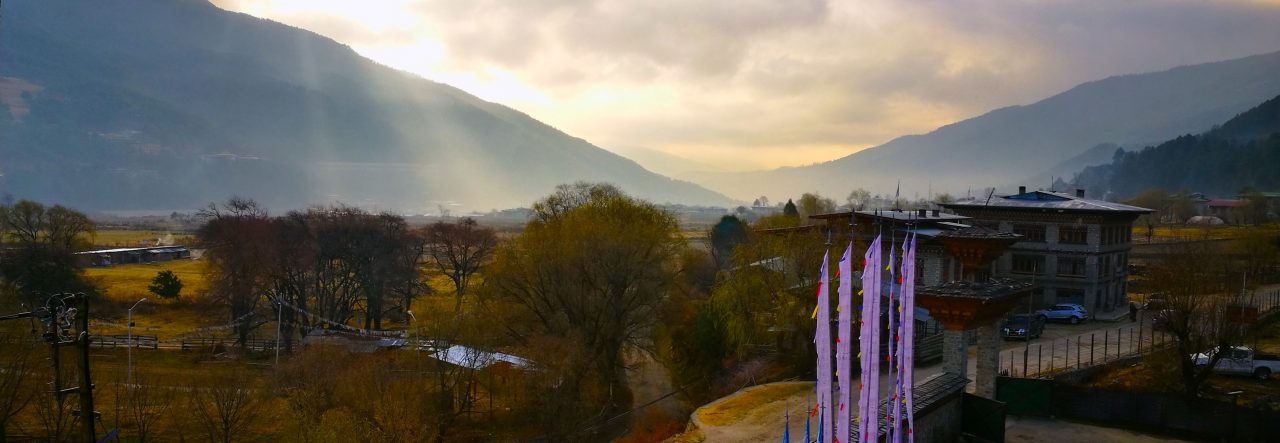
It feels nice to visit Phurdo Gonpa after two years. After my first and last visit here in 2020, a friend and I gifted them a large water tank.
Phurdo Gonpa is on a mountain top in Paro Shaba, and was established by Drubthop Thangtong Gyalpo (1361-1485), a Tibetan yogi-artiste-engineer. He is best known for building iron chain bridges across the Himalayas, some of which are still in use today.
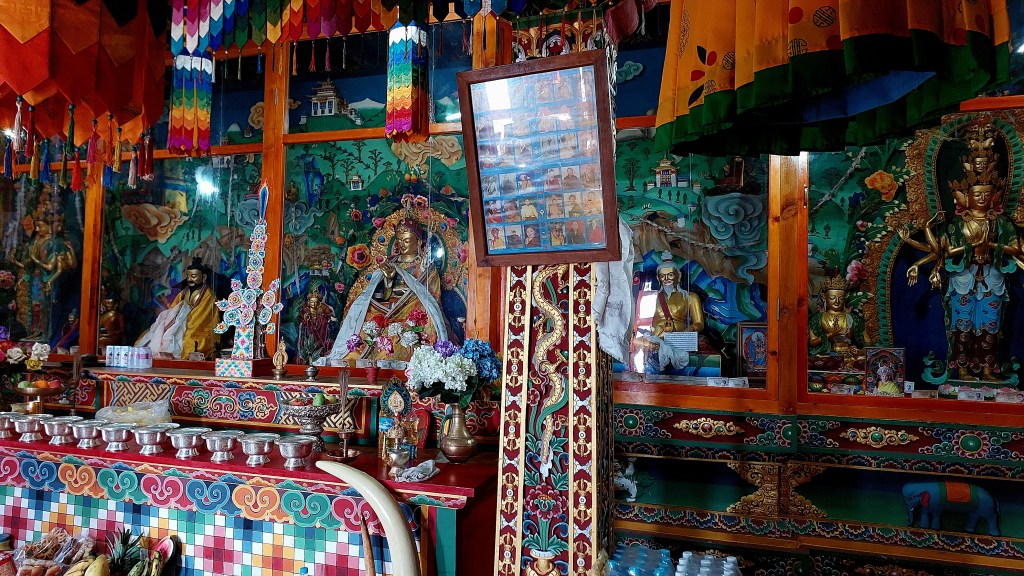
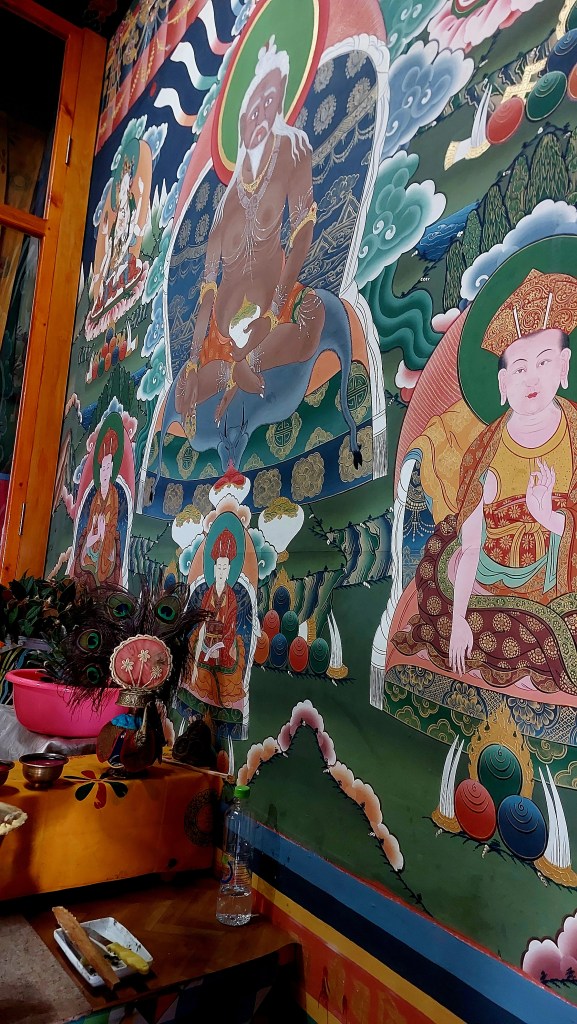
Thangtong Gyalpo, who was invited here by Drake Tsen and Aap Chundu, while meditating here, saw in his vision the whole mountain range as Mount Potala, the Abode of Avaloketeshvara, in a shape of a phurpa. Hence the altar of this temple is designed as Mount Potala with all the nearby sacred sites such as Bemri, Jelela, Dongkala, Dra Karp, Mendrup Gonpa. The spiritual merit of visiting this mountain is the same as visiting the sacred abode of Potala.
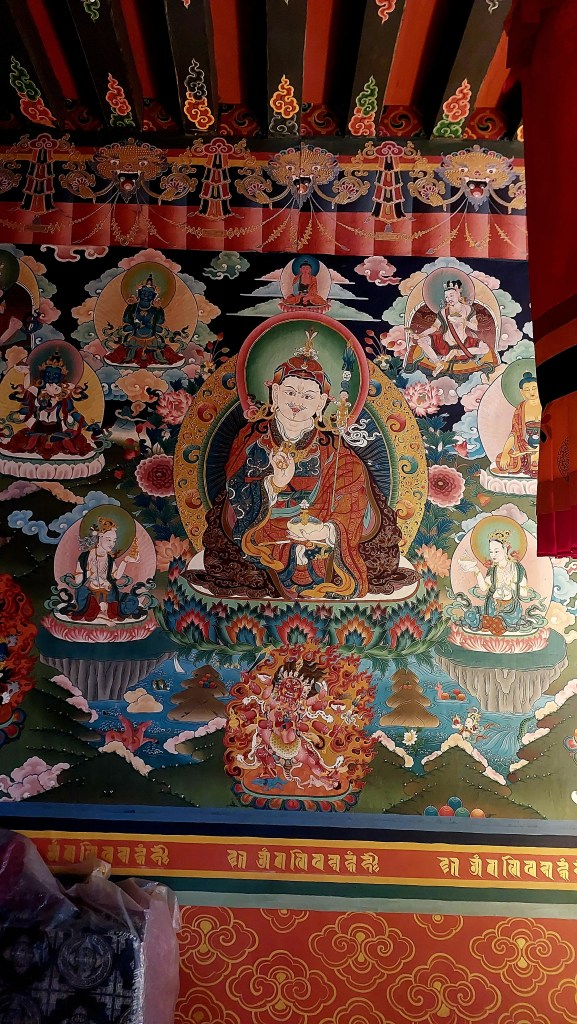
The center statue of the altar is Guru Nangsi Zillnoen (Guru Padmadambhava). He is flanked on either side by Cherizig Chha-Tong (1000-arms Avalokiteshvara). On the right side of the altar is Namsey Zambala – the Wealth Deity, and the Protector deity Mahakala.
Phurdo comes from the Dzongkha word, phu, which means “to fly”, and “do” (boulder). It is derived from the legend that a stone stupa below the temple attempted to fly away with Drubthob Thangtong.
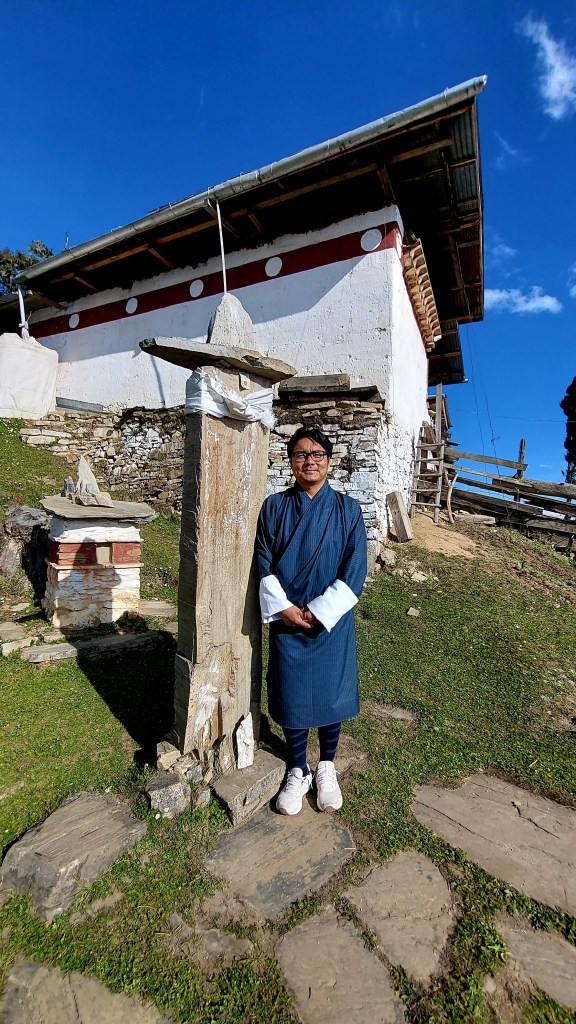
The stupa called Lho Penden has stone slabs on its two sides. The story is that they are self-emanated wings, which sprouted from itself – to be able to fly with the yogi to Tachogang. However, the yogi left him back here. And, thus, it was also called Phurdo (flying rock) and the gonpa took its name from it.
Another interesting relic to see is a 6-feet tall monolith called “Dhoring” (Stone pillar) which is said to be the physical height of Thangtong Gyalpo himself.
My first visit here was in 2020 after I saw a post about the caretaker pleading with the devotee to bring water.
Phurdo Gonpa sits on a limestone mountain top. And like any limestone or dolomite mountain, the water table must be way down in the valley, and not anywhere near the peak. In fact I discovered there are no water springs near any of the temples on this mountain. So all temples such as Dongkala, Mendrup Gonpa, Bemri, Dra Karp have no water source. Since time unknown they harvest rainwater and snow and at other times they walk for hours every day to distant water springs.
During my first visit I noticed that Phurdo Gonpa didn’t even have a large water tank for storage to meet the needs of the dry months. So, a friend of mine and I donated a 5000 litres water tank to help them pull through the fall and the winter months.
Take water:
To all devotees visiting Phurdo Gonpa, Mendrup Gonpa, and Dongkala, take cartons of bottled water, besides the butter and incense sticks. There is a very good road till the doorsteps of the temples.
Who should visit:
Everyone, and especially engineers, artists, writers. One belief is that Thangtong Gyalpo is supposed to have conquered the five elements of nature – earth, wind, fire, water and space. A statue of Thangtong is a must at home to avert natural disasters.
Getting there:
After Shaba Bridge, coming from Thimphu, turn right at the bridge, and head for Yuthok Gonpa and Dra Karp. Phurdo Gonpa is an hour drive and is on top of the mountain past Tenchekha village and Mendrup Gonpa. Small cars are welcome.


 Dorji Wangchuk