A legend goes that a man accidentally entered the mythical paradise. After wandering aimlessly for a while he found a tree to shelter himself from the heat of the Sun. Having refreshed a bit, he felt hungry and wished for some food. Immediately the food appeared before him. He then thought he would like some wine. The wine appeared too. Startled and shocked, he thought some ghosts were there providing him everything. Then the ghost appeared.
In the Buddhist mythology there is the legend of wish-granting tree known as the pagsam jongshing (Dz: དཔག་བསམ་ལྗོན་ཤིང; Skt: Kalpavruksha). Wish-granting trees are believed to bestow any wish one makes.
There is a story that in Paro, at the spot where Nyephu Gonpa is located today, there once stood such a pagsam jongshing tree. The people back then wished for abundant harvests. Their wish was granted. They received an endless supply of grains, fruits and vegetables – to the point that they became idle, bored and wild because they didn’t have to work.
They got so wild that they even attempted to kill the lama of Do Choten Gonpa, Gyalwang Choeje Kunga Paljor (1428-1476). The lama and his attendants and animals are believed to have flown away from there before the mob made it to the hermitage. (There is a detailed account of how they achieved the flying skills).
Subsequently, the local people also chopped off the pagsam jongshing tree.
Though there is hardly any trace of the tree today, it is said that one can still make a wish on the spot. So, here I am, on the Duechen Ngazom (Vesak Day) of 2023 making my maiden visit to say a wish. I also had the most amazing day.
The Baeyul Neyphu Valley, Paro
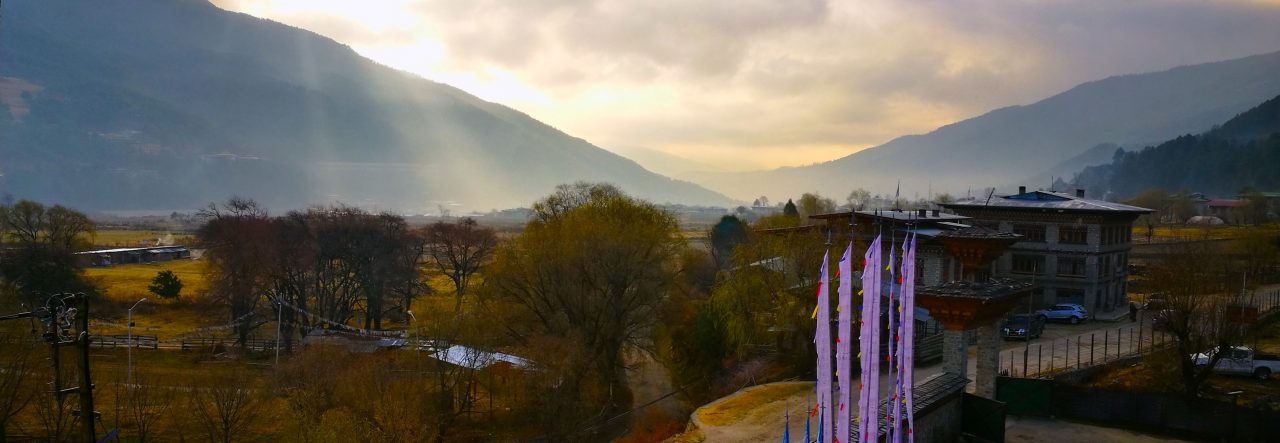
From Shaba Bridge, coming from Thimphu, if one turns right and takes the dirt road, one enters the Neyphu Valley. Some refer to it as Heyphu, after the name of the village below Neyphu temple.
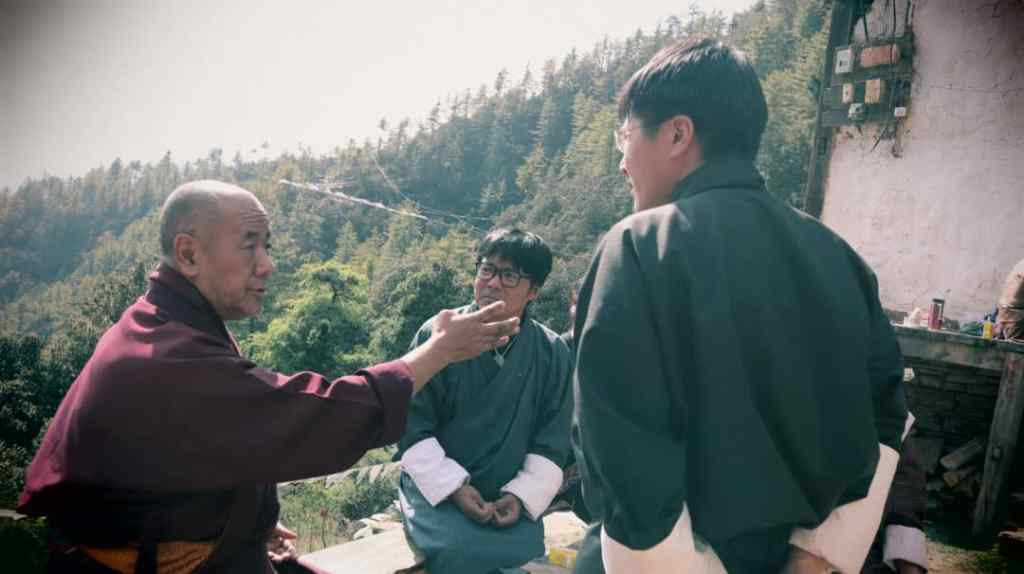
Neyphug literally means “the sacred hermitage caves”. According to lopen Karma Jurmey, who completed a six-year retreat at Menchunag, there are 108 sacred caves. He adds that Neyphu area holds the key to the mythical paradise, called Bae-Yul in Dzongkha, and that by just setting foot in the area, one is liberated from being reborn in the lower realm.
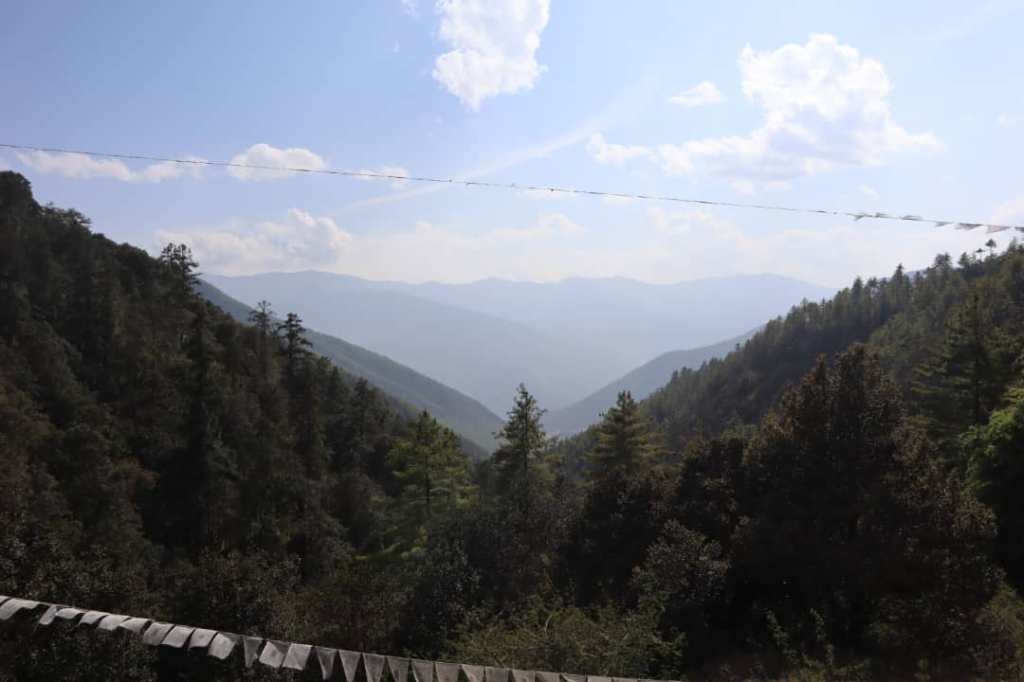
As one drives up, the valley slowly rises in altitude and after many twists and turns you reach a beautiful and blissful spot – surrounded by mountain-top temples of Do Choten, Bemri, Dongkala and Phurdo Gonpa. It truly feels like a Bae-Yul (hidden paradise) as mentioned in the holy scriptures. You only realises its sacredness when you leave the valley and hit back to the Thimphu – Paro highway.
There is rock face in the valley, says our guide – a young monk in Neyphu Gonpa, where an old man from Shaba saw a temple. He left his load at the “entrance” and never came out. His load remained unattended there for many years till someone took it and now is kept in a nearby temple.
Terton Ngawang Drakpa
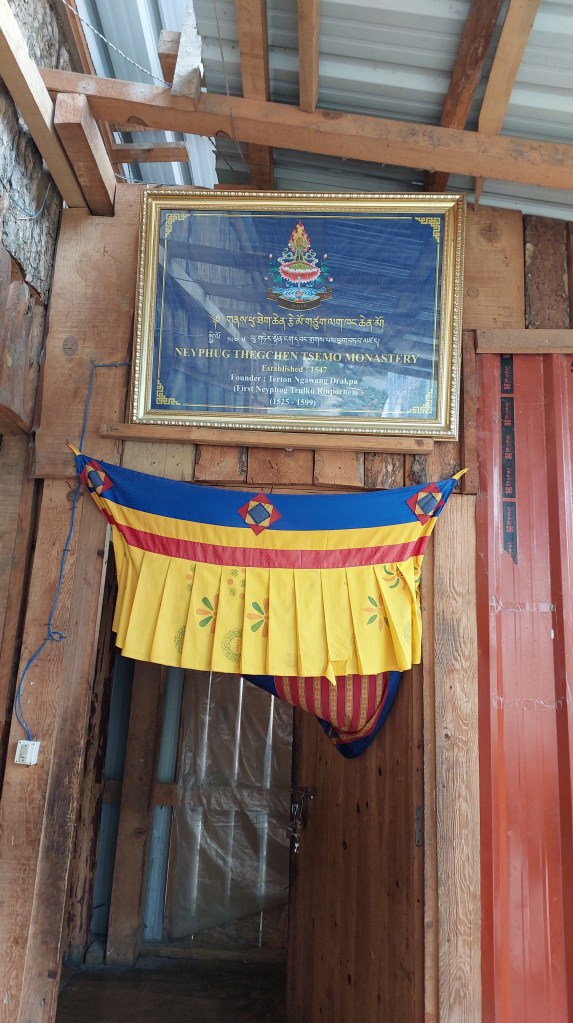
Neyphu Temple was established by terton (treasure revealer) Ngawang Drakpa (1525-1599), a Peling lama, born in Sha Kunzangling. According to some sources, he attained enlightenment-like state at the peak known as Samten Tsemo (where Bemri stands today), and was looking for an appropriate site to establish a seat for his Dharma activities. The village elders of Neyphu valley offered that spot where the pagsam jongshing tree once stood.
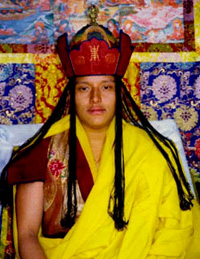
The birth of Terton Ngawang Drakpa was envisioned by Terton Pema Lingpa (1450-1521), who left instructions to his son, Thuksey Dawa Gyeltshen, to confer to him all sacred and secret teachings and practices. Terton Ngawang Drakpa, thus travelled to Bumthang and not only was a student of Thuksey, but later also became the teacher to Terton Tshering Dorji, who founded Nyechen Dongkala. He was thus one of the greatest Bhutanese yogis and dzongchen masters of all time, who started the lineage of Nyephu Trulku. The current one is the Ninth Nyephu Trulku, Ngawang Shedrup Chokyi Nima.
In his previous existence, Terton Ngawang Drakpa was Acharya Yeshey Yang – who was a disciple of Guru Padmasambhava and responsible for all clerical works.
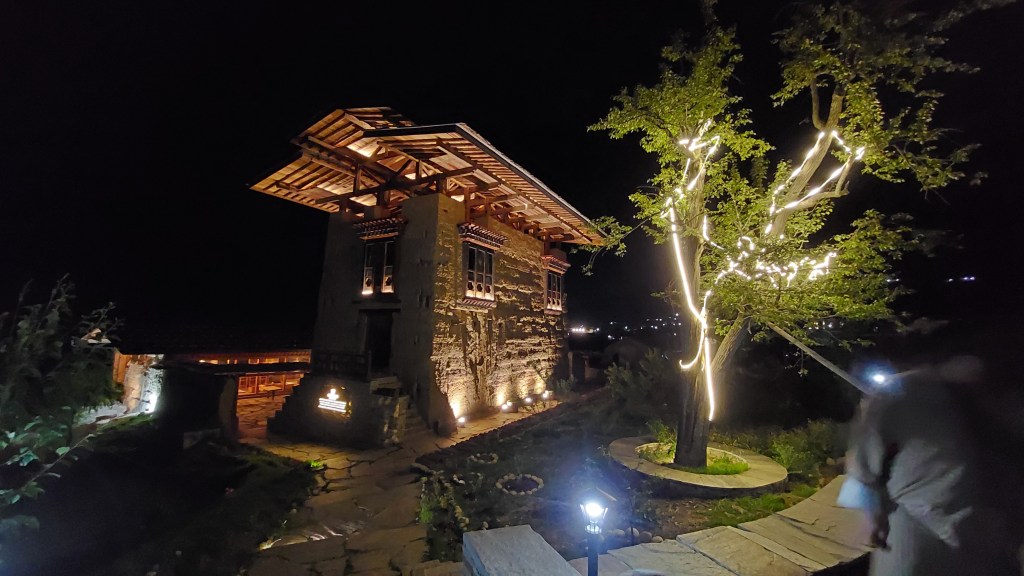
Neyphu Monastery
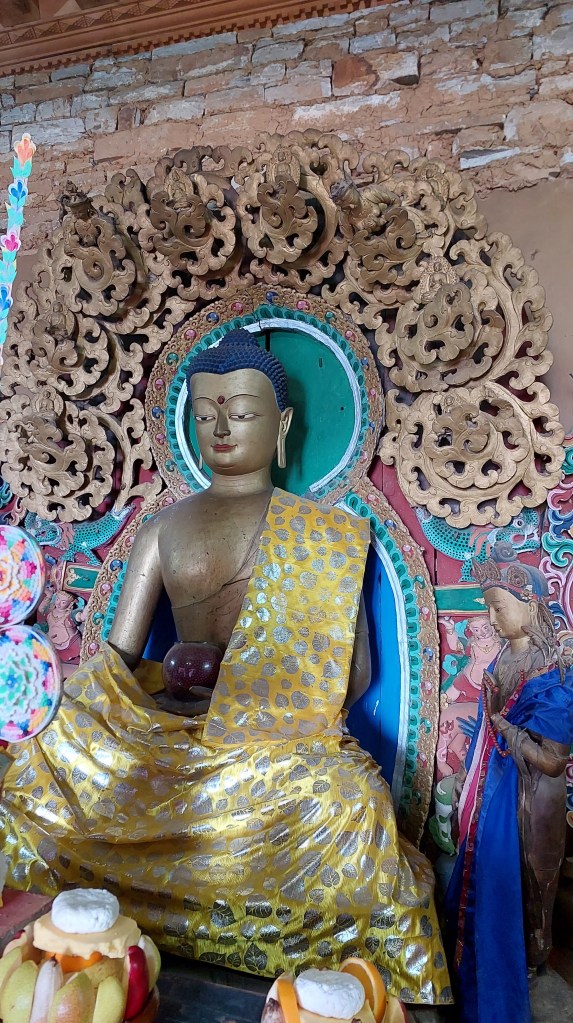
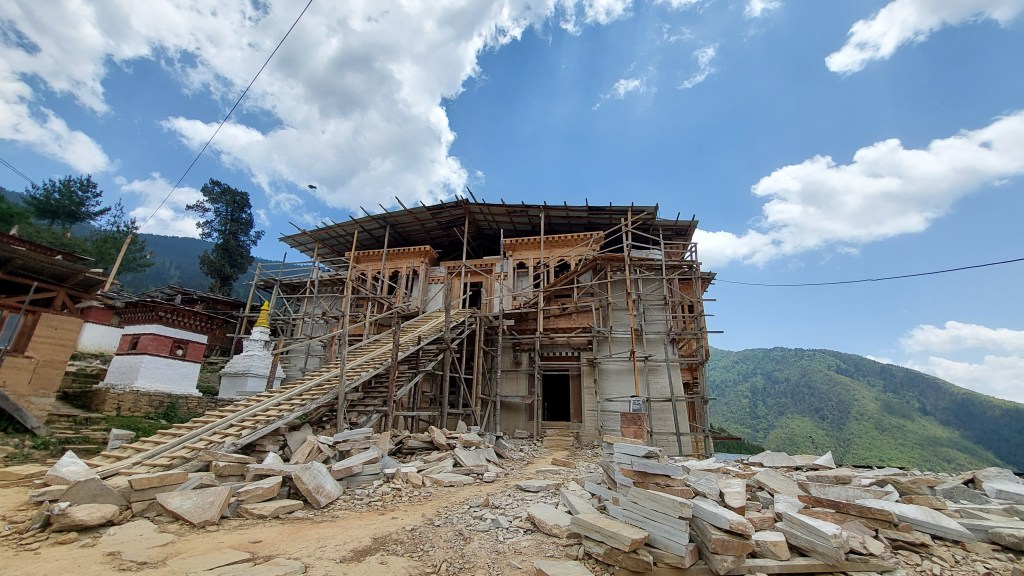
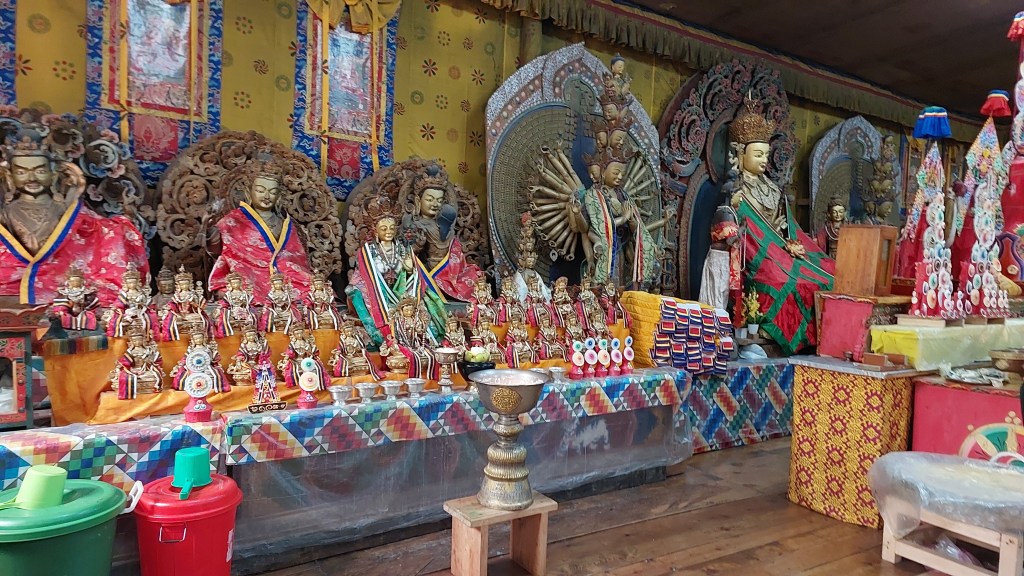
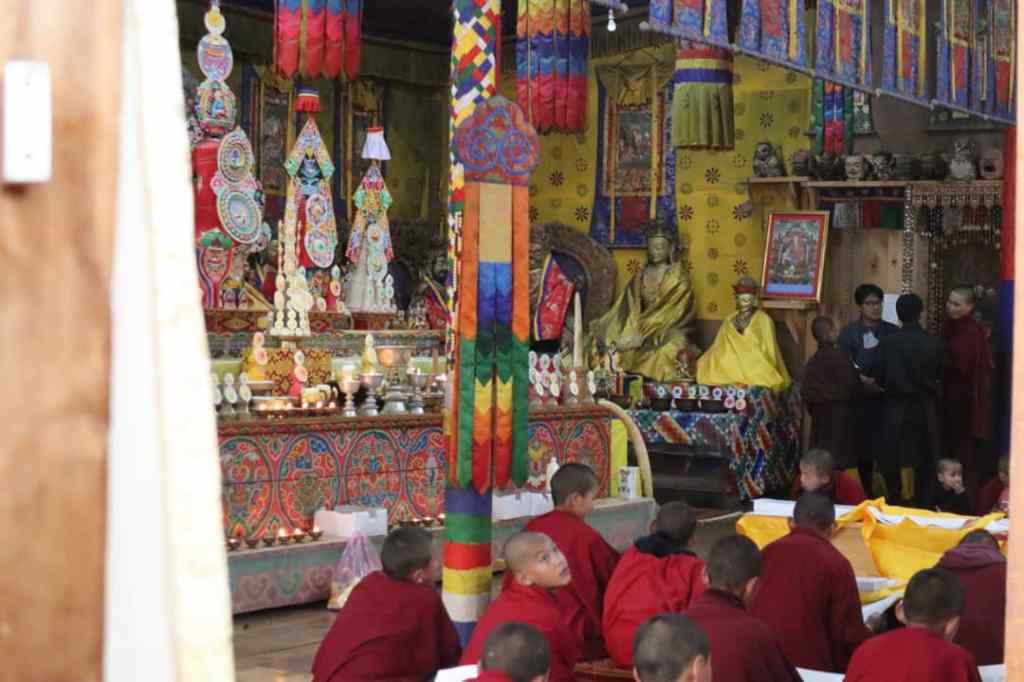
The temple is under construction and all statues are in a temporary hut, except Duesum Sangye ( Dz. དུས་གསུམ་སངས་རྒྱས; Buddhas of The Three Eras – Buddha Dipankara, Buddha Shakyamuni and Buddha Maitreya) on the ground floor. The statue of Shakyamuni is considered as sung-joen (talking statue) and hence is very sacred.
Those destined for the top floor are Guru Padmasambhava, Dorje Sempa (Vajrasattva), Sangye Tshepamay (Amitayus) and two Chenrizig Chukchizhey (Eleven-arms Avalokitesvara). Of special interest is the set of the statues representing the Eight Manifestations of Guru that were sculpted by the Fourth Neyphu Trulku, Sangdag Neduen Dorji.
The scripture/speech relic (sung-ten) is a set of Kanjur – the holy cannon of Buddhism, believed to have been written by the Second Nyephu Trulku, Sangag Gyeltshen (1600-1661).
Guru kutshab – the main treasure of Neyphu
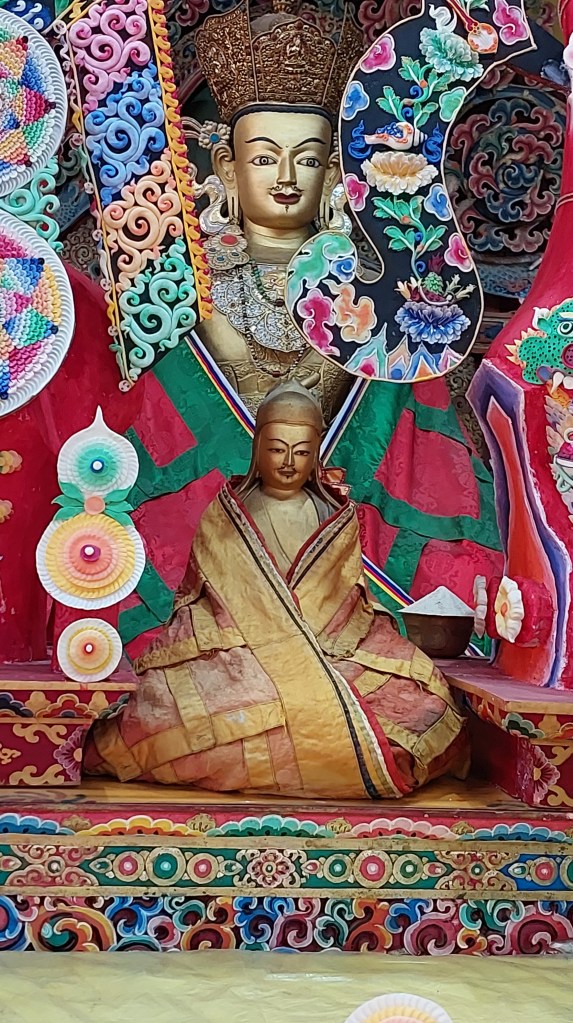
As the most-sacred inner relics, known as the nang-ten, the monastery also has one of the Five-Envoy-Statues (སྐུ་ཚབ་) of Guru Padmasambhava – considered to be the kutshab (physical representations) of Guru, the blessing of which is at par with meeting Guru in person. (See below for background of kutshab)
The caretaker-monk says that the Kutsab statue was retrieved from the large Buddha statue at Kyichu temple in Paro. Terton Pemalingpa is believed to have seen it in his vision, and revealed it to his son, Thugsey Dawa Gyeltshen, who then later instructed Terton Ngawang Drakpa to retrieve it.
Other sacred relics are a pair of shoes that belonged to Guru Padmasambhava, the ritual hat of Zahor King, worn by second Neyphu Trulku, and a clay-statue of Jampayang (Manjushri), which is believed to have come flying from Tibet.
The monastery also has the Chamber of the Protector Deities of the Nyingma Tradition – Ma-Za-Dam Sum, which is the short form of Mamo Ekajati, Za Rahula, and Damchen Dorje Legpa – the main protectors of the tradition. Inside the chamber is also the statue of the ferocious local Gyelpo (king-spirit) Kuntu Zangpo, who is the lord of the area.
The statue is displayed once a year on the 15th Day of the 5th Month in the lunar calendar.
The Neyphu Monasteries Network
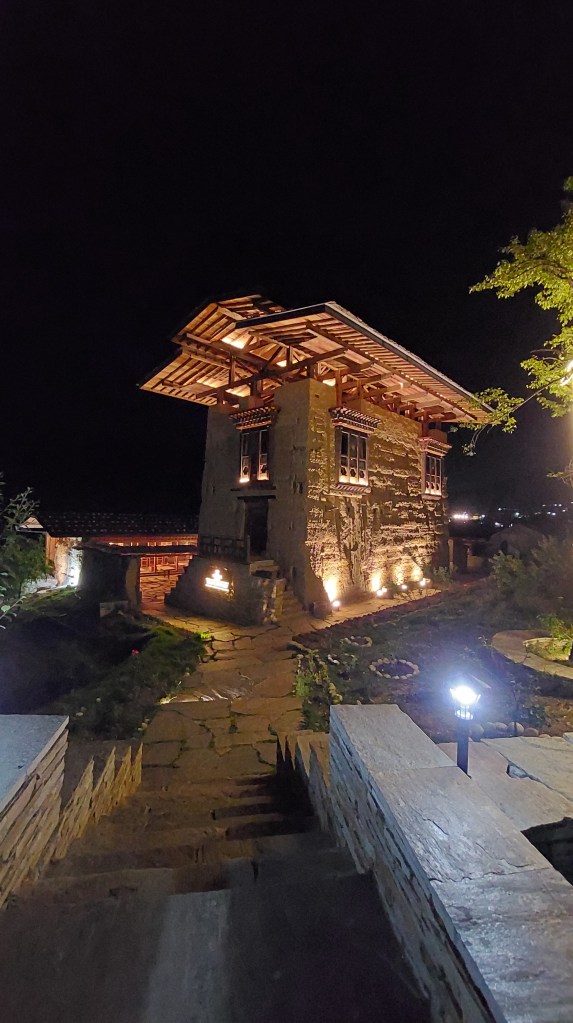
Neyphu Monastery is not a single stand-alone temple but the centre of a vast and loose network of temples and monastic institutes in Paro, such as Bemri, Chorten Gangkha, Menchu Gonpa, Minrekha, Phurdok Gonpa, Tshedrak Gonpa, Tsundru Gonpa, Yangchi Gonpa and Zhelgno ruins (which has now been restored into a heritage house with a cafe (Your Cafe) to support the monastic body).
The Centre of clay art
What little known fact is that Neyphu is where the art of clay statue making (jin-zo) was invented. Hence, it is culturally one of the most significant temples in Bhutan. Even today many lamas and artisans visit Neyphu Gonpa to take the measurement of the statues and also use some a model (I did this too to make two statues of Khandro Yeshey Tshogyel and Khandro Mendarawa for another temple).
In particular the statues of Guru Tshengay (Eight Manifestation of Guru) are supposed to be the best in terms of representation. The fourth Neyphu Trulku, Sangdag Nueden Dorje, is supposed to have made them based on the visions he saw. Today he would be regarded as the inventor of clay art.
The Stalking Spirit of Neyphu
Although Neyphu Gonpa is one of the most sacred Nyingma temples in Paro, at par with Neychen Dongkala or Mendrup Gonpa, it does not receive the same pilgrimage traffic. The reason is because of the fear and the myth of the stalking spirit called Neyphu Gyelp. This spirit is believed to be very powerful, and malignant too, who chooses to harm innocent pilgrims and people after stalking them.
However, there is some confusion, it seems. According to Neyphu Trulku, first of it it is not Gyelp Kuntu Zangpo who stalks you, but another king-spirit. Second, it is not this king-spirit who is malignant but the female spirit called Shaza Khandro maybe harming the people. In any case, both the spirits are now hosted and sealed in the upper most temple in the complex called Goen Gom.
Therefore, visiting this Gonpa, with its rich repertoires of sacred statues, and the Three Protectors of Nyingma Tradition, is highly recommended.
Around Neyphu Monastery
When you are half way up to Neyphu Gonpa from Shaba, there is a stupa, believed to be built by Gyalwang Je Kunga Paljor, and which contains one of the relics of Sangye Yoesung (Buddha Kashyapa) retrieved by Drubthob Gyem Dorji from Dzongdrakha. It is called Chorten Gangkha temple and the stupa is inside the temple.
After crossing Neyphu Gonpa, few minutes up where the road ends is Menchunag Gonpa, the spot where Tshang Khenchen Pelden Gyatsho lived and died, and where there is a mind-blowing self-arisen painting of Avalokitesvara, and self-arisen mantras on the rock.
When to visit
The most significant day is the 8th Day of the Second month, coinciding with the Birth Anniversary of terton Ngawang Drakpa, all the sacred relics are displayed for public viewing. What is very special would be to view the Guru Kutsab statue, which is equivalent of meeting the Guru in person.
The fifteenth day of fifth month is also auspicious to visualise the Guru Kutsab
Notes:
Guru Kutsab
In the Eighth Century, when Guru Rinpoche was leaving for the southwestern land of the Rakshas, King Muthri Tsenpo of Tibet requested Guru to leave something behind to represent him. It is said that Guru instructed Acharya Shantarakshita to make five statues with five different costumes – of Zahor, Nepal, India, Tibet and China. The statues were buried into the earth as termas, to be revealed by tertons at a later period.
These lines were believed to have been spoken by Guru to King Mutri Tsenpo on the sacredness of the Guru Kutsab:
Whoever sees or gets blessings from these statues,
it is no different than seeing me, Guru Padmasambhava!
As for the temporal, they grant whichever common attainment one may wish for,
And ultimately, to the abode of myself, Padmasambhava, escorted with honor by the assembly of Dakas and Dakinis, will be brought to the Supreme Celestial Mansion of Lotus Luminosity!
Even the places where these statues are kept, would have no difference as that of the Celestial Mansion of Lotus Luminosity!
Huge gatherings of Dakas and Dakinis will take place, auspiciousness would pervade everywhere and there will be bountiful crops and cattle,
The kalpa (eons) of sickness, war, and famine would soon get over!



 Dorji Wangchuk