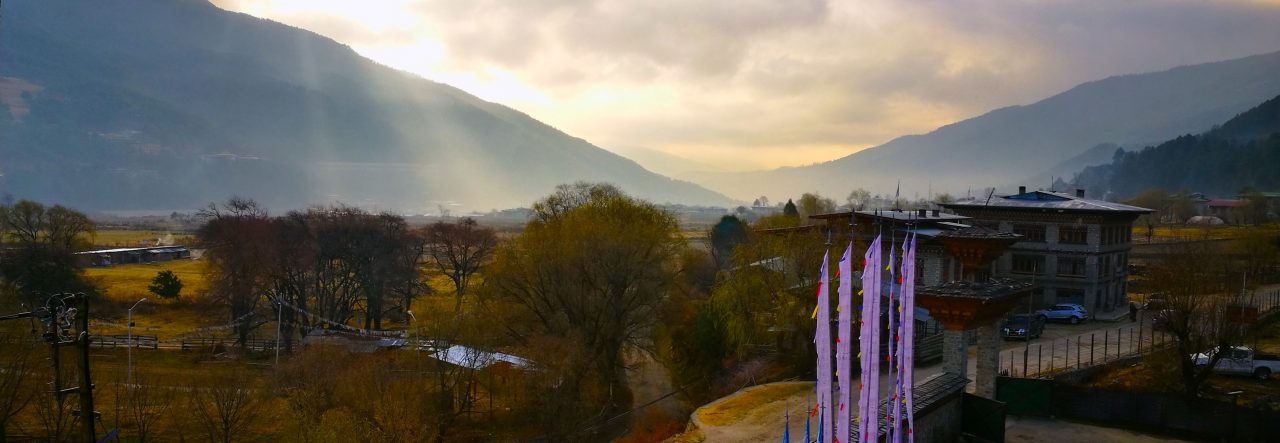
There is a popular holy mountain in Bhutan (a hill by local standards) where you walk around it for 108 times. On average it takes fifteen to twenty minutes to do one full circle, which means a good three to four days to complete the sacred number of 108 rounds. Legend has it that the spiritual merit of doing the 108 rounds is so great that one could cleanse even the worst of one’s past karma. And I just did that. It was not easy either.
After a gruelling three-day of walking, puffing, dragging myself and almost crawling towards the end, I completed the popular 108 circumambulations of this power place that was blessed by Guru Padmasambhava. This fulfils a dream that has been hanging on my mind for years after my first ever visit in 2002. During my last visit in 2019, where I just paid homage to the “talking” Guru in the main temple, I made a wish to be back to do the legendary 108 rounds. I was not ready for the challenge back then.
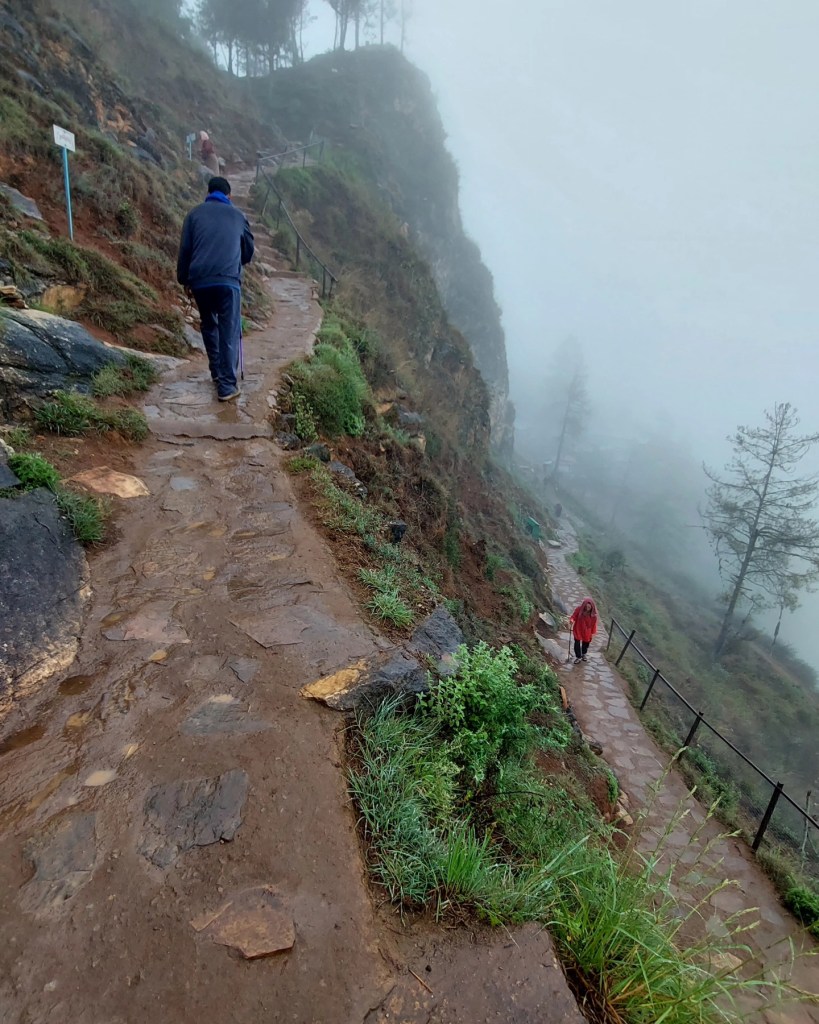
To provide some context, first, the mountain stands at almost 3,000 metres above sea level and the trail is around one kilometre long. A quick maths says 108 rounds equates to 108 kilometres. This is equivalent to two marathons back to back. Second, the trail moves vertically like a clock. You climb up from the base, reach a plateau, and then you walk down from the other side. It is not a flat walk. Both your knees and your thighs get killed in the process. When it rains, like it did on my first day, the trail is slippery – adding extra pressure on your legs.
Owing perhaps to these, and more so because of the blessings of Guru Rimpoche and all the subsequent deities and yogis who visited there, the spiritual reward of doing the 108 rounds of Dra Karp is believed to be so great that one is cleansed of all the sins as big as “killing one’s parents”. This is perhaps a metaphor to indicate the immense power and blessings of this sacred mountain.
The sacred Dra Karp in Paro
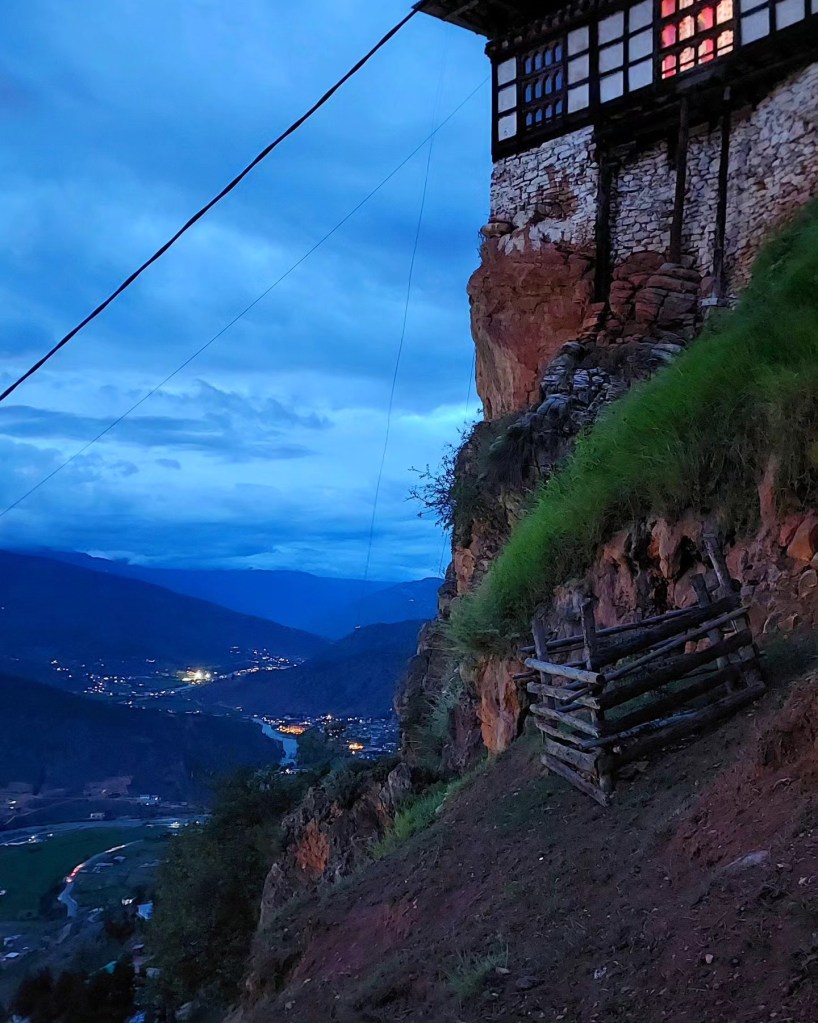
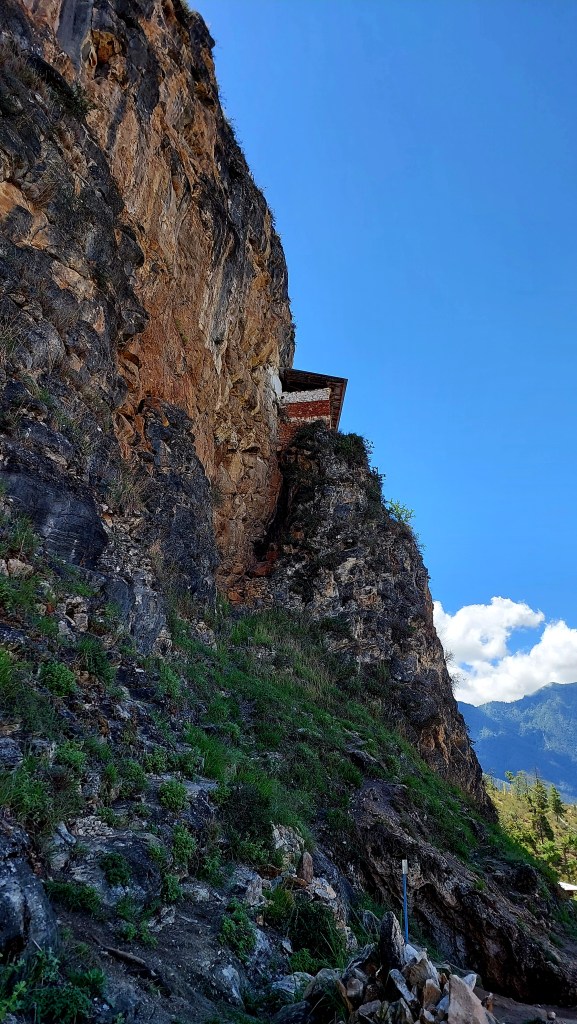
Dra Karp (also rendered as Drakarpo), which literally means “split rock”, is a popular pilgrimage site in Shaba gewog in Paro. According to some ancient scriptures, Guru Rimpoche – probably in the form of Guru Dorje Drolo, had moved from Taktshang to Dzongdrakha, and from there to here to meditate and hide a sacred ter – spiritual relics that would be later discovered by masters of destiny. The door to the ter, called ter gho, can be seen on the rocks.
As Guru was meditating in the cave, he found the space to be a bit tight and so he pushed the rock in front of him with his legs and hands and the rock was split. And thus the name, Dra Karp, which means ‘split rock’. The splitted space now holds a small and narrow temple.
As you enter the temple, there is a pagsam jongshing (wish-granting tree) near the right window, and a statue of Drak Tsen (the mountain deity of Dra Karp) on the left. As you go further the split rock is on the right and the cave is to the left. There are two statues of Guru Rimpoche – one inside the cave and one – a bigger one, on the altar to the right. The bigger one is more sacred, as it is considered as sungjoen (talking statue). For me, it is the most beautiful statue of Guru, which caught my attention during the very first visit in 2002.
On the split rock one can see various self-arisen images such as that of Jetsun Jambayyang (Manjurshri) and the footprints and handprints left by Guru – probably as he pushed the rock away from where he was sitting.
More than the cave it is the mountain that has been further sanctified by the visits and blessings of other Buddhist masters, deities and divinities. There are countless caves – big and small, and marks left by them. The most popular ones are the caves of Yidam Tandrin, and Lama Namkhai Nyingpo. It is obvious that Buddhist masters and practitioners down the ages have visited this place following the footsteps of Guru Rimpoche, and have left their own marks of accomplishments.
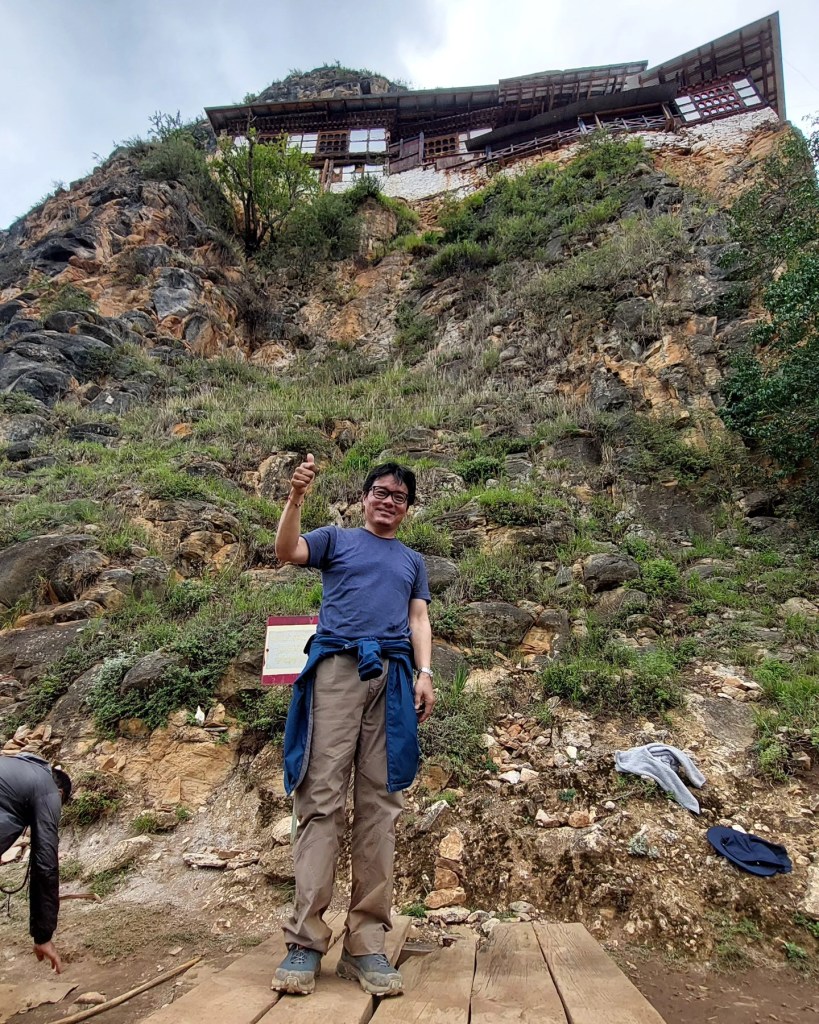
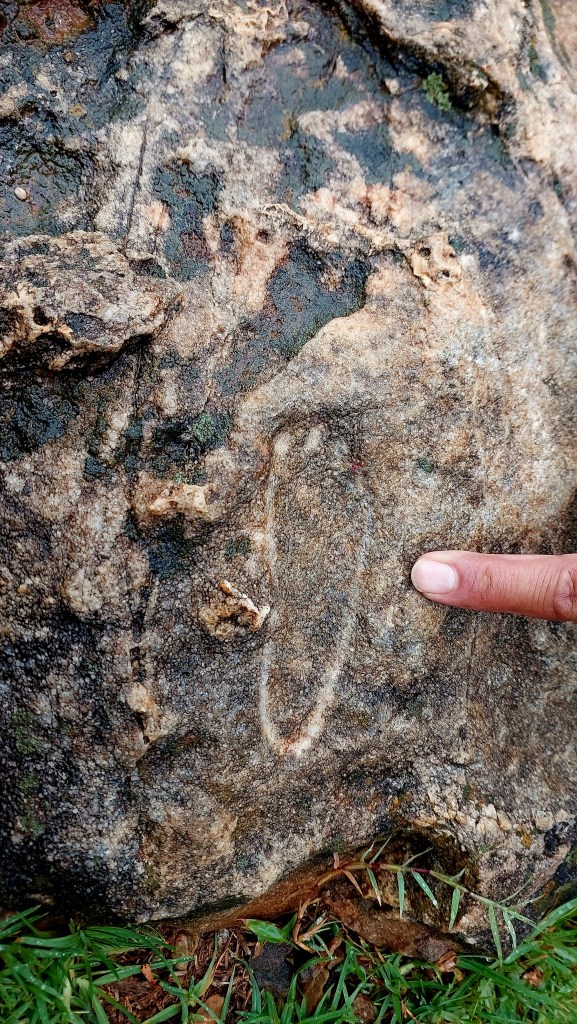
My favourite is a tiny footprint of a khandro (dakini) on the top plateau of the trail. This is where one should end the pilgrimage and sing and offer devotional dances to the deities and dakinis. The walk should start at the base, where you prostrate three times. There are wooden planks donated by some people to facilitate the prostrations.
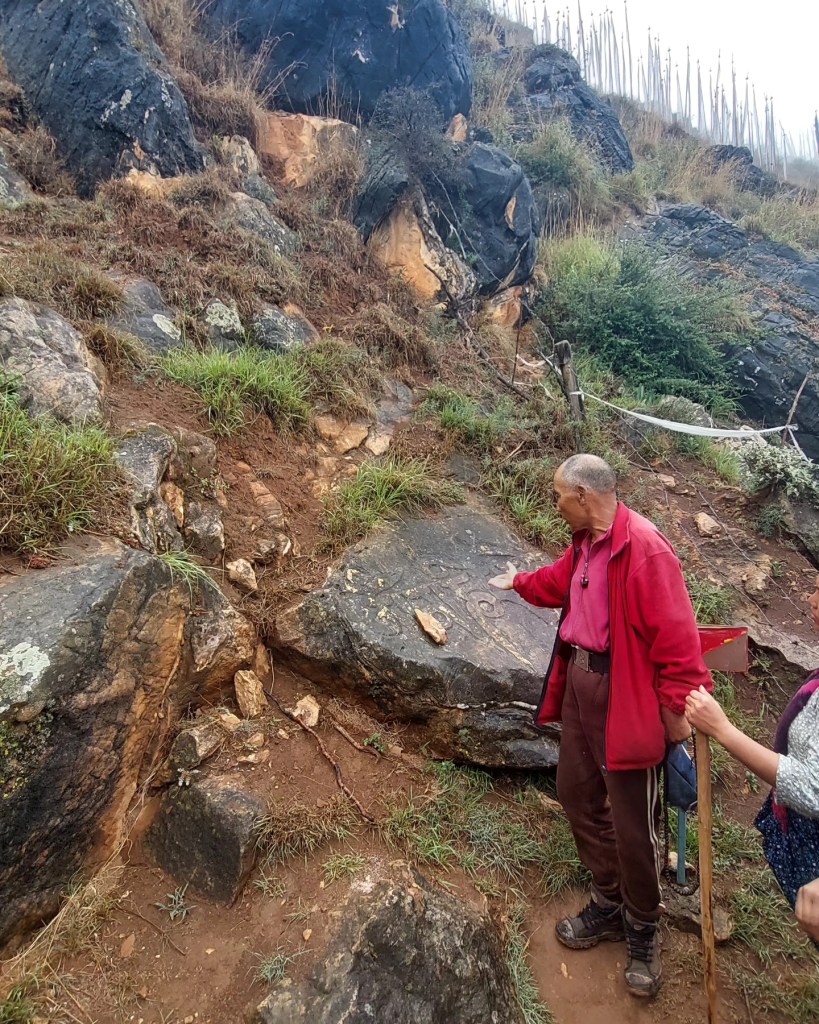
On the same plateau there is also a large boulder split into three. According to a local man, Lotey Gyeltshen, 75, who served as a novice monk for four years before being drafted into the army, Dra Karp gets its name from this rock.
“When Guru was meditating in the cave below the deity, Drak Tsen, kept bothering Guru and kept hiding in this rock,” says Lotey.
“One day Guru was so annoyed that he chased the Drak Tsen who disappeared into the rock. Guru focussed his mind on the rock which split into three and the Drak Tsen was revealed and tamed. This is why this place is Dra Karp because this rock was split into two by Guru,” he elaborated.
“This is a blessed rock. If you have back pain, knee pain, shoulder pain, or headache, you rub here on different spots,” he added. A highly-spirited man, Lotey went on to demonstrate how to do the rubbing and switches from Dzongkha to Sharchop to Hindi, which made us all laugh or smile. But I did try rubbing my back on the boulder like a bear, and it did work. Whether it was my blind faith, or the real blessings from a boulder, my chronic backache made some comeback this time but not to disrupt my mission of 108.
In recent decades, Dra Karp has become a popular pilgrimage destination for its promise to be able to wash away one’s all bad karma – including vicious acts as big as killing one’s parents. Obviously this is a metaphor to highlight the immense blessings and power of this place. Every day streams of pilgrims of all ages can be seen struggling around this sacred mountain. The place is like a hotel with people coming and going at every hour.
I first visited in 2002, but couldn’t get 4 days off to do the 108 rounds. I made several subsequent visits with friends and family members for day visits and each time I made a wish to Guru that I be back for the legendary 108 circumambulations, so that I am able to wash away my sins – from both this life (I have committed many) and from my past existence that I really don’t know.
So, finally here I am – after a good 20 years.
My circumambulation experience
108 rounds of Dra Karp is a big undertaking. And like every such undertaking, one must plan and strategise. So I decided on a slow first day, followed by an intensive second day, and then wind down and complete it on the third day.
“Yes, it is best to start slow, and increase the pace as you get familiar with the circuit. You shouldn’t rush,” said Pema Choden, who let me use her house below Dra Karp, and who lives in Thimphu these days.
“Many people make a jump start only to give up on the second day,” she said.
I followed her advice.
On the Day Zero, which is the evening I checked into my room in Dra Karp, I visited the main temple, and offered a cake to Guru. I also made a deal with the local deity, Drak Tsen. If I completed the 108 rounds I would offer 108 butter lamps for the benefit of all sentient beings. I rolled the dice. I got his approval through a good number. I then did some inaugural rounds of Dra Karp since it was the holy Dakini Day, according to the Bhutanese calendar.
Then I kicked off the First Day of the mission. The target was 42 but I stopped at 31 and went home at 5pm. I had stomach cramps the whole day from too much chillis I ate. But that was not my biggest worry. I was focussed on my lower back, which has always troubled me, and which I was worried of spraining it.
The next day, after my body was warmed up, and after I knew every corner and boulder, I increased my pace. The weather gods were kind enough to send some clouds to cover the intense Sun. Nonetheless, I burnt my neck and my nose.
I met the target of crossing both the midpoint of 54 rounds and the two-third mark, which is 72. I closed the day at 75 – leaving 33 for the third and the last day.
I woke up on the third day with aches and pains all over my body that, at one point, I even doubted if I could complete the rounds. I kept going, albeit very slowly.
“Today, your speed has gone down, sir,” joked one female pilgrim.
“It has,” I replied.
“You have come this far. So you might as well crawl and complete the rounds,” she added.
And I was almost crawling. I got a second walking stick and I used my arms muscles to help my legs pull my super-tired body. I was literally walking on four legs.
The Sun was also unforgiving on the third day. At one point I was almost getting a sun stroke. With the rain clearing the dust, and being at 3,000 meters, the UV rays must have been at the highest level.
Everyone was also tired. And so we encouraged each other, and helped each other. There was one elderly lady who was lying flat on the ground, and almost giving up, and in pain.
“I think you need my help,” I offered to her.
“I don’t think you can do much. My right knee is gone. I can barely feel my foot,” she replied.
“Of course, I can. I am a doctor but not a medical doctor. Just a knowledge doctor (dzongkha translation of PhD),” I joked. She smiled.
“Here apply some Counterpain,” I told her as I passed her my pain ointment.
“It is foreign-made and it will give you instant relief,” I told her. (I added the foreign thing to help her psychologically. Anything foreign is always better for the Bhutanese).
After she applied, I wrapped her knees with the knee brace, which I was carrying it in case one of my knees gave up. When I was done, I told her to get up.
She got up slowly and exclaimed, “Wow! The pain is gone. You are better than a medical doctor.”
We all resumed our walk. I had missed two rounds playing a fake medical doctor. But I thought that helping another human was the bigger achievement, and my duty. Later, at one point when I was overtaking her, I saw her smiling and doing great and was like,
“You know, I just asked Guru Rimpoche to bless you with great knees and legs till your next life, and the next, and the next, so that you can make to every pilgrimage site in the world.”
I thanked her for praying for me, and silently teared up inside thinking that I got a better deal than her by helping her. And that good people and humanity still exist in this troubled world.
Miracles at the final rounds
It was around 5pm when I started my last three rounds. My phone rang. It was my elder daughter. As I was talking to her lying flat on the ground, I noticed a double rainbow that had appeared over the mountain (see the photo below).
I was like, “Is that the divinities are celebrating the completion of my mission.”
When I finished talking and resumed walking, my pilgrimage company, Kesang, had caught up with me and was overtaking me when I called out to him and told him to look over the mountain. He was stunned to see what he was seeing and was almost in tears..
“You are really something, man! I have never experienced something like this before.”
There was more.
As we did our last round, and as we were descending the stairs on the southern side of the trail, a light drizzle of rain showered on us only for a brief moment (see video below). The amazing thing was, it was only for the two of us. And there was no cloud over us. It was a bright blue sky.
And just as the drizzle appeared, it disappeared almost instantly. We didn’t share this incident with other pilgrims, lest they felt bad that they didn’t get this miracle blessing.
Boosted by the three auspicious signs my body suddenly felt fresh and strong that I could walk normally again without the walking sticks. I closed the pilgrimage by adding 108 prostrations at the base of the mountain, and paid gratitude to Guru Padmasambhava, and to the deity protector, Aap Drak Tsen, for not chasing me away. According to another resident-meditor, many people get injured and leave without completing the rounds.
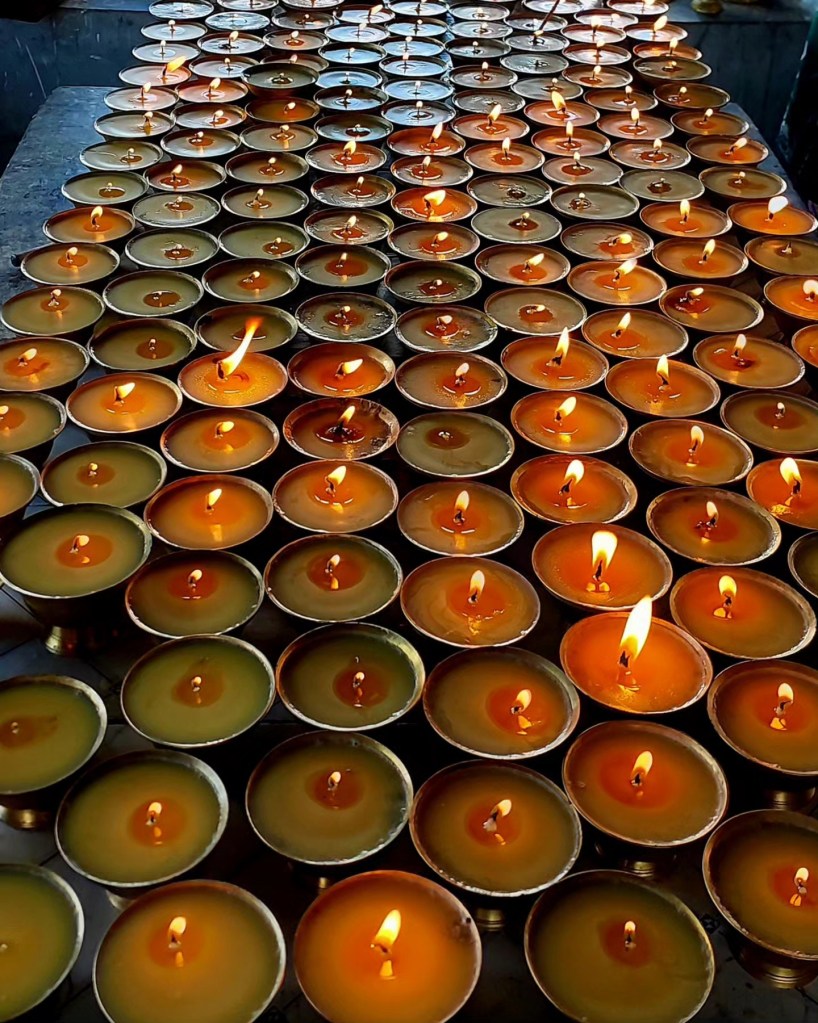
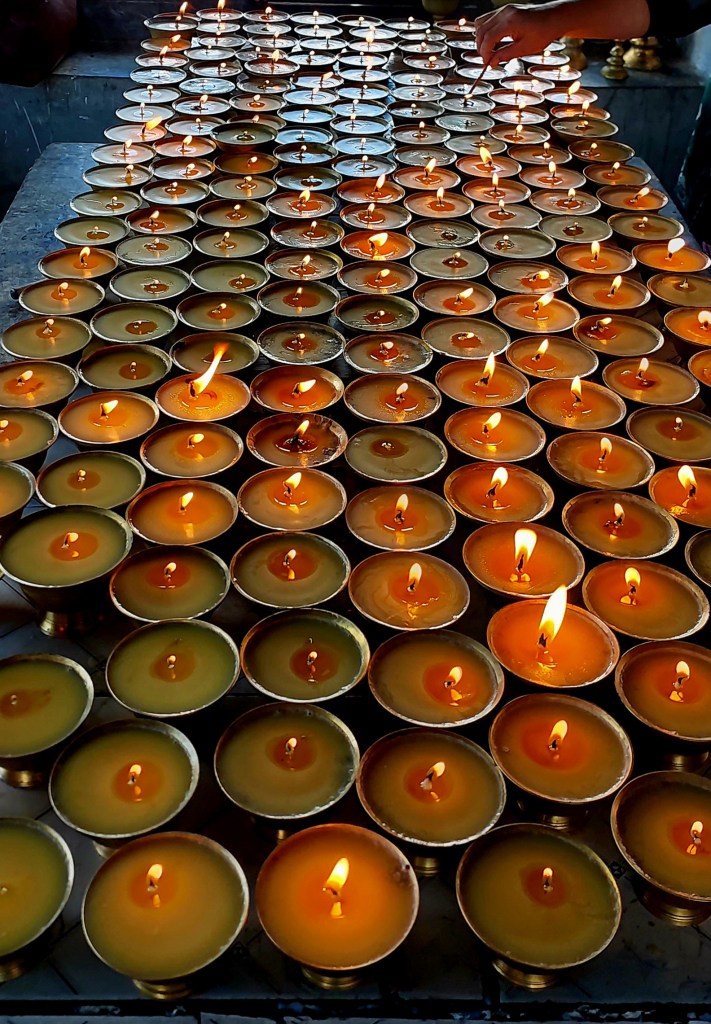
Then on the next day before we left, we offered 108 butter lamps for the benefit of all sentient beings – as promised to the local deity. I prayed that as long as I lived, I would be back to do thirteen rounds, if possible (this is Lite Version to the 108), or at least do three, which is the bare minimum.
I prayed that this place continue to attract people and help redeem their lives and their bad deeds, and reset to give them a fresh start – or simply help them to continue on their journey towards becoming bodhisattvas.
What remains. What went away.
Although doing the Dra Karp round is a pilgrimage with all the merits of cleansing your bad karma and accumulating some good ones for your next life, there are few things that shall remain with me.
- Peace and contentment. As I walked in silence for the most part, one thing you can do is think a lot – or think nothing. Either way I felt both my mind and my body becoming lighter. Some hundreds of calories were burning away each day and so were the negative feelings and emotions I have been carrying with me. When you take some time off from your comfort zone, to a place like Dra Karp you see things more objectively. They seem to miraculously get less important and slowly leave your head altogether. On the third third day I was smiling all day for no reason. Contentment, I guess, is when you don’t know why you are happy.
- Kindness and compassion. Dra Karp is a limestone mountain – meaning there are no water springs. And there were pilgrims who did not have this prior information and did not bring any water along. Seeing that and without a second thought I went to town one evening and bought a truckload of water and placed them along the trail, so that people could just pick them. I also helped and cheered others who were less fit than me to complete their rounds. Likewise, there were other pilgrims who offered their modest lunch with me although they were humble people from rural areas. Not wanting to embarrass them, I accepted and sat down with them and shared lots of laughters and smiles.
- Self-care. Taking three days off to do this became some sort of a self-care – something that we all are bad at – especially people in higher position in the society. And yet, it was worth it for my health too. After all, what is everything without your health? During my last annual medical check-up my bad cholesterol level was above the normal. After these three and half days of strenuous physical exercise, which was preceded by a 10-day Vipassena course in Sikkim in India, the numbers went down to almost normal. Was it the blessings of Guru, or did I burn the bad LDL away? I don’t know but from now on I plan to switch off from mundane life, walk around the mountain again 108 times to balance my health numbers.
GETTING THERE
At Shaba Bridge, take right to Euthok Gonpa. Dra Karp is some 5 kilometers from the highway. Small cars can ply.
SOME IMPORTANT TIPS
- Prepare. Walk at least an hour everyday for a week or a month to prepare for the 108 rounds of Dra Karp. Do not take it lightly.
- Strategise. 108 in three days means 36 rounds per day. Start with 36 on fresh legs. Do 48 on the second. Finish the 108 on the third day with 24.
- Food. Eat lots of carbohydrates. Wheat flour in Tibetan style is best. You need energy and glucose. Do not eat any oily or spicy stuff. You will die of acid reflux.
- Start early. Wake up at 4 and start walking at 4.30 or at least by 5. Take short breaks. Go to beg by 9pm.
- Walk slowly. You will be doing over 100,000 steps. If you accidentally miss just one step and twist your foot or slip, your mission is over. Walk slowly and don’t stop.






 Dorji Wangchuk