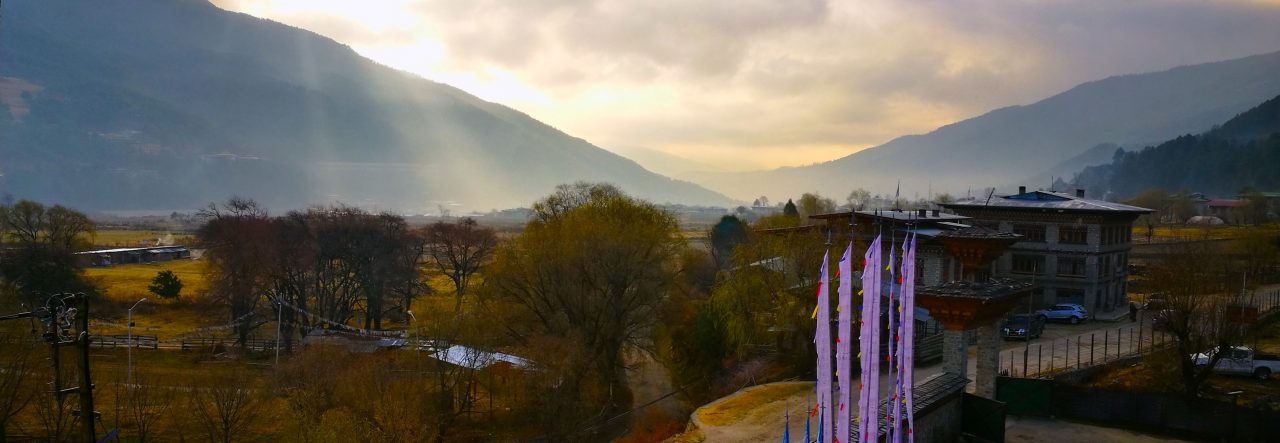
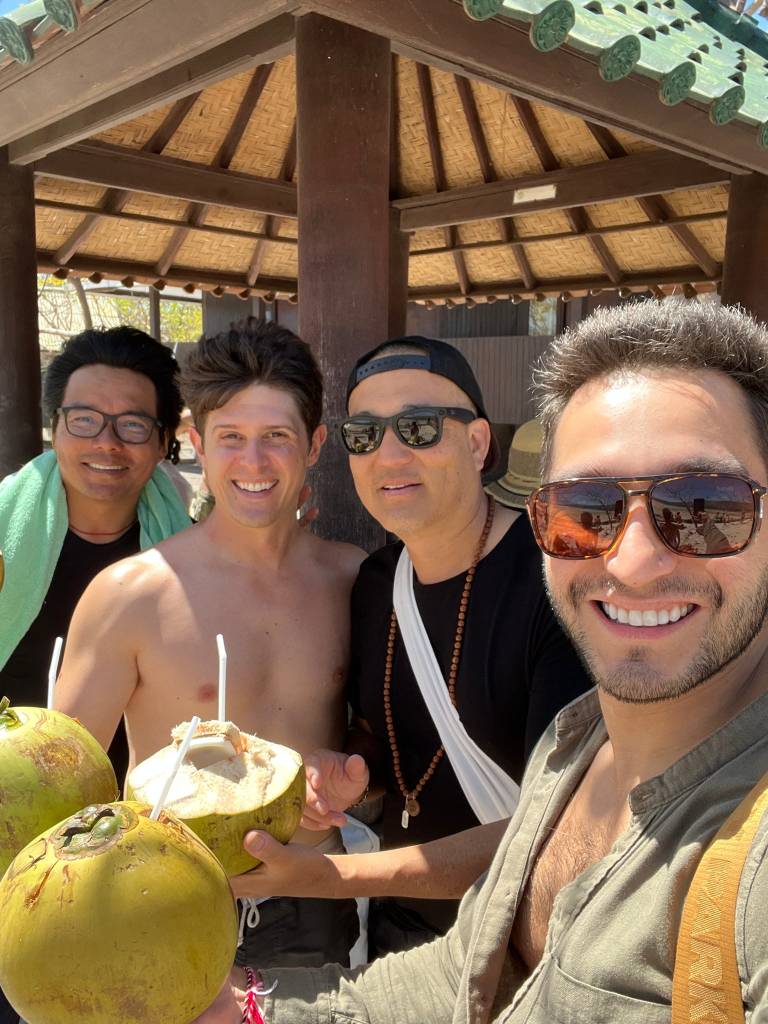
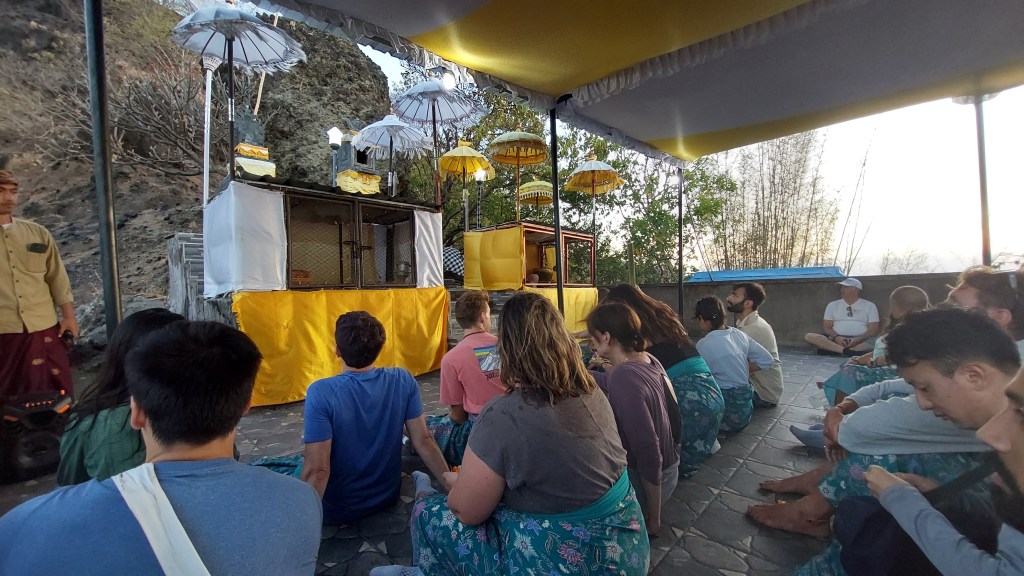
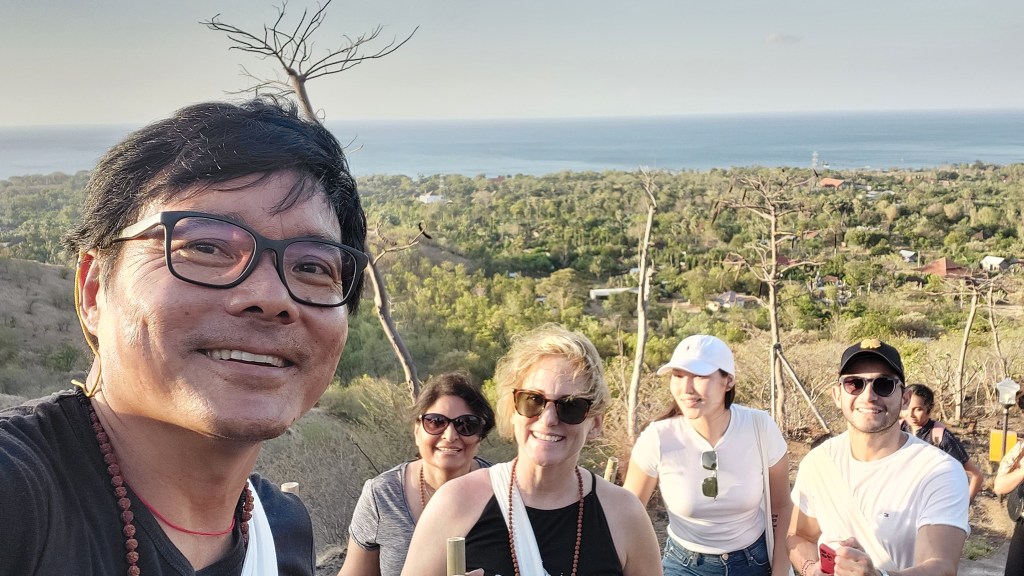
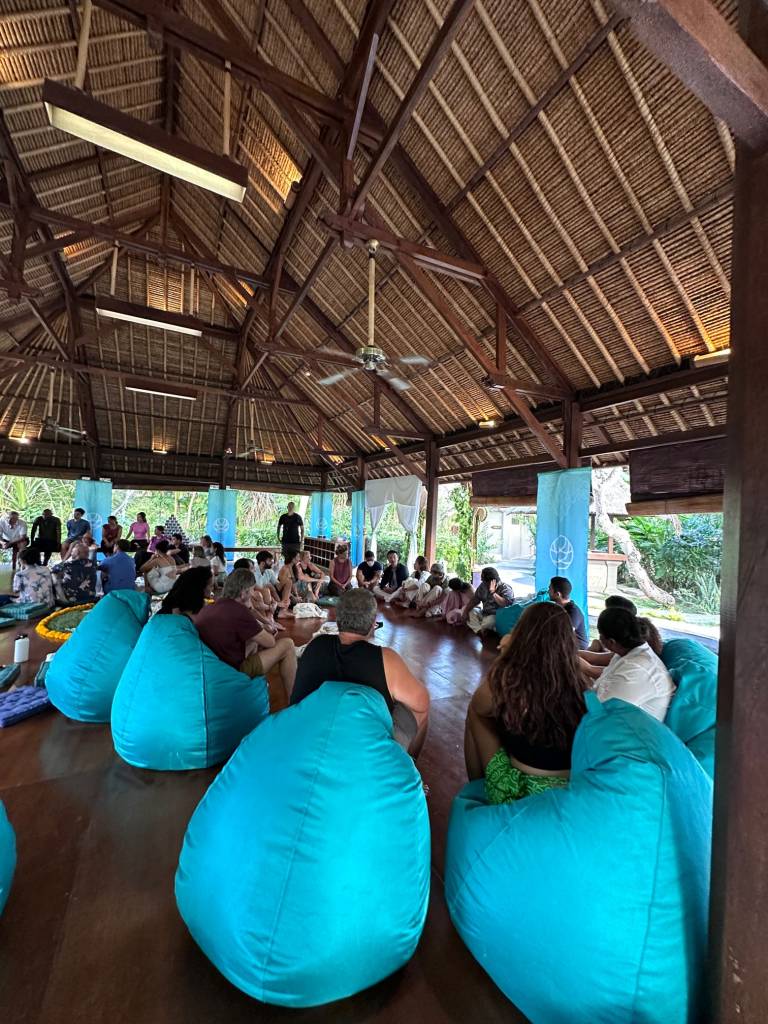
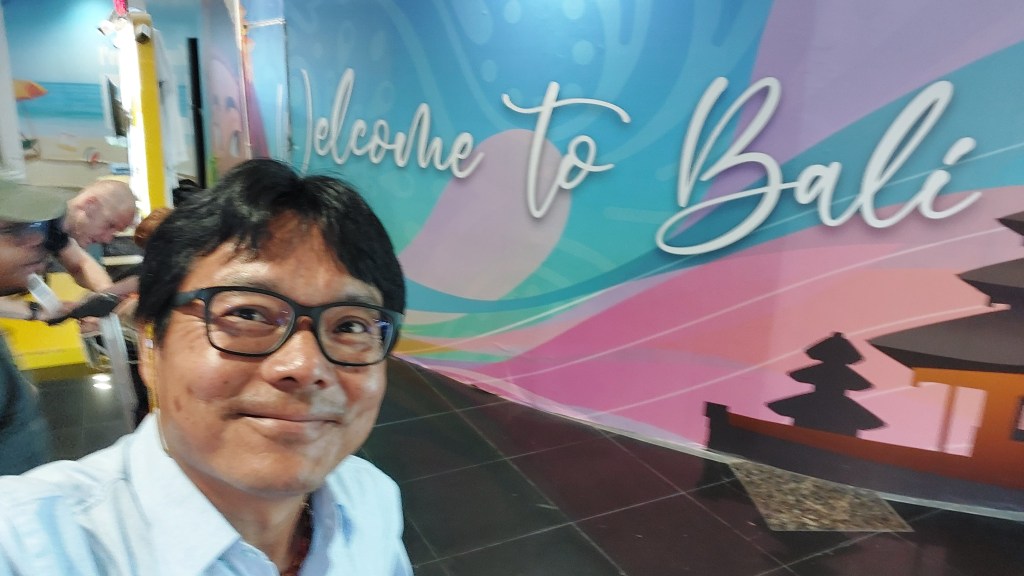
Bali, Indonesia – I am on my fourth day into the wellbeing worldwide retreat in Bali, Indonesia. This retreat comes on the heels of the pilgrimage around the sacred Drakarpo mountain in Paro, and the 10-day Vipassana course in Sikkim. So, it is a good landing because I am physically tired, but in a way still in the retreat mood.
On a serious note, while wellbeing and pursuit of happiness have taken a back seat in national policies and public debates in Bhutan these days, around the world it has gained momentum – especially after covid. For instance, there are over 70 friends and family gathered here from 22 countries seeking wellbeing and genuine happiness.
I often get the question, and I am also asked to give public talks, on the question: What is wellbeing?
The short answer is: it depends – from person to person and from country to country. Nonetheless, let me share what it means to be well in Bhutanese culture in particular, and the world in general – a framework to help you work towards your wellbeing, so to speak.
Wellbeing isn’t just about money. It is not about money, most of the time.
In the simplest of definitions, it means to be, and to feel, well. This is, of course, easier said than done. With this thing called life, with all its trials and tribulations weighing in all the time, everything becomes complicated.
Yet, from some research I conducted, and readings I have done, and trying to live them for the past couple of years, there are four components of life that need to be recognised, appreciated and balanced. And they are: social, emotional, physical, and spiritual wellbeings.
Social wellbeing is about cultivating a productive and meaningful social life and relationships built on gratitude, community and compassion.
Emotional wellbeing is learning the skills to regulate one’s emotions, practice self awareness and build positivity. As I always say, you will never make mistakes in life with what you know or have studied. But you can potentially blow up everything with your emotions.
Physical wellbeing, or wellness, is about learning more about your body – as in what to eat, to do exercise, and to take care of the body, and to listen more to it, so that it is in optimum condition to carry your life and dreams forward.
Spiritual wellbeing seeks to understand your spirit – as in your soul or your consciousness. Spiritualism is not about being religious. Spirituality and religions are two different things. Spirituality is about finding, understanding and enriching your soul. In Buddhism and Hinduism you also call it consciousness (sem and atma respectively).
Emotional intelligence and four-pillar wellbeing.
Of the four aspects of wellbeing, emotional wellbeing is the toughest to practise or acquire. Since I entered the profession of academia, this has been one of my core concerns, way of life and an area of research.
Wellbeing, according to this proposition, can spread across four thematic areas: mindfulness, community, self-curiosity and contentment.
Mindfulness as in self-awareness; community as in selfless service; self-curiosity as in self-care and growth; and contentment as in finding the balance.
Happy to be a part of this amazing family of international researchers and educators bringing the four pillars of wellbeing into classrooms, and into the world.





 Dorji Wangchuk