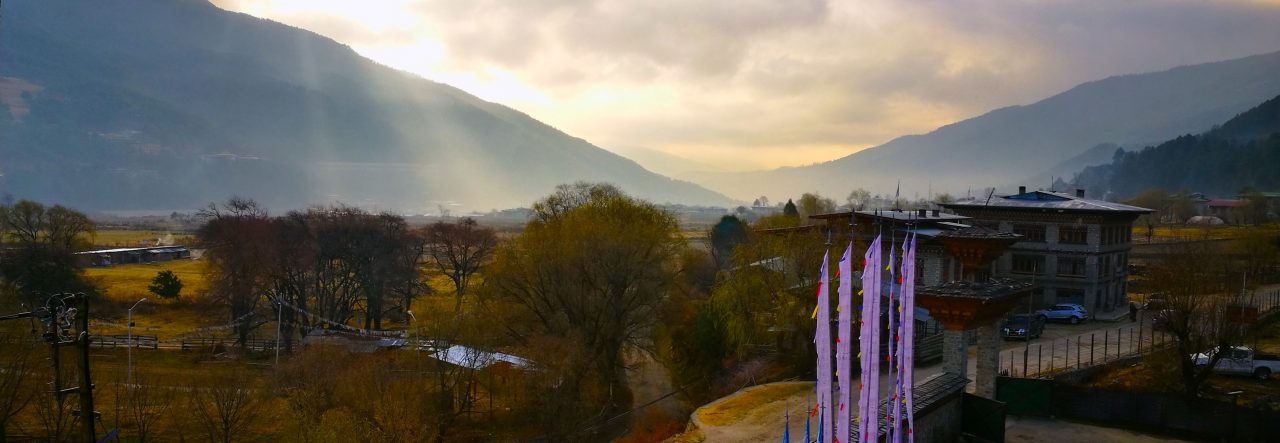
Story #1 – A young boy is in a long coma – somewhere in a hospital in New York. He was born with cerebral palsy. The doctors have given up hope and have asked the family to prepare for the worst – and to sign off to pull the plug. His sister, however, reached out to me through a common friend from the US with a “Heard you say they do miracles there in Bhutan. Can they do something for my brother?”.
My friend and I were trekking up to the Dodeydra Monastery in Bhutan, which was good timing – a good tendrel (auspicious coincidence), as we believe. When we get to the monastery the abbot compassionately listens to our request. He told me to instruct the family in America to gather around the boy at noon the next day, and face towards the east and pray, while he, the abbot, would launch blessings and prayers from Bhutan.
The next day, 15 minutes after the rituals were over, my friend’s phone rang again. There was screaming and sobbing on the other side. My friend thought the boy was gone. Nope. The boy woke up, and the family was crying out of joy. The doctor rushed in saw what was happening, and left the room in tears. “I have been doing this for 35 years. I don’t what you are doing but keep going,” he was quoted saying.
Story #2 – Recently, this same friend from the US told me that another friend of ours in LA was feeling low. His brother (a practising Zen Buddhist) has been diagnosed with stage 4 lung cancer and has been getting treated. He was going for the last radiation, followed by his review two weeks later. The doctors cautioned any optimism.
I invoked the blessings and conducted prayers for him in several places. My lama, Dorje Phagmo Rimpoche, after blessing him in absentia assured me that he would be alright.
Two weeks later I got a long text from my friend in LA. His brother’s lungs were clear and the doctors couldn’t believe their eyes when the CT scans came back.
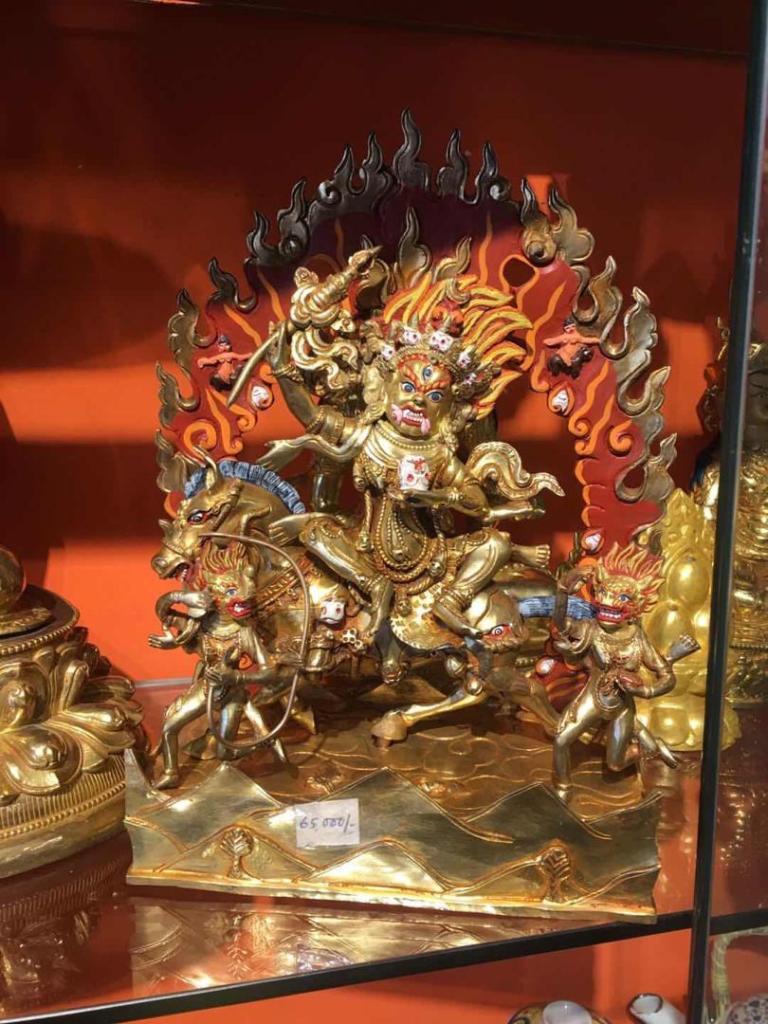
I have more such stories from recent years. A newborn, who was breathing but not moving in a hospital in the US, and who moved her tiny finger after I invoked deity Palden Lhamo. Someone I know, again in the US, who felt fine receiving chemo after we commissioned the monks of Dodedra to chant Sangye Menlha (Medicine Buddha) mantra. He eventually recovered too.
Do these make sense?
I was born in a traditional Bhutanese family – of Buddhist dharma, rituals, prayers, and ceremonies. As a child, I used to accompany my grandfather, who was a lay lama, to conduct rituals for ordinary people in their homes in upper Tashigang in east Bhutan. For me these “things” are normal.
I was sent to a Catholic boarding school and later was sent off to Italy to major in microelectronics and engineering at the University of Bologna. Meaning, science and technology have been my better half, with spirituality and mysticism being the other side. Besides, I was exposed to other spiritual traditions – in that I lived among them.
In my third career in academia I have looked at the relationship between society and spirituality, and the role it plays in individuals. I still a have long way to go, but to answer the question, of whether rituals work, my reply is, it looks like it does. Of late, I have attended to around nine requests for spiritual help from outside the country. Only one did not make it through but the rest are doing fine.
To put it more aptly – medical science can take you very far these days, but it ends somewhere. There is a wall, and that’s where spirituality seems to take over. To put it simply, miracles appear where medicines end.
Of course, the two need not be linear. As my good friend, Nadya, says, the two can go alongside. Meaning while you get medical attention, you can also resort to religious ceremonies and shamanic rituals. After all, science has been with us for not more than 300 hundred years but the magic and miracles have been around for 5,000 – if not more.
As someone who has seen the power of the supernatural in many religious traditions, again, I am not advocating or promoting only the Buddhist rituals. Both Hinduism and Christianity have stories of miraculous power and recoveries. I myself recovered from a bad case of malaria when I was a child – after a mysterious Hindu priest appeared in front of our house in south Bhutan and tied a string around my arm. I started recovering moments later.
The point is science and technology have made us lose our innate power of healing, to start with, and have also made us skeptical of anything other than modern hospitals to attend to our health. The choice I believe is not to go simply for one or the other – but for both.
Science has made us lose our instincts, our sixth sense, and the power to feel the place and people – and by extension to absorb the energy of any kind, other than energy bars and synthetic painkillers. In short, we have become numb.
Of course rituals cannot cure all the cases but at least, the road of hope is longer than just relying on modern medicines.
And in that last stretch of hope one may find eventually the cure.
And not to forget
The traditional medicines (sowa rigpa) that is mainly based on medicinal herbs are, at times, a better choice than western allopathic medicines. Bhutan was known as Menjong (Land of Medicines) in ancient times – largely exporting rice and medicines to Tibet in exchange for salt, tea, and turquoise.
From my own experience, traditional medicines work better and have no side effects, for chronic ailments like gastritis, elevated bilirubin, bad cholesterol, and hypertension. Whenever I run some blood tests and these things show up, I drop by the Traditional Medicines Hospital in Thimphu to request some pills.



 Dorji Wangchuk