Korphu takes its name from a two-feet flat and oval boulder under which the great treasure revealer (terton in Dzongkha), Pema Lingpa (1450–1521) is believed to have taken shelter – after turning himself into a bee. “Gor means “stone” and phug means “cave”, and it became a cave for the Terton”, says former gup (headman) Zeko – an elderly gentleman whom I randomly met in Gelephu a month back and invited me to his village.
I had visited Nabji-Korphu before – in 2004, as a part of a UN team to open an eco-trail that the community had built with UN-GEF funding. It was a week-long trek from Langthil to Nimshong through some of the most dramatic trails – especially crossing the famed and scary Ugyen Drak. Needless to say, my team and I thoroughly enjoyed that trip and had only fond memories of me going broke midway into the trip – and scamming a colleague to be the chief guest and tip the villagers.
And now here I am back. It is 2024. How time flies!
“You can drive your car all the way to our doorstep, la” Zeko assured me when I met him in Gelephu. In fact that’s what we did.
The Lhundup Chodarling Temple:
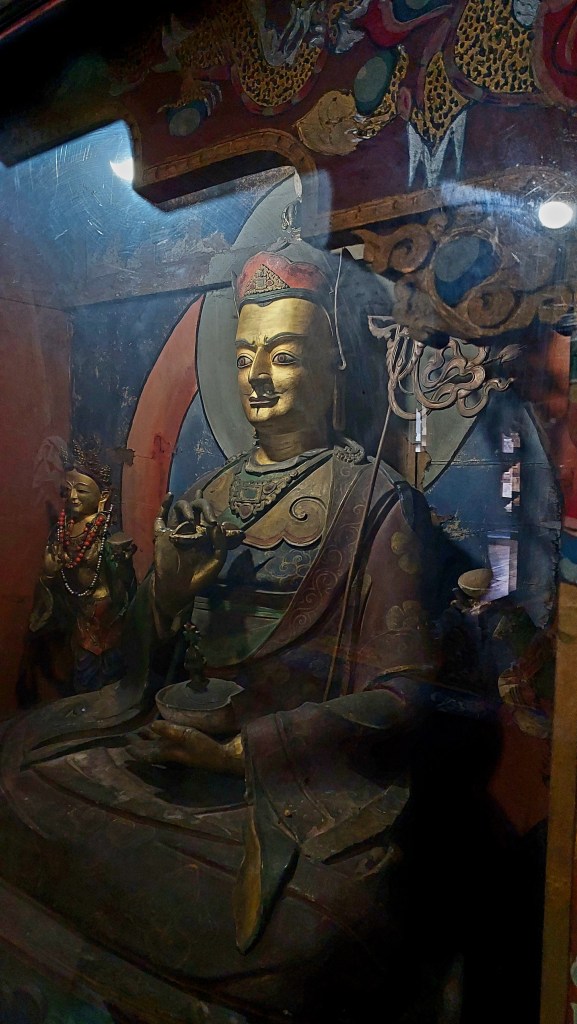
The village of Korphu revolves around this temple – the history of which starts with the arrival of lama Chogden Gonpo (1497–1543) in Nabji. He was considered as the reincarnation of the treasure discoverer Dorji Lingpa (1346–1405), and was also a disciple of Pema Lingpa (1450–1521). He came there to disseminate the teachings of Dorling Tradition and offered statues of Guru Rinpoche and Dorji Lingpa – both of which can be seen there even today.
Few years after his arrival, an epidemic of smallpox spread in the valley and took many lives. Chogden Gonpo requested his guru, Pema Lingpa to come to Nabji to help cure the disease. Pema Lingpa obliged and came and conducted several rituals and prayers and cured the valley of the disease.
Pema Lingpa then built a two-storied retreat center following which many disciples joined him and build small huts and houses around his centre. Korphu, therefore, is one of the few cluster villages in Bhutan with houses attached to one another unlike the typical farmhouses in Bhutan that are independent and spread.
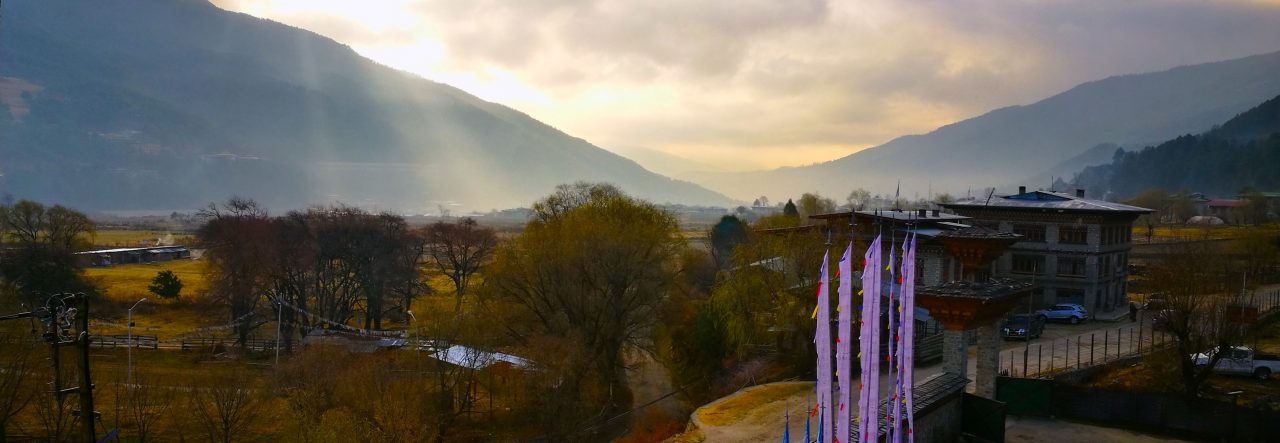
Korphu is on the hill overlooking the beautiful paddy fields and the village of Nabji. In fact, many people in other parts of Bhutan refer to this twin village as Nabji Korphu. From Nabji if you walk it is a two-hour uphill climb.
The origin of Gorphu:
When Pema Lingpa was looking for a place to establish his retreat centre, he wanted a good source of water. After befriending a local hunter called Pema Dorji, he was shown a water spring at a place known as a Umchu Gang.
One day Pema Lingpa found animal traps around Umchu Gang and he immediately removed them so that no animal was hurt. When Pema Dorji found out, he charged Pema Lingpa for doing that. Finding him really furious and relentless in his attacks, Pema Lingpa magically brought down wind and hailstorm over the place, while he himself turned into a bee and took shelter under a flat boulder.
Pema Dorji saw that he was dealing with no ordinary man, and apologised. He also gave up his hunting business and became a gomchen – lay monk under Pema Lingpa. He named the place after the boulder – as Gor-phug, and over time it was mispronounced as was popularised as Korphu.
The relics of the temple:
While Nabji is associated with Guru Padmasambhava, Korphu is a seat of Pema Lingpa. The outer structure of the temple has been renovated but the inside still is old and feels very sacred. There are the statues of Guru Padmasambhava and Avaklokiteshvara that are believed to be the handworks of Chogden Gonpo. Both the statues have the powers to grant any wish one makes, the caretaker told me.
The inner relics (nangten) are: a volume of Transcendental Wisdom in 8,000 stanzas which are referred to as Gyatongpa, which is believed to have been written in golden ink by Pema Lingpa; the ceremonial hat of Ani Choeten Zangmo, the grand-daughter of Pema Lingpa, and who is widely known for establishing a Peling seat in Dremetse in Mongar; the dress worn by Pema Lingpa, which he wore when he dove into Mebar Tsho in Bumthang; and two bells crafted by Pema Lingpa.
The sacred chamber of the Guardian Deity (Goenkang) is dedicated to Gonpo Maning Nagpo – flanked by the two local mountain deities Ap Jowo Durshing and Ap Muktsen.
Visiting Korphu:
Visiting Korphu brought me immense joy and smiles from funny memories from the earlier trip. The people of Korphu are some of the nicest folks I came across and every guest is treated like a VIP. They take pleasure in serenading you and singing you off as as you leave their magical village.
Truly it is a place I recommend before modernity or some other things erase this genuine Bhutanese hospitality. This time I also got to get blessings from each and every nangten they hold in the sacred village temple. As a descendent of Peling lineage, it was an emotional experience to see so many personal effect of this greatest of masters.
And this time, as Ap Zeko promised, it was a cool drive from Wangdigang in Zhemgang for an hour along the narrow black-topped road till the doorsteps of both Nabji and Korphu temples.
It is a place I will return again to listen to more stories, songs and soak in their warm hospitality.




 Dorji Wangchuk