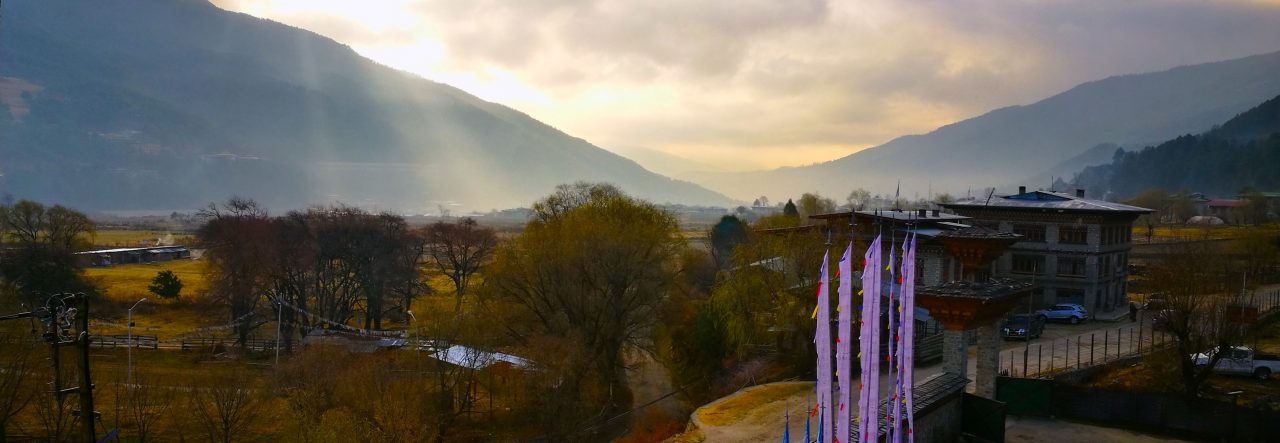
Zurphel is probably a mispronunciation of Zur-Bae from the word, Baeyul, which means a hidden paradise in Buddhist mythology. Story has it that a cow herder entered a hut here to find a large ceremony going. He spent a week, after which he missed his home, and instantly he found himself at the doorstep of the hut, and which suddenly had turned to a rock face. When he reached his home he discovered that his wife had passed away a long time before and his children had grown as old as him.
The cow herder probably entered the baeyul, a mythical land where it is believed that one year there equals to 1000 years in the human world.
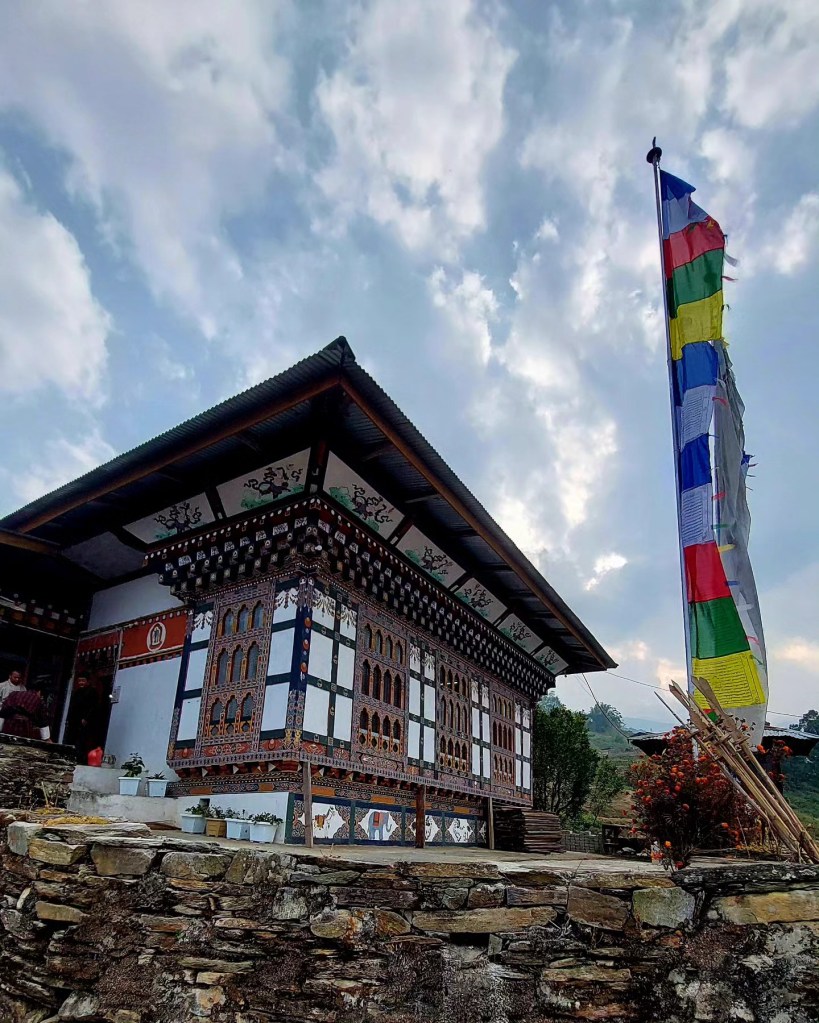
Zurphel Lhakhang was built in the same area by Chorten Gonpo, who was the heart-son (thuksey in Bhutanese) of the great treasure revealer, Terton Dorji Lingpa (1346-1405). It is believed that Chorten Gonpo built 108 temples of which Zurphel temple is one of them. Zurphel Lhakhang is believed to be built over a small lake.
According to Gangtey Trulku Rimpoche, this temple is one of the most sacred places in Khengrig Namsum (the Bhutanese name for Zhemgang region).
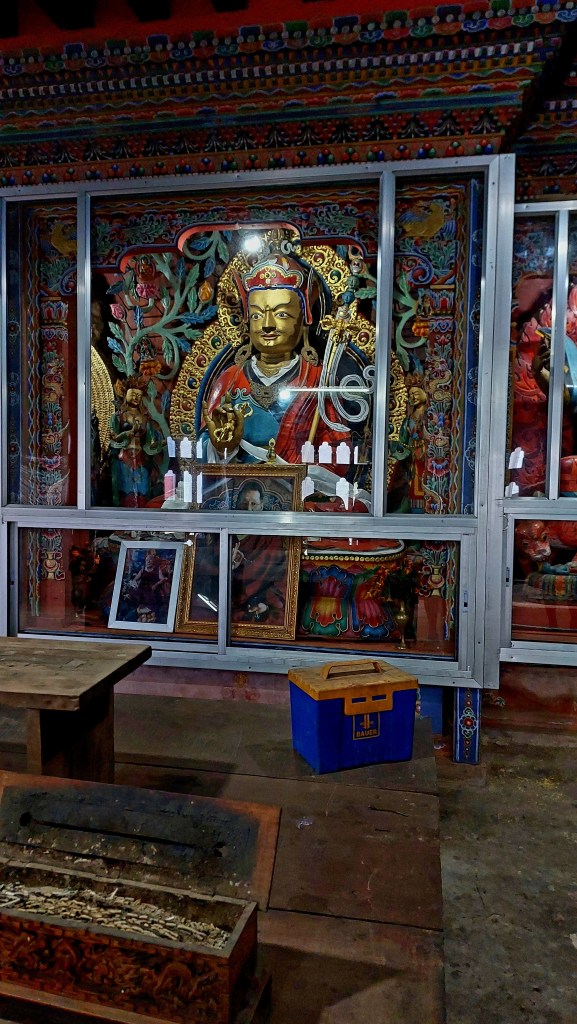
There are two important relics of Zurphel Temple. One is the statue of Guru Padmasambhava, which is believed to have been built by Chorten Gonpo himself. This is the most sacred piece, which is believed to speak some day in the future. It is a beautiful statue, where Guru looks like a young lad. It emits a powerful aura.
This statue of Guru is curiously wearing the robe from left to right, which is the opposite from the usual right to left. No one could explain to me why and how this happened. Nonetheless, the statue is supposed to be very sacred because of this.
There is also a smaller statue of Guru, which is believed to have been presented by the lords of Samkhara Drung, a place towards Gelephu. This statue is believed to have taken unto itself the smallpox epidemic in the 1930s. While the whole of Samkhara village was wiped out by the epidemic, only the family of Samkhara Drung survived and they moved to present-day Zurphel. And for allowing them to settle in Zurphel this statue was gifted to the village.





 Dorji Wangchuk