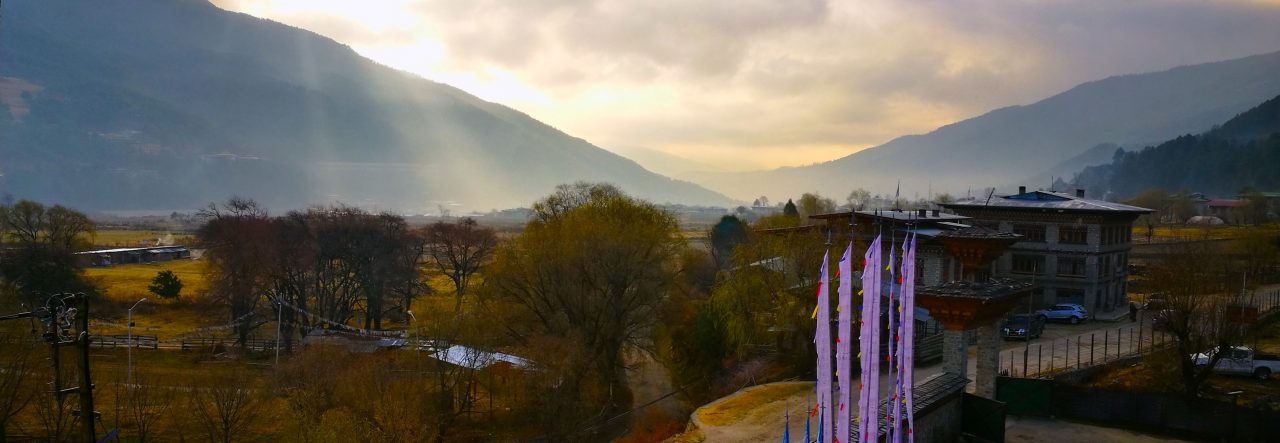
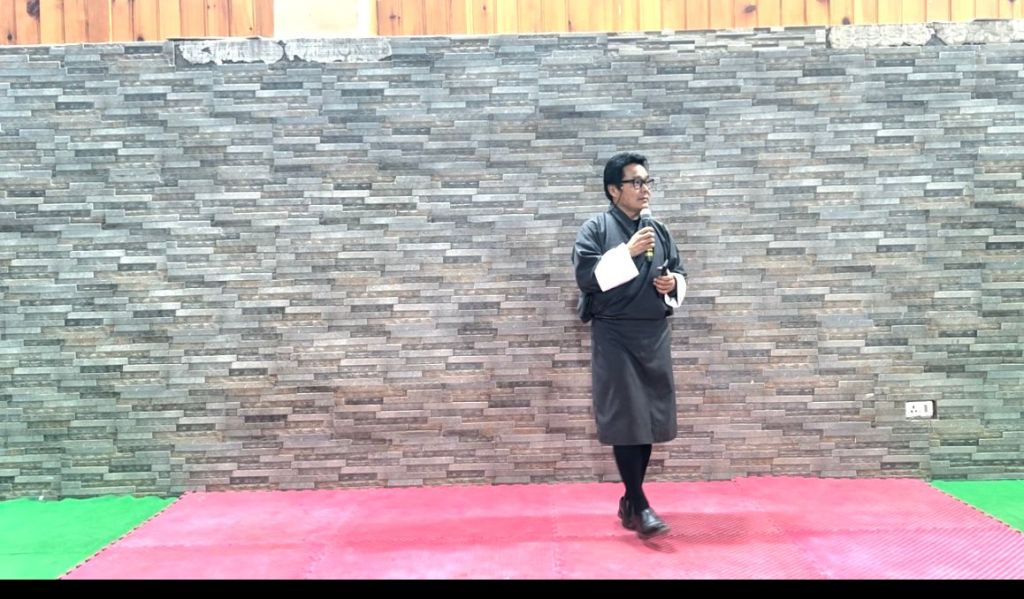
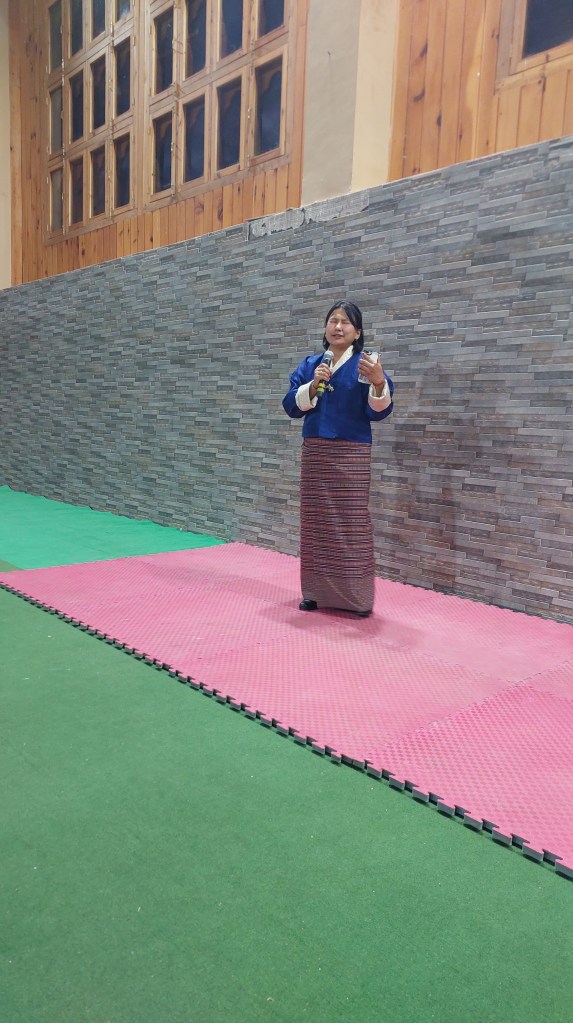
(Sharing my prepared speech at the Teachers Appreciation Dinner at Paro for teachers of the well-being club. 26 October 2024.)
This year marks the 11th Year of my teaching and academic life, and let me tell you that I have never been happier. It has been a fulfilling third career. Not a day goes by that I don’t get a message from one of my former students—both Bhutanese and foreigners—who share how much impact I have had on them or how they were inspired to think beyond and better for themselves. These are the kinds of messages that you want to grow old with.
Mind you, in my career in the government, I have directed several million-dollar projects, and people have built their lives, families, and buildings after working for me. But I have yet to receive a “thank you note” from anybody about that.
(What is the wellbeing curriculum? How does that help you become Bhutanese?)
The organisers have asked me to address two questions: What is the wellbeing curriculum? And then contextualise it to what it means to be Bhutanese – a topic of discussion that I have initiated in the public domain.
Exactly 10 years ago, when I was teaching in Sherubtse, I asked a simple question: What makes a great teacher?
One conclusion that I came to was that a teacher must be well – mentally and physically, to start with. There can be no quality education – or whatsoever, if teachers are stressed, demotivated and unwell. This gave birth to the Four Pillars of Wellbeing and the Contentment Foundation through research we initiated with academics from UC Berkeley and Yale. This program now serves thousands of teachers around the globe – touching thousands of lives. The Four Pillars of Wellbeing (community, mindfulness, self-curiosity and contentment) are aimed at the wellbeing of the teachers for this reason, I have stated.
Let me contextualise them within our societal needs and trends around us. As usual, I will use stories to drive the points.
(Mindfulness and contentment)
I was 8 when my parents sent me to a boarding school – a Catholic institution run by the Don Bosco fathers and brothers near Phuntsholing. As I entered my teens, I became a movie addict – a fan of Dharmendra and Amitabh Bachchan – and so I was always slipping out of the dorm. When the school counsellor was too upset and helpless, he would call my parents to talk to me.
My parents would come but would never tell me not to do this or do that. We, Bhutanese, you know, will do exactly the opposite of what you ask – especially boys (girls are better). Instead, my parents would tell me, “Whatever you do, do with Tsham Tshey”.
Tsham Tshey means limit. It is about setting a limit to what we do – whatever we do, both good and bad. It is finding the balance in life. It stems from Buddha’s first realisation – the need to follow the middle path without veering into the extremes of self-mortification and hedonism. It ultimately aims to attain contentment and equanimity.
Every year, as I left for my boarding school, my mother used to give me another simple piece of advice: Take care of your mind, and be mindful in whatever you do, everything will fall in place if you take care of your mind.
My mother never told me anything specific to be done or to avoid at school or in my life. She knew that if I took care of my mind, I would be alright. Decades later, I am still following her advice of mindfulness.
The second story is about community building and selfless service.
Starting in 2007, I volunteered for Tarayana for two years to work in the remote community of Athang Rukha. After the project was over, I stayed on to help the community build a temple. Back then, my only motive behind the community temple was that the place would eventually bring people together. It is a social place. It is where people share their lives and help build community vitality and resilience. This aspect is important for Bhutan as it navigates between tradition and technology and between science and spiritualism.
As a teacher, I also encourage building communities among my students and mentees through moelam and memories.
The third story is about compassion and kindness.
I once took a leave for a week from my class. A teacher substitute was identified, and we went through the things this teacher would cover while I was away. We went into every detail. When I came back from my leave, I was shocked to learn that no teaching was done while I was away. When I asked, I was told by the teacher that my students didn’t know anything, and this person didn’t feel like teaching them. I was completely lost for words. This teacher, I concluded, had no compassion whatsoever.
At the most basic level, to be a teacher, you have to have empathy and compassion. Unless you have that, the young learners will not connect to you. And, like it or not, these days, no learning takes place in an atmosphere of disconnection and disregard. The students will just shut you out. It is different during our time. We even endured corporal punishment to learn from our teachers.
Whenever I meet teachers in rural areas, I am always awed – not by their knowledge but by the compassion and empathy that our teachers practise – which go unnoticed. I once came across one whose small quarter was a dorm for 15 students.
(Role of teachers in the new era)
So, to rotate back to the question: What is the role of the four pillars of well-being in education, and how do we reinforce the art of being Bhutanese?
Of late, I have been sharing one of the findings from my PhD research – what does it mean to be Bhutanese? I have been saying that to be Bhutanese is to be compassionate, altruistic and spiritual. Spiritual, not only in the sense of being religious but also having an intimate connection to the nature, people and all sentient beings of the six cosmic realms. And altruistic as being in the selfless service of them.
I believe the role of the teacher and the education system in the 21st century is not to launch ourselves into some futuristic imagination and fantasies but to help consolidate who we are as Bhutanese – through timeless values, traditions and wisdom.
I say this with conviction because the entire library that humanity has produced is on your palm now. I believe the days of teachers as the sole repository of knowledge are gone. Skills can be learnt through watching YouTube. It is free. However, contentment, compassion and community need to come from someone closer.
I believe one of the challenges we are facing as individuals and as a nation is that we have strayed away from what it means to be truly Bhutanese or simply to be human.
There is so much talk about technology, such as AI replacing some 300 jobs, including teaching, according to some experts. However, I feel no machine can teach empathy, kindness, and mindfulness. No AI tool will look at you like my mother and tell you, “Whatever you do, take care of your sem (mind)”.
While the teaching profession is safe from AI, our role as teachers is beyond delivering curriculum or the bulky syllabus. It is more about inspiring people to learn, motivating them that education is still important, and bringing humanity back to the centre stage of our lives. It is about teaching children to be compassionate and caring and practise loving-kindness.
Above all, it is about building communities, collaborations and country.
Thank you all for being a wonderful audience.
🙏🙏🙏



 Dorji Wangchuk