Ever wondered what is behind the closed doors of the sacred Goenkang (chamber of the tutelary deities). Well, there are many religious objects, and the most important ones are the tormas that represent the particular protector deity.
Torma (གཏོར་མ་) generally refers to the dough and butter sculptures, which are made during and for religious sermons in Buddhism. The word, torma, comes from two words tor (གཏོར་) which means ‘casting away” of impurities, defilements and negativities or giving away selflessly to all sentient beings with the kind of motherly love, and hence the second word, ma (མ་), which means ‘mother’.
A legend goes that the Torma tradition was started by Ananda – Gautama Buddha’s cousin and attendant. Story goes that he was once meditating in the forest when a ferocious hungry ghost appeared to him and wanted to eat him. Ananda ran to the Buddha and told him what happened. The Buddha advised Ananda to make an effigy of himself and offer it to the hungry ghost with prayers and compassion. Ananda did that and the hungry ghost was appeased. The tradition of Torma was then established.
As Buddhism flourished and took different forms and sects, so did the shape and scope of torma evolve to embrace the local traditions, cultures and beliefs. Today in Vajrayana Buddhism world, there are many types of torma such as lütor (གླུད་གཏོར་) or the torma with effigy, chutor (ཆུ་གཏོར་) or torma with water, lenchag torma (ལན་ཆགས་གཏོར་མ་) or torma for karmic debtors, lutor (ཀླུ་གཏོར་) or torma for nāga serpent spirits, or gektor (གེགས་གཏོར་) or torma for the obstructing evil forces.
A type of tormas is the representations of the devas and the deities. The shape of these tormas vary from one to the other depending on the deity the torma represents. These types of torma includes the yidam torma (ཡི་དམ་གཏོར་མ་) representing enlightened deities, chökyong torma (ཆོས་སྐྱོང་གཏོར་མ་) representing protector deities, and zhidak torma (གཞི་བདག་གཏོར་མ་) representing local territorial deities. Some of these torma, especially when they represent the tutelary protector deities, are kept hidden in the shrine.
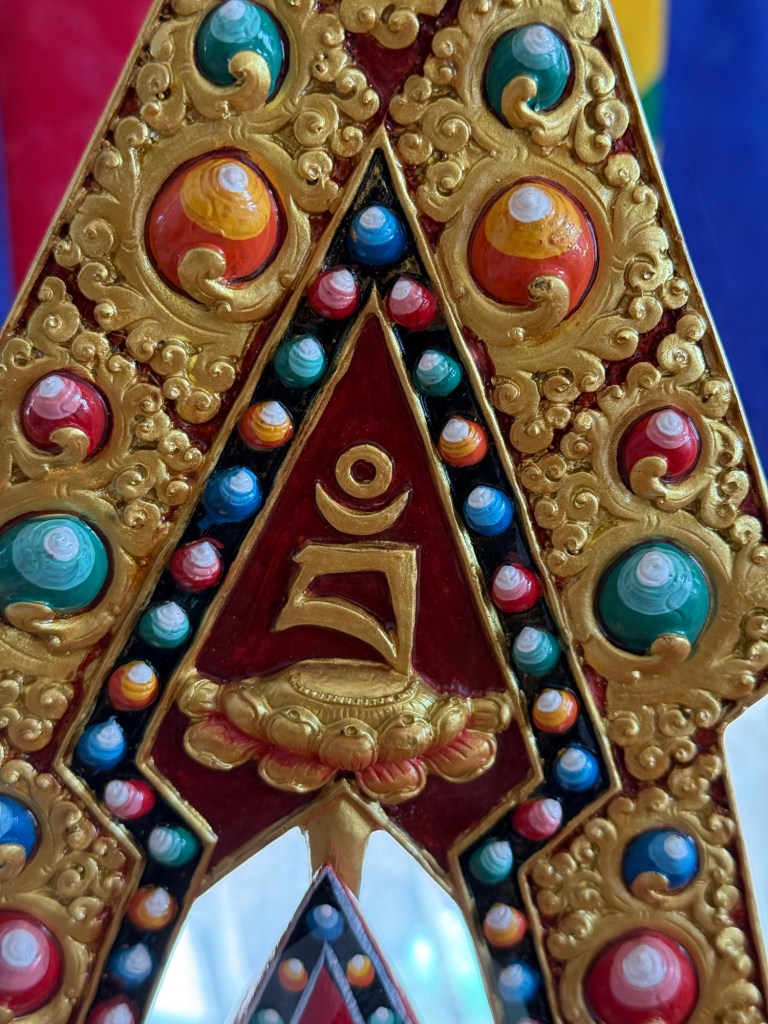
The one in the picture is of Aum Palden Lhamo (Sri Devi) – one of the Eight Great Dharmapalas in Tibetan Buddhism and her retinue, and which I commissioned for Athang Rukha (abode of Palden Lhamo).
These tormas are made from incense powder and water collected from holy places around the Himalayas. Today on the post-ngenpa guzom day, coinciding with Tara Day, I offered it to the temple there. May our supreme protector deity guard us, as we embark on an ambitious venture as a nation.
JO RAMO JO, RAMO JO JO, RAMO TUNJO, KALA RACHENMO, RAMO AJA DAJA, TUNJO, RULU RULU, HUNG JO HUNG

 Dorji Wangchuk