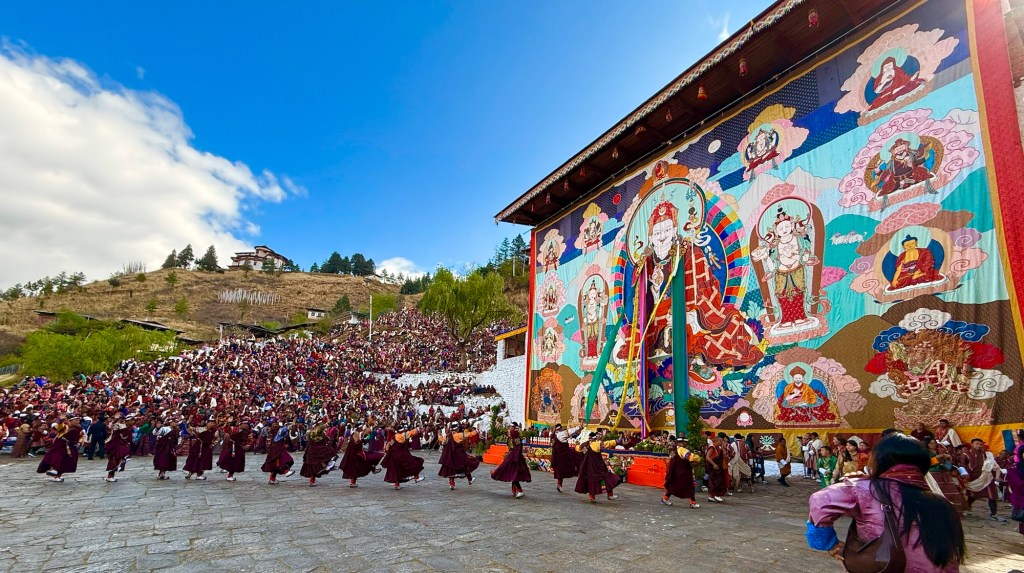
Paro Tshechu is a 7-day event. It was originally organised in Dzongdrakha. The first and last day are still conducted there, while the five-day event is what is now known as Paro Tshechu. Furthermore, one of the masks in Raksha Langu Dance is used/borrowed from Dzongdrakha for Paro Tshechu, and a whole ceremony has to be conducted for receiving and returning this mask. The mask can be seen in Tsheringma temple in Dzongdrakha.
Likewise there are lots of other rich stories of which house in Paro sends this or that performer for which dance. For instance, all the dancers in the picture have to be from Lungyi Gewog, where Dzongdrakha is located. They only get this honour to offer the Zhey (devotional praise).
And in the Shawa-Shachi (The Dance-Drama of the Stag and Hounds) the guy who plays Sharop Gyem Dorji has to spend the night before the dance in the house of Hungrel Drung Drung (14the century lana) that is located above the venue. (The land on which Paro Dzong stands was offered by this family).
If you attend Paro Tshechu again, try getting the blessing from the cymbal that is used during the Black Hat dance. It is the one that is believed to have been retrieved from Nub Tshona Patra lake by Terton Sherub Mebar (1267-1326).
The mask of the head jester (Atsara Gom) belongs to Hungrel Dra temple and special permission ritual has to be conducted there before taking, and a gift has to be offered when returning the mask.
These stories and triviality are all dying as our focus on culture is completely on things like “not allowed to take pictures in temples” or “you can’t wear half kira” and so on.
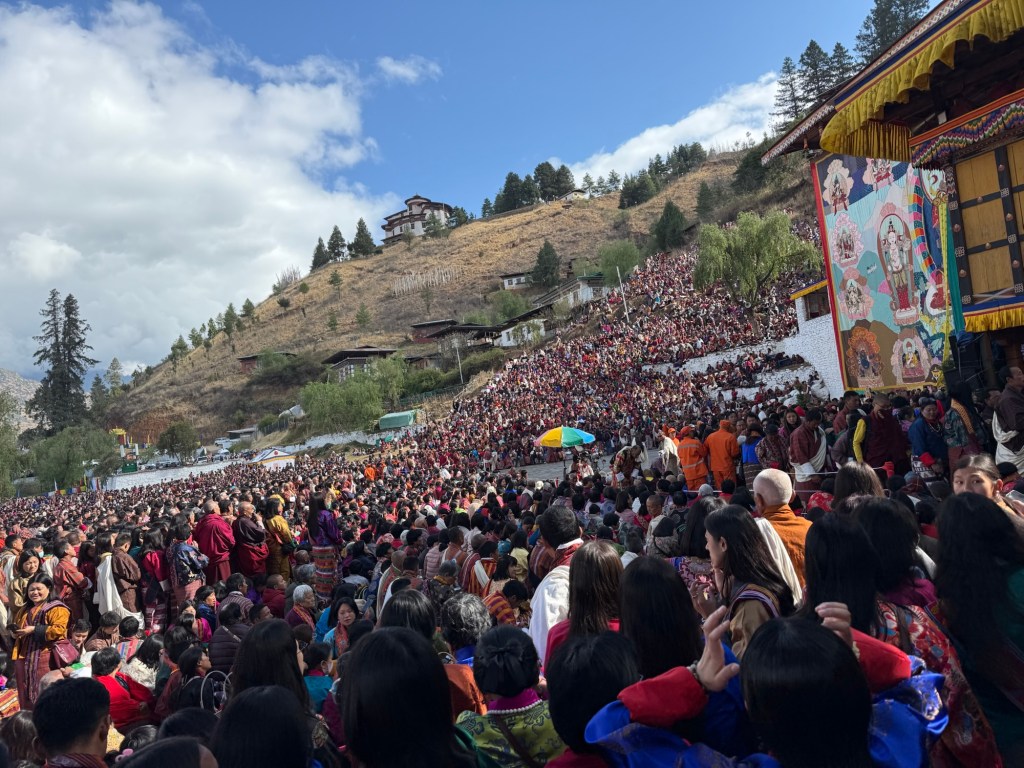
Meanwhile, Paro Tshechu itself is promoted only by the tourism companies (I get the dates from tourism websites). Instead it is a big community kurim (obstacles-clearing rituals) and people’s festival. I hope someday it becomes a national festival.
Until then, keep going, Paro!
😍😍😍


 Dorji Wangchuk