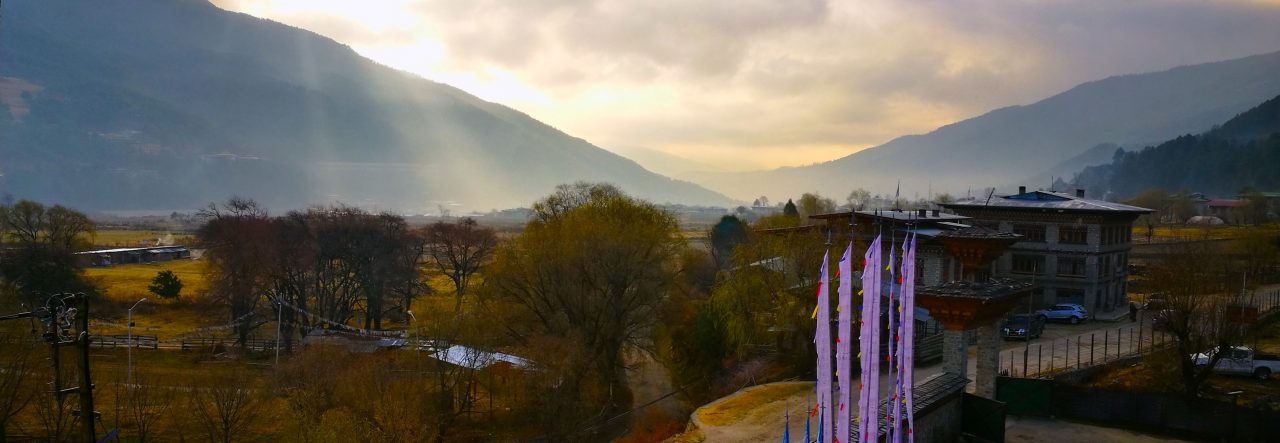
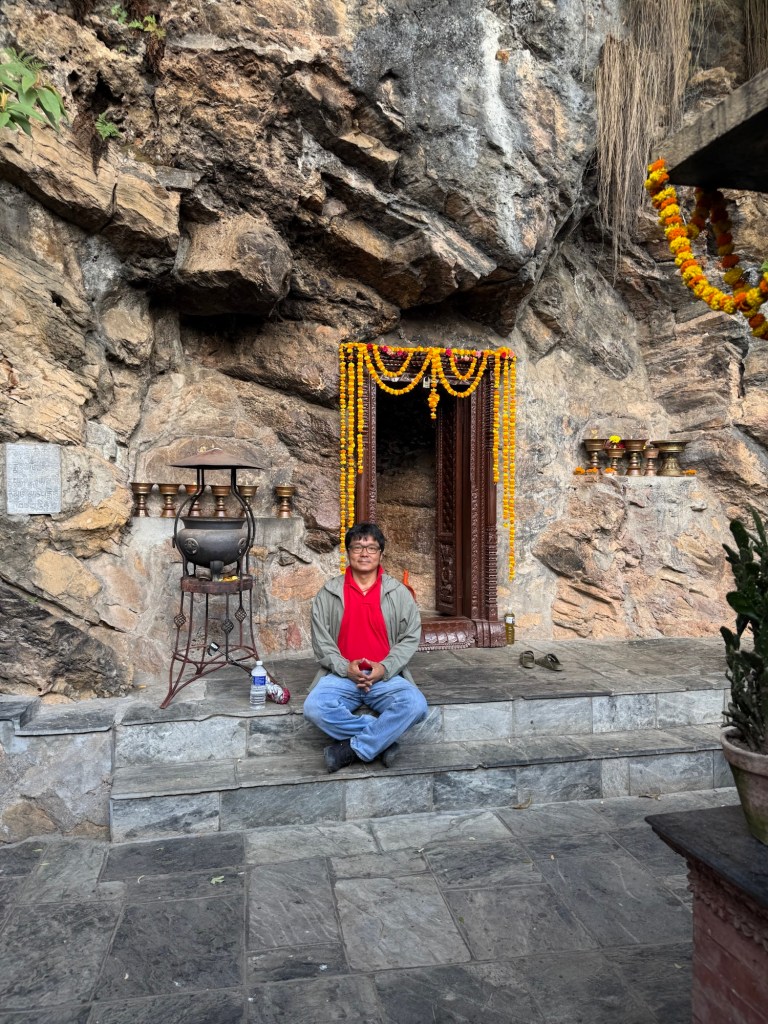
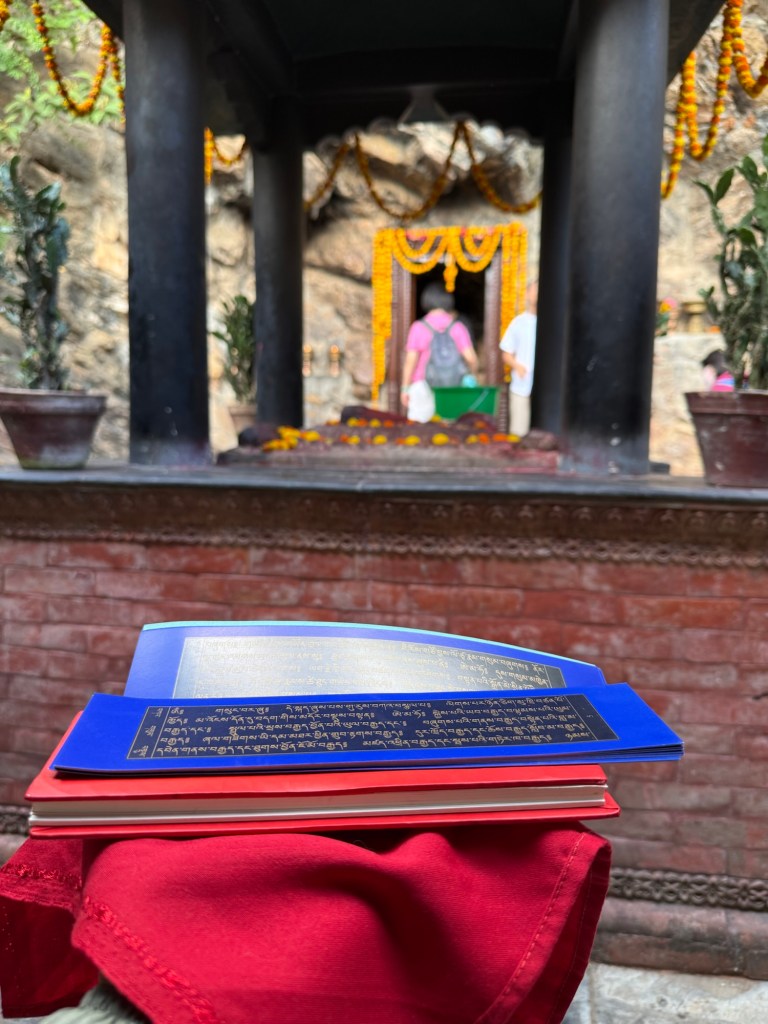
I made my second visit to Yanglesho in Nepal and paid my respect to Guru Padmasambhava by reading the sacred Pema Kathang (or an attempt to be honest, but the intent was pure).
While Bodhgaya is a must for all Buddhists, for Vajrayana practitioners Yanglesho is mandatory, because it is the place of Guru Rimpoche’s attainment. To be more precise, it was here that he achieved Yangdak (ཡང་དག་) corresponding to the Enlightened Mind, after practicing the Yangdak Heruka (ཡང་དག་ཧེ་རུ་ཀ་) and Vajrakilaya.
Yanglesho also appears in the history of Bhutan as the place where the envoys of King Sindhu Raja of Bumthang found him when they came looking for him.
For centuries, devotees from Tibet, Bhutan and other Himalayan communities have traveled here to offer homage at the place where Guru Rinpoche gained the siddhi of Mahamudra. Of these four knowledge-holder attainments, the Knowledge-Holder of Mahamudra is supreme.
THE BACKGROUND.
According to ‘The Great Treasure of Blessing’ Guru Padasambhava was practicing the Sadhana of Yangdak Heruka when powerful local spirits caused a three-year drought and also threw in famine and diseases. Padmasambhava asked his teachers in India for a scripture to counter these attacks. The teachers sent him the tantra scripture of Dorje Phurba (Vajrakilaya) and the obstacles were thereafter pacified. Both Guru Rinpoche and his Nepalese consort Shakyadevi attained the third vidyadhara level. He was then referred to as Yanglesho Pandita by the locals.
In Soeldhep Lueduenma – a terma teaching conferred to Nanam Dorje Dudjom, a line appears:
“In the rock cave of Yangleshö in Nepal,
You accomplished the practice of Yangdak, Essence of Great Bliss,
Liberating all obstacles and obstructors through Vajrakilaya:
And, in this sacred place, you attained the siddhi of mahamudra:
To Dorje Tötreng Tsal, we pray!
To the Lotus-born guru of Orgyen, we pray!”
VISITING THERE
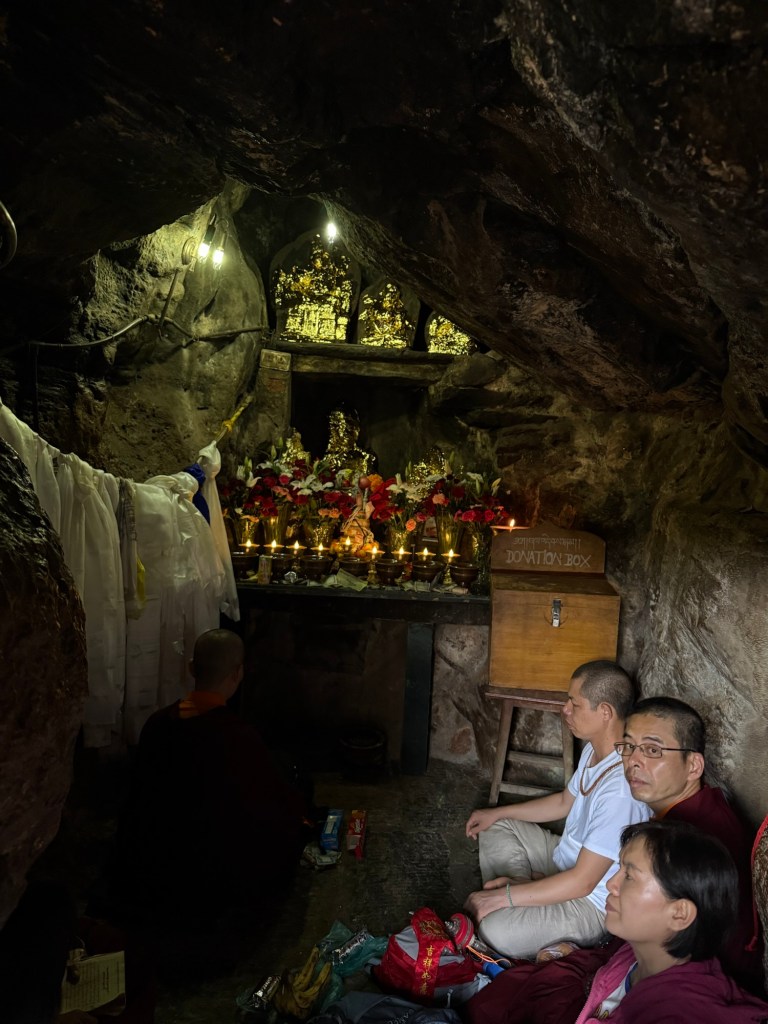
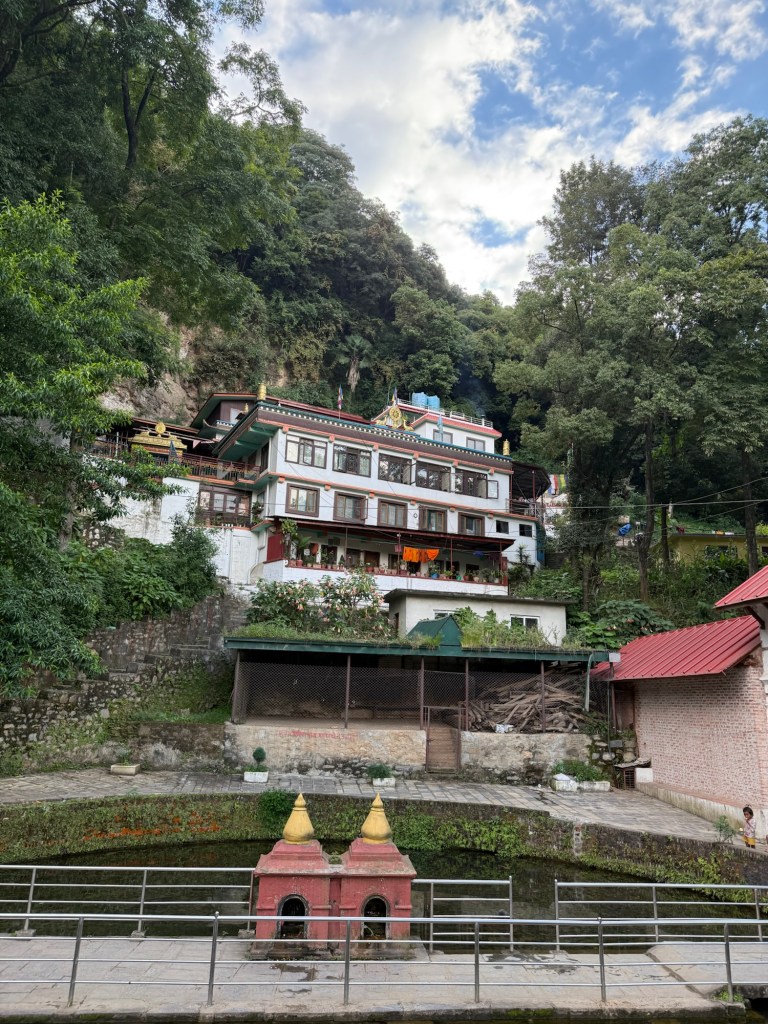
There are two main caves – Yanglesho, where Guru spent the Winter, and the upper Asura Cave where he retreated during the Summer. And then there are two other very important sacred sites – The Self-Arisen Tara and Ganapati, and the temple of Dorje Neljorma (Vajrayogini) – established by Phamthingpa, who was a disciple of Naropa, and teachers of Marpa Lhotsawa.
(Marpa Lhotsawa is the founder of Kagyu School of Tibetan Buddhism).
From Kathmandu take a taxi (driving time 1 – 1.5 hours) and shoot straight for the Self-ArisenTara and Ganapati (Drolma Rangjung) temple. After visiting it, walk up a few hundred steps to Asura Cave. There is a temple and Tshokhang built by Karmpa Lama, Trulku Ugyen Rimpoche. Spend as much time here in the cave and outside the cave to read, chant, and listen to Baza Guru, Barchel Lamsel or Soeldhep Luedhenma.
Then from Asura cave, walk down and before you hit the Car Parking there is a very sacred temple of Dorje Neljorma (Vajrayogini). And finally end your visit to Pharping with the legendary Yanglesho cave, which is right beside the road. There is a temple built by the Late Chatrel Rimpoche at the site.
FUN FACT
Pharping, and other sacred sites in Nepal, have lots of connections to Bhutan, and Bhutanese are most welcome by locals – owing to a history of generosity and patronage.
GETTING THERE
Pharping, the village that hosts all the above sites is some 25 kilometres from central Kathmandu. Take a taxi and go straight to Self-Arisen Tara Temple. CLICK HERE FOR LOCATION
🙏🏻🙏🏻🙏🏻


 Dorji Wangchuk