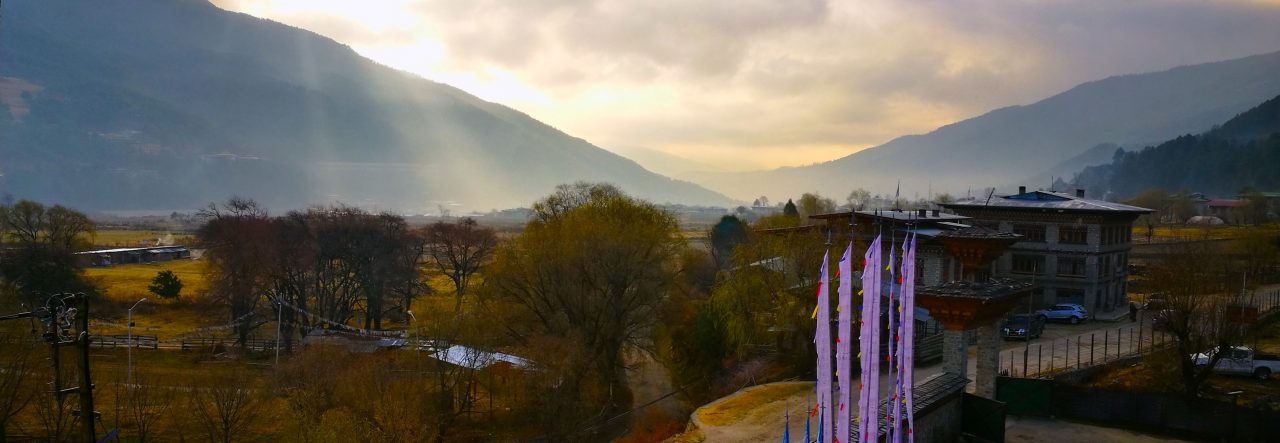
Thrue-bab duechhen (Descent of Sacred Water) is an important public holiday in Bhutan. It is day when people consider water as holy. In eastern Bhutan it is the start of the festive season.
There are several explanations as to its origin. According to Bhutanese astrologers, during this day and for few days after it, the sun shines on a star called Rishi (དྲང་སྲོང་). The star in turn shines on Earth and anything it touches is believed to purify, and bestow some healing power.
Hence, people put water in containers and place them outside to receive the light of the star. One must know when does the star shine from which date to which date from the astrologers.
Then the water is used to take bath. People also bath in open streams and ponds, since the entire water body on earth is believed to be blessed.
NOT BLESSED RAINY DAY
Contrary to the popular belief, the day has no religious or astrological relation to rain. The day neither marks the end of monsoon nor does it need to rain for the water to be sacred.
The sacredness is delivered by the light of the Rishi star on the water body. Depending on the year, and the position of our solar system Thruebab Duechen can even last for several days.
WHAT COMES DOWN THEN?
Why thruebab? Buddhist legends tell the story of a statue of Buddha Vairocana that was built by the devas and enlightened beings near Mount Meru.
At this time of the year, when the Rishi star shines on the crown of the statue for a week, drops of divine nectar are believed to trickle down as a result of the prayers of the enlightened beings and gods. These drops of nectar then fall on the earth making all water bodies sacred.
Thus, for a week people drink and bathe in the waters to clear any spiritual defilement and physical illnesses and disabilities.
THRUEBAB 2025
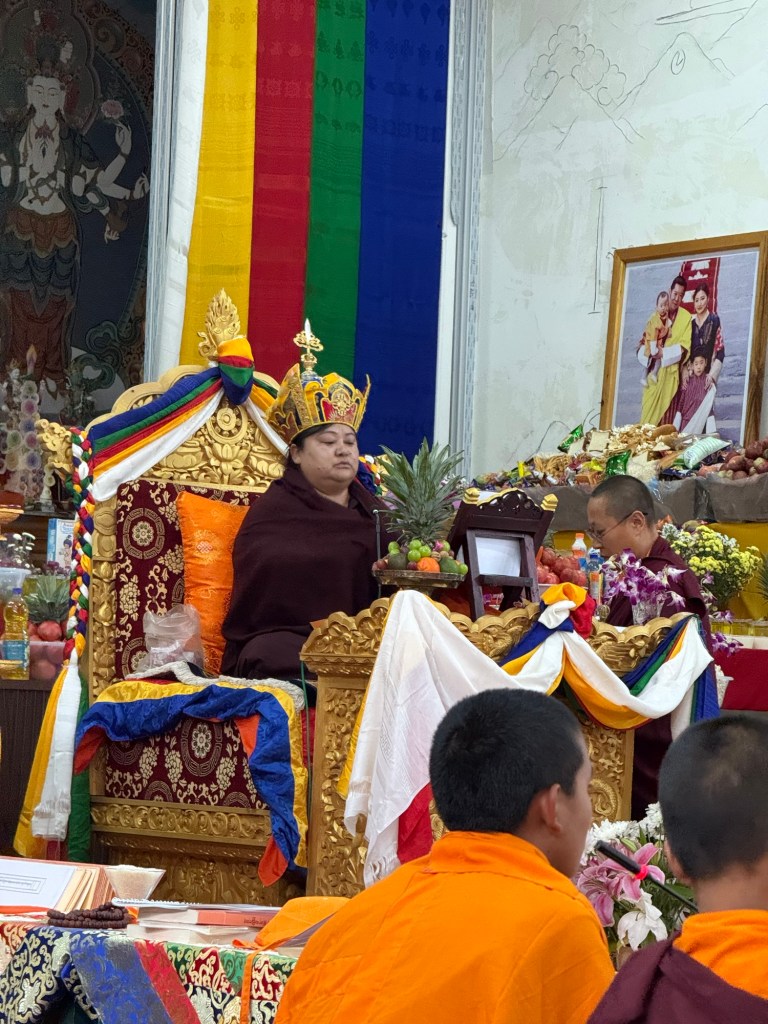
I had the good fortune to receive the water blessings from my teacher/lama Dorje Phagmo Rimpoche, who conducted a public blessing. She made the water even more sacred by mixing holy waters she collected from sacred sites in India, Nepal, Bhutan and China.
🙏🏻🙏🏻🙏🏻
NB
Thruebab was probably translated as “Blessed Rainy Day” in the early years of Bhutan’s development by someone who had no background knowledge or its significance. Now that we have the expertise we must change the translation and the narrative.
The same is translating Guru Tsen Gye (གུ་རུ་མཚན་བརྒྱད་, guru tsen gyé) as Eight Manifestations of Guru, which is totally wrong.

 Dorji Wangchuk