Back to Korphu after 20 years

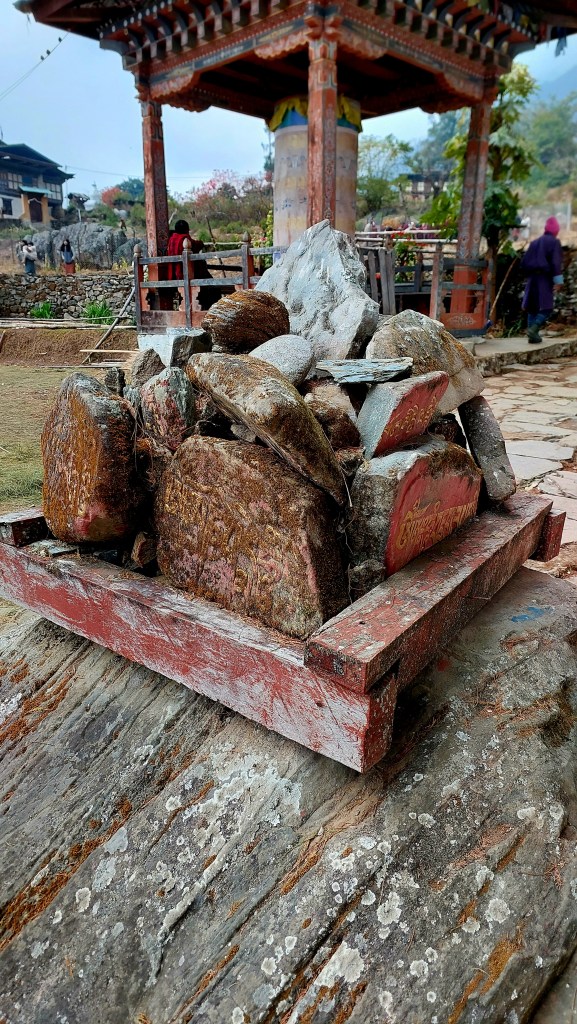
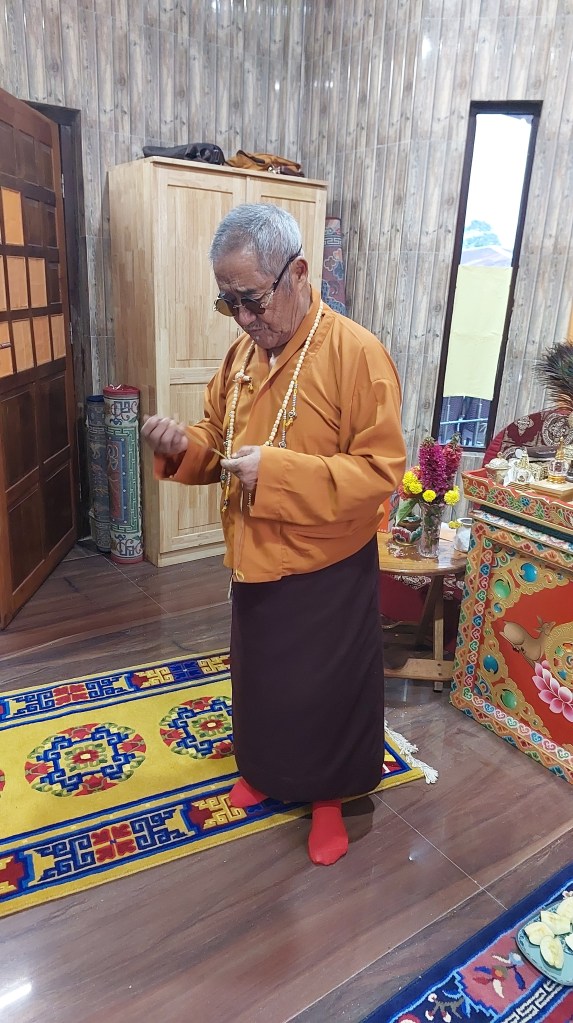
Korphu takes its name from a two-feet flat and oval boulder under which the great treasure revealer (terton in Dzongkha), Pema Lingpa (1450–1521) is believed to have taken shelter – after turning himself into a bee. “Gor means “stone” and phug means “cave”, and it became a cave for the Terton”, says former gup (headman) Zeko – an elderly gentleman whom I randomly met in Gelephu a month back and invited me to his village.

I had visited Nabji-Korphu before – in 2004, as a part of a UN team to open an eco-trail that the community had built with UN-GEF funding. It was a week-long trek from Langthil to Nimshong through some of the most dramatic trails – especially crossing the famed and scary Ugyen Drak. Needless to say, my team and I thoroughly enjoyed that trip and had only fond memories of me going broke midway into the trip – and scamming a colleague to be the chief guest and tip the villagers.

And now here I am back. It is 2024. How time flies!

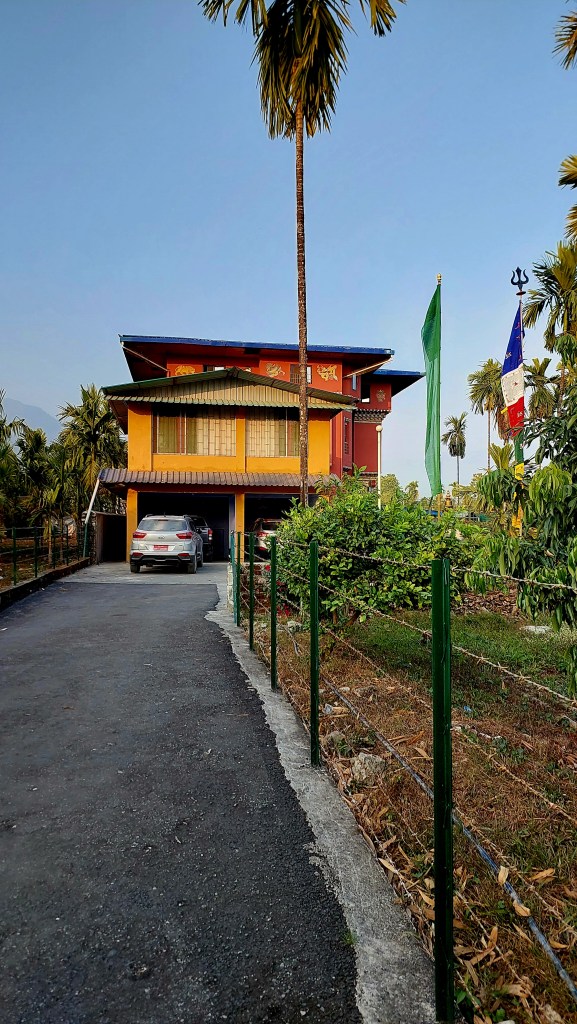
“You can drive your car all the way to our doorstep, la” Zeko assured me when I met him in Gelephu. In fact that’s what we did.

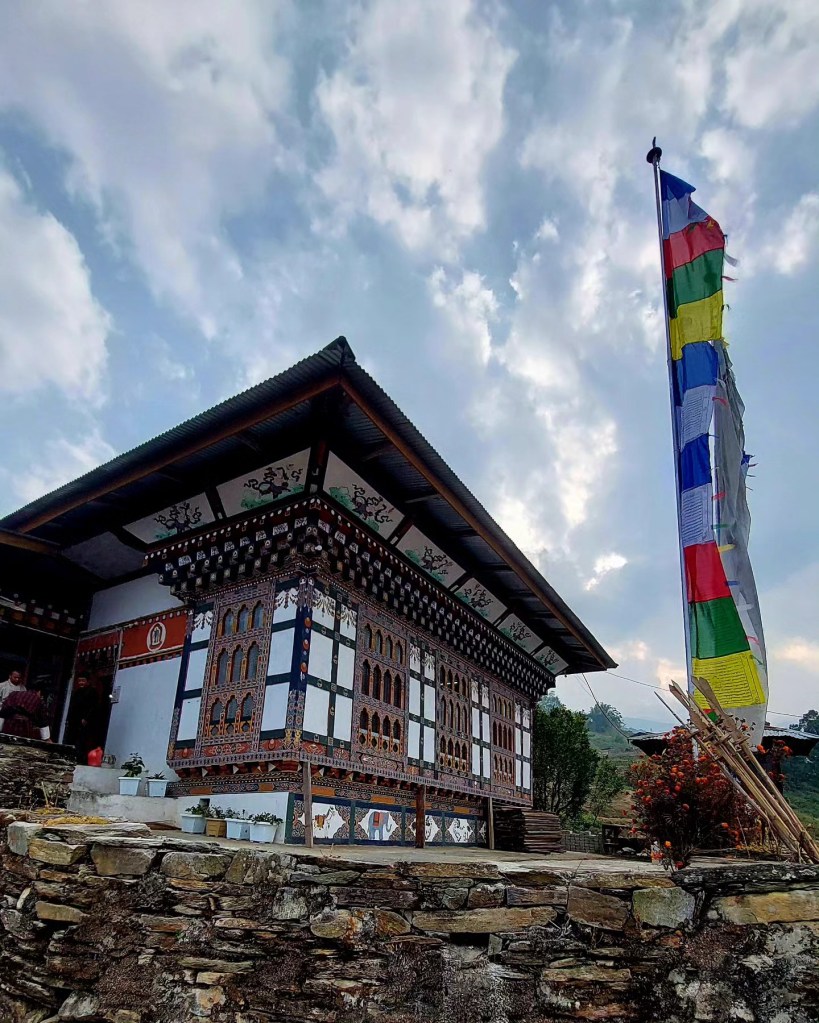
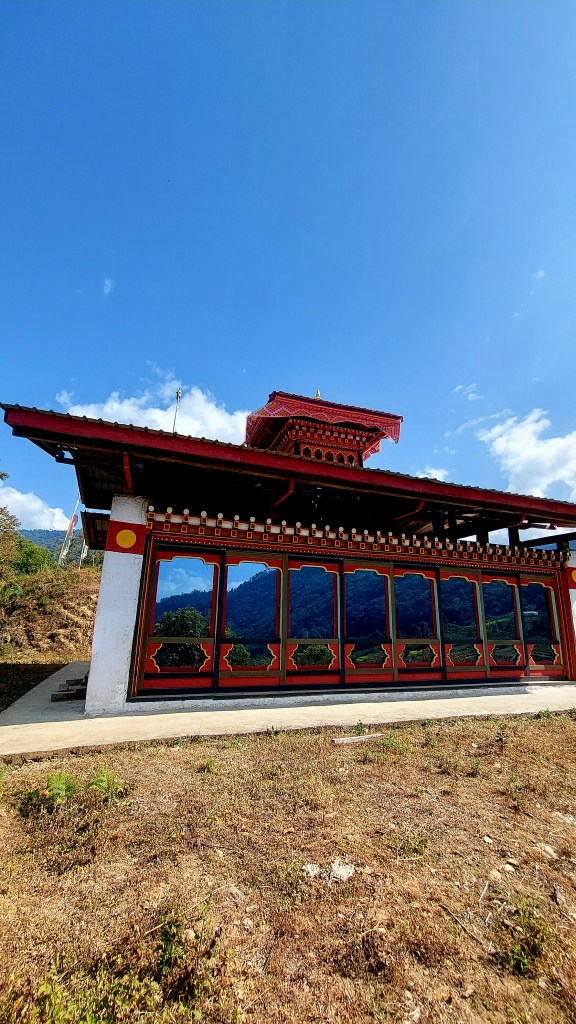
The Lhundup Chodarling Temple:

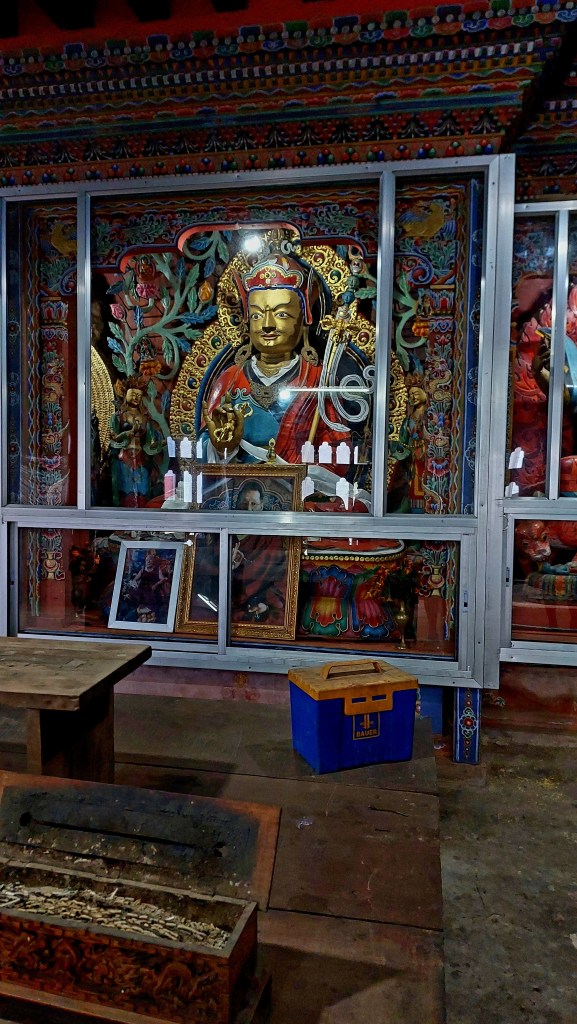
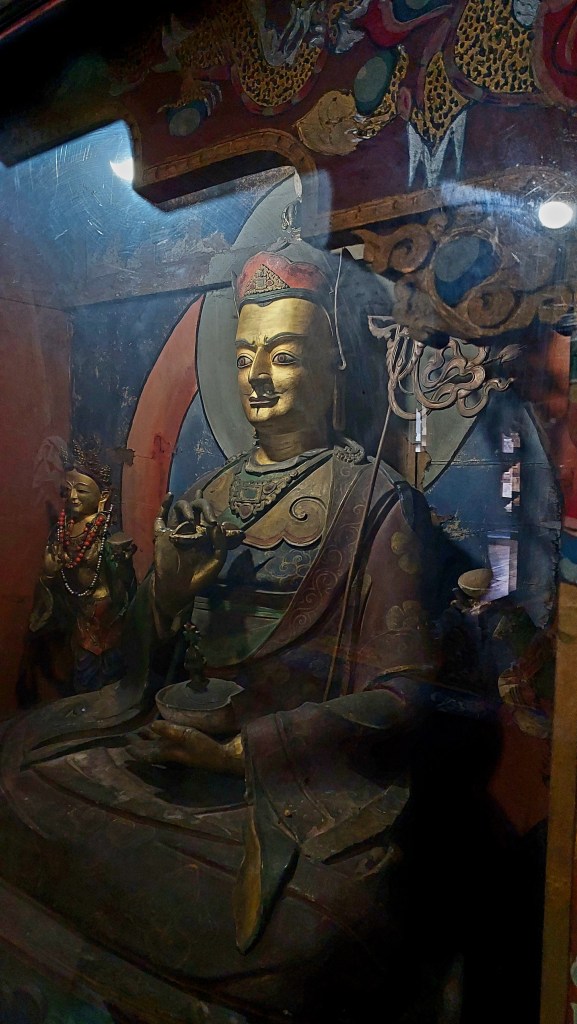
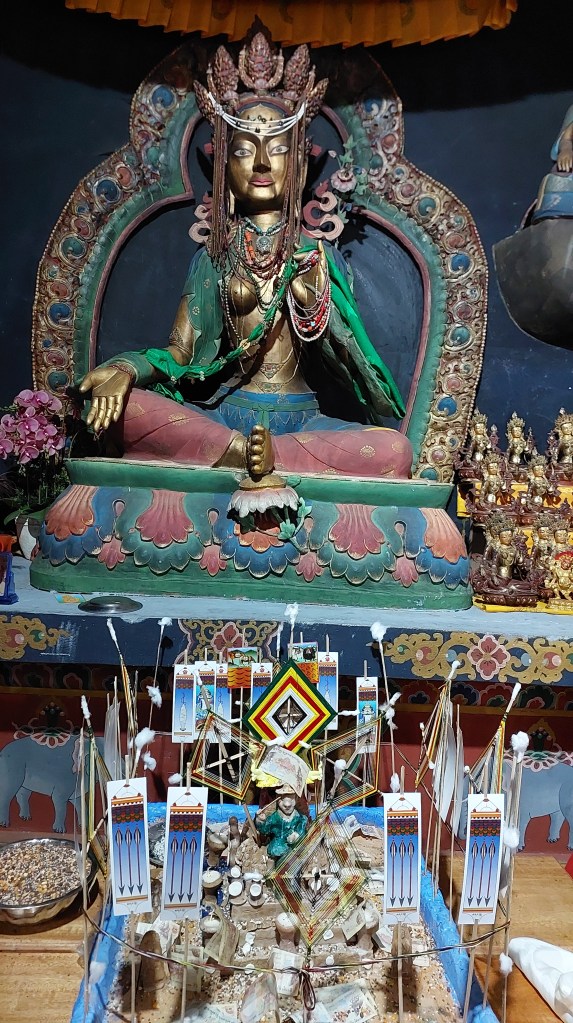
The village of Korphu revolves around this temple – the history of which starts with the arrival of lama Chogden Gonpo (1497–1543) in Nabji. He was considered as the reincarnation of the treasure discoverer Dorji Lingpa (1346–1405), and was also a disciple of Pema Lingpa (1450–1521). He came there to disseminate the teachings of Dorling Tradition and offered statues of Guru Rinpoche and Dorji Lingpa – both of which can be seen there even today.

Few years after his arrival, an epidemic of smallpox spread in the valley and took many lives. Chogden Gonpo requested his guru, Pema Lingpa to come to Nabji to help cure the disease. Pema Lingpa obliged and came and conducted several rituals and prayers and cured the valley of the disease.

Pema Lingpa then built a two-storied retreat center following which many disciples joined him and build small huts and houses around his centre. Korphu, therefore, is one of the few cluster villages in Bhutan with houses attached to one another unlike the typical farmhouses in Bhutan that are independent and spread.

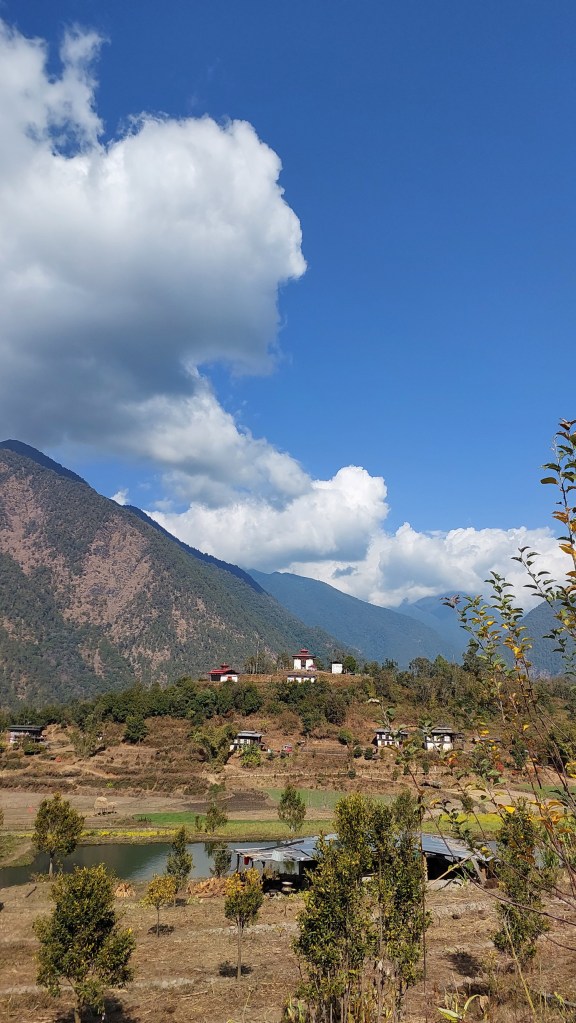
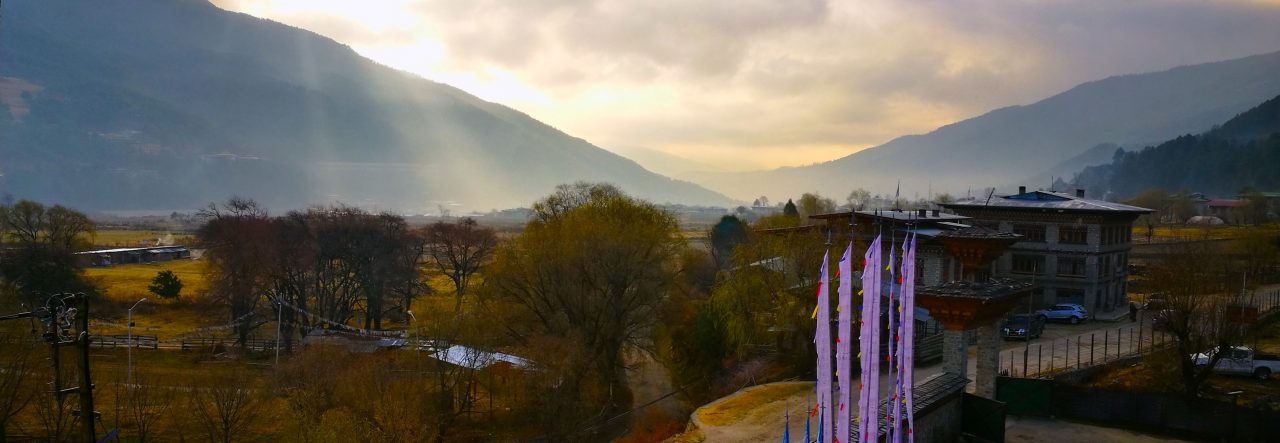
Korphu is on the hill overlooking the beautiful paddy fields and the village of Nabji. In fact, many people in other parts of Bhutan refer to this twin village as Nabji Korphu. From Nabji if you walk it is a two-hour uphill climb.

The origin of Gorphu:

When Pema Lingpa was looking for a place to establish his retreat centre, he wanted a good source of water. After befriending a local hunter called Pema Dorji, he was shown a water spring at a place known as a Umchu Gang.

One day Pema Lingpa found animal traps around Umchu Gang and he immediately removed them so that no animal was hurt. When Pema Dorji found out, he charged Pema Lingpa for doing that. Finding him really furious and relentless in his attacks, Pema Lingpa magically brought down wind and hailstorm over the place, while he himself turned into a bee and took shelter under a flat boulder.

Pema Dorji saw that he was dealing with no ordinary man, and apologised. He also gave up his hunting business and became a gomchen – lay monk under Pema Lingpa. He named the place after the boulder – as Gor-phug, and over time it was mispronounced as was popularised as Korphu.

The relics of the temple:

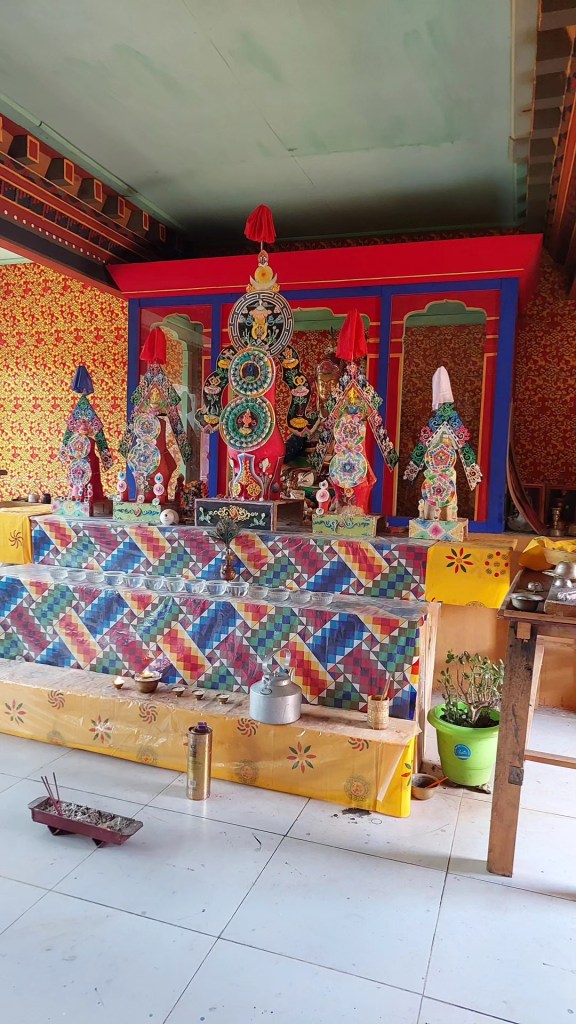
While Nabji is associated with Guru Padmasambhava, Korphu is a seat of Pema Lingpa. The outer structure of the temple has been renovated but the inside still is old and feels very sacred. There are the statues of Guru Padmasambhava and Avaklokiteshvara that are believed to be the handworks of Chogden Gonpo. Both the statues have the powers to grant any wish one makes, the caretaker told me.
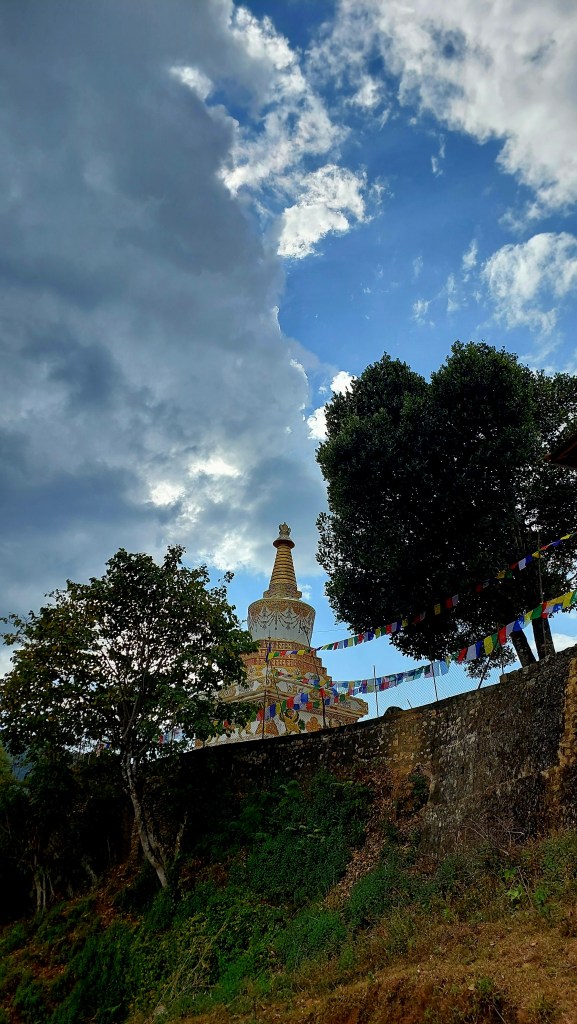
The inner relics (nangten) are: a volume of Transcendental Wisdom in 8,000 stanzas which are referred to as Gyatongpa, which is believed to have been written in golden ink by Pema Lingpa; the ceremonial hat of Ani Choeten Zangmo, the grand-daughter of Pema Lingpa, and who is widely known for establishing a Peling seat in Dremetse in Mongar; the dress worn by Pema Lingpa, which he wore when he dove into Mebar Tsho in Bumthang; and two bells crafted by Pema Lingpa.

The sacred chamber of the Guardian Deity (Goenkang) is dedicated to Gonpo Maning Nagpo – flanked by the two local mountain deities Ap Jowo Durshing and Ap Muktsen.

Visiting Korphu:

Visiting Korphu brought me immense joy and smiles from funny memories from the earlier trip. The people of Korphu are some of the nicest folks I came across and every guest is treated like a VIP. They take pleasure in serenading you and singing you off as as you leave their magical village.

Truly it is a place I recommend before modernity or some other things erase this genuine Bhutanese hospitality. This time I also got to get blessings from each and every nangten they hold in the sacred village temple. As a descendent of Peling lineage, it was an emotional experience to see so many personal effect of this greatest of masters.

And this time, as Ap Zeko promised, it was a cool drive from Wangdigang in Zhemgang for an hour along the narrow black-topped road till the doorsteps of both Nabji and Korphu temples.

It is a place I will return again to listen to more stories, songs and soak in their warm hospitality.

New-Year Pilgrimage – Finale in Rukha

I closed my week-long New Year Pilgrimage with a visit to Athang Rukha – my adopted village for 18 years now. The village of Rukha is one of the few sacred abodes of Palden Lhamo – one of the three supreme protectors of Bhutan.

My association with Rukha.

For those of you who have not been following my work, I have been associated with that valley since 2007 when I went there for the very first time on a documentary mission. The remoteness of that place (it was two days of walking through the leech infested jungles) and the misery I came across shook me to the core that I decided then and there that whatever remained of my life would be dedicated to doing something for that village. The valley is now known for the Oleps – the last hunter-gatherers of Bhutan.

I subsequently volunteered for a foundation that went on to lift them out of abject poverty to a dignified life. When the project ended, the villagers and I had bonded so much that they wouldn’t let me leave. So, I stayed on and we built some temples together in a valley that didn’t even have a prayer flag when I first got there (they practised shamanism and nature-worship). I provided the funds using my own money (which ran out every now and then and the work stopped) and the people there did the hard work – extracting the timber, carrying the boulder, ramming the mud, etc.

Fast forward to 2024, the third temple – a tshokhang (community hall) dedicated to Guru Padmasambhava – my birth deity, is getting the finishing touches of religious art on the ceiling – three mandalas of Tshela Namsum (Buddha Amitayus, Unisha Vijjaya and Tara). These mandalas when completed would throw down more blessings when anyone does ceremonies to Sangye Tshepamay, Namgyelma or Jetsun Drolma.

Abode of Palden Lhamo.

The place is believed to be the abode of Palden Lhamo and visited by both Guru Padmasambhava – on his way to Bumthang in the Eighth Century, and by Terton Pemalingpa in the Sixteenth Century on his way from Bumthang looking for a place that would eventually become Gangtey Gonpa.

A temple built in the mediaeval era stood there until it was completely destroyed in the early 1930s after the original inhabitants abandoned the valley because of the smallpox epidemic. Between 2009 and 2014, the Oleps, the new settlers of Rukha and I built the temple over the mud ruins of the original temple. Left untouched, the ruins can be seen on the ground floor. The carpenter, Chorten Tshering, was told in his dream by a girl not to destroy the mud ruins.

In 2014 when the former Tsugla lopen Samten Dorji consecrated the first temple, many old people from the valley heard the sounds of the religious instruments for the first time in their life. Furthermore, many young people, and every elder member, took the oath from Tsugla Lopen to refrain from hunting and killing wild animals – a skill and way of life they inherited from their forefathers. Now, a twice-monthly Lhamo Tsho-ja is conducted with households taking turns.

Traditionally the Oleps practiced shamanism and animism, and this continues in some forms till this day. And here, I have been very respectful not to force anyone into one or the other spiritual practices. As Buddha said, I can only show the way.

In 2020, when the pandemic hit and we were all stuck, the Rukha Lama, Ugyen Tshering, and I initiated another temple to be used as Tshokhang, so as to turn the first temple into a Neykhang (place for protector deities) and dedicate it solely to Palden Lhamo. I also built an altar with 21 Taras for my daughter and grandson whose birth deity is Tara. In 2022, the tshokhang was consecrated by Gangtey Rimpoche, who also presided over a three-day Tshechu with mask dances – the first one to be instituted in lower Sha region.

The blessings of Palden Lhamo and Tara are evident. Rukha has been receiving bountiful harvest, in general, and the families who were solidly behind the temple project are having a fulfilling time with their children doing well with their life.

And the story continues..

From going hungry to building a better life for themselves and their children, to temples and hosting the first Tshechu in the region, the Oleps have come a long way in less than two decades. It has been close to an economic and social miracle – a case study in development management. The credit fully goes to the people who believed in themselves and were ready to work hard.

Along the way the State also provided the valley with a power-tiller road (2011) upgraded to a farm road (2018), electricity (2019), and mobile phone network (2023). From a two-day treacherous hike the road to Rukha has been reduced to an hour-long pleasant drive from the Wangdue – Tsirang highway.

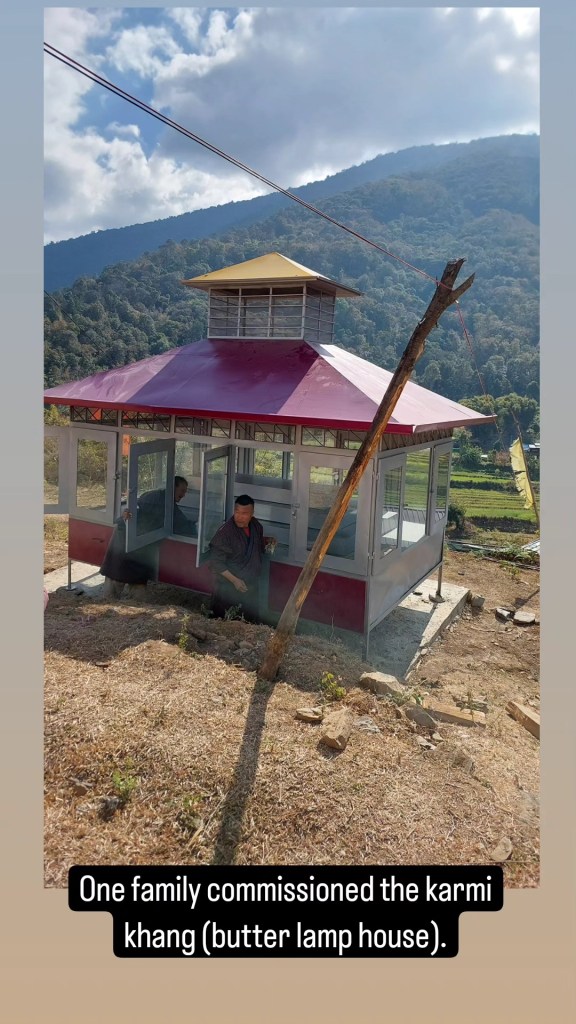
I offered three butter lamps in a new large Karmi Khang that a family from Rukha had bought in the memory of their father, who passed away a few months back. It arrived on the same day I landed there. I prayed that the people of Rukha continue on their path and be a part of this small great nation, as it moves confidently into the future.

They say you cannot take anything with you when you die. This is not true. You will carry with you the good and bad karma and the merits and retributions you accumulated. And more importantly, you will also leave behind the memories of you in people whose lives you made some difference.

So, as you breathe in the Dragon Year 2024, I invite you all to take a moment to reflect on a few questions. How many thoughts and prayers (moelam zangpo in Bhutanese) have you sent to others? How many smiles have you brought in someone else? How many lives have you touched through your small or big works?

As a Mahayana Buddhist, these should be the questions of your life – and the greater meaning of a pilgrimage.

(Itinerary of my pilgrimage – Semtokha Dzong (Thimphu), Dobji Dzong (Paro), Lhakhang Karpo (Haa), Punakha Dzong (Punakha), Mebar Tokchoe (Zhemgang), Lamga and Rukha (Wangdue)

Mebar Tokchoe Lhakhang, Zhemgang

The third leg of my New Year Pilgrimage 2024 took me to Mebar Tokchoe temple in Kheng Kikhar in Zhemgang where my teacher #3, Dorje Phagmo Rimpoche (popularly known as Khandro Dorje Phagmo) has established a nunnery called Ngajur Pemachophelling.

I conducted a Drolma Yuldhog, which literally means “Obstacles removing Tara ritual”, which is considered as the king of all rituals. While one could conduct the Drolma Yuldhog at one’s home or at other sacred places, for me there is no better place than here.

First, Khandro Dorje Phagmo is considered as the emanation of Jetsun Drolma (Tara). Second, Mebar Tokchoe temple is believed to have been established by Monmo Tashi Khyidron on the advice of Guru Padmasambhava to pave the way for the success of Samye monastery construction in Tibet. During the same endeavour, Guru is believed to have advised King Thrisong Detsen to conduct Drolma Yuldhog to clear the obstacles standing in the way in the establishment of Samye monastery. And third, the invocation of the blessings of Tara done by nuns is believed to yield better merits.

So, there are lots of reasons – both religious and historical – that make this place special for a Drolma Yuldhog. I commission this ritual twice a year – once after the winter solstice and one after the summer.

It is always a sublime and blissful moment to be here. To paraphrase the some lines from the rituals:

“May you be free from the Seven Internal and Six External Sources of diseases. May you be protected from all negative energy. May you all be firmly on the Path to Enlightenment”

(To be continued)

New Year Pilgrimage 2024

Seeking three divinities, three deities and my three teachers

We celebrate the New Year on the first day of the twelfth month – at least in the eastern half of Bhutan from where I come from that’s the case. So, the last few days of the eleventh month and the first week of the “new year” are spent on pilgrimage inside Bhutan – visiting temples, sacred places and getting blessings from my teachers and conducting rituals for the year. I do this to pay gratitude for the closing year, while propitiating the deities and divinities, and receiving the blessings for the new year.

On the first leg of my pilgrimage I covered Semtokha Dzong to pay my respects to the Supreme Guardian deity, Yeshe Gonpo (Mahakala in Sanskrit) where the resident caretaker lopen Wangchuk considers me his jindha (patron) and conducted a brief soelkha for me.

I continued the next day visiting Dobji Dzong (estd 1531) in Paro where there is an amazing statue of a smiling Milarepa, which is believed to have spoken in the past. The statue is said to have been gifted by the Tibetan patrons to lama Jetsun Ngawang Drukpa (1682-1748) – the founder of Tshamdrak Gonpa, during his last religious mission to Tibet. Milarepa, who is supposed to have become enlightened in one lifetime after committing some atrocious deeds, gives me hope that if one is committed, one can attain enlightenment in a go. That’s a dream, which increasingly looks like it will be a dream.

On the same day, I also visited Lhakhang Karpo in Haa – a sacred place, believed to have been built on the spot where a white dove released by King Songtsen Gempo (617-650) from Tibet landed. The place is believed to be the abode of powerful local guardian, Aap Chundu – a deity known for his physical strength, and also for being honest, dedicated and principled.

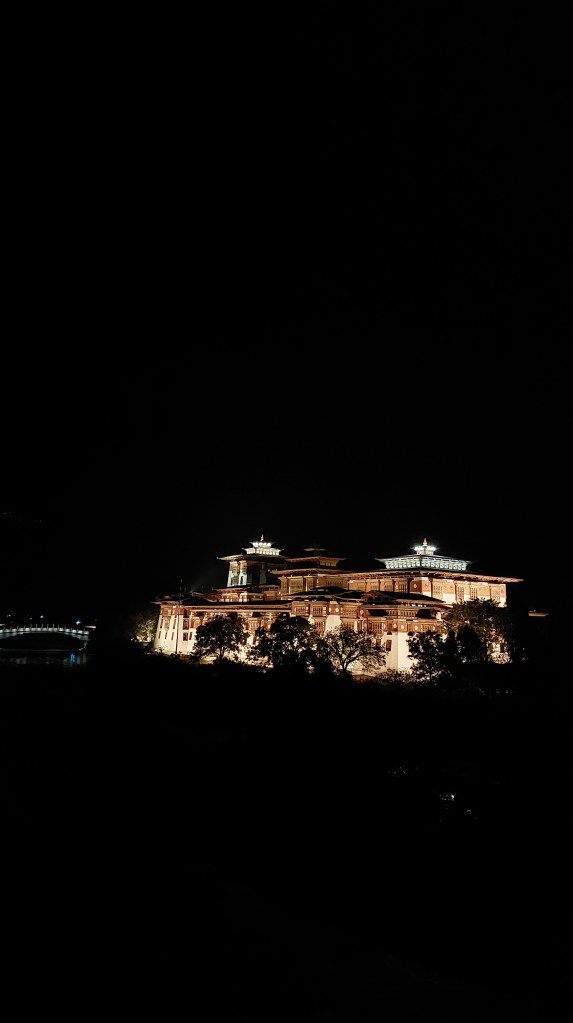
The second leg of my pilgrimage took me to Punakha – the former winter “capital” of Bhutan where the monastic body still travels to avoid the freezing cold of Thimphu. Punakha Dzong has the Machen Lhakhang, which contains the sacred remains of Zhabdrung Ngawang Namgyel in permanent retreat (thudam in Dzongkha). I make it to Punakha at least once a year to pay my respects and receive the blessings of the divine founder of Bhutan. Without Zhabdrung, there might not have been Bhutan.

In Punakha I also received kago from one of my teachers, Most Venerable Lopen Samten – the former Tsugla lopen. He is also my “Google Scholar” for anything related to Vajrayana Buddhism.

On the following day (today) I drove straight from Punakha to Gelephu, where my family lama, Rangshikhar Rimpoche, resides. He is another teacher I visit at the start of every year. There is nothing I can say that people don’t know about him. The oldest and the most humorous of my three teachers, it always feels blissful to be in his presence that I feel it is okay if I died the next day. I mean, that’s how powerful he is and how peaceful you feel that I always wondered that if God really existed it would look like and be like him.

“How is my year?” I asked him. I have been quizzing him like this for over 40 years. He is one of the few togdenpas I know and who is known for perfect divinations.

“Just be a little careful in this coming month till 27th day,” he warned me, “And remember to say your barchel lamsel prayers every morning and don’t be careless”.

With that assurance, and after updating who is where in my family, I took his leave, so as not to hog his time. There were two groups waiting after me.

(To be continued with a third leg of my pilgrimage – from Zhemgang, Bumthang, Wangdue and end in Paro. I will be breaking my pilgrimage for a few days here in Gelephu to work on another article on the mindfulness city project)

😇😇😇
Tentative itinerary

– Semtokha Dzong – The oldest dzong built by Zhabdrung Ngawang Namgyel. Grand altar to Yeshey Gonpo

– Dobji Dzong – Built by Lama Ngawang Chogyel in 1531. Talking statues of Milarepa and Guru Padmasambhava.

– Lhakhang Karpo – 7th Century. Medicine Buddha and an altar to Ap Chundu

– Punakha Dzong – 1637. Sacred remains of Zhabdrung Ngawang Namgyel.

– Mebar Tokcho (8th Century) and Buli Tsho, Zhemgang

– Kurjey (Bumthang) – Sacred site of Guru Padmasambhava

– Rukha (Wangdue) – abode of Palden Lhamo

– Nyechen Dongkala (Paro) – Buddha Shakyamuni relic discovered by Terton Pema Lingpa

A new era for the airlines?

Druk Air has resumed scheduled flights to Gelephu. It came on the heels of the salang tendrel for the extension of the existing airport, which will play a major role in the Mindfulness City project that was formally launched on National Day. 

Our airlines are more than just airlines. They are our connection and our lifeline to the world. Besides, Druk Air is our national flag carrier. And this is not a small responsibility. In my view, connectivity and furthering national pride and identity should be the main focus of Druk Air. 

The concept of national flag carrier

Allow me to elaborate my argument with some academic studies and experiences from around the world.

As a Bhutanese, I grew up at a time when there was no air service in the country. Bhutan did not even have a helicopter then. I have always loved aeroplanes since I was a child. I watched the Indian jet fighters thunder over our school in Kharbandi. So one can imagine the excitement I felt when I saw pictures of a Dornier aircraft with the national flag on its tail. Of course, back then I was unaware of all the hard work, and the diplomacy of the Highest Office, which went behind to get that tiny aircraft flying. I only learned that much later – first hand.

Today, in the world, there are more than 30 state-owned airlines, and some big names such as Thai Airways and Air India, that run on loss. However, these countries recognise that air transport in general, and national airlines in particular, play a pivotal role by facilitating rapid connectivity, fostering economic growth through tourism and trade, and enhancing a country’s sovereignty and security. Above all, they instil pride and promote national identity by flying the national flag around the world.

Studies by scholars such as Raguraman on the national carriers of Malaysia and Singapore reveal how the governments of these two nations viewed their airlines “as important national symbols and as ‘chosen instruments’ for projecting their countries internationally”. In his paper, he examined the varying ways in which their flag carriers, a term coined at the Chicago Convention in 1944, have served to promote nation building and national identity. There was even a joke back in those days that a nation was not considered legitimate until it had collectible stamps and a flag carrier. 

In recent years, three countries that have taken up building their airlines as their national brands are the United Arab Emirates, Qatar, and Turkey. In the last decade or so, they have gone on, with heavy subsidies from their governments, to build some of the best airlines in the market today. Switzerland did the opposite, only to realise the error and put their flag carrier back in the sky.

Our flag carrier can do more. I have suggested in my article on the Australia exodus that one way to keep an emotional link with our growing diaspora is to establish a physical connection by having our airlines do regular flights to Australia and to the Middle East. That would spark off, what in sociology is called, a circular migration. Maybe to start with, our government could negotiate seasonal flights with these governments, and then slowly make it a scheduled offering. Imagine being greeted by Druk Air’s dragon logo in Kuwait, Qatar or Canberra. Definitely it would help maintain a stronger connection with home through regular visits and investments.

Role of air connectivity for Gelephu

With the launch of the most ambitious project of our lifetime, which would require the best and most convenient connectivity to Gelephu, I commend the decision by Druk Air to resume its scheduled flights there. I understand it also plans to go international using the existing runway and the ATR aircraft to fly to cities like Bagdogara, Kolkata and Kathmandu. That would really act as a catalyst for the project. For these routes even an unpressurised Cessna Grand Caravan would do the job. These have very low operating costs.

In the long run our airlines stand to gain the most from this project – and so does our tourism industry. I hope that Bhutan Airlines, which bravely weathered Covid-19 when many private airlines went bust, will join this noble initiative to build the city of the future. 

As a student of communication, I cannot stress how much communication, connectivity, and connections play a vital role in the making of a nation. Different political parties have been toying with the idea of more airports around the country. Why not? We don’t have to fly the Airbus around. Small aircrafts known as STOL (short take-off and landing) could be deployed like in Nepal and other mountainous countries. There are many makes and models in the market, such as the Twin Otter and Beechcraft. If you have at least 800 metres of runway, you are good to go. We should shed the description of our country as being poor, mountainous or landlocked. It blocks our minds from doing anything big or bold. 

There should be more than just two flights in a week to Gelephu. Agreed that there is no demand now. However, to paraphrase the legendary Steve Jobs of Apple Inc, you create the demand where there isn’t one. That’s how you become a market leader and a trendsetter. I believe that if somehow our airlines could bring down the prices, more could fly, and more demand could be created. This is the business model of budget airlines such as AirAsia whose slogan is “Now Everyone Can Fly”. If the government needs to subsidise our airlines, it should do so. The overall benefit would be spread to the people and to the economy. After all, we are talking about national unity and solidarity, and pressing our economic pedal hard, as we embark on the most important royal initiative for some years to come.

I travel a lot. Nothing is more reassuring than seeing your own people and the flag waiting for you in India, Nepal or Thailand to take you back home. Whenever I am close to Suvarnabhumi Airport in Bangkok on the highway, I always turn my head towards the tarmac where our two airlines, Druk Air and Bhutan Airlines, are usually parked. Seeing either of them with our national symbols always makes me proud.

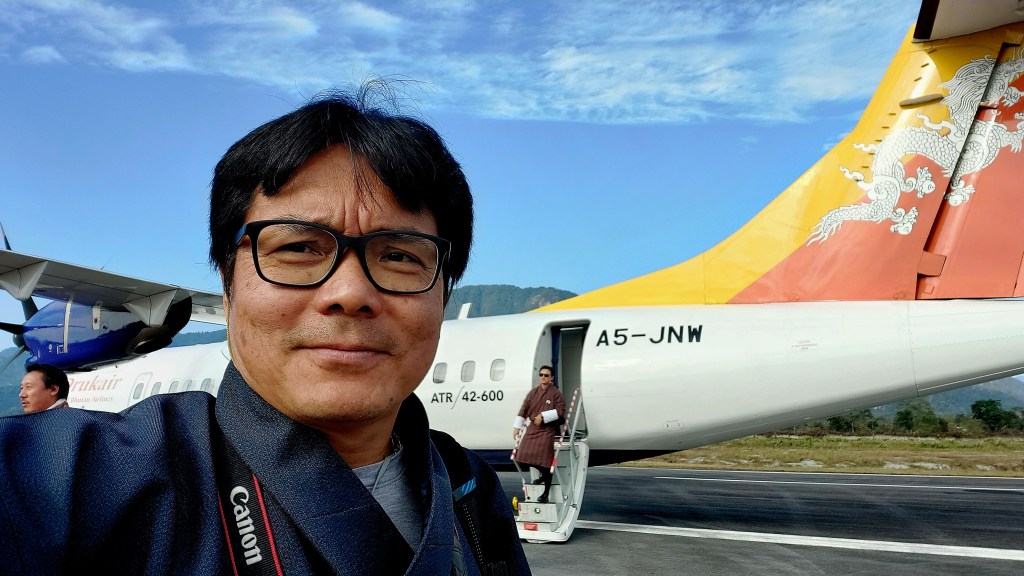
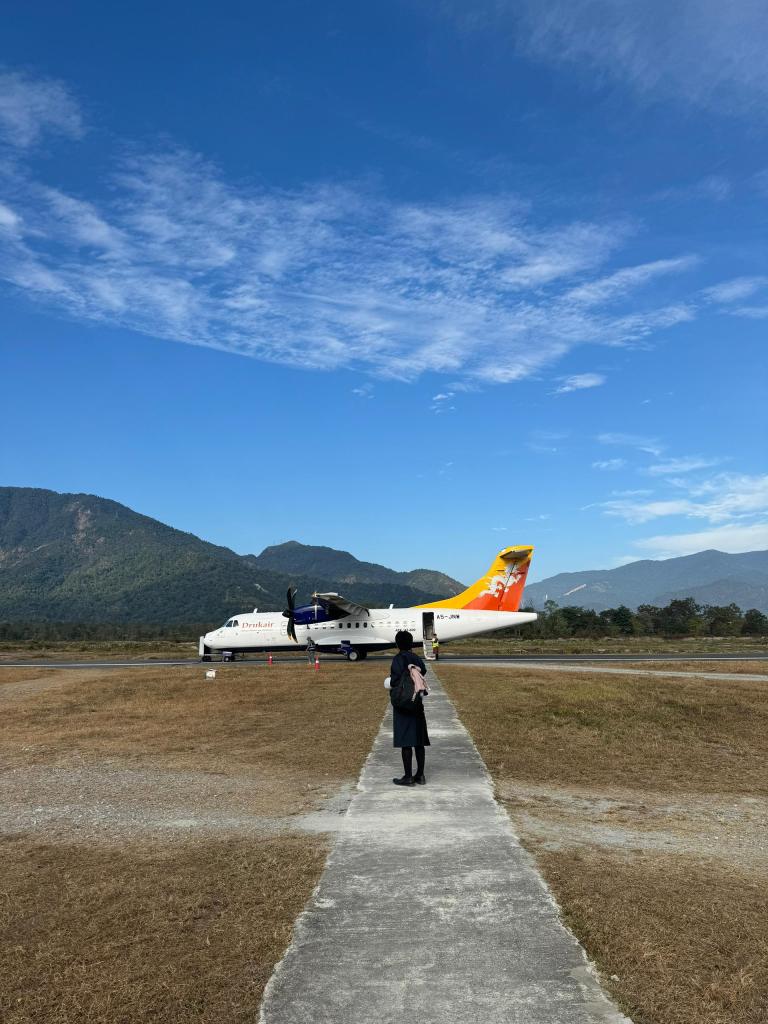
And like that little boy who was incredibly excited to see the tiny Dornier carry our flag in 1983, I was once again filled with wonder and awe when I landed in Gelephu two weeks back. I just stood there for a couple of minutes savouring that beautiful moment in history.

The Real Bhutanese New Year

This year, 12th January will be celebrated as Sharchop Losar or Chunyipa Losar. However, it appears that this is not just the new year’s day for central and eastern Bhutan, but for Bhutan as a whole.

Historical records show that the Founder of Bhutan, Zhabdrung Namgyel observed this day by returning to Punakha (he was more a travelling ruler) and having his subjects visit him and pay homage and tributes. It is said that the three-way staircase of the main entrance to Punakha Dzong was built to welcome the three regional governors called the penlops on that day. Zhabdrung also made all state appointments while also greeting other lesser regional leaders and their retinues as they paid tribute to him. Thus, the day was referred to as buelwa phuewi nyim, which is poorly translated as traditional day of offering.

Astrological significance

This day falls on the first New Moon after Nyilo – a traditional Bhutanese holiday, and in the month when the Moon meets with the Cancri constellation. In the older Lama Gongdue (བླ་མ་དགོངས་འདུས་) – a terma teaching revealed by Sangye Lingpa (1340-1396), the month is considered as the first month of its calendar year. This was probably the calendar prior to the adoption of the official Buddhist calendar followed in Bhutan. The celebration of New Year on this day in central and eastern Bhutan is thus more local, and more traditional Bhutanese.

According to Bhutanese scholar, Karma Phuntsho (PhD), Zhabdrung Ngawang Namgyal was a serious follower of Terton Sangay Lingpa’s teachings and incorporated rituals such as the Lama Gongdue into the ritual curriculum of the Central Monastic Body. And this may also be the reason why he marked the day as the day of accepting tributes and a day of celebration with his people.

Why do Tibetans celebrate the New Year a month later?

The Tibetan New Year’s day, which comes a month after, coincides with the Mongolian New Year known as Horda (ཧོར་ཟླ་), which the latter instituted as their calendar – to mark the day of victory over the Tangut Kingdom by the first emperor, Genghis Khan.

After Gushri Khan (1582-1655) invaded Tibet in 1641, the Horda became the Tibetan calendar and thus the Mongolian New Year day was celebrated as the Tibetan New Year. Furthermore, Gushri Khan was referred to as Chogyal (Dharma King). And thus this Losar (New Year) was also referred to as Gyalpoi Losar (རྒྱལ་པོའི་ལོ་གསར་) – King’s New Year. Older folks in Bhutan would be familiar with this term

In essence, the Dawa Dangpi Losar has neither any auspicious significance to Bhutan, nor any important astral reasons. As Dr. Karma Phuntsho adds, it is even odd that we celebrate it as the main Losar, which is a legacy of Mongol rule over Tibet.

Let’s celebrate Chunipa Losar as our New Year

In sociological studies we say that repeated behaviour becomes a habit. A habit embraced by a mass becomes a culture. A culture repeated periodically becomes a tradition. So, we can institute some new traditions, and retrieve some older ones, around this Day, so that over time it consolidates as the Bhutanese New Year.

First of all, call it Bhutanese New Year!
As someone trained in sociolinguistics, trust me, vocabulary matters. To continue with the misnomer Sharchokpa Losar would do no good.

Second, making appointments, promotions and pay raises:
Following Zhabdrung’s tradition, new and important appointments could be made on this day. Promotions and bonuses can be declared on this day.

I am not limiting this invitation to the government only. That would take time. I would rather invite our private sector, and companies to do that. Pay the bonuses and give a salary raise on this day. Why not? As I said, if we all do this every year it would become a tradition. Employees all over Bhutan would be eagerly waiting for this day – and a whole new industry can come up on this just like the red envelope tradition in East and Southeast Asia.

Third, PIT Day. No one likes taxes but as a cliche goes, it is the only sure thing in life besides death. So, why not do it on the eve of this day? Why not celebrate it? Why not file your personal income tax with a prayer that your few ngultrums take this country an inch forward and benefit as many sentient beings? Make it a happy moment to pay your taxes. It is all in the mind.

Fourth – make it a Day of Offering:
Most importantly, as Buddhists, it can be the day of offering to your root-lama and to the gompas you visit, astrologers you consult and places you revere. Just as our forefather did to Zhabdrung, we can do it to the lamas of our time. As we believe in Bhutan, such offerings will “clear your obstacles for this life, and help you accumulate positive merits in your next”. And so, why not start the year with a bang.

Above all, make it a tradition in your own family to meet – and, again, to paraphrase a local saying, “meet and eat one meal together”. If not, WeChat is there.

Happy Bhutanese New Year!

Why do we do annual rituals in Winter months

Today is Nyilo (literally meaning the Return of the Sun), which is an important day in the Buddhist calendar. In Thimphu, Punakha and Wangde it is celebrated as the New Year. In the West, it is called Winter Solstice.

It is believed that today the Sun starts its journey from the South after paying homage to the Lord of South Direction, Yama (Shinje in Dzongkha, གཤིན་རྗེ་), who is also the Lord of Death – or the Lord of Judgement of Death.

Since in the court of Yama is believed to be filled with many dead souls waiting for the trial, some of them escape by tagging along with the Sun.These dead souls called shinpo are considered to cause all sorts of problems in the human world – sickness, accidents, disaccords, loss of property, etc.

To avert such misfortunes, one has to conduct propitiating ceremonies to one’s family protector deities (choe-sung) and kay-lha (birth deities) and invoke the blessing of Sangay Tshepamay for life (Tshe in Dzongkha) and Namsey for wealth (Yang). This is the reason why Bhutanese families conduct annual lochoe (rituals) during winter months.

During the Summer Solstice, the Sun returns from the North and the Lord of North Direction is Kubera – the God of Wealth. So in Summer if one can do propitiating rituals to deities of wealth such as Kubera (Zambala), Unisha Vijjaya (Namgyelma) or Tara (Drolma), it would be great. You need some wealth to pay your bills and do dharma. Many temples across Bhutan do Namgyel Tongcho in Summer.

The king of rituals is Drolma Yuldhog, which is my favourite. I do this twice a year, irrespective of the season because it includes everything – wealth, health, progress in life, enlightenment thereafter, etc.

If you cannot conduct large ceremonies you should at least visit temples and wish away your problems. I usually go to Semtokha because there are three altars in one big hall.

You could also donate a small amount of money to conduct prayers such as Barchel Lamsel, Dukkar, and Sherub Nyinpo. This Saturday and Sunday are very good days to do that. (These days just use mobile banking from anywhere. Contact me if you want to donate to Ngajur Pemachopheling Monastery).

Happy New Year to the natives of Thimphu, Wangdue and Punakha. Please don’t forget to wish me back on Sharchop Losar (coming soon). 😁😁😁

New Year’s day? Time to reflect. Not time to resolve.

New Year’s eve is when many of the promises, which won’t be kept anyway, are made. It is the time when resolutions are listed as we get tipsy and sing the old year goodbye.

Here is a better proposition.

How about that we take a moment to reflect, ponder and be grateful. We simply take too many things for granted – good health, good life and good people around you. And yet, we know that not everything is the same for everyone on the planet. We are the fortunate ones, actually.

Instead of saying, I want to be healthy, maybe you ARE healthy, instead of resolving to be better, maybe you ARE good enough. And if you are thinking of striving, you ARE already thriving.

When you believe you are enough you feel contented. You enjoy the inner peace. You refrain from desiring for more.

So, at least the New Year’s Day, take a time to be grateful. If you look around carefully you will find hundreds of things you can, or should, be grateful for.

If you find nothing, don’t forget that you are still alive. Not everyone made it through 2023.

(Take a moment to list down 10 things you are grateful for. Write them down on a piece of paper. Fold it and keep it in your purse. Later during the year, when you are down, go through the list. And smile 😊😊😊)

(Picture: On a boat off the coast of Bali, Indonesia. July 2023)

Gelephu Mindfulness City – a perspective

Big and bold ideas are often perceived differently by different people. We make sense of the world and events based on our belief systems, assumptions, worldviews, interests, and on circumstances we grew up with. So, let me share my understanding of this most ambitious and important project of this era – the Gelephu Mindfulness City – a concept like no other.

Let me start by clarifying, what it is not? The proposed Mindfulness City will not be a futuristic metropolis like Dubai or Singapore with megamalls and skyscrapers. The new “city” will be spread horizontally over a large area of 1,000 square kilometres. Farmland, heritage sites, biological corridors, and national parks will all be protected. 

There also seems to be a major misconception among the Bhutanese that everything will be taken over and flattened to build this city. That does not seem to be the case either. Investors and institutions, both foreign and local, will be invited to submit their proposals to set up their branches and businesses here, and state land will be allocated according to the master plan. I believe that as much as possible, public infrastructure will be built on government land. If private land needs to be acquired, they will refer to industry best practices to ensure fair compensation.

What is it, and what does it mean for us?

Commitment of our King: The initiative is, first and foremost, a project envisioned by His Majesty the King with the people in mind – especially the youth. It is like an aspiration we have as parents for our children, so that they can live a happy and a fulfilling life. As someone who has taught in colleges and seen the raw talent of thousands of our youth, I have always felt that as a society and as a government, we have short-changed them by failing to create adequate opportunities. This bold initiative will address this shortcoming. 

Coming of age: Bhutan has sacrificed a lot for the sake of the planet. In terms of ecological services, when monetised, Bhutan has been contributing something to the tune of US$ 15 billion (GDP is 3 billion). Maybe we leaned a little too much towards environmental conservation and deprived ourselves of the economic benefits and financial stability – something that became apparent during Covid-19. Of course, the new concept is not a U-turn from these conservation policies. It could be characterised as an attempt to find a balance between economic growth, environmental conservation, and cultural heritage.

Gelephu, thus, is a service to humanity that offers a new approach to being and living. It will be a peaceful space in the green Himalayan foothills, with clean water, food and crisp air, and where people meet their souls and add meaning to their lives. It will also be a place to pursue one’s passions, dreams, and career productively.

Common goal. Collective imagination: The Gelephu project has inspired a nation, sparked the collective imagination, and will give the Bhutanese a sense of shared purpose. As a social thinker, I have been lamenting the fact that as a country we have lacked a common goal since the advent of Parliamentary democracy in 2008. As elected governments come and go, we are pulled in different directions. 

His Majesty’s royal address at the National Day was the most powerful since the Coronation Address. The scene of youth flashing the lights from their phones and singing a tribute to our King, who was standing in their midst during the National Day Concert is still fresh in our minds. I had the fortune of witnessing something similar again at the consecration of the Water Treatment Plant in Gelephu. This is symbolic of the entire nation that is rallying around our compassionate young King who has unveiled the most courageous leap forward to build a mindful nation based on the timeless values and principles of the Three Jewels.

It looks like the nation has woken up from a long slumber and walked straight into a beautiful dream. There is a lot of work to do. However, as His Majesty has said, “We should worry but we should not doubt” (our intentions or our capabilities).

So, what is our role?

Gelephu is firstly a Bhutanese vision. We need to rally everyone from every corner of the country to solidly stand behind it. People should feel a part of, have a stake in, and believe we will benefit from this endeavour. We need to instil confidence in our youth – the main beneficiary and the builders of this project. To do that, we just need to shower them with love and faith, just as loving parents would do to their children. It means to have their back if they need us, reassure them if they make honest mistakes, and show them that we really care. If we do that our youth will charge uphill for us.

The obvious question then is, do they deserve our love and faith? You bet they do. Let’s not forget their service to the nation during Covid-19. While leadership mattered, our Desuup volunteers patrolled the borders in the scorching Sun, distributed food and essentials to our doorsteps, and stepped up when the country needed them the most. What more do they have to prove?

Finally, we need to share our enthusiasm with the world and invite them in, provided they share the same beliefs.

Will they come though?

How do we attract investments and residents into this place? What is the pitch? How do we characterise this new “city”?

World over, especially after Covid, people feel the urge to slow down, even quit the rat race, return to nature, live a more meaningful life, or escape to a faraway place that welcomes them – even for a few days. Perhaps Gelephu can be such a place – a beautiful spot in the Himalayas framed by the living Edens of the Royal Manas National Park and Phibsoo Wildlife Sanctuary, that enables green, healthy and sustainable living, while building a firm, fulfilling a dream or operating a company out of it.

To add to that would be the traditional wisdom of life based on Buddhism – a 2500-year-plus timeless insight into one’s purpose and the meaning of life. The enduring wisdom of compassion and loving kindness offered from a place, where deer and elephants run in the wild, can be attractive to a world that is torn apart by war, hatred, greed, pollution, traffic, malls and materialism. This is something that only a few places on earth can offer.

Travelling with a group of lamas and Rimpoches for a few days in the vast plains of Gelephu visiting the proposed sites, I had to keep pinching myself to check if I was dreaming. A couple of times as I whizzed past the areca trees and paddy fields, I had a feeling of being in a parallel matrix. This is what attracts me to this project, and what will attract them. It has sparked something in me.

So, will they come? To paraphrase a line from one of my favourite films, Field of Dreams: If you build it, they will come. In this movie, the main character, a farmer facing foreclosure, instead imagines a baseball field in the middle of his cornfield where his idols, including his father, could come and play despite being long dead and gone. He suddenly hears a voice, “If you build it, he will come”. The farmer builds the baseball field and the ghosts of these players, including his father, do appear and play. The moral of the film is, if you believe in what you do, the impossible will happen.

In conclusion – the Golden Thread

The project is, however, more than just a fancy airport and mind-blowing infrastructure. To me, it is the idea and the intent behind it, which we need to ponder upon as a country. It is about thinking loud and doing things differently without the trappings of bureaucracy, petty-mindedness, “third-world” mentality or limiting ourselves of being a Landlocked country. It is about being brave and imagining big, but always with the greater good in mind – country and humanity. This is what a friend of mine views as the golden thread of this new vision.

In one of my essays I characterised Gelephu as a train station like the one in Sergio Leone’s film, Once Upon a Time in America, where no trains arrive.

Now the train is finally coming to Gelephu – both physically and metaphorically.

________________________________________________
Dorji Wangchuk (PhD), Professor, Writer, Researcher
(Views expressed here are personal of the author)

The article appeared on Kuensel of 30.12.2023)

Beyond the National Day 2023

So, the much-awaited National Day 2023 came and went. 

We sang, we danced, we poured out our hearts, and posted selfies on social media. We shared royal images of our Kings and Queens. We wrapped the buildings with the national flag. We recommitted our undying love to our country on Facebook. And far away, on the foreign shores, we came out in colourful national dress. and got together and partied together.

We listened to our King who spoke from the heart, which got us fighting back our tears. Some, of course, were not as strong. They cried like babies. But that’s okay. Tears, as they say, is a language that God understands. In our case, our King does. Trust me.

We all pledged to solidly rally behind the King – to roll out the sleeves, and work together, so that we can leave a lasting legacy – a country better than we inherited, and a nation stronger than the one which our Fourth Druk Gyalpo gave his tears, blood and sweat for 34 years.

So, what is next? To be honest, as people, in terms of commitments and behavioural changes, if the past editions of the National Day are to go by, our patriotism seems to have a very short shelf life. The day after getting fired up, we are back to our old self. We will be back to hierarchy, bureaucracy and VIP culture. Shopkeepers will be idling away waiting for the customers. People will be jumping back to the get-rich-quick approach – instead of looking for new opportunities, learning new skills or innovating their products or services. Simply put, nothing much will change.

This is a big paradox, because I know our respect for our King is real, the tears are real and the feelings are real. And yet, as quickly as we get excited, it seems to die out as quickly. I have tried to analyse why this is happening. Here is one probable explanation. 

The fire in our heart – or the lack of it

Blame it on the small-society syndrome, where what others might think, or say, determines our own thoughts and actions. Or blame it on our education system, which celebrates rote-learning over real learning, and competition over collaboration. One thing is for sure. As children transition to adulthood, somewhere along we manage to extinguish the fire in their hearts – and deprive them of their childhood curiosity, empathy, critical thinking and passion. Instead we school them towards conformism, conventions, complacency and unhealthy competition. 

Who is, then, bewildered that we have a herd mentality and not individual creativity? How can we complain that everyone is opening Dhaka sales or tour agencies, or rushing to Australia? Why lament the fact that we don’t regard one another with the same level of respect we accord to, say, foreign visitors?

This is sad, because from my experience of having taught diverse nationalities in this short university teaching career, Bhutanese may be ahead in terms of individual brilliance. We need to encourage creativity instead of conformity, community in place of competition, and compassion over ego. We need to celebrate every student as a champion in his or her own right. Among other things, in Macau they grade the students as A+, A-, B, C and D – and for what they are worth individually – and not pitch one against the other by placing them as first or second, passed or failed.. 

Since lately, I have decided to accept the hard reality that it is simply not there in us to be imaginative, creative, innovative or empathetic – definitely not among the average educated lot. It is nothing intentional. It is the result of how we are educated, and socialised. Therefore, those who can think, create or inspire, should lead, do and show. Those who are endowed with the agency to envision and see the future should offer themselves in the service of the greater good. Those who fully comprehend the Royal Vision, must break it down for others and list down the opportunities and potentials to help derive the maximum benefits.

The new vision

Every generation is presented with a challenge to prove its worth. This generation is now faced with the most pressing issue of its time – to secure the economic base of our country before it is too late. If Covid-19 has taught us one thing, it is that, despite all talks of globalisation, every country must ensure its economic independence, and fend for itself.  

To start with, we Bhutanese must shred off the mindset that the world owes us something. First of all, we are, now, not even in the list of the least developed countries that warrants someone’s sympathy. Second, Covid-19 has revealed that when times are rough each country will take care of its own interest, which is, of course, fair enough. Bhutan has learnt the hard way to identify its key interests and pursue them – one way or the other. 

Simply put, we need to build our own economic base, so that the future is not only guaranteed, but can also generate gainful employment with higher income. In the long run, hopefully, this would reverse the trend of out-migration, which to me, and I have said it before, is the most significant threat to our nation of our time.

The vision for an economic hub in Gelephu is towards this national goal of self-reliance. I don’t have the details, but after hearing His Majesty’s royal address, I have no doubt that it would be awesome. 

Relight my fire

Whatever we plan, the youth of Bhutan will ultimately have to be a part of, and take ownership of the vision. So, how are our young people responding? What is my observation? 

As the National Day drew to a close and the music filled the air of the Thimphu night, I took a stroll along Thimphu Norzin Lam, absorbing the celebratory mood, and taking pictures and posting them on my social media feeds. As I was doom-scrolling my phone for the images and videos of the day, I ran into several Instagram stories, in which our King and Gyalsey were featured, without the security details, standing in the stadium with some 20,000 and watching the National Day Concert.

Thousands of young people had their mobile torches on and were singing their hearts out to our King, pouring their love – and reciprocating the same love that the King had showered to the people that morning during the Royal Address. 

The lyrics went something like, “Thanks to our past karma that we are born as Your people. If we don’t accumulate the same merit in this life, please let’s be reborn as other sentient beings in Your vicinity”. 

The video, which is shared widely, made me teary again and will be etched in our collective memory for years to come. In this cry and chorus of thousands of our young people, and in this unprecedented act (you never sing directly to the King out of respect, or light a torch in his direction), I observed one thing, and that our Gen Z is different. They will do anything for our King, as our forefathers did – even lay down their lives to defend our country. Our youth are also ready to offer their blood and sweat, as my parents did when they built the first motor road with their bare hands in the 1960s.

Maybe my generation poured the water over the fire of their hearts, but those little hearts are far from being extinguished. They are still burning. Or maybe, it was our King who lit the fire again that morning – the fire of love, the fire of selfless service, and the fire that will warm the hearts of our small great nation called Bhutan.

Something, I see, is burning again. I think that something is called hope.