I made a day-trip to Jaigaon. It is an easy pleasant drive from Thimphu. I had gone there to find a silversmith who can do the zartsha (parasol) and gokyim (cornice) of the stupa. I need three sets each. I found one artisan in a village away from Jaigaon, who has agreed to do it for 50k a set.
Guess how much our people here in Thimphu were asking me? One was as high as 120k per set. Since I am almost the sole sponsor of the project, I had to hunt for some reasonable prices.
Now we know why businesses and the town of Jaigaon are booming while we continue to be in a state of slumber. We overcharge for everything in Bhutan. And I have no solutions to offer, or make any subjective comments, for this practice. It is a personal decision 😏😏😏
And coming to Jaigaon as a place, honestly, I am at home in these plains and tea gardens of Imdia – having grown up in Phuntsholing (my father was a bus driver there) – and having seen Jaigaon sprout out of a sleepy village with a border gate and three Indian policemen – in the early 1970s.
I saw the iconic Bhutan Gate being built in 1973-74. And as a student in Kharbandi, we stood in line to see off, and recieve, His Majesty the Fourth King, many times. There was no Druk Air then. So, I have nothing but fond memories of the area to be able to just jump for any small reason to go there.
As a bonus, I got the hilux-cover repaired for Nu. 50 😁😁😁
Triviality – I came across several private clinics run by Bhutanese medical doctors, and doctors who worked in Bhutan for many years. Another reason why Bhutanese folk to Jaigaon.
My earlier post on the launch of BBS TV (Silver Jubilee in Silence) drew lots of engagement. Thank you all for the kind words.
I hope the article inspires the current generation in-charge and leaves a legacy and makes a difference in the lives of our fellow Bhutanese or another human being (irrespective of race, religion or nationality). We have done our part.
For those in the government, the post-democracy era is harder to do your jobs. I know that. With the intention to put check-and-balance among institutions in a democratic governance system, we seem to have unwittingly put up some seemingly unsurmountable walls. I understand. But they were all done with good intents as the country prepared for the 2008. Few can fanthom things that didn’t happen. And it is possible that many worse things were avoided because of these guard rails.
From my own experience if you do your job and do it with clear conscience, you will come out clean. I had 141 audit memos for the BBS TV project. Over time I cleared them all – no malice, or any grudge whatsoever to anyone. 25 years later, when you look back, you just laugh at them. I still meet the auditors who grilled me and we have some tea together (I don’t drink) and relish the past. We respect each other. Everyone was doing their job. There was nothing personal.
For those in commerce or social work of some sort, find your niche, stay put, and innovate. You don’t have to be in the government to bring a difference in others. Besides, you can do anything if you do it well with passion and with purpose. While many seem to blame everything on the State or on the lack of market, firms in Jaigaon and Siliguri, and even universities in Canada and Australia are targeting the Bhutanese market.
Do it for yourself.
The bottom line is, if you want to do, do it because you feel you owe it to the greater good, but not expecting a reward or recognition everytime you move your finger. If you do that, as you grow older your conscience will give you a great sense of fulfilment. The deep satisfaction will come from inside of you – and not from the outside.
Bringing TV to Bhutan was not easy at all. There was a lot of resistance – all in good faith, I guess. There were lots of naysayers, and interestingly, and annoyingly, lots of people who were supposed to be in, but were standing on the sideline and passing comments. These things are all normal everywhere, when you do something new or bold. When such things happen, you just ask a practical or philosophical question, “Who am I doing for?” You will feel energised. Otherwise everyone and everything will try stop you. This also goes for people who have gone back to university and are struggling to complete their masters or the PhD.
Changing anything anywhere is difficult. It is not just in Bhutan. If you are living and working abroad, you will know. A Bhutanese college mate of mine who lives in Italy is not able to paint his gate because of local municipal rules. In fact, sometimes I feel we are much better off here in Bhutan.
There are new things to do.
There is also a notion that there is no new things to do and that everything has been done by the previous generation. Nothing is further than the truth and reality.
There are many new things to do in the country. We need traffic lights, we need better road signage, we need street names, postal codes and zip code. Who has not gone round and round looking for someone’s house? Isn’t this ridiculous?
We can privatise lots of counter services like licensing, permits, land records, vehicle registrations, and even management of public infrastructures like roads, bridges, museums, airports, etc. The National Land Commission has appointed authorised agencies to do land surveys for property divisions. The final issuing authority should be with the government but the process can be privatised. Letting private sector to offer such services would create jobs while the government can focus on regulation, policy-making and macroeconomic planning – and not selling chocolates or entry tickets.
Services like taxis can be improved, mass public transport to be introduced, dental works to be privatised. Plots along highways can be leased to young Desuups to start road amenities such as cafes, restrooms, campsites, tyre repairs, etc. Then, of course, there is my favourite dream – a rail line along Wangchu river to connect Thimphu and Paro. Wouldn’t this be wonderful? It would hardly be 70km to Phuntsholing. Absolutely do-able.
Long way to go.
We have come a long way, as a nation. We still have a long way to go. While there are scepticisms and negativities all around these days two things that we should always keep in mind is that, first, nothing lasts. Second, we need to take control of our own country and destiny. No foreigners will come to our rescue if things go to the dogs. Covid period was the perfect example.
We need to right the wrong ourselves. And not walk away, or stay on the sideline.
With a little more love among ourselves, with a little trust for each other, I know we can get there. 露♀️⛷️露♂️♂️ ✌️
Twenty five years ago yesterday (June 2), TV finally came to Bhutan. It was launched as one of the Silver Jubilee celebrations of His Majesty the Fourth Druk Gyalpo. While there were many great things done as a part of the celebration, including the introduction of the Internet on June 1, the arrival of television to Bhutan was the much-awaited moment for just everyone in the country for various reasons. Someday, if I feel, I will detail them out.
As many would know, I led that historic project, which I am still immensely grateful for the opportunity of a lifetime – something that I am still proud of and will remember it forever. I recall one morning in January of 1999 when the late Lyonpo Ugyen Tshering, who was then the Cabinet Secretary, called me and another colleague of mine, also Ugyen Tshering (who later became a parliamentarian) and conveyed to us the Royal Assent. In his simple misdemeanour he told us, “Even if you have to take the Druk Air aircraft to get it done, do it! Now it is a royal command.”
Running up to June 2, 1999, there are a few cute little details, and a secret, that I want to share here today. More in future.
The TV project, while it was proposed for months preceding to 1999, was given the final green light only 4 months before the actual launch date. So, it felt quite impossible to build a brand new TV channel in four months. When I started enquiring with the companies around the world for the essential equipment everyone just declined. One even told me that I was crazy. I was, actually. However, a French company agreed and I flew over to Paris to check the company. The deal was done.
In telecommunication engineering we also have something called redundancy – meaning we cannot depend on one set of equipment, since we are dealing with the public service. We need a back-up. And so, since it was impossible to get a second transmitter within that time period I stopped over in New Delhi and I requested my good friend, RK Gupta, who was then the Chief Engineer of Doordarshan to lend me a used transmitter. RK Gupta (he used to refer to me as “my Son”) sent a full set of equipment – all packed in three jumbo trucks from his branch office in Lucknow. Fortunately, I later realised that I had made this personal request, because the main transmitter from Paris came only on May 30th evening with only 60 hours to go on-air. We were literally counting hours and minutes, sleeping in tents at Sangaygang to get the job done and going home only for quick showers.
While my team was unpacking the main transmitter I immediately assembled the back-up station sent by Doordrshan and then got it working. This took away a lot of pressure from me. It was also because I was the only TV engineer back then. My team had not even seen what the TV test signal looked like before that. So I felt the whole national TV project on my shoulder.
June 2 came and the celebration kicked off in Changlingmithang and, at Sangaygang, which overlooked the whole Thimphu city, we briefly stopped to listen to the Royal Address. When HM made a mention of the introduction of TV, I was super proud, but deep inside I was still grappling with the fact that we had still not fully tested the equipment. We were making the last few connections to put the full power from the main transmitter through the antenna. I kept that a secret, because if people knew we were not fully ready, it would have panicked everyone. In a crisis you just keep your cool. We achieved the full power without burning any equipment just two hours before the actual launch at 4pm.
People will remember that the first historic transmission came 20 minutes late, but that was due to another last moment issue we had – and it was not from the technical side, although it is normal to hear the announcers say it is.
All in all, 25 years later here we are. Was it good, or bad for the country that we brought the TV? All I can say is, it was inevitable. In the years and months running up to 1999, I faced the Planning Commission and the powerful Cabinet (ministers were like gods those days) and I remember sternly repeating this same message.
1999 and beyond
BBS TV was not just about BBS. I can proudly say that the BBS TV, thanks to a technology called the DVCAM that we chose from several others, later gave birth to what we now have as the Bhutanese film industry. Norling and Tashi Nyencha were the first to jump in. DVCAM was a digital technology that made equipment affordable to small markets with shoe-string budgets. I designed a whole eco-system based on DVCAM, which was later adopted in many small Asian and African countries, for which I was conferred the Asia-Pacific Engineering Award in 2000 in Manila.
More than the award, these days I feel a deep sense of satisfaction seeing young artists and actors and our filmmakers – and thousands of jobs created by that single decision I made back then.
On the broader side, I would like to believe that BBS TV played a huge role, and continues to do, in our collective journey as a nation towards democracy and public discourse – and everything that came out of it. Both BBS and our Film Industry played a vital role in Dzongkha promotion and pop culture, which are strongly elements of national sovereignty. We reduced our dependence on foreign culture and entertainment.
Other than that, as I said, I only feel gratitude for the opportunity bestowed on me from the high above – for the trust and confidence in a 30-year old man – who was almost a one-man army. I felt, and I still feel that I owe it to my country (and not the other way around) for feeding me, clothing me and sending me for higher studies – and making me who I am today. My parents on their own, would never have afforded anything close if I was left to them.
Yesterday as I drove to Jaigaon and back my memories took me to all the mountains and peaks on Dagala, Takti, Ganglakha, Saureni and the southern foothills – among leeches and mosquitoes and occasional snows, to search for the perfect spot to place a TV & radio relay stations to serve our people better.
Wishing everyone a nice week of contemplation as we head for the last few days of the holy month. 🙏🙏🙏
Picture: The Guardian (newspaper), UK
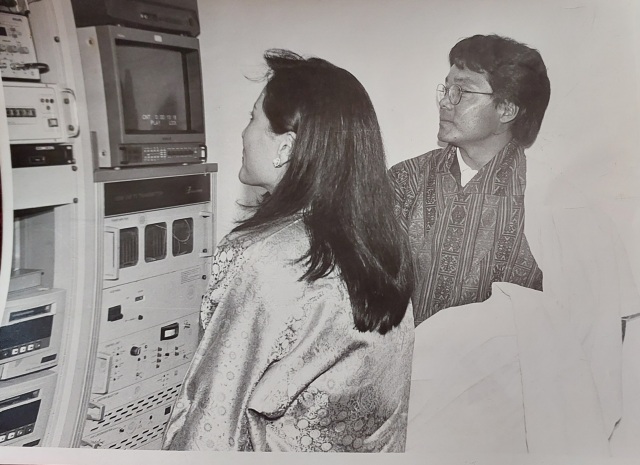
Her Majesty Ashi Tshering Pem Wangchuck inaugurated Bhutan TV at 4pm on June 1999Her Majesty Ashi Tshering Pem Wangchuck, Princess Chimi Yangzom Wangchuck and Ashi Sonam Choden visiting two days before the inauguration
My sister called. A distant aunt with whom we shared our childhood days has lost her son.
“This is the second one she is losing,” my sister added.
I jump out of my seat. I remember only the eldest one, whom, of course, I have not seen since our lives drifted apart after primary school. I went to a boarding school but our parents (our fathers were second cousins) worked in the same department for few more years.
In recent time, occasionally, I met my aunt but saw none of her children. Besides, my uncle passed away ten years ago and that further widened our relationship.
I asked for more information on how my distant cousins did with their lives. I was told only one has a stable job. That too a low-level one. None of them completed school. And three of them (two deceased now) were doing some odd jobs, regularly getting into problems of all kinds.
After I put my phone down my heart sank and for days I was depressed.
“Why is life so unfair? Both my uncle and aunt were not bad people,” I started asking questions I had no answers to.
We (my distant cousins) started our lives together. Same school. Same teacher. Went barefoot and hungry together. In fact they were a little better off for some reason. And yet they are where they are and we (my siblings) are where we are.
They too had dreams. I remember vividly that one wanted to become a pilot like me.
Moral of the story.
If you see someone doing odd jobs, or in some low-key positions or places, treat them well. Know that they too had dreams. They too would have loved to become successful like you – whatever success meant.
Check on your relatives, and your classmates. I know I am terrible at keeping in touch. It is my weakest link with relationships. I mean no malice, though. But one thing, I treat my classmates like I always used to. We still call each other by nicknames. No protocols or no social distancing.
Not everyone has made it although you may have started out together. It’s not their fault. I don’t know what it is. Simply, disadvantaged?
(NB – I am helping my aunt financially since death is also expensive these days)
I just read an old article on Tenzing Norgay on New Yorker. Tenzing is one of the first humans to reach the Peak of Mt. Everest. The link is given below.
An article like this one on Jigme Palden Dorji would be nice, rather than obsess over who was “first” to reach the summit of Mt. Everest. An indepth piece on his inner and the outer journey.
For, a feat such as climbing Everest, or venturing into the unknown, is intimately personal – and rarely about the prize, or recognition. Something must have pulled, or pushed, our young Jigme there. Such a story would be inspiring and worth a read.
Tenzing Norgay, as the article says, wanted to climb Everest because a monk had once told him that Buddha lived on top of Mt. Everest. A devout Buddhist he felt the pull and made an offering when he finally got up there. The other reason is that he grew up near Mt Everest and saw Swiss expedition try and fail to summit it. So, as a boy, he vowed to everyone that he would go up there, or die.
The other relevant point that the article highlights is that while he was lauded and decorated in other countries, he faced jeolousy and envy among his own people. Sounds familiar?
Congrats to our young army officer, Jigme Palden, for dragging himself to the peak of Mt. Everest. I say “dragging” because everyone who has been above 5,000 meters will know that it is no more a casual walk after that altitude.
I was joking that the highest point I have been to in my life was 5,300 and with an extra shot of whisky I felt I was on the top of the world. What a feeling it was!
Jokes aside, first, Jigme’s personal achievement is not just about him. His achievement is a reminder, and inspiration, to our youth that there are still places to go, things to do and peaks to summit. It need not necessarily be another mountain, or the Moon, but could be the peaks of science and technology, of business and innovations, or art and music, and films or farming, and many more.
In a country where strong socio-cultural norms and the perceived limited opportunities make you feel constricted, young Jigme (I think he was my daughter’s schoolmate) is a reminder of the immense possibilities and potentials that the world offers and that one should not be holed up in the excuses provided by the society around you and the authorities above you. It is an example of having a dream and pursuing with with determination.
It is about thinking beyond the normal, routine and the acceptable. Nothing great has been achieved by humanity without challenging all the above.
Second, and most importantly, it is about challenging yourself – to wake up early, train hard, work late, put your heads down and keep going.
“You don’t conquer the peak. You conquer yourself”, a seasoned mountaineer once told me long time back. It is not about reaching the summit. It is about knowing yourself, where you can get, what you can do, and who you are at the deepest level – because only when you push yourself to the extreme you know what you are. This is perhaps a person’s biggest achievement in life. Once you figure this out, the rest will follow.
I join the nation in celebrating this proud moment of his achievement and in wishing for a wonderful life ahead of him with more “peaks” to conquer.
May the spirits of your ancestors, and the dharma protectors of this small great nation be with you.
So, it is not just me who is nauseated by this committee thing for every decision to be made in this country – especially with the over-emphasis on it. (See my earlier post)
Well, to share my own experience I have always believed in the old Bhutanese adage – consult others but decide for yourself. In much of what I do at personal – and at professional level, this old wisdom has been my modus operandi.
Sure, it has got me into trouble. I was slapped with 141 audit memos when I led the Bhutan TV project in 1999 (my promotion was held for several years because of these). At work, my colleagues were often caught off-guard when they found themselves lagging behind me. This attracted, and attracts, a lot of envies and jealousies. But never mind. Nothing lasts anyway.
There is one thing one must remember, though: And that is, never to do anything with greed, hatred or self-interest. If you leave those out, the universe will ultimately find you honest and innocent – no matter what you do or how you do. And you will have no skeletrons to hide in your cupboard. You can age with a smile and with a pure heart – a clean chit, with tens of achievements on your cap.
And so is life..
Time does not wait for anyone. As my good friend, blogger Yeshey Dorji, says: the world does not wait for Bhutan.
In life, if you get entangled with what others might say or think, you will age regardless, and soon it will be time for you to pack your belongings and vacate place. No one owns the job one has. Don’t make it too personal. Rather, do what is best for the job – not for yourself.
For those in leadership positions or in a place of power or privileges, cherish it! You are the Chosen One. But don’t waste the opportunity by playing safe, or by playing dirty – or by the holding back the best of yourself. Because when you go – and you will go one day, you want to go with a style, not with regrets and remorse. You should the proudest of yourself when you eventually retire.
The choice, of course, is yours.
By the way, the iconic Taktshang was not built by a committee. 😁😁😁
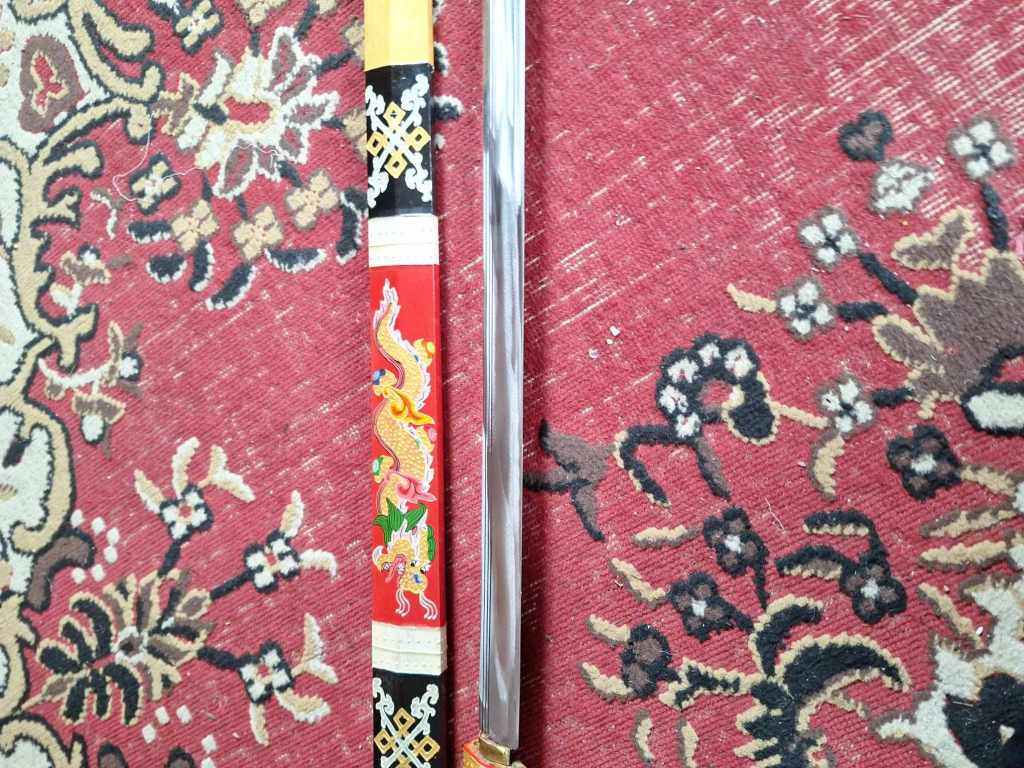
So I needed a few used patangs – ceremonial swords worn by decorated officials. I needed for my next project – another religious construction. After a few direct enquiries with people I knew, which bore no results, I posted my request on Facebook.
And to my surprise, a kind lady, who doesn’t want to be named, responded. Let’s call her Golden Heart. Golden Heart mentioned that she had in fact three patangs and a few karbas (Sharchop word for ladle). She said if they were fine for my project, I could have them. She called me immediately to get my home address.
“Do you want to know how I got those patangs?” she asked.
“I was walking along Thimphu street and I found an old woman in a scorching Sun selling them on the sidewalk,” she said. She decided then and there to buy all the goods although she had absolutely no use of them. She felt sorry that someone that old had to sit under the burning Sun to make ends meet.
“I felt so pity for her,” she added. “The old lady told me that her husband finds old patangs and restores them and sells them. And with the money they earn they survive.”
The karbas came from other rural salesman and were also bought out of sympathy.
What also struck me about Golden Heart is that she comes from the Lhotsham community, who are predominantly Hindu. Who would have thought? And how inspiring is it for me that my works get resonated beyond my own religious fraternity.
More than her religious faith, however, I learnt through our call that Golden Heart is driven by kindness and simplicity. Although she lives on a small pension and is currently broke, while undergoing a long medical treatment she refused any money from me.
To be honest, I am often discouraged by the bureaucratic roadblocks I have to encounter even when I am doing something good for some distant community, or for the nation. However, it is ordinary people like our Golden Heart, their support and simplicity and their words of encouragement that keep me going.
Thank you, Golden Heart. May you be blessed with speedy recovery and a long life. The world needs more of you.
May 2, 2024 – I drove to Athang Rukha to attend the last day of the Mani Dungdrup – organized by a certain Lama Wangdi from Punakha.
I had mainly pushed myself there, despite my heavy schedule, for one reason – the Rukha Lama Ugyen Tshering and seven men and women came and worked tirelessly in the heat of Gelephu to organise the Sacho Bumter for Dorje Phagmo Center the week earlier. I intended to reciprocate their favour, quickly pay respects to Palden Lhamo and Avalokiteshvara and turn back. So, it was just another trip for me. I have been doing this for 18 years now.
The Arrival
However, this time the Rukha Lama had other plans. The villagers were told to receive me with full honors of a VIP-Lama or whatever. So, to my great embarrassment I was received with the blaring sounds of dung-jaling (Tibetan religious horns and trumpets) and ladies singing as they led me in procession to the temple.
At the venue, the jing-ser ritual was going on and the Presiding Lama, Venerable Wangdi – the former Lam Neten of Tsirang, signaled me to my seat.
When the ceremony was over he explained the significance of the Jing-Ser ceremony to the people, and also acknowledged my arrival.
“We have not met before. So I am honored to meet you in person. The locals here speak very highly of you,” Lam Wangdi told me as he turned to me.
He continued, “Almost nine years back I accidentally discovered this sacred abode of Palden Lhamo, but with no religious events whatsoever. So, I initiated and we did four editions of Mani Dungdrub from 2016 to 2019. I was told you were living abroad then. Then, Covid struck and this is the first one since normal life resumed”.
In 2015, Lam Wangdi, who was then the Lam Neten (District Abbot) of Tsirang Dratshang, was invited to preside over a death ritual in the first village of the valley. While there, he was told that a Palden Lhamo temple was newly built further up in the valley. He felt pulled by some mysterious forces and one day, accompanied by his two attendants, he trekked up to Rukha. He was so mesmerized by the place that he vowed to initiate a Mani Dundrub (Million recitation of Avalokiteshvara mantra) for three years.
He turned to me again, “These people even didn’t know what Mani Dungdrub was, forget about having the religious items to conduct one. I had to carry everything on my back,” he told me. “Now, to see all these temples that you have built, the sacred statues you have put, and a resident lama posted here, it all makes me very emotional. So, I told people before you arrived, “Take good care of this man. Follow whatever he says. Do not let him ever leave this valley. He is a very special person.”. I hope you will continue to support this valley. If you need me, I will come and join you till my last breath”.
I was humbled by his offer. And I felt that he too was drawn here like me by some distant karma from our past lives. He is from Punakha and I am from Trashigang.
The Celebration:
The day continued with celebrating the Birth Anniversary of the Third King of Bhutan, a solemn tribute. This was followed by lunch.
In the afternoon before the Chenrizig Ku-Sung-Thug Wang, which required rest of the day, the Support Committee for Rukha Temple was launched with me as the unanimously-elected Chairman and 45 founding members. Blessing the initiative, Lama Wangdi remarked again to say how proud he was to see the youth of Rukha taking charge of the future of Palden Lhamo Temple.
“Many years back when I first landed here I made a little wish – that the Buddha Dharma flourish from this abode of Palden Lhamo. With the compassionate work of our khenpo (Dr. in Dzongkha) Dorji Wangchuk, and your own good fortune and hard work, I have been telling myself that the wish of this old useless man has been granted. Furthermore, today when you – the young people, informed me that you were launching this Committee to continue the works of khenpo and mine, I told myself that I can die as a happy man because you embody the wishes of our King and of His Holiness Je Khenpo”.
He continued, “Before I came, I was telling myself that this would be my last time because I am not young anymore. I am 72. But now, I have decided to make another wish and that is – before I die I will offer a Rigsum Gonpo (Chenrizig-Jamyang-Chana Dorje) Thongdrel to this sacred place”.
The day ended and dinner was served. I decided to take leave of my new-found friend and before I left, I asked him,
“Lama, did you say that you will initiate the Thongdrel for this temple here?”.
“Yes,” he replied.
“Well, then, I would like to commit Nu. 100,000 from my side for the thongdrel. Let me know when you need the money.”
He was very pleased. “That makes my work easy. I will match your offer with 100,000, and find the rest,” he replied. “So, I was right. You are really something. I don’t know what”.
We both laughed. And wished each other goodbye with a vow that we would continue to work for the valley and for Buddha Dharma.
Leaving Rukha:
As I drove back, alone, along the narrow dirt road towards Wangdue-Tsirang highway my mind always takes me to different moments in the 17 years I have frequented this valley – some sweet, some scary and many of friendship, laughter and selflessness. Like the lama, I too made a prayer when I first landed here in 2007:
“And that whatever was left of my life would be dedicated to uplift this godforsaken community to show them the path to a better future.”
I am glad that 17 years later we are way ahead of that simple moelam.
Some backgrounders
– Rukha is one of the few abodes of Palden Lhamo in the country. While there are sacred chambers dedicated to her, there are only few places in Bhutan that can claim as her abode. Rukha is one of them. The site was blessed by Guru Rimpoche and Pema Lingpa (on his way from Bumthang looking for the site that would later become Gangtey Gonpa)
– Lam Wangdi currently serves as resident lama of Dho-Jagar Lam temple in Punakha. When he comes to Rukha for mani dungdrub he brings everything that is needed for the event – butter lamps, prayer flags, khadar, chadri items, incense sticks, flour to make ritual cakes, etc. The local contribute what they produce – rice, and some butter
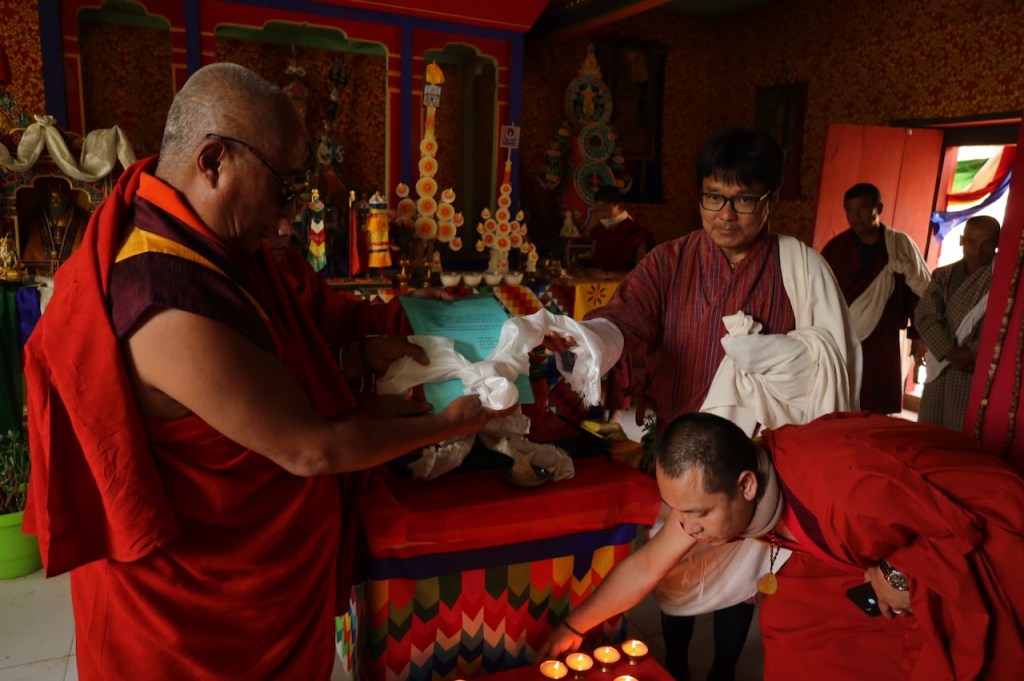
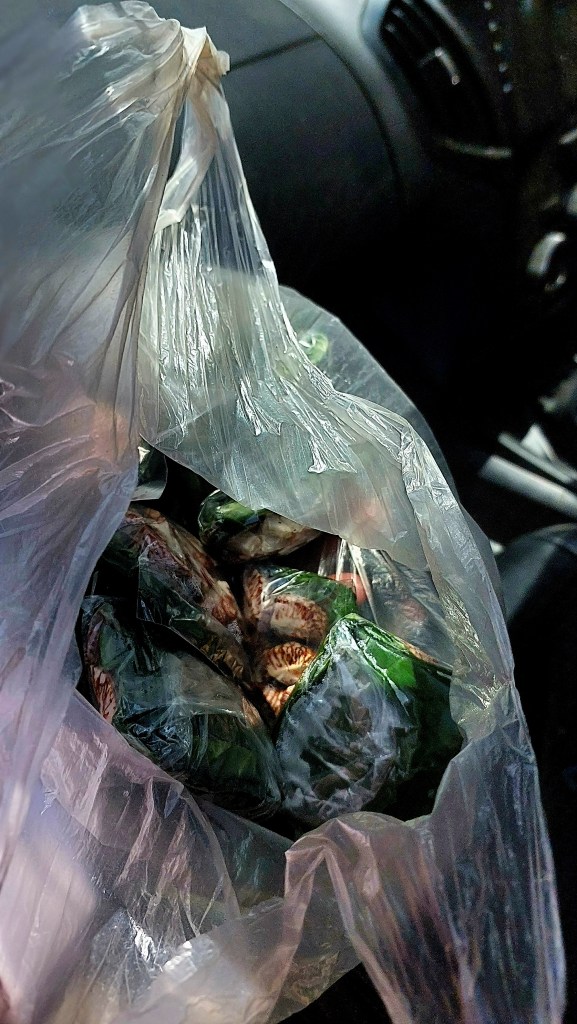
I don’t chew doma (betel nut) but in the freezing temperature of Thimphu dawn, I drove past an elderly woman who was selling it. She said she was feeding her family by doing this. I bought her whole stock.
So, what did I do with all the doma?
Many years back I called my lama, Dorje Phagmo, and asked her to protect me as I undertook one of my endless road trips across the country.
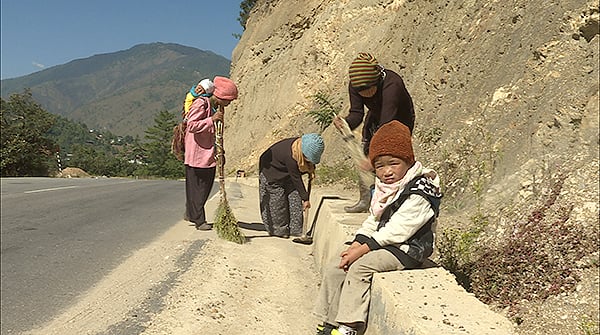
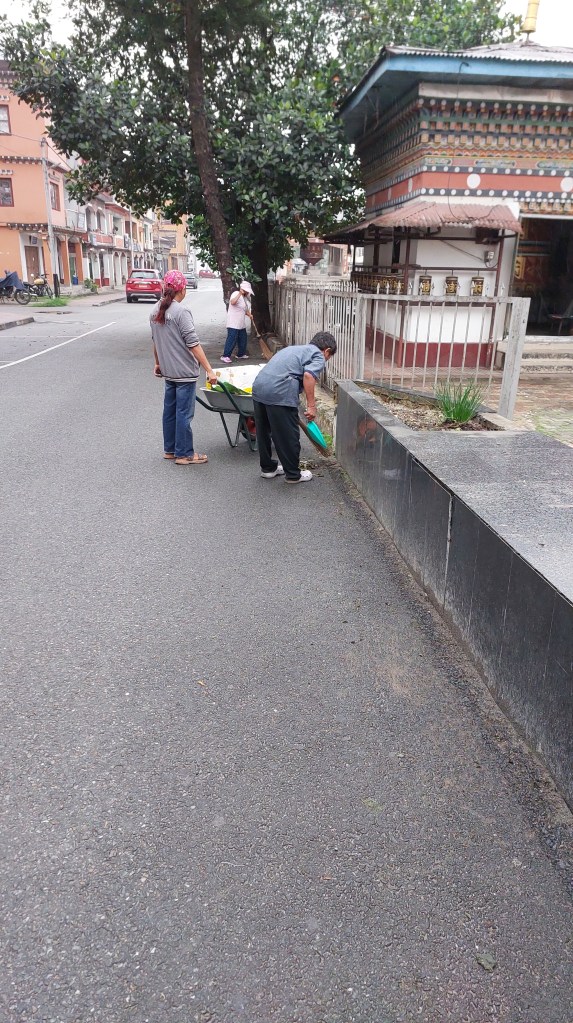
“Do you ever notice the road workers and their children along the highway?” She said. “Take some doma, and juice and biscuits for them. Their gratitude and happiness will be greater than my prayers. You will have a safe journey”.
Now, every time I hit the road, I buy a few cartoon of packaged juice, biscuits, candies and doma (betel nuts) and I stop and say hello to those people who are making my trips safe and successful.
This is where the whole stock of doma I bought yesterday from the elderly lady went – to the people working on the road.
You can’t hit two birds with one stone. You can hit many 🥰🥰🥰













 Dorji Wangchuk