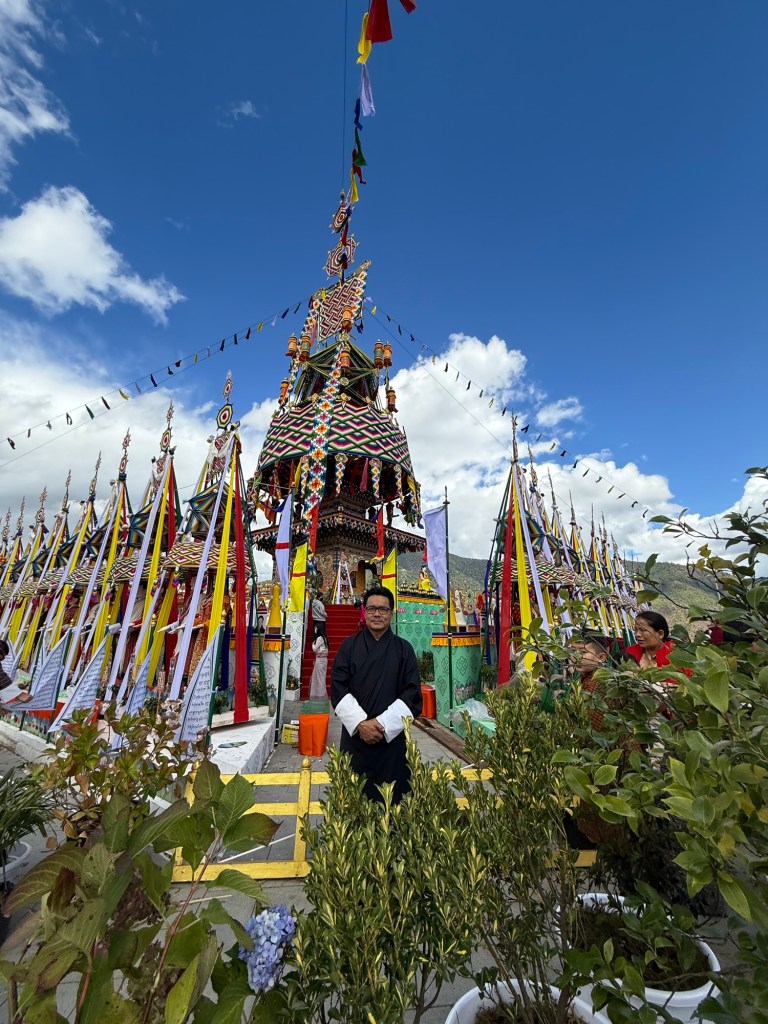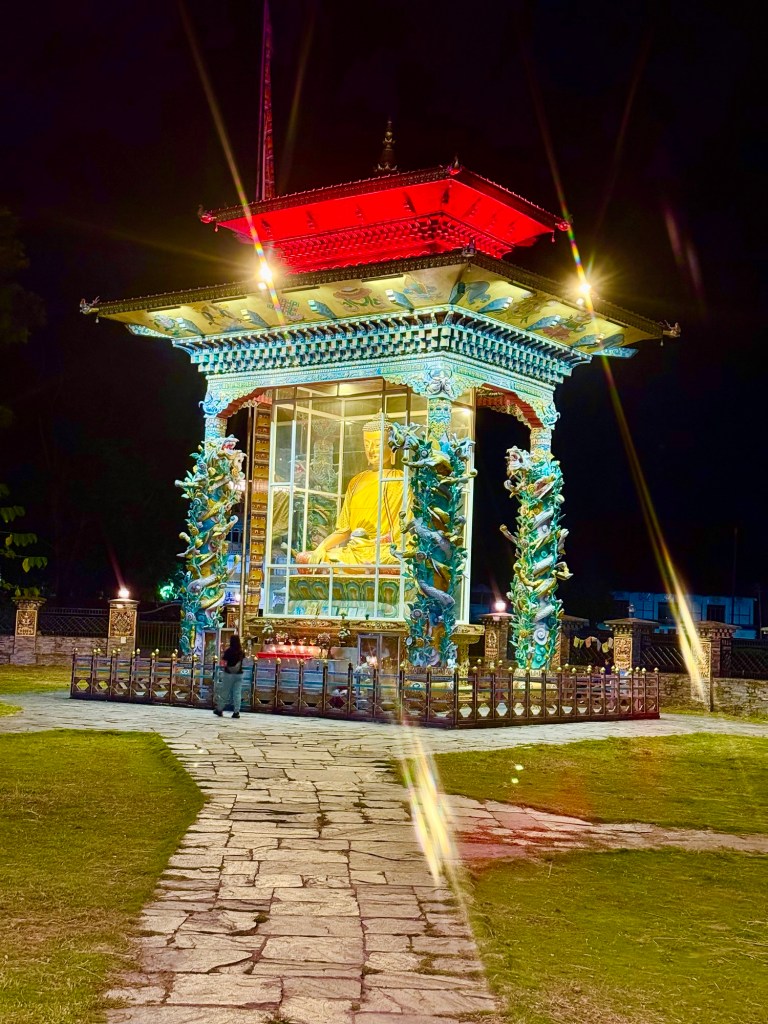
The Chorten Jarung Khashor

Lesser known facts and legends about Beybou Chorten.

  1. The last major reconstruction of Boudha Chorten was entirely sponsored by Bhutan’s first King Ugyen Wangchuck – and the works were overseen by Lama Sonam Zangpo as a young disciple of Togden Shakya Shri. (See last picture)
  2. During consecration 100 million Buddhas descended and dissolved into it. Thus it is the most sacred monument in all three strands of Buddhism.
  3. Boudha is the biggest stupa in the World. It has inspired several statues built in Bhutan, such as Chorten Kora, Chendepji, Kurizam, and Tama.

The background story of the Wish-fulfilling Beybu Chorten.

There are many legends, myths, history and stories around this magnificent chorten at Boudha in Kathmandu, that it is left to the devotee as to what to believe. As a Bhutanese, and thus a Guru Rimpoche fan, I choose to believe it as a wish-fulfilling Jarong Khashor.

In a terma scripture discovered by Tertön Lhatsön Ngönmo, ‘The Legend of the Great Stupa Jarungkashor’, Guru Rinpoche tells the story of a local Tamang woman, Aum Jazam whose real name was Samvari, who wished to build a stupa to house the ashes of Buddha Kashapa remains (Sangye Osung). She approached the king for land as large as a buffalo hide, which the King granted. She then sliced the hide into a thin string and made it as long as possible and used it to measure the perimeter boundary of the land – on which she decided to build the stupa.

However, when the local community found that out, they reported to the king of the trick, and to take back his permission, as the feat would also embarrass the Royal Court. The King’s reply was: ‘Let it be done’ (jarung) slipped from my tongue (kashor). The king speaks but once!”. The stupa then came to be known as the Jarung Khashor.

With the help of her three sons, Aum Jazam, enshrined the relics of the Buddha Kashhyapa in the central pillar and began building the stupa. However, she passed away before the stupa was complete.

The sons did complete the stupa and each made some aspirations during the consecration of the stupa. The eldest aspired to be reborn as a Dharma King. The second wished to be a great scholar monk. The third aspired to be a powerful tantric yogi. And the fourth to be a minister to coordinate all religious activities of his elder brothers.

All their wishes were fulfilled. The eldest brother was reborn as Tibetan Emperor Trisong Deutsen, the second as great scholar Shantarakshita, and the third as Guru Padmasambhava.

Interestingly bad wishes are also granted if made at this Stupa. The donkey, who believed that he did all the hard work, was upset that he was not invited to the consecration. So he made a wish that he be the one to destroy all the religious legacies of the four brothers. The donkey was later reborn as anti-dharma King Langdarma.

However, as the donkey was making that bad wish, a crow witnessed it and aspired to be the one to put an end to any anti-dharma elements. He would be reborn as Lalung Pelgyi Dorji and he would be the one to assassinate the anti-Buddhist Langdarma.

The Boudha chorten would, therefore, become known around the Tibetan Buddhist world as a wish-fulfilling stupa. And “the most sacred monument in Tibetan Buddhism” according to my lama. And because the stupa is so big, your wishes can also be as vast, and as crazy as you can possibly think.

🙏🏻🙏🏻🙏🏻

The E Vihara Temple – The Kurjey of Nepal

In Patan, near the famous Durbar Square, tucked away from the bustling streets, is the Yempi Mahabir temple. While it is not too visited, it is the site in Nepal from where Guru established the root of the Vajrayana tradition.

Known as Bayul Eyi Tsuglakhang in Dzongkha, it is celebrated through a terma discovered by Ugyen Lingpa that goes:

“The Great One of Uddiyana spent three months in Nepal ༔ vastly benefiting the people of that land. ༔
Among them was Vasudhara, the Newar. ༔
After this, he hid treasures in the Temple of É.”(Revealed by Orgyen Lingpa)

THE BACKGROUND.

Guru Padmasambhava’s connection to this place is similar to the one in Bumthang Kurjey.

The Newar yogi king, Shilamanju, was in distress, as some evil spirits had kidnapped Shilamanju’s daughter, Kunla Kunsashi. The entire royal family supplicated upon their master to help them.

Having arrived here and entered the realm of spirits to retrieve the Newar princess, the site eventually became the first site of the Vajrayana teachings to the Newars – who all converted to Vajrayana Buddhism.

Guru’s Activity Seat

This place became the main seat of Guru in Kathmandu valley, and it is believed he lived here for many years – meeting with many siddhas and lay people. Over time, É Vihara became the springboard for tantric teachings as it expanded to the North. At one point, the place saw a streams of teachers, yogis, siddhas, as did skilled artisans.

According to the Tibetan sources, this is the place where the Tibetan minister, Nanam Dorje Dudjom (who later became one of the eight main disciples) met Guru and extended the invitation sent by King Trisong Detsen.

A sacred relic of this temple is the statue of Buddha Amitabha, from whose heart Guru is supposed to have emanated.

BARCHEL LAMSEL

the complex, the late Jadrel Rimpoche has renovated one section and built a rare Barchel Lamsel altar with all the manifestations of Guru that appear in Barchel Lamsel prayer.

You should take the opportunity to sit down and complete reciting the mantra.

GETTING THERE.

Patan is easily reached within Kathmandu by taxi. Depending on traffic, it takes 30-45 minutes to drive to the main gate from Boudha Stupa. It is near the most recognizable landmarks in Patan is the Hiranya Varna Mahavihar (Golden Temple).

Location.

Yempi Mahabir is located in Patan.

Almost enlightened at Yanglesho

I made my second visit to Yanglesho in Nepal and paid my respect to Guru Padmasambhava by reading the sacred Pema Kathang (or an attempt to be honest, but the intent was pure).

While Bodhgaya is a must for all Buddhists, for Vajrayana practitioners Yanglesho is mandatory, because it is the place of Guru Rimpoche’s attainment. To be more precise, it was here that he achieved Yangdak (ཡང་དག་) corresponding to the Enlightened Mind, after practicing the Yangdak Heruka (ཡང་དག་ཧེ་རུ་ཀ་) and Vajrakilaya.

Yanglesho also appears in the history of Bhutan as the place where the envoys of King Sindhu Raja of Bumthang found him when they came looking for him.

For centuries, devotees from Tibet, Bhutan and other Himalayan communities have traveled here to offer homage at the place where Guru Rinpoche gained the siddhi of Mahamudra. Of these four knowledge-holder attainments, the Knowledge-Holder of Mahamudra is supreme.

THE BACKGROUND.

According to ‘The Great Treasure of Blessing’ Guru Padasambhava was practicing the Sadhana of Yangdak Heruka when powerful local spirits caused a three-year drought and also threw in famine and diseases. Padmasambhava asked his teachers in India for a scripture to counter these attacks. The teachers sent him the tantra scripture of Dorje Phurba (Vajrakilaya) and the obstacles were thereafter pacified. Both Guru Rinpoche and his Nepalese consort Shakyadevi attained the third vidyadhara level. He was then referred to as Yanglesho Pandita by the locals.

In Soeldhep Lueduenma – a terma teaching conferred to Nanam Dorje Dudjom, a line appears:

“In the rock cave of Yangleshö in Nepal,
You accomplished the practice of Yangdak, Essence of Great Bliss,
Liberating all obstacles and obstructors through Vajrakilaya:
And, in this sacred place, you attained the siddhi of mahamudra:
To Dorje Tötreng Tsal, we pray!
To the Lotus-born guru of Orgyen, we pray!”

VISITING THERE

There are two main caves – Yanglesho, where Guru spent the Winter, and the upper Asura Cave where he retreated during the Summer. And then there are two other very important sacred sites – The Self-Arisen Tara and Ganapati, and the temple of Dorje Neljorma (Vajrayogini) – established by Phamthingpa, who was a disciple of Naropa, and teachers of Marpa Lhotsawa.
(Marpa Lhotsawa is the founder of Kagyu School of Tibetan Buddhism).

From Kathmandu take a taxi (driving time 1 – 1.5 hours) and shoot straight for the Self-ArisenTara and Ganapati (Drolma Rangjung) temple. After visiting it, walk up a few hundred steps to Asura Cave. There is a temple and Tshokhang built by Karmpa Lama, Trulku Ugyen Rimpoche. Spend as much time here in the cave and outside the cave to read, chant, and listen to Baza Guru, Barchel Lamsel or Soeldhep Luedhenma.

Then from Asura cave, walk down and before you hit the Car Parking there is a very sacred temple of Dorje Neljorma (Vajrayogini). And finally end your visit to Pharping with the legendary Yanglesho cave, which is right beside the road. There is a temple built by the Late Chatrel Rimpoche at the site.

FUN FACT

Pharping, and other sacred sites in Nepal, have lots of connections to Bhutan, and Bhutanese are most welcome by locals – owing to a history of generosity and patronage.

GETTING THERE

Pharping, the village that hosts all the above sites is some 25 kilometres from central Kathmandu. Take a taxi and go straight to Self-Arisen Tara Temple. CLICK HERE FOR LOCATION

🙏🏻🙏🏻🙏🏻

And so we begin

A journey of a thousand miles with this single step.

Going through the images of the ceremony to mark the start of Gelephu International Airport, my heart feels humbled, awed and proud.

At the last National Day His Majesty said that He would make His little children work there. “Even Sonam Yangden – even if she can carry just a pebble.” (Unofficial translation). To hear those heavily loaded words of commitment is something. Seeing them turn into action is totally a different feeling. I am simply awed, to say the least. There are no words to adequately express what the country is feeling.

Nonetheless, let me scribble this for posterity.

I got very emotional to see HRH Gyalsey Ugyen Wangchuck (especially) working. Maybe it is because Gyalsey Ugyen is the same age like my grandson. On the other hand, my heart is filled with immense love and pride for our Crown Prince who can seen carrying a large boulder with bare hands. Theirs outputs may be little, but the impact is huge – spreading to thousands of Bhutanese hearts across the globe.

The picture of young Gyalsups and Dessups who have showed up to build the future is reassuring. They will be the direct beneficiaries when this dream becomes a reality.

They say, a journey of a thousand miles begins with a single step. Here it was that single boulder put away from His Majesty with his bare hands. My heart is full, and so are my eyes. 🥹🥹🥹

I join the nation in saying a little prayer tonight, for our own collective success.

For it is our project – for our own future.

🙏🏻🙏🏻🙏🏻

(The new Gelephu International Airport project is the first major infrastructure to come up at the newly-envisioned Gelephu Mindfulness City in south Bhutan. Known as GMC it will be a new futuristic city that will blend modern living with nature, culture, health and wellbeing – and not a total pursuit of economic growth, but a balance one)

(Pictures: BBS and Official Page of HM)

GelephuMindfulnessCity #KingOfBhutan #Bhutan

Of Sutras and Spirituality

My posts on acquiring scripture written with gold ink drew a lot of interest and enquiries. A few also asked me what it was, which didn’t really surprise me. Another asked me the use of having a copy at home. For the sake of all sentient beings, let me share here what I have shared. (I directed the orders to Lam Kesang).

What is a sutra?

Simply put, sutras (Dz. མདོ་, doh) are teachings of Buddha in their original form.

The first set of sutras was written right after Buddha’s passing away. His cousin and closest attendant called Ananda gathered all the closest disciples in Rajgir in India, and they started writing down the discourses and sermons made by Buddha in his lifetime.

Historians agree that Buddha did not write anything down, but lived a life of a wandering monk, and taught people wherever he went. His followers like Ananda and Saiputra and other close disciples were believed to have superb memories that they could recollect and recite the teachings of Buddha in entirety. Hence, one unique feature of the sutras is that they start with the phrase, “Thus, I heard” to mean that they were reproducing what they heard and where.

What is the Heart Sutra?

The Heart Sutra (Sherub Nyingpo in Dzongkha) is one of the 40 texts that comes under the title known as Prajnaparamitasutra. Prajna means ‘wisdom’ and paramita means ‘perfection’, and this sutra forms the core of Mahayana Buddhism.

Legend has it that the original concept was taught by Buddha at Vulture Peak in Rajgir, and written down by a disciple of Manjushri. It was later entrusted to the Nagas of the underworld for safekeeping, and to be revealed when humanity was ready to receive it.

The legend then has it that in the Second Century, an Indian scholar is believed to have entered the Naga’s world, and to have bestowed on them the Buddha Dharma. In gratitude for teaching them, the Naga king gifted one set of Prajnaparamita texts to him. And because he managed to win the nagas, he was subsequently referred to as Nagarjuna (Noble Naga).

Heart Sutra expounds on the concept of emptiness, that everything and every phenomenon in the universe is empty of any inherent, independent or of permanent nature. And instead, everything is interconnected and interdependent. The text is a conversation between Sariputra and bodhisattva Avalokiteshvara. It forms the foundation of the Mahayana and Vajrayana schools.

Between facts and fiction in Buddhism.

One thing that I observe with younger Bhutanese, who are mostly urban born and bred, is that they are apprehensive of the mythological aspects of Buddhism as contradicting the philosophical teachings of the Buddha, and the actual historical accounts. Add to that the latter Vajrayana practices that include magic and miracles and endless rituals.

First of all, myths and legends form an integral part of any religion. When I was young, I attended a Catholic boarding school where I was told that Jesus walked on water. Instead of questioning that, I thought, how cool it would be if I could also walk on water.

Second, navigating between facts and fictions in Buddhism requires understanding that many concepts and legends have to be understood at different levels. At the ‘outer’ level you accept them literally. But at ‘inner’ level you try to appreciate the deeper philosophical underpinnings. Then finally there is the ‘secret’ level where you internalise and become the concept or the image itself.

Above all, Buddhism, regardless of schools and sects, has one aim – to guide the practitioners towards realisation – by understanding their true nature of the reality around them. It could be achieved through meditation, discipline and ethical conduct (Theravada school), or through appreciating the wisdom of emptiness and the core practices of loving-kindness and compassion and wisdom (Mahayana tradition).

Our Stories define who we are.

Despite being a science and engineering student for most all my life (at 35 I switched to journalism and filmmaking), and deep-diving into Buddhism only in my third career as an academic, I have always been open-minded to absorb everything Buddhism had to offer – the philosophy and the power, and the magic and the miracles.

Historical facts and accounts make us knowledgeable, but stories and legends inspire us as individuals, bind us as a society and as common humanity, and transmit timeless values across generations. A story is what makes life worth living, a culture worth preserving, and a nation worth fighting for.

Blame it on western education or its obsession with rationalism and positivism, we often place philosophy, history and devotion in separate boxes. And yet, it is not uncommon in Bhutan to teach history that is mixed with myths and heroes and divinities. Without being apologetic about this, I would say that this is the beauty of Bhutan. After all, to paraphrase my friends in the West, science does not have answers to everything, and spirituality helps make sense of the world where logic stops. And life, it is about making sense of the world around us, every moment that we breathe.

Benefit of having a copy of Heart Sutra scripture.

Coming back to the sutras, it is believed that the pages not only relay the timeless teachings of Gautama Buddha, but also emit his power and blessings.

In recent weeks, I have read deeply into the Heart Sutra, and moved by the profundity of the teachings on emptiness and its offshoots of wisdom and compassion, I took the opportunity to commission a personal copy – written in gold ink. It was done by the same people who produced the first holy Kangyur in Bhutan – on the royal command of our King.

Now, because the Prajnaparamita was discovered by Nagarjuna, whom the nagas and serpent-kings revere, having a copy of Heart Sutra is believed to protect you from diseases that nagas usually launch us, and from bad dreams and conflicts at home.

May the teachings of Buddha Dharma flourish forever.

🙏🏻🙏🏻🙏🏻

Bad karma. Good karma.

For the past two weeks, I have been mostly confined to my home in Thimphu. Reason: a second-degree burn on my right foot. A boiling cup of coffee fell on my feet. 

It was right as I was prepping for the signing of the MoU on 19th June for a big power deal which I had initiated. I made it to the event with sandals though (I apologise to all high officials that I had to break protocol, whoever noticed).

The burn was bad and was debilitating. A pilgrimage plan had to be canceled. Stranded at home with my doctor-friend advising me not to go out. It seemed impermanence just dropped by to say, hello!

However, two things kept me going. 

First, there is a lesson that life is subjective. You think you are in bad shape? With a little empathy, you will see many around you in worse situations. Compared to what others may be going through, the three weeks of prognosis I got for my burn is a little karmic joke.

Moral: If you think only of your misery, you will be more miserable. Look around. Talk to people. Many would wish they were in your shoes. 

Second, I completed reading the translation of the two most important sutras in Mahayana Buddhism – the Diamond Sutra, and the Heart Sutra. I bought this book. I don’t know when, and I could only read it this time. Had this minor accident not happened, the book would still continue to gather dust. 

I also had the time to think about ordering the Heart Sutra scriptures written in gold ink. The full title of the Heart Sutra is The Heart of the Blessed Perfection of Wisdom (བཅོམ་ལྡན་འདས་མ་ཤེས་རབ་ཀྱི་ཕ་རོལ་ཏུ་ཕྱིན་པའི་སྙིང་པོ་). What a blessing to be able to do that! (Will do a separate article on this).

Good karma or bad karma?

Was the burn on my foot bad karma or good karma? I would like to think that it was the latter. Because I got it done, there was not a single moment in the last two weeks that I complained about it. In fact, my spirits were high, and I was still dishing out memes and one-liners on taxation and other current issues. And, yes, it gave me the opportunity to read the Heart Sutra. 

Moral: When life takes you to a different place, find something more worthwhile to do there. 

Good karma is a choice – not just providential.

😎😎😎

Education? Don’t forget values.

This picture story came on my social media feed today. It is an incident that apparently occurred in 2019 in Mizoram (India). The little boy of 6, Derek Lalchhanhima, had accidentally run over a chicken with his bicycle. Overwhelmed by guilt and compassion, he turned up at a hospital offering all the money he had to the doctors to save the chicken. (Story was covered by mainstream Indian media).

This story reminded me of an incident involving my younger daughter when she was five or six. She had gone to a local store to buy some candies and the salesman had mistakenly given her an extra change of Nu. 1.

She found out later during dinner and she was so disturbed that she woke up early the next morning and waited for the store to reopen and hand over the money. The shop owner was moved by her honesty that he gave her some candies for free.

Another time, she was calling out to our neighbor to inform that their pumpkin had grown in our garden. Their pumpkin plant had crossed the fence.

Parental Education:

We live in an age where we are obsessed with education – to the point we drive the education system and ourselves crazy. But is classroom education everything that is there is to teach or learn? What about values like honesty, hardwork, humility, compassion, etc.

Truth be told, my wife and I have never checked on our children’s school work. A few times maybe she did but for me my dictum was, “I just want them to grow up as good human beings”. This aloofness in me, I know, used to put off my children’s teachers too. I understand.

Instead, I insisted on the Bhutanese values of compassion, loving kindness and community, and service to King and country. My wife, who is Japanese, taught discipline, diligence, duty and honesty. As for their school education, we were just content that our children were getting by at school.

Being Human. The Real Skill:

These days, whenever I have conversations on education whether it is in Bhutan or elsewhere, another in-thing is this so-called twenty first century skills. Although I teach at university level, and mentor executives and entrepreneurs from some of the world’s biggest tech companies, I have no idea what skills or knowledge will serve us as humanity moves deep into this century.

This is not to deride those who think they do, and are doing something about it. As far as I am concerned, as the world increasingly becomes technologically driven, as AIs take over jobs like immigration counters and salespersons at shopping malls, one thing will increasingly be missed and felt – human connection.

My proposition, therefore, to survive and even thrive in this hyper-connected world is to learn to be human again – and to instill the values of humility, honesty and hardwork. Our age-old values of compassion and loving kindness that are the core practices in Mahayana Buddhism will gain more currency and win you more credibility than the credits from the world’s best universities.

Actionable Solution:

Coming back to the opening story of the Mizo boy, according to the news reports, the school honoured him draped in a shawl, which is a traditional way of honouring someone among Mizos.

Every year in Bhutan, we honour students who have excelled in tests and exams and sports. Can we start recognizing exemplary acts of kindness, compassion and community service too? In a country guided by the words of Buddha, I would say, why not?

Formal education, yes! Don’t forget values.

Go to the places that scare you

Machiphu, Taktshang, Paro
🙏🏻🙏🏻🙏🏻
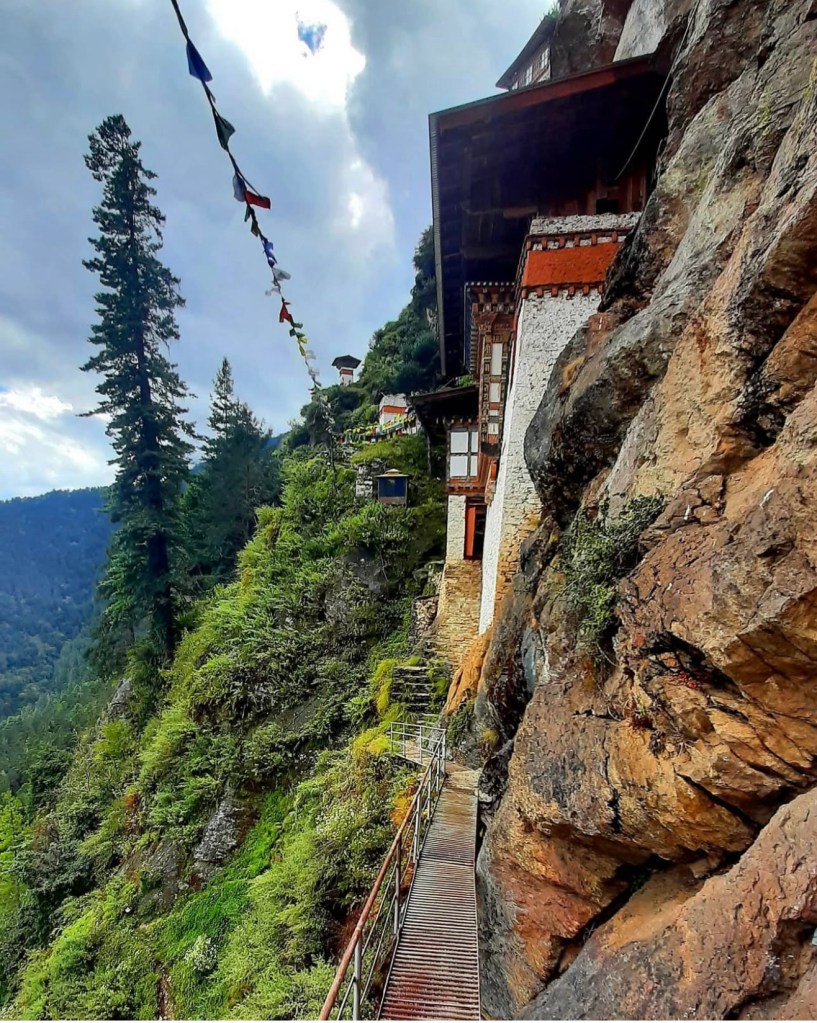
One of the nine major caves that encompass the sacred mountains of Taktshang is called Machiphu. It is named after Tibet’s greatest yogini, Machig Labdron (1055-1154). And it is located above the more iconic Pelphu complex (popularly referred to as Paro Taktsang).

Machik Labdrön is believed to be a reincarnation of Yeshey Tshogyel, and together with her teacher, the Indian mahasiddha Pha Dampa Sangye, is considered as the founder of the Chod practice. She is both a dakini and a deity – believed to be an emanation of Prajnaparamita (Yum Chenmo in Bhutanese).

Historically, she was a contemporary of Milarepa. She was an adept and outstanding teacher, and a mother, who defied social norms that only men can practice higher tantra with the required seriousness, strength and vigour.

The Machiphu Temple.

The ground floor takes us to a small doorway with a cave which fits just three people. Here Machig Labdron is supposed to have received the nectar of longevity from Buddha Amitayus. This is where you seek long life. Buddhists believe you can extend your life through seeking one.

On the upper follow there is a temple with the statue of Machig Labdron in the middle, Phadampa Sangye on her left, and Buddha Amitayus on her right.

The pilgrimage for childless couple.

Behind the temple there is a rock face with the footprints of Machig Labdron and Phadampa Sangye. Since time immemorial Machiphu and Machig Labdron are sought after by childless couples. If one seeks a son, one makes the wish to Phadampa Sangye. If one wants a girl, one makes the wishes to Machig Labdron. On the day of my visit, three women had come to seek the blessings.

What do I learn?

I didn’t seek another son or a daughter for myself but I made a moelam that my descendants flourish in numbers and in deeds – and take the Buddha Dharma further – just as my father did his tiny bit and I did a little more. We are after all the descendants of several masters of the past.

I don’t know much about the teachings of Machig Labdron, and I don’t practice the Chod either, but personally these famous five lines of hers, which I came across, were so liberating for me in the past.

Confess your hidden faults.

Approach what you find repulsive.

Help those you think you cannot help.

Anything you are attached to, give that.

Go to the places that scare you.

Of the five, the last one, ‘Go to the places that scare you’, speaks to me so deeply. This is because behind my calm demeanour I have always been a little devil – always daring to move beyond the norm, beyond what I am told is possible – or sometimes what is socially acceptable.

At the age of 8, I went to a Catholic boarding school. Not because of anything other than to stay away from going hungry at home. We were very poor.

Later when I turned 19, I left for Italy to study engineering at the University of Bologna. I didn’t speak the language nor have I stepped out of the country until then.

To give some context, it was during the time when Bhutan was completely isolated. There was no air link nor telephone. My parents only knew I had reached safely in Perugia, only after three months. That’s how long letters took to reach Bhutan.

In 2002, after successfully bringing radio and TV into Bhutan, I stepped down from a successful post of chief engineer to become a TV presenter/producer – which was bit crazy for someone who always struggled with communication. (I suffered from speech delay and probably ADHD and spoke full sentences only when I was four).

In 2013, after leaving my position as a senior palace official, I dared to become a simple teacher (gloriously termed as professor) in the remote Sherubtse College, where my office was a cold corner with a broken wooden desk, dingy toilets, and stained floors. I repaired my wooden chair too, and used my own equipment to teach media, journalism and documentary filmmaking.

My pilgrimage to Machiphu is to seek the blessings of the divine feminine to keep granting me the courage to go to such places. And by that I don’t mean physically scary places, but to keep going – to keep moving out of my comfort zone.

As we grow older sometimes we just feel like hanging our gloves and retreating to the comfort of our home and family – to say, I am done! However, if you look around there are things to do, places to go, people who need you, and some people who want you.

And there are also people who want you to disappear so that (they think) they can have a field day – in which case then you would be handing the victory to them. To them, I say,

“HELLLLLOOO! I am still here”

May the spirit of Machig Lhabdron guide you, help you with courage, to confront your inner demons, fight the outer monsters, and push you out of your comfort zone. To greater meaningful moments in your life. Or whatever remains of it.

🙏🏻🙏🏻🙏🏻

Core lessons from Machig Labdrön by Lama Tsulthrim Allione

  • Embrace and offer: Instead of running from fear, pain, and desire, one should “cut through” them by offering them as food to the demons and deities. This practice intensifies experiences to reveal their empty nature and sever attachment to a solid self.
  • Rest in your nature: Stop the relentless search for an end goal, because the mind is already empty and clear, like space. True peace comes from resting in this natural, unfabricated state, rather than chasing transient goals.
  • Take responsibility: “Carry the load” of all phenomena. This means taking responsibility for your own life and experiences, and not avoiding what you might consider unpleasant or insignificant. It is an invocation to keep your heart and mind open.
  • Challenge dualistic thinking: Recognize that the mind creates the labels of “good” (gods) and “bad” (demons) for phenomena. This dualism, called ladre, keeps us trapped in grasping and aversion. What you call a “demon” is simply an experience you are afraid of, and a “god” is an experience you desire; both can be used to cut through fixation.
  • Fearlessness through wisdom: Through the practice of Chöd, you can achieve a fearlessness that transcends both hope and fear. By cutting through the illusion of a separate, solid self, you can achieve a state of boundless compassion and liberated wisdom. 

Reaching there.
From the famous viewpoint at Taktshang, after a few stairs down, instead of going down towards Taktshang Pelphug, you take the trail to the left and climb and hike up for around 15-20 minutes. You get a beautiful top view of the iconic Taktshang. The temple of Machiphu can be seen as soon as you turn behind the bend.

👨🏻‍🦯‍➡️👨🏻‍🦯‍➡️👨🏻‍🦯‍➡️

Words of my Perfect Teacher

I spent my Sunday listening to the Empowerment of Tengyur – one of the two holy canons of Buddhism. It was conferred to over 500 lamas and monks by His Eminence Samten Dorji – the former Tshugla Lopen (minister of monastic education) at the main hall of Tango Buddhist university.

While I didn’t understand a word, the readings were very soothing to my ears and mind. As our belief goes, I am sure my consciousness understood the teaching, because it is supposed to be beyond language or words. There is a religious legend that when Gautama Buddha gave his first sermon at the Deer Park in Sarnath, all the sentient beings of the Six Realms attended the teaching and understood every word he spoke.

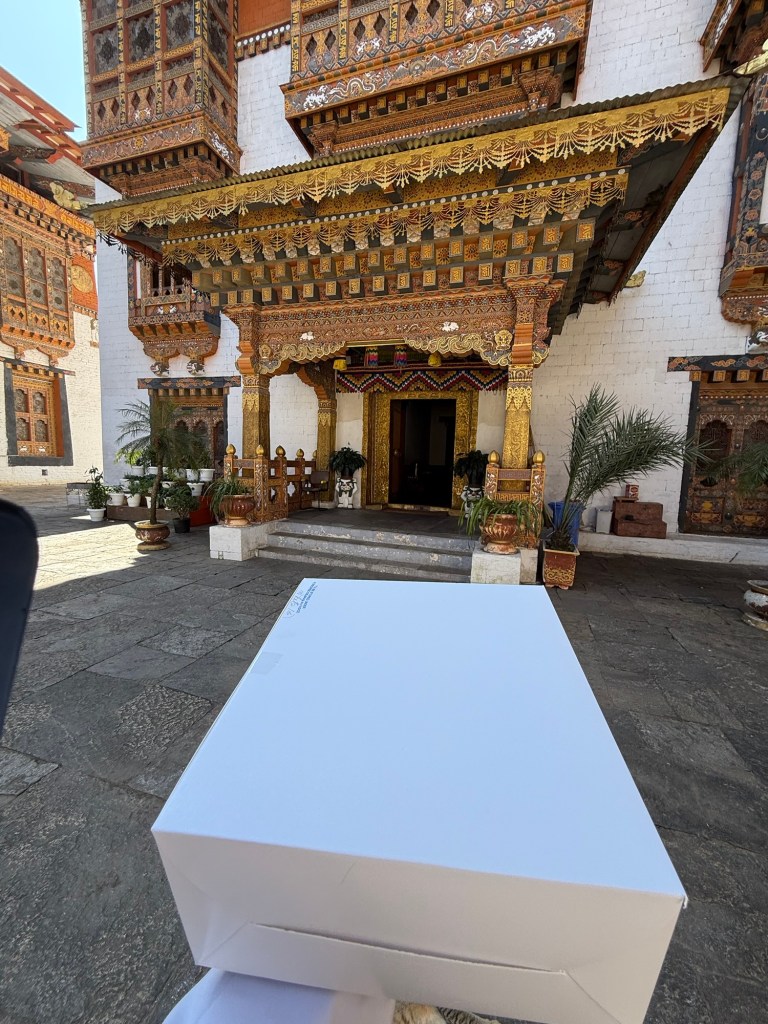
As a lay person, I also took the opportunity to offer cakes (18 boxes) and cash – known as chhagyeb, to the Lama and to all the monks, so that the blessings of their prayers and practices rub on me and to all sentient beings.

May Buddha Dharma flourish for aeons to come.

Background info: What is the Tengyur?
Tengyur means “the translated treatises” and is comprised of the Tibetan translations of works written by Indian Buddhist masters, explaining and elaborating on the words of the Buddha.

In simple words, Tengyur provides interpretations, explanations, and elaborations on the teachings found in the Kangyur. They were made by various teachers such as Nagarjuna, Asanga, Shantideva, etc. It comprises of 208 volumes of scriptures and some 165,000 lines.

(The Tengyur Empowerment started almost a month ago and will go on for few more days. It is held at Tango Buddhist university hall in Thimphu. There are only few masters who can confer this empowerment)

Ngelung Drechaling

Ngelung Drechaling in Gangtey (there is another claimant of this place in Phobjikha) is considered as one of eight legendary Lings* that were established by the Fourteenth Century Buddhist master,

Longchen Rabjam Drime Oser (1308-1363). Longchenpa, in short, is considered by far the most important Nyingma master for it was he who compiled and codified the foundational texts for study and practices for Nyingma school of Tibetan Buddhism.

Ngelung Drechaling takes its name from a stone boulder that is preserved in front of the temple, and is the oldest temple in the valley – even older than the famous Gangtey Gompa.

This temple is located below Gangtey Shedra (towards the right) as you drive down from Lawala. It is also known as the residence of Second Gangtey Trulku – Tenzin Lekpai Dondrub – a large statue of whom is on the main altar to the left of the statue of Guru Padmasambhava.

As for the relics, there are the tooth relic of the horse of Longchen Rabjam, and a beautiful and an old Guru thangka with hand prints of the Great Longchenpa.

More importantly, a metal plate that was smithed by Terton Pema Lingpa (1450-1521). Rubbing a food item on it and consuming it is believed to be both healing and a liberation from the Lower Realm. 

“Even our monarchs have come and done that,” says Lam Kunzang Dorji – the super jolly lama of the temple.

The Holy Waters of Za Rahula:

Of the many legends and beliefs surrounding this place, most significantly, is the fact that it is one of the places with a magical water called Za-chhu (holy water of Za Rahula), which have miraculous healing properties for neurological disorders like stroke, muscle dystrophy, palsy, speech delay or disorder, etc.

“Thanks to such miraculous powers of the Za-Chhu, I have received a couple of offerings from the devotees who recovered, with which I have managed to give a fresh murals, and 115 prayer wheels around the temple.” Says lam Kunzang.

Za Rahula – the unforgiving deity:

Ngelung Drechaling has a sacred chamber dedicated to Za Rahula. Za Dong Rahula – or simply Za Rahula, is the nine-headed deity who, together with Mamo Ekajati and Damchen Dorje Legpa form the Three Protector Deities of Nyingma School of Buddhism. These three deities in short form are known as Ma-Za-Dam Suum. 

The nine staked heads of Za Rahula are believed to be the nine planets that Rahula has swallowed – togther with the Sun and the Moon. Thus, he is known as the conqueror of the planets. 

Why should stroke patients appease Za Rahula?

One common Bhutanese belief is that when a person suffers from stroke or neurological disorders such as paralysis and palsy it is believed that he or she has been hit by Za (planets). This “Za” refers to the deity Rahula, because Za Rahula doesn’t forgive. Such malice or misfortune are also considered as karmic retribution or balance known as len-chha (literally meaning balance karma). Appeasing Za Rahula helps one recover from stroke – or provides protection from getting stroke. 

🙏🙏🙏

*The Eight Lings established by Longchen Rabjam:

In Bhutan, Künkhyen Longchen is known for establishing the eight lings (locations where he meditated on, taught, and wrote the Dzogchen):

– Babron Tharpaling (thar pa gling);

– Shingkhar Dechenling, Bumthang (shing mkhar bde chen gling);

– Tang Ugyencholing in Bumthang (stang au rgyan chos gling);

– Kunzangling in Lhuntse (skur stod kung bzang gling);

– Khothang Pemaling/Rinchenling (mkho thang rin chen gling);

– Menlok Kunzangling in Wangle (kun bzang gling);

– Nyenlong Drechagling (sngan lung ‘bras bchags gling); and

– Paro Samtenling (spa ro bsam gtan gling).