The Tragedy for Children Left Behind

Last week in a casual conversation with my so-called social media influencers, one working mother-journalist, shared something very concerning. The case of many young parents who have left their young children in the hands of caregivers back in Bhutan.

In a bid to secure the future of their children, the parents are working abroad and sending money and resources back home. It is a common narrative across Asia and not just confined to Bhutan. So far so good. It sounds nice. It sounds noble. It sounds rational. But this is where the good news ends, in my view.

As I mentioned before, I am not a child psychologist, but a social science student who is trained to observe social phenomena a little more in depth. More than that I am a parent of two daughters (now adults) and the head of an extended family with a long list of nieces and nephews, who always believed that depriving your children of parental love and presence does not bode well for their development.

The consequences of childhood dejection are even scarier. At best, these children will grow up with a big hole in their heart, while the worst case scenario is beyond anyone’s imagination. 

First, there is simply nothing in the world that can replace the parental love and their continued presence as the child grows up and confronts the cruel, complicated and confusing world. Second, there is tons of academic research that shows that the harm from the absence outweighs any economic benefits. One study from China suggests that children who are not raised by their parents are at higher risk of internet addiction, depression, anxiety, loneliness, suicidal ideation, drug abuse and violent crimes.

As we come to terms with the increasing reality of outmigration, there are few questions that one needs to ask in earnest – with utmost sincerity. Whose dreams and future are you securing? Your own or your children’s? Won’t there be the possibility that the dreams you are building could turn into nightmares in future? What if you are left with a broken child. What kind of adult this child would grow up to be? What kind of country are we going to live in? Mind you, ours is a small nation and it will take one person to bring down the whole society and the atmosphere. We are not India or the Philippines to absorb social shocks. No amount of money or iPad will substitute you.

I might also add that there are no perfect one-size-fits-all answers to the above questions. It depends from case to case, person to person, and from family to family. For instance, two of my age-mates with foreign spouses successfully brought up their children in the US with strong Bhutanese identity. And back in the 2000s my own sister had to leave behind two young children, and we the two elder siblings tried our best to fill the gap. It looks like it worked in our case. To our great fortune, though, our elder sister was a housewife, and we didn’t have iPads, smartphones or social media. And life was fairly simple and straight-forward. And I also met a woman in New York who has no choice but to provide from afar.

For those who are out, I feel it would be good to follow our age-old advice, which my late mother used to give me. Whatever you do, do it with moderation (tsham tshey in Bhutanese). If you have made some inroad into financial security, come back. For those parents who are planning to leave, take turns to go and study and earn abroad, while one stays back and be with the children. Or if you can afford and also ensure that you can rein in your children, pass your values and identity (which will be tough), take the children with you. Be careful with this too. This is another topic that I have partly dealt with in other talks and articles.

Ask those tough questions every now and then, and be honest with yourself, instead of blindly following the herd, or stubbornly chasing the dream. You know your own situation, circumstances, and your children better than anyone. But, if you lose your children no one will cry with you. The mass you followed will instead blame you for not knowing how to parent.

Most importantly, as my influencer-colleague shared with a heavy heart, be aware! Just know that this nightmarish future is not something you can undo once it unfolds in front of you.

You cannot unwind the clock of your life. You cannot retrieve those lost years.

πŸ˜΅β€πŸ’«πŸ˜΅β€πŸ’«πŸ˜΅β€πŸ’«

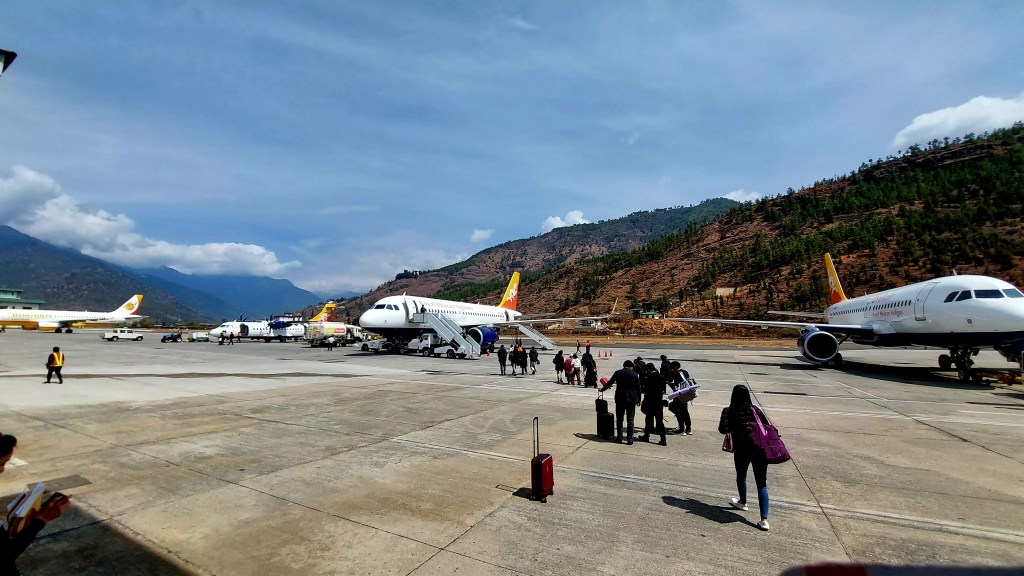
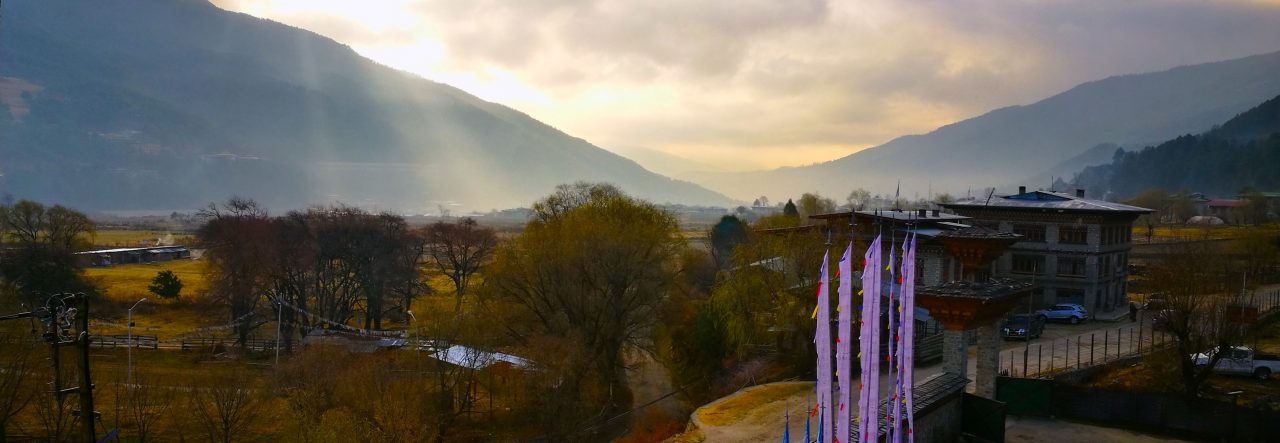
(Archive picture from my last trip)

Gelephu Mindfulness City – a perspective

Big and bold ideas are often perceived differently by different people. We make sense of the world and events based on our belief systems, assumptions, worldviews, interests, and on circumstances we grew up with. So, let me share my understanding of this most ambitious and important project of this era – the Gelephu Mindfulness City – a concept like no other.

Let me start by clarifying, what it is not? The proposed Mindfulness City will not be a futuristic metropolis like Dubai or Singapore with megamalls and skyscrapers. The new β€œcity” will be spread horizontally over a large area of 1,000 square kilometres. Farmland, heritage sites, biological corridors, and national parks will all be protected. 

There also seems to be a major misconception among the Bhutanese that everything will be taken over and flattened to build this city. That does not seem to be the case either. Investors and institutions, both foreign and local, will be invited to submit their proposals to set up their branches and businesses here, and state land will be allocated according to the master plan. I believe that as much as possible, public infrastructure will be built on government land. If private land needs to be acquired, they will refer to industry best practices to ensure fair compensation.

What is it, and what does it mean for us?

Commitment of our King: The initiative is, first and foremost, a project envisioned by His Majesty the King with the people in mind – especially the youth. It is like an aspiration we have as parents for our children, so that they can live a happy and a fulfilling life. As someone who has taught in colleges and seen the raw talent of thousands of our youth, I have always felt that as a society and as a government, we have short-changed them by failing to create adequate opportunities. This bold initiative will address this shortcoming. 

Coming of age: Bhutan has sacrificed a lot for the sake of the planet. In terms of ecological services, when monetised, Bhutan has been contributing something to the tune of US$ 15 billion (GDP is 3 billion). Maybe we leaned a little too much towards environmental conservation and deprived ourselves of the economic benefits and financial stability – something that became apparent during Covid-19. Of course, the new concept is not a U-turn from these conservation policies. It could be characterised as an attempt to find a balance between economic growth, environmental conservation, and cultural heritage.

Gelephu, thus, is a service to humanity that offers a new approach to being and living. It will be a peaceful space in the green Himalayan foothills, with clean water, food and crisp air, and where people meet their souls and add meaning to their lives. It will also be a place to pursue one’s passions, dreams, and career productively.

Common goal. Collective imagination: The Gelephu project has inspired a nation, sparked the collective imagination, and will give the Bhutanese a sense of shared purpose. As a social thinker, I have been lamenting the fact that as a country we have lacked a common goal since the advent of Parliamentary democracy in 2008. As elected governments come and go, we are pulled in different directions. 

His Majesty’s royal address at the National Day was the most powerful since the Coronation Address. The scene of youth flashing the lights from their phones and singing a tribute to our King, who was standing in their midst during the National Day Concert is still fresh in our minds. I had the fortune of witnessing something similar again at the consecration of the Water Treatment Plant in Gelephu. This is symbolic of the entire nation that is rallying around our compassionate young King who has unveiled the most courageous leap forward to build a mindful nation based on the timeless values and principles of the Three Jewels.

It looks like the nation has woken up from a long slumber and walked straight into a beautiful dream. There is a lot of work to do. However, as His Majesty has said, β€œWe should worry but we should not doubt” (our intentions or our capabilities).

So, what is our role?

Gelephu is firstly a Bhutanese vision. We need to rally everyone from every corner of the country to solidly stand behind it. People should feel a part of, have a stake in, and believe we will benefit from this endeavour. We need to instil confidence in our youth – the main beneficiary and the builders of this project. To do that, we just need to shower them with love and faith, just as loving parents would do to their children. It means to have their back if they need us, reassure them if they make honest mistakes, and show them that we really care. If we do that our youth will charge uphill for us.

The obvious question then is, do they deserve our love and faith? You bet they do. Let’s not forget their service to the nation during Covid-19. While leadership mattered, our Desuup volunteers patrolled the borders in the scorching Sun, distributed food and essentials to our doorsteps, and stepped up when the country needed them the most. What more do they have to prove?

Finally, we need to share our enthusiasm with the world and invite them in, provided they share the same beliefs.

Will they come though?

How do we attract investments and residents into this place? What is the pitch? How do we characterise this new β€œcity”?

World over, especially after Covid, people feel the urge to slow down, even quit the rat race, return to nature, live a more meaningful life, or escape to a faraway place that welcomes them – even for a few days. Perhaps Gelephu can be such a place – a beautiful spot in the Himalayas framed by the living Edens of the Royal Manas National Park and Phibsoo Wildlife Sanctuary, that enables green, healthy and sustainable living, while building a firm, fulfilling a dream or operating a company out of it.

To add to that would be the traditional wisdom of life based on Buddhism – a 2500-year-plus timeless insight into one’s purpose and the meaning of life. The enduring wisdom of compassion and loving kindness offered from a place, where deer and elephants run in the wild, can be attractive to a world that is torn apart by war, hatred, greed, pollution, traffic, malls and materialism. This is something that only a few places on earth can offer.

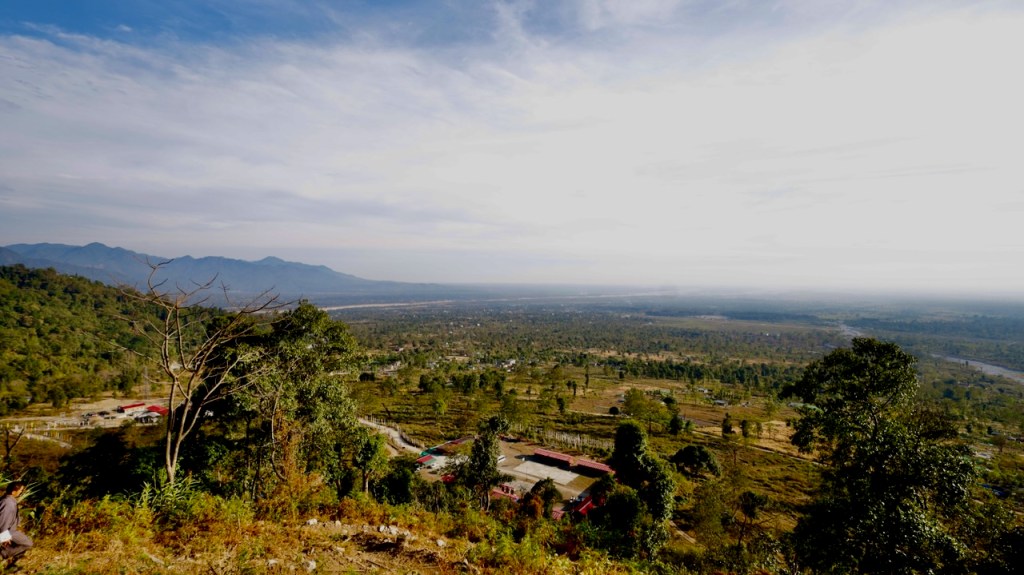
Travelling with a group of lamas and Rimpoches for a few days in the vast plains of Gelephu visiting the proposed sites, I had to keep pinching myself to check if I was dreaming. A couple of times as I whizzed past the areca trees and paddy fields, I had a feeling of being in a parallel matrix. This is what attracts me to this project, and what will attract them. It has sparked something in me.

So, will they come? To paraphrase a line from one of my favourite films, Field of Dreams: If you build it, they will come. In this movie, the main character, a farmer facing foreclosure, instead imagines a baseball field in the middle of his cornfield where his idols, including his father, could come and play despite being long dead and gone. He suddenly hears a voice, “If you build it, he will come”. The farmer builds the baseball field and the ghosts of these players, including his father, do appear and play. The moral of the film is, if you believe in what you do, the impossible will happen.

In conclusion – the Golden Thread

The project is, however, more than just a fancy airport and mind-blowing infrastructure. To me, it is the idea and the intent behind it, which we need to ponder upon as a country. It is about thinking loud and doing things differently without the trappings of bureaucracy, petty-mindedness, β€œthird-world” mentality or limiting ourselves of being a Landlocked country. It is about being brave and imagining big, but always with the greater good in mind – country and humanity. This is what a friend of mine views as the golden thread of this new vision.

In one of my essays I characterised Gelephu as a train station like the one in Sergio Leone’s film, Once Upon a Time in America, where no trains arrive.

Now the train is finally coming to Gelephu – both physically and metaphorically.

________________________________________________
Dorji Wangchuk (PhD), Professor, Writer, Researcher
(Views expressed here are personal of the author)

The article appeared on Kuensel of 30.12.2023)

Beyond the National Day 2023

So, the much-awaited National Day 2023 came and went. 

We sang, we danced, we poured out our hearts, and posted selfies on social media. We shared royal images of our Kings and Queens. We wrapped the buildings with the national flag. We recommitted our undying love to our country on Facebook. And far away, on the foreign shores, we came out in colourful national dress. and got together and partied together.

We listened to our King who spoke from the heart, which got us fighting back our tears. Some, of course, were not as strong. They cried like babies. But that’s okay. Tears, as they say, is a language that God understands. In our case, our King does. Trust me.

We all pledged to solidly rally behind the King – to roll out the sleeves, and work together, so that we can leave a lasting legacy – a country better than we inherited, and a nation stronger than the one which our Fourth Druk Gyalpo gave his tears, blood and sweat for 34 years.

So, what is next? To be honest, as people, in terms of commitments and behavioural changes, if the past editions of the National Day are to go by, our patriotism seems to have a very short shelf life. The day after getting fired up, we are back to our old self. We will be back to hierarchy, bureaucracy and VIP culture. Shopkeepers will be idling away waiting for the customers. People will be jumping back to the get-rich-quick approach – instead of looking for new opportunities, learning new skills or innovating their products or services. Simply put, nothing much will change.

This is a big paradox, because I know our respect for our King is real, the tears are real and the feelings are real. And yet, as quickly as we get excited, it seems to die out as quickly. I have tried to analyse why this is happening. Here is one probable explanation. 

The fire in our heart – or the lack of it

Blame it on the small-society syndrome, where what others might think, or say, determines our own thoughts and actions. Or blame it on our education system, which celebrates rote-learning over real learning, and competition over collaboration. One thing is for sure. As children transition to adulthood, somewhere along we manage to extinguish the fire in their hearts – and deprive them of their childhood curiosity, empathy, critical thinking and passion. Instead we school them towards conformism, conventions, complacency and unhealthy competition. 

Who is, then, bewildered that we have a herd mentality and not individual creativity? How can we complain that everyone is opening Dhaka sales or tour agencies, or rushing to Australia? Why lament the fact that we don’t regard one another with the same level of respect we accord to, say, foreign visitors?

This is sad, because from my experience of having taught diverse nationalities in this short university teaching career, Bhutanese may be ahead in terms of individual brilliance. We need to encourage creativity instead of conformity, community in place of competition, and compassion over ego. We need to celebrate every student as a champion in his or her own right. Among other things, in Macau they grade the students as A+, A-, B, C and D – and for what they are worth individually – and not pitch one against the other by placing them as first or second, passed or failed.. 

Since lately, I have decided to accept the hard reality that it is simply not there in us to be imaginative, creative, innovative or empathetic – definitely not among the average educated lot. It is nothing intentional. It is the result of how we are educated, and socialised. Therefore, those who can think, create or inspire, should lead, do and show. Those who are endowed with the agency to envision and see the future should offer themselves in the service of the greater good. Those who fully comprehend the Royal Vision, must break it down for others and list down the opportunities and potentials to help derive the maximum benefits.

The new vision

Every generation is presented with a challenge to prove its worth. This generation is now faced with the most pressing issue of its time – to secure the economic base of our country before it is too late. If Covid-19 has taught us one thing, it is that, despite all talks of globalisation, every country must ensure its economic independence, and fend for itself.  

To start with, we Bhutanese must shred off the mindset that the world owes us something. First of all, we are, now, not even in the list of the least developed countries that warrants someone’s sympathy. Second, Covid-19 has revealed that when times are rough each country will take care of its own interest, which is, of course, fair enough. Bhutan has learnt the hard way to identify its key interests and pursue them – one way or the other. 

Simply put, we need to build our own economic base, so that the future is not only guaranteed, but can also generate gainful employment with higher income. In the long run, hopefully, this would reverse the trend of out-migration, which to me, and I have said it before, is the most significant threat to our nation of our time.

The vision for an economic hub in Gelephu is towards this national goal of self-reliance. I don’t have the details, but after hearing His Majesty’s royal address, I have no doubt that it would be awesome. 

Relight my fire

Whatever we plan, the youth of Bhutan will ultimately have to be a part of, and take ownership of the vision. So, how are our young people responding? What is my observation? 

As the National Day drew to a close and the music filled the air of the Thimphu night, I took a stroll along Thimphu Norzin Lam, absorbing the celebratory mood, and taking pictures and posting them on my social media feeds. As I was doom-scrolling my phone for the images and videos of the day, I ran into several Instagram stories, in which our King and Gyalsey were featured, without the security details, standing in the stadium with some 20,000 and watching the National Day Concert.

Thousands of young people had their mobile torches on and were singing their hearts out to our King, pouring their love – and reciprocating the same love that the King had showered to the people that morning during the Royal Address. 

The lyrics went something like, β€œThanks to our past karma that we are born as Your people. If we don’t accumulate the same merit in this life, please let’s be reborn as other sentient beings in Your vicinity”. 

The video, which is shared widely, made me teary again and will be etched in our collective memory for years to come. In this cry and chorus of thousands of our young people, and in this unprecedented act (you never sing directly to the King out of respect, or light a torch in his direction), I observed one thing, and that our Gen Z is different. They will do anything for our King, as our forefathers did – even lay down their lives to defend our country. Our youth are also ready to offer their blood and sweat, as my parents did when they built the first motor road with their bare hands in the 1960s.

Maybe my generation poured the water over the fire of their hearts, but those little hearts are far from being extinguished. They are still burning. Or maybe, it was our King who lit the fire again that morning – the fire of love, the fire of selfless service, and the fire that will warm the hearts of our small great nation called Bhutan.

Something, I see, is burning again. I think that something is called hope.

Failures, education and learning

Failures, education and learning are three different things. But the modern society hasΒ jumbled them into a perfect blend trapping thousands of young people into hopelessness.

First, it kills meΒ thatΒ our young peopleΒ cannot deal with failures and disappointments in life. Why is this happening? Who taught them that life is aΒ smooth sail? Who is responsible for giving false hopes? How do we teach people to embraceΒ failures and disappointments?

microMsg.1486028230896
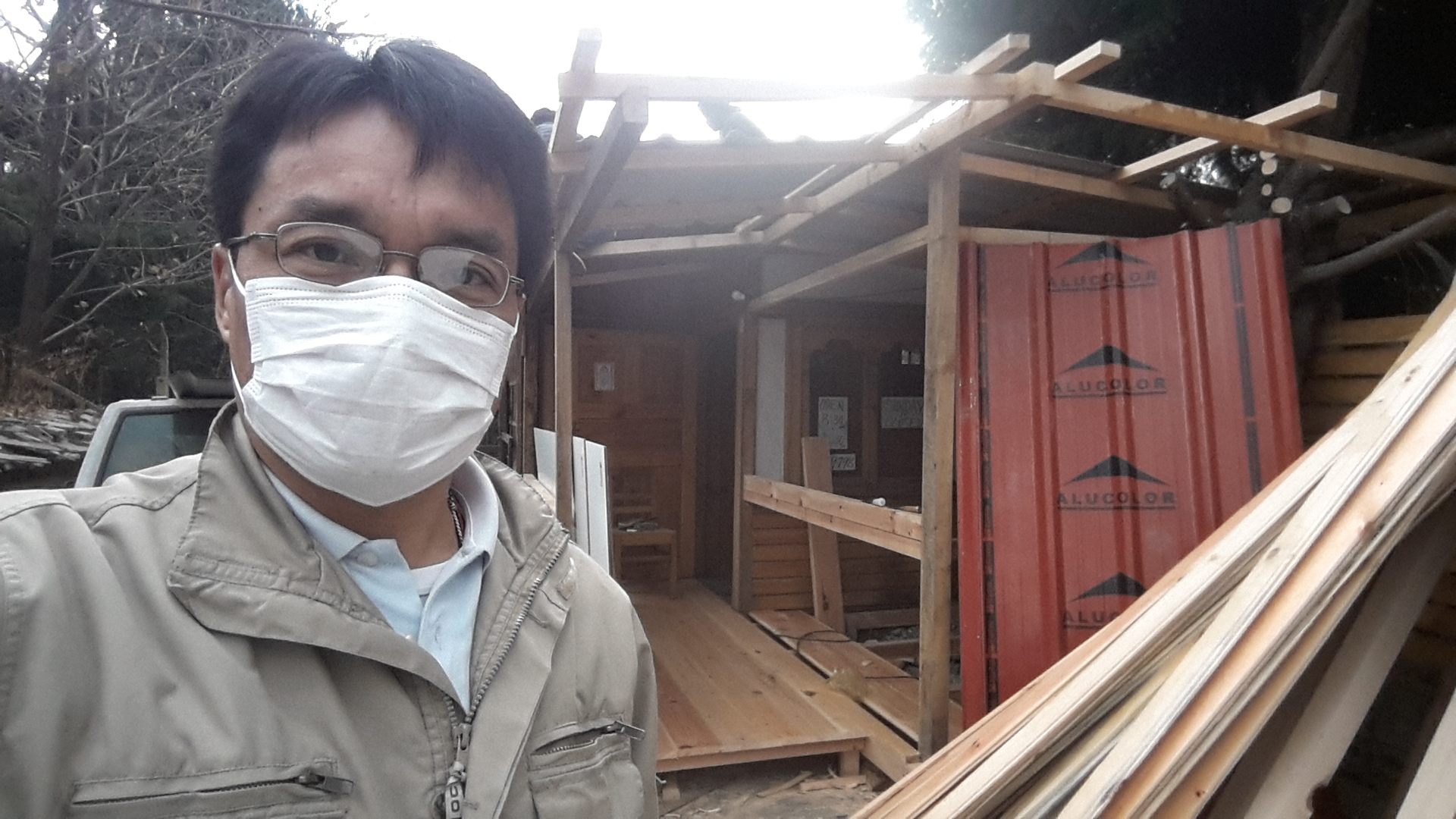
I suffer dust allergy but I love doing carpentry. Our people want job but not work.

A young Facebook friend wrote to me few days back (I get such requests very frequently from young people) asking me how he could help his friend to deal with a failure. Apparently his friend couldn’t qualify for college. I don’t know why people have to rush toΒ college. I made my daughter work as a receptionist in Dorji Elements for 2 years before she figured out what to do and resumed her studies.

Anyway here is the advice I wrote to my facebook friend. I thought this might be relevant to many facing similar dilemma.

Dear…….. IΒ have two suggestions and a word of caution for your friend.

1.Β Not being able to continue his studies is neither the end of the world nor the end of his learningΒ life. I, myself, wasΒ interrupted three times in my life on my road to formal education. First, after I finished class X when the government insisted I joined the job market (1982 to 1983). Second, after I completed my diploma from Dewathang (1985 to 1988) and third, after all these years since I graduated in 1995 (this was, of course, my own doing). So the key to continuing his studies is not to keep banging his head of being a student at all cost but to take a diversion and to resume after some time – like I did.

2. He can take up some petty jobs – any job that would give him an honest income – and then he could take an evening BA course at the Royal Thimphu College. (And in 4 years he has his ‘dream’ paper. Not sure if it would be useful but there is a 46-year-old shopkeeper who is doing that, together with many younger students. They work the whole day and come to class in the evening. It is the same degree course).

The word of caution to your friend isΒ never to look at formal education as the only way to success or to live. Education and learning are tools to help you become a better person, a good human being and a productive citizen. ItΒ should not be seen as an escape from poverty, as a pieceΒ to show off to others, or to pursue just because your classmates are also doing that. I hope these all make sense.”

Second, I hate that our society has created just one channel of thought, just one meansΒ to live and one way to be human – Get a college degree, or you are nothing. It is not just in Bhutan but everywhere. While I support formal education (otherwise I wouldn’t be writing here), what I strongly advocate is learning, and in fact lifelong learning. Education and learning for me areΒ both useful tools to see, feel and experience the world fully – and differently. However, education and learning are altogether different. Education is a systematic learning and that’s it. ButΒ learning is a natural process that should not stop after a formal education.

10629420_10154514250720153_2879644047791424915_oEven without, or with less, formal education we canΒ survive. When I was in the 7th grade (and I was just 12) I did house wirings in Tashigang town and in my village during school holidays and earned ‘tons’ of money. Two months and four houses = Nu.Β 800! Can you imagine? My father’s monthly salary was just Nu. 210. Other times, when I was growing up, I also worked as plumber and electrician and repaired sawmills andΒ rice grinding machines. However,Β I wouldn’t have survived without learning. As as neonate I learnt to breathe and cry and feed myself. As a toddler, I learnt to walk, speak, tie my lace and say, kuzuzangpo.Β As I grew up I learnt many other skillsΒ besides what the education system gave me. As a matter of fact,Β fromΒ some of those skills I even launched very successful careers in documentaryΒ filmmaking, journalism, teaching and social work.
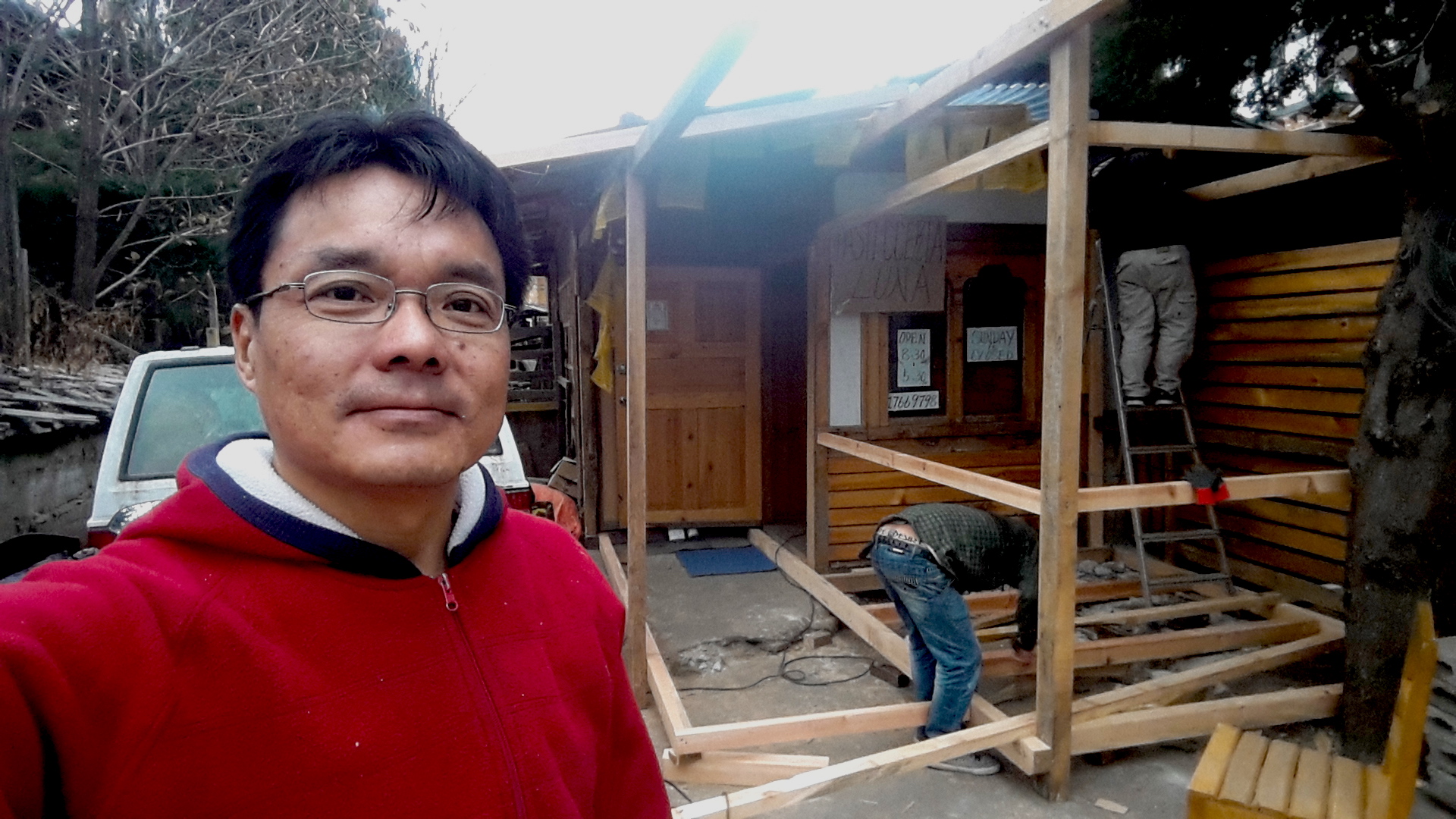
And my learning continues even to this day. But after my PhD, I might work as barista (I can serveΒ free coffee to myself), bookseller (inspired by Bookseller of Kabul) or a builder (building stuff is in my blood) or as a teacher (wherever they want me. Would love to teach on the steppes of Mongolia). Now,Β am I wasting my time pursingΒ PhD? Absolutely not. As I said, I am savouring the experience, the process and the different

2017-04-06 13.02.45
You are not suffering. You have suffering – Nagarjuna

worlds beyond the civil service, engineering, media, filmmaking and parenthood. I am in the world of philosophy (reading Aristotle, Confucius, Gebser, Foucault); the world of anthropology and socio-linguistics (works of Boas, Geertz, Labov); the world ofΒ Buddhism, which I thought I was in but realised I knew nothing (so reading Nagarjuna, Chandrakirti, Dzongsar Khyentse); and lastly, the fantastic realm of research and discovery – of old knowledge and new paradigms. This is actually what brought along this PhD thing. I started pursuing whatΒ I tentatively coined as middle path communication – a new theoretical framework for Bhutan in the age of social media. So PhD isn’t my goal but just a means.

To summarise, failures, education and learning are three different things. And then there is qualification – altogether a different animal, which together with titles and decorations, are things we are so addicted to. But I am also aware that it is not their fault. The modern society hasΒ jumbled all these into a perfect blend, which has trapped thousands of youth across the country, and millions worldwide. In Bhutan we do that:

  • Socially: We characteriseΒ education as an escape from poverty and also equate farming to hell. “If you don’t want to study, do you want to look after cows?”Β Bhutanese parents often tell their children.Β We also give shallow advice: Just get a degree and your life is made. We provide false hope: Study hard so that you don’t have to struggle later.Β And my all time favourite: Zaaai! You have graduated. Now you can enjoy the rest of your life.
  • Systematically: For the education system, you are just a number. If you hitΒ 62.5, you have made it to heaven (welcome to Sherubtse College). 62.4? You can go to hell. We even use massacring words like “cut-off” points.

I could go on but let me stop here and post a TED talk video of this extraordinary guy, Sonam Wangchuk (no relation to me. He is an Indian from Ladakh) who returned to his community and has some great answers and solutions.

20170131_164556

20170204_123024
I paid two people 25,000 (one didn’t even know how to use the saw) just to help meΒ build this – a counter for my Book Cafe (“grand” opening in 2018).

2016-02-27
I do plumbing works at home. Now it is so easy that you don’t have to do threading works. My next plumbing project will be solar water heating system and rain water harvesting.