Silver Jubilee in Silence.

Twenty five years ago yesterday (June 2), TV finally came to Bhutan. It was launched as one of the Silver Jubilee celebrations of His Majesty the Fourth Druk Gyalpo. While there were many great things done as a part of the celebration, including the introduction of the Internet on June 1, the arrival of television to Bhutan was the much-awaited moment for just everyone in the country for various reasons. Someday, if I feel, I will detail them out.

As many would know, I led that historic project, which I am still immensely grateful for the opportunity of a lifetime – something that I am still proud of and will remember it forever. I recall one morning in January of 1999 when the late Lyonpo Ugyen Tshering, who was then the Cabinet Secretary, called me and another colleague of mine, also Ugyen Tshering (who later became a parliamentarian) and conveyed to us the Royal Assent. In his simple misdemeanour he told us, β€œEven if you have to take the Druk Air aircraft to get it done, do it! Now it is a royal command.”

Running up to June 2, 1999, there are a few cute little details, and a secret, that I want to share here today. More in future.

The TV project, while it was proposed for months preceding to 1999, was given the final green light only 4 months before the actual launch date. So, it felt quite impossible to build a brand new TV channel in four months. When I started enquiring with the companies around the world for the essential equipment everyone just declined. One even told me that I was crazy. I was, actually. However, a French company agreed and I flew over to Paris to check the company. The deal was done.

In telecommunication engineering we also have something called redundancy – meaning we cannot depend on one set of equipment, since we are dealing with the public service. We need a back-up. And so, since it was impossible to get a second transmitter within that time period I stopped over in New Delhi and I requested my good friend, RK Gupta, who was then the Chief Engineer of Doordarshan to lend me a used transmitter. RK Gupta (he used to refer to me as “my Son”) sent a full set of equipment – all packed in three jumbo trucks from his branch office in Lucknow. Fortunately, I later realised that I had made this personal request, because the main transmitter from Paris came only on May 30th evening with only 60 hours to go on-air. We were literally counting hours and minutes, sleeping in tents at Sangaygang to get the job done and going home only for quick showers.

While my team was unpacking the main transmitter I immediately assembled the back-up station sent by Doordrshan and then got it working. This took away a lot of pressure from me. It was also because I was the only TV engineer back then. My team had not even seen what the TV test signal looked like before that. So I felt the whole national TV project on my shoulder.

June 2 came and the celebration kicked off in Changlingmithang and, at Sangaygang, which overlooked the whole Thimphu city, we briefly stopped to listen to the Royal Address. When HM made a mention of the introduction of TV, I was super proud, but deep inside I was still grappling with the fact that we had still not fully tested the equipment. We were making the last few connections to put the full power from the main transmitter through the antenna. I kept that a secret, because if people knew we were not fully ready, it would have panicked everyone. In a crisis you just keep your cool. We achieved the full power without burning any equipment just two hours before the actual launch at 4pm.

People will remember that the first historic transmission came 20 minutes late, but that was due to another last moment issue we had – and it was not from the technical side, although it is normal to hear the announcers say it is.

All in all, 25 years later here we are. Was it good, or bad for the country that we brought the TV? All I can say is, it was inevitable. In the years and months running up to 1999, I faced the Planning Commission and the powerful Cabinet (ministers were like gods those days) and I remember sternly repeating this same message.

1999 and beyond

BBS TV was not just about BBS. I can proudly say that the BBS TV, thanks to a technology called the DVCAM that we chose from several others, later gave birth to what we now have as the Bhutanese film industry. Norling and Tashi Nyencha were the first to jump in. DVCAM was a digital technology that made equipment affordable to small markets with shoe-string budgets. I designed a whole eco-system based on DVCAM, which was later adopted in many small Asian and African countries, for which I was conferred the Asia-Pacific Engineering Award in 2000 in Manila.

More than the award, these days I feel a deep sense of satisfaction seeing young artists and actors and our filmmakers – and thousands of jobs created by that single decision I made back then.

On the broader side, I would like to believe that BBS TV played a huge role, and continues to do, in our collective journey as a nation towards democracy and public discourse – and everything that came out of it. Both BBS and our Film Industry played a vital role in Dzongkha promotion and pop culture, which are strongly elements of national sovereignty. We reduced our dependence on foreign culture and entertainment.

Other than that, as I said, I only feel gratitude for the opportunity bestowed on me from the high above – for the trust and confidence in a 30-year old man – who was almost a one-man army. I felt, and I still feel that I owe it to my country (and not the other way around) for feeding me, clothing me and sending me for higher studies – and making me who I am today. My parents on their own, would never have afforded anything close if I was left to them.

Yesterday as I drove to Jaigaon and back my memories took me to all the mountains and peaks on Dagala, Takti, Ganglakha, Saureni and the southern foothills – among leeches and mosquitoes and occasional snows, to search for the perfect spot to place a TV & radio relay stations to serve our people better.

Wishing everyone a nice week of contemplation as we head for the last few days of the holy month.
πŸ™πŸ™πŸ™

Picture: The Guardian (newspaper), UK

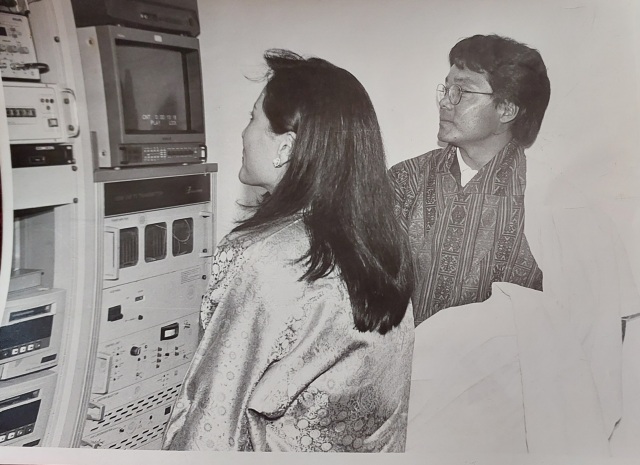
Her Majesty Ashi Tshering Pem Wangchuck inaugurated Bhutan TV at 4pm on June 1999
Her Majesty Ashi Tshering Pem Wangchuck, Princess Chimi Yangzom Wangchuck and Ashi Sonam Choden visiting two days before the inauguration

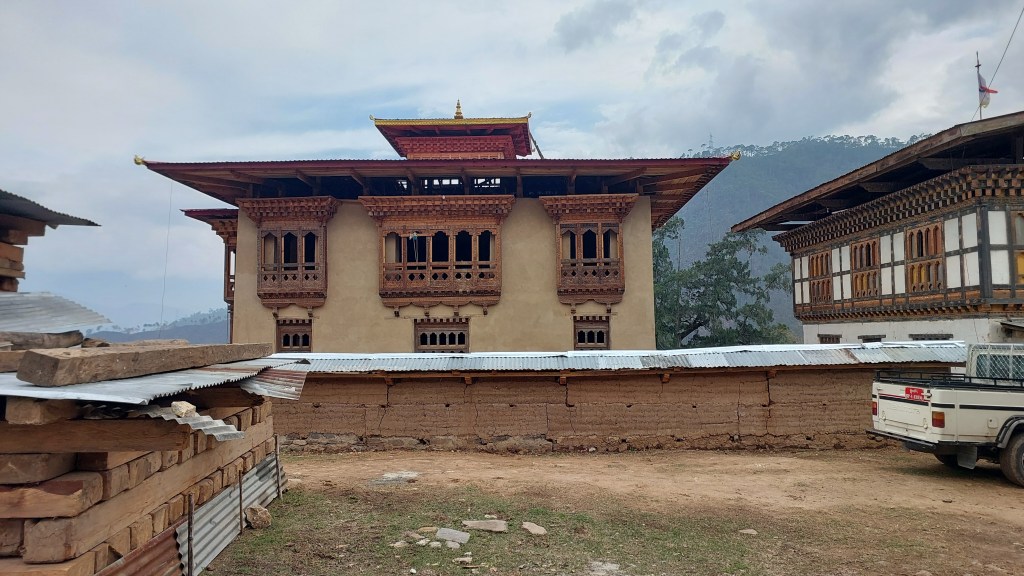
Jarogang Lhakhang, Athang Gewog

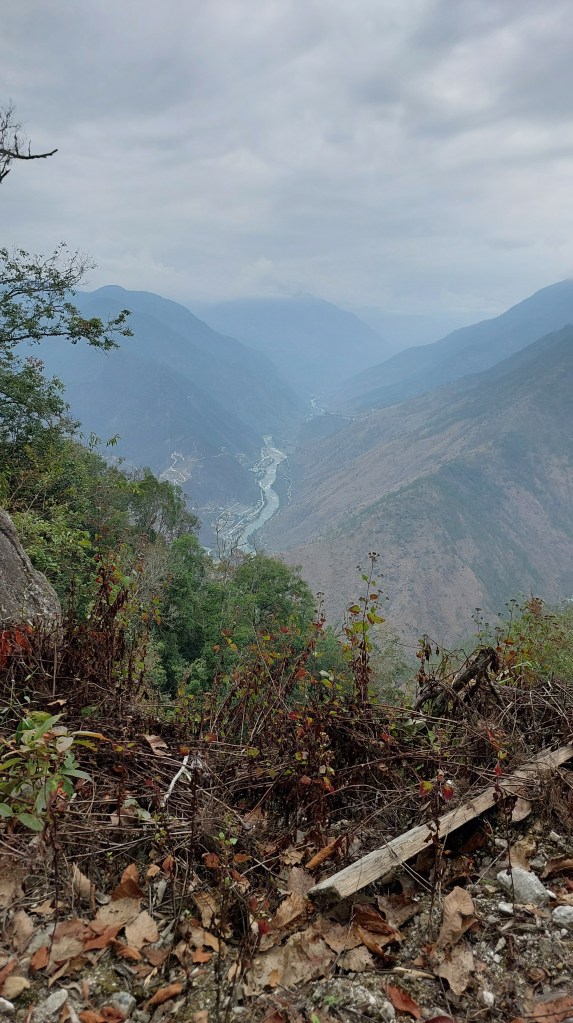
Jarogang Temple is located in the village by the same name. It is in Athang gewog – and one can see it perched on the hill across the river, when driving along Wangdue-Tsirang highway and when you reach around Kamichu.

Jarogang takes its name from Legon Jarog Dongchen – one of the three supreme protectors of Bhutan. This deity together with Yeshey Gonpo (Mahakala) and Palden Lhamo (Sridevi) make up the trinity of protector deities for Bhutan as established by Zhabdrung Ngawang Namgyel (1594-1651). 

During the Second Tibetan invasion in 1934, Semtokha Dzong was captured and occupied. Zhabdrung Ngawang Namgyel felt that his presence in the country was causing too many troubles for his hosts and may lead to more deaths in his name. So he decided to leave for India – enroute to Ladakh where the King there, Senge Namgyel, had invited him. Like many of his predecessors Zhabdrung Ngawang Namgyel intended to go on a lifelong retreat to Mt. Kailash, which was then part of the Ladakhi Kingdom. 

However, when he reached a stream after descending from Jarogang village, the deity Jarog Dongchen appeared to him and requested him to stay. The deity assured him that he would take care of the invaders. Zhabdrung, then, is believed to have returned to Jarogang and stayed in the house of Zomlha Chugmo (literally meaning Wealthy Lady of Zomlha). Few days later Zhabdrung again felt he was not only freeloading on the local people but also causing too much burden. He again set off only to be met with the deity at the same spot, who then informed the Zhabdrung that Semtokha Dzong has been razed down by a fire and all invaders have been killed. Zhabdrung named the small stream where he heard the news as Deychu – to indicate the stream where he received the good news. Zhabdrung returned to Jarogang and informed his hostess that he had decided to return to Chari.

The β€œkutsab” and the sacred relics of Zhabdrung

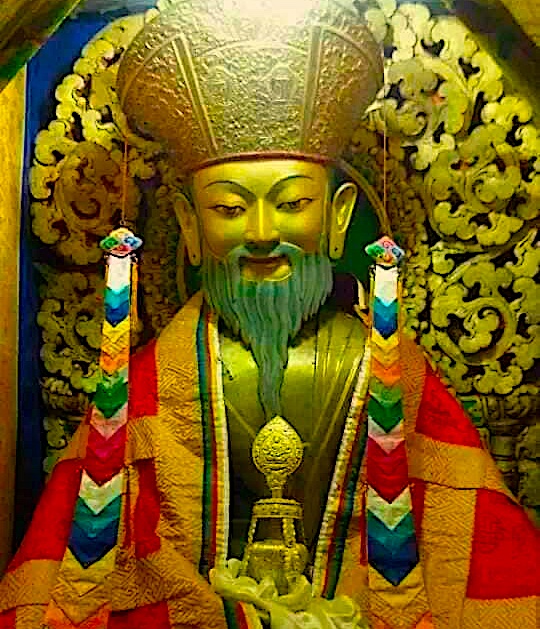
On the day of his departure, the hostess begged him to stay there and offered him the large house from where Zhabdrung could base his dharma activities. It is believed that Zhabdrung made two statues which resembled himself out of the rice dough and presented them to the hostess as his kutshab (representative). The statue, he promised, would carry the same sacredness of blessing as receiving it in person from him. 

While one of the statues is still there today, the other is believed to have flown away and landed somewhere in Tsirang. No one knows about it. However, the people of lower Wangdue and Tsirangtoe believe that the area would have good harvest and all nine grains because somewhere there is this second statue β€œstuck on a tree”, according to the legend.

The other amazing relic (for me) is his phurpa (ritual dagger), which seems to be very powerful. There is also a conch, a bell and a cymbal, which were all gifted to the Zomlha Chugmo. There is also a small metal statue called kharsapani, which is also believed to be self-arisen (rangjung). Some sources say that there were more relics and belongings of Zhabdrung but were apparently taken to Lama Lhakhang in Wangdue Phodrang Dzong – and brought here when the new dzong was built to be used as nangten. Nevertheless, in my view, Jarogang Lhakhang still has the biggest collection of relics associated with Zhabdrung – making it a recommended pilgrimage destination for every Bhutanese – irrespective of the faith, sect, or religious affiliations. In fact Zhabdrung was the founding Father of Bhutan – besides being the emanation of Avalokiteshvara and Guru Rimpoche.  

The trees of Jarogang

The visit to Jarogang is incomplete without visiting the jackfruit tree, which is believed to have grown out o a seed planted by Zhabdrung Ngawang Namgyel. Even today the lama and the monks of Jarogang make the offering of the first harvest to the Machen Lhakhang – where the mummified remains of Zhabdrung is preserved today (he was never cremated). This tradition has been continuing for over three hundred years now.

There is also a tall cypress tree below the temple, which is believed to have grown out of the Zhabdrung’s walking stick. Legend has it that with numerous wars and invasions, he doubted if his mission to establish a Drukpa state would be successful. Thus, he planted the walking stick and is supposed to have made a moelam (aspirational prayer) that if he were to succeed a tree would grow out of the stick.

(Triviality: The exteriors of Jarogang temple retains the mud color without getting the white lime wash. The folk theory is that the local deity of Uma demanded that Jarogang temple should not get a whitewash. In retaliation the deity of Jarogang demanded that Uma Gonpa won’t get a sertog (the rooftop pinnacle). So even today Jarogang temple is not whitewashed, and Uma Gonpa has no sertog)

Getting there

Along the Wangdue-Tsirang highway, before you reach Kamichu there is a cantilever bridge and on the other side of the bridge is marked as the headquarters of Jaypee construction company. Cross the bridge and drive for some two kilometers till you reach a diversion – marked with two signboards. To the left is to Jarogang, and to the right is Athang gewog office.

New-Year Pilgrimage – Finale in Rukha

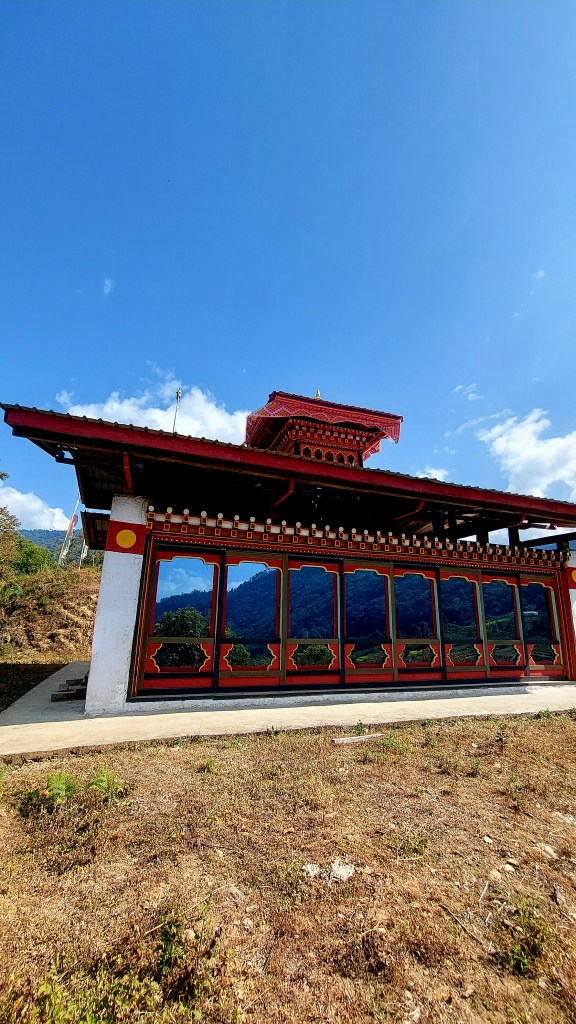
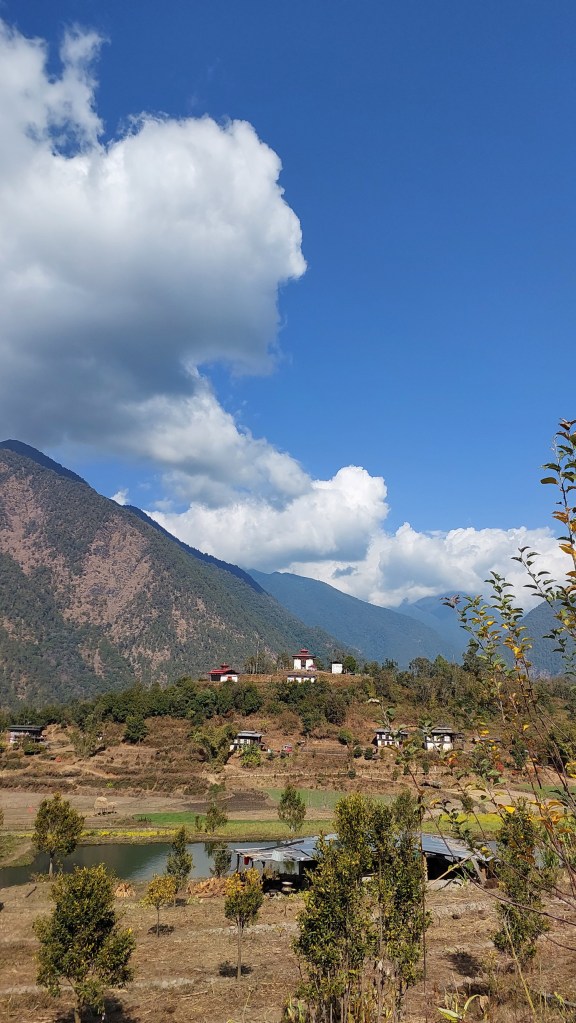
I closed my week-long New Year Pilgrimage with a visit to Athang Rukha – my adopted village for 18 years now. The village of Rukha is one of the few sacred abodes of Palden Lhamo – one of the three supreme protectors of Bhutan.

My association with Rukha.

For those of you who have not been following my work, I have been associated with that valley since 2007 when I went there for the very first time on a documentary mission. The remoteness of that place (it was two days of walking through the leech infested jungles) and the misery I came across shook me to the core that I decided then and there that whatever remained of my life would be dedicated to doing something for that village. The valley is now known for the Oleps – the last hunter-gatherers of Bhutan.

I subsequently volunteered for a foundation that went on to lift them out of abject poverty to a dignified life. When the project ended, the villagers and I had bonded so much that they wouldn’t let me leave. So, I stayed on and we built some temples together in a valley that didn’t even have a prayer flag when I first got there (they practised shamanism and nature-worship). I provided the funds using my own money (which ran out every now and then and the work stopped) and the people there did the hard work – extracting the timber, carrying the boulder, ramming the mud, etc.

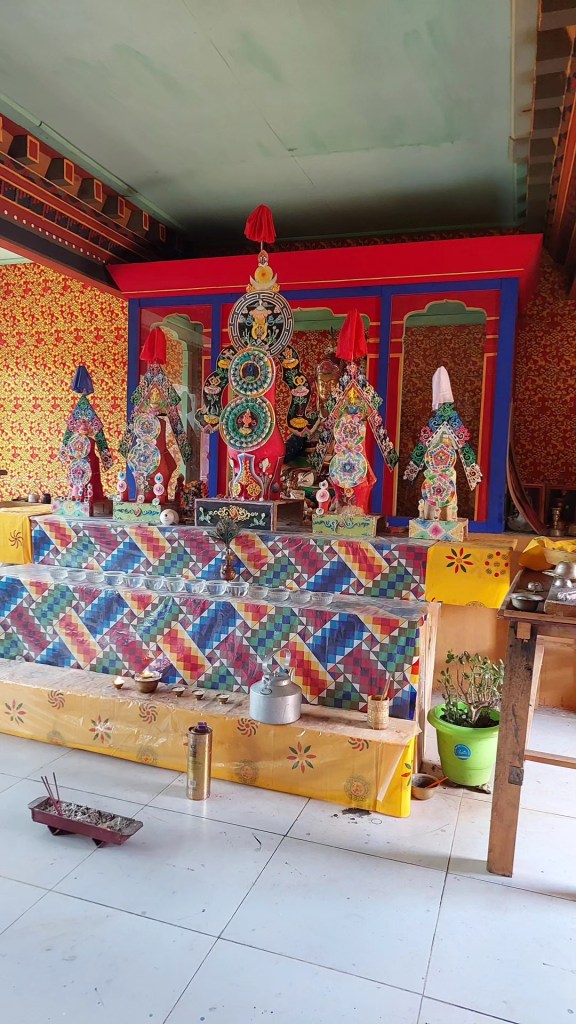
Fast forward to 2024, the third temple – a tshokhang (community hall) dedicated to Guru Padmasambhava – my birth deity, is getting the finishing touches of religious art on the ceiling – three mandalas of Tshela Namsum (Buddha Amitayus, Unisha Vijjaya and Tara). These mandalas when completed would throw down more blessings when anyone does ceremonies to Sangye Tshepamay, Namgyelma or Jetsun Drolma.

Abode of Palden Lhamo.

The place is believed to be the abode of Palden Lhamo and visited by both Guru Padmasambhava – on his way to Bumthang in the Eighth Century, and by Terton Pemalingpa in the Sixteenth Century on his way from Bumthang looking for a place that would eventually become Gangtey Gonpa.

A temple built in the mediaeval era stood there until it was completely destroyed in the early 1930s after the original inhabitants abandoned the valley because of the smallpox epidemic. Between 2009 and 2014, the Oleps, the new settlers of Rukha and I built the temple over the mud ruins of the original temple. Left untouched, the ruins can be seen on the ground floor. The carpenter, Chorten Tshering, was told in his dream by a girl not to destroy the mud ruins.

In 2014 when the former Tsugla lopen Samten Dorji consecrated the first temple, many old people from the valley heard the sounds of the religious instruments for the first time in their life. Furthermore, many young people, and every elder member, took the oath from Tsugla Lopen to refrain from hunting and killing wild animals – a skill and way of life they inherited from their forefathers. Now, a twice-monthly Lhamo Tsho-ja is conducted with households taking turns.

Traditionally the Oleps practiced shamanism and animism, and this continues in some forms till this day. And here, I have been very respectful not to force anyone into one or the other spiritual practices. As Buddha said, I can only show the way.

In 2020, when the pandemic hit and we were all stuck, the Rukha Lama, Ugyen Tshering, and I initiated another temple to be used as Tshokhang, so as to turn the first temple into a Neykhang (place for protector deities) and dedicate it solely to Palden Lhamo. I also built an altar with 21 Taras for my daughter and grandson whose birth deity is Tara. In 2022, the tshokhang was consecrated by Gangtey Rimpoche, who also presided over a three-day Tshechu with mask dances – the first one to be instituted in lower Sha region.

The blessings of Palden Lhamo and Tara are evident. Rukha has been receiving bountiful harvest, in general, and the families who were solidly behind the temple project are having a fulfilling time with their children doing well with their life.

And the story continues..

From going hungry to building a better life for themselves and their children, to temples and hosting the first Tshechu in the region, the Oleps have come a long way in less than two decades. It has been close to an economic and social miracle – a case study in development management. The credit fully goes to the people who believed in themselves and were ready to work hard.

Along the way the State also provided the valley with a power-tiller road (2011) upgraded to a farm road (2018), electricity (2019), and mobile phone network (2023). From a two-day treacherous hike the road to Rukha has been reduced to an hour-long pleasant drive from the Wangdue – Tsirang highway.

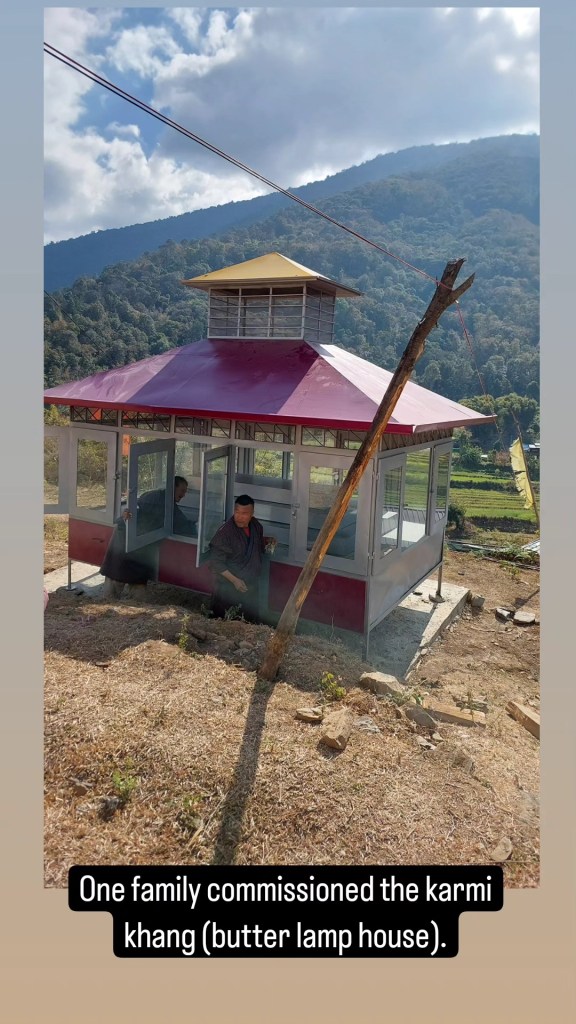
I offered three butter lamps in a new large Karmi Khang that a family from Rukha had bought in the memory of their father, who passed away a few months back. It arrived on the same day I landed there. I prayed that the people of Rukha continue on their path and be a part of this small great nation, as it moves confidently into the future.

They say you cannot take anything with you when you die. This is not true. You will carry with you the good and bad karma and the merits and retributions you accumulated. And more importantly, you will also leave behind the memories of you in people whose lives you made some difference.

So, as you breathe in the Dragon Year 2024, I invite you all to take a moment to reflect on a few questions. How many thoughts and prayers (moelam zangpo in Bhutanese) have you sent to others? How many smiles have you brought in someone else? How many lives have you touched through your small or big works?

As a Mahayana Buddhist, these should be the questions of your life – and the greater meaning of a pilgrimage.

(Itinerary of my pilgrimage – Semtokha Dzong (Thimphu), Dobji Dzong (Paro), Lhakhang Karpo (Haa), Punakha Dzong (Punakha), Mebar Tokchoe (Zhemgang), Lamga and Rukha (Wangdue)

The Real Bhutanese New Year

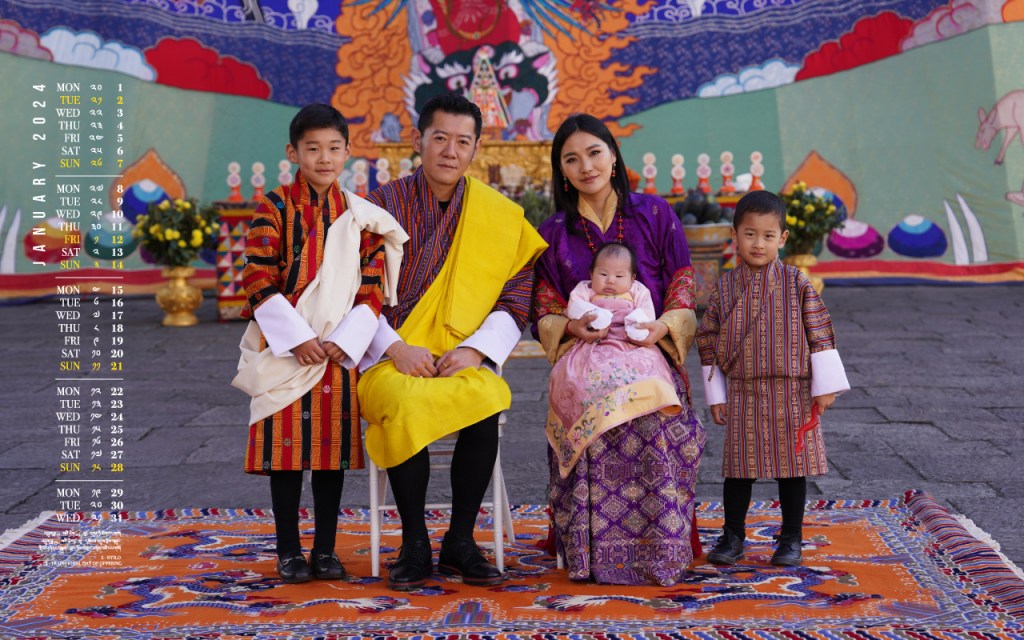
This year, 12th January will be celebrated as Sharchop Losar or Chunyipa Losar. However, it appears that this is not just the new year’s day for central and eastern Bhutan, but for Bhutan as a whole.

Historical records show that the Founder of Bhutan, Zhabdrung Namgyel observed this day by returning to Punakha (he was more a travelling ruler) and having his subjects visit him and pay homage and tributes. It is said that the three-way staircase of the main entrance to Punakha Dzong was built to welcome the three regional governors called the penlops on that day. Zhabdrung also made all state appointments while also greeting other lesser regional leaders and their retinues as they paid tribute to him. Thus, the day was referred to as buelwa phuewi nyim, which is poorly translated as traditional day of offering.

Astrological significance

This day falls on the first New Moon after Nyilo – a traditional Bhutanese holiday, and in the month when the Moon meets with the Cancri constellation. In the older Lama Gongdue (ΰ½–ΰΎ³ΰΌ‹ΰ½˜ΰΌ‹ΰ½‘ΰ½‚ΰ½Όΰ½„ΰ½¦ΰΌ‹ΰ½ ΰ½‘ΰ½΄ΰ½¦ΰΌ‹) – a terma teaching revealed by Sangye Lingpa (1340-1396), the month is considered as the first month of its calendar year. This was probably the calendar prior to the adoption of the official Buddhist calendar followed in Bhutan. The celebration of New Year on this day in central and eastern Bhutan is thus more local, and more traditional Bhutanese.

According to Bhutanese scholar, Karma Phuntsho (PhD), Zhabdrung Ngawang Namgyal was a serious follower of Terton Sangay Lingpa’s teachings and incorporated rituals such as the Lama Gongdue into the ritual curriculum of the Central Monastic Body. And this may also be the reason why he marked the day as the day of accepting tributes and a day of celebration with his people.

Why do Tibetans celebrate the New Year a month later?

The Tibetan New Year’s day, which comes a month after, coincides with the Mongolian New Year known as Horda (ΰ½§ΰ½Όΰ½’ΰΌ‹ΰ½ŸΰΎ³ΰΌ‹), which the latter instituted as their calendar – to mark the day of victory over the Tangut Kingdom by the first emperor, Genghis Khan.

After Gushri Khan (1582-1655) invaded Tibet in 1641, the Horda became the Tibetan calendar and thus the Mongolian New Year day was celebrated as the Tibetan New Year. Furthermore, Gushri Khan was referred to as Chogyal (Dharma King). And thus this Losar (New Year) was also referred to as Gyalpoi Losar (དྷྒྱལ་པོའི་ལོ་གསདྷ་) – King’s New Year. Older folks in Bhutan would be familiar with this term

In essence, the Dawa Dangpi Losar has neither any auspicious significance to Bhutan, nor any important astral reasons. As Dr. Karma Phuntsho adds, it is even odd that we celebrate it as the main Losar, which is a legacy of Mongol rule over Tibet.

Let’s celebrate Chunipa Losar as our New Year

In sociological studies we say that repeated behaviour becomes a habit. A habit embraced by a mass becomes a culture. A culture repeated periodically becomes a tradition. So, we can institute some new traditions, and retrieve some older ones, around this Day, so that over time it consolidates as the Bhutanese New Year.

First of all, call it Bhutanese New Year!
As someone trained in sociolinguistics, trust me, vocabulary matters. To continue with the misnomer Sharchokpa Losar would do no good.

Second, making appointments, promotions and pay raises:
Following Zhabdrung’s tradition, new and important appointments could be made on this day. Promotions and bonuses can be declared on this day.

I am not limiting this invitation to the government only. That would take time. I would rather invite our private sector, and companies to do that. Pay the bonuses and give a salary raise on this day. Why not? As I said, if we all do this every year it would become a tradition. Employees all over Bhutan would be eagerly waiting for this day – and a whole new industry can come up on this just like the red envelope tradition in East and Southeast Asia.

Third, PIT Day. No one likes taxes but as a cliche goes, it is the only sure thing in life besides death. So, why not do it on the eve of this day? Why not celebrate it? Why not file your personal income tax with a prayer that your few ngultrums take this country an inch forward and benefit as many sentient beings? Make it a happy moment to pay your taxes. It is all in the mind.

Fourth – make it a Day of Offering:
Most importantly, as Buddhists, it can be the day of offering to your root-lama and to the gompas you visit, astrologers you consult and places you revere. Just as our forefather did to Zhabdrung, we can do it to the lamas of our time. As we believe in Bhutan, such offerings will β€œclear your obstacles for this life, and help you accumulate positive merits in your next”. And so, why not start the year with a bang.

Above all, make it a tradition in your own family to meet – and, again, to paraphrase a local saying, “meet and eat one meal together”. If not, WeChat is there.

Happy Bhutanese New Year!