Compassion Maketh Bhutanese

Compassion and selfless service are a trademark of every Bhutanese – and if we can maintain these qualities regardless of where you are, and if we can implant these values in our young ones, rest is just cultural paraphernalia and performances, which will evolve over time anyway. A compassionate heart is what we must develop as a foundation in our children, and is what we must practice as higher sentient beings.

I draw happiness from simple acts of selfless service – whether it is to make someone happy (loving kindness) or to help alleviate a suffering (compassion). And true selfless service starts when you stop asking, what is in it for me? For example, there is nothing for me – directly or indirectly – neither in trying to raise funds for a Bhutanese who is hospitalised in Perth, or to make Zhiwaling Heritage Hotel win an online award – and not even in trying to bring investors and investments into the Gelephu Mindfulness City.

There is also nothing for anyone who is responding to my requests. But, doing something together creates memories. Memories keep people together. It enhances solidarity. It makes relationships grow stronger. Ultimately, collective memories of all Bhutanese is what makes a Bhutanese nation – if Benedict Anderson’s assertions on imagined communities and nationalism are true.

Nonetheless, again, to say there is nothing in exchange for the selfless service we practice is also not totally true. I have been around for long enough to see and even experience that the universe always finds ways to pay you back – sometimes more than what you have given to others.

This belief comes from the Buddhist concept of the circle of karma. My favourite story on this goes something like: One Sharchokpa shopkeeper saw that his sales were never picking up while his neighbour’s shop was doing a roaring business. Someone suggested him to go see the Late, and the short-tempered, Holiness Jadrel Sangye Dorje Rimpoche (🙏).

“Do you give?” Rimpoche asked the man.

“No, la”, the man replied.

“How you expect to get, if you don’t give anything?” Rimpoche shouted back, and chased him away.

This phenomenon of getting-by-giving does not seem to exist only in the spiritual realm. There was also a scientific study being done in the US by a researcher on this topic of giving and getting. This research concluded that if you give $1 you ultimately get back, miraculously, $1.65. In other words, if you give away a million dollars, you get back 1.65 million some through some twists and turns. Companies that donate see their income go up by 1.65 times. People who give generously have seen their wealth grow instead of becoming poorer.

So, keep giving to keep living.

😈😈😈

(For those who are interested in becoming a giver and also “succeed” in life and business – if you don’t believe in spiritual masters or spiritual masters only, there is this book, Give and Take, by Adam Grant, which highlights lots of stories and studies.

  • Benedict Anderson, Imagined Communities (1992)

Nyilo Diaries

Annual Gratitude.

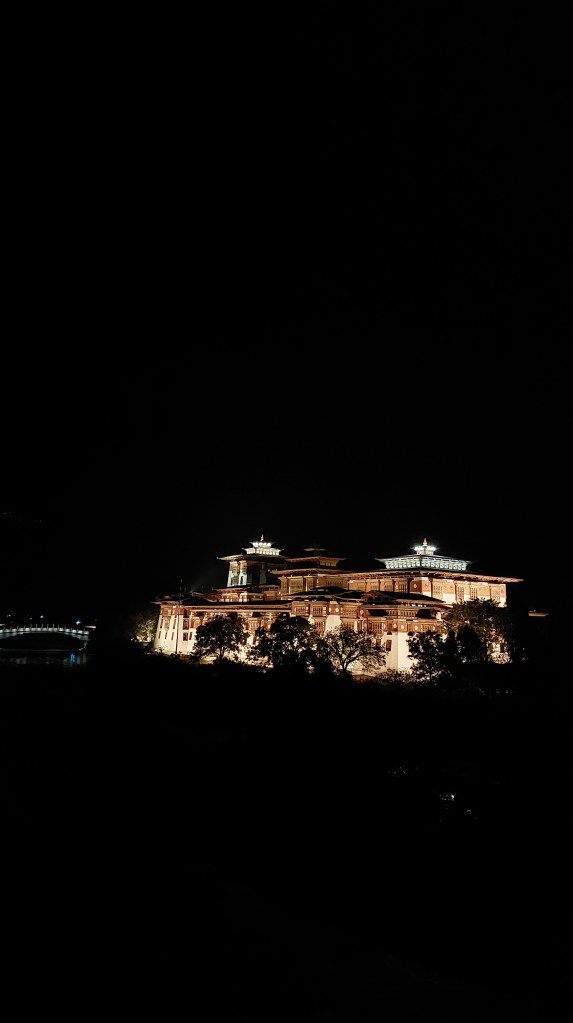
Paid my homage on the Nyilo Day to our founding father, Zhabdrung Ngawang Namgyel, at the sacred Machen Lhakhang in Punakha Dzong. Sought his blessings for the new year and what he thought of me coming out of my semi-retirement. He responded with a perfect dice number which means, Awesome! (this is according to the caretaker-monk).

Waking the Talk.

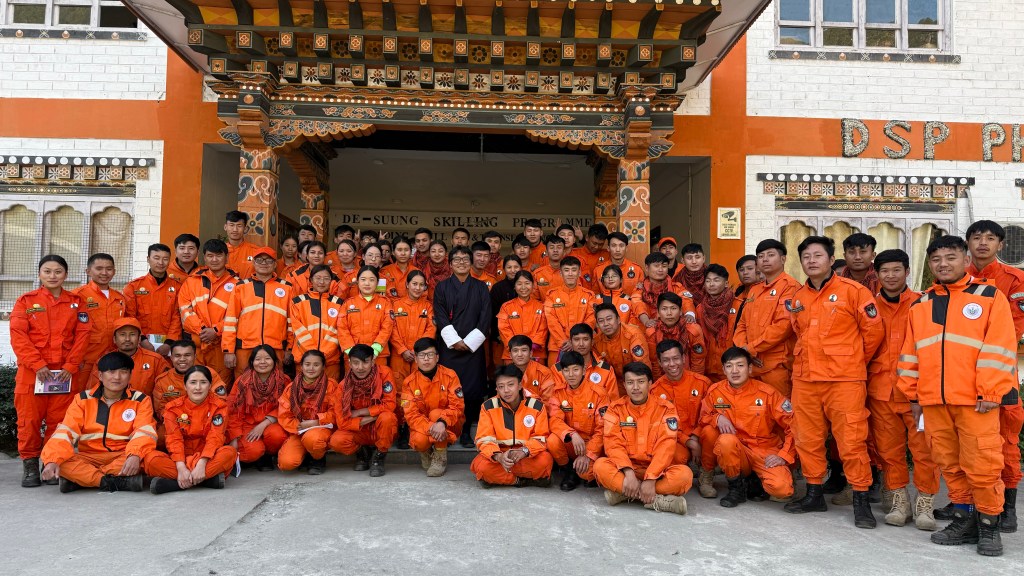
On this day I completed revising the Buddhist iconography, and Foundation of Buddhism, which were two courses I taught this group of 200+ young Bhutanese – in September and October. (To all the Tour agencies maliks, please know that I trained these guys. So take them with blind faith).

I also gave the guys some peptalk where I told them not to only find faults in the stars, the society or the state but to look at themselves in the mirror and challenge themselves first.

I said, “We always think it is someone’s fault when life does not go our way. You know, for me I am my biggest biggest obstacle. For instance, these days I feel too lazy to go for morning walks. I keep rejecting all job offers because I don’t want to work full-time. I struggle to eat healthy, or work as hard as I used to. At your age I used to work 18 hours a day. Can you do that? Can you wake up at 5 in the morning, work like crazy, and go to bed at midnight for 5 years every day?”

I told them to just go out, explore and grab every opportunity, take what comes their way, and they will eventually find their place and purpose in the world. At the very least, they could carry some boulders at GMC. The world may be unfair but you can’t change it if you only look for excuses.

Aum Om’s Homestay

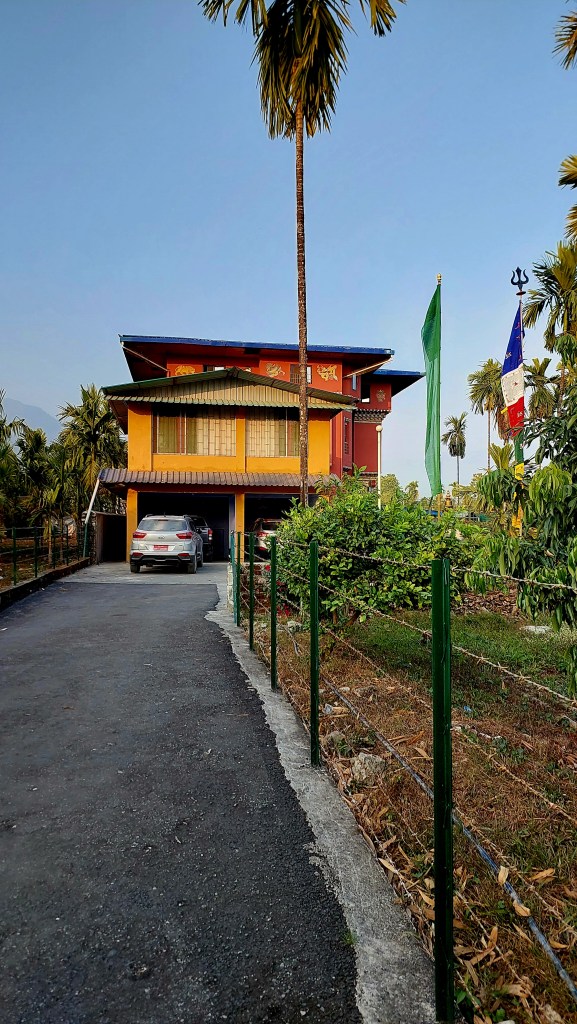
On the eve of the Nyilo I had a free meal (she refused to take the payment) at Aum Om’s Homestay. After running around in foreign land for months I wanted to eat something authentic Bhutanese, and I called her up. Aum Om is the sister of the legendary artist Asha Karma of VAST. The homestay, certified for tourists, is tucked away in the quiet corner overlooking the Punakha valley.

Aum Om is a quintessential Bhutanese lady – super warm, generous, strong, dignified, and a great homemaker. Her place is an oasis of peace and perfection. (If you want to go there, and you must, you can find her place on Google Map too)

May 2025 bring peace, and contentment to all.

New Year Pilgrimage 2024

Seeking three divinities, three deities and my three teachers

We celebrate the New Year on the first day of the twelfth month – at least in the eastern half of Bhutan from where I come from that’s the case. So, the last few days of the eleventh month and the first week of the “new year” are spent on pilgrimage inside Bhutan – visiting temples, sacred places and getting blessings from my teachers and conducting rituals for the year. I do this to pay gratitude for the closing year, while propitiating the deities and divinities, and receiving the blessings for the new year.

On the first leg of my pilgrimage I covered Semtokha Dzong to pay my respects to the Supreme Guardian deity, Yeshe Gonpo (Mahakala in Sanskrit) where the resident caretaker lopen Wangchuk considers me his jindha (patron) and conducted a brief soelkha for me.

I continued the next day visiting Dobji Dzong (estd 1531) in Paro where there is an amazing statue of a smiling Milarepa, which is believed to have spoken in the past. The statue is said to have been gifted by the Tibetan patrons to lama Jetsun Ngawang Drukpa (1682-1748) – the founder of Tshamdrak Gonpa, during his last religious mission to Tibet. Milarepa, who is supposed to have become enlightened in one lifetime after committing some atrocious deeds, gives me hope that if one is committed, one can attain enlightenment in a go. That’s a dream, which increasingly looks like it will be a dream.

On the same day, I also visited Lhakhang Karpo in Haa – a sacred place, believed to have been built on the spot where a white dove released by King Songtsen Gempo (617-650) from Tibet landed. The place is believed to be the abode of powerful local guardian, Aap Chundu – a deity known for his physical strength, and also for being honest, dedicated and principled.

The second leg of my pilgrimage took me to Punakha – the former winter “capital” of Bhutan where the monastic body still travels to avoid the freezing cold of Thimphu. Punakha Dzong has the Machen Lhakhang, which contains the sacred remains of Zhabdrung Ngawang Namgyel in permanent retreat (thudam in Dzongkha). I make it to Punakha at least once a year to pay my respects and receive the blessings of the divine founder of Bhutan. Without Zhabdrung, there might not have been Bhutan.

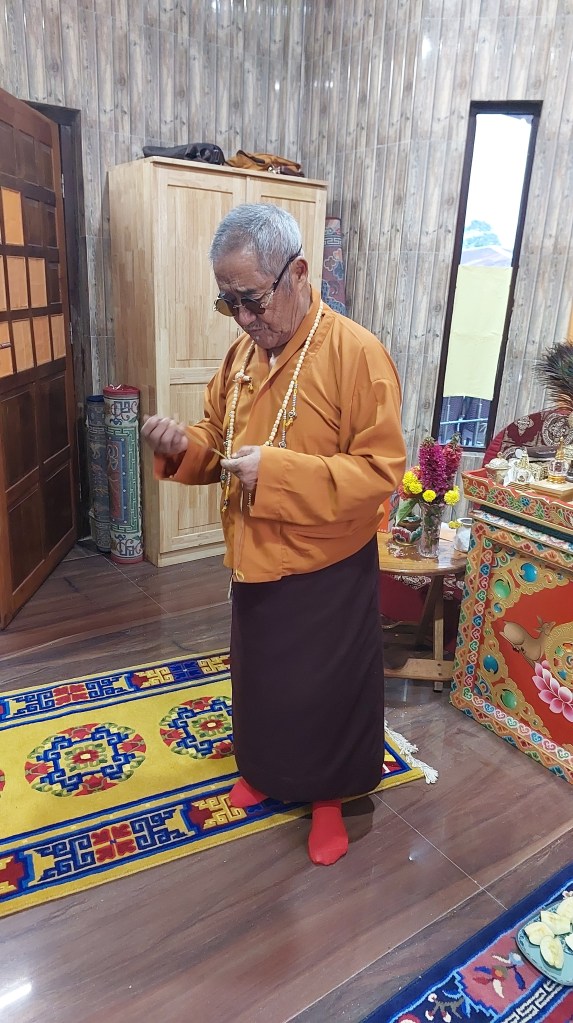
In Punakha I also received kago from one of my teachers, Most Venerable Lopen Samten – the former Tsugla lopen. He is also my “Google Scholar” for anything related to Vajrayana Buddhism.

On the following day (today) I drove straight from Punakha to Gelephu, where my family lama, Rangshikhar Rimpoche, resides. He is another teacher I visit at the start of every year. There is nothing I can say that people don’t know about him. The oldest and the most humorous of my three teachers, it always feels blissful to be in his presence that I feel it is okay if I died the next day. I mean, that’s how powerful he is and how peaceful you feel that I always wondered that if God really existed it would look like and be like him.

“How is my year?” I asked him. I have been quizzing him like this for over 40 years. He is one of the few togdenpas I know and who is known for perfect divinations.

“Just be a little careful in this coming month till 27th day,” he warned me, “And remember to say your barchel lamsel prayers every morning and don’t be careless”.

With that assurance, and after updating who is where in my family, I took his leave, so as not to hog his time. There were two groups waiting after me.

(To be continued with a third leg of my pilgrimage – from Zhemgang, Bumthang, Wangdue and end in Paro. I will be breaking my pilgrimage for a few days here in Gelephu to work on another article on the mindfulness city project)

😇😇😇
Tentative itinerary

– Semtokha Dzong – The oldest dzong built by Zhabdrung Ngawang Namgyel. Grand altar to Yeshey Gonpo

– Dobji Dzong – Built by Lama Ngawang Chogyel in 1531. Talking statues of Milarepa and Guru Padmasambhava.

– Lhakhang Karpo – 7th Century. Medicine Buddha and an altar to Ap Chundu

– Punakha Dzong – 1637. Sacred remains of Zhabdrung Ngawang Namgyel.

– Mebar Tokcho (8th Century) and Buli Tsho, Zhemgang

– Kurjey (Bumthang) – Sacred site of Guru Padmasambhava

– Rukha (Wangdue) – abode of Palden Lhamo

– Nyechen Dongkala (Paro) – Buddha Shakyamuni relic discovered by Terton Pema Lingpa

Why do we do annual rituals in Winter months

Today is Nyilo (literally meaning the Return of the Sun), which is an important day in the Buddhist calendar. In Thimphu, Punakha and Wangde it is celebrated as the New Year. In the West, it is called Winter Solstice.

It is believed that today the Sun starts its journey from the South after paying homage to the Lord of South Direction, Yama (Shinje in Dzongkha, གཤིན་རྗེ་), who is also the Lord of Death – or the Lord of Judgement of Death.

Since in the court of Yama is believed to be filled with many dead souls waiting for the trial, some of them escape by tagging along with the Sun.These dead souls called shinpo are considered to cause all sorts of problems in the human world – sickness, accidents, disaccords, loss of property, etc.

To avert such misfortunes, one has to conduct propitiating ceremonies to one’s family protector deities (choe-sung) and kay-lha (birth deities) and invoke the blessing of Sangay Tshepamay for life (Tshe in Dzongkha) and Namsey for wealth (Yang). This is the reason why Bhutanese families conduct annual lochoe (rituals) during winter months.

During the Summer Solstice, the Sun returns from the North and the Lord of North Direction is Kubera – the God of Wealth. So in Summer if one can do propitiating rituals to deities of wealth such as Kubera (Zambala), Unisha Vijjaya (Namgyelma) or Tara (Drolma), it would be great. You need some wealth to pay your bills and do dharma. Many temples across Bhutan do Namgyel Tongcho in Summer.

The king of rituals is Drolma Yuldhog, which is my favourite. I do this twice a year, irrespective of the season because it includes everything – wealth, health, progress in life, enlightenment thereafter, etc.

If you cannot conduct large ceremonies you should at least visit temples and wish away your problems. I usually go to Semtokha because there are three altars in one big hall.

You could also donate a small amount of money to conduct prayers such as Barchel Lamsel, Dukkar, and Sherub Nyinpo. This Saturday and Sunday are very good days to do that. (These days just use mobile banking from anywhere. Contact me if you want to donate to Ngajur Pemachopheling Monastery).

Happy New Year to the natives of Thimphu, Wangdue and Punakha. Please don’t forget to wish me back on Sharchop Losar (coming soon). 😁😁😁