Jarogang Lhakhang, Athang Gewog

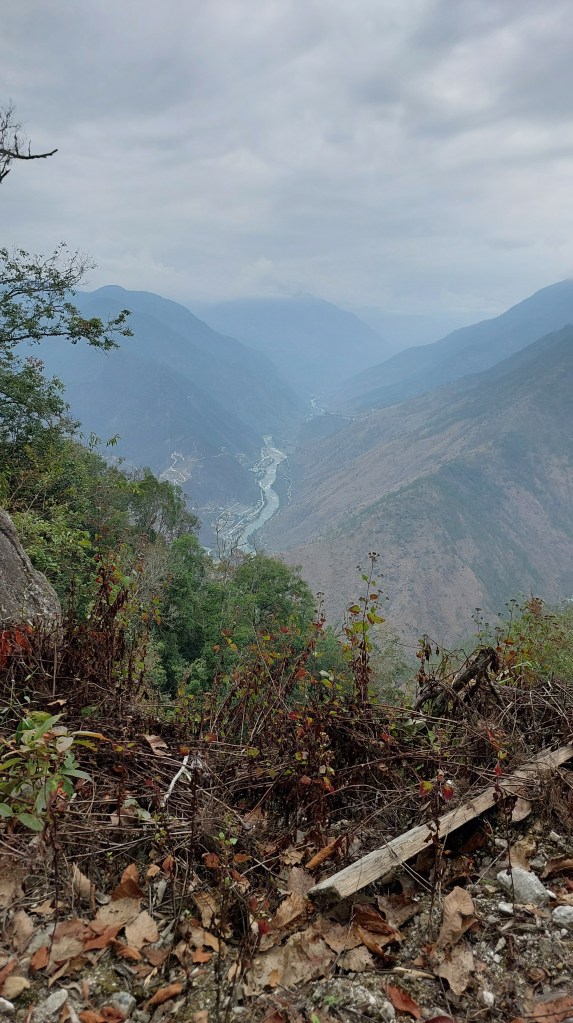
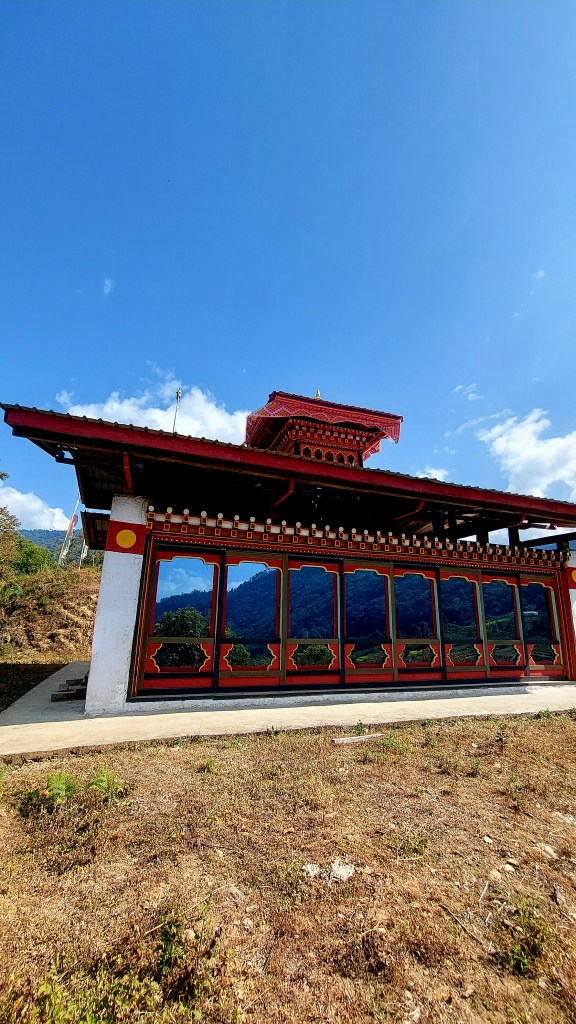
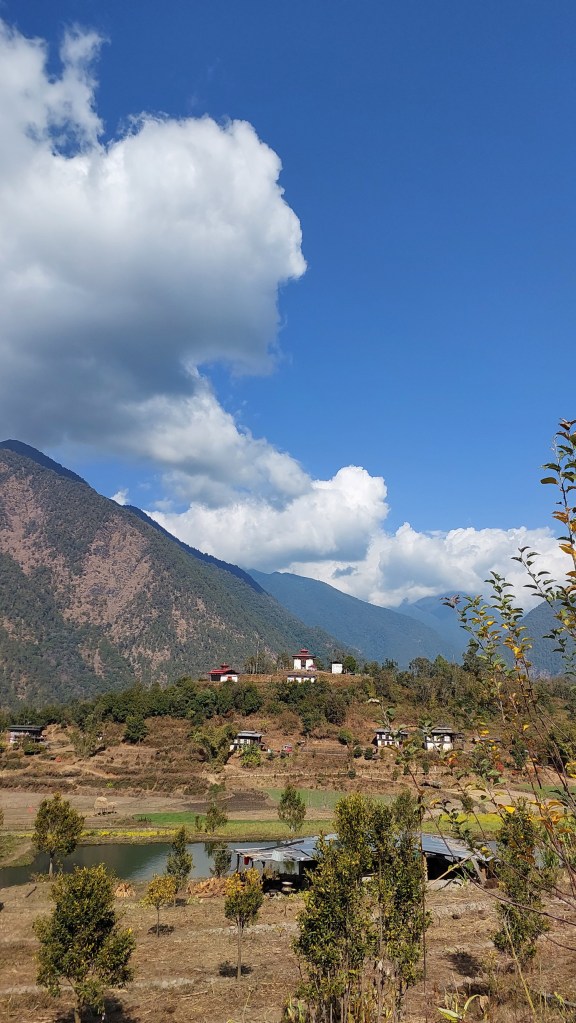
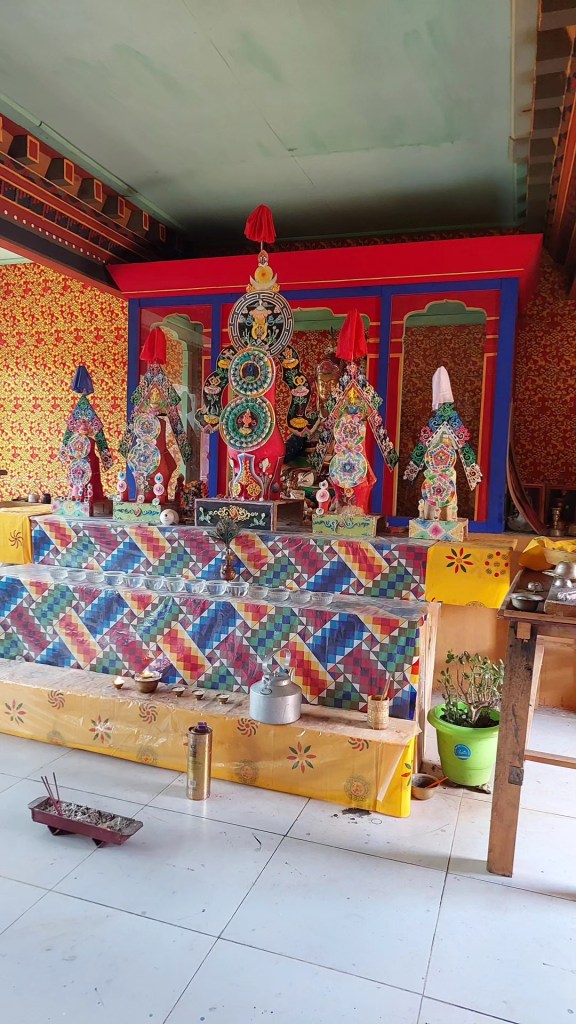
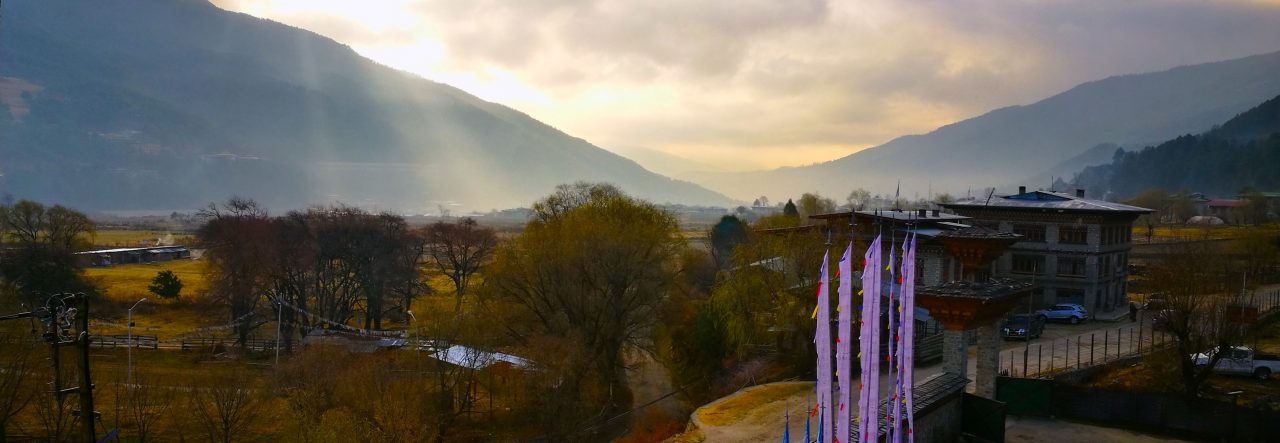
Jarogang Temple is located in the village by the same name. It is in Athang gewog – and one can see it perched on the hill across the river, when driving along Wangdue-Tsirang highway and when you reach around Kamichu.

Jarogang takes its name from Legon Jarog Dongchen – one of the three supreme protectors of Bhutan. This deity together with Yeshey Gonpo (Mahakala) and Palden Lhamo (Sridevi) make up the trinity of protector deities for Bhutan as established by Zhabdrung Ngawang Namgyel (1594-1651). 

During the Second Tibetan invasion in 1934, Semtokha Dzong was captured and occupied. Zhabdrung Ngawang Namgyel felt that his presence in the country was causing too many troubles for his hosts and may lead to more deaths in his name. So he decided to leave for India – enroute to Ladakh where the King there, Senge Namgyel, had invited him. Like many of his predecessors Zhabdrung Ngawang Namgyel intended to go on a lifelong retreat to Mt. Kailash, which was then part of the Ladakhi Kingdom. 

However, when he reached a stream after descending from Jarogang village, the deity Jarog Dongchen appeared to him and requested him to stay. The deity assured him that he would take care of the invaders. Zhabdrung, then, is believed to have returned to Jarogang and stayed in the house of Zomlha Chugmo (literally meaning Wealthy Lady of Zomlha). Few days later Zhabdrung again felt he was not only freeloading on the local people but also causing too much burden. He again set off only to be met with the deity at the same spot, who then informed the Zhabdrung that Semtokha Dzong has been razed down by a fire and all invaders have been killed. Zhabdrung named the small stream where he heard the news as Deychu – to indicate the stream where he received the good news. Zhabdrung returned to Jarogang and informed his hostess that he had decided to return to Chari.

The “kutsab” and the sacred relics of Zhabdrung

On the day of his departure, the hostess begged him to stay there and offered him the large house from where Zhabdrung could base his dharma activities. It is believed that Zhabdrung made two statues which resembled himself out of the rice dough and presented them to the hostess as his kutshab (representative). The statue, he promised, would carry the same sacredness of blessing as receiving it in person from him. 

While one of the statues is still there today, the other is believed to have flown away and landed somewhere in Tsirang. No one knows about it. However, the people of lower Wangdue and Tsirangtoe believe that the area would have good harvest and all nine grains because somewhere there is this second statue “stuck on a tree”, according to the legend.

The other amazing relic (for me) is his phurpa (ritual dagger), which seems to be very powerful. There is also a conch, a bell and a cymbal, which were all gifted to the Zomlha Chugmo. There is also a small metal statue called kharsapani, which is also believed to be self-arisen (rangjung). Some sources say that there were more relics and belongings of Zhabdrung but were apparently taken to Lama Lhakhang in Wangdue Phodrang Dzong – and brought here when the new dzong was built to be used as nangten. Nevertheless, in my view, Jarogang Lhakhang still has the biggest collection of relics associated with Zhabdrung – making it a recommended pilgrimage destination for every Bhutanese – irrespective of the faith, sect, or religious affiliations. In fact Zhabdrung was the founding Father of Bhutan – besides being the emanation of Avalokiteshvara and Guru Rimpoche.  

The trees of Jarogang

The visit to Jarogang is incomplete without visiting the jackfruit tree, which is believed to have grown out o a seed planted by Zhabdrung Ngawang Namgyel. Even today the lama and the monks of Jarogang make the offering of the first harvest to the Machen Lhakhang – where the mummified remains of Zhabdrung is preserved today (he was never cremated). This tradition has been continuing for over three hundred years now.

There is also a tall cypress tree below the temple, which is believed to have grown out of the Zhabdrung’s walking stick. Legend has it that with numerous wars and invasions, he doubted if his mission to establish a Drukpa state would be successful. Thus, he planted the walking stick and is supposed to have made a moelam (aspirational prayer) that if he were to succeed a tree would grow out of the stick.

(Triviality: The exteriors of Jarogang temple retains the mud color without getting the white lime wash. The folk theory is that the local deity of Uma demanded that Jarogang temple should not get a whitewash. In retaliation the deity of Jarogang demanded that Uma Gonpa won’t get a sertog (the rooftop pinnacle). So even today Jarogang temple is not whitewashed, and Uma Gonpa has no sertog)

Getting there

Along the Wangdue-Tsirang highway, before you reach Kamichu there is a cantilever bridge and on the other side of the bridge is marked as the headquarters of Jaypee construction company. Cross the bridge and drive for some two kilometers till you reach a diversion – marked with two signboards. To the left is to Jarogang, and to the right is Athang gewog office.
Athang Morakha Chador Temple, Wangdue

Morakha takes its name from a remark made by an attendant of Guru Padmasambhava. It was during the time when Guru Rimpoche and Mendarawa were in the area. Mendarawa was in the village, while Guru was meditating in the mountains between Phobjikha and Athang. When the Guru inquired about Mendarawa, the attendant is supposed to have replied, “She is (Mo-ra) in the village (Khar)”. Thereafter the place where Mendarawa dwelled was named Morakhar, and later simply Morakha.

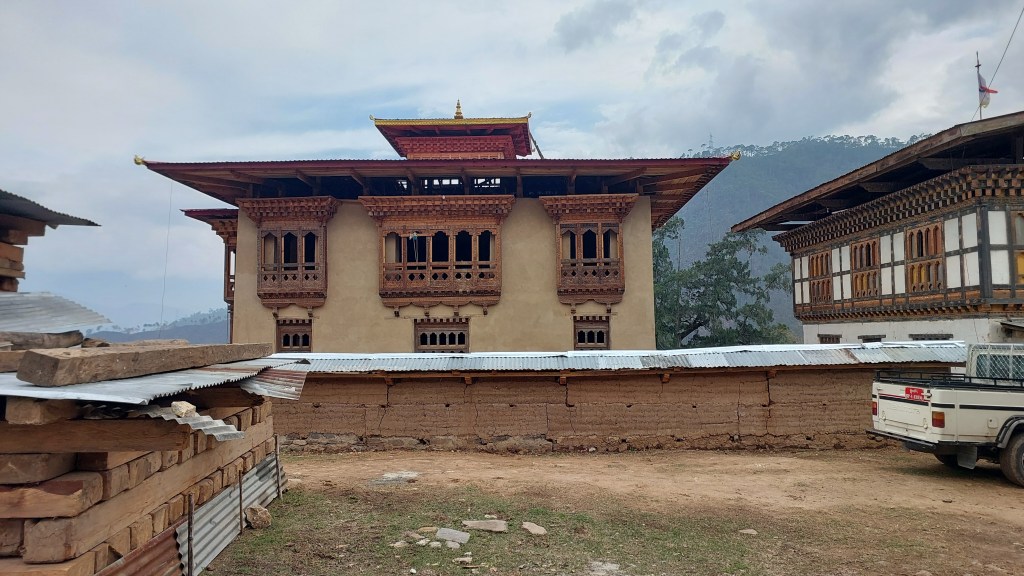
Morakha Temple stands over the village of Lomsokha in the main Athang valley. The site is believed to be the spot where Mendarawa practised the Vajrapani saddhana – known as Chana Dorje drub in Bhutanese. A temple was later built on the spot by the followers of Mendarawa and Guru Rimpoche. The exact date is not known.

Coupled with the Athang Tsho (lake), which is at the other end of the valley, the region was a mandatory destination of all emanations of Terton Pema Lingpa, and the followers of the Peling tradition. The area, therefore, received hundreds of pilgrims each year – thus adding to the prominence and economy of Athang region since the mediaeval era. It was only in the post-modern era that the region saw the decline, as the natives were lured to the urban areas of Thimphu and Wangdue. During the same period, pilgrimages from Tibet stopped for reasons known to everyone.

Mendarawa, and Adha mathra and Adha Rachu:

In front of Morakha temple is the boulder that is believed to be the handloom of Khandro Mendarawa, the spiritual consort of Guru Padmasambhava. While the Guru spent his time in the mountains of Athang (also colloquially pronounced as Adha), Mendarawa spent her days practising the Vajrapani mantra, and by night weaving the traditional clothes. The stone relic can be seen even today. Some local sources claim that the origins of the popular Adha mathra and Adha rachu – a traditional handwoven textile and pattern have their origins here in the works of Khandro Mendarawa. And because of their association to Mendarawa, these patterns of traditional textiles have spiritual blessings and are auspicious for special occasions.

According to one source, Athang Morakha is only place visited by Mendarawa. All other important sites of Guru are associated to either Yeshey Tshogyel or Tashi Khyidron. This makes Athang a very special valley

Betel leaves:

Another very popular item associated with this place and to Mendarawa are the betel leaves, which are believed to have been planted by her. The only surviving plant, which is standing in front of the temple, is jealousy guarded, as many attempts to graft and reproduce have been unsuccessful. The betel leaves from this plant are used for making mendrub (medicinal pills) or rilbu (blessed pills). Another local claims that the betel leaves available in the wild in the jungles of Athang gewog are equally blessed by Mendarawa – and they are used for Zhugdrey ceremony in Gangtey Monastery during the annual Gangtey Tshechu and Drubchen.

Chana Dorje relic (ter) statue:

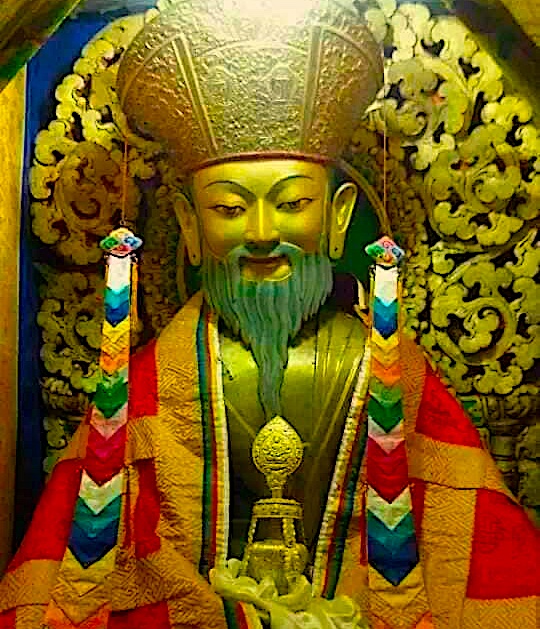
The most prized possession of Morakha Lhakhang is a finger-sized relic statue of Vajrapani (similar to the one in Bartsham temple in Trashigang). It is tucked away in a secured safe and can be seen only on special occasions.

Vajrapani is referred to, in abbreviated form, as Chador in Bhutanese, and every newborn that receives his or her name from this temple is called Chador. So, every other person in this gewog is called Chador, and almost every Chador you meet may be from Athang gewog.

According to the caretaker monk, the sacred Chador statue is believed to have been retrieved by Terton Pema Lingpa from Mebar Tsho (lake) in Bumthang. “One statue flew to Tsakaling in Mongar, another to Paro Dongkala, and the last one came to Morakha,” he adds.

When the original Morakha temple was destroyed by fire this relic statue is believed to have flown away and stayed safe on a nearby tree. It was later discovered by the resident monks and brought back to the temple.

Vajrapani is also a popular deity, who is revered as a part of the supreme Trinity of Protector Deities called the Rigsum Gonpo (རིགས་གསུམ་མགོན་པོ་) – literally translated as “Lords of Three Families” with the three families being Avalokiteshvara, Manjushri and Vajrapani.

The affiliation to Gangtey Gonpa:

The association of Morakha Lhakhang to Gangtey Gonpa started with the life and works of the Second Gangtey Trulku, Tenzin Lekpai Dondrub (1645-1727), who is considered as the most prolific of all the previous Gangtey Trulkus, and who operated mainly in this region. Although a realised being, he lived a simple life of an itinerant monk – who are locally referred to as gomchens.

His works and the patronage he received from the Athang area became the inspiration for the popular adage, “Lama Ganteyb. Jindha Adhap” (Lama from Gantey, patrons from Athang). Today the monastic center is affiliated to Gangtey Gonpa, and the current Gangtey Trulku Rimpoche initiated the reconstruction and the expansion of the temple into a proper monastic institute.

Who must visit?

While Chana Dorje practice is recommended for everyone to pave the path towards ultimate enlightenment, the blessing is a must for those born with birth-mewa 2 and 4. It is strongly recommended that people born with these mewas make a pilgrimage to this sacred place and/or to Bartsham Chador Lhakhang in Trashigang. This is because Chana Dorje is the deity of those born with birth mewa 2 and 4. Birth mewa 2 are those born in the 1944, 1953, 1962, 1971, 1980, 1989, 1998, 2007, and 2016. Birth mewa 4 are those born in 1942, 1951, 1960, 1969, 1978, 1987, 1996, 2005, 2014, 2023

Getting there:

The total drive time from Thimphu is just 3-4 hours making it a nice day trip. There is a farm road that takes off from Kamichu on Wangdue-Tsirang highway. It is pliable with small cars (maybe not during the wet season).

When you get down to the valley floor from the Lapsaka Pass, look for a signboard. Take the road to the left marked as Athang Morakha Changlochen Chador Lhakhang.

What to take:

Take rice, flours, lentils, cooking oil and food supplies for the monks there. There is a community of monks headed by the abbot – with no subsidy from the state.

Where to stay:
There are decent guest rooms at Morakha Lhakhang in case people want to stay overnight, which I highly reccomend. Contact person: Lopen Sonam Drugyel 17480524.

The bridge to cross towards Athang from Wangdue – Tsirang highway
After dropping down to Athang valley floor, you will get to this cross road.

New-Year Pilgrimage – Finale in Rukha

I closed my week-long New Year Pilgrimage with a visit to Athang Rukha – my adopted village for 18 years now. The village of Rukha is one of the few sacred abodes of Palden Lhamo – one of the three supreme protectors of Bhutan.

My association with Rukha.

For those of you who have not been following my work, I have been associated with that valley since 2007 when I went there for the very first time on a documentary mission. The remoteness of that place (it was two days of walking through the leech infested jungles) and the misery I came across shook me to the core that I decided then and there that whatever remained of my life would be dedicated to doing something for that village. The valley is now known for the Oleps – the last hunter-gatherers of Bhutan.

I subsequently volunteered for a foundation that went on to lift them out of abject poverty to a dignified life. When the project ended, the villagers and I had bonded so much that they wouldn’t let me leave. So, I stayed on and we built some temples together in a valley that didn’t even have a prayer flag when I first got there (they practised shamanism and nature-worship). I provided the funds using my own money (which ran out every now and then and the work stopped) and the people there did the hard work – extracting the timber, carrying the boulder, ramming the mud, etc.

Fast forward to 2024, the third temple – a tshokhang (community hall) dedicated to Guru Padmasambhava – my birth deity, is getting the finishing touches of religious art on the ceiling – three mandalas of Tshela Namsum (Buddha Amitayus, Unisha Vijjaya and Tara). These mandalas when completed would throw down more blessings when anyone does ceremonies to Sangye Tshepamay, Namgyelma or Jetsun Drolma.

Abode of Palden Lhamo.

The place is believed to be the abode of Palden Lhamo and visited by both Guru Padmasambhava – on his way to Bumthang in the Eighth Century, and by Terton Pemalingpa in the Sixteenth Century on his way from Bumthang looking for a place that would eventually become Gangtey Gonpa.

A temple built in the mediaeval era stood there until it was completely destroyed in the early 1930s after the original inhabitants abandoned the valley because of the smallpox epidemic. Between 2009 and 2014, the Oleps, the new settlers of Rukha and I built the temple over the mud ruins of the original temple. Left untouched, the ruins can be seen on the ground floor. The carpenter, Chorten Tshering, was told in his dream by a girl not to destroy the mud ruins.

In 2014 when the former Tsugla lopen Samten Dorji consecrated the first temple, many old people from the valley heard the sounds of the religious instruments for the first time in their life. Furthermore, many young people, and every elder member, took the oath from Tsugla Lopen to refrain from hunting and killing wild animals – a skill and way of life they inherited from their forefathers. Now, a twice-monthly Lhamo Tsho-ja is conducted with households taking turns.

Traditionally the Oleps practiced shamanism and animism, and this continues in some forms till this day. And here, I have been very respectful not to force anyone into one or the other spiritual practices. As Buddha said, I can only show the way.

In 2020, when the pandemic hit and we were all stuck, the Rukha Lama, Ugyen Tshering, and I initiated another temple to be used as Tshokhang, so as to turn the first temple into a Neykhang (place for protector deities) and dedicate it solely to Palden Lhamo. I also built an altar with 21 Taras for my daughter and grandson whose birth deity is Tara. In 2022, the tshokhang was consecrated by Gangtey Rimpoche, who also presided over a three-day Tshechu with mask dances – the first one to be instituted in lower Sha region.

The blessings of Palden Lhamo and Tara are evident. Rukha has been receiving bountiful harvest, in general, and the families who were solidly behind the temple project are having a fulfilling time with their children doing well with their life.

And the story continues..

From going hungry to building a better life for themselves and their children, to temples and hosting the first Tshechu in the region, the Oleps have come a long way in less than two decades. It has been close to an economic and social miracle – a case study in development management. The credit fully goes to the people who believed in themselves and were ready to work hard.

Along the way the State also provided the valley with a power-tiller road (2011) upgraded to a farm road (2018), electricity (2019), and mobile phone network (2023). From a two-day treacherous hike the road to Rukha has been reduced to an hour-long pleasant drive from the Wangdue – Tsirang highway.

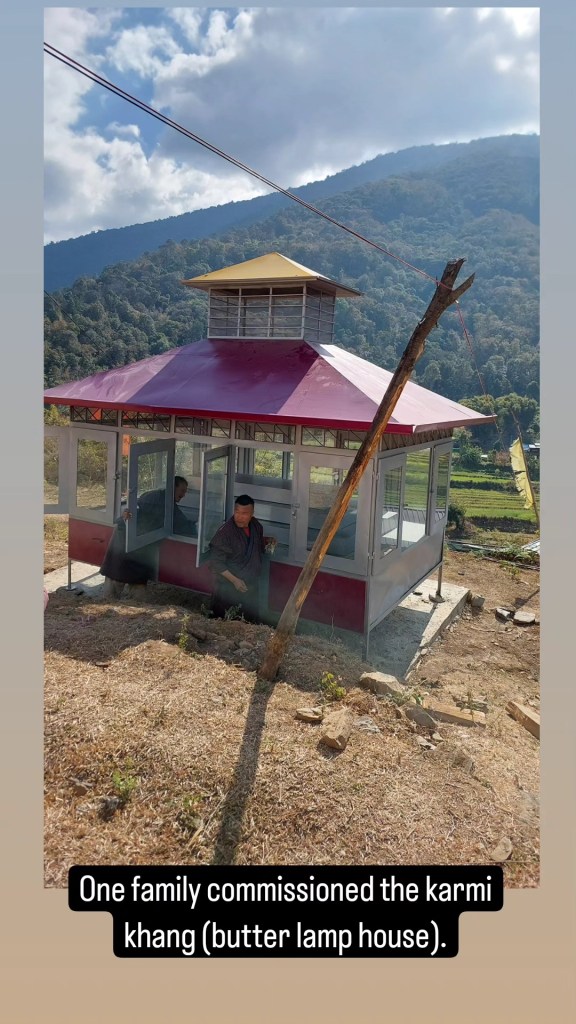
I offered three butter lamps in a new large Karmi Khang that a family from Rukha had bought in the memory of their father, who passed away a few months back. It arrived on the same day I landed there. I prayed that the people of Rukha continue on their path and be a part of this small great nation, as it moves confidently into the future.

They say you cannot take anything with you when you die. This is not true. You will carry with you the good and bad karma and the merits and retributions you accumulated. And more importantly, you will also leave behind the memories of you in people whose lives you made some difference.

So, as you breathe in the Dragon Year 2024, I invite you all to take a moment to reflect on a few questions. How many thoughts and prayers (moelam zangpo in Bhutanese) have you sent to others? How many smiles have you brought in someone else? How many lives have you touched through your small or big works?

As a Mahayana Buddhist, these should be the questions of your life – and the greater meaning of a pilgrimage.

(Itinerary of my pilgrimage – Semtokha Dzong (Thimphu), Dobji Dzong (Paro), Lhakhang Karpo (Haa), Punakha Dzong (Punakha), Mebar Tokchoe (Zhemgang), Lamga and Rukha (Wangdue)