Chortens (Dzo. མཆོད་རྟེན་; literally meaning “Support to The Teaching”) come in all shapes and sizes. Contrary to popular belief, there are more than three architectural types of chorten.
Stupas were adapted in the Buddhist world from earlier traditions as monuments for simply safekeeping the mortal remains of Buddha. Over time they evolved both in terms of physical aspects as well as the content. What is common to all types of chorten in the Buddhist world is that there are five physical structures to represent the five natural elements of earth, water, fire, wind, and space. Chortens in Buddhism are built as representation of the Buddha as seated in a lotus position.
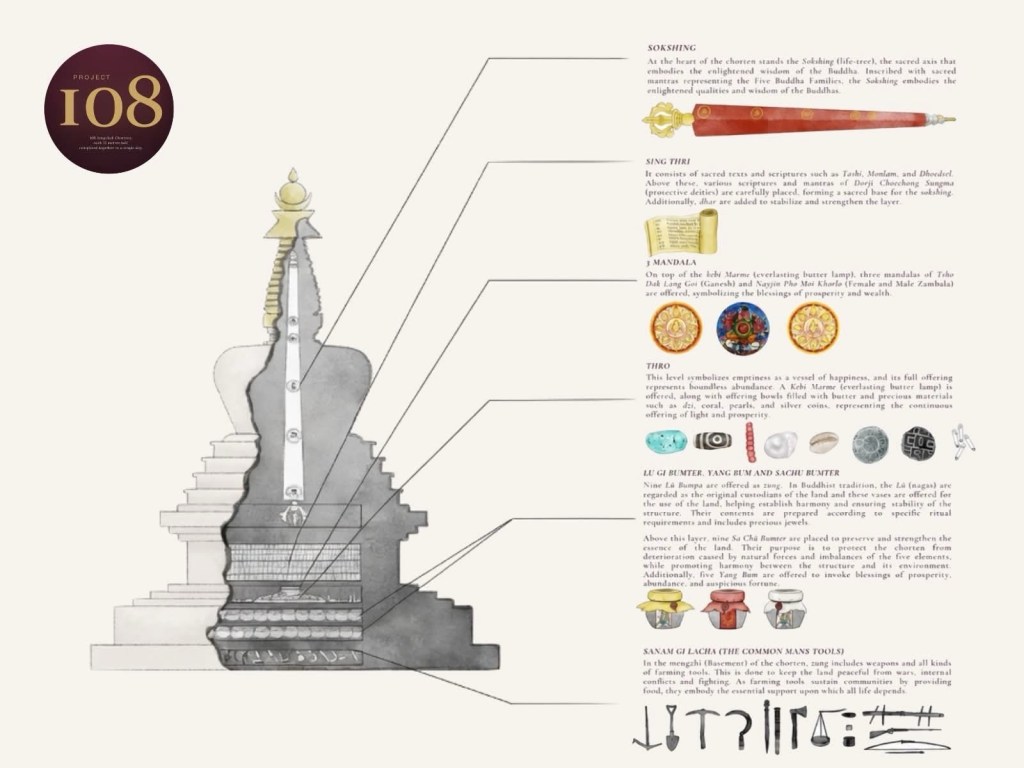
In this post let me share what goes inside a Bhutanese stupa, so that one day you can also build one. These pictures are from the Rigsum Gonpo stupa that my siblings and I sponsored to rebuild in Athang Morakha in Wangdue, as per the advice of my lama, Khandro Dorje Phagmo Rimpoche.
I dedicated the holy Saga Dawa month (the fourth month in the Bhutanese calendar) rebuilding a Rigsum Gonpo stupa in Morakha village in Athang Gewog. The place is associated with two very important figures in Vajrayana Buddhism. First, it is believed to be the abode of Vajrapani (Chana Dorje), which is referred to as Changlochen. Second, it is associated with Mendharawa – one of the principal consorts of Guru Padmasambhava.
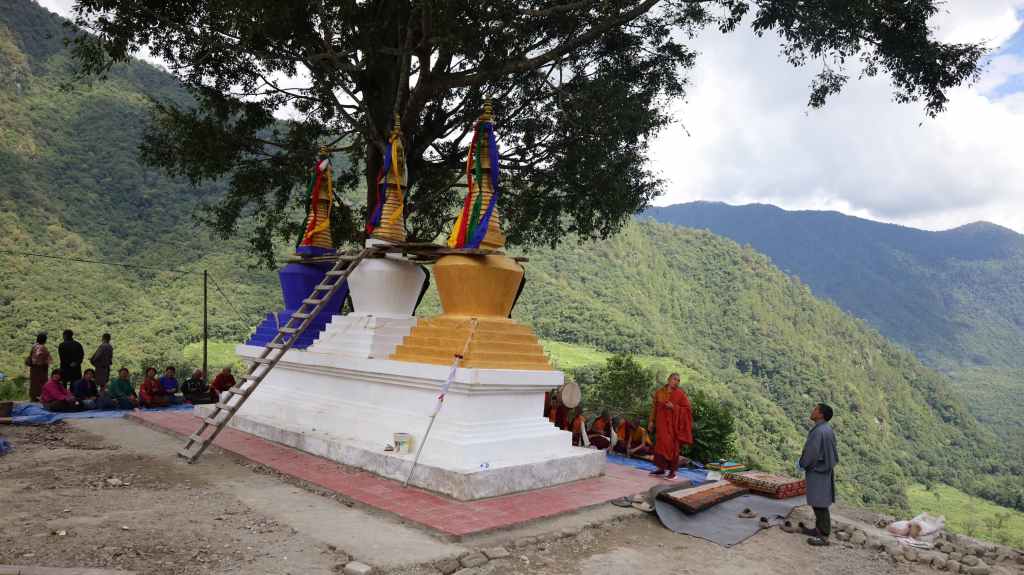
Rigsum Gonpo (Dzo. རིགས་གསུམ་མགོན་པོ) means Lords Protectors of Three Families (or Realms) and refers to Chana Dorje (Vajrapani), Chenrizig (Avalokiteshvara) and Jamyang (Manjushri). The three stupas are the representations of these three important deities in Vajrayana Buddhism.
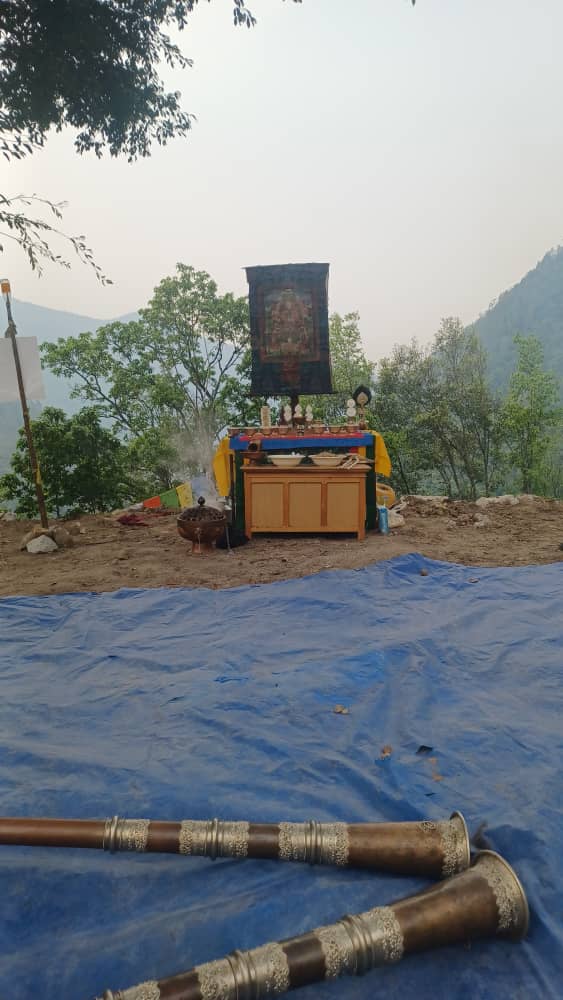
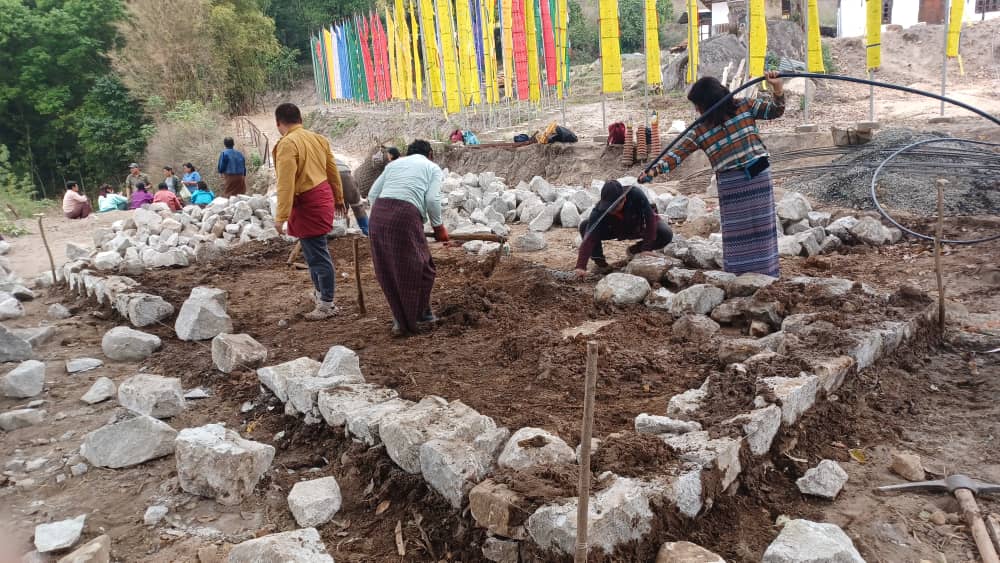
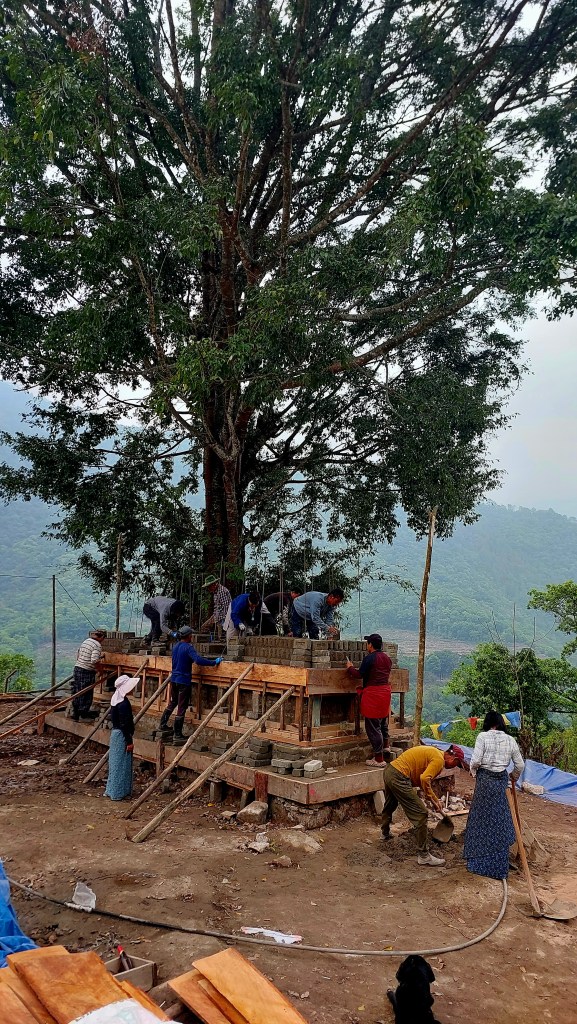
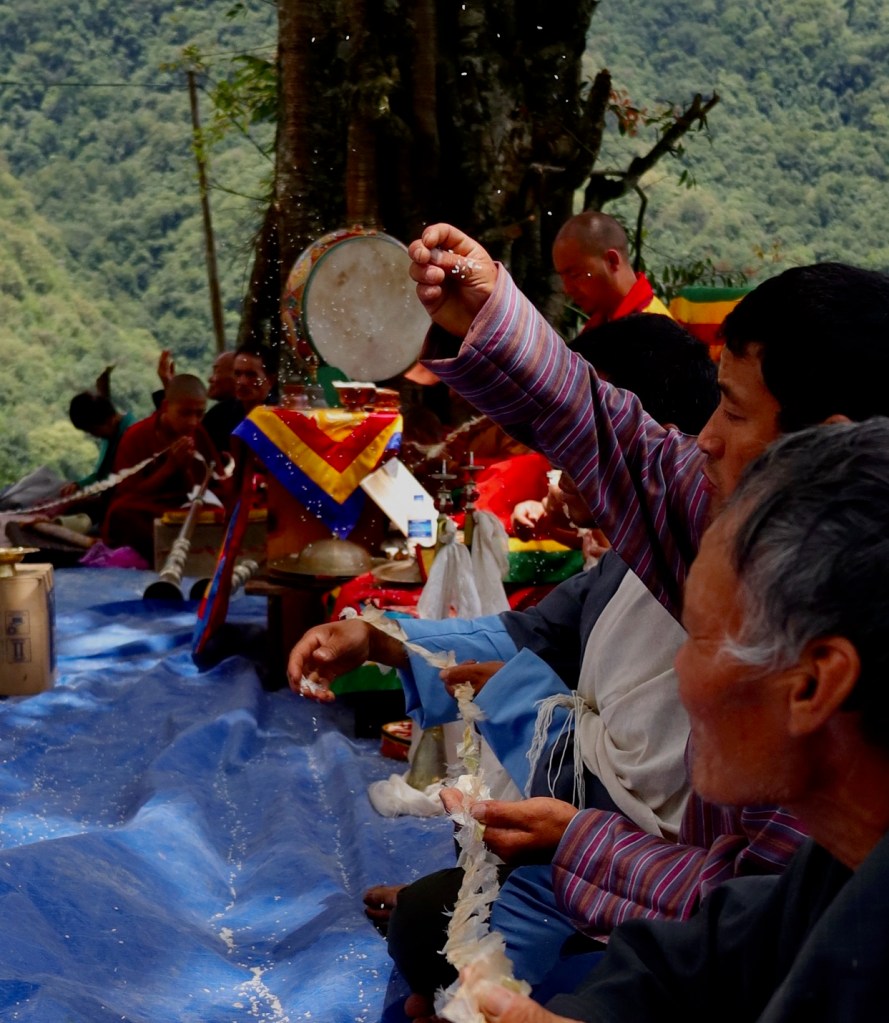
Picture 1 – Every major construction starts with a salang tendrel (Permission Seeking Ceremony) where we ask the consent of the earth deity to build the stupa. We offer 12 sacho bumter (vase of treasure) – four each for the three chortens. This offering is considered as a gift to the earth deity for allowing us to occupy the ground.Picture 2 – The first structure over the ground is the Sa-zin (foundation). This stage is important to provide the correct direction of the stupa (called Chho in Dzongkha). It should not face any direction randomly – especially its shadow should fall in the direction of any private homes. A master astrologer or a realised lama should do this to ensure that it benefits all sentient beings and hurts no one. Picture 3 – The next is to build three stairs called them-kha. Here inside the walls we have the first set of zung (relics) going in – consisting of farming implements and an old urn at the bottom layer. After covering this layer with juniper leaves the men and women garment and jewelries are spread – including arms and ammunition.Picture 4 – Then comes the Thri (throne) where the second set of Zung is buried. Here, inside of it, we offer a full set of religious musical instruments, and as many yangbum (vase of prosperity).Picture 5 – Every inch of the hollow space is filled with tsatsa (mini stupas) and dried juniper leaves. If juniper leaves are not available dry sand is fine too. The thing to remember is not to leave any space.
Picture 6 – The Thri is sealed and this marks the completion of the first stage of the constriction.
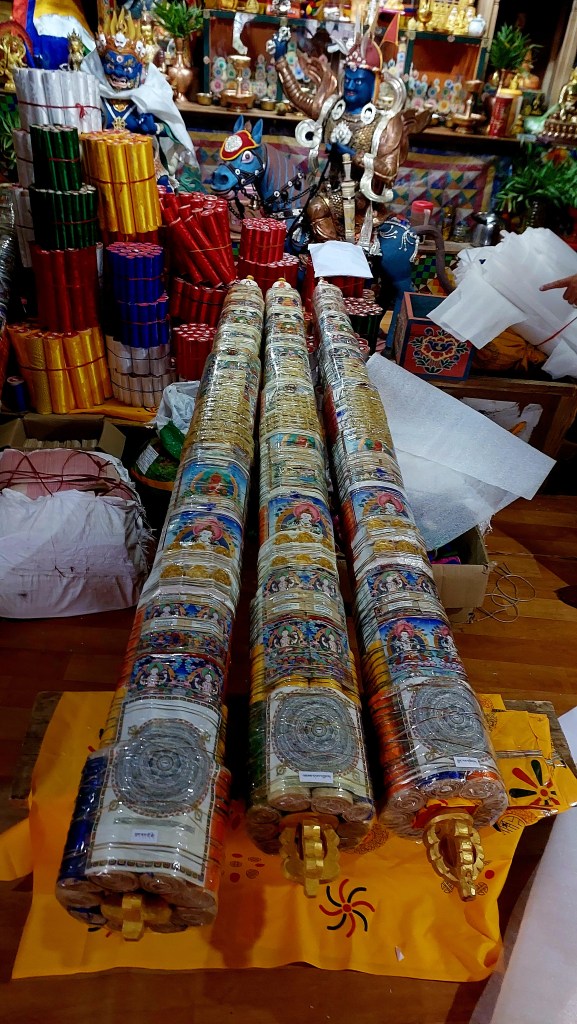
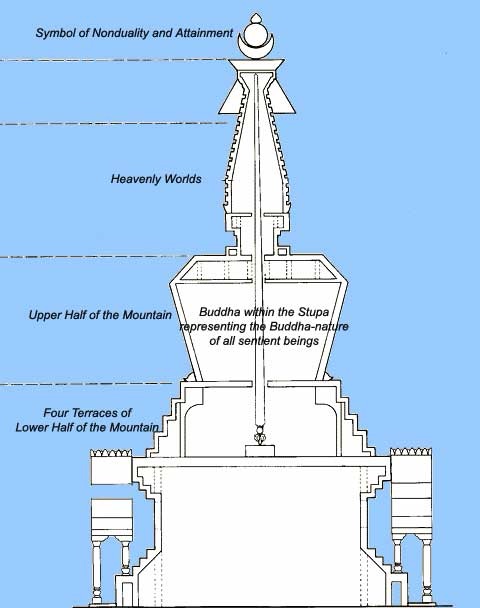
Picture 7 – Over the Thri, we build what we call the Tshemed-Zhi (The Four Immeasurable). It is four-step pyramid and in it we plant the sokshing – the soul of the stupaPicture 8 – Sokshing means “tree of life” and it is what makes the stupa come to life and bestow the power. It is a wooden pole sliced out of a young juniper tree, around which hundreds of scrolls of mantras, clay statues and precious objects are bound. This is best done by a master artisans, although it may be cheaper to do on your own. I prefer to get it from one master I know. Picture 9 – Planting the sokshing is one of the three most sacred stages of the construction of the stupa and hence, a realised lama should preside over this. It is believed the act of “planting” causes disturbances in the Lower Realm, and even the Lord of Death, Yama, can get upset. On the other hand, the upper tip is believed to send power of prayers and mantras, like a radio antenna, to the Higher Realms and the divinities would take a break to witness this sacred moment. Picture 10 – At the base of the sokshing we offer Kaypi-Mar (eternal butter) in a copper urn, and four sets of choeb-ting (water offering cups) filled with gemstones and precious metals. You fill the remaining empty spaces with sacred scriptures like Kanjur (Words of Buddha) or Bum Poti (Perfection in 100,000 lines).Picture 11 – The Bumpa (vase) – the conical shape structure is filled with statues of the deities and divinities.Picture 12-13 – Above the bumpa is the chug-sum khrolo (Thirteen Discs of Enlightenment) which envelopes the upper part of the sokshing. The completed chug-sum khorlo is in the picture below.Picture 14 – The golden parasol which covers the Chug-sum Khorlo is placed on top and both are given a golden color. The three stupas of Rigsum Gonpo are also given their respective colors: yellow for Manjushri, white for Avalokiteshvara, and dark blue for Vajrapani.Picture 15 – Finally, the top-most structure is the golden pinnacle. Usually the Sun, Moon and the Star representing the space are carved and placed there, but increasingly people offer golden pinnacle, which is costlier and believed to accumulate more merits.Picture 17 – The main sponsor of the construction is honoured with gifts of rice, textile and a white khadar.May this sacred stupa bless all sentient beings and bring peace and prosperity to this community and country.





 Dorji Wangchuk
My heartfelt congratulations
LikeLike