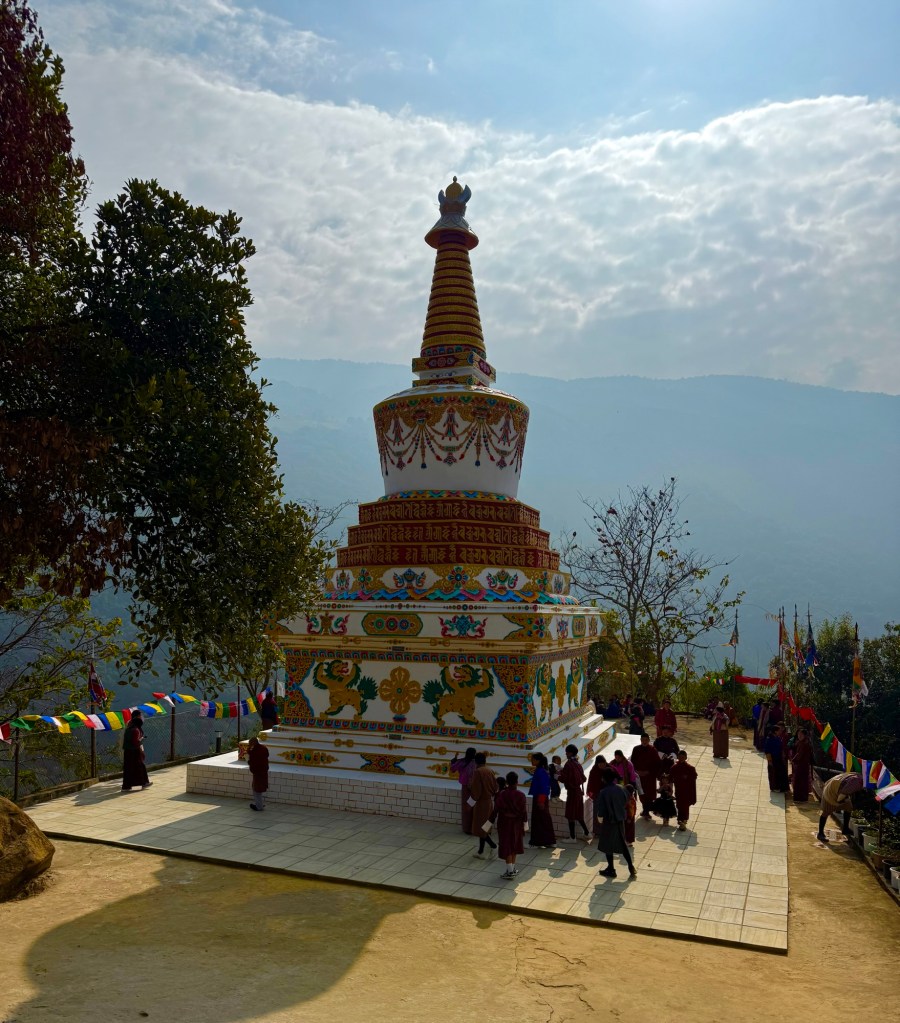
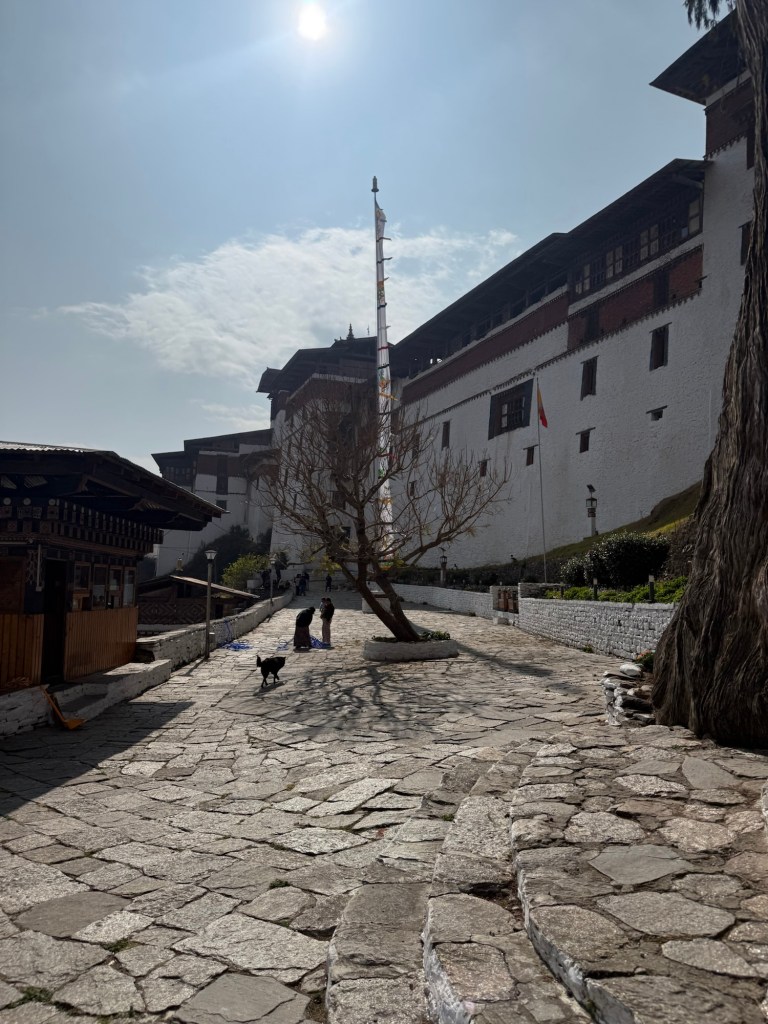
This is Yindhum Chorten in Dorje Phagmo Dratshang in Zhemgang.
A few years back I had put marbles around the stupa after a conversation with one of the resident nuns there, who is in a wheelchair. She has permanent birth defects.
During my recent trip there, however, as I was sitting on this spot and observing the people going around the stupa, I just realized how a simple innovation like putting flat tiles around a stupa can mean so much not just for the disabled but for the old too. How easy and pleasant it makes for the elderly to do their circumambulating.
One guy came up to me and told me how his father-in law loves going around this stupa because the floor is smooth. For those of us living in the cities such facilities are often taken for granted. In far flung places it is a luxury.
Doing good things does not necessarily mean you need lots of money, and you have to do great things. Great things are great, but not all can afford. Small and simple projects such as this, but meaningful, do not cost much and can give you an equally great sense of joy and fulfillment.
For those of my age who have had their share of fame and fortune and are seeking some greater meaning in their life (not those who are struggling still), all you need to develop is mindful seeing and observations, coupled with empathy and service to others. And to slow down with accumulating wealth and power and vying for more.
There are so many simply joy you can bring to the world.
Next project: to make the temple and the stupa wheelchair friendly.
Thanking all my online and offline friends for the heartwarming wishes on my birth anniversary. I was down with the flu to respond immediately. My frontal neocortex was shut off from endless sneezing that I could not think straight. So, here is a belated reflection as I almost hit a full zodiac cycle by the Bhutanese calendar.
Aging is a natural process where years get added to life. It is not in your hands. It happens regardless of all of us and to all of us. However, not everything needs to be left to time, fate, and nature. You have a choice too. You can add life to the years, as the cliché goes.
Let me share my own approach and experience. And by no means is this to sound condescending or moralizing.
Unfollow the script.
You see, just before the covid years, I had an inkling that something was off with the standard script of our life—the established conventions, the social norms, and the predetermined expectations. Covid-19 confirmed that feeling, with the lessons of impermanence being hammered on us by the sudden pandemic. I was on to completing my doctoral studies and take up a teaching position in a foreign university. But everything changed in an instant.
Ever since that, I don’t take anything for granted. I don’t wait for doing what needs to be done. If there is a meaningful project, I grab it and run with it. If there is a place to go, I don’t wait. If there is a person in distress, I try to help. Every year is an achievement. Every month is a blessing. Every day is a gift. Every moment is to be cherished.
One problem with following the convention is that you get deleted once your usefulness expires, such as reaching the so-called retirement age—a concept that is nonexistent in the traditional Bhutanese society but which became widespread with the introduction of the modernization era. Ten years back I had all these realizations.
No such thing as retiring.
Today when I travel, I meet my mates from my school and colleges and work colleagues who have mostly retired. This, I feel, is a huge scam we have fallen for. Retirement is a concept we borrowed from the Industrial Revolution, where you are disposed of once you are not strong enough. Worse still, you “delete” yourself. As a small country with a small productive workforce, this is a waste. Monks and farmers never retire.
I feel one should not stop working—especially the doctors, engineers, and teachers. Recently, when I was in Buli, I met one of my juniors from engineering college, who said he was retired. I told him that there is no such thing as retirement and that I want to see him in Gelephu for two to three months every year to help build the mindfulness city. There are a myriad of ways to give back to the country, king, and community. And lots of ways to add life to your years.
Fun facts about Gen X.
The thing is, my generation—Generation X, the generation that grew up eating WFP wheat supplies, the generation that got the first vaccinations, the generation that walked for days to get to a road, the generation that came from the School of Hard Knocks—will probably live longer than their parents. Past the age of 80 for sure if one leads a healthy life, and many may even cross 90. Now, that is a good 20+ years to operate on your own.
Sure, life is uncertain. But, again, this is something no one can do anything about. What you can do, instead, is to start thinking about how to fill those 20 years in the most meaningful ways that will make you proud and without having to check with the whims and fancies of your capricious boss and a judgmental society. You can move around more freely and make your own choices.
This, of course, is not to suggest abandoning one’s obligations and responsibilities, but an invitation to do what makes one truly happy and fulfilled without the boundaries set by the service rules and social pressures. In fact, a friend of mine once shared that he really felt he was serving the country better after he left the government job. His was the first hotel to offer itself as a quarantine station during Covid.
So, to all the people from GenX, keep going! You can still contribute to humanity; you can volunteer for one of the numerous spiritual monument projects in GMC, you can teach our Desuung and Gyalsung, or you can volunteer for any of the NGOs in the country. The opportunities are there.
For millennials and those born after.
The millennials! Because of all the constant distractions and intense lifestyle, you guys will age very fast. You are 17 one day and 47 in an instant. 30 years, gone! You will soon be in line at the exit door. Start thinking now about how best you can give life to your years. What greater meaning can you find? What difference can you make? How many lives have you changed? Is this life all that there is? You may be judged by the number of houses you own or the career you pursued and attained. But what will truly make you feel deeply satisfied inside is how many lives you have made a difference to and how many moods you have uplifted.
For Gen Z and Gen Alpha, there won’t be a script to follow, as the world you will live in will change so fast that you will be in the recycle bin more often than not. I will elaborate on this in my future articles.
Meanwhile, start adding life to your years as Mother Nature adds years to life.
🤩🤩🤩
NB: Starting the first day of the rest of my life by sending out school-going expenses for my beneficiaries 😇😇😇
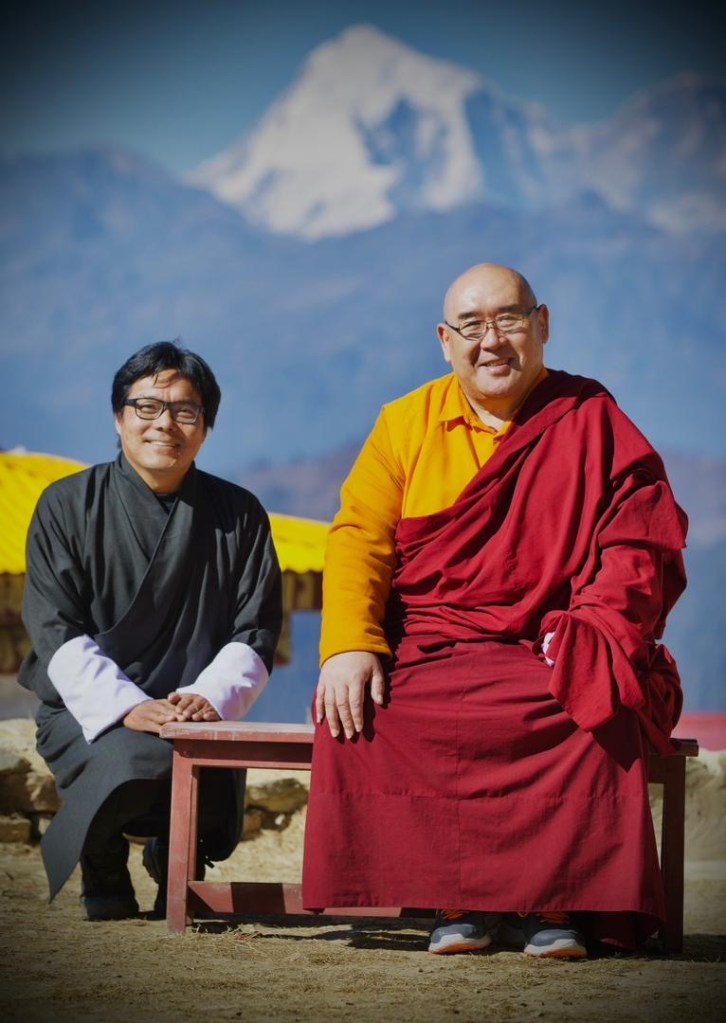
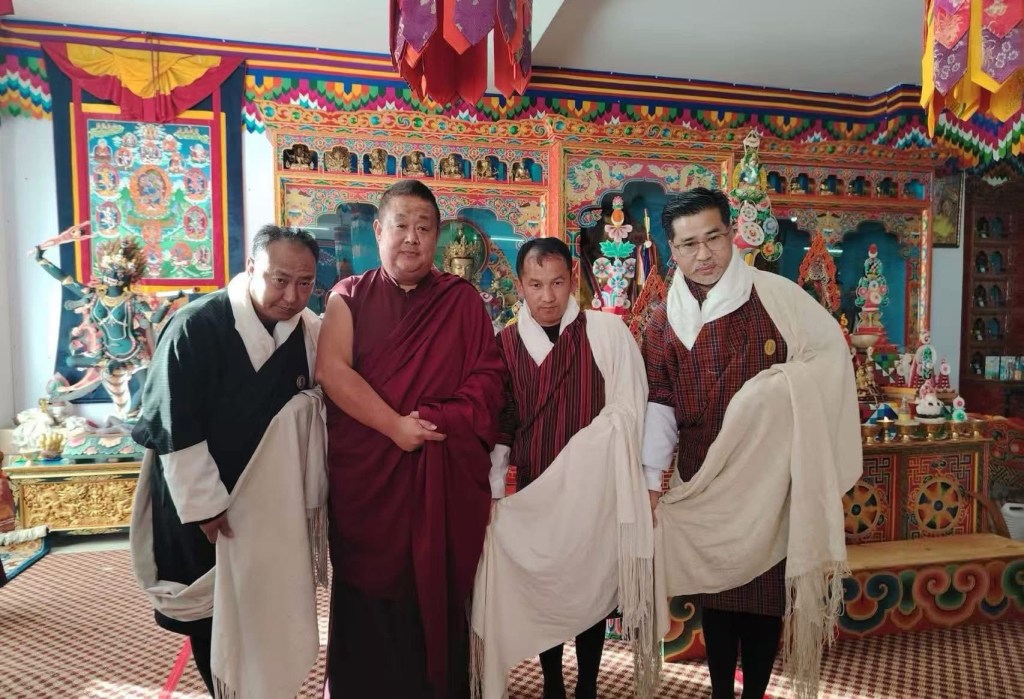
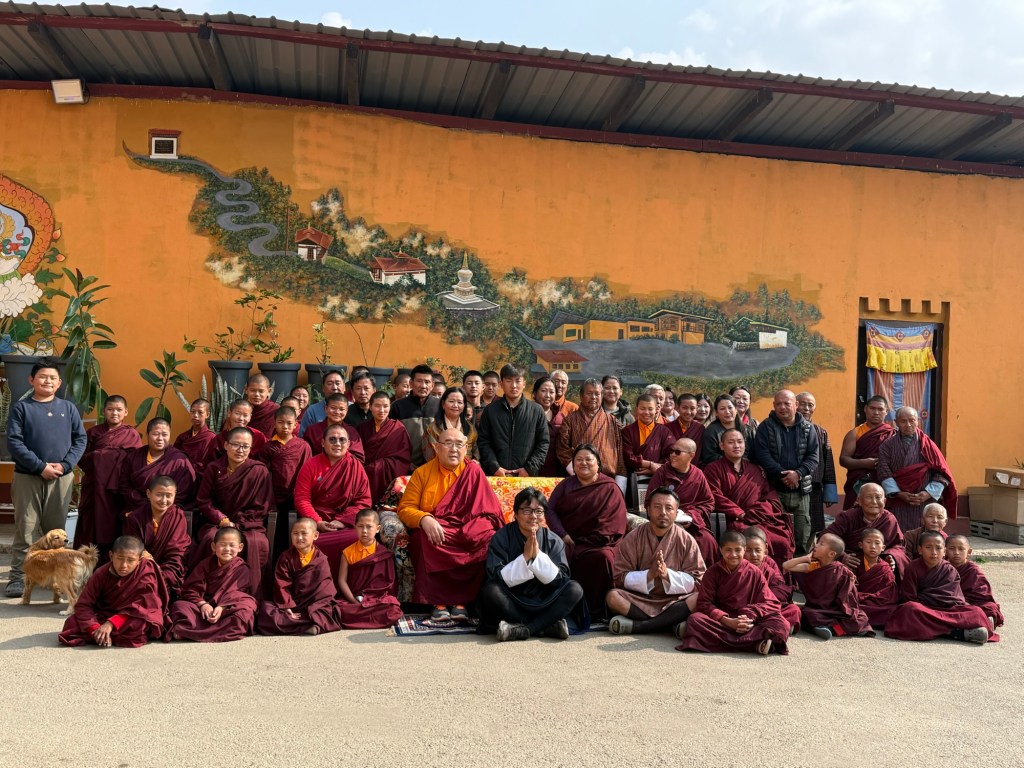
(Photo – with His Eminence Sonam Gyatso (aka Abhum) Rimpoche, for whom I jumped at the privilege of showing him our country. He really liked the Tshering Chhegna circuit. He was a teacher to Dorje Phagmo Rimpoche when she studied in Mysore.
After my post on driving in India, here is a funny and not-so-funny side of driving in Bhutan – in the spirit of fairness and sportsmanship. Please add your #MaanKiBaat. But no hate speech, please. Only fun and some laughs allowed here. 😁😁😁
Indicator Rule. The right indicator ON can mean any of the following:
I want to turn right.
Don’t overtake.
You can overtake.
Safe Distance Not Allowed. Don’t leave a safe distance between you and the car in front of you. Otherwise, this space will be filled by at least a taxi and a truck, who are trying to gain milliseconds of arrival time.
No traffic light is a national pride. Either it is too advanced a technology to adopt, or we take pride in being romanticized that “Bhutan has no traffic signal.” Technology is there for a reason.
Some cars think they are trucks. If they want to turn right, they occupy the left lane and veer right. Vice versa, if they are going left, they turn right first. And trucks think they are cars. They try to enter a race competition with SUVs.
Confidence Overloaded. Pedestrians do zebra crossings as if they have divine rights. Maybe they have nine lives like cats.
The fast lane is Booked. It seems some drivers have paid the subscription fees to stay in the fast lane. So, you have to overtake them from the left.
Overtaking is an ego game. If you attempt to pass the car in front that is snailing, it will suddenly accelerate. If you are successful, you will be cursed or chased.
Honking Rule. One short beep to alert the car in front you are overtaking; three short beeps to say hello to your friend passing by; the longest and continuous beep to scream if someone is trying to kill you.
Some Entitled Lot. The more luxurious the car, the more the sense of entitlement one feels.
Thanks. No, Thanks. Don’t expect to get a thank you for the courtesy you extend, like waiting for them to pass or complete their maneuver.
Blind you! Prepared to be blinded at night by someone flicking at you to alert you of their presence.
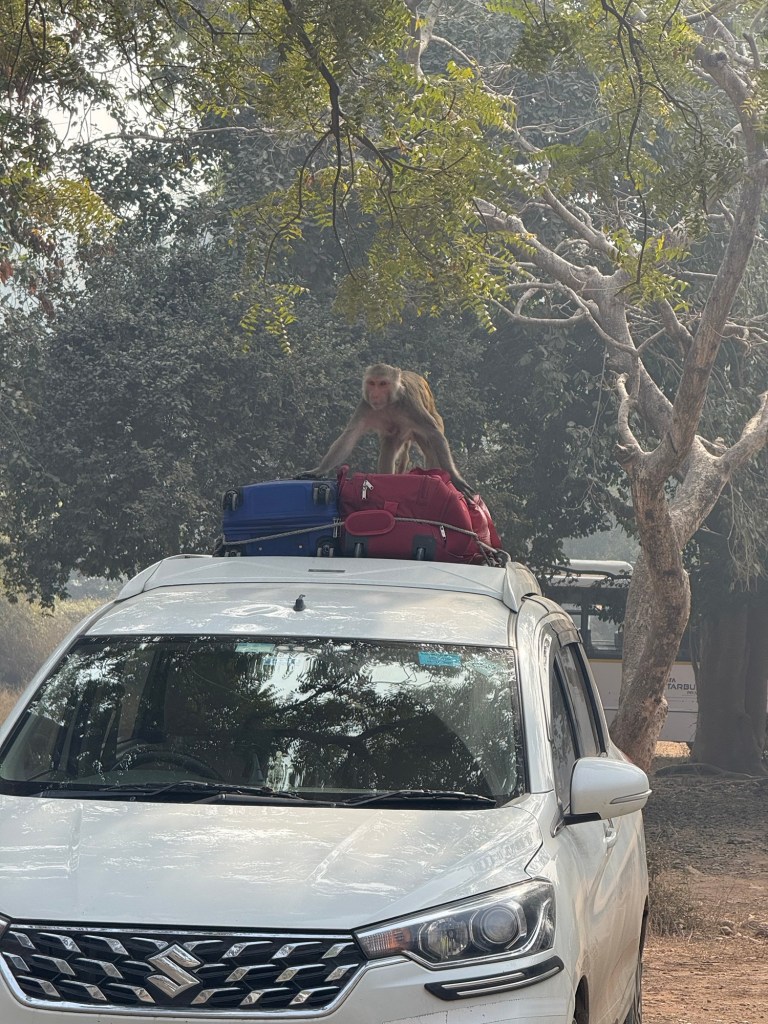
Animal Surprise. Be careful when driving in rural areas and forested areas. Cows, goats, chicken, tigers, elephants, leopards, deer, monkeys, pheasants, and mongooses may pounce on the road from nowhere.
Almost Licensed. If you see a large letter “L” pasted on the rear windshield, it means the driver is “Learning.” Go near it at your own risk.
Acrobatic Spitting. If you see someone open the door and pop out their upper bust, don’t worry. It is not a suicide attempt. It is to spit out the betel nuts.
Let there be no light. Wonder why Bhutanese don’t switch on the light beam till it is pitch dark. Don’t be alarmed to meet many cars driving in the dark, after the sun has been long gone. 🤔🤔🤔
Stroke is a cruel disease. It is something I don’t wish for anyone. Once it hits, if it is not fatal, the recovery time is long, or the patient is disabled for life. Either way, the psycho-social and economic impact is huge on individuals and families, leading to depression and despair.
Post-stroke care and recovery is the key, and it is where the Foundation will have a new area of focus. We at the foundation are open to and are on the lookout for any solution to help our patients. And in this way, in Bhutan we are fortunate. Besides the medical services, we have traditional medicines, plus powerful Vajrayana rituals, and, finally, the blessings of our lamas and rimpoches.
Hence, one of the initiatives I proposed in the foundation was to request some of our rinpoches to be our spiritual patrons. Their role would be to bestow long life and medicine Buddha blessings regularly on our patients and the caregivers and the staff of the foundation.
Why Spiritual Patrons?
The Foundation is basically an organization that puts compassion into practice, and compassion and loving kindness are the core practices in Mahayana Buddhism. And who is the epitome of such practices? For me these three Rimpoches embody these values.
Furthermore, from my experience, when people are down, when all hope seems to be lost, and when desperation sets in, that’s when people turn to spirituality. Only our spiritual masters can lift them up. I can’t do that, and the doctors can’t do much either. And yet, the psychological effect is huge and leads to positive outcomes. A westerner, for whom I arranged a blessing, had his T cell miraculously increase and eventually recover from an almost fatal disease. Others even recovered from late-stage cancers after blessings, rituals, and prayers were conducted on their behalf.
Where science stops, spirituality will take over and help us find our way back to health, happiness, and hope.
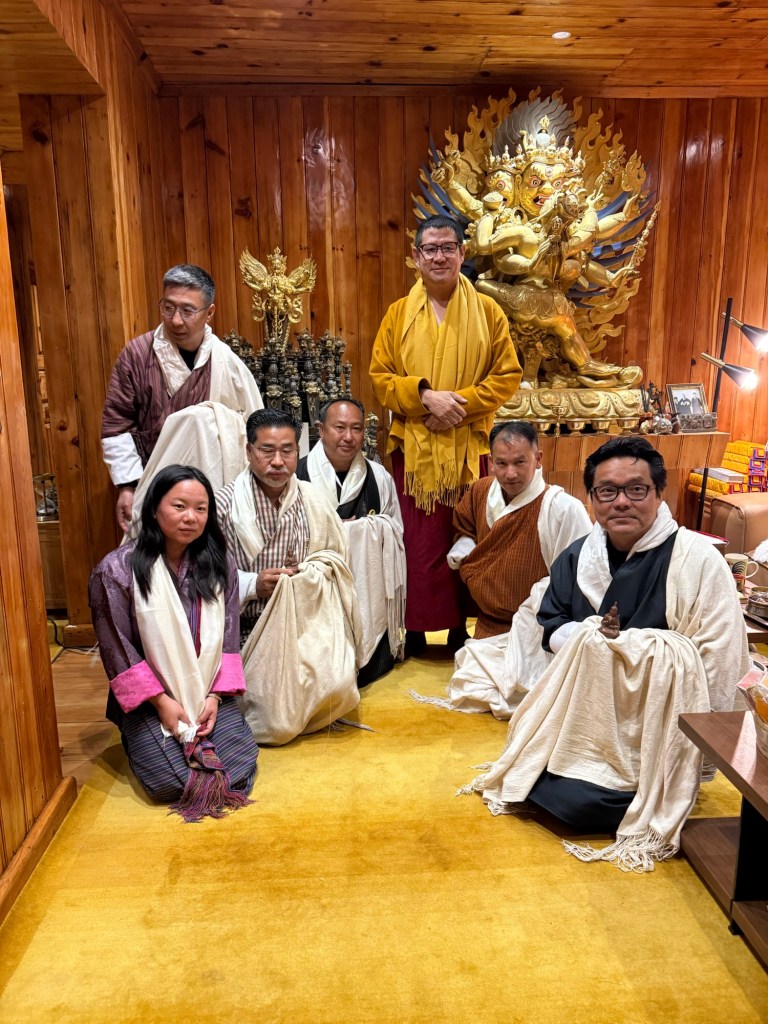
Hence, we are super excited that all three rimpoches we approached—His Eminence Zuri Rinpoche, His Eminence Kathok Situ Rimpoche, and Her Eminence Dorje Phagmo Rimpoche—have accepted our request. Their compassion and blessings will go a long way in helping our patients and caregivers to wade through the challenges in the post-stroke period.
We are also hopeful that through their prayers, concerns, and blessings, there would be fewer people affected by this terrible disease.
This is the beauty of Bhutan.
Deepest gratitude to all three Rimpoches. 🙏🏻🙏🏻🙏🏻
.
.
.
.
.
(Be involved. Be informed.)
Approximately 80% of strokes are preventable through lifestyle changes and management of risk factors.
Invite the team from BSF to do a professional risk assessment of your school, office, business, monastery, workplace, and family. Contact our office.
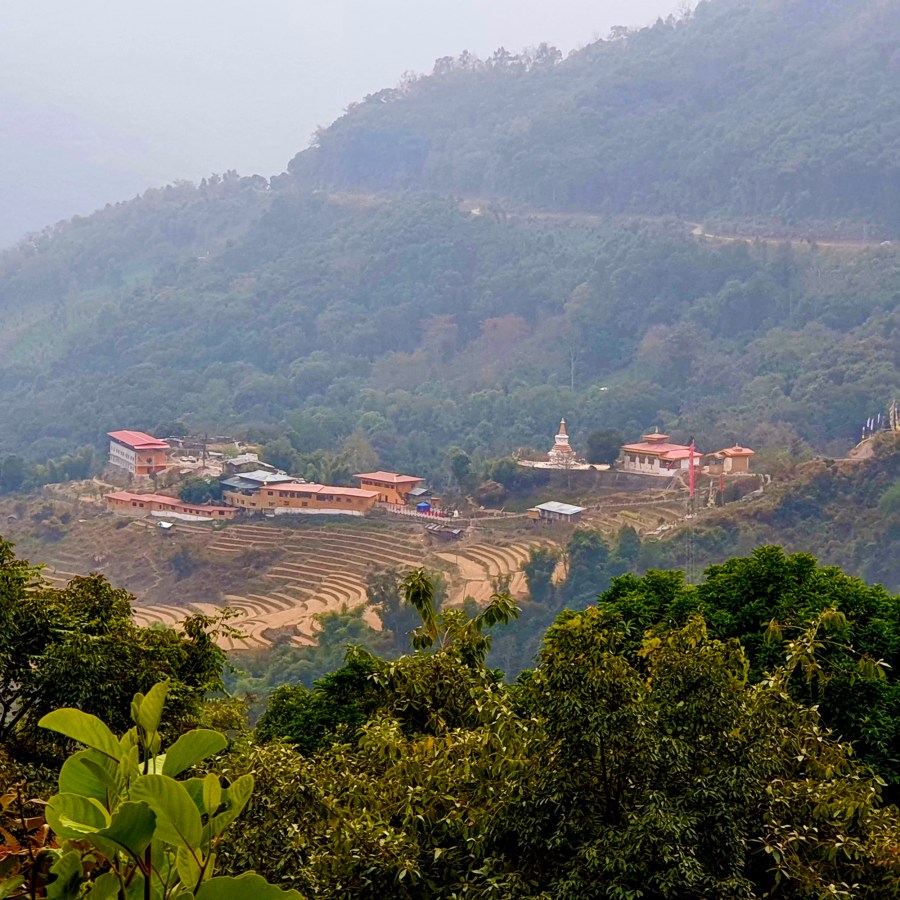
When one thinks about Zhemgang, one doesn’t associate this lost region in central Bhutan as a pilgrimage destination. And yet, Zhemgang has its own charm. The lower altitude means it is more pleasant in winter. And spiritually, the place is associated with Terton Pema Lingpa, Terton Dorji Lingpa, and Mebar Tashi Khyidron, besides the omnipotent Guru Padmasambhava.
Visiting my teacher
Pilgrimage is also a journey to renew one’s vow to one’s teachers. It is a new year—time for new hope, but time for the same old aspirations. Farchen Zangmo Rimpoche—the thirteenth emanation of Dorje Phagmo (Vajravarahi)—has her main Dharma center in Zhemgang in Nangkor gewog.
The center is built near the 8th-century Mebar Tokchoe temple established by Monmo Tashi Khyidron. It was built as the southern portal to keep off the demons obstructing the construction of Lhasa Samye in Tibet. It is thus a sacred site.
Phurpa (Vajrakilaya) Drubchen
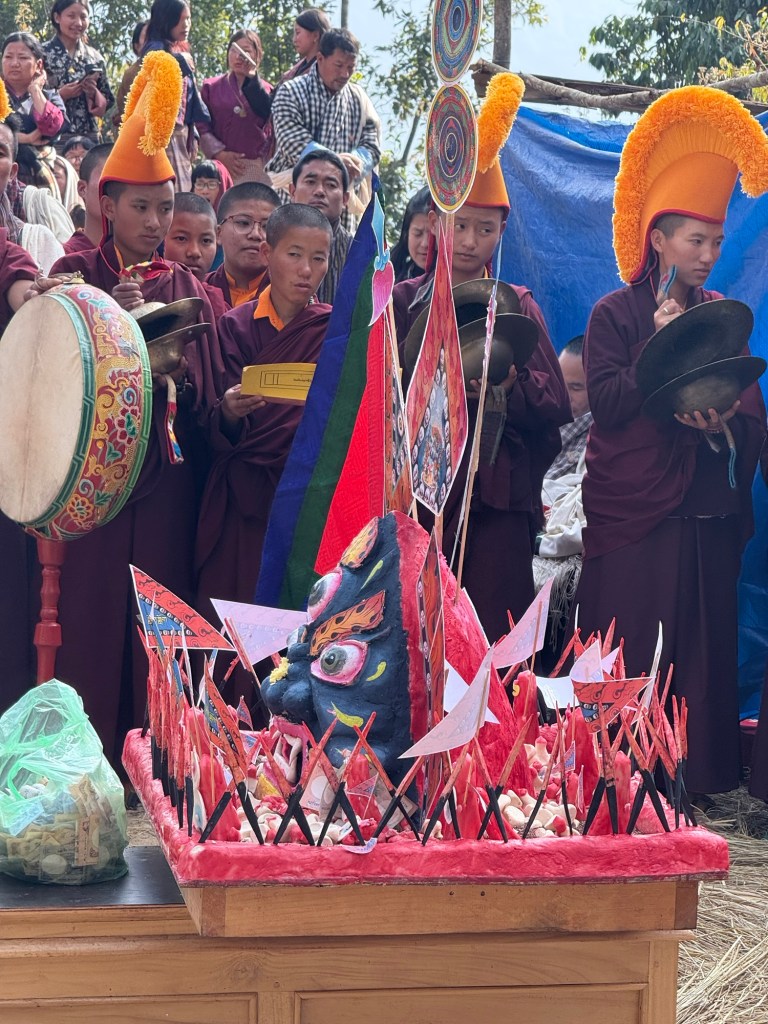
I made the pilgrimage to also attend the annual Phurpa Drubchen organized by Dorje Phagmo Rimpoche.
The Vajrakilaya Ritual is a very powerful purification ceremony, which is traditionally conducted as the lunar year ends. The ritual has the power to cleanse all accumulated negativities and defilements while also clearing obstacles and tragedies in the coming year.
Besides my usual dedications, I offered my prayers for the health and wellbeing of our King as we embark on ambitious national goals such as the Gelephu Mindfulness City project. Every prayer would help, I am sure.
Buli—the abode of Buli Monmo.
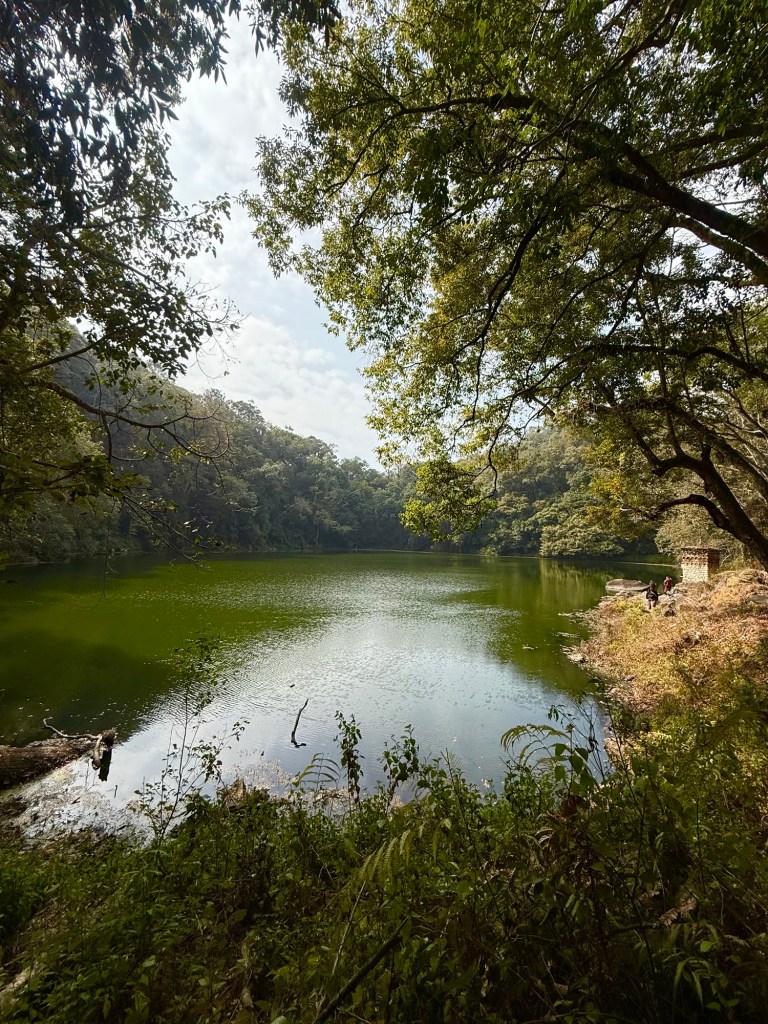
And of course, I made a visit to the beautiful village of BuBuli and paid respects to Monmo Kuntu Zangmo, the protector deity of Buli, with her abode in Buli Tsho (lake). When we arrived, the lake was all dirty with leaves littering the surface and dark in color. As we stayed and completed a few rounds of mantras and prayers, everything cleared up. It was, as always, magical.
I also traced her origins and the myth.
According to Phuntsho-la, who runs a homestay in Buli, Tshomen Kuntu Zangmo came from the mythical kingdom of Shambala and wandered through Tibet, then Kurtoe Dungkar in Lhuntse. She then travelled to Tang Kuenzang Drak and reached Chumey in Bumthang. From Chumey, she crossed Brektey La and descended into the region of Kheng Buli, where she resides now.
There is a house in Buli where she, disguised as an old woman, sought to spend the night. She told the grandmother not to disturb her for a few days. But the next morning, seeing the guest not waking up for breakfast even when the sun was up, the grandmother peeped through the gaps of the door and saw hundreds of snakes circling around a big serpent that was holding a ruby on its head. The grandmother was mortified and passed out—only to be woken up by the same old womwoman,o said,
“I told you not to disturb me.”
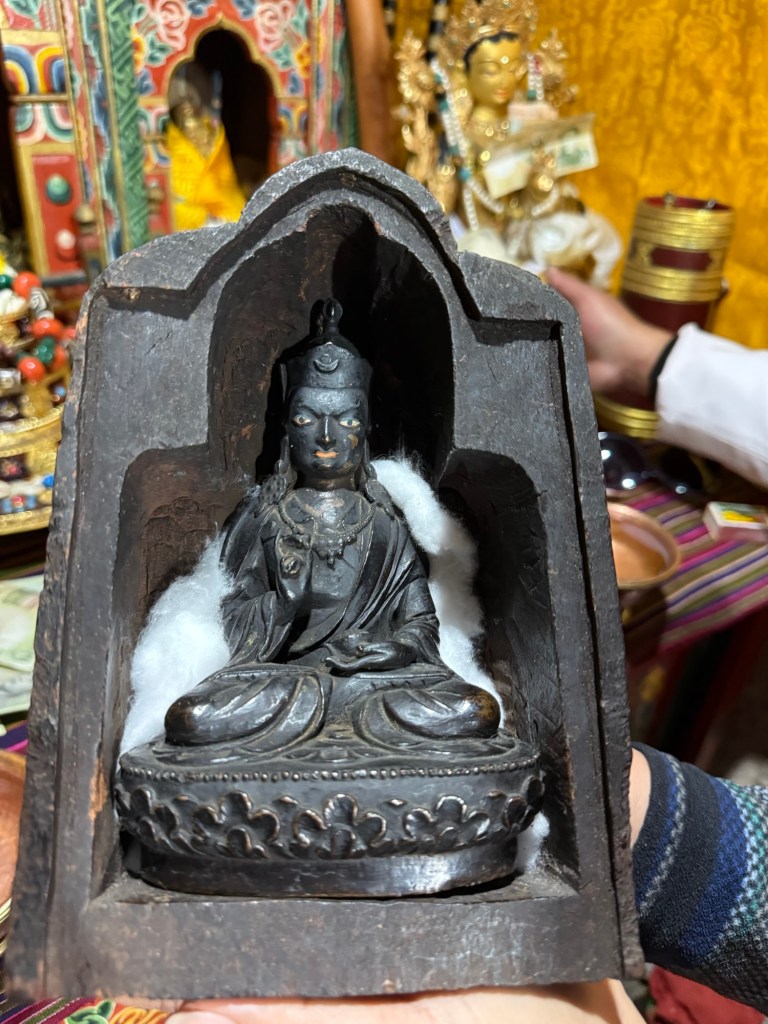
She then gave the old grandmother a conch and left the house. The conch is not there, but the story is still alive, and the place was later visited by Terton Pema Lingpa, who gifted an image of himself made with his own hands. The statue can be seen today (see picture).
Pema Lingpa (Khar) Lhakhang.
One of my mandatory stops in Buli is the Khar Lhakhang, built by Choedrak Lama Sonam Gyeltshen, who was a student of Drubthob Choying Rangdol, in honor of Terton Pema Lingpa. The place is also special because it is believed that Pema Lingpa is said to have visited the spot and met Guru Rimpoche there.
The temple’s main statue is Guru Padmasambhava, but the more sacred one is Guru Drakpo—the wrathful emanation of Guru. The statue is believed to have shed tears and blood from his right hand a few days before a dedicated caretaker passed away.
A mural painting in the temple depicts Pema Lingpa making a bumpa, tsetor, and pan. All these three items are in the possession of different families in Buli, and one can visit them. The place depicted in the painting is just below the temple—a small spot encircled by boulders.
Oral history tells the story of Pema Lingpa being visited by a gomchen (lay practitioner) in his camp and having a conversation. The gomchen later turned out to be Guru Padmasambhava. However, no one except the Terton saw the gomchen.
Sacred waters of Avalokiteshvara.
One of my favorite things to do in Buli is visiting and collecting a jerrycan full of the holy waters blessed by Chenrizig (Avalokiteshvara).
Unlike other sacred waters known as drubchu, which are believed to have been revealed to prove the achievement of someone’s practices (druba), the holy waters of Avalokiteshvara are a divine water blessed by the Bodhisattva of Compassion. Hence, it is more sacred.
Trongsa Dzong.
I closed my pilgrimage in the magnificent Trongsa Dzong by visiting the nyekhang dedicated to local deity Gara Wangchuk (the same nyeb of Trashigang Dzong), the chambers of protector deity Palden Lhamo, and the amazing Buddha Maitreya.
Trongsa Dzong was originally a new village (Krong Sar) that popped up around a small temple built by Ngagi Wangchuk—the grandfather of Zhabdrung Ngawang Namgyel.
The site was chosen after he had the vision of Palden Lhamo. Later in the morning he saw the hoof mark of a donkey (Palden Lhamo’s mount) in the area. It can still be seen even today at the main door of the Dzong.
May my prayers bring blessings to the world as we begin the Fire Horse Year.
🙏🏻🙏🏻🙏🏻
(The fourth and last part of my pilgrimage is soon.)
I drove from Gaya to Siliguri to Bhutan. Here are some interesting observations, for fun:
Traffic rule is optional. Honking is mandatory.
Cows are king. Goats are deputy boss.
Everyone honks, but no one listens.
Nobody gives way to anybody. Everyone is equal.
Every space is a road. Or a parking.
Driving is taken like a serious contest. The tension of the faces is real.
Bigger the vehicle, more aggressive is the driver.
Trucks are dangerous. Chicken, even more.
Zebra crossing is a waste of paint.
Trucks are anchored on the fast lane – by default.
There are many good things too.
There is chaotic order, which is like our own life.
In over 3000 km in over a week, I saw only one trafic accident.
If you ask one person for direction, three show up to help you.
Some of the best drivers got be in India. They are safe and precise upto a few millimetre.
Trust the locals, not Google Map.
New highways are smooth and superb. Some are world-class.
Best part of road trips in India is having tea on clay cups for Rs.5. You get to keep the cups as souvenirs.
If you violate a traffic light, the locals are on your side.
If you are in trouble, whole village stops to help.
Finally, there is free non-stop entertainment, such as overloaded trucks, family of five plus maid on one bike smiling and waving at you, cars carrying mattresses and pipes on the carrier plus a passenger on top.
Recommendation:
Do a driving pilgrimage to India with your friends. The experience and the memories can be unforgettable. You will see the real soul of India among the simple village folks.
I just concluded the first leg of my pilgrimage of the eight sites associated with Buddha. Needless to say, it was a profound experience. Sitting and walking on the same soil as the Enlightened One was both a moving experience and a very fulfilling one.
However, there was one thing that bothered me – the constant pestering by petty vendors and beggars in every pilgrimage site. There were hundreds of men, women, and children – some old, some disabled, and many totally undernourished.
The suffering and the misery numbed me completely that I was simply overwhelmed and felt helpless. But to unsee such suffering is to undo any merit from the pilgrimage itself. What is the use of praying to Buddha while overlooking the very thing he was trying to bring an end to? So, I kept looking for an answer to my own dilemma.
On the fifth day while driving from Vaishali to Rajgir, I struck up a long conversation with my driver, Indradev, about the development in Bihar – nicer roads, better Internet connectivity than before. And we continued with his life, family, and children. We did a WhatsApp video call with them and I got introduced to his family – especially to his six-year-old son, who always tries to connect to different people from different countries his father drives around.
MY BUDDHA MOMENT.
During one of his subsequent calls, I overheard his son complain that the school wants to know when he will pay the fees. My newfound friend looked perturbed.
“Why is the school bullying your son for the fees?” I asked.
“Sir, I am behind by four months, and so the school is right to ask for it,” he replied.
He then went on to complain how life has been unfair to him since his father passed away and he didn’t get anything and even had to discontinue his school. He works every day for long hours to just feed his family.
He is currently squatting on someone’s land with a token lease. A kind Vietnamese pilgrim gave him some money to put up a proper roof, and a Tibetan Rimpoche from Dharamsala helped build a toilet. Both of them, however, have lost touch with him during covid-19. He added that this season has been low in tips, and his salary was just enough to buy the groceries.
“Sometimes I wonder if God exists and why he keeps me in an earthly hell forever,” he concluded with a sigh.
His voice was heavy, and the pain was real. I empathized with him, felt a deep sorrow because I know how he felt. I have been there too where I felt worthless.
“But I won’t deprive my son of what I missed. In fact I am sending him to a private school although it takes one fourth of my salary,” he said with conviction.
“How much is the monthly fee ?” I asked him.
“It is one thousand per month, sir,” he replied.
“So, that would be twelve thousand a year?”
“Right, Sir.”
“Ok. Call the school right away and tell them you will clear the dues by tomorrow when we get back to Bodhgaya. And tell them you won’t be late here after either, because I will pay the fees for the whole year.”
He went into disbelief but did it right away. When he put the phone away, he seemed relieved.
“You said God has abandoned you. I think he didn’t, whoever he or she is,” I told him.
He was visibly emotional.
“Thank you, Sir,” he said, looking towards the horizon with a teary eyes.
I looked out of the window and saw the mountains of the city of Rajgir getting closer. But it was not the words of the Buddha that came to my mind to describe what I just did. Instead, my favorite line from the movie Schindler’s List – a Hebrew proverb kept ringing:
He who saves one life, saves the world entire.
No! I can’t end all the suffering in the world. But, at least I just saved a child from being harassed for not paying the school fee on time. Maybe I saved him from having to drop out of his school. One never knows.
The next day when we got back to Bodhgaya, I relieved Indal to go and clear the dues with the school. He messaged me an hour later and texted me the receipt and the last exam results.
DID BUDDHA RECIPROCATE?
That evening in Bodhgaya after dinner, I rushed to get a few more rounds of the great Mahabodhi stupa. It was almost closing time.
When I entered the gate, I saw that a group of Thai, Vietnamese, Chinese and Indian devotees were saying their last prayers as the temple was about to close. I entered and joined in. It was a beautiful moment chanting the praises to Buddha in Pali.
Buddham Saranam Gacchami (I take Refuge in Buddha), Dhammam Saranam Gacchami (I take Refuge in the Dharma), Sangham Saranam Gacchami (I take Refuge in the Sangha).
Then as the security was ushering us all out at 9 o’clock, I saw the main priest, who was sitting on the altar near the Buddha, distributing scarfs and other flowers offered to the Buddha statue. I approached the priest too and asked him if I could have a white scarf too. He looked into my eyes, thought for a moment, and said,
“Wait!”
And he got up and took down a large yellow silk robe that was wrapped around the Buddha statue. He bundled it and launched it at me.
I caught it like a good goalkeeper and thanked him several times as I hurried to the door with the policemen screaming at me.
As the giant door closed behind me, I turned around and stood there for a moment to reconfirm the priceless gift I just received, slowly settling in, and absorbing the blessing for one last time.
And in that moment I realised that even my “God” has not abandoned me either. I would like to believe that he reciprocated on behalf of the child I just helped.
😌😌😌
(I decided to sponsor the child all the way till college, as long as he does well. ✌️✌️✌️
May this small act of kindness bring closer to ending suffering and misery on this earth.)
Info: Indradev drives for a tour company. Someday he dreams to own his own car. Right now his priority is buying the land he is on. Good to hire him and do the Buddha Circuit. Car is bit luxurious but better be safe.
I had the fortune of visiting the newly-opened and beautiful Buddha Samyak Darshan Museum in Vaishali. The main building in the shape of a stupa houses the Buddha Relics that were unearthed at Vaishali and kept at Patna Museum for over 70 years.
It is believed that after Buddha’s cremation, the ashes were divided equally into eight parts and distributed to the king and patrons of Buddha. The Licchavi Kings received their share, which they put inside the Vaishali stupa. The stupa was later destroyed and buried during the decline of Buddhism in India in the 12th century — only to be unearthed by British archaeologists in the early 1900s.
Vaishali and Buddha.
Vaishali is located some 30 km north of Patna — the state capital of Bihar in India. Although it often does not get mentioned at par with the other four major sites, it is historically significant in that it was the capital of the Licchavi Kingdom that patronized Buddha and the Sangha.
Vaishali is also believed to be where Buddha met his first teacher, Arada Kalama (yes! Buddha had teachers too). Arada taught him mediation, which Buddha mastered in a few months.
The Monkey Miracle.
It is believed that the Third Turning of the Wheel of Dharma took place in Vaishali, where the Buddha taught the concept of Bodhicitta — the Buddha-nature that is present in all sentient beings, and cittamatra (mind-only), over which later in the 4th century, the Yogacara School was founded by Asanga.
Today one can visit the spot marked by the Ashoka Pillar, and a large water reservoir (dry in winter) called the Monkey Tank, and a large brick mound renains of a stupa.
The reference to monkey comes from a very popular story of Buddha in Vaishali. A monkey is supposed to have stolen the Buddha’s begging bowl, and returned the bowl filled with fresh honey as an offering later. When the Buddha accepted and blessed it, the monkey was so happy. When he was reborn as a human, he attained enlightenment. This legend is the most famous of Vaishali and is told and retold, and even carved as rock and temple art all over Buddhist India.
Historically, Vaishali is remembered for two other important moments in Buddhism.
Teaching of Impermanence. Buddha also conducted his last teaching in Vaishali before leaving for Kushinagar. He taught on impermanence and went on to announce his upcoming demise and emphasized the inevitability of change — one of the key Buddhist concepts.
Ordination of women and democracy. Upon insistence by Ananda, Buddha ordained the first group of women into the Sangha — starting with his foster mother, Mahaprajapati Gautami (Buddha’s biological mother died soon after his birth). Furthermore, Buddha expressed his satisfaction over how the decisions in the Sangha were made in the most democratic manner.
Special gratitude.
A special thank you to the Indian monk and the security guard who allowed me to take pictures and spend a little more time in the temple. They did that when I told them that I was from Bhutan and was on a serious pilgrimage.
The ruins and the location of the original Vaishali stupa can be seen even today. ** With this third of the eight places associated to Buddha, I conclude the first phase of my pilgrimage in India. I will continue with Sarnath, Sravasti, Kapilavastu, Lumbini, and Kushinagar next time.
The sacred text known as the Satasahasrika Prajñaparamita, which is translated as the Perfection of Wisdom Sutra in One Hundred Thousand Lines (Skt. Śata-sāhasrikā Prajñāpāramitā; Tib. ཤེས་རབ་ཀྱི་ཕ་རོལ་ཏུ་ཕྱིན་པ་སྟོང་ཕྲག་བརྒྱ་པ།) is one of the principal texts in Buddhism. In Dzongkha it is simply referred to as bum (འབུམ་)—meaning ‘The Hundred ’Thousand’—referring to the 100,000 lines of the scripture.
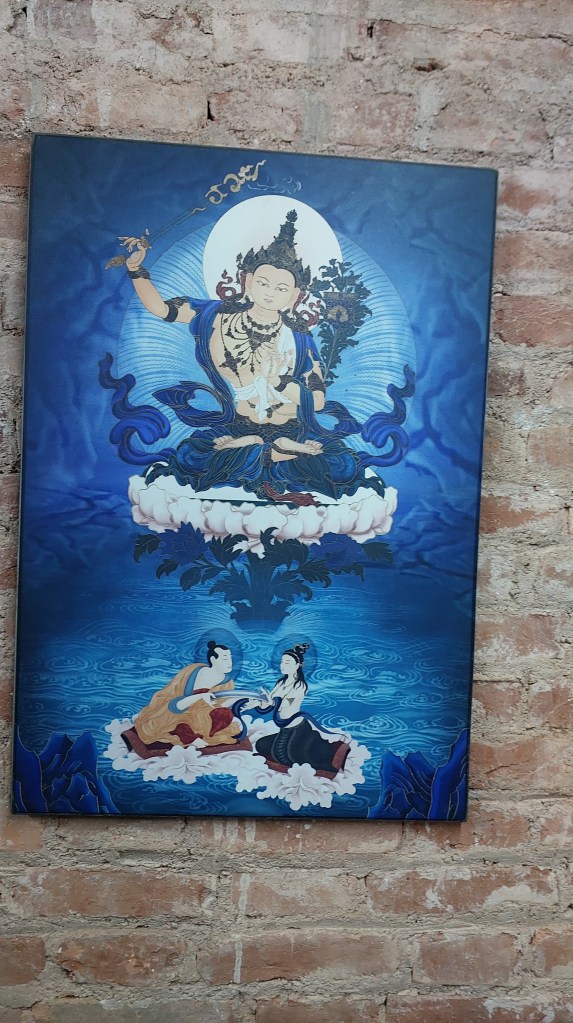
Story has it that it is based on the teachings of Buddha that were delivered at the Vulture Park in Rajgir (India). Manjushri is supposed to have attended the teaching and dictated it to his disciple, who wrote it down. The sacred manuscript is attributed to Jinashri Jnana, a disciple of Manjushri, with Manjushri himself, the legend goes, writing the first three pages with his own index finger and dictating the rest.
The complete set of texts was believed to have been delivered for safekeeping to the Nagas in Kathmandu Valley by Manjushri with an instruction that a man would come in the distant future to retrieve them. That man would happen to be Nagarjuna—a brilliant second-century scholar from South India.
The Temple and the Ser Bum:
I had heard that the manuscripts were in a family temple in Kathmandu and that it was possible to see them. Or at least that was what my Nepali friends told me. Having written the essence of the Prajanaparamita in my PhD dissertation, I was fascinated by the prospects of even getting a glimpse of the original copy.
So, I decided to make a trip to Nepal.
After asking around, and based on a book by Keith Dowman, I traced the family temple to Vikramshila Mahavihar (aka Bhagwan Bahal or Tham Bahil) in Thamel. The local Newari people refer to the volumes as Ser Bum, while the proper Sanskrit name is Śata-sāhasrikā Prajñāpāramitā.
Tracing it in Kathmandu.
The Volume is taken out only on certain days – as deemed auspicious by the Newari calendar. There are no fixed days.
As instructed by another source, I went to the office to introduce myself and make a request. Having a local reference helps, but in my case, I was able to convince them that I was a serious scholar, and most importantly, I had to convince them that I was a devout Buddhist—and not part of any sinister group. You have to make the appointment at least a day in advance for them to probably do some background checks on us.
The Scriptures Appear:
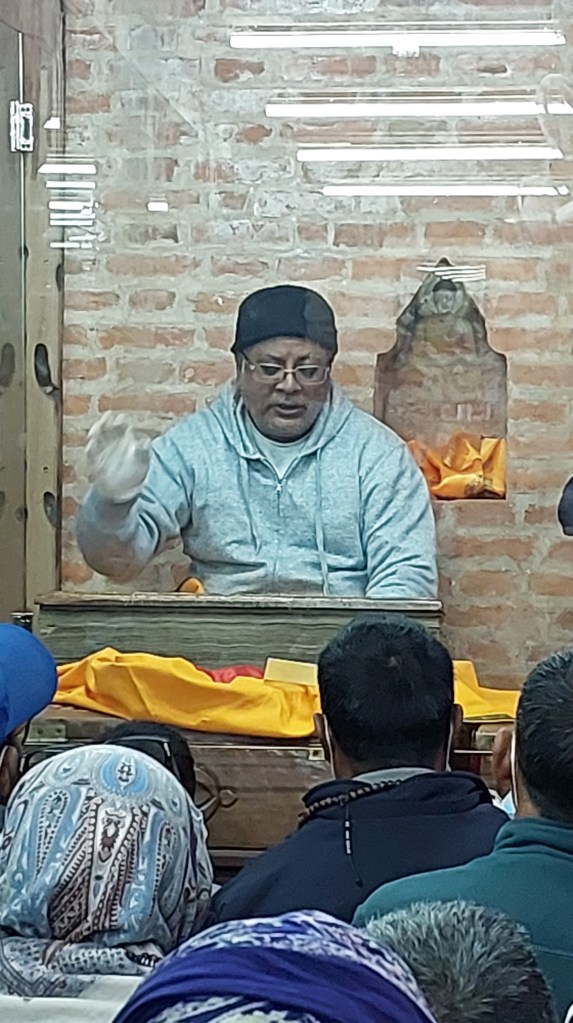
I got back to Tham Bahil on the day of the appointment and was led to a closed room, where I joined some 20 Ladakhi monks, lamas, and pilgrims, who had probably made the same request. After some 30 minutes of waiting, the four volumes of the scriptures were brought in and then solemnly opened by the Chief Custodian from behind a glass wall. He spoke and explained everything in Hindi since he assumed that we were all from Ladakh. He showed the first three pages, written by Manjushri with his own finger, and the rest of the pages written by his disciple, Jinashri Jnana. The noise from the courtyard outside was muffling his voice, and I felt sorry for the Ladakhis since they were mostly illiterate pilgrims and probably didn’t know much of the legend that was shared.
Tracing the Entrance to the Subterranean World:
According to another legend, Kathmandu was a huge lake surrounded by mountains. Eons before Shakyamuni Buddha, the Bodhisattva Kanakmuni is believed to have thrown a lotus seed in the lake. A big lotus with a thousand leaves and flowers blossomed out of that seed. On one of the flowers, a self-arising butter lamp burned miraculously.
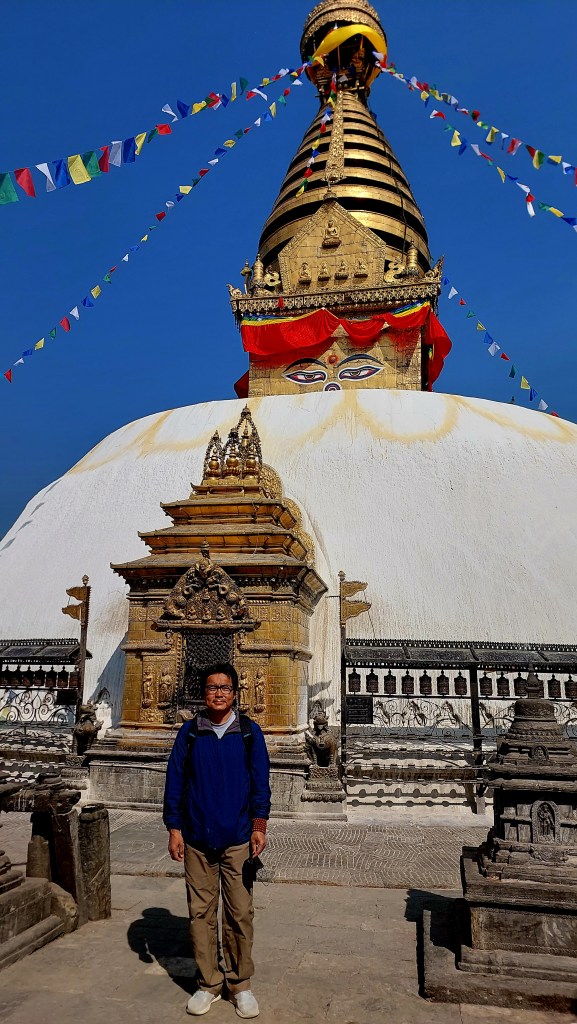
Manjushri is believed to have visited the place, and after meditating on Phulchoki mountain, he struck one end of the valley with his divine sword and drained the water from the lake. And as for that Eternal Butter Lamp, a hill rose on which now stands Soyambhunath (Phagpa Shingkun) Chorten. Just below the summit of Soyambhunath, I was told by the Chief Custodian of Tham Bahil that there is a place called Shantipur, where Nagarjuna is supposed to have entered and returned from the subterranean world of the Nagas with the scriptures.
I thanked him for this piece of information, got out of the temple, and got to the street, where I stopped a taxi. “Monkey temple, my friend,” I told the driver in Nepali. We dribbled through the traffic of Kathmandu and got to Soyambhu in 15 minutes.
After a tough climb up the long stairs to Soyambhu Chroten, I asked around and found the place called Shantipur. Here Nagarjuna (in the second century) is supposed to have entered the subterranean world on the invitation of the Naga King to come and teach the nagas the Buddha Dharma. And to reciprocate for the precious teaching, the Naga King offered the four volumes containing the Satasahasrika Prajnaparamita (the Ser Poti) to Nagarjuna.
What stands there today is a one-story building with a large, dark, ornamented door. That door is supposed to lead to another golden door, one priest told me, and to another door, with a total of five golden doors. That is the entrance to the World of the Nagas.
According to the same legend, the Naga King is still holding on to one more volume and waiting for Nagarjuna to come and give more teachings and offer him that last volume.
Leaving Soyambhu with a prayer:
I made a small offering through the door, rang the bell thrice as per the tradition, and made a silent prayer and a Moelam: that this story and the legend, whether true or not, never die and instead inspire thousands more like me, seeking both the knowledge and enlightenment—and that everyone who seeks them work towards the goodness of humanity and for the benefit of all sentient beings.
I climbed back to the Chorten and made 13 rounds of the Phagpa Shingkun (Soyambhu) and thanked the divinities, especially Manjushri, for this beautiful journey that I have undertaken—and requested him that I never get to my destination—and that there may be more of this wonderful mission.
#EightPlacesAssociatedWithBuddha 70 km north of Bodhgaya is the town of Rajgir. It literally means “King’s House” and probably refers to King Bimbisara who had this place as the capital of his ancient kingdom of Magadha. King Bimbisara, and his son Ajatasatru were the first patrons of Gautama Buddha.
Rajgir is mentioned in Buddhist texts and stories as the place where the Buddha gave certain sermons such as the Heart Sutra, and the Lotus Sutra. In particular, the sacred site mentioned is the Vulture Peak, nicknamed since the rocks look like a vulture.
Of the various teachings, the Heart Sutra (Dzo: Sherub Nyingpo) is of prime importance to us – the Mahayana and the Vajrayana schools because it introduces the concept of Emptiness. The text is included within the larger volume of Prajnaparamita sutras (bum in Dzongkha).
The most famous line from the short scripture is: Form is emptiness. Emptiness is form (གཟུགས་སྟོང་པའོ། །སྟོང་པ་ཉིད་གཟུགས་སོ།)
My experience.
It would be an understatement to say that it was a feeling of extreme satisfaction, reverence and a sense of fulfilment that I could sit and read the sacred texts of Heart Sutra, which I commissioned in gold script and subsequently got it blessed and thumbprinted by my lama Dorje Phagmo Rimpoche.
While Bodhgaya is the site of Buddha’s enlightenment, Rajgir is the site of Buddha’s activities. To visit the Bamboo Groove (Venuvana Park), which was the venue of Buddha’s first Sangha, felt emotional. To be standing and walking on the same soil as the Buddha and Sariputra (he was born here and attained enlightenment as per some sources) was a great feeling of being fortunate.
I also sat and said a few mantras at Saptaparni Cave, where the First Buddhist Council was held after Buddha’s paranirvana. I dedicated my prayers for all sentient beings to find peace and happiness and free from suffering.
I recited the mantra: Tadyatha Om Gatey Gatey Paragatey Parasamgatey Bodhi Svaha (ཏདྱ་ཐཱ། ཨོཾ་ག་ཏེ་ག་ཏེ་པཱ་ར་ག་ཏེ་པཱ་ར་སཾ་ག་ཏེ་བོ་དྷི་སྭཱ་ཧཱ།).
It is translated as: Oṃ, Gone, Gone, Gone Beyond, Gone Altogether Beyond, Awakening, So Be It” ✌️✌️✌️





 Dorji Wangchuk