The Tshog-kor practice


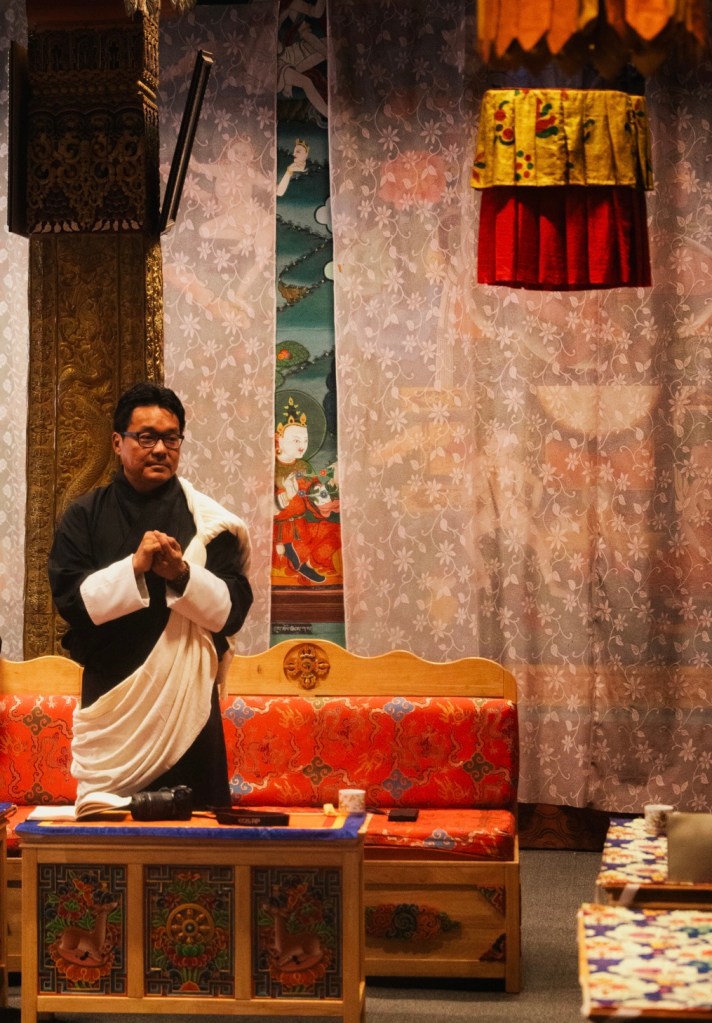
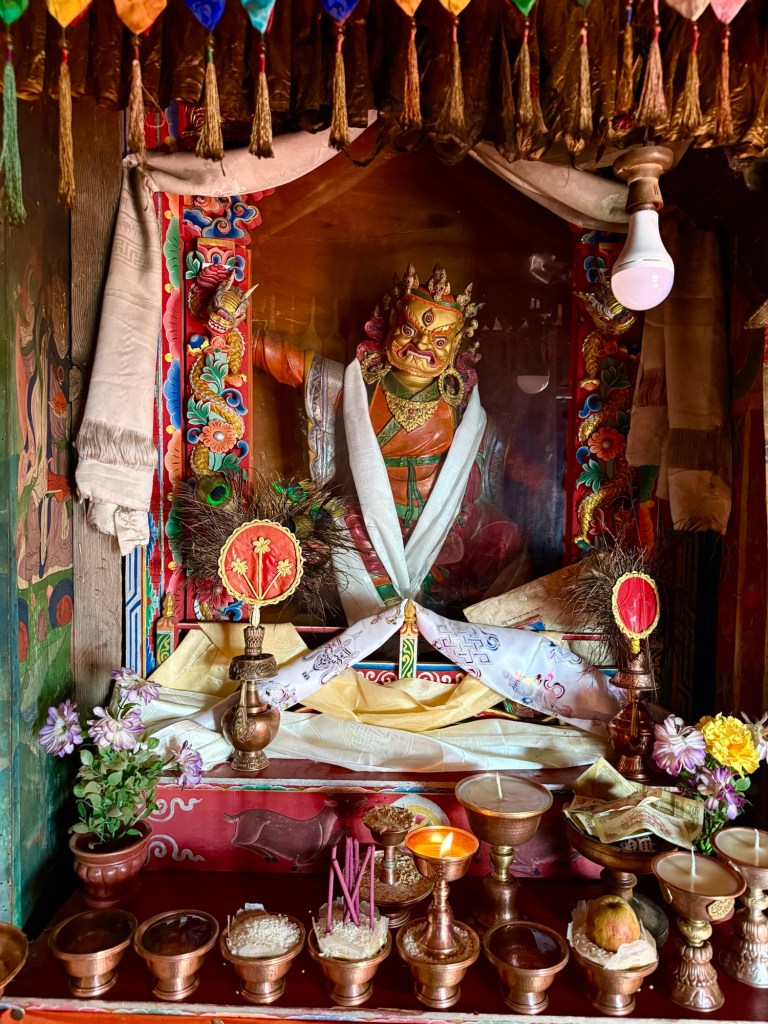
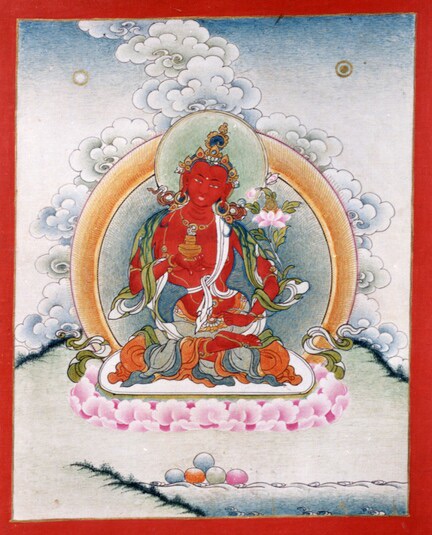
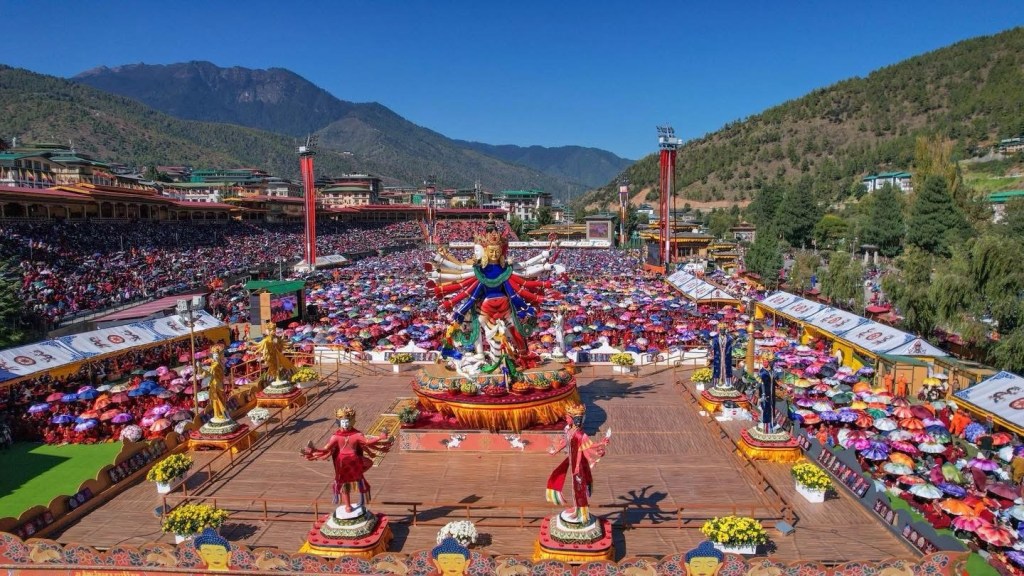
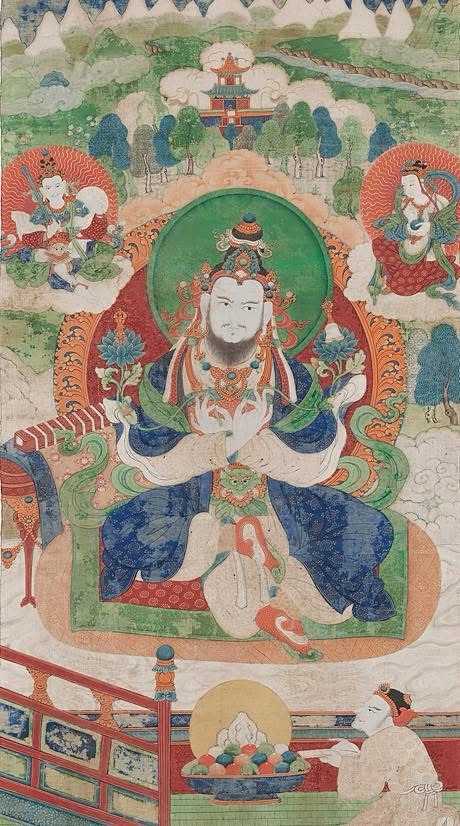
The final day of any major religious festival is dedicated to practicing of giving and offering. It is known as Tshog-Kor (literally meaning ‘Circle of Offering’)

The better term that conveys the meaning is the Sanskrit word, Ganachakra, which means “Wheel of Accumulation”.

In the ceremony of Tshogkor, practitioners gather around the lama, and make offerings of food, drinks, snacks, incense, money, butter lamps, which, first of all, is an act of practicing detachment from desires and clinging. It is said that by giving one generates merits and good karma. In fact, we refer to someone fortunate as“Tsho Tsasab” – meaning someone who has accumulated and built the merits.

Conversely, if you don’t give, you don’t get. Meaning wealth, prosperity, peace or anything you want must be cultivated through similar actions. If you cultivate hate you get hate in return. If you give money away, you will get money in return. (There was curious academic study being done that showed that for every dollar you give, you get back $1.65)

Second, by participating in the ritual of tshogkor, it is believed that one purifies and renews sacred vows made to enlightened beings, to one’s lamas, and to the spiritual community.

Thirdly, the practice of Tsho-kor is designed to generate “gatherings” of bliss and togetherness among the community members – to help each other to continue on the path of Buddha Dharma.

The Most Committed Wins

There is so much celebration and search for the smartest these days. The smartest student, who has aced the standardised class test is put on a pedestal. The smartest idea is showered with loans and financing. The smartest person in the room is given all the attention and recognition.

Yet, in my relatively long career in government, business and academia the probable hare-and-tortoise-race is still relevant. It is not the brightest and the fastest who finally wins the race. It is the one who is the most committed. True, one could be smart and committed too. But that’s a rare combination.

So, what is the winning skill in life?

At the most basic level it is practicing the timeless values such as integrity (tha damtsi) and karma-and-consequences (ley judrey). Assuming this is given, what more?

It is commitment.

Commitment, however, has to be directed somewhere. What do you commit to? In this article I will elaborate commitment in three areas of competency, consistency and connection.

Intelligence can be average. In some cases, being intelligent can be a liability too for, it can either breed an ego, or an expectation – or both. Most class toppers in Bhutan have rarely made it anywhere or far because they develop expectations, which often go unfulfilled. Also many intelligent people from my generation have not made it big because they became dismissive of other and others’ opinions.

Competency.

Competency starts with the fundamentals. If you are into any profession, you must ask, what are the basics and get them right. I have often been to public offices where the person manning the counter cannot respond to simple inquiries. I have been to shops where the salesperson cannot tell me a little more about the product.

Start by learning the fundamentals, and getting them right, because basics are like foundations of a building – on which one launches a successful career. It is a hard job but there is no alternative to building competency.

Consistency.

Bhutanese restaurants and hotels launch with great food and ambience only to find a dead place when you go back after a month. Consistency is not our forte. Even government plans and projects are inaugurated with much fanfare and blessings – only for them to be forgotten when the next management takes over. This is a common narrative.

Consistency requires commitment – a lot of commitment. Consistency fuels confidence in people – making success a guaranteed outcome. Consistency helps you gain trust in people around you. And trust, in this age of massive scrutiny by the social media is gold. Trust will be the most important asset in this century – not money or capital.

Connection.

I built my career on meaningful relationships – relationships that are genuine, dependable and of mutual benefit – and made through empathy and altruism, and not on exploitation, discrimination, profits or self-serving goals. Ultimately one must aim for people to say, “he or she is dependable” of you.

I treat everyone with respect – making no distinction between a millionaire or a maid, no discrimination between a CEO or a janitor. I don’t expect or extract anything from anyone other than to be helpful to each other in times of need. This approach goes with just everyone irrespective of who they are. Needless to say they pay off in terms of your reputation.

Conclusion.

Commitment to your competency by learning the fundamentals and then innovating and getting better incrementally; and commitment to consistency by staying at it – day in day out, year in year out. Malchol Gladwell suggests that if you grind 10,000 hours in anything you do, you will be the best. And finally commitment to building genuine relationships with people and giving your best.

These are the attributes one must cultivate if one wants to do well in life, love, relationships, and in careers in government, politics, or business.

If you are looking for people, or want to encourage anyone, look for the most committed – not the smartest. If you want to succeed in anything, commit! That’s all.

🙏🏻🙏🏻🙏🏻

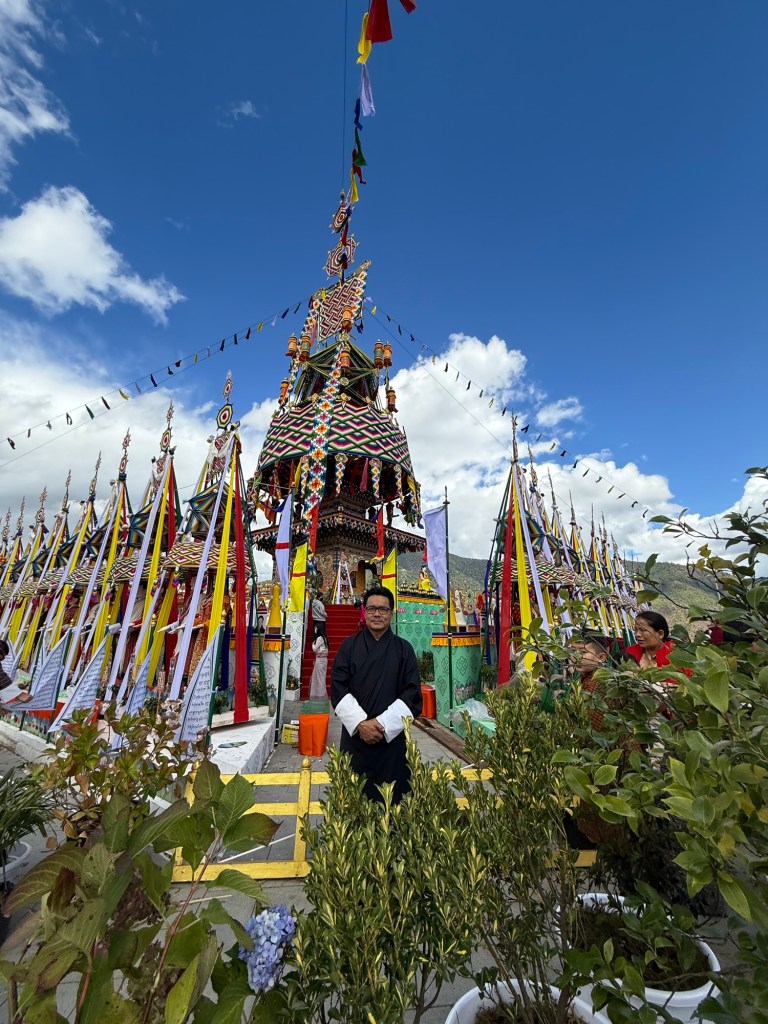
(In the picture, I had gone to visit Drugyel Dzong when this student of Drugyel School spotted me and followed me and asked me if I was ‘Sir Dorji Wangchuk 😁’. Said he reads everything I write on Facebook, blog, or on social media. I commended him that he read, which is quite uncommon among Bhutanese.

Writing consistently for many years is very challenging – taking lots of research, thinking, and sometimes even courage and grit, but pays off in little moments like this.

“You have your King. We have no one.”


Reflections from the world around us, and us

“Is the road this bad all the way to Daman?” I asked my driver, Suman, soon after we left the ring-road of Kathmandu Valley and hit the so-called district highway, which was just a dirt road.

“There are few stretches of tarred road, but it is very much like this,” he replied.

We are heading for Chumik Jangchub, the sacred site of holy waters, blessed by Guru Rimpoche which appears in the Barchel Lamsel prayers.

Since the drive was long – four hours to do 65 km, I struck a long conversation with him – on his life, the economic situation in Nepal, which all concluded with a sigh of total resignation from him. “You guys have your King. Here we have no one”, he told me.

In the following days, everyone I interacted with had the same thing to say. “You have a King. You guys are lucky”. The frustration and hopelessness have been there for more than a decade. In fact, this time, the first thing I asked when I landed – to a cabdriver I took from the airport – was, “I hope there is no strike this week, because I have to get back to work after this”.

But the strike did happen. Less than one hour after I checked in at Kathmandu Airport, people started pouring into the streets, police started shooting at protesters, and then all hell broke loose, which was played out on social media all over the world. Government buildings were burnt, policemen were chased and beaten, ministers were stripped naked and stoned.

CORRUPTION IS OMNIPRESENT

Corruption is one word that keeps floating in the mass media as the reason for the popular uprising in Nepal, Bangladesh or Sri Lanka – the three countries in our neighbourhood. The perception of corruption is also felt by our own people here in Bhutan.

Now one basic truth about corruption is that it is everywhere. Only the type, level and sophistication of corruption vary. For instance, I have lived in advanced economies such as Japan and Italy for extended periods. They have corruption there too. However, one key difference is that they don’t fail in delivering public services, providing social security and a basic pension. In Bhutan I would say that the quality of services and infrastructure may not be up to the mark, but still we have systems and structures in place. This is not to say that we have to accept things as they are. We can always improve.

What is equally important, if not more, is the welfare of the people as the fundamental duty of the government. The exasperation and the anger in those countries may stem from the widespread corruption and nepotism, but it is made worse by the lack of empathy, care and selfless service among those in power. All the people I interacted with have told me that they had lost all hope. This is not only sad but dangerous.

Hence, we in Bhutan should not be too hard on ourselves. Things may not be perfect, but no one goes hungry or homeless. Hospitals treat you for free. There is goodness in many things around us. If some things are not ok, it falls on all of us to fix them, or call them out. More importantly, we still care for each other and look out for one another in times of distress. This is exemplified by a series of successful fundraising for people who have fallen in great financial difficulties while getting advanced medical treatments. The day we lose this will be the day we lose ourselves.

LESSONS AND SOLUTIONS

Notwithstanding our relatively good situation, there are a few key lessons that we can learn from what is happening in the world.

In this period of economic downturn with many youth leaving the country and are struggling, those who are doing well financially should not flaunt their wealth, power or success. What is seemingly a harmless Facebook or Instagram post of a new SUV or EV can be construed as a slap on someone’s face who is making his ends meet. Humility is the best policy.

Those who are elected to power, should be mindful of their words and actions. We should be balanced and broad minded in our decision-making. And informed on the broader ramifications of a public policy regardless of the good intent. And those who have influence through their social status should be reassuring in our positions on national issues, civil in our arguments, and constructive in our criticism.

As a more long term and sustainable solution, we need to formalise compassion, country, and contentment as a part of our education system. Until this generation, these soft skills and values came mainly from the parents and especially from the grandparents. In an era of smaller nuclear families there is a growing gap – a vacuum that needs to be filled.

Empathy is going extinct and compassion is on the decline in the name of rules, fairness and corruption-free goals. There is a windstorm blowing in the neighborhood and if there is really an antedote, it is compassion and community. These fundamental values will anchor us solidly on the ground. Imagine if our ministries and courts are compassionate in their dealings.

As an educator now I believe in the power of education to make lasting changes. The education system in the new era needs to include not just intellectual enhancement, but also social, emotional, and spiritual enrichment. It is time to put behind us the Industrial model of the education system that instills competition, which collaterally breeds pride, jealousy and greed – the three poisons in Buddhism.

WE HAVE OUR KING

As each of us witness the horrific and tragic images from our neighbourhood, we should not worry or lose our focus. As Bhutanese, we are fortunate to have our King. In fact we are in a much better place. We can even dream of a brighter future at a time when there is pessimism all over the world. For our neighbourhood, we must pray for leaders as benevolent, so that we can all dream together as a region.

I have also mentioned in some other posts that the King-People bond is sacred. It is the soul of the Bhutanese nation, which should never be compromised in any manner by anyone. No other institution, individual or an idea can even come close to what the Monarch can achieve in terms of bringing the country together towards a common goal and a shared dream. We saw that recently when over 7,000 people braved the heat of Gelephu to volunteer in the Gelephu Mindfulness City project for a week. There was genuine pride, joy and smile in every selfie from that week there.

And, as my taxi driver in Nepal said, we have our King in whom we can always be hopeful. When all of life’s options are exhausted, when systems fail us, when justice is not served, ‘there is always a place we can ultimately go to’ – to translate an old Bhutanese adage. And this is not a small thing. In fact, this is a huge privilege as Bhutanese.

There is a story of a carpenter in Paro who accidentally sliced all his right fingers. When asked by my friend who met him later as to what his initial thoughts were when that happened, he shared how he was going to feed his family. He also recounted that when he was heading for the hospital with his crying wife by his side, he comforted her by saying that should he be unable to work again they could always approach the King.

As long as we have our King, we have hope. And to quote one of my favourite films, The Shawshank Redemption, “Hope is a good thing, maybe the best of things, and no good thing ever dies”.

(Picture: HM Official Page)
His Majesty with some volunteers in Gelephu

The most beautiful temple in Kathmandu Valley

By far the most beautiful temple in Patan is the Golden Temple in Patan. Locally known as Hiranya Varna Mahavihar, it is a UNESCO world heritage site and protected.

It was built by King Bhaskar Varman in the 12th Century.

A story goes that the king dreamed of a golden mouse chasing a cat. Next morning the king saw a replay of the dream in reality – of a golden mouse chasing a cat at the same location. He decided to build a temple at the exact location. Even today mice are fed with the caretakers placing food in the four corners of the temple.

MAIN RELICS

There are several sacred relics here. The main one is the 900-year old Prajñāpāramitā (the Perfection of Wisdom) scriptures, which is read every morning, and which if you are lucky the priest allows you to touch it and get a blessing. This volume is one of the oldest surviving and which has been uninterruptedly read for over 400 years. So, you are looking at 400+ years of blessing.

BUDDHA STATUES WASHES ITSELF.

The main altar is dedicated to Lord Buddha (Jowo Shakyamuni) that is decorated with an array of Sambhogakaya ornaments. The statue is another very sacred relic that is revered by the Newars.

The statue is considered as ‘alive’ and thus very sacred, because it is believed that it took a bath on its own.

According to a story, there was once a war between two great ancient kingdoms of the Kirants and Lichhavis. And no one dared to venture out of their homes. So, the Buddha’s statue at the temple was not taken care of or worshipped. 

A deeply devoted Buddhist family decided to send their child, a very young boy, to wash the Buddha statue believing no one would hurt a child. The child arrived at the temple and innocently placed the pot of water at the door.

The boy thought that the Lord Buddha statue would wash itself like everyone else. He repeatedly told the statue that the bath water was ready. Not seeing the statue respond, the boy was heartbroken and began to cry. 

The Statue took pity on the child and moved and washed itself. Thereafter, and even today, the head priest of the temple is a young boy under the age of 12. 

MANJUSHRI SANGHITI

There is also the rare Mahamanjushri Sanghiti statue and the scripture, which is regularly read. 

The ten-arm Manjushri Sanghiti is the older form of Manjushri who is believed to have been the celestial teacher of Gautama Buddha. The teaching and the scriptures as we have them now, which are included in the Kangur, are believed to have been the version taught by Buddha to Vajrapani to bring down his ferociousness. 

GETTING THERE

The place is easily reached by a taxi. It is the most popular place in Patan

CLICK HERE FOR THE MAP

The Wish-fulfilling Tara of Nepal

The Wish-fulfilling Red Tara (Drolma Moelam Gangtab of Nepal) a very beautiful, but a sad Tara, that is found inside Tara Devi temple – to the north of Dattatraya Square in Bhaktapur.

This Red Tara is believed to be chained here by the locals after she returned from a trip to Tibet. The story goes that they didn’t want her to leave again, or leave and never return, and thus is believed to wear that gloomy face.

While the Tibetans and the Bhutanese consider it as the Red Tara, the statue is identified as Dipankara by the Indians and Nepalis.

According to yet another source, she is believed to be Dakini Yeshey Tshogyel who spent some few years of her life, even marrying one local man. She is best remembered for bringing back to life a dead child from the banks of the river where cremation was about to be conducted. There are songs and praises in her honour that goes:

Following the Guru’s instructions, you travel to Nepal,
bring a corpse back to life, are rewarded with gold,
and ransom your consort of skilful means, Acharya Sale.
In such ways you are a guide for beings, so difficult to tame.
To you, we pray!

— Jamgön Kongtrul Lodro Thayé

Regardless, it is considered as one of the most sacred statue by the locals, who guard it very jealously.

GETTING THERE

The temple is located in Bhaktapur and is marked as Tara Devi Temple. It is at a walkable distance from Durbar square. CLICK HERE

The White Avalokiteshvara (Seto Machindranath) of Kathmandu

The Seto Machindranath (White Avalokiteshvara) is a statue in Jana Bahal Temple in Thamel, Kathmandu, which is revered by both Hindus and by Buddhists for two different reasons.

THE BUDDHIST STORY.

This White Chenrizig (others are of different colours) is one of the five Self-Arisen Avalokiteshvara Brothers (འཕགས་པ་རང་བྱོན་མཆེད་ལྔ) that emerged from one sandwood tree in Nepal. Three are located in Kathmandu Valley and two in Lhasa in Tibet.

The five Cherizig brothers, as it is known in the Buddhist world, are very important because they have set the stage for the propagation of Dharma in Nepal and in Tibet.

They are believed to have been hidden as treasures by Avalokiteshvara himself, but later retrieved by the envoy of King Songsen Gyempo, Akaramatishila, and placed in carefully chosen locations along the trade route from Nepal to Tibet.

Tibetan Buddhists believe that the miraculous arrival of these Avalokiteshvara statues in Tibet played an important role in the establishment of Dharma there.

One century later, Guru Padmasambhava further enhanced their sanctity at the request of King Trisong Detsen, and purposely stopped at each of these treasured statues to pay homage, infusing them with his blessings.

Therefore, the five statues are believed to be extremely charged with blessing.

The five sacred Avalokiteshvara statues are:

  1. Arya Vati Zangpo of Kyirong (in Mangyul)
  2. Arya Bukham of Patan
  3. Arya Jamali of Kathmandu
  4. Arya Lokeshvara in the Potala Palace (Lhasa)
  5. Arya Akham of Patan

THE HINDU VERSION.

Interestingly, this white Chenrizig is also revered by the Hindus, who have a different story to share.

Locally known as Seto Machindranath, it is Protector Deity of Kathmandu. Annually the city stops to celebrate a chariot procession that travels across the city.

It is believed that during the rule of King Yakshya Malla, people came to bath near Swambhunath and secured a place in heaven.

Yama, the King of Death, realising the power of Swambhunath, once made a trip to take a bath too. However, he was captured by King Yakshya Malla, who demanded as ransom the seed of immortality. So Yamraj sought Avalokiteshvara to come to his rescue and his prayer was heard.

Seto Machindranath then told the king to build a temple where the two rivers, Kalmati and Bagmati, met and to organize chariot procession so that the gods would visit the kingdom and bless them with happiness and long life.

MY TAKE

Although I am a Buddhist, and I may be inclined to believe it as one of the Chenrizig brothers, as a communication scholar I appreciate the Hindu version. This is because Seto Machindranath, as the deity of Kathmandu unites the Hindus, Buddhists and the Newars. It promises long life and happiness to all, thus bringing harmony to the city.

As a communication scholar and as a big proponent of the power of storytelling, the legend of Yamaraj being kidnapped and demanded the immortality for the King, is simply captivating. Such stories are powerful rhetoric of unifying forces, which I hope never dies in the age of omnipresent and omnipotent technological advances.

I wish the local people to forever tell this story. I hope, as the signboard at the main entrance says, “All religions are welcome inside the temple”.

🙏🏻🙏🏻🙏🏻

GETTING THERE

Jana Bahal is easily reachable in Thamel. It is better to walk from either Durbar Square or Kanti Marg, as the street is narrow for taxis. CLICK HERE

The Holy Waters of Chumik Jangchub


Chumik Jangchub (ཆུ་མིག་བྱང་ཆུབ།) in Nepal – literally meaning Spring of Enlightenment is a sacred site opened with Guru Padmasambhava on his way to Tibet. It is one of the eight important places in Nepal that are associated to Guru.

Finding my cousins

The sacred site was visited since time unknown, but what can be seen at the site – the stone steps and footpaths, the old temple, which unfortunately was destroyed by the earthquake in 2015, were all done by a Bhutanese yogi – Lama Rinzin Rimpoche from Rangshikhar in Tashigang. He came on a pilgrimage here in the 1960s and never left. He passed away in 2022 at 95.

He happens to be my father’s first cousin, and thus by extension his children are my cousins, whom I had the good fortune of meeting them for the first time today.

The current siblings-occupants, Tshampa Wangchuk and Ani Choki are rebuilding the place – piece by piece with their hands. They are not in a rush and have no expectations or desires. They were born here and have never left the place. They are both past their 50s. Such a dedication. A humbling experience to be in their presence.

CHUMIK JANGCHUB

Chumik Jangchub is a must-visit for all Vajrayana devotees. There are two things to see here. A self-emanating face of Guru (see picture) under the cave, and the sacred spring.

A paragraph from the popular Barché Lamsel mantra (the Prayer that Removes All Obstacles on the Path) says:

དམ་ཅན་དམ་ལ་བཏགས་པའི་ཚེ། དྲི་མེད་གནས་མཆོག་ཉམས་རེ་དགའ། རྒྱ་གར་བོད་ཡུལ་ས་མཚམས་སུ། བྱིན་གྱི་བརླབས་ནས་བྱོན་པའི་ཚེ། དྲི་བསུང་སྤོས་ངད་ལྡན་པའི་རི། མེ་ཏོག་པདྨ་དགུང་ཡང་སྐྱེ། ཆུ་མིག་བྱང་ཆུབ་བདུད་རྩིའི་ཆུ། བདེ་ལྡན་དེ་ཡི་གནས་མཆོག་ཏུ། སྐྱེས་མཆོག་ཚུལ་བཟང་ཆོས་གོས་གསོལ། ཕྱག་གཡས་རྡོེ་རྩེ་དགུ་བསྣམས། གཡོན་པས་རིན་ཆེན་ཟ་མ་ཏོག། རཀྟ་བདུད་རྩིས་ནང་དུ་གཏམས། མཁའ་འགྲོ་དམ་ཅན་དམ་ལ་བཏགས། ཡི་དམ་ཞལ་གཟིགས་དངོས་གྲུབ་བརྙེས།

When binding the protectors, who abide by their vows, ༔
in that supreme place of power, immaculate and enchanting, ༔
on the very border of India and Nepal, ༔
you grant your blessing, and as soon as you arrive ༔
the mountain becomes fragrant, a sweet scent wafting through the air. ༔
Even in winter, lotus flowers bloom, ༔
and a spring flows there, called ‘Nectar of Enlightenment’. ༔
In this supreme and sacred place, suffused with bliss, ༔
O Kyechok Tsulzang, clad in Dharma robes, ༔
your right hand wielding a nine-spoked vajra, ༔
your left supporting a jeweled casket ༔
Brimful with the elixir of rakta, ༔
you bind dakinis and guardians, who keep their pledges, ༔
and you attain the siddhi of beholding the yidam face to face. ༔

Here, Guru came to be known as Kyechok Tsulzang, Eminent Noble Being, after leaving marks of his power and blessings in the form of a holy spring, which remain available for everyone to this day. A sip of this water is believed to release you from the lower realm and put on the path to realisation.

A WISH I MADE.

Personally this place felt sooooooo blissful that I made a wish to be back here and to be able to build a temple for the benefit of all sentient beings – in this or next life. I don’t remember making such a wish anywhere. Maybe I was just inspired by my two newfound long lost cousins. Yes, they are so simple that they inspire.

GETTING THERE.

Chumik Changchup sits within the forested landscape of the Rikheshwor Jungle, near the village of Daman, 65-100 km depending on the route you take. It is southwest of Kathmandu, at a place called Daman. It is a nice day trip approximately 3.5 hours from Kathmandu.

The drive is long but the scenery is mind blowing. You climb to 2800 meters and you can see the tall peaks of Dhalagiri, Annapurna and Everest. And enjoy local Tamang hospitality on the way.

CLICK HERE FOR LOCATION

You can also break the journey by stopping at the sacred Dorje Phagmo (Vajravarahi) nye. It is known as Bajrabarahi Mandir, Chapagaon

The Chorten Jarung Khashor

Lesser known facts and legends about Beybou Chorten.

  1. The last major reconstruction of Boudha Chorten was entirely sponsored by Bhutan’s first King Ugyen Wangchuck – and the works were overseen by Lama Sonam Zangpo as a young disciple of Togden Shakya Shri. (See last picture)
  2. During consecration 100 million Buddhas descended and dissolved into it. Thus it is the most sacred monument in all three strands of Buddhism.
  3. Boudha is the biggest stupa in the World. It has inspired several statues built in Bhutan, such as Chorten Kora, Chendepji, Kurizam, and Tama.

The background story of the Wish-fulfilling Beybu Chorten.

There are many legends, myths, history and stories around this magnificent chorten at Boudha in Kathmandu, that it is left to the devotee as to what to believe. As a Bhutanese, and thus a Guru Rimpoche fan, I choose to believe it as a wish-fulfilling Jarong Khashor.

In a terma scripture discovered by Tertön Lhatsön Ngönmo, ‘The Legend of the Great Stupa Jarungkashor’, Guru Rinpoche tells the story of a local Tamang woman, Aum Jazam whose real name was Samvari, who wished to build a stupa to house the ashes of Buddha Kashapa remains (Sangye Osung). She approached the king for land as large as a buffalo hide, which the King granted. She then sliced the hide into a thin string and made it as long as possible and used it to measure the perimeter boundary of the land – on which she decided to build the stupa.

However, when the local community found that out, they reported to the king of the trick, and to take back his permission, as the feat would also embarrass the Royal Court. The King’s reply was: ‘Let it be done’ (jarung) slipped from my tongue (kashor). The king speaks but once!”. The stupa then came to be known as the Jarung Khashor.

With the help of her three sons, Aum Jazam, enshrined the relics of the Buddha Kashhyapa in the central pillar and began building the stupa. However, she passed away before the stupa was complete.

The sons did complete the stupa and each made some aspirations during the consecration of the stupa. The eldest aspired to be reborn as a Dharma King. The second wished to be a great scholar monk. The third aspired to be a powerful tantric yogi. And the fourth to be a minister to coordinate all religious activities of his elder brothers.

All their wishes were fulfilled. The eldest brother was reborn as Tibetan Emperor Trisong Deutsen, the second as great scholar Shantarakshita, and the third as Guru Padmasambhava.

Interestingly bad wishes are also granted if made at this Stupa. The donkey, who believed that he did all the hard work, was upset that he was not invited to the consecration. So he made a wish that he be the one to destroy all the religious legacies of the four brothers. The donkey was later reborn as anti-dharma King Langdarma.

However, as the donkey was making that bad wish, a crow witnessed it and aspired to be the one to put an end to any anti-dharma elements. He would be reborn as Lalung Pelgyi Dorji and he would be the one to assassinate the anti-Buddhist Langdarma.

The Boudha chorten would, therefore, become known around the Tibetan Buddhist world as a wish-fulfilling stupa. And “the most sacred monument in Tibetan Buddhism” according to my lama. And because the stupa is so big, your wishes can also be as vast, and as crazy as you can possibly think.

🙏🏻🙏🏻🙏🏻

The E Vihara Temple – The Kurjey of Nepal

In Patan, near the famous Durbar Square, tucked away from the bustling streets, is the Yempi Mahabir temple. While it is not too visited, it is the site in Nepal from where Guru established the root of the Vajrayana tradition.

Known as Bayul Eyi Tsuglakhang in Dzongkha, it is celebrated through a terma discovered by Ugyen Lingpa that goes:

“The Great One of Uddiyana spent three months in Nepal ༔ vastly benefiting the people of that land. ༔
Among them was Vasudhara, the Newar. ༔
After this, he hid treasures in the Temple of É.”(Revealed by Orgyen Lingpa)

THE BACKGROUND.

Guru Padmasambhava’s connection to this place is similar to the one in Bumthang Kurjey.

The Newar yogi king, Shilamanju, was in distress, as some evil spirits had kidnapped Shilamanju’s daughter, Kunla Kunsashi. The entire royal family supplicated upon their master to help them.

Having arrived here and entered the realm of spirits to retrieve the Newar princess, the site eventually became the first site of the Vajrayana teachings to the Newars – who all converted to Vajrayana Buddhism.

Guru’s Activity Seat

This place became the main seat of Guru in Kathmandu valley, and it is believed he lived here for many years – meeting with many siddhas and lay people. Over time, É Vihara became the springboard for tantric teachings as it expanded to the North. At one point, the place saw a streams of teachers, yogis, siddhas, as did skilled artisans.

According to the Tibetan sources, this is the place where the Tibetan minister, Nanam Dorje Dudjom (who later became one of the eight main disciples) met Guru and extended the invitation sent by King Trisong Detsen.

A sacred relic of this temple is the statue of Buddha Amitabha, from whose heart Guru is supposed to have emanated.

BARCHEL LAMSEL

the complex, the late Jadrel Rimpoche has renovated one section and built a rare Barchel Lamsel altar with all the manifestations of Guru that appear in Barchel Lamsel prayer.

You should take the opportunity to sit down and complete reciting the mantra.

GETTING THERE.

Patan is easily reached within Kathmandu by taxi. Depending on traffic, it takes 30-45 minutes to drive to the main gate from Boudha Stupa. It is near the most recognizable landmarks in Patan is the Hiranya Varna Mahavihar (Golden Temple).

Location.

Yempi Mahabir is located in Patan.

Almost enlightened at Yanglesho

I made my second visit to Yanglesho in Nepal and paid my respect to Guru Padmasambhava by reading the sacred Pema Kathang (or an attempt to be honest, but the intent was pure).

While Bodhgaya is a must for all Buddhists, for Vajrayana practitioners Yanglesho is mandatory, because it is the place of Guru Rimpoche’s attainment. To be more precise, it was here that he achieved Yangdak (ཡང་དག་) corresponding to the Enlightened Mind, after practicing the Yangdak Heruka (ཡང་དག་ཧེ་རུ་ཀ་) and Vajrakilaya.

Yanglesho also appears in the history of Bhutan as the place where the envoys of King Sindhu Raja of Bumthang found him when they came looking for him.

For centuries, devotees from Tibet, Bhutan and other Himalayan communities have traveled here to offer homage at the place where Guru Rinpoche gained the siddhi of Mahamudra. Of these four knowledge-holder attainments, the Knowledge-Holder of Mahamudra is supreme.

THE BACKGROUND.

According to ‘The Great Treasure of Blessing’ Guru Padasambhava was practicing the Sadhana of Yangdak Heruka when powerful local spirits caused a three-year drought and also threw in famine and diseases. Padmasambhava asked his teachers in India for a scripture to counter these attacks. The teachers sent him the tantra scripture of Dorje Phurba (Vajrakilaya) and the obstacles were thereafter pacified. Both Guru Rinpoche and his Nepalese consort Shakyadevi attained the third vidyadhara level. He was then referred to as Yanglesho Pandita by the locals.

In Soeldhep Lueduenma – a terma teaching conferred to Nanam Dorje Dudjom, a line appears:

“In the rock cave of Yangleshö in Nepal,
You accomplished the practice of Yangdak, Essence of Great Bliss,
Liberating all obstacles and obstructors through Vajrakilaya:
And, in this sacred place, you attained the siddhi of mahamudra:
To Dorje Tötreng Tsal, we pray!
To the Lotus-born guru of Orgyen, we pray!”

VISITING THERE

There are two main caves – Yanglesho, where Guru spent the Winter, and the upper Asura Cave where he retreated during the Summer. And then there are two other very important sacred sites – The Self-Arisen Tara and Ganapati, and the temple of Dorje Neljorma (Vajrayogini) – established by Phamthingpa, who was a disciple of Naropa, and teachers of Marpa Lhotsawa.
(Marpa Lhotsawa is the founder of Kagyu School of Tibetan Buddhism).

From Kathmandu take a taxi (driving time 1 – 1.5 hours) and shoot straight for the Self-ArisenTara and Ganapati (Drolma Rangjung) temple. After visiting it, walk up a few hundred steps to Asura Cave. There is a temple and Tshokhang built by Karmpa Lama, Trulku Ugyen Rimpoche. Spend as much time here in the cave and outside the cave to read, chant, and listen to Baza Guru, Barchel Lamsel or Soeldhep Luedhenma.

Then from Asura cave, walk down and before you hit the Car Parking there is a very sacred temple of Dorje Neljorma (Vajrayogini). And finally end your visit to Pharping with the legendary Yanglesho cave, which is right beside the road. There is a temple built by the Late Chatrel Rimpoche at the site.

FUN FACT

Pharping, and other sacred sites in Nepal, have lots of connections to Bhutan, and Bhutanese are most welcome by locals – owing to a history of generosity and patronage.

GETTING THERE

Pharping, the village that hosts all the above sites is some 25 kilometres from central Kathmandu. Take a taxi and go straight to Self-Arisen Tara Temple. CLICK HERE FOR LOCATION

🙏🏻🙏🏻🙏🏻