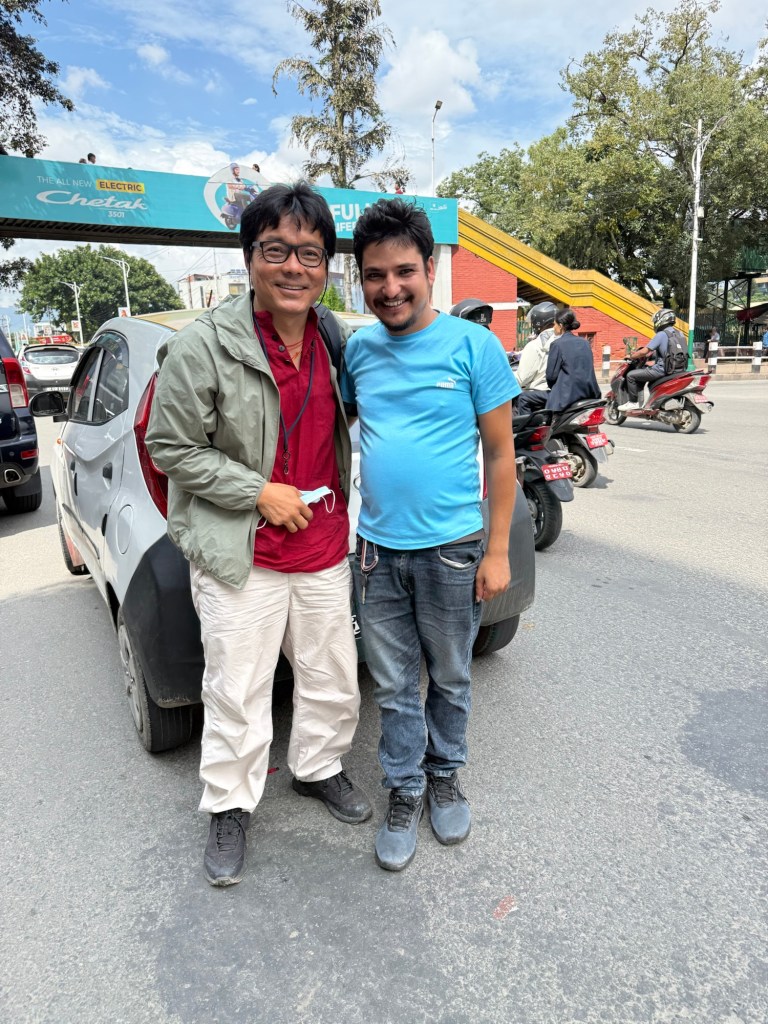
Three months back I put out an open invitation for anyone who wanted to join me on a hike to Dodeydrak for the Full Moon celebration of Yarney. One lone guy, who was among the 200+ desuups I trained, showed up. Today he works with me part-time, and may fulfill his wish to send his mother on a pilgrimage to Nepal this winter.
In life opportunities come to everyone. Simply, for everyone! It is just that some people procrastinate, some miss them, some just don’t see, some want to be spoon-fed, and some are caught sleeping.
Opportunities also show up at different times, places, forms and shapes. At times they show up as challenges – as a difficulty – as some hard work. The thing is, nothing good in life comes easy, or comes on a silver platter. Yes, there are those who get that, but that is rare, and that is boring too.
At other times, real opportunities are not revealed at once. Like an onion it has many layers. Like a jigsaw puzzle, you see only the pieces at the first glance. It is only when you look back that you see the best of opportunities come from the most insignificant move you made.
Recently, I dragged myself to an academic workshop in Thimphu. It was after a tough week where I had caught a stomach flu too. But I went there and among many brilliant people, I also met a young researcher. This researcher and I got along and a week later he remembered me as a person to meet for a visiting VC of a big foreign university. This VC and I got into some amazing ideas too and laughters. Towards the end of our meeting he made an open job/collaboration offer. I may or may not take it, but the point is, had I felt lazy to go to that workshop in the first place, I would be still on Facebook complaining of lack of opportunities – and corruption and nepotism.
These days Gelephu Mindfulness City is taking root – both in spirit as well in the structure. It is being given the foundations in every sense. Many still fail to see the huge potential and opportunities unpeeling as the city draws men and machines.
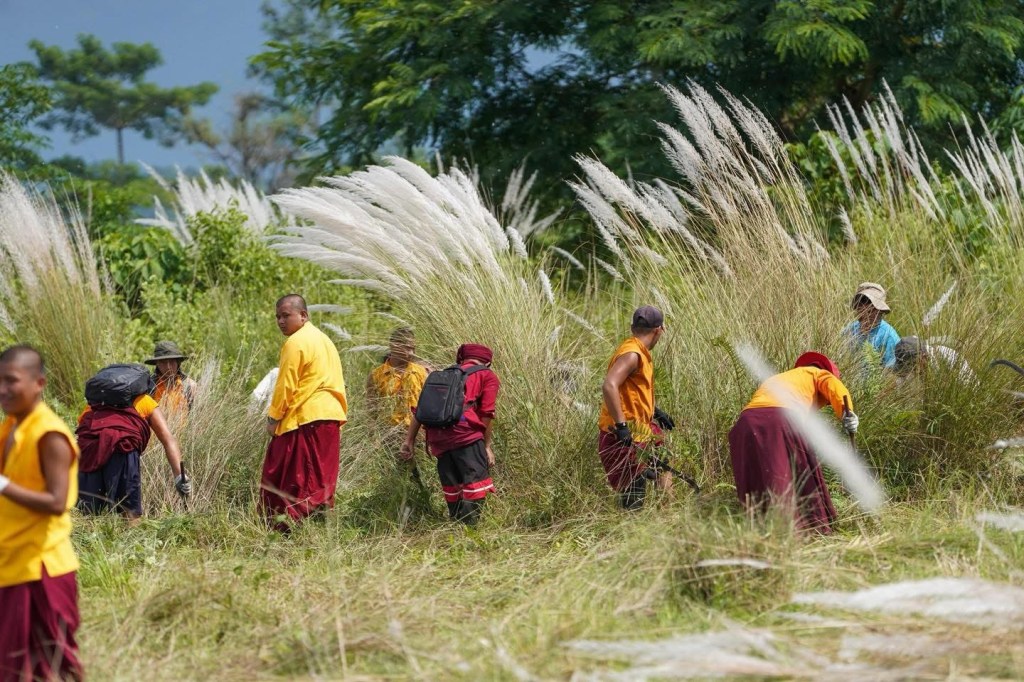
Volunteers works are organised. Our King is even there in person. A tree needs to be removed, a bush needs to be cleared, a snake needs to be relocated, and some areas need to be planted. All these are small steps to a grandeur vision. All these matter. All these are not insignificant. At the very least, one can say, “I moved a boulder” one day in a distant future.
To all those who have shown up and who are there, thank you for your sweats and selfies. I send my gratitude and appreciation. I am even inspired by some of my close friends who wouldn’t even wash the dishes who are there. For those who have not made it, please do so when the next opportunity shows up.
GMC is not just a city. It is a process. A process of reinvention – a message that was explicit in the royal address. GMC is an opportunity to unlearn old habits, and learn new attributes – one attribute being the art of being there – being proactive.
As you develop that proactive attitude, you will realise yourself showing up to every call. Eventually, you will surely be a winner. These are not random quotes from some distant social media influencer, or a billionaire.
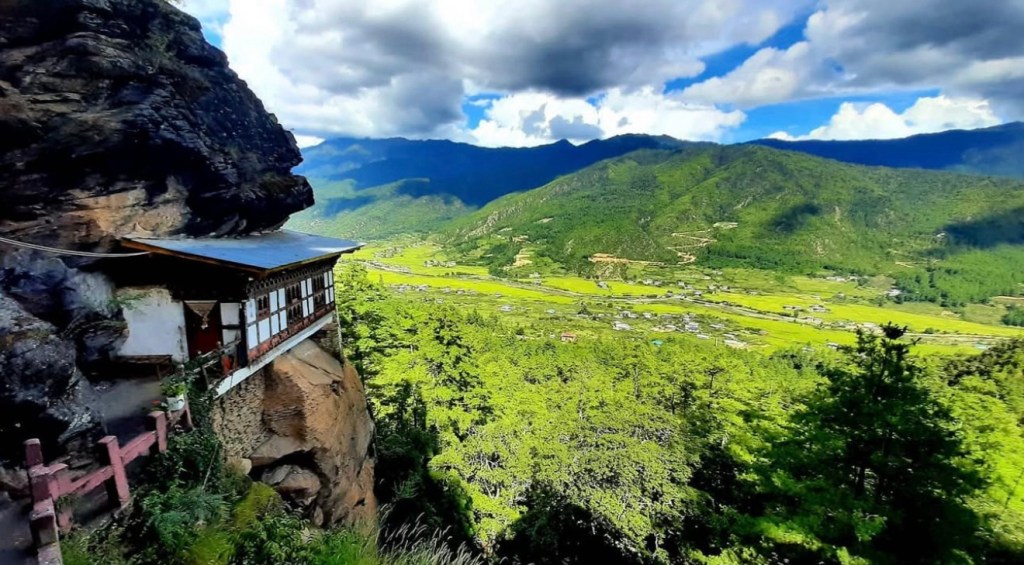
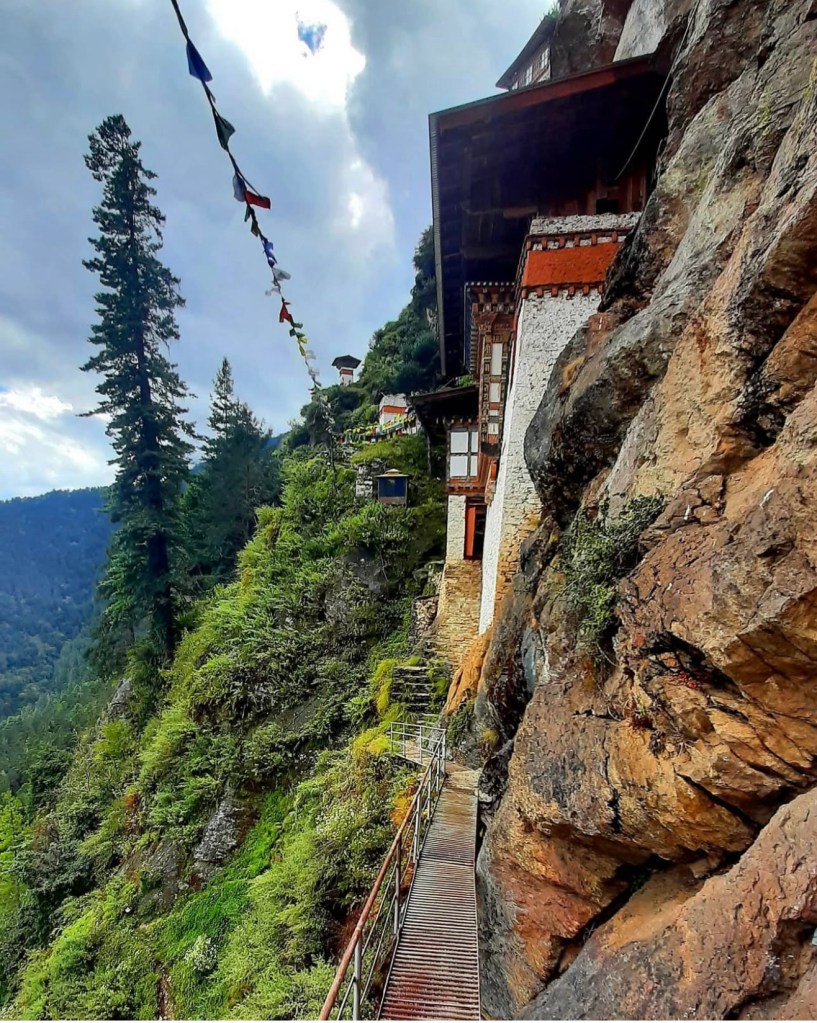
Sengye Drak (translated as Lion’s Cave) is located in Doteng gewog and is considered as the second Taktshang. The name, Sengye, is derived from khandro Seng Dhong Ma, a manifestation that the Guru turned into when he meditated here.
Thus the main temple has Guru as the central figure. According to the caretaker monk, Pema Dorji, there’re two legends surrounding this statue. First, when it was being made in Tibet and when the sculptor was preparing the clay, the head appeared on its own – and is believed that Guru placed his own head on the statue. Second, it was brought to Bhutan as one of the main relics for the newly-built Rinpung Dzong. However, the statue refused to be placed in Rinpung and instead directed the people to take it to Sengye Drak. The statue is, therefore, a very sacred piece. The smaller temple, glued to the cliff, has Seng Dhongma as the statue.
I closed my 6-day Tshering Che Nga pilgrimage/research trip, for this time, by paying gratitude to Guru Padmasambhava in Sengye Drak.
So, what remains of this journey for me?
Honestly, I am humbled. I am humbled by the fact that there is so much I don’t know of my own country. How many times have I not been to Paro. And I am humbled by the warmth of the caretakers, lamas, and ordinary people who are the true guardians of the sacred sites and relics.
One young monk offered to me, “Take my number. Call me if you’re in trouble. I’ll invoke the deity.” Aap Penjore in Ramna fed me and my friend as if we were a family. In Dongkala the abbot offered a place for me to stay there and write in peace. While still another lama blessed my research on nyes and deity-worship as a pure act of Dharma. All these people were people I was meeting for the first time.
From every place I visited I didn’t “leave with empty mouth” (a Bhutanese expression that I was offered free tea, snacks or a full meal). Everyone was kind and helpful and pulled out everything they had for us.
I’d written before that we Bhutanese are basically king-loving, god-fearing and happy-go-lucky and hospitable people. In this trip I discovered another attribute.
Ragoe gets its name from Ra, which means goat in Bhutanese; and goe that stands for vulture. Legend has it that the main statue at Ragoe, a Guru Sungjoen (speaking statue of Guru Rimpoche) was brought here by a goat and a vulture from Drelha Dzong.
The guru statue was built by the legendary statue maker, Pintsa Dewa, in Punakha Dzong. It was allocated for Goen Tshephu but the statue is supposed to have told that its rightful place of destiny was Paro Ragoe. The people of Punakha brought it till Drela, a mountain pass between Paro and Thimphu, and from there a vulture took possession and flew it till the base of Ragoe. Then a mountain goat found its way into the present location.
Although the dates are not recorded well, it can be assumed to be mid-seventeenth century, when corroborated with other works of Pintsa Dewa. The sacred site was blessed by Guru in his second visit and was later confirmed and reopened by Drubthob Thangtong Gyalpo (1361 – 1485).
Thangtong Gyalpo reached here following a vision of a mountain that resembled a sleeping tortoise, which was causing harm to the local village by sending incurable diseases. In fact, at the base of the Ragoe Nye there are several ancient ruins of houses that lost all their inhabitants. He meditated in Ragoe and contained the disease from spreading beyond the foot of the mountain.
As one climbs up after leaving the car, the sacred sites are all marked and the paths are well-preserved. The main temple of Guru Sungjoen is literally glued to the mountain and from there it takes some nerves to visit the Khandroma drupchu (sacred waters).
The second temple is some hundred meters above the main temple and is where a yogi from Tashi Yangtsi, Tshewang Tenzin (of Eighteenth Century) followed a vision and meditated here and met Guru in person. The altar has a statue of wish-fulfilling Guru Sampa Lendrupma.
Things to do:
Get your personal amulets (re)blessed by Guru Sunjoen. Believed to increase the spiritual power.
Getting there: From Paro town, head for Paro Dzong and at the second bridge in Shari, don’t cross. Shoot straight along left bank of the river for some 15 km. Then walk.
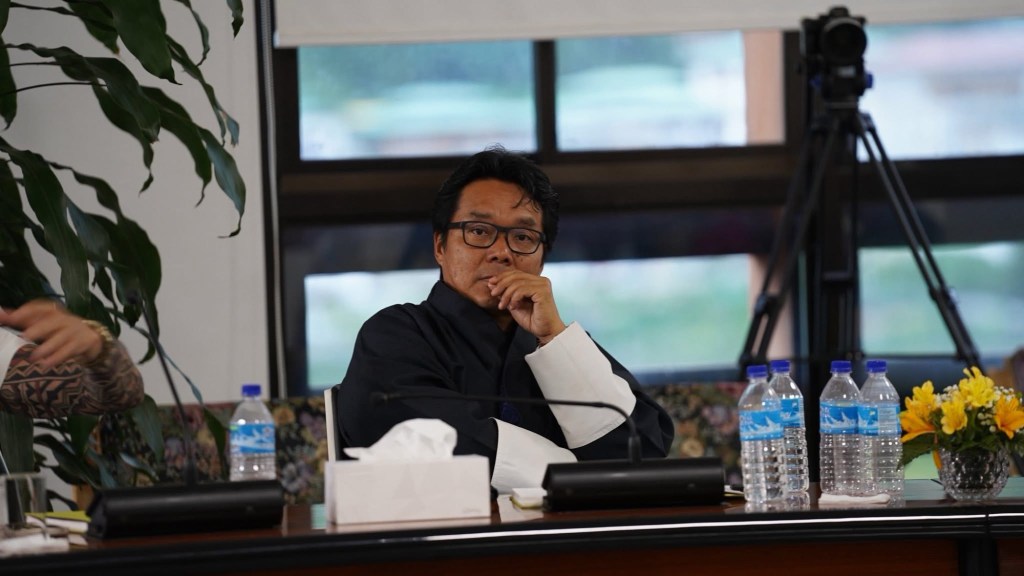
I attended the first edition of the Happy Progress Forum brought together by RIGSS -and Stockholm School of Economics, it convened social scientists and academics from Sweden, US, UK, New Zealand, South Africa, India, Japan and Bhutan. Three of us – one from RUB and one from the National Council and I represented Bhutan.
It was a brain enriching experience to be among the brightest minds in social science, economics and technology, and have deep conversations around pursuit of growth versus the universal pursuit of happiness.
There were over 12 presentations from different countries – including one that tracked the Gross National Happiness in a few pilot countries using the big data.
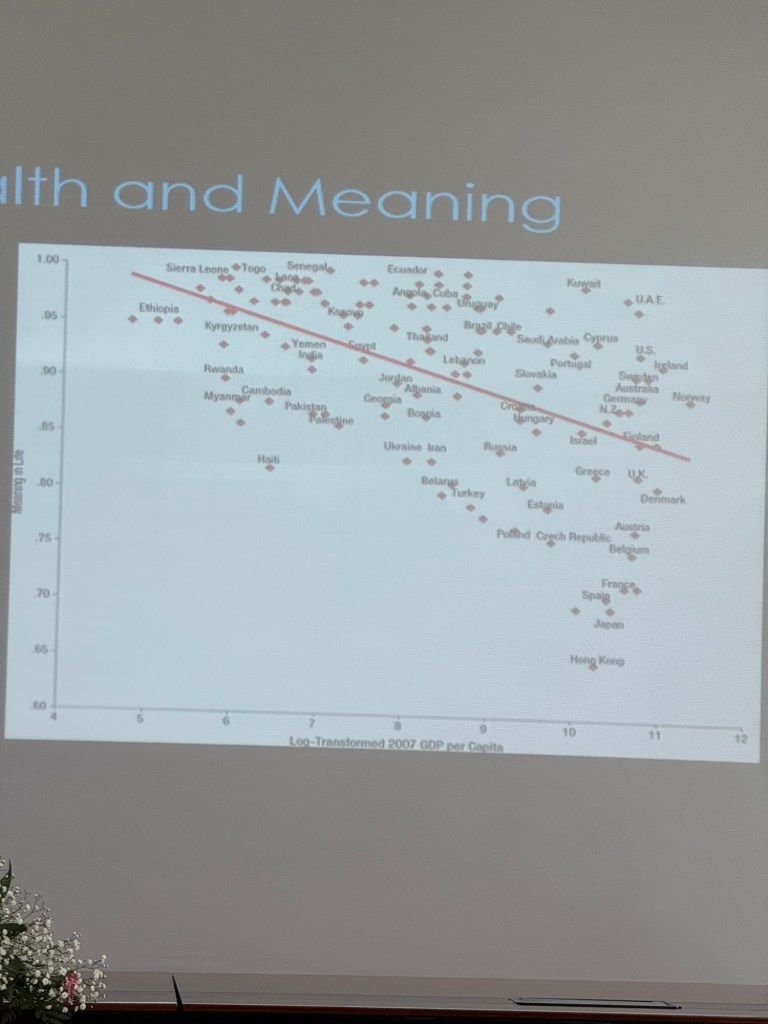
One study that caught my attention was a study from analysing a large data set from some 45 countries – at various levels of development and growth that looked at the GDP and overall wellbeing.
Contrary to the conventional wisdom, the experience from every country studied showed that as the GDP of a country increased, the happiness and meaning of life dipped. (See the first picture).
What was even more alarming was the finding from several advanced economies that showed that as the GDP increased and living standards improved, it also took a toll on mental health – thus leading to higher suicide rates.
Of course, with access to more disposable income, life’s satisfaction is enhanced. But life satisfaction is not to be confused with deeper meaning of true happiness and greater purpose, which many pursue and but only a few seem to achieve.
This topic, I thought, was relevant because of our big Bhutanese diaspora having entered the competitive world of advanced economies. As their income sees an increase by manifold, initially they will experience some life’s satisfaction, but soon everything might flatten out, and in many cases it will see a decline as bigger questions in life begin to emerge. This will occur around the midlife.
Second, and more importantly, how can we in Bhutan prevent the parallel increase in GDP and toll in mental health from happening? Or can we? Can there be a more meaningful progress? This question is timely, now that we have started digging in Gelephu to build the world’s first mindfulness city.
I expressed my own view, with a question, do we really have a choice? Or do we really have to choose between the two? Are economic growth and meaning of life a dichotomy? From my own experience it is not.
However, if one only adopts the modern-western-capitalistic model of the society and economy where unwittingly we restrict our life to primarily ensuring physical comfort and financial security, the road may be bit bumpy. I subscribe to the school of thought that there are two other vital aspects of wellbeing – social and spiritual that are either missing or poorly represented – especially in developed economies, which lead to instability in the life of an individual as well as of the nation.
For example, the lack of social wellbeing and policies around it might have led to social inequalities thus leading to popular uprising – three of which happened in our neighborhood. On the other hand, the lack of spiritual wellbeing is drawing people to mindfulness retreats and to spiritual traditions like Buddhism – in droves to seek an answer to the timeless ontological question: Who am I? What is the meaning of life? Is that all in this thing called life?
It was therefore nice to see another presentation from a study from Harvard that proposed that for a person or a nation to experience a deep sense of fulfilment it has to achieve a delicate and difficult balance of four key aspects – physical, mental, social and spiritual healths.
And this is the essence or the goal of Gelephu Mindfulness City, which will attempt to seek economic prosperity without losing the greater meaning of life.
This is not to say that we have found the Holy Grail in the vision of the GMC, or that it would be anywhere easy. It is indeed an ambitious project that no country has embarked on – but it is a dream worth pursuing – and a vision that the world needs to see it accomplished.
In other words, there can be prosperity with meaning, as long profit is pursued with purpose.
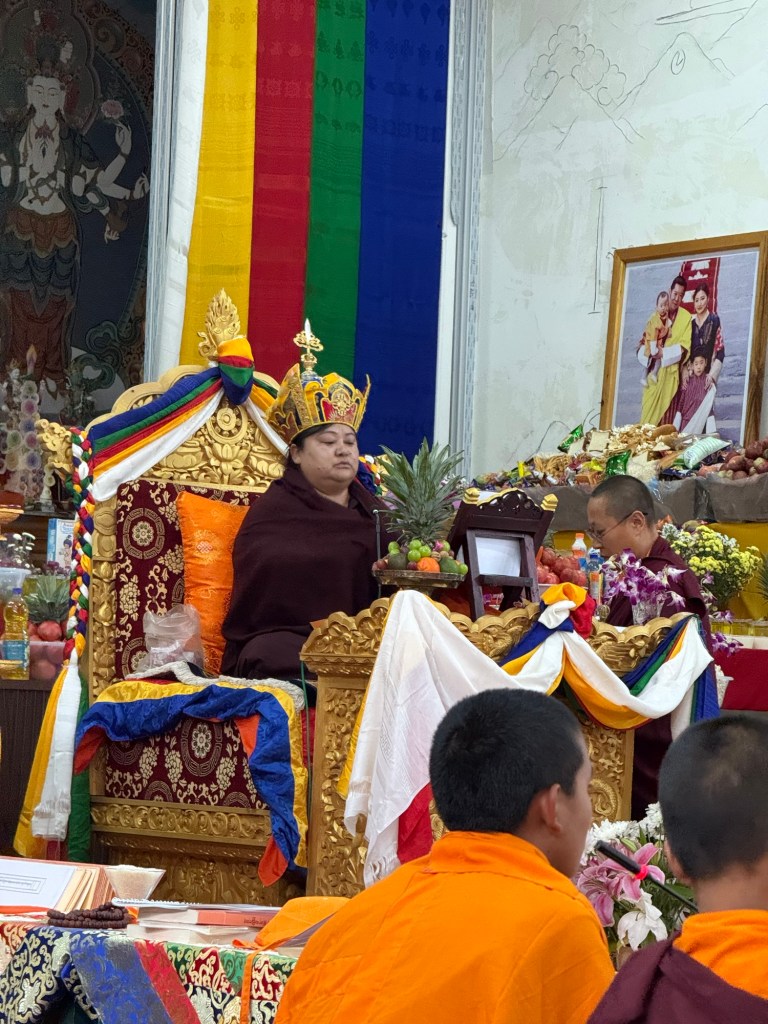
For the past week, my lama, Dorje Phagmo Rimpoche bestowed several empowerment besides the very powerful Drolma Jigchoma (Tara of Eight Fears) lung. She also gave the powerful Tandrim-Phagmo wang, which only few reincarnate beings hold the lineage. The Vajrayogini practice is the final key towards the Vajrayana equivalent of enlightenment.
The attendance, however, was low compared to the past edition at Memorial Chorten. Many expressed that they did not know, which is quite difficult to buy in this day and age where information comes on your palm.
DON’T PROCRASTINATE.
One general trend I see with many people is that they are so passive and indecisive when it comes to taking action. Whether it is to visit a relative or a religious gathering, or to attend a talk by eminent scholars, people procrastinate and later regret having missed it – after seeing the images of other people who were there.
Of course, it takes time and effort, and strength to beat laziness and be everywhere. But unless you are too old to walk you must jump at every opportunity. No dreams will ever be fulfilled if you are sleeping all the time, or watching TikTok videos.
BE THERE!
Every event, every occasion presents opportunities for growth. You meet people, you make new friends, you build new acquaintances who will then prove to be useful or helpful. It is a hard work, but if you want a fulfilling life, you must be proactive. Nothing falls on your lap – something that my Generation X realised early on as we walked to school and crossed oceans seeking knowledge.
In another post I mentioned that I made my career through enlarging my network of people and organisations. Once I even carried the luggage for a visiting ambassador, who then supported a large project proposal for BBS.
There is the Global Peace Prayer ceremony coming up where every contemporary Buddhist master from every tradtion is coming. It will be the largest such gathering of Rimpoche in recent history. There is the opening for the third batch of volunteers at Gelephu Mindfulness City. For easterners, Dzongsar Khyentse Rimpoche will give sacred teachings from Peling Tradition. Check what is going on in your town or community. Just go!
Today, after several days of teaching my own course and then attending the weeklong Tara Jigchoma Bumtshok, I dragged myself to the Happy Progress Forum brought by RIGSS and the Stockholm School of Economics. And I learnt lots of new stuff on what Big Data can do, how space shapes our body and mind, and progress and profit can co-exist (a perfect recipe for GMC).
Back to spirituality, one should not take life for granted – especially to get wang, lung and even thri. As they say, time and tide wait for no man.
Thrue-bab duechhen (Descent of Sacred Water) is an important public holiday in Bhutan. It is day when people consider water as holy. In eastern Bhutan it is the start of the festive season.
There are several explanations as to its origin. According to Bhutanese astrologers, during this day and for few days after it, the sun shines on a star called Rishi (དྲང་སྲོང་). The star in turn shines on Earth and anything it touches is believed to purify, and bestow some healing power.
Hence, people put water in containers and place them outside to receive the light of the star. One must know when does the star shine from which date to which date from the astrologers.
Then the water is used to take bath. People also bath in open streams and ponds, since the entire water body on earth is believed to be blessed.
NOT BLESSED RAINY DAY
Contrary to the popular belief, the day has no religious or astrological relation to rain. The day neither marks the end of monsoon nor does it need to rain for the water to be sacred.
The sacredness is delivered by the light of the Rishi star on the water body. Depending on the year, and the position of our solar system Thruebab Duechen can even last for several days.
WHAT COMES DOWN THEN?
Why thruebab? Buddhist legends tell the story of a statue of Buddha Vairocana that was built by the devas and enlightened beings near Mount Meru.
At this time of the year, when the Rishi star shines on the crown of the statue for a week, drops of divine nectar are believed to trickle down as a result of the prayers of the enlightened beings and gods. These drops of nectar then fall on the earth making all water bodies sacred.
Thus, for a week people drink and bathe in the waters to clear any spiritual defilement and physical illnesses and disabilities.
THRUEBAB 2025
I had the good fortune to receive the water blessings from my teacher/lama Dorje Phagmo Rimpoche, who conducted a public blessing. She made the water even more sacred by mixing holy waters she collected from sacred sites in India, Nepal, Bhutan and China.
🙏🏻🙏🏻🙏🏻
NB Thruebab was probably translated as “Blessed Rainy Day” in the early years of Bhutan’s development by someone who had no background knowledge or its significance. Now that we have the expertise we must change the translation and the narrative.
The same is translating Guru Tsen Gye (གུ་རུ་མཚན་བརྒྱད་, guru tsen gyé) as Eight Manifestations of Guru, which is totally wrong.
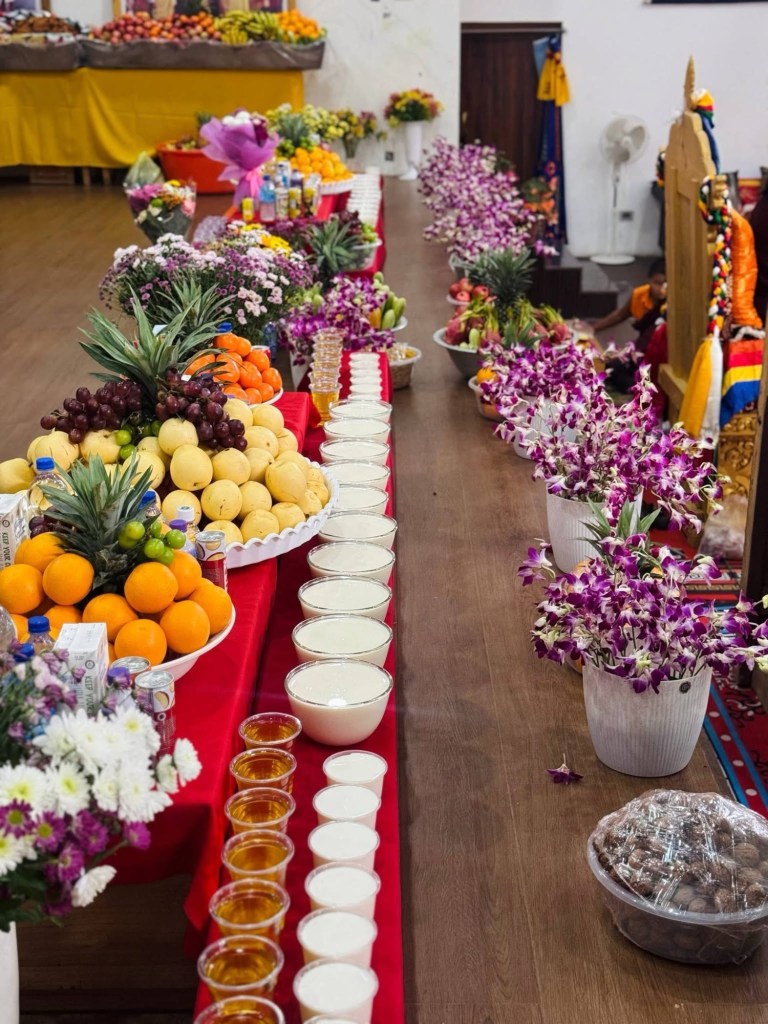
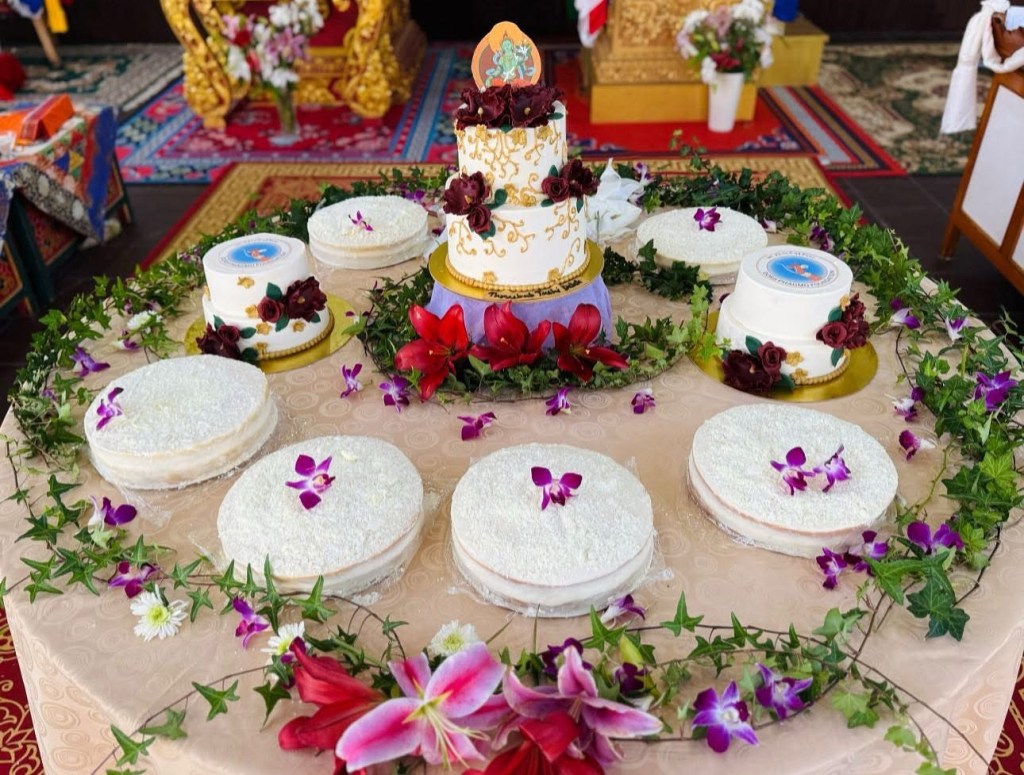
The final day of any major religious festival is dedicated to practicing of giving and offering. It is known as Tshog-Kor (literally meaning ‘Circle of Offering’)
The better term that conveys the meaning is the Sanskrit word, Ganachakra, which means “Wheel of Accumulation”.
In the ceremony of Tshogkor, practitioners gather around the lama, and make offerings of food, drinks, snacks, incense, money, butter lamps, which, first of all, is an act of practicing detachment from desires and clinging. It is said that by giving one generates merits and good karma. In fact, we refer to someone fortunate as“Tsho Tsasab” – meaning someone who has accumulated and built the merits.
Conversely, if you don’t give, you don’t get. Meaning wealth, prosperity, peace or anything you want must be cultivated through similar actions. If you cultivate hate you get hate in return. If you give money away, you will get money in return. (There was curious academic study being done that showed that for every dollar you give, you get back $1.65)
Second, by participating in the ritual of tshogkor, it is believed that one purifies and renews sacred vows made to enlightened beings, to one’s lamas, and to the spiritual community.
Thirdly, the practice of Tsho-kor is designed to generate “gatherings” of bliss and togetherness among the community members – to help each other to continue on the path of Buddha Dharma.
There is so much celebration and search for the smartest these days. The smartest student, who has aced the standardised class test is put on a pedestal. The smartest idea is showered with loans and financing. The smartest person in the room is given all the attention and recognition.
Yet, in my relatively long career in government, business and academia the probable hare-and-tortoise-race is still relevant. It is not the brightest and the fastest who finally wins the race. It is the one who is the most committed. True, one could be smart and committed too. But that’s a rare combination.
So, what is the winning skill in life?
At the most basic level it is practicing the timeless values such as integrity (tha damtsi) and karma-and-consequences (ley judrey). Assuming this is given, what more?
It is commitment.
Commitment, however, has to be directed somewhere. What do you commit to? In this article I will elaborate commitment in three areas of competency, consistency and connection.
Intelligence can be average. In some cases, being intelligent can be a liability too for, it can either breed an ego, or an expectation – or both. Most class toppers in Bhutan have rarely made it anywhere or far because they develop expectations, which often go unfulfilled. Also many intelligent people from my generation have not made it big because they became dismissive of other and others’ opinions.
Competency.
Competency starts with the fundamentals. If you are into any profession, you must ask, what are the basics and get them right. I have often been to public offices where the person manning the counter cannot respond to simple inquiries. I have been to shops where the salesperson cannot tell me a little more about the product.
Start by learning the fundamentals, and getting them right, because basics are like foundations of a building – on which one launches a successful career. It is a hard job but there is no alternative to building competency.
Consistency.
Bhutanese restaurants and hotels launch with great food and ambience only to find a dead place when you go back after a month. Consistency is not our forte. Even government plans and projects are inaugurated with much fanfare and blessings – only for them to be forgotten when the next management takes over. This is a common narrative.
Consistency requires commitment – a lot of commitment. Consistency fuels confidence in people – making success a guaranteed outcome. Consistency helps you gain trust in people around you. And trust, in this age of massive scrutiny by the social media is gold. Trust will be the most important asset in this century – not money or capital.
Connection.
I built my career on meaningful relationships – relationships that are genuine, dependable and of mutual benefit – and made through empathy and altruism, and not on exploitation, discrimination, profits or self-serving goals. Ultimately one must aim for people to say, “he or she is dependable” of you.
I treat everyone with respect – making no distinction between a millionaire or a maid, no discrimination between a CEO or a janitor. I don’t expect or extract anything from anyone other than to be helpful to each other in times of need. This approach goes with just everyone irrespective of who they are. Needless to say they pay off in terms of your reputation.
Conclusion.
Commitment to your competency by learning the fundamentals and then innovating and getting better incrementally; and commitment to consistency by staying at it – day in day out, year in year out. Malchol Gladwell suggests that if you grind 10,000 hours in anything you do, you will be the best. And finally commitment to building genuine relationships with people and giving your best.
These are the attributes one must cultivate if one wants to do well in life, love, relationships, and in careers in government, politics, or business.
If you are looking for people, or want to encourage anyone, look for the most committed – not the smartest. If you want to succeed in anything, commit! That’s all.
🙏🏻🙏🏻🙏🏻
(In the picture, I had gone to visit Drugyel Dzong when this student of Drugyel School spotted me and followed me and asked me if I was ‘Sir Dorji Wangchuk 😁’. Said he reads everything I write on Facebook, blog, or on social media. I commended him that he read, which is quite uncommon among Bhutanese.
Writing consistently for many years is very challenging – taking lots of research, thinking, and sometimes even courage and grit, but pays off in little moments like this.
“Is the road this bad all the way to Daman?” I asked my driver, Suman, soon after we left the ring-road of Kathmandu Valley and hit the so-called district highway, which was just a dirt road.
“There are few stretches of tarred road, but it is very much like this,” he replied.
We are heading for Chumik Jangchub, the sacred site of holy waters, blessed by Guru Rimpoche which appears in the Barchel Lamsel prayers.
Since the drive was long – four hours to do 65 km, I struck a long conversation with him – on his life, the economic situation in Nepal, which all concluded with a sigh of total resignation from him. “You guys have your King. Here we have no one”, he told me.
In the following days, everyone I interacted with had the same thing to say. “You have a King. You guys are lucky”. The frustration and hopelessness have been there for more than a decade. In fact, this time, the first thing I asked when I landed – to a cabdriver I took from the airport – was, “I hope there is no strike this week, because I have to get back to work after this”.
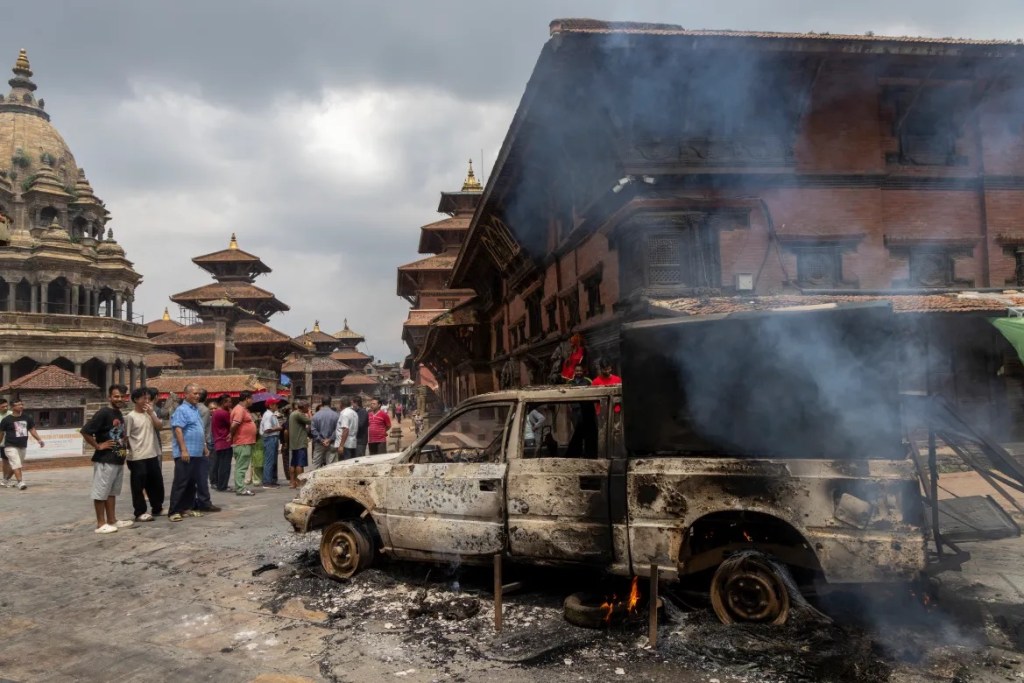
But the strike did happen. Less than one hour after I checked in at Kathmandu Airport, people started pouring into the streets, police started shooting at protesters, and then all hell broke loose, which was played out on social media all over the world. Government buildings were burnt, policemen were chased and beaten, ministers were stripped naked and stoned.
CORRUPTION IS OMNIPRESENT
Corruption is one word that keeps floating in the mass media as the reason for the popular uprising in Nepal, Bangladesh or Sri Lanka – the three countries in our neighbourhood. The perception of corruption is also felt by our own people here in Bhutan.
Now one basic truth about corruption is that it is everywhere. Only the type, level and sophistication of corruption vary. For instance, I have lived in advanced economies such as Japan and Italy for extended periods. They have corruption there too. However, one key difference is that they don’t fail in delivering public services, providing social security and a basic pension. In Bhutan I would say that the quality of services and infrastructure may not be up to the mark, but still we have systems and structures in place. This is not to say that we have to accept things as they are. We can always improve.
What is equally important, if not more, is the welfare of the people as the fundamental duty of the government. The exasperation and the anger in those countries may stem from the widespread corruption and nepotism, but it is made worse by the lack of empathy, care and selfless service among those in power. All the people I interacted with have told me that they had lost all hope. This is not only sad but dangerous.
Hence, we in Bhutan should not be too hard on ourselves. Things may not be perfect, but no one goes hungry or homeless. Hospitals treat you for free. There is goodness in many things around us. If some things are not ok, it falls on all of us to fix them, or call them out. More importantly, we still care for each other and look out for one another in times of distress. This is exemplified by a series of successful fundraising for people who have fallen in great financial difficulties while getting advanced medical treatments. The day we lose this will be the day we lose ourselves.
LESSONS AND SOLUTIONS
Notwithstanding our relatively good situation, there are a few key lessons that we can learn from what is happening in the world.
In this period of economic downturn with many youth leaving the country and are struggling, those who are doing well financially should not flaunt their wealth, power or success. What is seemingly a harmless Facebook or Instagram post of a new SUV or EV can be construed as a slap on someone’s face who is making his ends meet. Humility is the best policy.
Those who are elected to power, should be mindful of their words and actions. We should be balanced and broad minded in our decision-making. And informed on the broader ramifications of a public policy regardless of the good intent. And those who have influence through their social status should be reassuring in our positions on national issues, civil in our arguments, and constructive in our criticism.
As a more long term and sustainable solution, we need to formalise compassion, country, and contentment as a part of our education system. Until this generation, these soft skills and values came mainly from the parents and especially from the grandparents. In an era of smaller nuclear families there is a growing gap – a vacuum that needs to be filled.
Empathy is going extinct and compassion is on the decline in the name of rules, fairness and corruption-free goals. There is a windstorm blowing in the neighborhood and if there is really an antedote, it is compassion and community. These fundamental values will anchor us solidly on the ground. Imagine if our ministries and courts are compassionate in their dealings.
As an educator now I believe in the power of education to make lasting changes. The education system in the new era needs to include not just intellectual enhancement, but also social, emotional, and spiritual enrichment. It is time to put behind us the Industrial model of the education system that instills competition, which collaterally breeds pride, jealousy and greed – the three poisons in Buddhism.
WE HAVE OUR KING
As each of us witness the horrific and tragic images from our neighbourhood, we should not worry or lose our focus. As Bhutanese, we are fortunate to have our King. In fact we are in a much better place. We can even dream of a brighter future at a time when there is pessimism all over the world. For our neighbourhood, we must pray for leaders as benevolent, so that we can all dream together as a region.
I have also mentioned in some other posts that the King-People bond is sacred. It is the soul of the Bhutanese nation, which should never be compromised in any manner by anyone. No other institution, individual or an idea can even come close to what the Monarch can achieve in terms of bringing the country together towards a common goal and a shared dream. We saw that recently when over 7,000 people braved the heat of Gelephu to volunteer in the Gelephu Mindfulness City project for a week. There was genuine pride, joy and smile in every selfie from that week there.
And, as my taxi driver in Nepal said, we have our King in whom we can always be hopeful. When all of life’s options are exhausted, when systems fail us, when justice is not served, ‘there is always a place we can ultimately go to’ – to translate an old Bhutanese adage. And this is not a small thing. In fact, this is a huge privilege as Bhutanese.
There is a story of a carpenter in Paro who accidentally sliced all his right fingers. When asked by my friend who met him later as to what his initial thoughts were when that happened, he shared how he was going to feed his family. He also recounted that when he was heading for the hospital with his crying wife by his side, he comforted her by saying that should he be unable to work again they could always approach the King.
As long as we have our King, we have hope. And to quote one of my favourite films, The Shawshank Redemption, “Hope is a good thing, maybe the best of things, and no good thing ever dies”.
(Picture: HM Official Page) His Majesty with some volunteers in Gelephu
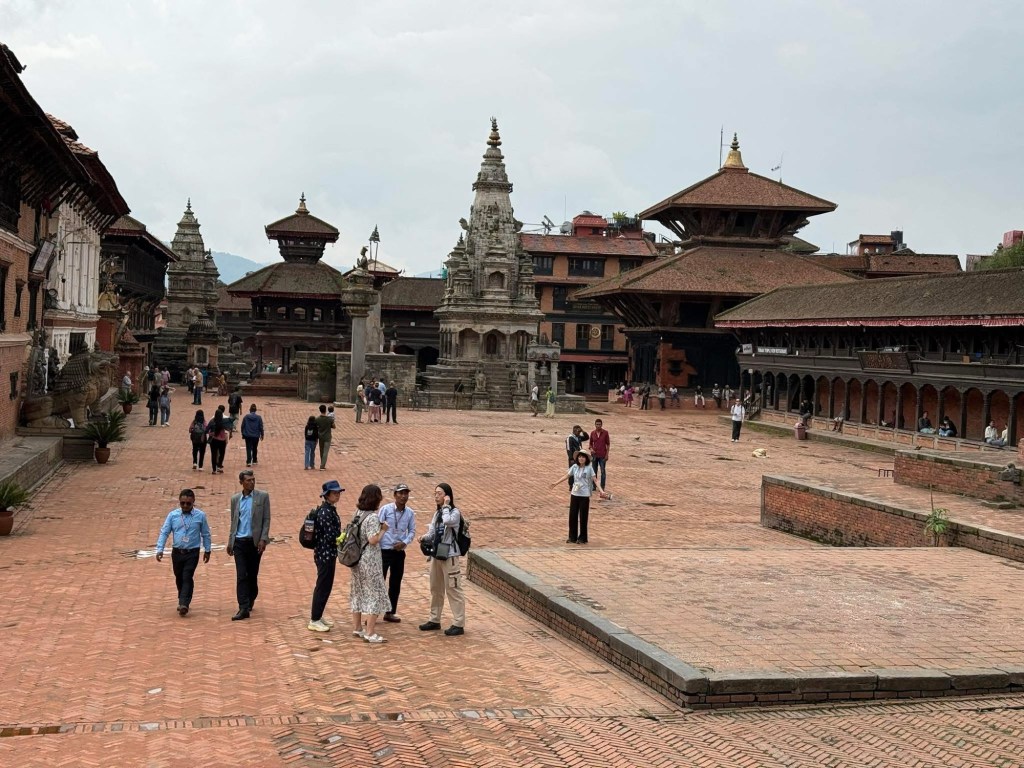
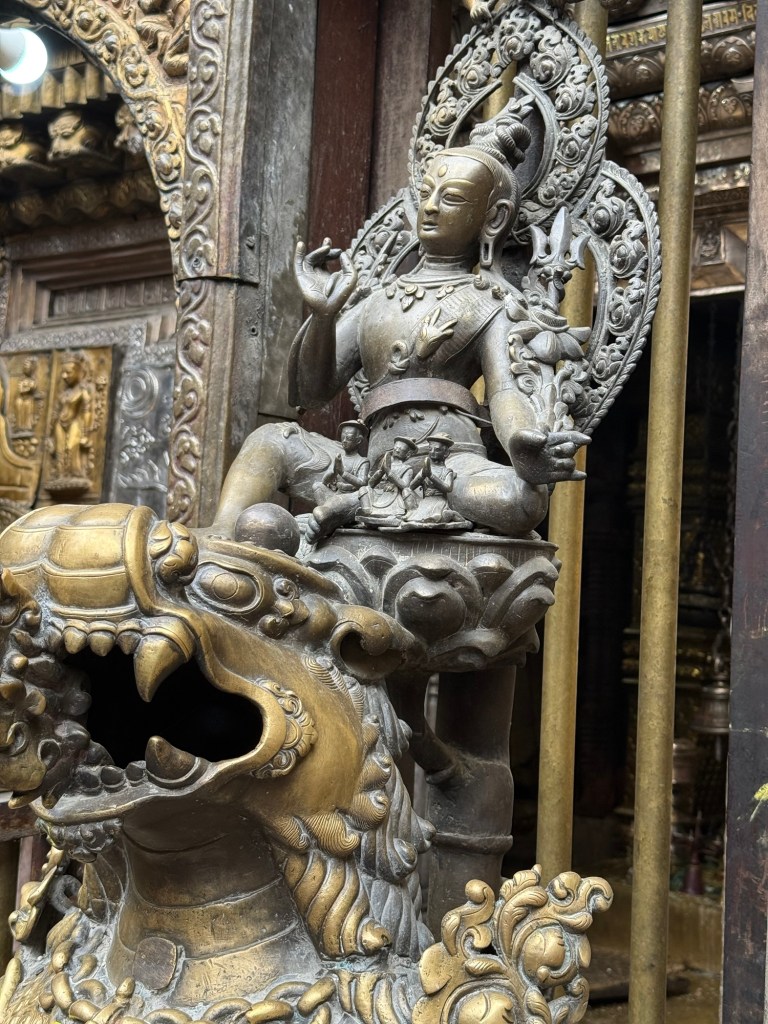
By far the most beautiful temple in Patan is the Golden Temple in Patan. Locally known as Hiranya Varna Mahavihar, it is a UNESCO world heritage site and protected.
It was built by King Bhaskar Varman in the 12th Century.
A story goes that the king dreamed of a golden mouse chasing a cat. Next morning the king saw a replay of the dream in reality – of a golden mouse chasing a cat at the same location. He decided to build a temple at the exact location. Even today mice are fed with the caretakers placing food in the four corners of the temple.
MAIN RELICS
There are several sacred relics here. The main one is the 900-year old Prajñāpāramitā (the Perfection of Wisdom) scriptures, which is read every morning, and which if you are lucky the priest allows you to touch it and get a blessing. This volume is one of the oldest surviving and which has been uninterruptedly read for over 400 years. So, you are looking at 400+ years of blessing.
BUDDHA STATUES WASHES ITSELF.
The main altar is dedicated to Lord Buddha (Jowo Shakyamuni) that is decorated with an array of Sambhogakaya ornaments. The statue is another very sacred relic that is revered by the Newars.
The statue is considered as ‘alive’ and thus very sacred, because it is believed that it took a bath on its own.
According to a story, there was once a war between two great ancient kingdoms of the Kirants and Lichhavis. And no one dared to venture out of their homes. So, the Buddha’s statue at the temple was not taken care of or worshipped.
A deeply devoted Buddhist family decided to send their child, a very young boy, to wash the Buddha statue believing no one would hurt a child. The child arrived at the temple and innocently placed the pot of water at the door.
The boy thought that the Lord Buddha statue would wash itself like everyone else. He repeatedly told the statue that the bath water was ready. Not seeing the statue respond, the boy was heartbroken and began to cry.
The Statue took pity on the child and moved and washed itself. Thereafter, and even today, the head priest of the temple is a young boy under the age of 12.
MANJUSHRI SANGHITI
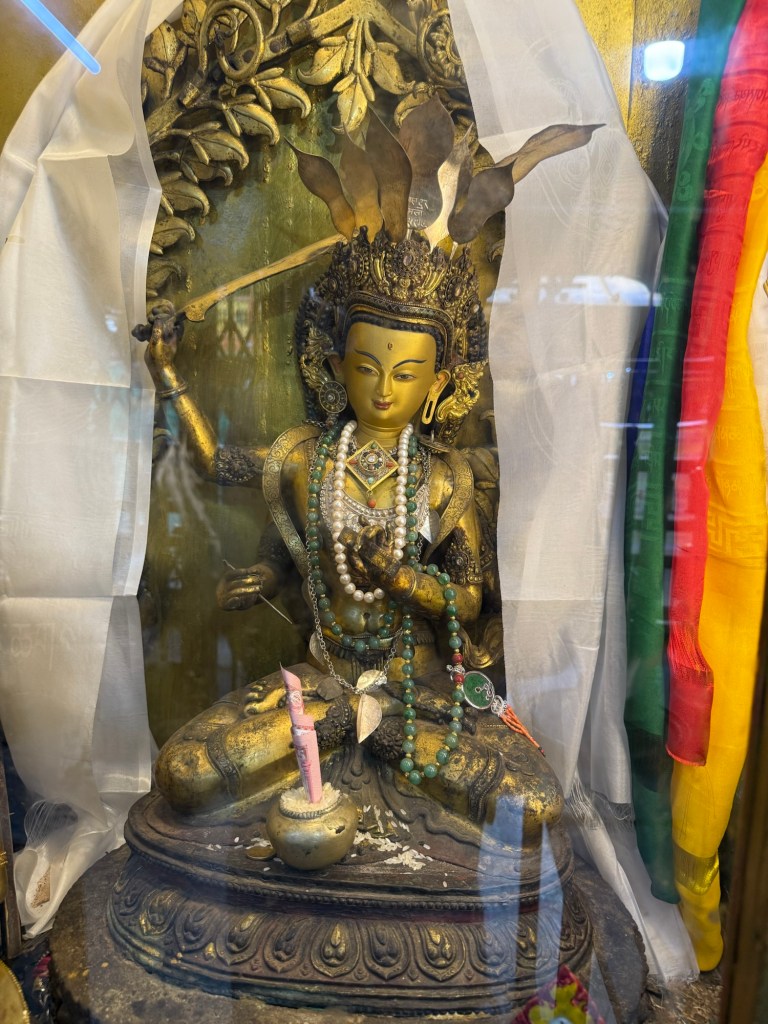
There is also the rare Mahamanjushri Sanghiti statue and the scripture, which is regularly read.
The ten-arm Manjushri Sanghiti is the older form of Manjushri who is believed to have been the celestial teacher of Gautama Buddha. The teaching and the scriptures as we have them now, which are included in the Kangur, are believed to have been the version taught by Buddha to Vajrapani to bring down his ferociousness.
GETTING THERE
The place is easily reached by a taxi. It is the most popular place in Patan