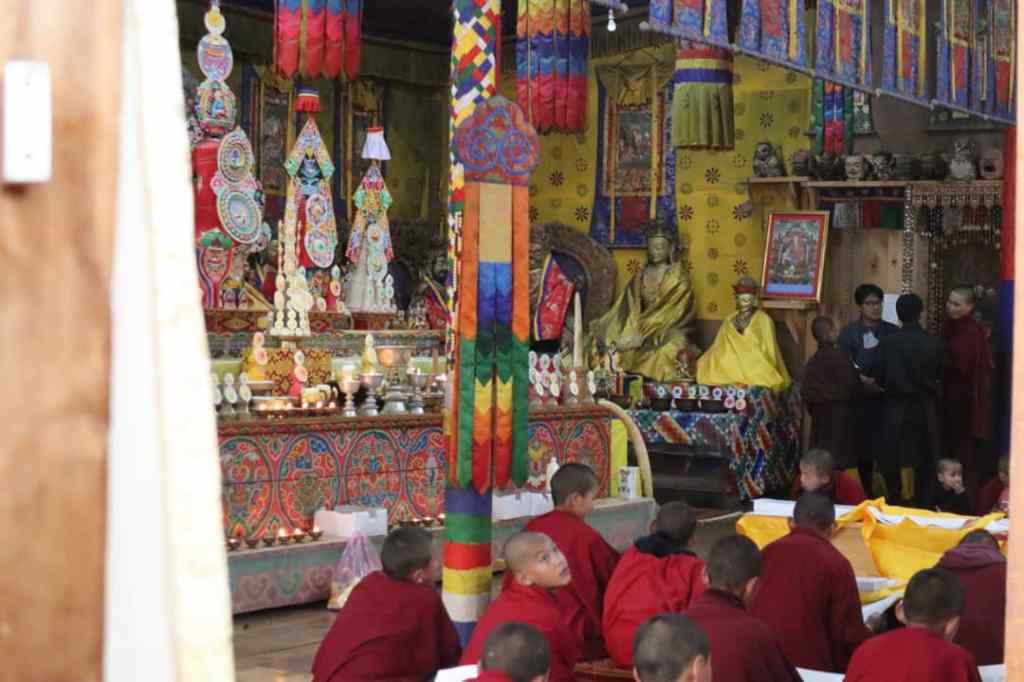
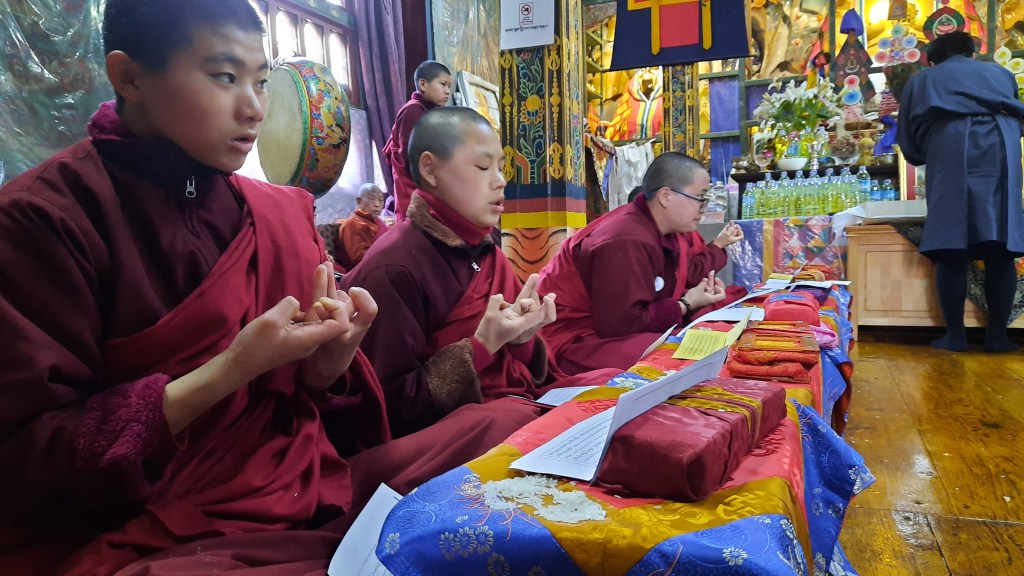
Gonpo Tongtsho means “Thousand Offering to Mahakala”. It is a fortnighly propitiating ceremony to the three Supreme Protector deities – Yeshey Gonpo, Palden Lhamo and Jarog Dongchen, done in all the sacred chambers called Goenkangs around the country.
Over 200 monks are involved and it is a costly affair. However, affluent families sponsor make it a tradition to sponsor these day-long rituals, once a year, as it is considered to raise their status in the community, as well as be blessed and protected. Sometimes families and friends also come together to sponsor it for one day in a year.
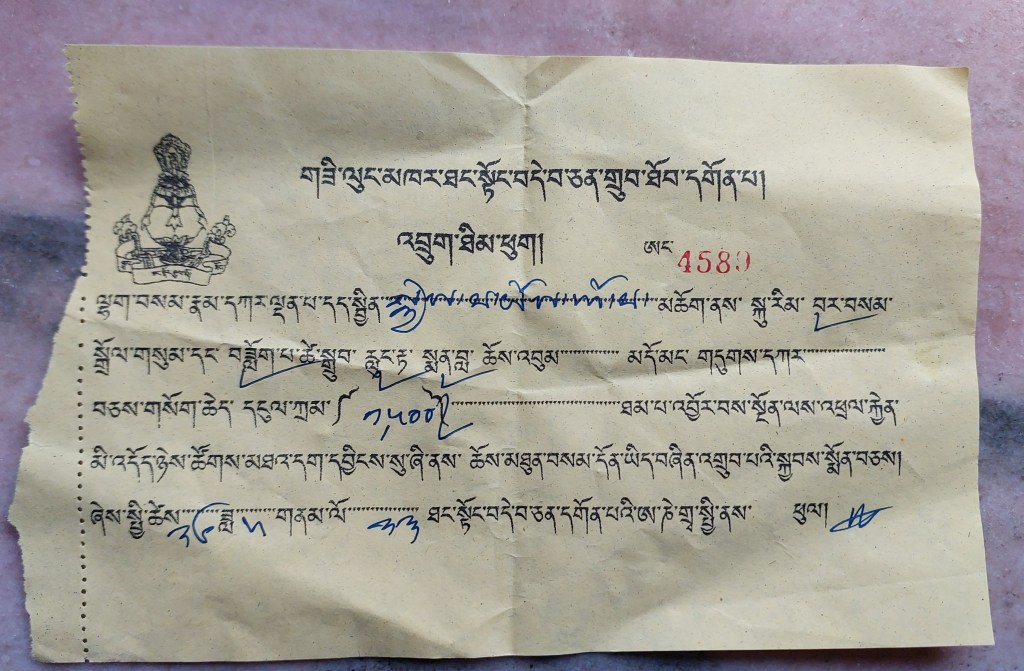
My family has been making an offering of Gonpo Tongtsho on Gonpo Duelzang (14th Day of Lunar Calendar) of the Treldha Month – in Semtokha Dzong for 5 years now. Initially we had committed for 3 years but we have kept going.
This is mainly to follow a tradition of our ancestral House in Tashigang being a Jindha (sponsor) in Tashigang Dzong. We have no idea when this was established but we have records of it going on for at least six generations.
Now that Thimphu has become our home for the last 30 years we decided to pay our gratitude to the deities here. Back in Tashigang Dzong, on this day, we also continue to fulfil the age-old tradition, without interruption.
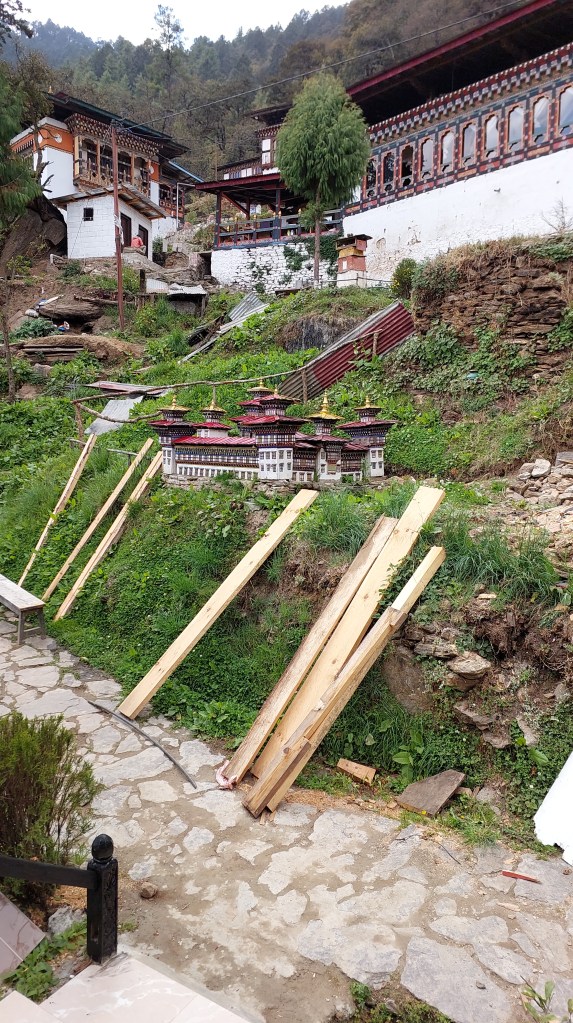
Semtokha Dzong
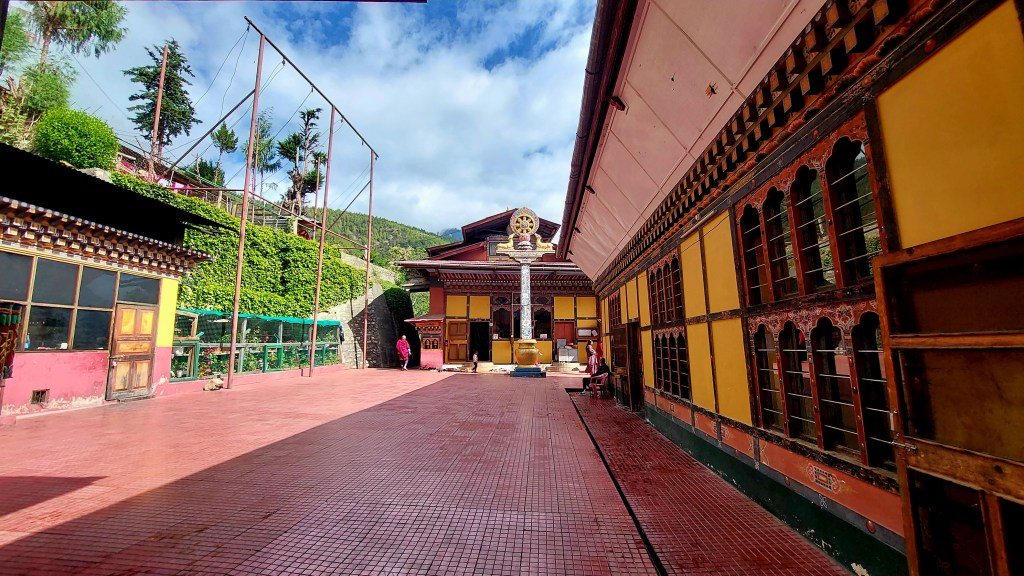
Semtokha Dzong is the first Dzong built by the founder of Bhutan as a nation-state, Zhabdrung Ngawang Namgyel (1594-1651). It is thus one of the most important religious monument in the country, despite the fact that the larger Tashichho Dzong in the same valley serves as the country’s capitol building.
The internal architecture is unique with three temples on the same floor having the same common and large prayer hall in the middle. This way a quick visit is possible, as there is no need to do different floors to visit different temples.
Still, for the ardent devotees, the top floor has the residence of Zhabdrung Ngawang Namgyel, which has been turned into a small temple.
Vipassana is an ancient Buddhist meditation technique. It is rendered as lhak-thong (ལྷག་མཐོང་) in Mahayana-Vajrayana traditions, which means to “see more”, “see clearly”. In these traditions, though, the Lhak-thong practices require prior understanding of the core philosophies of compassion (Dz. སྙིང་རྗེ་, nyingjéy, Skt. Karuna) and emptiness (Dz: སྟོང་པ་ཉིད་ – tongpa nyi, Sanskrit: Sunyata) – and is rarely delivered to a novice or lay practitioners. Training in another meditation technique called Shamatha (Dz. ཞི་གནས་, Zhi-néy, Sanskrit: Samatha) is also seen as a requirement, or as the foundational meditation technique, in the Mahayana school and its offshoots.
Vipassana as delivered in the Goenka Tradition is a simplified, but a powerful and experiential training in Buddha’s Eightfold Noble Path. Its ultimate goal is for one to work towards liberation by focussing on the concepts of Anicca (Dzongkha: མི་རྟག་པ་, mitakpa; English: Impermanence) and equanimity (Dz: བཏང་སྙོམས་, tang-nyom; Skt: Upek-kha) in which one develops a mind that it is free from the attitude of attachment to some and aversion to others. A balanced and calm mind, so to speak. It is based on the universal law of nature that all things are in a constant state of flux, including one’s body and mind. Hence, by sitting still, observing your breath, and by exploring inwards with a calm mind, one can feel the sensations arising and fading – which signifies the impermanence nature of all phenomena.
As you enter the 10-day programme you have to deposit your ego, status, and smartphones at the Reception Desk and for the entire duration you have to live like a monk or a nun – by subscribing to the Five Precepts of Buddhism, and meditate in total silence, guided by a teacher. You sleep in a simple room, and eat what is offered by the centre through the generosity of others. Day starts at 4 in the morning and ends at 9 in the night.
In absence of such a simple, a yet profound, technique for lay pratitioners in Mahayana followers (there maybe one), Vipassana is very popular among the Bhutanese. There are many who have embraced it and continue to practise, as well as new students like me getting into it.
Does this practice contradict with Vajrayana-Mahayana practices? No. To put it simply, Vajrayana Buddhism among non-monastic followers and practitioners engage in meritorous acts such as supporting the Sangha and reciting the mantras that are believed to propel one to salvation. Vipassana invites people to undertake inward journeys only – to explore one’s mind and purify it. So the two practices are complementary.
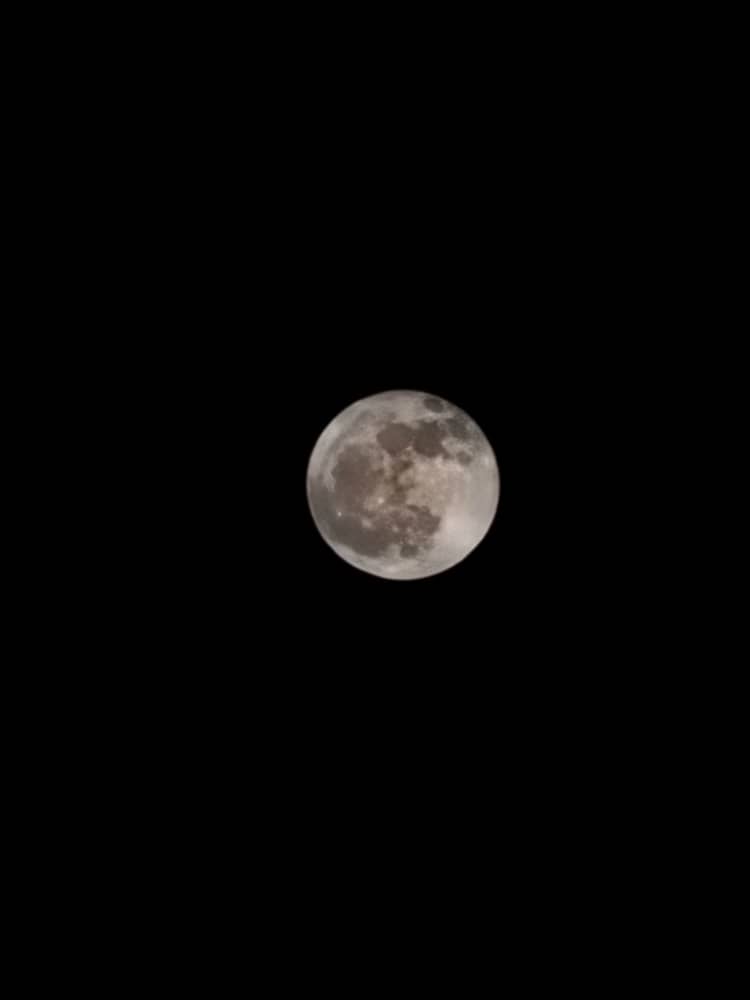
Starting off on the New Moon of the holy Saka Dawa month and ending it on the Birthday of Guru Rimpoche, I have completed my first experience with the popular 10-day Vipassana meditation programme.
Attending a Vipassana course has been seven years (three covid-years included) in the making. I registered for it several times, got my place confirmed, but everytime I chickened out at the last moment. To be honest, I couldn’t imagine waking up every day at 4 am (I am a night owl). Or sit still for 13 hours daily, because I have recurrent back pain. I also have another condition – a mild form of Restless Leg Syndrome (RLS), which urges me to move my leg or sitting positions every few minutes. I am also claustrophobic and to have my eyes shut and be alert for a long time is out of the question. So, Vipassana increasingly became a dream. For the same above reasons, I also stayed away from sitting through religious sermons that go on for days or months.
However, covid matured me into the fact that life was indeed uncertain (I was supposed to complete my PhD in 2020. I did it only in 2022) and so, one should never put away things for some other time. Besides, I was getting neither younger nor stronger and if I really wanted to do it, I had to go for it. And this time it was it.
My Vipassana experience
Sikkim welcomed me with an incessant monsoon rain. As I made my way up the banks of the huge Teesta in a small taxi, the swollen and muddy river gushed downstream with large trunks of trees and tin roofs.
“I don’t come here in this season, but Covid made me never to skip every opportunity to earn,” says Dawa Sherpa, the taxi driver. “Plus carrying Bhutanese going on pilgrimage always makes me feel blessed too”.
I checked into the Dharma Sineru in central Sikkim with mild diarrhoea and nausea. Perhaps I picked some germs in a roadside dhaba I ate in Odlabari. I thought I would be ok the next day as we started the course, which was not to be.
There were 56 of us – 26 male and 26 females. Few dropped out by the third day. It is common for people to do that. The course is not a walk in the park.
The first day of the course was terrible. My stomach condition had worsened, plus it was bloating too – making it uncomfortable to sit. To make matters worse my tension headache struck again. Happens, and this time it lingered on. I felt miserable.
The next day my headache had subsided but my stomach was still not settling down. I persisted. Despite these health challenges I increased sittings with lotus position from two to five to ten minutes.
The Day 3 looked hopeful. My stomach had quietened. I started catching up with the group. We had to observe our breath entering our two nostrils. This was my first training in the art of meditation. I have no other experience at all. I was beginning to enjoy it when another tragedy loomed.
I started feeling a sharp pain in my left lower back. I was like, “OMG! My back is giving up”. It happens from time to time thanks to an injury from a bicycle fall in college. I silently invoked my protector deities to help me pull through.
Day 4 was, however, no better. The pain had worsened. At every break I rushed to the room, stretched and did some exercise my physiotherapist had taught me, applied a coat of Tiger Balm, and rushed to the Hall.
But during one of the breaks, one of the assistants, didn’t see me come out of my room and came in checking. I was just finishing applying the Tiger Balm. Our eyes crossed.
“My back is giving up on me,” I told him as I started finishing the routine.
”Oh! If you want I can ask the Teacher to give you some rest,” he kindly offered.
“No! No! I don’t want to miss even one session.” I replied. I will persist.
And persisting I did but barely made it to the end of the day, which concludes with a Q&A with the Teacher – Norbu Bhutia, a kind-hearted and committed Sikkimese gentleman. I approached him and told him I had a request to make. I explained to him that I needed a seat with a backrest because my back was giving up on me – thanks to a past injury.
“Oh!” he replied.
I assumed that he was wondering why I had not declared my condition in the registration form, or during registration, which would have actually led them to not qualify me for the course. Vipassana courses are done as per the Theravada Buddhist tradition, which emphasises on strict rules and code of conduct called Pancha-Sila. Not be honest about your physical condition can be construed as lying, which is one of the Pancha-Sila.
“It happened 25 years ago and it never was a big problem for me and I am leading a normal life. But this time it is snapping,” I added.
“OK,” he said, “We will arrange a seat with a backrest for you”.
Moving to top gear
From Day 5, I shifted to top gear. I slowly sat still for 15 minutes straight without moving a finger, stretching my leg or opening my eyes. I was pleased with my progress. From the earlier day we had moved from Anapanna meditation, which is observing the normal respiration as it comes in and as it goes out, to Vipassana meditation that involves observing one’s physical sensations as they emerge, without judging or dwelling on them. This way you develop equanimity because, after all, all phenomena are impermanent. So why waste one’s precious time and life on them?
The Adittana Meditation
I was not done, as yet. There was one more goal to achieve even for a new student – a 60-minute sitting where you cannot open your eyes, hands or legs. It is called Adittana (strong determination) Meditation. I was mortified by the requirement and thought that was impossible for someone with RLS.
“Your mind is more powerful than your body,” said the teacher. “If you tame your mind, you can tame your physical body”.
For me it was always the other way around. I thought that I needed to tame my body to start taming my mind. But this golden advice from him was a breakthrough. I started visualising in my mind that it was possible. And I set out to achieve it on my last day. But, lo and behold, I scored my first 60-minute motionless sitting on Day 7. Of course, I had to, and I still have to, put in lots of effort. The thing is, one should do it effortlessly.
What next?
This is just the introduction to the technique and I don’t claim (no one can) to have mastered the art in just 10 days. It will take years to make a significant progress in this field. The founder of the Vipassana movement, Shri Goenka, himself trained under his Burmese teacher for 14 years in Burma before he felt he could teach others.
And yet, for me this was a great personal achievement – to know that I can wake up at 4 in the morning every day if I want to, and that neither RLS nor a chronic back issue should limit what you want to do in life. This opens up new opportunities for me such as venturing into more serious Vajrayana practices such as Dzogchen, or short solitary retreats. I am also confident to sit through long discourses and receive Thri-Lung-Wang, literally meaning ‘Initiation-Transmission-Empowerment’, which is very popular for lay practitioners in Bhutanese Buddhism, or sit though the sacred teachings on Prajanaparamita (Dz. ཤེར་ཕྱིན་, ཤེས་རབ་ཀྱི་ཕ་རོལ་ཏུ་ཕྱིན་པ་, Sher-chin, Eng: Perfection of Wisdom), or Rinchen Terzo (Dzo: རིན་ཆེན་གཏེར་མཛོད་, The Treasury of Precious Termas).
Vipassana was a great experience and I plan to do it once every year. If for nothing, it humbles me into being a monk, even if it is for a limited time.
Most importantly, I would like to integrate the essence, or the ultimate goal, of Vipassana, and Buddhism in general, which is to deepen the concepts of equanimity and impermanence. I will make every effort to make the most of every moment – but not to over-cherish the good times because they won’t last, and not to over-despair during bad times because they won’t last either.
And if either good times or bad ones overpower you, observe your breath as it comes in, and as it goes out.
BHAVATTE SABBE MANGALAM – May all beings be happy
Getting there
Dhamma Sineru is set in the rural mountains of central Sikkim with a view of the Himalayan peaks of Kanchenjunga, Lachen and Lhachung. It is around 7 hours drive from Bagdogra Airport, New Jalpaiguri Train Station, or from the borderingy city of Phuntsholing in Bhutan.
It takes about 30-60 minutes from Gangtok.
Who should attend it?
From what I gathered in this first 10-day course, Vipassana is ideal for any adult – and especially for those in. It humbles you into seeing the reality as it is. You realise that none of them will ultimately matter. For 10-days you live a life of austerity, discipline and anonymity that is free from ego, greed or jealousy – The Three Poisons that keep us in samsara.
Although Vipassana is not a therapy for any illness – mental or physical, it is very therapeutic for both body and mind. The body gets some rest from the excessive sugar, carbs, or processed food. Mentally it purifies your mind into clearer thinking.
It is highly recommended for mid-career professionals and people heading towards, or passing through, mid-life crisis. It gives you a great opportunity to take stock of your life, and strategise what remains of the years ahead.
What does it cost to attend one?
All Vipassana courses are delivered FREE of any mandatory fee to the participants. You may donate after the course if you feel you benefited or that someone can benefit with your donation. The only cost is getting to the venue.
From Bhutan it costs Nu. 8,000 and up (as of July 2023) to be dropped at the centre by a taxi from Jaigaon (India). You can ask the same taxi to pick you up if you don’t want to stay on for a few days exploring Gangtok or Tashiding after the course.
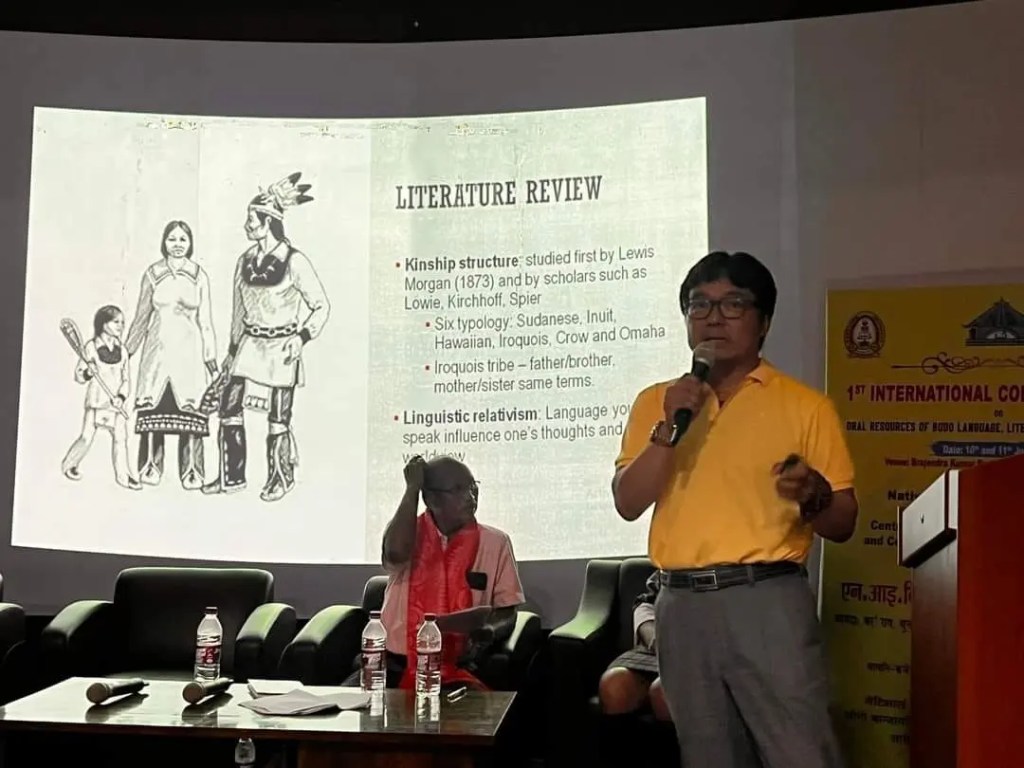
In social anthropology, kinship address system is how members of a family refer to other members of the same family or a clan. For example, we call our mother, ai, in Dzongkha and ama in Tshangla-lo of Bhutan, and apa for father in both.
Different communities, ethnic groups and cultures around the world have different kinship address systems. For instance, among some native American nations like the Iroquois, paternal uncles and father are addressed with the same term, while mother and aunts had the same. In some other cultural groups, they have gender neutral terms for brothers and sisters.
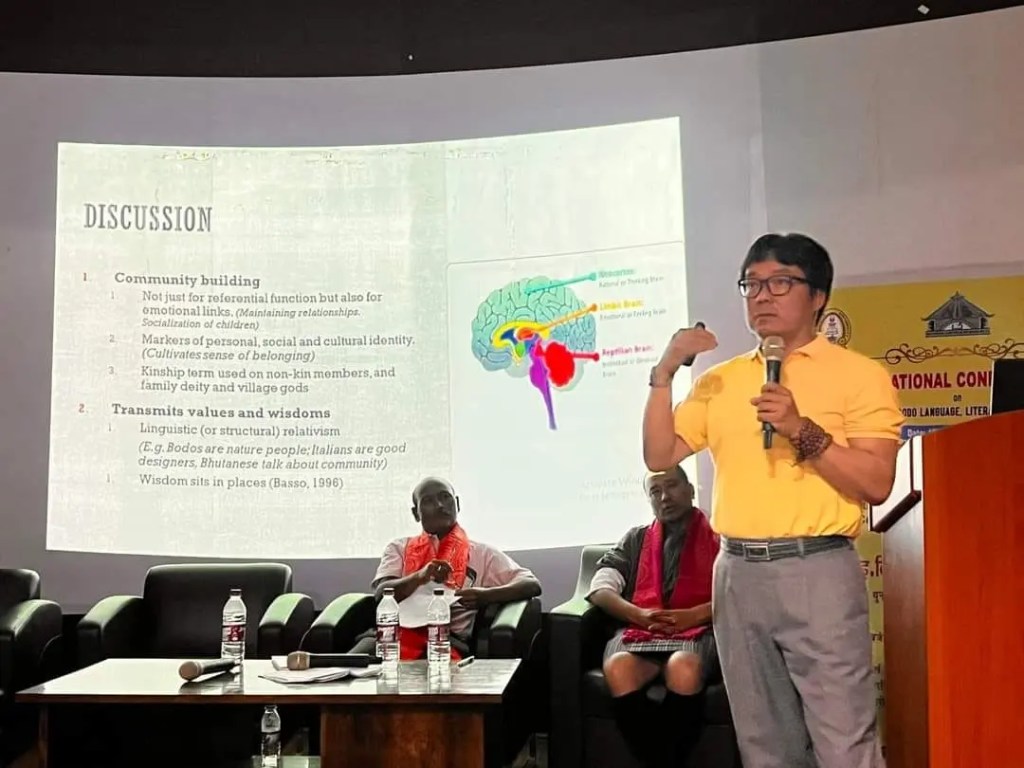
The study of these terminologies reveal a lot about the value systems, what is being valued, and the social and cultural traditions. Besides, native languages have been passed down from earlier generations bundled with stories, beliefs, heritage, wisdom, and memories.
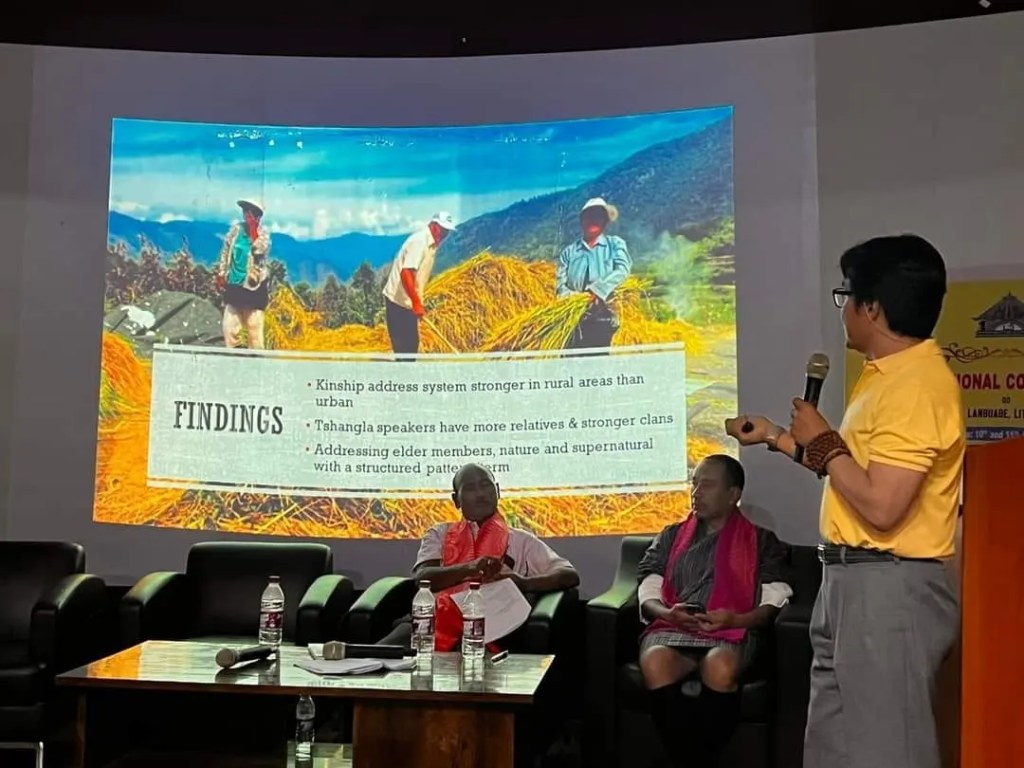
The Tshangla community of eastern Bhutan has some of the world’s largest repertoire of kinship terms – around 30 in all. English has around one third – around 10. This suggests that such rich terminologies help build and sustain the large extended family culture among the Tshanglas. Having a term for each member, such as aku (father’s younger brother), apchi (father’s elder brother), ajang (mother’s brother), azem (mother’s younger sister), amchi (mother’s elder sister), may help establish an emotional link between interlocutors, and not just serve the referential function. Consequently, people feel connected to every member of the family or community.
Kinship terminologies also find their way in the socialisation of young children. Tshangla elders make every effort to teach the children the proper kinship term, and how people are related to each other. For instance it would be something like, “She is not amchi. She is your ani. She is father’s mother’s sister’s daughter”. Such a structured socialisation process makes everyone feel part of the community. It then creates a strong sense of belonging in the people. Eventually a stronger community, and a nation is achieved.
Standby parentsculture
The words, amchi and azem (mother’s elder sister and younger sister respectively) are abbreviated from ama-chilu (big mother, mother’s elder sister) and ama-zemu (small mother – mother’s younger sister). These term imply that in the event of the demise of the biological mother, the sisters of the mother have the responsibility to fill in and take the child/children as their own. Likewise aku and apchi are abbreviated from apa-zemu (small father, father’s younger brother) and apa-chilu (big father, father’s elder brother). This arrangement was necessary in the past when maternal mortality from child births were very common. And men left for trade, or into the jungles, and sometimes did not return.
This tradition also entailed that you could not marry your parallel cousins, while cross cousins was allowed. The standby-parents culture could entail your parallel cousins becoming your siblings at any time. In fact the kinship terms for parallel cousins are the same as sibling terms – kota (younger brother), usa (younger sister), ana (elder sister), ata (elder brother).
Not just cosanguineal
Traditional Tshangla society requires one to acknowledge relatives up to seventh degree. This even include affinal relatives such as through marriage, besides the consanguineal relatives, which are relatives through bloodline. A cousin of mine followed this rule and estimated that I have 2,400 relatives.
Tshangla elders also insist on reconnecting with affinial relatives of the past, arguing that we are sognu thur (one family). For instance, there were inter-marriages between my ancestral house in Tashigang and the house of Ngatshang Koche. This past alliance entitles us to refer to members and descendants from that house as our relatives – as one family.
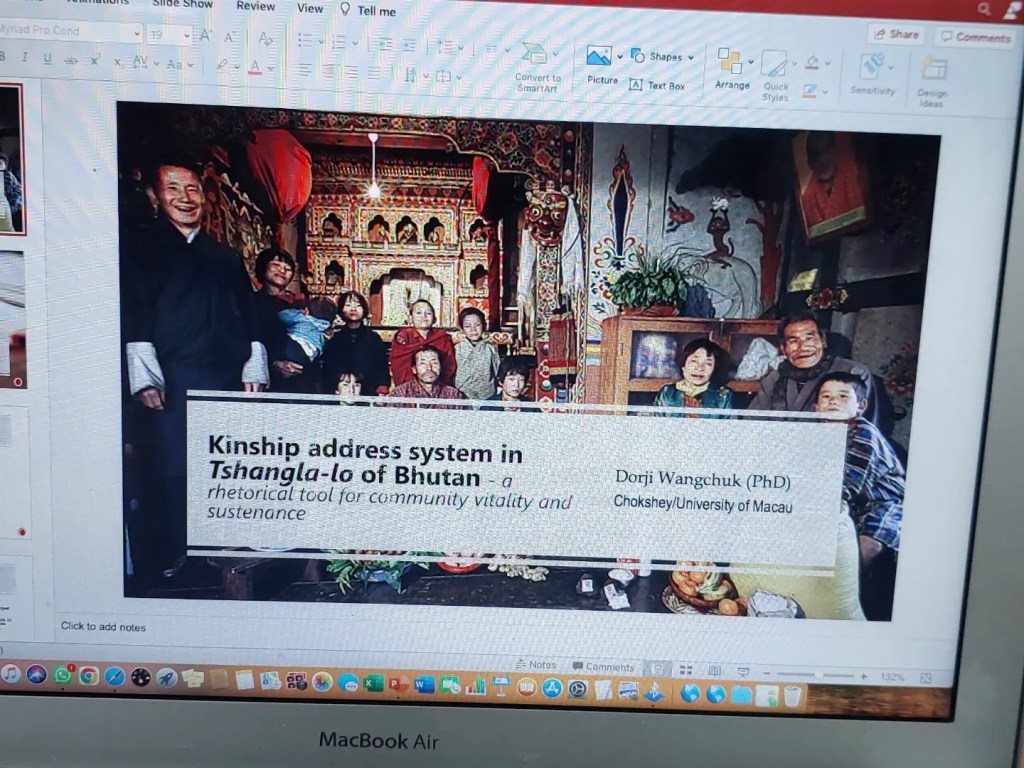
(Excerpt from my paper – Kinship terminologies in Tshangla-lo – a rhetorical device for community building amd sustenance, delivered at Central Institute of Technology, Kokrajhar)
The PPT file can be downloaded from the link below
A legend goes that a man accidentally entered the mythical paradise. After wandering aimlessly for a while he found a tree to shelter himself from the heat of the Sun. Having refreshed a bit, he felt hungry and wished for some food. Immediately the food appeared before him. He then thought he would like some wine. The wine appeared too. Startled and shocked, he thought some ghosts were there providing him everything. Then the ghost appeared.
In the Buddhist mythology there is the legend of wish-granting tree known as the pagsam jongshing (Dz: དཔག་བསམ་ལྗོན་ཤིང; Skt: Kalpavruksha). Wish-granting trees are believed to bestow any wish one makes.
There is a story that in Paro, at the spot where Nyephu Gonpa is located today, there once stood such a pagsam jongshing tree. The people back then wished for abundant harvests. Their wish was granted. They received an endless supply of grains, fruits and vegetables – to the point that they became idle, bored and wild because they didn’t have to work.
They got so wild that they even attempted to kill the lama of Do Choten Gonpa, Gyalwang Choeje Kunga Paljor (1428-1476). The lama and his attendants and animals are believed to have flown away from there before the mob made it to the hermitage. (There is a detailed account of how they achieved the flying skills).
Subsequently, the local people also chopped off the pagsam jongshing tree.
Though there is hardly any trace of the tree today, it is said that one can still make a wish on the spot. So, here I am, on the Duechen Ngazom (Vesak Day) of 2023 making my maiden visit to say a wish. I also had the most amazing day.
The Baeyul Neyphu Valley, Paro
From Shaba Bridge, coming from Thimphu, if one turns right and takes the dirt road, one enters the Neyphu Valley. Some refer to it as Heyphu, after the name of the village below Neyphu temple.
Neyphug literally means “the sacred hermitage caves”. According to lopen Karma Jurmey, who completed a six-year retreat at Menchunag, there are 108 sacred caves. He adds that Neyphu area holds the key to the mythical paradise, called Bae-Yul in Dzongkha, and that by just setting foot in the area, one is liberated from being reborn in the lower realm.
As one drives up, the valley slowly rises in altitude and after many twists and turns you reach a beautiful and blissful spot – surrounded by mountain-top temples of Do Choten, Bemri, Dongkala and Phurdo Gonpa. It truly feels like a Bae-Yul (hidden paradise) as mentioned in the holy scriptures. You only realises its sacredness when you leave the valley and hit back to the Thimphu – Paro highway.
There is rock face in the valley, says our guide – a young monk in Neyphu Gonpa, where an old man from Shaba saw a temple. He left his load at the “entrance” and never came out. His load remained unattended there for many years till someone took it and now is kept in a nearby temple.
Terton Ngawang Drakpa
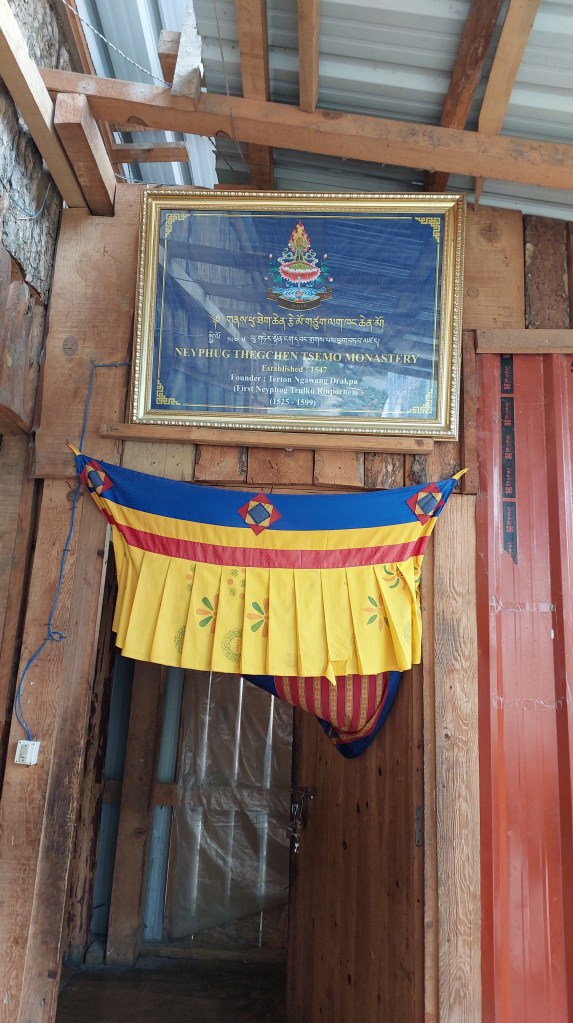
Neyphu Temple was established by terton (treasure revealer) Ngawang Drakpa (1525-1599), a Peling lama, born in Sha Kunzangling. According to some sources, he attained enlightenment-like state at the peak known as Samten Tsemo (where Bemri stands today), and was looking for an appropriate site to establish a seat for his Dharma activities. The village elders of Neyphu valley offered that spot where the pagsam jongshing tree once stood.
The birth of Terton Ngawang Drakpa was envisioned by Terton Pema Lingpa (1450-1521), who left instructions to his son, Thuksey Dawa Gyeltshen, to confer to him all sacred and secret teachings and practices. Terton Ngawang Drakpa, thus travelled to Bumthang and not only was a student of Thuksey, but later also became the teacher to Terton Tshering Dorji, who founded Nyechen Dongkala. He was thus one of the greatest Bhutanese yogis and dzongchen masters of all time, who started the lineage of Nyephu Trulku. The current one is the Ninth Nyephu Trulku, Ngawang Shedrup Chokyi Nima.
In his previous existence, Terton Ngawang Drakpa was Acharya Yeshey Yang – who was a disciple of Guru Padmasambhava and responsible for all clerical works.
Neyphu Monastery
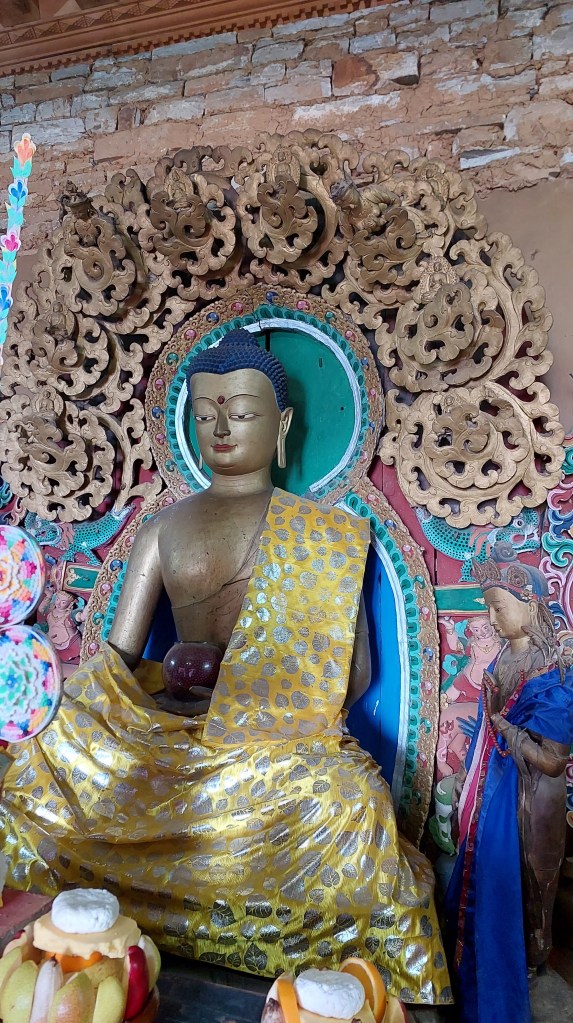
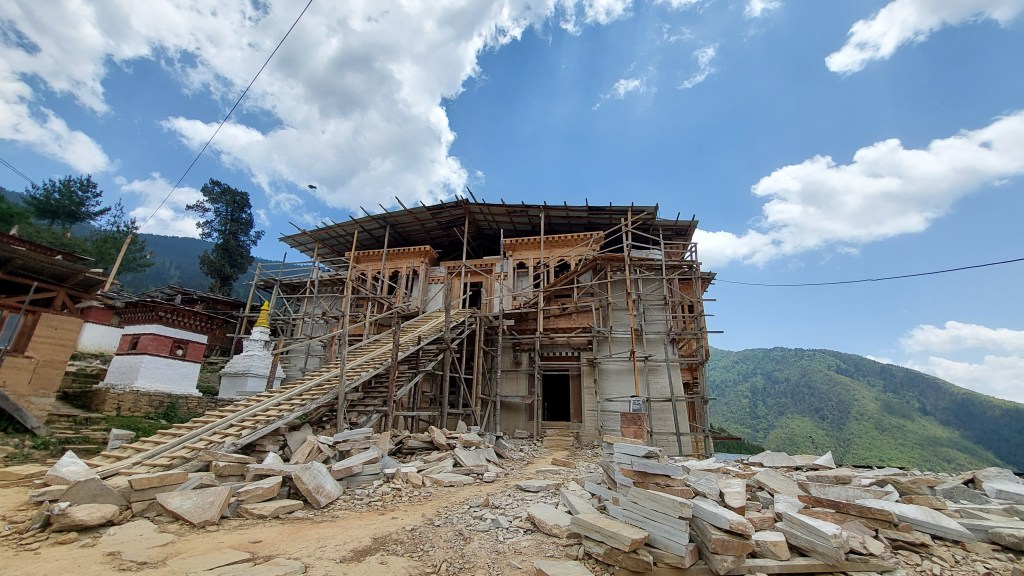
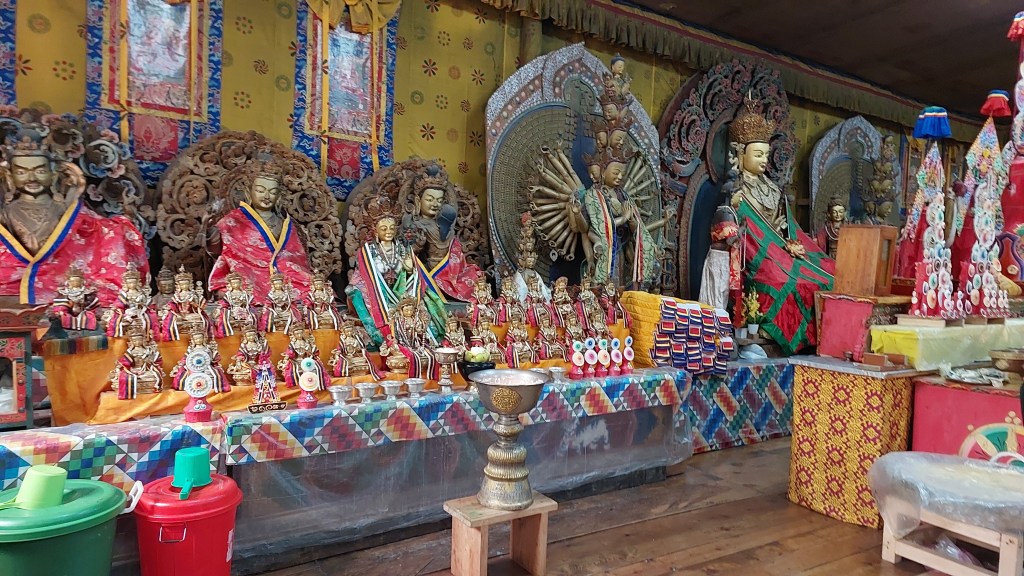
The temple is under construction and all statues are in a temporary hut, except Duesum Sangye ( Dz. དུས་གསུམ་སངས་རྒྱས; Buddhas of The Three Eras – Buddha Dipankara, Buddha Shakyamuni and Buddha Maitreya) on the ground floor. The statue of Shakyamuni is considered as sung-joen (talking statue) and hence is very sacred.
Those destined for the top floor are Guru Padmasambhava, Dorje Sempa (Vajrasattva), Sangye Tshepamay (Amitayus) and two Chenrizig Chukchizhey (Eleven-arms Avalokitesvara). Of special interest is the set of the statues representing the Eight Manifestations of Guru that were sculpted by the Fourth Neyphu Trulku, Sangdag Neduen Dorji.
The scripture/speech relic (sung-ten) is a set of Kanjur – the holy cannon of Buddhism, believed to have been written by the Second Nyephu Trulku, Sangag Gyeltshen (1600-1661).
Guru kutshab – the main treasure of Neyphu
As the most-sacred inner relics, known as the nang-ten, the monastery also has one of the Five-Envoy-Statues (སྐུ་ཚབ་) of Guru Padmasambhava – considered to be the kutshab (physical representations) of Guru, the blessing of which is at par with meeting Guru in person. (See below for background of kutshab)
The caretaker-monk says that the Kutsab statue was retrieved from the large Buddha statue at Kyichu temple in Paro. Terton Pemalingpa is believed to have seen it in his vision, and revealed it to his son, Thugsey Dawa Gyeltshen, who then later instructed Terton Ngawang Drakpa to retrieve it.
Other sacred relics are a pair of shoes that belonged to Guru Padmasambhava, the ritual hat of Zahor King, worn by second Neyphu Trulku, and a clay-statue of Jampayang (Manjushri), which is believed to have come flying from Tibet.
The monastery also has the Chamber of the Protector Deities of the Nyingma Tradition – Ma-Za-Dam Sum, which is the short form of Mamo Ekajati, Za Rahula, and Damchen Dorje Legpa – the main protectors of the tradition. Inside the chamber is also the statue of the ferocious local Gyelpo (king-spirit) Kuntu Zangpo, who is the lord of the area.
The statue is displayed once a year on the 15th Day of the 5th Month in the lunar calendar.
The Neyphu Monasteries Network
Neyphu Monastery is not a single stand-alone temple but the centre of a vast and loose network of temples and monastic institutes in Paro, such as Bemri, Chorten Gangkha, Menchu Gonpa, Minrekha, Phurdok Gonpa, Tshedrak Gonpa, Tsundru Gonpa, Yangchi Gonpa and Zhelgno ruins (which has now been restored into a heritage house with a cafe (Your Cafe) to support the monastic body).
The Centre of clay art
What little known fact is that Neyphu is where the art of clay statue making (jin-zo) was invented. Hence, it is culturally one of the most significant temples in Bhutan. Even today many lamas and artisans visit Neyphu Gonpa to take the measurement of the statues and also use some a model (I did this too to make two statues of Khandro Yeshey Tshogyel and Khandro Mendarawa for another temple).
In particular the statues of Guru Tshengay (Eight Manifestation of Guru) are supposed to be the best in terms of representation. The fourth Neyphu Trulku, Sangdag Nueden Dorje, is supposed to have made them based on the visions he saw. Today he would be regarded as the inventor of clay art.
The Stalking Spirit of Neyphu
Although Neyphu Gonpa is one of the most sacred Nyingma temples in Paro, at par with Neychen Dongkala or Mendrup Gonpa, it does not receive the same pilgrimage traffic. The reason is because of the fear and the myth of the stalking spirit called Neyphu Gyelp. This spirit is believed to be very powerful, and malignant too, who chooses to harm innocent pilgrims and people after stalking them.
However, there is some confusion, it seems. According to Neyphu Trulku, first of it it is not Gyelp Kuntu Zangpo who stalks you, but another king-spirit. Second, it is not this king-spirit who is malignant but the female spirit called Shaza Khandro maybe harming the people. In any case, both the spirits are now hosted and sealed in the upper most temple in the complex called Goen Gom.
Therefore, visiting this Gonpa, with its rich repertoires of sacred statues, and the Three Protectors of Nyingma Tradition, is highly recommended.
Around Neyphu Monastery
When you are half way up to Neyphu Gonpa from Shaba, there is a stupa, believed to be built by Gyalwang Je Kunga Paljor, and which contains one of the relics of Sangye Yoesung (Buddha Kashyapa) retrieved by Drubthob Gyem Dorji from Dzongdrakha. It is called Chorten Gangkha temple and the stupa is inside the temple.
After crossing Neyphu Gonpa, few minutes up where the road ends is Menchunag Gonpa, the spot where Tshang Khenchen Pelden Gyatsho lived and died, and where there is a mind-blowing self-arisen painting of Avalokitesvara, and self-arisen mantras on the rock.
When to visit
The most significant day is the 8th Day of the Second month, coinciding with the Birth Anniversary of terton Ngawang Drakpa, all the sacred relics are displayed for public viewing. What is very special would be to view the Guru Kutsab statue, which is equivalent of meeting the Guru in person.
The fifteenth day of fifth month is also auspicious to visualise the Guru Kutsab
Notes:
Guru Kutsab
In the Eighth Century, when Guru Rinpoche was leaving for the southwestern land of the Rakshas, King Muthri Tsenpo of Tibet requested Guru to leave something behind to represent him. It is said that Guru instructed Acharya Shantarakshita to make five statues with five different costumes – of Zahor, Nepal, India, Tibet and China. The statues were buried into the earth as termas, to be revealed by tertons at a later period.
These lines were believed to have been spoken by Guru to King Mutri Tsenpo on the sacredness of the Guru Kutsab:
Whoever sees or gets blessings from these statues,
it is no different than seeing me, Guru Padmasambhava!
As for the temporal, they grant whichever common attainment one may wish for,
And ultimately, to the abode of myself, Padmasambhava, escorted with honor by the assembly of Dakas and Dakinis, will be brought to the Supreme Celestial Mansion of Lotus Luminosity!
Even the places where these statues are kept, would have no difference as that of the Celestial Mansion of Lotus Luminosity!
Huge gatherings of Dakas and Dakinis will take place, auspiciousness would pervade everywhere and there will be bountiful crops and cattle,
The kalpa (eons) of sickness, war, and famine would soon get over!
The “talking” BuddhaOne of the eight manifestations of Guru. The entire set was sculpted by Fourth Nyephu Trulku as he saw them in his dreams.Today is full moon day of the Fourth Month. It is called Duechen NgazomLopen Karma Jurmey completed six years of meditation in the caves around the areaNeyphu Valley looking towards Paro ShabaTerton Ngawang Drakpa – the founder of the place9th Neyphu Trulku with Zahor Guru uzha (ceremonial hat)Neyphu Heritage and Your Cafe, Thimphu – Paro highway in ShabaThe Zhelgno manor has been rebuilt to help sustain the monastic body
It feels nice to visit Phurdo Gonpa after two years. After my first and last visit here in 2020, a friend and I gifted them a large water tank.
Phurdo Gonpa is on a mountain top in Paro Shaba, and was established by Drubthop Thangtong Gyalpo (1361-1485), a Tibetan yogi-artiste-engineer. He is best known for building iron chain bridges across the Himalayas, some of which are still in use today.
Thangtong Gyalpo, who was invited here by Drake Tsen and Aap Chundu, while meditating here, saw in his vision the whole mountain range as Mount Potala, the Abode of Avaloketeshvara, in a shape of a phurpa. Hence the altar of this temple is designed as Mount Potala with all the nearby sacred sites such as Bemri, Jelela, Dongkala, Dra Karp, Mendrup Gonpa. The spiritual merit of visiting this mountain is the same as visiting the sacred abode of Potala.
The center statue of the altar is Guru Nangsi Zillnoen (Guru Padmadambhava). He is flanked on either side by Cherizig Chha-Tong (1000-arms Avalokiteshvara). On the right side of the altar is Namsey Zambala – the Wealth Deity, and the Protector deity Mahakala.
Phurdo comes from the Dzongkha word, phu, which means “to fly”, and “do” (boulder). It is derived from the legend that a stone stupa below the temple attempted to fly away with Drubthob Thangtong.
The stupa called Lho Penden has stone slabs on its two sides. The story is that they are self-emanated wings, which sprouted from itself – to be able to fly with the yogi to Tachogang. However, the yogi left him back here. And, thus, it was also called Phurdo (flying rock) and the gonpa took its name from it.
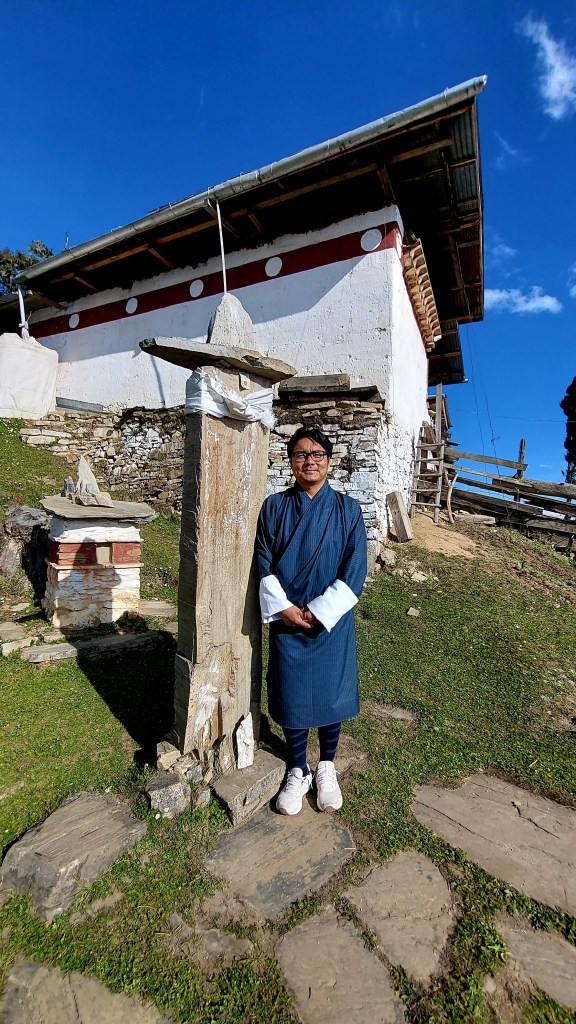
Another interesting relic to see is a 6-feet tall monolith called “Dhoring” (Stone pillar) which is said to be the physical height of Thangtong Gyalpo himself.
My first visit here was in 2020 after I saw a post about the caretaker pleading with the devotee to bring water.
Phurdo Gonpa sits on a limestone mountain top. And like any limestone or dolomite mountain, the water table must be way down in the valley, and not anywhere near the peak. In fact I discovered there are no water springs near any of the temples on this mountain. So all temples such as Dongkala, Mendrup Gonpa, Bemri, Dra Karp have no water source. Since time unknown they harvest rainwater and snow and at other times they walk for hours every day to distant water springs.
During my first visit I noticed that Phurdo Gonpa didn’t even have a large water tank for storage to meet the needs of the dry months. So, a friend of mine and I donated a 5000 litres water tank to help them pull through the fall and the winter months.
Take water:
To all devotees visiting Phurdo Gonpa, Mendrup Gonpa, and Dongkala, take cartons of bottled water, besides the butter and incense sticks. There is a very good road till the doorsteps of the temples.
Who should visit:
Everyone, and especially engineers, artists, writers. One belief is that Thangtong Gyalpo is supposed to have conquered the five elements of nature – earth, wind, fire, water and space. A statue of Thangtong is a must at home to avert natural disasters.
Getting there:
After Shaba Bridge, coming from Thimphu, turn right at the bridge, and head for Yuthok Gonpa and Dra Karp. Phurdo Gonpa is an hour drive and is on top of the mountain past Tenchekha village and Mendrup Gonpa. Small cars are welcome.
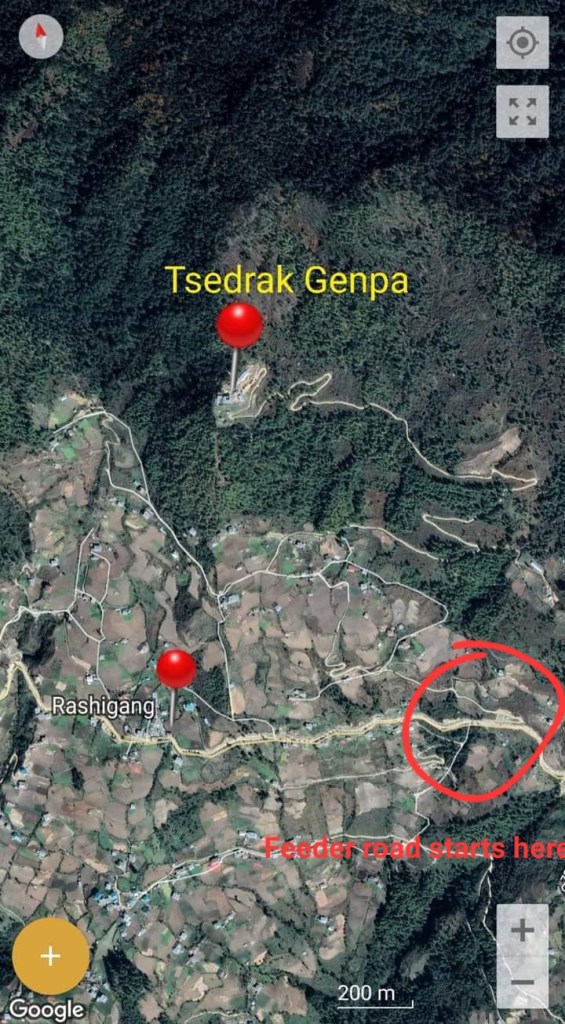
Tshedrak Gonpa, Naja Gewog, Paro – In September 2020, Guide Chimi, popularly known as the Prostration Man, reached out to me. He was initiating a set of large statues of Guru Sampa Lhendrup and the Eight Manifestations, for his village temple, Tshedrak Gonpa, in remote Naja gewog in Paro. He asked me if I could sponsor of the Eight manisfestations of Guru statue.
I told him, “Why not?” And paid the statue maker directly for Guru Pemasambhava.
I had never been to Tshedrak Gonpa but the opportunity to be a part of this magnificent spiritual project was enticing. It is not that I had excess money either. However, I thought, first of all, my descendents and I can someday visit this temple, or drive past it, with pride that I played a small part in rebuilding this religious monument.
Second, money will come and go. But time only rolls in one direction. It will be an instant when you realise that months have passed by and years have turned into decades.
And then decades will become centuries and, one day, we will be long gone. But this temple will remain. Caretakers will tell the stories of some devotees of destiny, who built this temple. Just as we are proud of our past heritage and our ancestors, our descendents will feel the same about us. I always say that our generation must do our bit instead of basking in past glory, or instead of whining that nothing is enough.
So, on this Tara Day of the Sage Dawa month I decided to make my maiden visit to this temple I heard so much about, and to also see for myself what I had actually got into.
The Rocky Cliff of Longevity
Tshedrak Gonpa stands above Tshegon village in Naja Gewog in lower Paro. To the south one can see the forested mountains of Chukha with Geling Gonpa towards the left peak. Haa Chu flows down at the bottom of the valley. It takes three hours with a small utility car from Thimphu.
Tshedrak means a “rocky cliff of longevity” and gets its name from a mountain that stands behind the temple. Here, the legend says, Terton Sherub Mebar (1267-1326) discovered a ter-statue of Sangye Tshepamay (Buddha Amitayus) from the cliff of longevity.
“While Sherub Mebar is more known as being associated to Ugyen Guru temple in Paro, it is here that he made his first discovery and proved his worth as a terton (treasure revealer)”, says Lopen Damcho Wangdi, a monk-teacher of Tshedrak. The revelation happened in the 13th century and, according to Lopen Damcho.
Then in the 18th Century the temple reappears in the hagiography of the Seventh Neyphu Trulku Namdrol Dorji, a contemporary and a good friend of the 25th Je Khenpo Sherub Gyeltshen (1771-1848), popularly known as Gori-Je. While there is no written record, it is possible what many claim and that Namdrol Dorji founded Tshedrak Gonpa. This is also evidenced by the fact that the propitiating rituals to the Peling Kasungs are conducted regularly here.
The Ku-ten Sung-ten of Tshedrak
The top floor has the main altar and the goenkang (chapel of the protector deities). The central figure is the Eleven-head Thousand-hands Avalokiteshvara, and represented according to the Peling Tradition. Other deities and bodhisattvas fill the entire altar that covers one wall of the main temple.
Of great interest to many is the goenkang, which houses the statues of the powerful tutelary deities plus Aum Ngagsum, the deity protector Ekjati of the Peling Tradition.
”Aum Ngagsum is a norlha (wealth conferring deity) and she is extremely generous and revered by people who are into business”, says Lopen Damcho. “Many people have become wealthy and prosperous, and got their wishes fulfilled,” he added. In fact on the day I visited a young girl accompanied by her two elder women were paying gratitude to the deity.
“Aum Ngagsum’s support is guaranteed but her generosity is closely guarded by the Tsedrak Tsen (Mountain deity of Tshedrak). If the beneficiaries do not show up to offer their gratitude, or annual homage after becoming rich from here, he retaliates and sometimes very violently,” he adds.
The sung-ten (literally meaning the Speech relic) is a volume of Sung-bum (One Hundred Thousand Verses of Perfection of Wisdom). It is believed that mere reading of this sacred scripture would not only help recover anyone from a serious disease but also guarantee a long life because of the life blessing from this temple.
In fact, thanks to the blessing of Sangye Tshepamay and the protection of Aum Ngagsum, the villages of Tshegon and Jabana are not only strong and healthy, they are also prosperous. Many people in Tshegon have lived past 100 years.
Getting there
It takes three hours with a small utility car from Thimphu to Tshedrak Gonpa. It is located in Haa Valley but under Paro District administration. From Thimphu drive to Chuzom and further down to Damcho towards Phuntsholing. From Watsha turn right towards Haa.
Tsedrak Gonpa is above Tshegon Village just before Rangshikha. You can see it on top of the mountain to the right from Gatro Restaurant. Take the first rough road to the right after the restaurant.
It is believed that Ugyen Guru Temple in Pangbisa received its curative powers from the Sangay Tshepamey ter discovered by Terton Sherub Mebar from Tshedrak. Pangbisa Rilbu (blessed pills) has such a power to cure the illness that in the past one rilbu was exchanged for one ox.
The founder of the temple – 7th Nyephu Trulku Namdrol DorjiTshepamay Ter statue (now housed in Pangbisa, Paro)Terton Sherub Mebar (1367-1326)Pema Sambhava in top right corner of the picture is my contribution to the temple
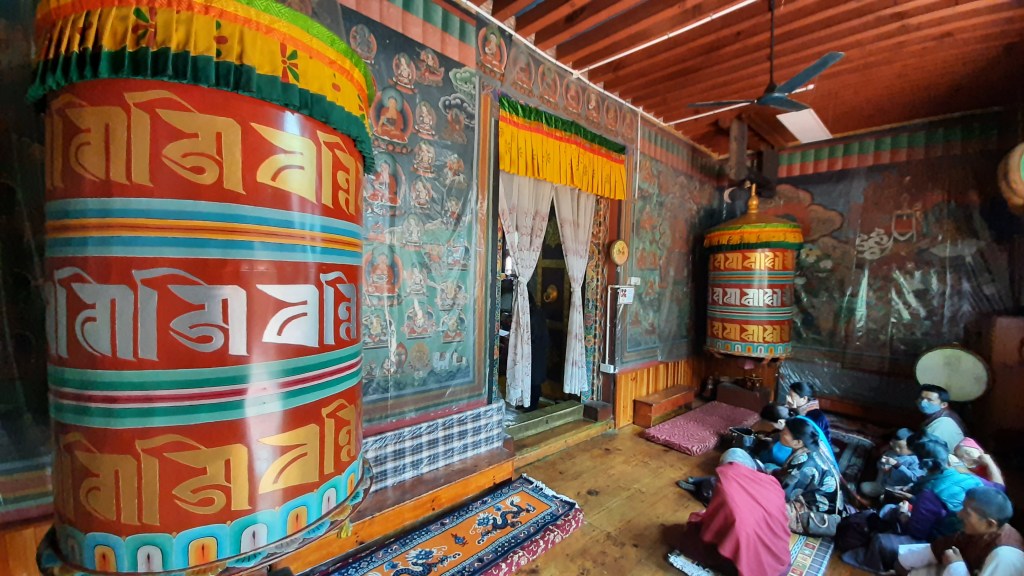
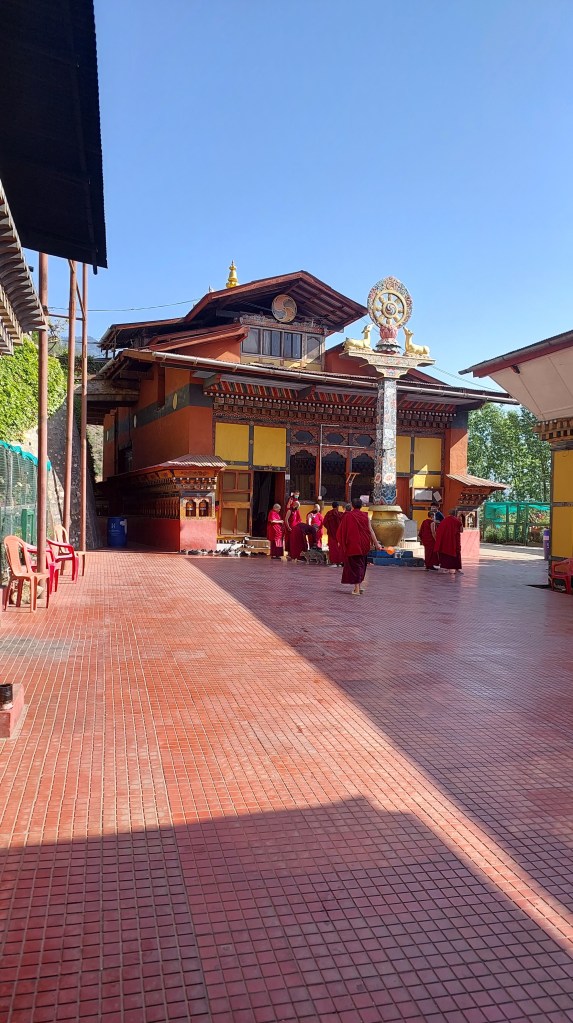
These days my morning walk consists of thirteen or 25 rounds of this temple in Zilukha in Thimphu. It is 10 minutes from my place. For those of you in Thimphu who may not be able to hike up to sacred places like Phajoding or Dodeydra, for whatever reasons (including laziness), you have Zilukha temple in the city that is as sacred, and where you can visit without too much formalities.
The temple is the heart of the Thangtong Dewachen Nunnery. It was built in 1983 by drubthob Rikhey Jadrel Rimpoche (1901-1984), who was considered as the 16th reincarnation of drubthob Thangtong Gyalpo (1361-1485). In fact Rikhey Jadrel was also known as Memay Drubthob.
The central statue of the temple is Thangtong Gyalpo (1361-1485) – one of the greatest yogis, and a master builder and artiste in Vajrayana Buddhism. To its left is an mesmerisingly beautiful statue of Drol-kar (White Tara), and to the right is Neten Yenla Jung (Angiraja) – one of the Sixteen Arhats. All the clay statues were created by the best jinzob (mud-artist) of our time, Lopen Omtong from Trashigang Bidung. The consecration ceremony of the temple was presided by His Holiness Kalu Rimpoche (1905-1989).
Guru Rimpoche’s vajra
It is believed that inside the Thangtong statue is a sacred dorje (Vajra) buried there, which apparently belonged to Guru Padmasambhava himself. The construction was started in 1981 and all the nang-zung (inner relics) for the statues were granted by Lama Sonam Zangpo (1888-1982), who was also supervising the statue construction. As the yeshey sempa (the most sacred relic) Lama Sonam Zangpo requested Memay Drubthob to put the Guru’s dorje, which the Drubthob was in possession of. Memay Drubthob refused at first, but when Lama Sonam Zangpo threatened to walk away, he relented, according to a reliable source. Lama Sonam Zangpo is supposed to have told that they were all getting old and didn’t have many years to live and that no one knows where the sacred dorje would end up if it is not placed there for the benefit of all sentient beings.
According to another source, around the same time, Memay Drubthob invited the indomitable Jadrel Sangye Dorje (1913-2015), popularly known as Jadrel Rimpoche, to the consecration ceremonies. Jadrel Rimpoche unapologetically replied that he would come only if the Guru’s dorje was offered and buried in the main statue as the principal yeshey sempa.
The dorje is believed to be the one that Guru Padmasambhava had used to tame the demons as shown in sampa lhendrup iconography. Hence while the temple may be relatively new, the inner relics offered by Lama Sonam Zangpo and the Guru’s dorje and the presence of all the great yogis such as Kalu Rimpoche and Jadrel Rimpoche make this temple a very special place. It is believed that any wish you make at Zilukha temple would be fulfilled. It is considered to be particularly powerful to clear one’s obstacles, and negative forces directed towards you, thanks to the Guru’s powerful dorje.
Why visit this temple?
We visit many sacred places and monuments purely based on legends we hear and believe. This temple in our city is not only convenient but it was built during our time by the greatest yogis and masters of the century – Rikhey Jadrel Rimpoche, Lama Sonam Zangpo, Kalu Rimpoche and Jadrel Sangye Dorje Rimpoche. Simply put, the temple is an established fact.
May Guru Padmasambhava hear your prayers and moelam
More on Thangtong Gyalpo
1. Thangtong Gyalpo is believed to be the mind emanation (thug-truel) of Guru Padmasambhava. It is believed that Guru considered revering Thangtong as revering him.
2. Thangtong Gyalpo, whose real name is Tsundru Zangpo, was an engineer, artiste, yogi, and an adept. He is considered to be the deity of people who take up professions such as engineer and art.
3. The world’s first opera was not Italian but Tibetan. It is called Achey Lhamo, and it was authored by Thangtong Gyalpo. Today Achey Lhamo opens all major Tibetan functions and festivals.
4. Thangtong Gyalpo means King of the Empty Plain. While he was meditating in the Gyede Plain in Tsang, five dakinis appeared to him and sang verses of praise: “On the great spreading plain; The yogin who understands emptiness; Sits like a fearless king; Thus we name him King of the Empty Plain.“
Supporting the temple:
The temple is independently managed and sustained. And so there are less formalities for visiting it. And the generous offerings of the devotees for prayers and rituals help to maintain this amazing gem in our city.
I often make requests to the nuns to recite barchel lamsel (obstacle-removing) and sampa lhendrup (wish-fulfilling) and make some offerings.
I spent the first day of this holy Saga Dawa month making my bi-annual visit to the sacred temples of Dodeydra in Thimphu, a Drukpa Kagyu establishment on the northwestern ridges.
I have been visiting this beautiful place for over twenty years now. It is a nice two-hour hike, but there is a killer uphill climb right at the start. If you can survive, you will have the most stunning view of Thimphu valley.
In recent years, Dodeydra has become a well-being temple for me and for my friends from abroad. Two of my American friends recovered from a life-threatening disease after we sought the prayers here. Another launched his business and visits Bhutan every year and conducts his annual kurim. It has become the official temple for my wellbeing journey.
The Cave of Scriptures
Dodeydra, which literally means “Cave of Scriptures”, gets its name from Dodey Kesang – a sacred Buddhist sutra set, which is believed to have been revealed from the rocks over which a temple now stands. The main temple, called the Tsuglakhang, was established by the 13th Je Khenpo (chief abbot) of Bhutan, Yonten Thaye (1724-84) in 1779. It also became the seat of two subsequent Je Khenpos – of the 18th Je Jamyang Gyaltshen, and of the 27th and 29th Je Pema Zangpo.
The health temple
Palden Lhamo is one of the eight major dharmapalas and the only female in Vajrayana Buddhism. She is also one of the three supreme protectors of the Kingdom of Bhutan. Known as Sri Devi in Sanskrit, she is believed to be the emanation of Mahakali – and the wrathful manifestation of Lhamo Pal Chhenmo (goddess Lhakshimi).
What many do not know is that Palden Lhamo is believed to help people recover from illnesses and diseases. Legend has it that when she was escaping from her evil husband-king, her mount, the donkey, was hit by an arrow. She pulled out the arrow and turned the wound into an eye. In the black pouch she holds in her left hand, she is believed to collect the pain and diseases of the devotees.
The story goes that when Je Pema Zangpo was meditating in a cave below, he heard the bray of the donkey of Palden Lhamo. He also saw the deity in his dreams. He later came across the donkey dung, which is now preserved in this temple as a sacred relic.
The temple, nicknamed Pem Zam Lhakhang, has the Tshela Namsum (Longevity Trinity) of Sangye Tshepamay (Buddha Amityus), Jetsun Drolma (Tara) and Namgyelma (Unisha Vijjaya) as the main statues. Hence, a kurim ritual here for the sick or long-life wishes, prayers or blessing ceremonies are recommended.
The wealth temple
The Tsuglakhang is a three-storied structure that looks as though it is pasted on a vertical rockface. Legend has it that the large boulder split into two, revealing the sacred scripture set and the giant slab that broke away is visible from the stupa nearby.
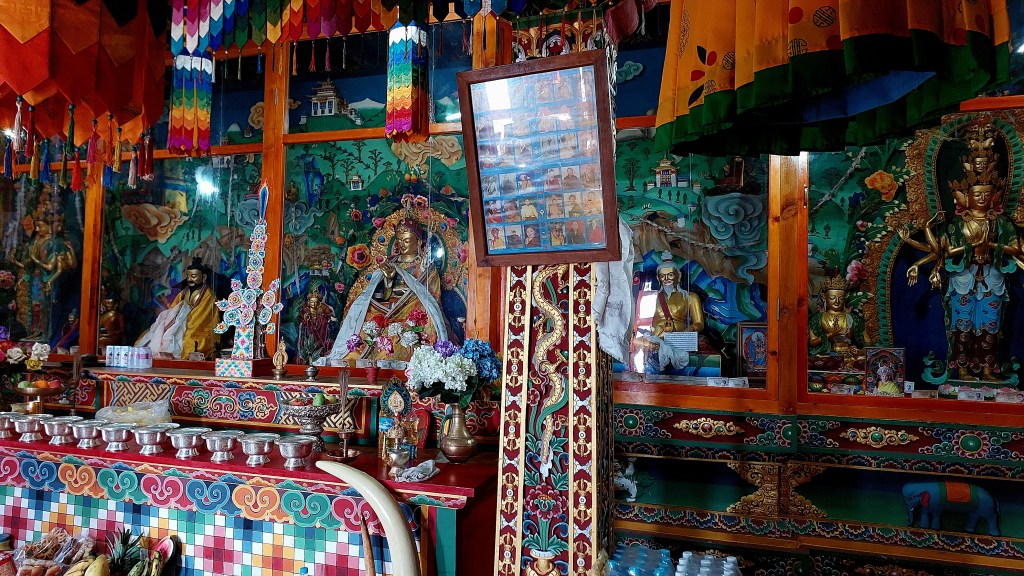
The ground floor of the Tsuglakhang is a museum consisting of the personal effects of the three Je Khenpos. The top floor is dedicated to Zhabdrung Phuntshum Tshogpa and to his tutelary deity, Yeshey Gonpo (Mahakala). The main temple is in the middle floor, and has Buddha Shakyamuni, Aum Zinchen Wangmo, and the inner sanctum of the three Je Khenpos plus Shabdrung Jigme Drakpa (1791—1830).
Since the mediaeval era, local traders and merchants leaving for Tibet and India would pay a visit here to seek the blessings of Aum Zinchen Wangmo for a safe journey and a successful business trip. On their return, they would bring a gift for her – usually consisting of corals and turquoise, as she is believed to be fond of them.
Aum Zinchen Wangmo is also known as Dorje Yudronma, who is considered one of the Twelve Tenmas (Dz. བསྟན་མ་བཅུ་གཉིས་, Skt. sthāvarā) in Vajrayana Buddhism, and who are believed to have been subdued by Guru Padmasambhava and enrolled as worldly dharma protectors.
Dorje Yudronma is also known for providing perfect divination with her turquoise drum that she holds in her right hand. State oracles of the Tibetan government in the past often consulted her through a medium.
Here, to seek her divination one must roll the dice and hit the perfect 5 (which is statistically quite difficult) or 7 or 15. If you receive one of the numbers you have her total blessings. Your wish will also be fulfilled if you have other numbers associated to other deities and divinities. However, as a worldly dharma protector, once you accomplish your mission you must return there and express your gratitude by bringing a piece of jewellery as a gift.
In some Vajrayana traditions, Aum Zinchen Wangmo is considered one of the Six Ejajati Sisters. Aum Jomo is believed to be the eldest, and Aum Zinchen Wangmo is the youngest and the most beautiful.
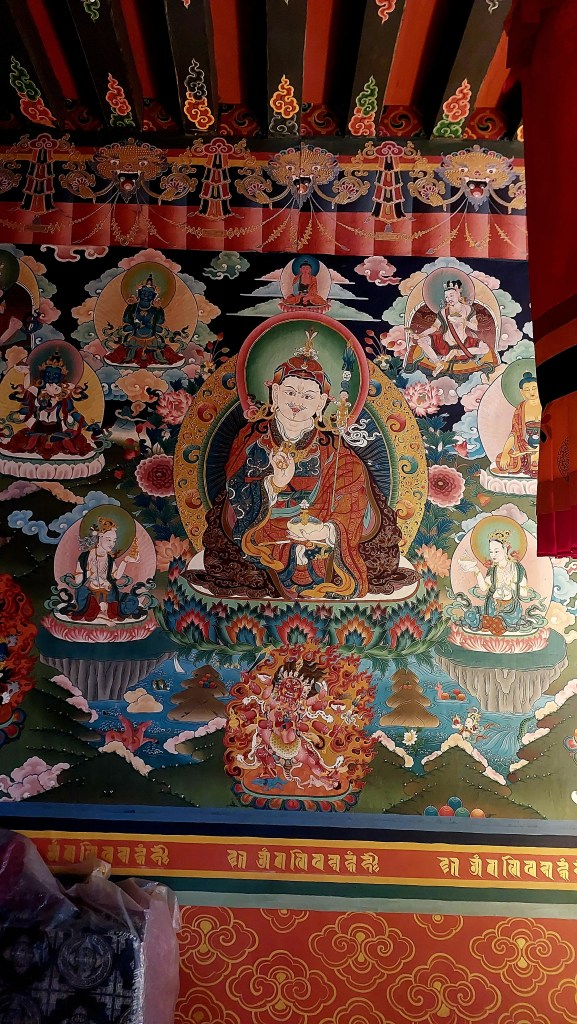
The whole mountain on which Dodeydrak is located was seen in the vision of Je Yonten Thayi as the deity Zinchen Wangmo in a seated position. This version of the story is depicted on the murals as you enter the Lama Temple in Tsuglakhang.
Buddha wears a crown
Coincidentally, in the same temple, the statue of Buddha Shakyamuni also exhibits wealth by wearing a crown. This is strange because Buddha is normally represented as wearing only a robe. But there is an interesting story behind the crown.
During the time of Zhabdrung Ngawang Namgyel, the King of Ladakh offered four estates around Mt. Kailash to Zhabdrung as a gift (the land was Bhutan’s exclave inside Tibet until the late 20th Century). A lama, who was referred to as Gangri Lam, was sent from Bhutan. During the long journey there and back, they often met a tragic end at the hands of thieves and bandits.
One particular Lam from Geleykha, who was deputed there, prayed to this Buddha Shakyamuni before he left and promised to offer something valuable if he made it safely back to Bhutan. He did make it back, and hence, the crown on the Buddha.
The Weeping Avalokiteshvara
One thing that I never miss is the mind-blowing mural painting of Chenrizig (Avalokiteshvara), which is believed to have shed tears when Kyabje Jamyang Gyaltshen passed away. It is to the immediate left after you enter the inner sanctum of the four lamas. The mural painting in the main temple is attributed to the handwork of Je Jamyang Gyaltsen himself.
The wellbeing temple
Mahayana Buddhism, and also Vajrayana, does not frown upon people seeking wealth or longevity as long as both are employed as means to attain a greater good, such as enlightenment, or to help others to achieve the same. What would be wrong is to practice materialistic tendencies such as hoarding or hedonism.
The third temple is the Kuenra – the main prayer hall. And here, where the monks gather every day, there are two very sacred statues that flank the main statues of Duesum Sangye (Buddhas of the Three Era). They are Jetsun Jamyang (Manjushri) and Lhamo Yangchenma (Saraswati). Both are believed to be sungjoen (statues that have spoken).
These two divinities help the devotees and practitioners not only to acquire knowledge but to also conquer ignorance – which is one of the main causes of suffering. What one should aspire for is to attain wellbeing and equanimity, and work towards enlightenment, and to eventually remove oneself from the cyclic existence of the Samsara. Knowledge and wisdom are thus seen as the best tools to get there. While we may not be able to dedicate our whole life like the monks, time is relative in Buddhism. Even if one can spend a minute or an hour there in silence and in good intention it is a great start of your journey towards realisation.
Honorary mention – The wellbeing waters
At the side of the Tsuglakhang is a small spring that is believed to have been blessed by the mantras of Namgyelma (Unisha Vijjaya) – the Victorious One. Namgyelma is the deity of both health and wealth. The story goes that Je Yonten Thaye, on his third visit to the holy Tsari Mountains in Tibet, brought a rock which, when he placed it over another rock at Dodeydra, produced this Namgyelma Drupchu.
The water is believed to cleanse one’s bad karma that may be standing in our way towards health, prosperity and enlightenment.
Another talk about salary raise. Another assumption that Bhutanese people are only after money. It is of great wonder that our people just don’t seem to get it.
IT IS NOT JUST ABOUT MONEY!
What is it, then? What is it about? Well, it is more about:
Sense of self-worth. People continuously assess their self-worth. In a society where one is defined more by social identity rather than personhood, people ask questions such as, “Why am I so useless?” Forget about repaying one’s parents and country, one realises that one can’t even pay the house rent. And sees one’s life slipping away. People then decide to make a jump.
Sense of belonging. People want to feel belonged, valued and acknowledged. People seek validation and affirmation, from their superiors and from their peers. When they don’t see them coming, people start wondering, “Does it even make a difference if I am here or not? Who cares? Who really bothers?” In most cases people will move on if they feel that they are not valued.
Sense of purpose. By and large, Bhutanese people are selfless (still!), and are service-bound. However, when Bhutanese cannot fulfil selfless aspirations and projects, in the sense that, when people cannot even repay their parents because of stratospheric living standards, or when people find that they cannot even contribute anything to nation-building, people start reasoning. Where do I stand in this whole gamut of nation-building? What is my role in this country? Where is my place in my society? If they do not see a greater purpose in one’s life, they will go find it somewhere else.
Money is the secondary reason for the exodus, from what I gather, but it is seen as the solution to fix the above existential questions, plus everything else. There is an illusion, both in the government as well as among the population, that money is the answer to all our problems or issues.
This “knowing what the people need” approach to public policy, which is defined as paternalism in sociology and political science, is where, I feel, we are going wrong. Public policies, as the name suggests, is a policy for and by the public. It should be a grassroot thing and not a top-down hit. It should be demand-driven and not decided by the source. Visions can be top-down but public policies should be formulated bottom-up.
Sure, in this hyper capitalistic world, money is required and that money helps. But unless we fix the deeper psycho-social problems – at individual level, and as a nation, we will find ourselves in the same state and situation even after 5 or 10 years. We will find ourselves there with more money, but with an empty heart, or mind – or both.
If the answer to the question, what motivates you to leave, is money, the follow-up question should be, “what do you need the money for?” In most cases, it will be either, “I want to repay my parents” or “have money to do good things, or help others.
And I said it before
In July of 2019 right after the teaching profession became the highest paid civil servants I spoke at the first Biodemocracy conference. There I categorically told those present that the move was not going to reduce teachers’ attrition. The excitement would last for 2 months and teachers would be back to attempting for Australia visa. (See below for more details on this).
Is raising salary meaningless?
No. Again as I said it before, the higher salary will attract the best people into the civil service but it will not do anything to retain them. It might also bring some Bhutanese back into the country from the UN and other international agencies and institutions. But if the objective is to retain the existing corp, it is a mission that is dead on arrival. Few might change their mind but those who have decided are waiting to walk away with higher gratuity and terminal benefits. Yes, the government is caught in a catch-22 game.
So my recommendation is to find the underlying cause, instead of treating the symptoms.



























 Dorji Wangchuk