Following my earlier post on Intents and Moelam, I had a few questions, which I share here.
I start with a story.
A lazy pig was once basking in the Sun and sleeping his day away when a pack of dogs pounced on him. The pig dashed for his life and without realising, he ran around a stupa three times. There was a teaching going on at the stupa and though the pig went around the chorten without even realising it, he was never reborn again in the lower realm.
So, first question: Is there benefit of just listening to the prayers, and teachings, even if you don’t understand it?
Yes, it does. Your mind may not understand because of the language you speak, but your conciousness, which is language-free and pure, is believed to absorb it.
It is said that when Buddha Sakymamuni spoke, every sentient being – humans, animals, devas, asuras, hungry ghosts and sprits, all understood every word he spoke.
Why am I not attending the teachings at Kuenselphodrang? As a lay person, trapped in the BS of life, I don’t have 30 days to go there every day.
Why I don’t go when I can? There are different types of teachings. The one currently being conferred should be attended in full. There are other teachings, which you can jump in and out. Consult your teacher, your lama.
What do you do then? Buddhism, especially Mahayana/Vajrayana Buddhism has no meaning or benefits if you don’t practice loving kindness and compassion. So, you just don’t sit, listen to or recite mantras. You must practice them.
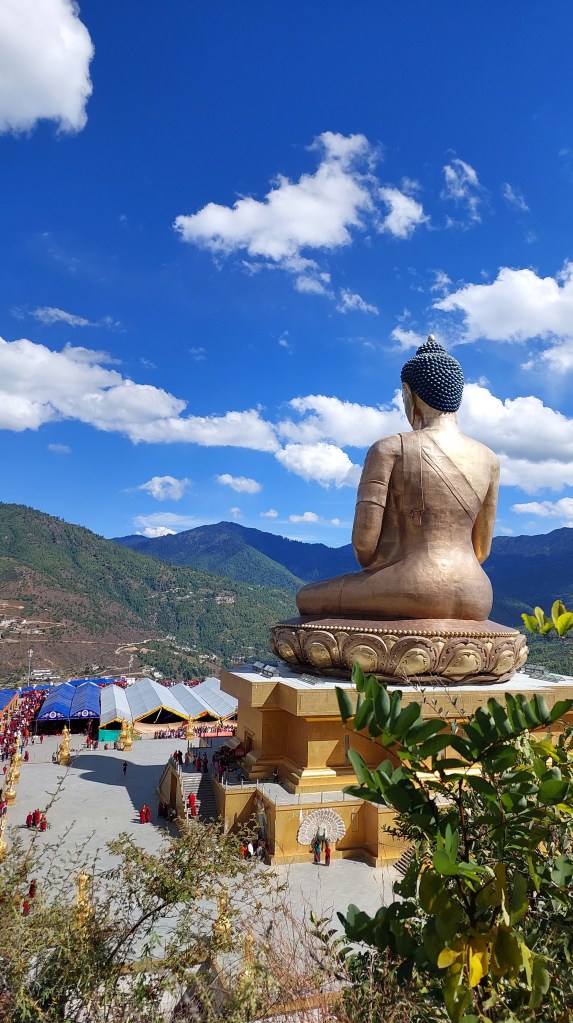
Make a trip to Kuenselphodrang. Make your wish. Volunteer there even for a day, or an hour. Drop some offerings (amount does not matter. Your intention and moelam do). Drop some foods or fruits. Give a ride to some old pilgrims. There are many ways to practice Buddhism. Or like the lazy pig, go and run around the big Buddha statue three times.
Stay blessed.
Addendum to the Pig Story.
The young Yangma Rimpoche, who has his center in Phobjikha, told me another version of this story when I shared with him that I was helping build a chorten in Zhemgang,
This pig was playing in the mud the whole day, and feeling tired, he dozed off when the dogs attacked. As he was running for his life, and around the chorten, the mud from his body got rubbed against the chorten at the exact point where the clay of the chorten had peeled off.
The pig, therefore, managed to repair that hole with his mud on the body. And in doing so he was released from the animal realm and reborn in higher realm.
Such is the merit of building a chorten. And yes, your consciousness – your soul, can understand the teachings, and absorb the merits of listening to the sacred verses.
Intentions, or view, is the most important aspect in Mahayana Buddhism. Whatever you do, whatever you say, ultimately one’s karmic merit or retribution depends on what is the main intention. Put simply, the end justifies the means as long as the end is noble, and the means does not violate the Five Precepts of the Vinaya. In fact, a popular saying goes something like, “If your intentions are clear, the earth and the paths will be cleared for you” (sampa zang na, sa dang laam yang zang).
Stories are abound of intents, and power of wishes, known as moelam in local languages. The most popular cliche being a self-arising statue of Buddha emerging out of a bone of a dog, because of faith, intent and moelam.
And of course, the lama who took this view to the extreme was our favourite Divine Madman, Drukpa Kuenley, who defied every convention and norm to prove this point.
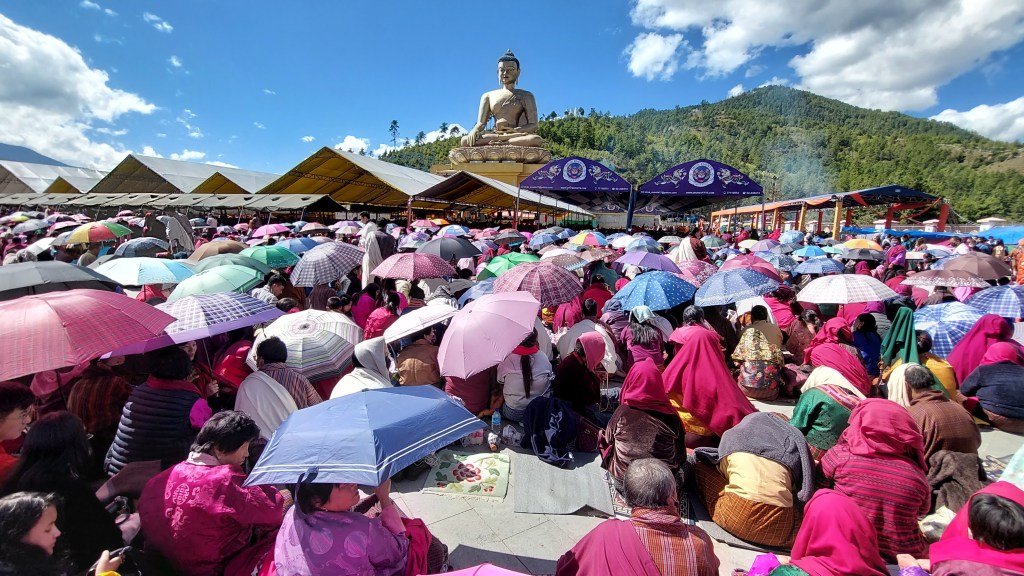
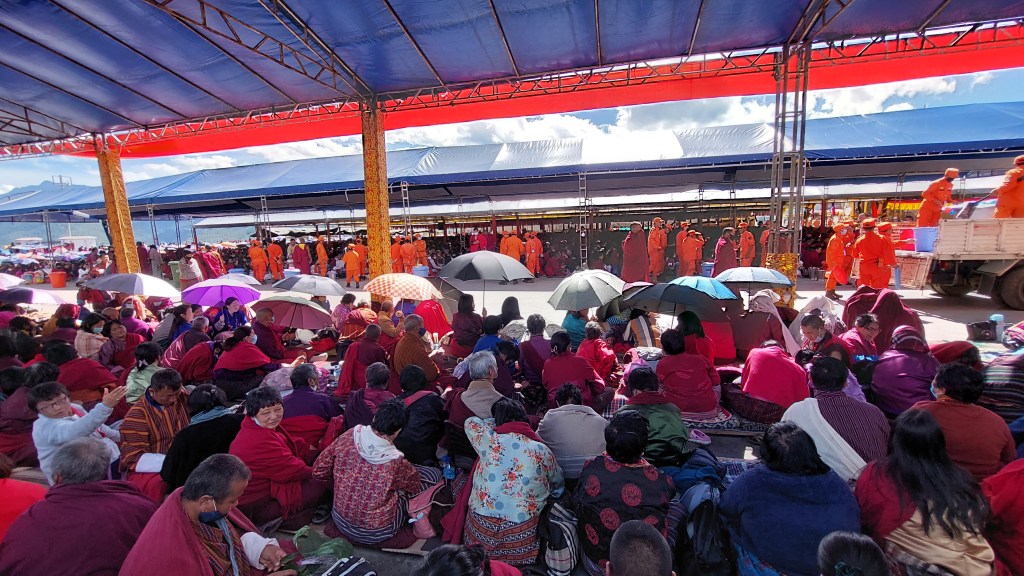
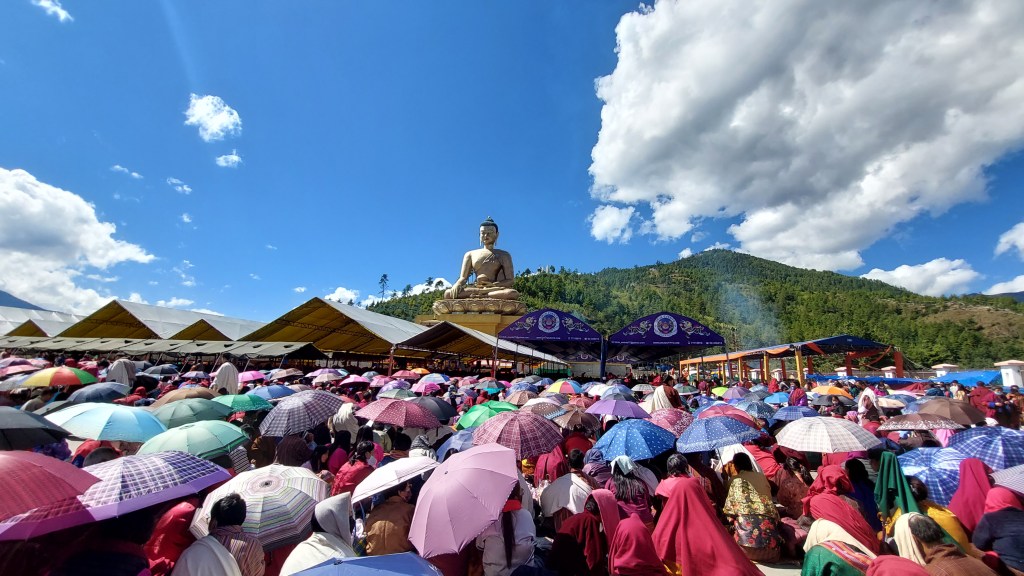
There is a month-long teaching going on in Thimphu. And it is bestowed by none other than our Living Buddha, Trulku Jigme Choedra, the curent Je Khenpo of Bhutan, and one of the purest living soul of our generation. There are thousands of devotees from all over the country, and many monks and ordinary people from Ladakh, Sikkim, and other places in India.
So, today, on the advice of my teacher, I paid a visit, listened to his teaching from the woods (which I didn’t understand a word but it’s fine), made a monetary offering for the organisers, and a cake with less sugar for His Holiness. And above all, as instructed I prostrated three times from a distance, from this spot (I didn’t bother the curious onlookers) and told the Buddha that with this today’s visit I be marked present for every day of the thirty days. I promised to be better in my next life by being a monk and be a more serious practioner.
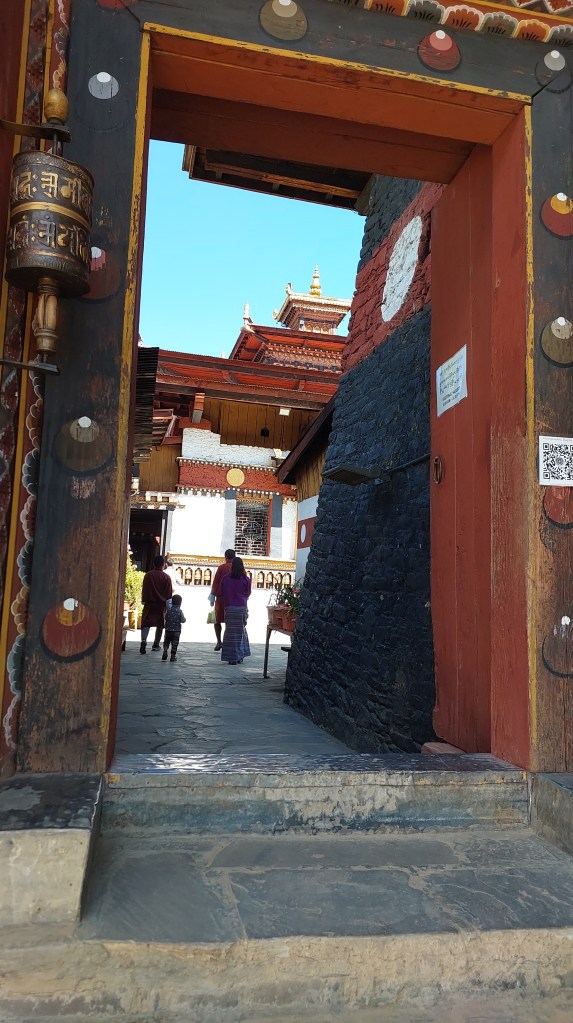
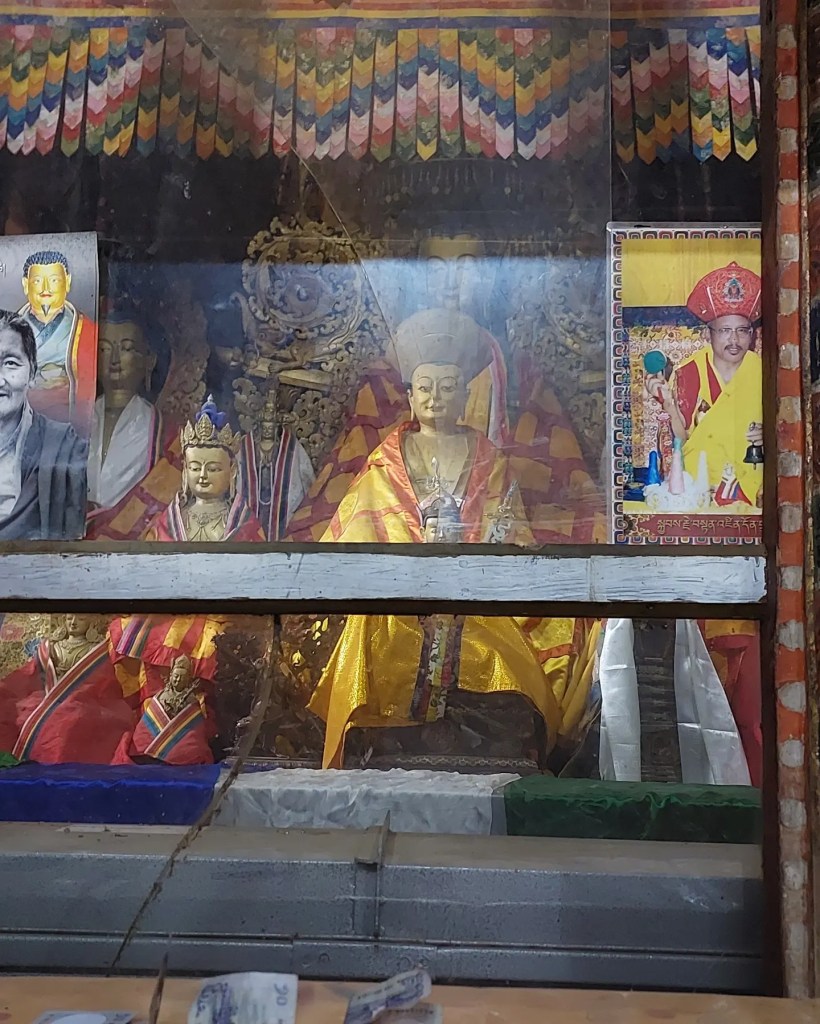
I think the Buddha said OK, because the Living Buddha kindly sent me some protection chords and blessed pills of the Medicine Buddha (Pix 3) in exchange for the cake. These gifts will go straight into my treasure box.
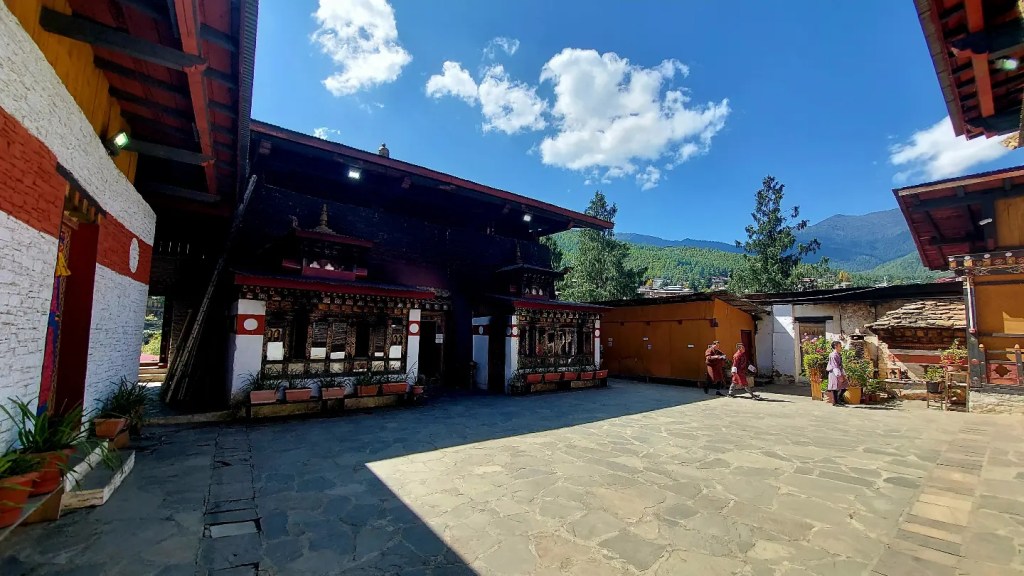
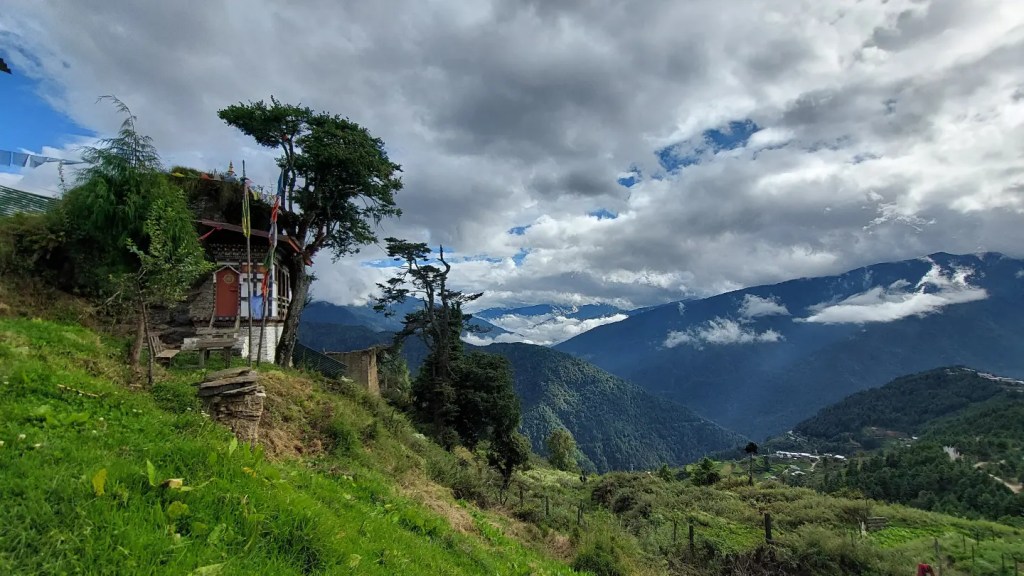
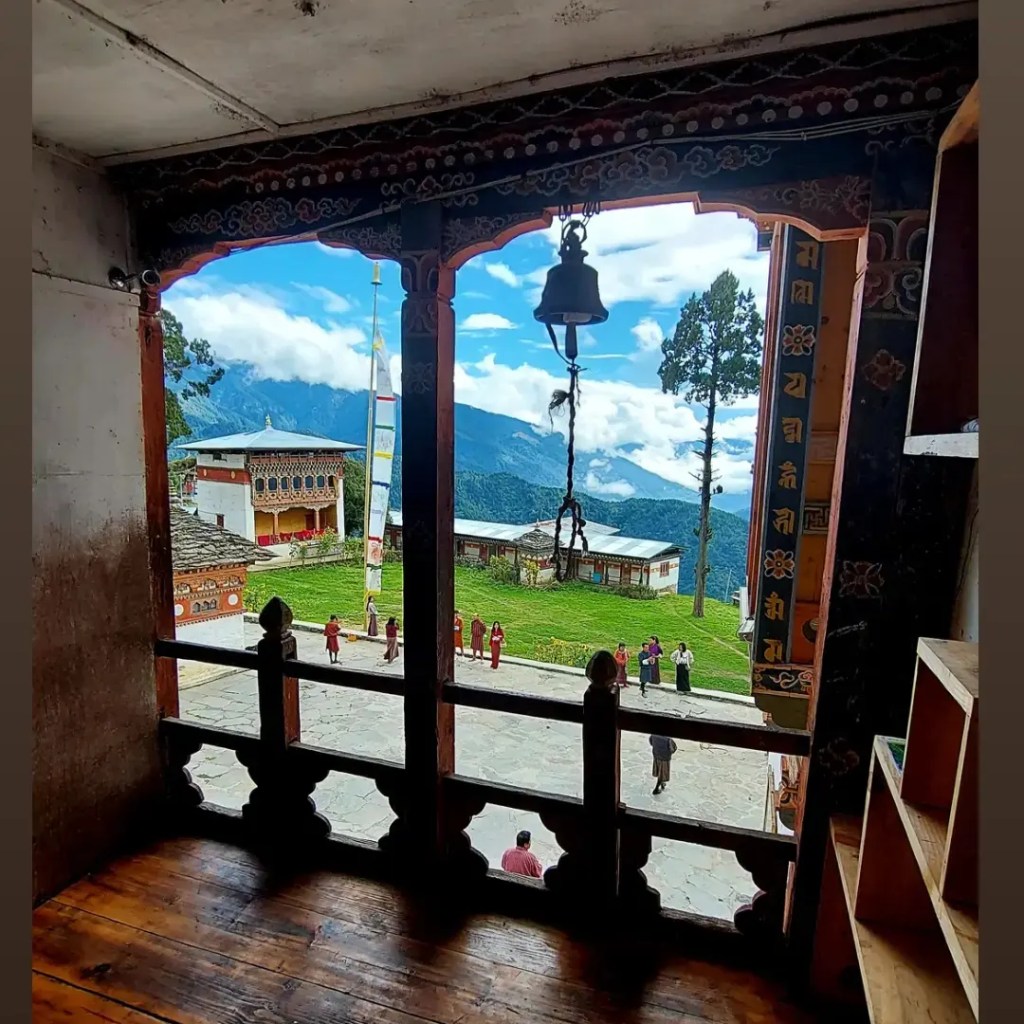
May all those who cannot come even for a day, for genuone reasons, but can see and listen to the teachings (Pix 2) be blessed for life.
Chang Gangkha lhakhang is located on a hill overlooking the core city area of Thimphu. It is probably the oldest temple in Thimphu valley and thus it is a very sacred and a popular place. Many sources attribute its establishment to Sey Nima, one of the sons of Phajo Drugom Zhigpo (1184-1251).
Phajo Drugom emerged from eastern Tibet and is responsible for introducing the Drukpa Kagyu lineage tradition into Bhutan. While Zhabdrung Ngawang Namgyel (1594-1651) is revered as the founder of Bhutan, it is thanks to the foundations laid by Phajo Drugom centuries earlier that the Zhabdrung could also achieve what he achieved.
Phajo Drugom is considered as the emanation of Avalokitshvara (Chenrizig) and so the main statue in Chang Gangkha is the large bronze and “self-arisen” statue, in seated position, of Chenrizig. Because it is believed to be self-arisen and not man-made, it is considered as a very sacred and wish-fulfilling statue.
Facing the main temple, and with a dark-colored walls, is goenkang (temple for the tutelary deities). One interesting feature of this goenkang is that the four guardians of the four directions are in standing position, and not seated like in other temples. This style resembles the guardians at the entrance of Chinese and Japanese temples. When I enquired no one could give me a satisfactory explaination. My own conclusion is that they are dra-lhas, and not gyalpos.
Chang Gangkha is, however, more popular as the temple protector of babies. This is because the local deity, Ap Genyen Domtshang, is considered as the kay-lha (birth deity) of children born in lower Thimphu. By lower Thimphu, it refers to the geographical boundary of south of Chubachu stream that flows from west to east. Since the country’s main hospital, Jigme Dorji Wangchuck National Referral Hospital, falls in lower Thimphu, and since this part of the city accounts for much of the population, practically almost every child born in Thimphu comes under the spiritual protection of Aap Genyen Domtshang.
For those born in upper Thimphu, the birth deity is Aap Genyen Jagpa Melen of Dechenphu temple, another extremely popular place.
Aap Domtsang’s statue is inside the main temple, and besides being the baby protector, he is also the territorial lord of Thimphu, whose help can be sought for dangers from bad dreams, and if attacked by other malignant spirits like sa-dag, nye-dag, mamo or lu.
NB.
The word, Genyen, is not a name but a title confered to a group of 21 king-spirits and local deities by the Buddhist master, Guru Rimpoche, after they receive a certain level of teaching. They are still not enlightened. Instead, one could say that they are half-enlightened deity, who will someday attain full enlightenment.
This distinction is important to understand because unlike other unenlightened and wordly deities (jigtenpa lha) who are believed to imprison you as their servants after you die, genyens won’t do that. Hence, it doesn’t harm to seek their support for mundane problems.
In Bhutan people avoid some temples because of, either very demanding local deities, or because some of them are believed to require you to come back on the same every year, failing which one could face the wrath. Neither Changangkha nor Dechenphu fall under this category.
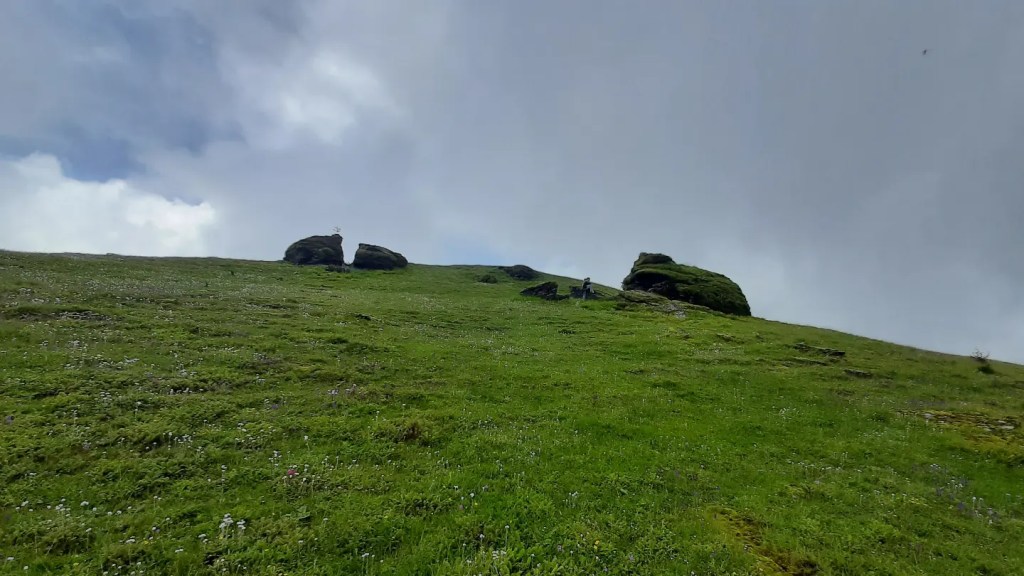
Salading Peak, 4,350m, central Bhutan – Three boulders, believed to be Aap Shatsi’s stove, stand today on the peak of Salading among the Black Mountains.
The valley of Rukha and Athang, and the lower valley of Phobjikha, hold a mountain deity called Aap Shatsi, as one of the deities that they have to appease – on an annual basis.
This peak of the mountain towards the south of Phobjikha is believed to be his abode. It is a four-day journey on foot from Rukha to this place.
Since two years, however, the people of Rukha don’t have to do this ardous journey. The image of the deity has been painted inside the sacred chambers in Rukha Lhakhang. The locals appease the deity in the community temple itself. So far, Aap Shatsi has not complained. I hope he continues to accept the offer from there.
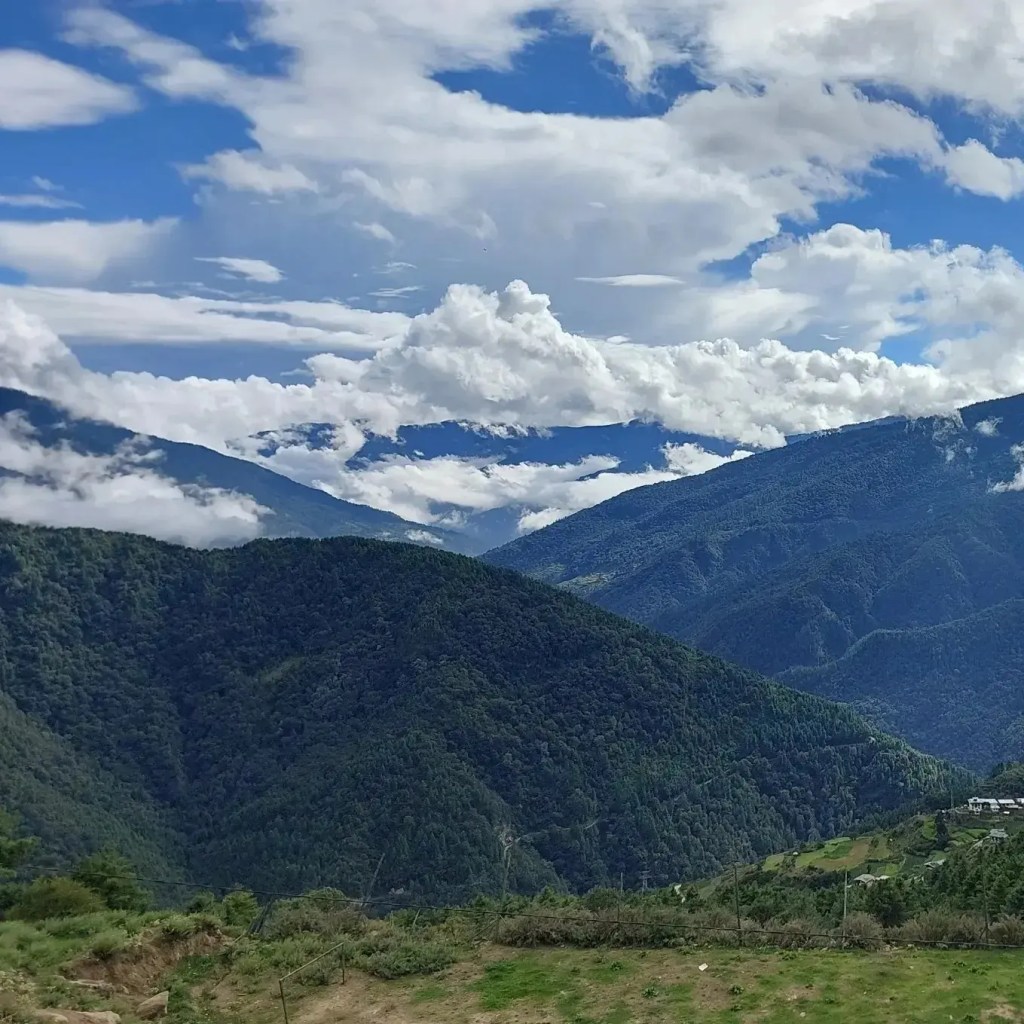
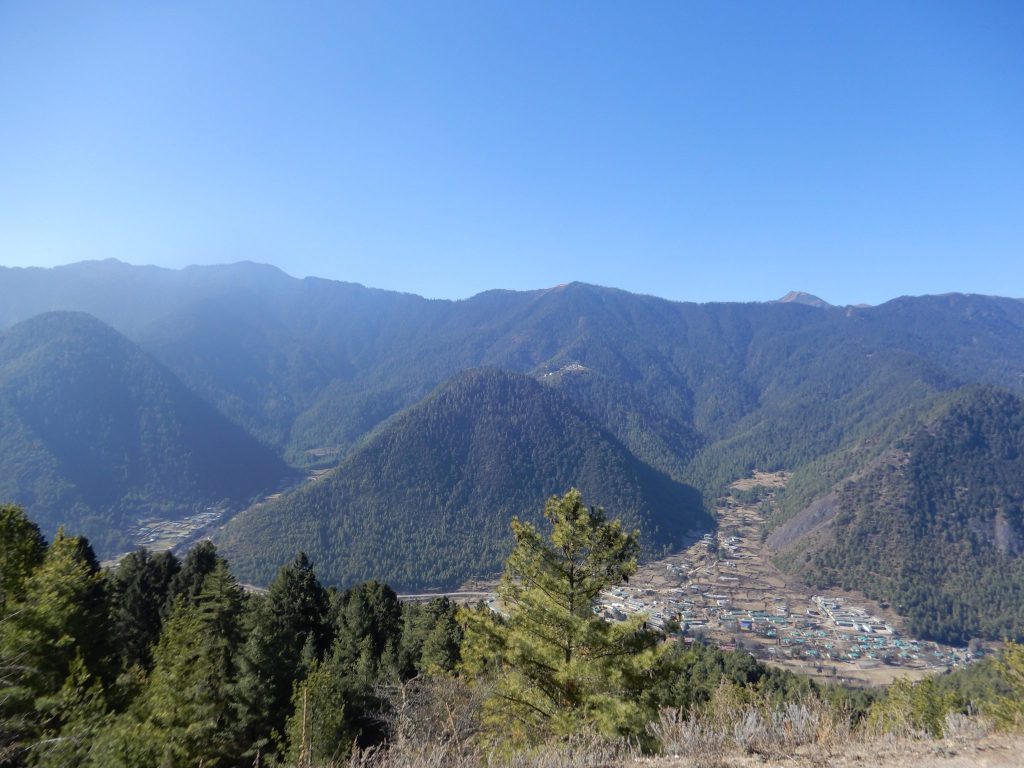
The Black Mountains range in central Bhutan holds many untold stories. It hosts the powerful mountain deity, Jowo Durshing (last photo), who is revered by the indigenous communities of Monpa and the Oleps, plus by some villages in Trongsa and Zhemgang.
The highest peak in this area, Durshing Gang, is believed to be the abode of the deity. In Lhoi Choejung, a history book by Lopen Pemala, this peak is mentioned as the first thing to emerge from the ocean as the Indian Subcontinent landmass collided with the Asian tectonic plate.
During the medieaval period, the Black Mountain area was a destination for Tibetan monks and medicine men looking for the sacred places blessed by Guru Rimpoche, and for the medicinal plants respectively.
A nation’s identity is the story it tells itself, so argued the British cultural studies scholar, Stuart Hall. Stories of deities and denizens, of magical placed and medicinal herbs, and of sacred sites and sanctuaries make this nation called Bhutan. This is us – our identity. We lose these stories, we lose our identity.
NB – At the Fourth International Conference on Vajrayana Buddhism in Thimphu, Oct 2-4, I spoke on the role of the deities in the social and communal life of the Bhutan and on the formation of national identity of the Bhutanese
My father, who happens to be one of the first Bhutanese to get a driving licence, started off as a royal chauffeur to His Majesty the Third King of Bhutan, and Their HRHs, in 1968. He was mostly assigned to HRH Princess Sonam Choden and HRH Princess Dechen Wangmo but also drove regularly for HRH the Crown Prince (later the Fourth Druk Gyalpo).
Those days the Third King was pouring his heart and soul and the country’s limited resources into school education. And day in and day out, per my father, His Majesty was fully engrossed with the modernisation process that Bhutan had just launched under His personal stewardship in 1961.
On one of the drives to Punakha, the King asked if my father had children. My father replied that he had two (my younger sister and my brother were not born then).
“When they turn 5, I want you to enrol them into modern school,” HM told my father.
My father remembers the King as being excited, passionate about education. HM would elaborate how modern education will change the lives of the Bhutanese. My father admits he didn’t understand what was beyond, or better, than the traditional learning in monasteries and monkhood.
Nonetheless, in 1972, when I was about to turn five, my father appeared in our village to take me away. And with his measly salary of few hundred ngultrums (by then he was transferred to the erstwhile BGTS in Phuntsholing) my father educated almost every member of the next generation, including all the nieces and nephews (my cousins).
50 years on, he still gets super excited when anyone in the family wins a scholarship or aces in academics. When I completed my PhD, he visited every temple in the valley and thanked every divinity he saw.
Now he is on the seventh heaven. Two of his grandsons (my nephews) got Chevening Fellowship to the UK this year, and although the news is months old, he is still celebrating, and walking around with pride everyday.
And yet, sending children to school during his time was hard, as more hands were needed at the farm. He got a monthly salary of Nu. 150. Affluent families in those days bribed state functionaries to keep their children home. Besides, in my case, being from a religious line, I had just started my monastic training under my maternal grandfather, when my father showed up to fulfil the Royal Command.
If there’s one staunch believer in the power of education, it’s him. His commitment has resulted in our household in Tashigang producing more postgrads than the entire village combined – something that made him an envy among his peers. He still insists on education over material wealth, and wants to see a few more PhDs in the family.
Of course, now, one can understand where my own zeal for lifelong learning came from.
Located in Chapcha gewog, Dokhachu means “a boulder standing upright and facing the sky”, and refers to a large boulder that sits a hundred meters away from the main temple. A small chapel is attached to this sacred boulder. Another version of the origin of the name claims the word is derived from two words, “doh” (boulder) and “khachu” from Dakpai Khachoe Zingkham (celestial paradise), which the founder saw while meditating by the boulder.
Dokhachu was established by Lama Thinley Gyamtsho in the second half of the 17th century. The temple later hosted Terton Drukda Dorji a century later.
Both the lamas had as their yidham in Ekajati (Dzongkha: Ralchikma. རལ་གཅིག་མ). Yidhams are the paramount meditational deities who guide the practitioners in their final stages of their vajrayana practices.
Terton Drukdra Dorji
Terton Drukda Dorji, a dharmic treasure revealer, is believed to be the emanation of Lhalung Pelgyi Dorji and he travelled through Tibet, Bhutan and other Himalayan areas to fulfil this destiny. He lived in the early part of the 18th century.
In Bhutan, his dharma activities occurred mainly along the Wangchu valley from Lungchosekha to Tshelungna, and in Chukha valley.
His life and works, however, coincided with that of the reformist and the “anti-dharma” ruler of Bhutan, the Eighth Desi, Druk Rabgye (reign: 1707 – 1719), who gave orders to kill the Terton.
The terton was eventually assassinated, through suffocation, in Mertsem, a village below Gedu, by two men from Bjachhu village. (Because of this sin, it is believed that the descendants of these killers from Bjachhu are cursed with a bad voice/throat).
The mortal remains of Terton was brought towards Tshamdra for cremation at the request of Tshamdra Trulku, Ngawang Drub. However, when it reached Chapcha Dzong, it refused to move further. Terton Drukda Dorji was eventually cremated near Chapcha Dzong. A stupa stands on the spot he was cremated. A story goes that the devas and the dakinis descended from heaven in the form of a gust of wind, to grab his ashes. Only a handful was saved by the presiding lama for the human realm, which is now believed to be house in Tsamdrak Gonpa – a temple that is further north of Chapcha.
Terton Drukdra Dorji is best known for his prophecy in the 18th century on the birth of Fourth King of Bhutan, HM Jigme Singye Wangchuck (born in 1955). As of writing this post, his reincarnation has been recognised and has started his dharma activities.
Lama Thinley Jamtsho
Lama Thinley Jamtsho was one of the first students of Zhabdrung Ngawang Namgyel (1594 – 1651) when the latter establised a Drukpa Kagyu monastery in Bhutan in 1620 at Chagri in Thimphu. Among many of Thinley Jamtsho’s achievement was establishing the presence of Drukpa Kagyu in Ladakh under the patronage of King Sengye Namgyel (1572 – 1642). It is not clear if he also served as the first Gangri Lam to Mt. Kailash. He built Dokhachu Gonpa in his latter years and after his return from Ladakh.
The powerful dharmapala, Ekajati
Although Dokhachu Gonpa is associated with two great historical figures, Terton Drukda Dorji and Lam Thinley Jamtsho, Dokhachu is chiefly known as the abode of yidham Ekajati, who is also known by another name here – Aum Kangchikma (one legged lady).
She is one of the three principal deities of the Nyingma tradition of Tibetan Buddhism. She is represented in iconography as having one strand of hair, one eye, one fang, one leg, one arm, and one breast. Legend has it that one of her eyes was pierced by Guru Padmasambhava to enable her to see better with one eye, and help him suppress the evils and demons. Another belief is that she was on the verge of dissolving her body through intense meditation, before being stopped by her celestial teacher, Buddha Akshobaya (Sangye Mithrupa in Dzongkha: མི་བསྐྱོད་པ), so that she remains a bodhisattva and avoids entering into Nirvana.
Mamo Ekajati, as she is also known by, is one of the three main protectors of Nyingma school, collectively known as Ma Za Dam Sum. The other two being Za Rahula and Damchen Dorje Legpa.
Ekajati is a Sanskrit word to mean “one” (eka) hair (jati). She has many names and forms. As the Yidham of Terton Drukdra Dorji she is known as Aum Kangchima (One-legged Lady). This is how she is referred to here. As the protector of Peling tradition, she is worshipped as Aum Ngagsum (Lady Protectors of the Mantras). In another belief, she is the second eldest of the Six Ekajati sisters where Aum Jomo is the eldest and Aum Zinchen Wangmo is the youngest.
Nangtehn (sacred relics) of the temple
The most important piece of statue-relic (nang-tehn) of the temple – and the Yeshey Sempa – is the self-arising (ter in Dzongkha) statue of Ekajati, which was discovered by Terton Drukda Dorji. There is also another small statue of Ekajati that was sculpted out of a cypress block by him.
Equally amazing sacred relics are the other personal possessions of the Terton such as the the vajra and the bell, and the statues of Guru Tshoki Dorji and of Chakrasamvara. There is also the bell believed to belong to Lingrey Pema Dorji (1128-1188), the teacher of Tsangpa Gyare Yeshe Dorji (1161-1211) – the founder of Drukpa Kagyu.
And there is my favourite – a unique miniature statue of Ganesh (Dzongkha: ཚོགས་བདག tsog gi dag po) – a wealth deity. The bodhisattva Manjushri, many eons before, is said to have carved four of such statues and released them into the universe. One of them is supposed to have landed in Japan.
Other than the relics, another important piece is the “speaking” statue of Guru Padmasambhava, and the Three Buddha of Three Eras known as Due-Sum Sangye.
What to seek there as blessing
Being a female deity, Ekajati is quick to respond to any genuine plea for help – even with mundane requests. This makes her extremely popular among those seeking prosperity and offsprings. One myth goes that the people of Chapcha gewog are wealthy because of the blessings of Aum Ekajati. A close friend of mine became a mother at 41 after she visited Dokhachu Gonpa.
Ekajati is also believed to be equally short-tempered and impatient and any complacency or delay in offering propitiating rituals will be met with her wrath. But her blessing is money-back guaranteed.
“I have been here for four years now, and so far no one had their wish not fulfilled,” says the caretaker monk, Tashi, who led us through the two-storied temple. “Many prominent people from Thimphu, and almost every person born in this region reveres her as their protector and wish-fulfilling deity.”
The temple is popular for those seeking wealth, longevity and offsprings. Story has it that the Third King of Bhutan, Jigme Dorji Wangchuck (1928-1972) visited the temple and sought the blessing of Aum Ekajati, and a royal prince was born in 1955, who later became the Great Fourth Druk Gyalpo (reign 1972-2006). Subsequently, Her Majesty Queen Kesang Choden initiated the reconstruction in the 1970s.
Among the serious believers was former Drabi Lopon, Hung Hung (nickname), who guaranteed the birth of a royal prince to the Third King of Bhutan, and even dared to place a bet with the King. Story goes that he received direct assurances from the deity herself.
Important days to note
The temple conducts its most important annual rituals to the deities on the 13th, 14th and 15th Day of the 4th month of the Bhutanese calendar. The relics are also open for public viewing and receiving blessings from.
Getting there
Dokhachu Gonpa is located above Chapcha Dzong. It is is two and half hours drive from Thimphu, Paro, Haa or Phuntsholing. From Thimphu take the old highway at Damcho and at the highest point at Chapcha, turn left towards Chapcha School. The gonpa is 3 kilometers above the school.
The upright standing boulderEkajati (Dzongkha: Aum Kangchigma). Source: InternetThe relics are in the temple with the golden pinnacle on the roof. There are 40 monks studying there.Dokhachu is on the mountain top, thus providing a magnificent of Chukha valley
Tshering Che Nga (Dzongkha: ཚེ་རིང་མཆེད་ལྔ་) means “five Tshering sisters” and refers to the most popular mountain spirits – the five Tsheringma sisters, who are revered as protectors (they are categorised as lokpalas) by the Kagyu and the Nyingma schools of Vajrayana Buddhism. They are also simply known as Tsheringma, which means “mother of longeivity”. There are many tall Himalayan peaks named after them, or are considered as their abodes.
Legend has it they once wandered around the Himalayas along Tibet-Nepal border, terrorising pilgrims and traders, before they were subdued by Guru Padmasambhava, and later by Milarepa, into becoming tutelary deities to watch over dharma seekers and devotees. Their main abode is considered to be the Mt. Gaurishankar at the India-Tibet border. In Bhutan both Tsherim Gang and Jumolhari are believed to be where they dwell.
Being worldly deities (འཇིག་རྟེན་པའི་ལྷ།), Tshering Chenga are invoked mainly for mundane problems and needs such good health, wealth, success, and even beauty instead of enlightenment or after-life journeys. And hence they are very popular across the Himalayan region because they are believed to be very responsive. They are propitiated in annual family rituals and community festivals. Many family homes also keep idols of Tsheringma on the altar with other divinities.
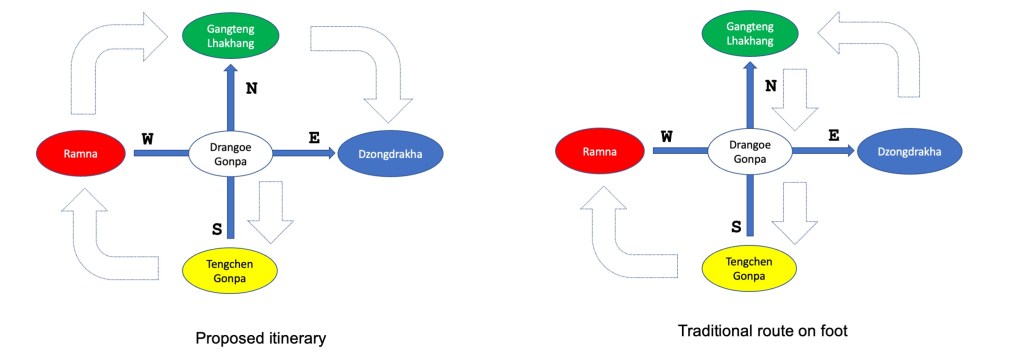
Paro is believed to host all the Tsheringma sisters, making it a prosperous valley. The sacred abodes of the sisters are Dzongdrakha (Tinghi Zhay Zangma – Deity of the East), Paro Gangtey Lhakhang (Talkar Dro Zangma – North), Drangoe Gonpa (Tashi Tsheringma – Centre), Tengchen Gonpa (Miyo Lang Zangma – South), and Ramna (Choepen Drin Zangma – West).
The cult of Tsheringma is not just Paro or in Bhutan but across many Himalayan cultures and communities. For example, Mount Everest, the Sherpas believe, is the abode of Miyo Langzangma – second eldest of the Tsheringma sisters. Thus, every Sherpa who climbs Mt. Everest prays to Miyo Lang Zangma, for safety and for protection.
While every Tsheringma sister is as good as the other in terms of bestowing protections and blessings, there are few subtle differences. If you want a long life, go to Drangoe Gonpa. If you want to ward off some health issues, Paro Gangtey is the place. If you want to ensure you don’t go hungry and want prosperity, head for Tengchen Gonpa. If you want offsprings and your clan to increase, Ramna is good. And lastly, if you are in dilemma over something – a new career, job, or business – in that you are unsure of what do, go to Dzongdrakha and roll the dice. This is just to simplify things for easy reference. What is as important, and as powerful, is your faith, devotion and mindset that should be attuned to ultimately use your health and wealth towards service to humanity and to dharma – and not to enrich yourself for hedonistic purposes.
Also while there’re no religious requirements, it is believed that if one visits all the Tsheringma sisters in Paro in one day, you receive the highest blessings and you will prosper.
Dzongdrakha
Dzongdrakha is in Lungyi gewog. From Wochu, take the highway to Haa. When you reach reach the plateau where Druk Seeds farm is located, you can see Dzongdrakha on the left mountain, pasted on a vertical cliff like Taktshang. The feeder road to Dzongdrakha starts at the end of the plateau.
In the 15th century, a Tibetan yogi, Drupthop Gyempo Dorji followed his master in search of a place called Zhungphug in Bhutan. When he reached the present day Wochu, a jackal appeared to show him the way to the rocky cliff.
Legend says that the Guru appeared in person and passed him a crystal sword, with which he struck the rockface. A crystal stupa and three egg-shaped relics of Sangye Yoesung (Buddha Kashyapa) were revealed. Two of the relics flew off. One was taken by the divinities, and one by the subterranean beings.
The half-stupa of Dzongdrakha
Drubthop Gyempo Dorji was leaving with the relic of Buddha Kashyapa when the people of Bongdey forced him to stay. He, therefore, called the village Bangdey (dominant village), which later became Bongdey.
He returned to Dzongdrakha and constructed a temple and installed the remaining relic and named the place as Dzongdrakha Goemba. His reincarnations started the Dzongdra Choeje lineage, who are still alive today.
The most prominent among his followers was the 17th century lama and the first Rinpung Lam Neten, Jangchu Zangpo. He renovated the main temple with Guru Padmasambhava as the centre piece.
He also built a chorten (stupa) to secure the relics that trembles during the auspicious days. The chorten is curiously only half-built as the top one-third is believed to be in the realm of gods and the base is in the subterrains of the nagas. Legend says one day it will either fly away or drown in there.
Dzongdrakha is also the starting and the end point of the famous Paro Tshechu. A 7-day festival was initiated in Dzongdrakha but was moved to Paro Rinpung to attract more devotees. However, one of the masks (used for the religious dance) became restless and wouldn’t stay still till a compromise was made. The first and last days were then brought back to Dzongdrakha while the remaining 5 days stayed in Paro Dzong.
The mask, a part of Raksha Lengu dance, is still visible in Tsheringma temple.
Tsheringma Temple
Dzongdrakha is the abode of Thinggi Shyal Zangma (མཐིང་གི་ཞལ་བཟང་མ་ ) where a separate temple is dedicated to her. One can wish for victory, charm and safe journeys. She holds a silver mirror, for divination, in her right and a banner of victory in her left hand. Her mount is a mare.
Lam Namgay of Dzongdrakha adds that Dzongdrakha is more than that. He says that ancient terma scriptures talk about Guru Dorji Drolo hiding the Tsheringma Ter (sacred relics) in Dzongdrakha. Furthermore, Dzongdrakha has a Ter statue of Tashi Tsheringma (བཀྲ་ཤིས་ཚེ་རིང་མ་), which they named as Dokar Jom and which was found in the fields below. This makes Dzongdrakha a very powerful abode of Tsheringma, to the extent that if one really cannot visit the other four sites, one can just visit here and make their wish.
Paro Gangtey Temple
Gangtey Temple is to the right at main gate of Hotel Gangtey Palace, facing Rinpung Dzong. From Taju take the feeder road towards Hotel Gangtey Palace.
The Gangtey Palace Temple is dedicated to the youngest of the Tshering Chhe Nga (The Five Sisters of Long Life), Talkar Dro Zangma. The temple faces the Paro Rinpung Dzong and it is believed that the paddy fields of Chang, which stands between these two important spiritual places, will always have a bounty harvest.
Talkar Dro Zangma (གཏལ་དཀར་འགྲོ་བཟང་མ་) is depicted holding durva grass (medicinal) in her right hand and a snake noose in her left hand to protect one from bad energy and sorcery. And so she helps fight off diseases, envy and sorcery. Her mount is a dragon.
Talkar Dro Zangma is the most beautiful of the five sisters, so says the caretaker, Pemba Tshering. She holds a bunch of the medicinal Durva grass on her right and a snake noose on her left. These signify that she has the power to cure diseases, if one earnestly have faith in her. Pemba says a mother bought a dying child who was given even by the doctors. A few months later, the child and the mother returned again. This time the child was unrecognizable, but cured and healthy. Pemba Tshering shares many other stories.
Talkar Dro Zangma with her snake noose also prevents malicious attacks both from humans as well as harmful nagas, losing one’s life force or fall sick. She counters natural disasters and epidemics, and so during the on-going pandemic more people have visited, as per Pemba.
The most interesting blessing is however the blessing of a child to childless couple. Pemba has many stories but there are two that are worth mentioning. First is a 46-year old woman who even at a such an advanced age didn’t give up the dream of motherhood. She became a mother. The second is a similar case but little more bitter sweet. The woman who wished for a child had a daughter but died few years later. The daughter who is now fully grown up considers Talkar Drozangma as her mother and visits here every month. Few more people do that too.
Drangoe Gonpa
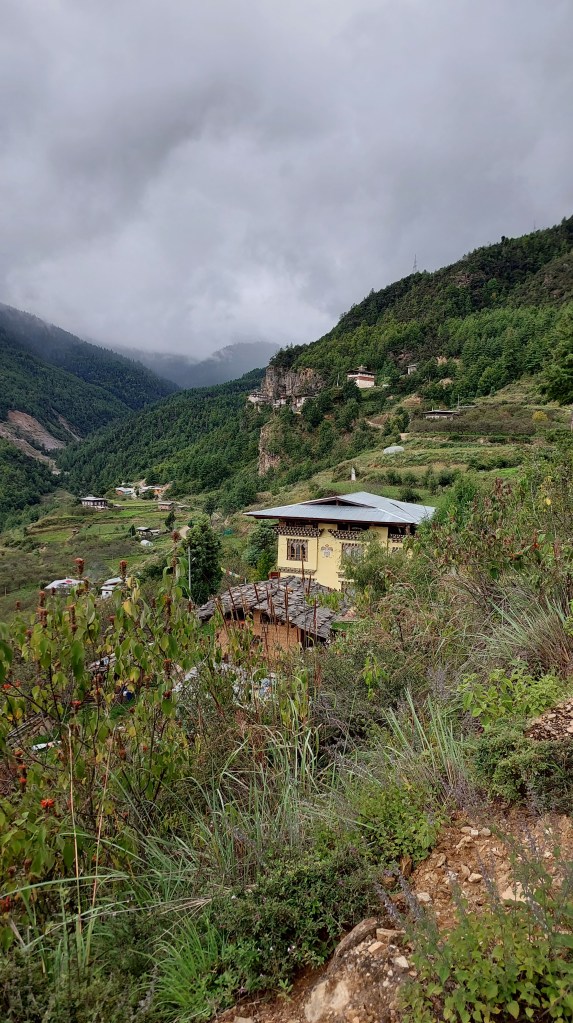
Drangoe Gonpa is located above Olathang Hotel and Paro Hospital. When you reach Hotel gate, take the left feeder road without entering the hotel complex towards “Olathang School”. The Gonpa can be seen from Olathang School on the hill to the right.
Drangoe Gonpa was established by Barawa Lama Gyeltshen Pelzang in 1510. It was later turned over to Drukpa Kagyu with Jinpa Gyeltshen as the chief abbot. Tashi Tsheringma (བཀྲ་ཤིས་ཚེ་རིང་མ་), who is the eldest of the Tsheringma sisters, was the tutelary deity of the Barawa Kagyu, a subsect of the Upper Druk (Toe Druk) in Tibet. And Drangoe Gonpa was built in her honour. However, after the death of Barawa Lam, his disciples made the statue of the lama and the Kudung chorten as the centre piece of the temple. But for locals of the village by the same name, the place belongs to deity Tsheringma and in her they seek protection and prosperity.
The temple was offered to Zhabdrung Ngawang Namgyel who then appointed Namkha Gyeltshen as the first abbot from Zhung Dratshang.
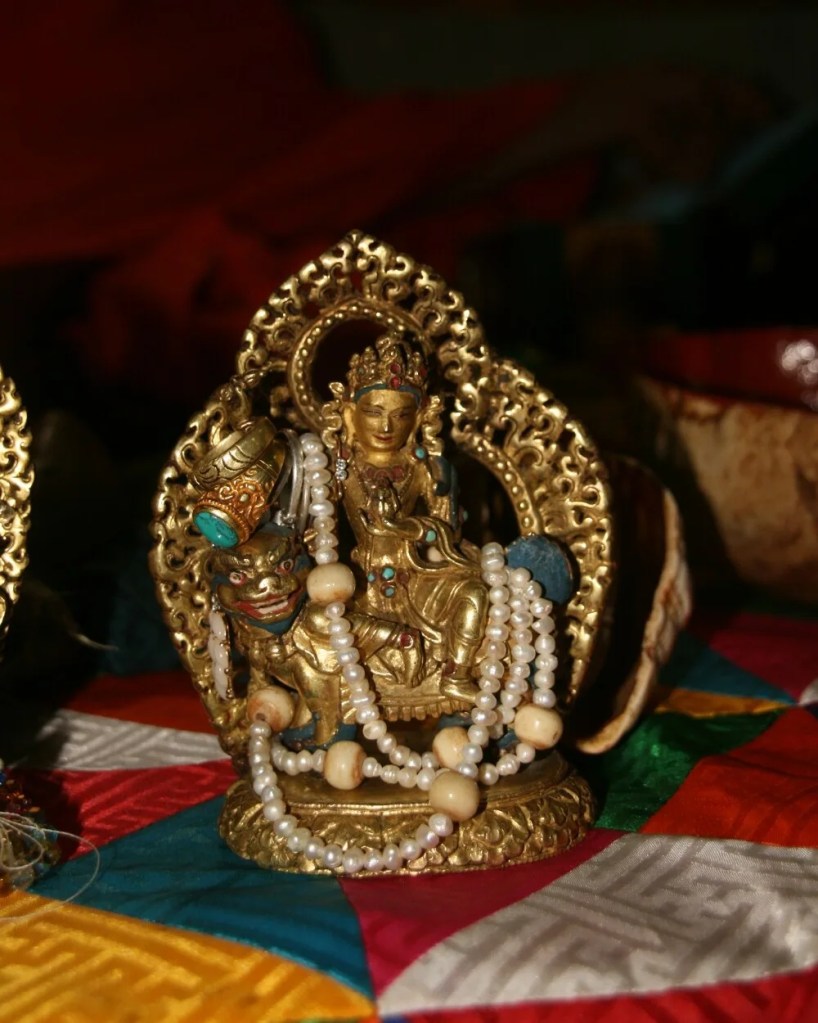
Tashi means “goodness” or “auspiciousness”. She hold on her left hand the vase of immortality and thus her main power is the granting a long life to devotees. On her right hand is the sacred vajra to repell all threats to life. Her mount is a snow lioness. Thus when one visits Drangoe Gonpa, one can wish for long life and commit to spread the Dharma.
According to Lam Kado, the abbot of the temple, if one pursues the pilgrimage to all the temples of the Five Tsheringma, one must either begin or end in Drangoe Gonpa, because Tashi Tsheringma is the eldest sister. He added that children born in Paro Hospital consider Tashi Tsheringma as their birth deity.
I would add that people hospitalised there could do well to seek the blessing for quick recovery to Tashi Tsheringma.
Tengchen Gonpa
Tengchen Gonpa is in Lango. From Paro town take the direction to Naktsel Resort. After a kilometer, take the feeder road marked “Tengchen Nunnery”.
Tengchen Gonpa is the abode of the second youngest of the Tshering Chhe Nga, Miyo Lang Zangma (མི་གཡོ་གླང་བཟང་མ་). She holds a bowl of rice on her left hand and a mongoose on her right that spits jewels. Her mount is a tiger. A devotion to Miyo Lang Zangma guarantees that you will never go hungry and will always bless you with a bountiful harvest and prosperity. The resident Lama, Thinley, says that Paro is the rice bowl of Bhutan because of the blessing of Miyo Lang Zangma.
The foundation for Tenchen Gonpa as the abode of Miyo Lang Zangma is attributed to Barawa Lama, Gyaltshen Pelzang, who had already established Drangoe Gonpa in the 14th century. It is believed that a small Densa (abode) was built by the Lama after which he invited the deity. Miyo Lang Zangma travelled from Tibet and when she reached Lango village, she spent a few days in a house helping the family to roast the wheat and grind the flour. The house still stands today. In fact the house has to host the religious procession statue of the annual deity ceremony on the eve of the Lomba – the local New Year of Paro.
Some four hundred years later, in the 19th century Sherub Gyaltshen, the 25th Je Khenpo of Bhutan, heard about the abode of Miyo Lang Zangma and wanted to verify the claim and possibly build a temple. He visited the place alone and was supposedly greeted by five beautiful girls. Je Sherub suspected that they were the deities and not ordinary humans, but pretended not to know and asked their names. One replied that they had only one name for all five, which was Mangala Rani (a Sanskrit term for deity). He then decided to build a temple and sent instructions to Rinpung Dzong to rally the people and resources. The gonpa was completed in 1849.
Miyo Lang Zangma vowed to protect people’s wealth and property – or help procure them. If you are financial luck is to be dim, maybe a visit to Tenchhen might help.
Ramna House
Ramna is not a temple but a private house in Dop Shari. From the town go towards Paro Dzong. At the second bridge, do not cross it but go straight. It is the second house on the left after 300 meters from the bridge.
Ramna House is where Chöpen Drin Zangma (ཅོད་པན་མགྲིན་བཟང་མ་) took residence. She is depicted holding a wish-fulfilling jewel in her right and a jewel encrusted casket in her left hand. Her mount is a doe. And thus she is believed to help with fulfilling any wish – be it for having offsprings or wealth.
According to former gup Dago, Choepen Dri Zangma, is the youngest of the five sisters and this is where the pilgrimage ends. “In some Internet sources Choepen Drizangma is associated to Dzongdrakha, which then leads to confusions of where to start and where to end the pilgrimage, “ he adds.
According to the family, there is no record as to when the deity landed in their house. They can trace to seven generations that have hosted the deity. What they know is that the five Tsheringma sisters first landed in Paro and met for one last time on a big boulder, near the house, before each of them parted ways. The big boulder is still visible today just before you reach the house. Choepen Dri Zangma heard that a woman in the house nearby needed help to deliver a baby and she offered to help. After that she made the house her abode.
Choepen Drinzangma is the all-purpose Tsheringma. If you have been having bad dreams, or omens, or if you are launching new projects, getting into marriage, having a baby or trying to have one, or have a new born child, she is the go-to Tsheringma – the wish-fulfilling one.
Recommended itinerary
There are several versions as to where to start and where to end the pilgrimage. I conducted a detailed pilgrimage and some research to all the sites last year. My suggestion is, visit in this order: Drangoe Gonpa, Tengchen Gonpa, Ramna House, Paro Gangtey Lhakhang, and Dzongdrakha Lhakhang, so that we follow the traditional kar-ser-mar-jang pattern.
Or simply, just visit Dzongdrakha, which is believed to house the three aspects of devotion and reverance – Ter (relic), tehn (inner relic) and nye (sacred place).
Or if you are walking, follow the traditional itinerary, which starts from Dzongdrakha and ends in Ramna.
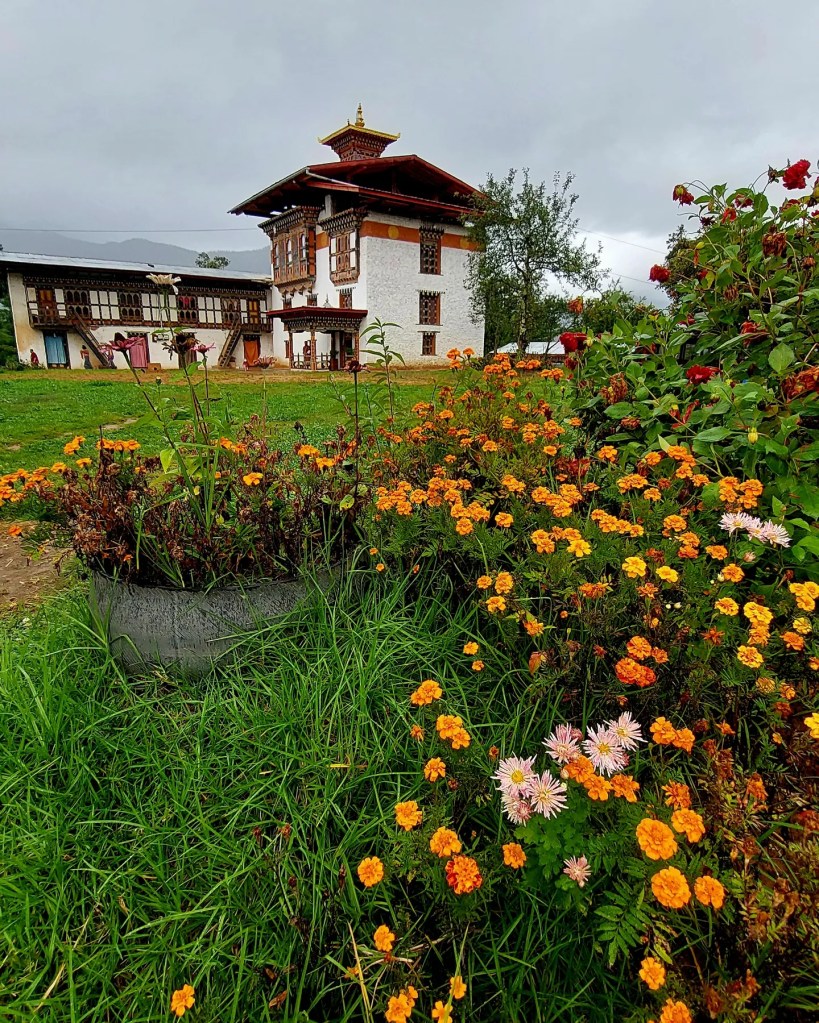
Dzongdrakha from the highway(The relic statue is a file picture from Ugyen Guru in Pangbisa, Paro)Tengchen Gonpa in Lango is the abode of Miyo LangzangmaDrangoe Gonpa, above Olathang Hotel is the main Tsheringma templeRamna House belonging to former Gup, Dago, hosts the youngest TsheringmaDzongdrakha. Tashi Tsheringma templeTsheringma sisters and their retinue, mural in Kenchosum Temple, Bumthang
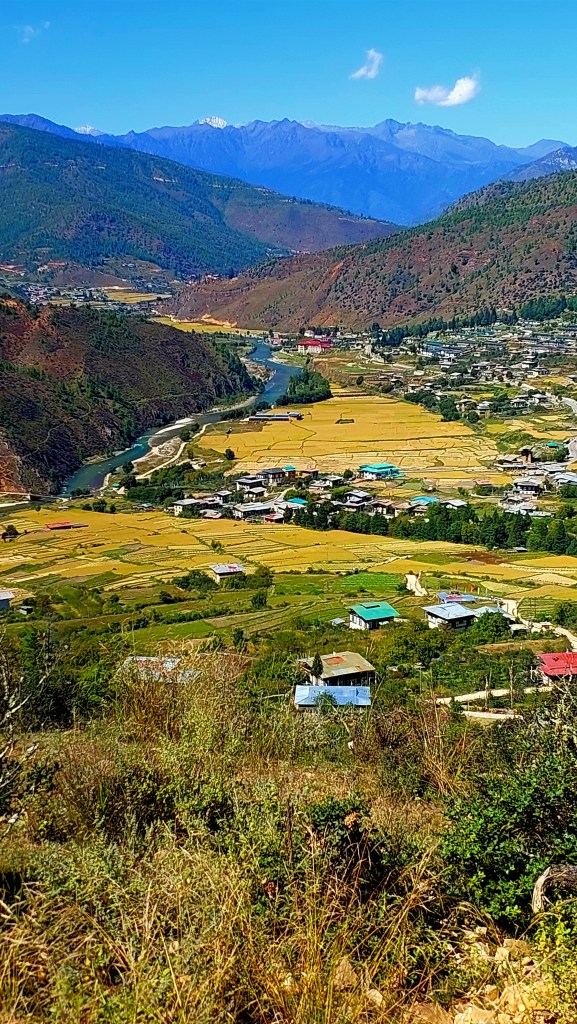
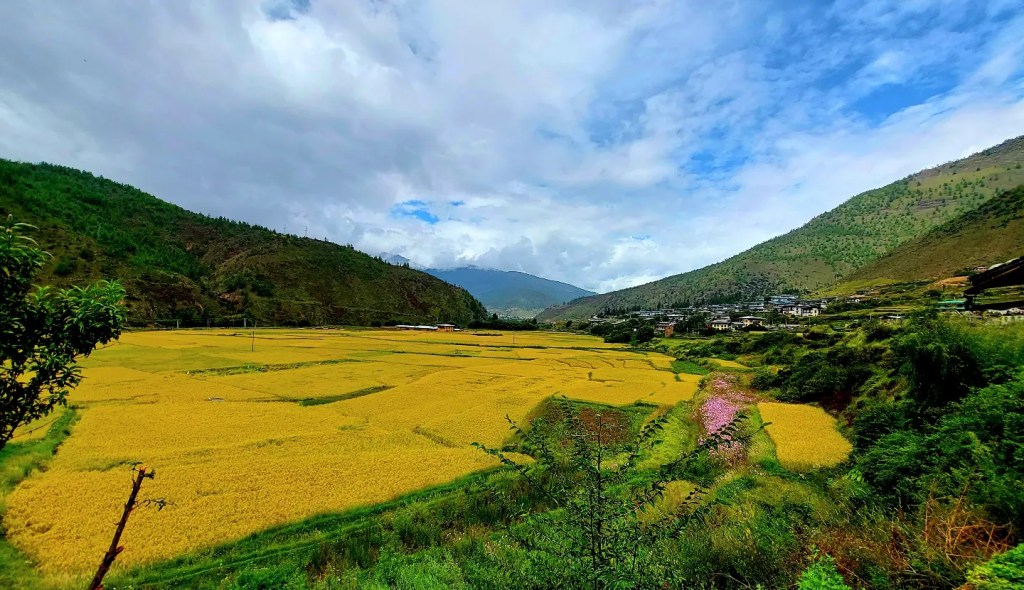
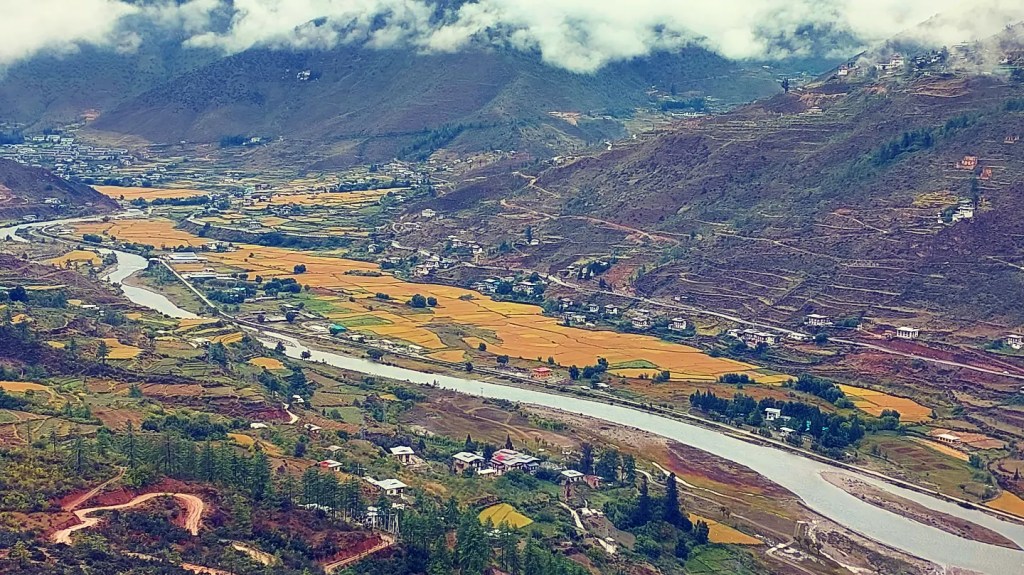
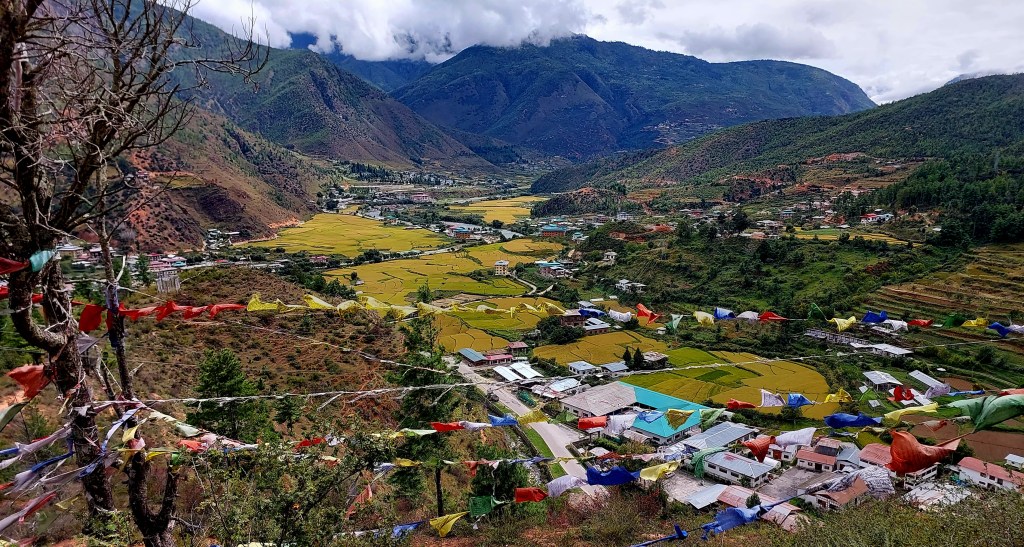
Paro is one of the most fertile valleys in Bhutan, and also the most productive with the best worked paddyfields in the country. People are very hardworking around here.
There is also another reason. Honour.
It is a disgrace to the family if the fields are left barren. However, with rising wages and declining rural population it is increasingly becoming difficult, if not impossible, to maintain this beauty.
If no policy interventions, such as providing state subsidies or intensive mecchanisation are initiated, it won’t be long before these flatlands turn into barren lands like in much of eastern Bhutan.
It will be just this generation who will hold on to that family honour or dignity – or whatever is left of it.
There is, of course, more than the family honour and pride, as to why we need to preserve this rice farming tradition in Bhutan.
It is cultural
Every plantation season and the harvest are accompanied by age-old rituals and traditions that make Paro, and other farming communities, the site of important cultural heritage and practices. Such cultural traditions shape individual identities as Bhutanese.
According to some culture studies scholars, throughout Asia, rice is still considered a sacred crop and “the ritual of harvesting rice has shaped Southeast Asian cultures and tradition for centuries.”
It is social
The activity of rice farming requires many hands. It thus brings people together. One theory as to why Asian countries and cultures are communal and family-centric is because of rice farming. Unity, communal harmony, collaborative mindsets will be lost if rice farming disappears and in its place will be individualism, ego and divisions.
Writing for the Scientific American, psychologist David Biello shares a study from China where they found that “the cooperation required to plant, tend and harvest rice grown paddy-style makes those born in southern China think more communally than those born in northern China, where the primary crop is easier-to-farm wheat.”
It is spiritual
Rice farming is not a random activity. You cannot pick a random date to start ploughing the fields. The community decides based on the advices of astrologers as to when the earth can be disturbed. Accordingly a lama kicks off the plantation season with a ceremony to mother earth, and only then the community can start tilling the mud.
Likewise the first harvest, which consist of a bowl of freshly ground rice, is offered to deities and divinities, as a mark of gratitude for their protection and blessings. The reverance for earth, the power of reciprocal blessings and the aspirations of the lamas and the farmers will eventually strengthen the spiritual equity for future generations.
Rice, therefore, is not just a Ministry of Agriculture issue, but a national one, if one can understand, and appreciate everything that revolves around it.
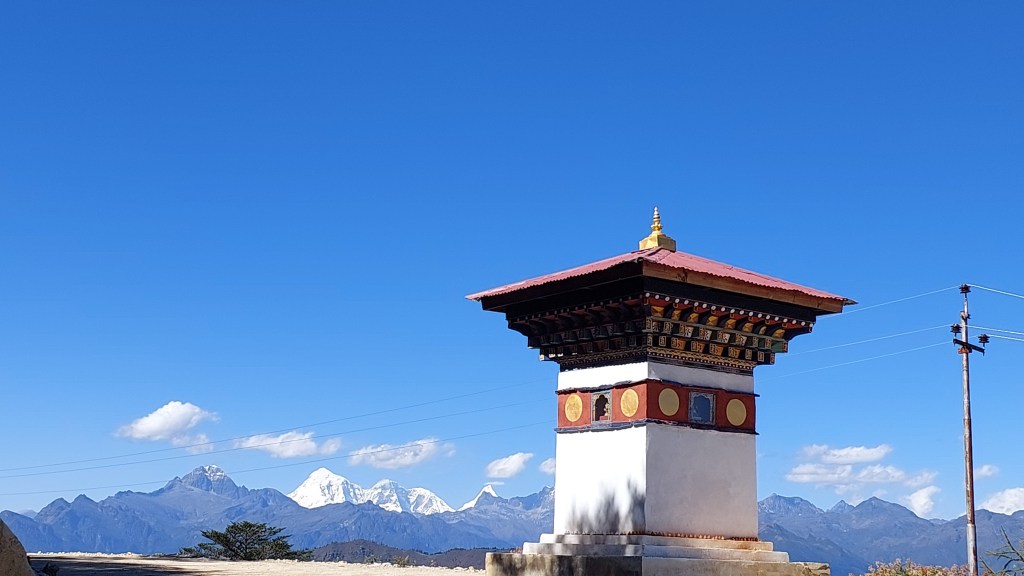
The high Himalayan mountains have been known to the locals around them as the abodes of the divine. For example, Mt. Jumolhari and Mt. Tshering Khang (the two left peaks in the picture) are considered the abodes of Jumo Tashi Tsheringma, the longevity and prosperity deity revered in Vajrayana Buddhism.
Mountain dwellers, all over the Himalayas, especially those living in high altitudes such as the Sherpas in Nepal and the Layaps in Bhutan make daily offerings to either appease them or seek her blessing. Likewise, other high peaks and even lower mountains are the spiritual sanctuaries of a pantheon of Vajrayana Buddhist gods and deities making the region highly sacred.
In recent years, many Tibetologists and anthropologists working in the Himalayas are questioning this concept based on the local terminology and the related translation. Some argue that something has been lost in translation since the “mountain deity” does not appear in any scriptures in Tibetan Buddhism. Instead there are many references to “divine mountains” such as lhari (ལྷ་རི་).
The question is: are some of the mountains deities themselves?
To cite an example, the three sacred mountains in the main Haa valley, in western #Bhutan, locally known as Meri Puensum (Three Divine Siblings) are revered as the embodiments of the three bodhisattvas of Jampelyang (Manjushri), Chana Dorje (Vajrapani), and Chenrizig (Avalokiteshvara).
Divine mountains and the mountains of the divine are, therefore, two different concepts altogether and proper understanding of this concept is key to understanding on how traditional communities in Bhutan and the Himalayan region make sense of the places. In fact the conventional wisdom of the local respect for nature, and living in harmony with environment is drawn from this belief, which if contested or discounted would have profound impact on the environment itself.
Coming back to translation, for instance, “Tsen” is translated as “mountain deity”. The translation does not hold when it is translated back to Dzongkha, which is necessary for a translation to hold water.
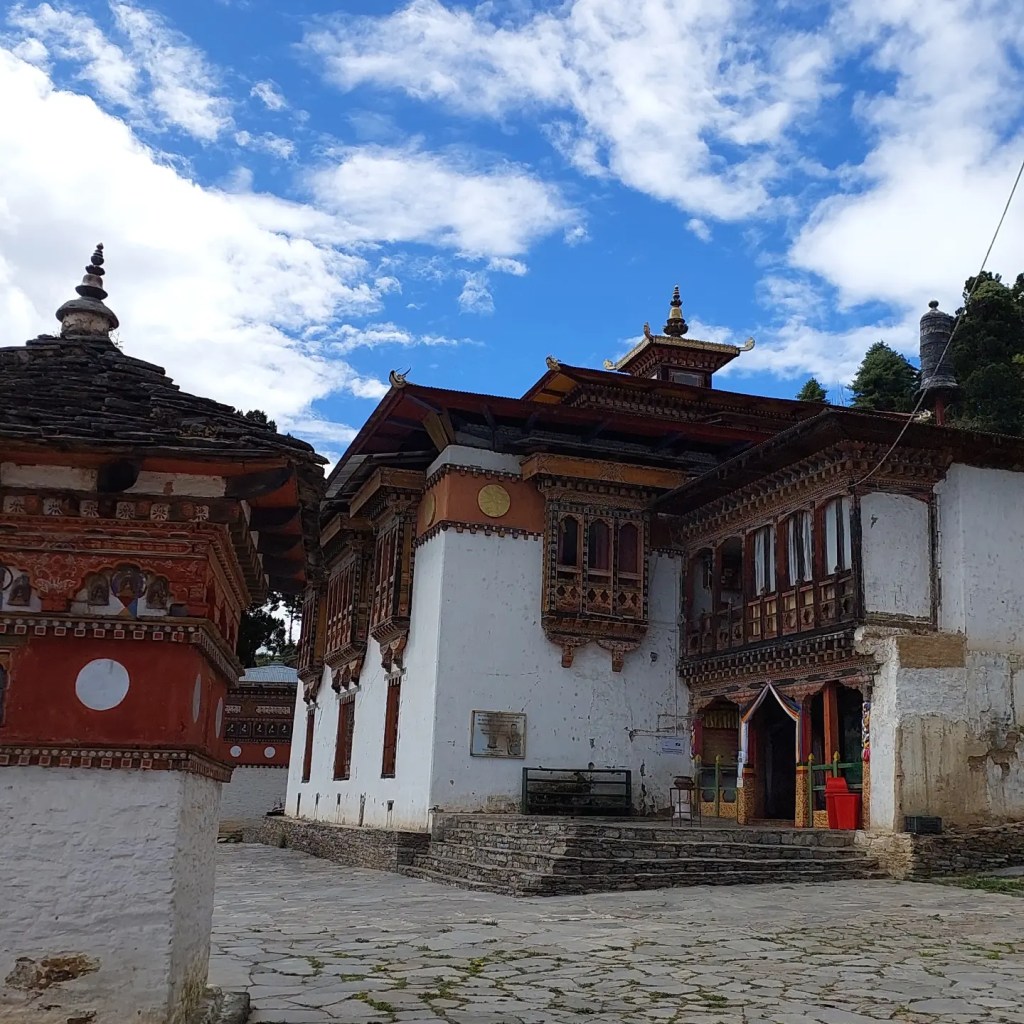
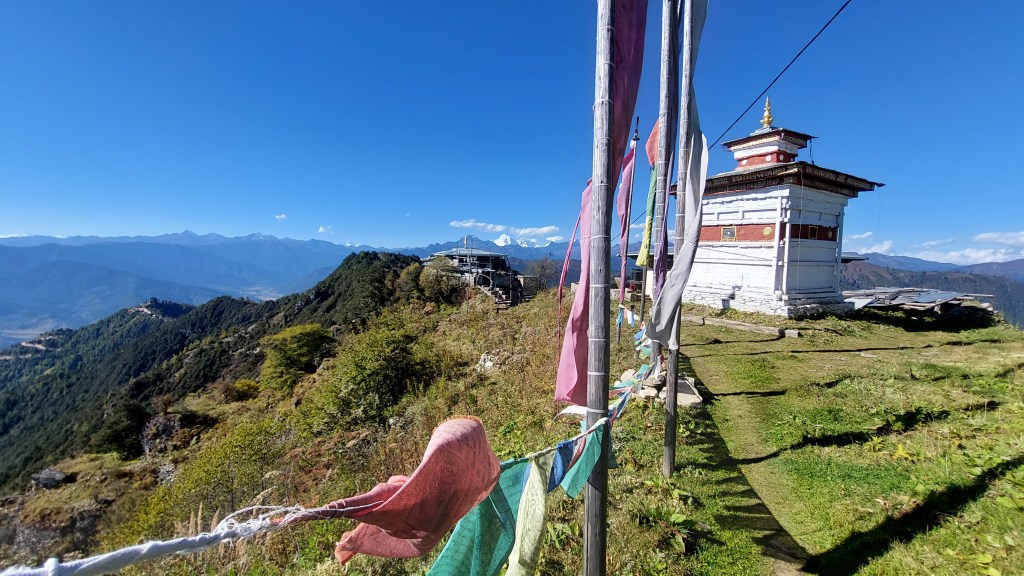
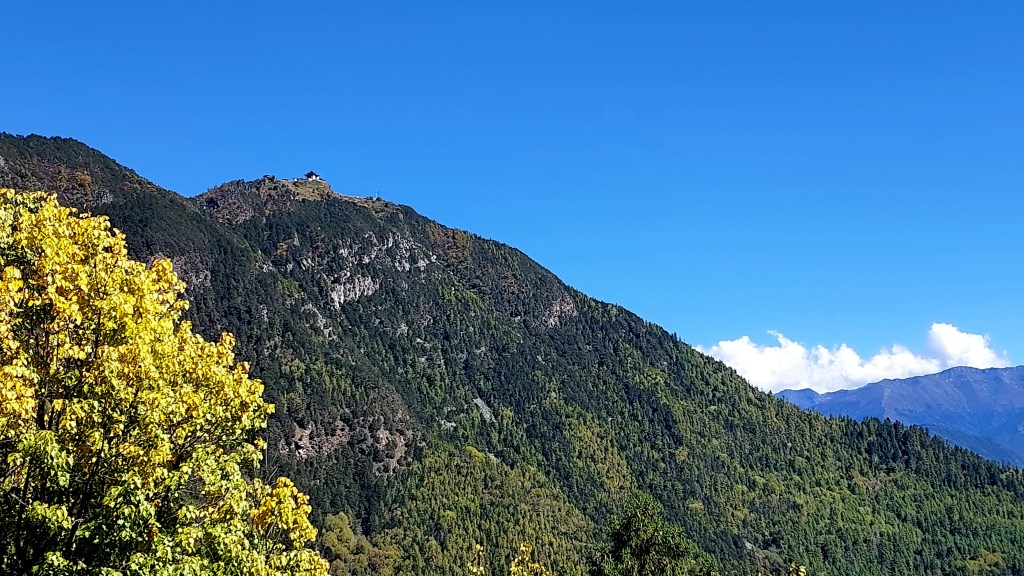
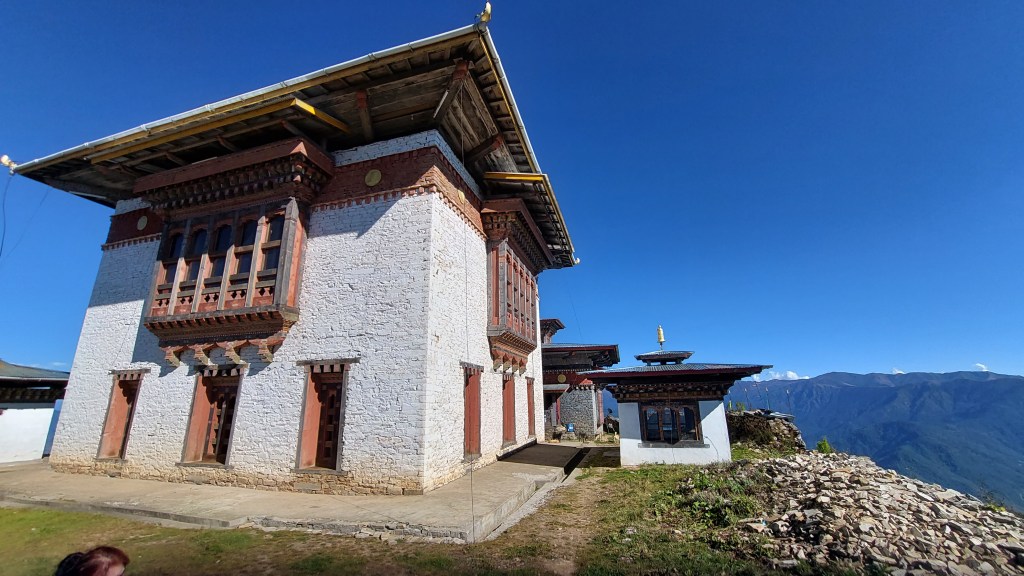
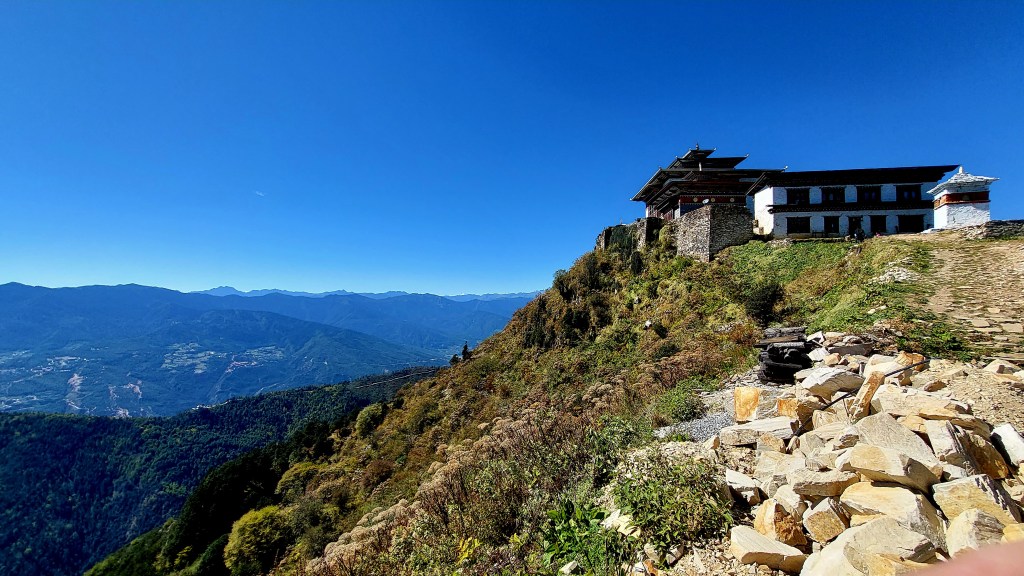
Dongkala (also written as Dongkarla) Gonpa was established in the 16th century by Terton Tshering Dorji, who was a student of Drubwang Rinchen Choedor of Mendrup Gonpa.
Story has it that Drubwang Rinchen Choedor, who was the resident lama of Mendrup Gonpa, saw a fireball on the peak of Dongkala, which was unusual. He instructed Tshering Dorji to take a hike up and check out.
Terton Tshering Dorji found a ter (sacred relic), which was discovered by Terton Pema Lingpa from Mebar Tsho (Burning Lake) and which had flown in to Dongkala. This ter known as Thongwa Dondrub (Wish-fulfilling on Seeing) can be seen in the main altar room on the top floor, today.
In the same altar room of the temple are the urn, which the infamous thief wanted to steal, and the Kaypi Marmey (Eternal Butter Lamp), which has been burning since the foundation of the temple in the 16th century. A kudrung chorten (memorial stupa) of Terton Tshering Dorji is on the left side of the altar, and believed as wish-fulfilling stupa.
And then my favorite – the rescued statue of Guru Padmasambhava, which came from another temple in the area. Apparently, that temple was caught by an accidental fire and the statue cried for help to rescue it. The statue is believed to have been brought by a single person, despite its size.
Dongkarla is also the abode of the powerful mountain deity Dongko Tsen, Lotey, who according to one story prevented a thief from stealing a sacred urn from the temple. The thief got his hand stuck on the vase. Desperate to leave when dawn broke, the thief chopped his wrist and escaped leaving behind his severed hand. The mummified hand is still visible in the goenkang today and is a main attraction for the visitors.
While the Zhung Dratshang manages the gonpa, the goenkang (altar room of the guardian deity) still maintains the dharma protectors of the Peling tradition, such as Gonpo Maning Nagpo, and the daily propitiating rituals are conducted in their honour. The goenkang also has mural paintings of several local deities such as Genyen Jakpa Melen, and Dongko Tsen Lotey.
Dongkala is the most beautiful viewpoint in the Thimphu-Paro region. On a clear day, you can see as far as Mt Kanchenjunga to the west (Nepal-Sikkim border), and Mt. Jumolhari, Tsherim Khang, and the most beautiful Mt. Jichu Drakey to the north. To the east, one can see the Table Mountain and Mt. Gangkar Puensem, the highest unclimbed peak in the world. To the south, you can see Takti Peak.
Mendrup Gonpa
A visit to Dongkala is, of course, incomplete if one does not visit Mendrup Gonpa, which is on the hill below. This is because the two temples were respectively founded by the Lama and his disciple, and thus the sacred Lama-Loma Damtsig is a powerful source of blessing and inspiration.
Mendrup literally means “Medicine Making” and is named after Drubwang Rinchen Choedor, who was an accomplished medicine maker. Even today, the stone grinder he used is believed to possess the power to cure skin diseases and muscular pain.
Mendrup Gonpa was founded by Drubwang Rinchen Choedor, who was a prominent disciple of Terton Pema Lingpa. In fact he was assigned to the western regions of Bhutan by Terton to hold the Peling tradition.
It is believed that Drubwang Rinchen had hundreds of students, some of whom were the likes of Terton Tshering Dorji, who established Dongkarla; terton Ngawang Drakpa, who established the Neyphu Gonpa; and Lam Sangay who built Jabdho Gonpa.
Mendrup Gonpa is still under the patronage of Gangtey Trulku Rimpoche, the mind reincarnation of terton Pema Lingpa, while Neyphu Gonpa is under the spiritual leadership of the line of reincarnation of Ngawang Drakpa, referred to as Neyphu Trulku.
The centerpiece of Mendrup Gonpa are the stone grinder, and the footprint of the Drubwang.
Getting there
At Shaba Bridge, on the Paro-Thimphu highway, take the dirt road to the left and drive upstream. And follow the sign to Yuthok Gonpa first, and then continue uphill and drive past Dra Karp.
The first temple to the right is Mendrup Gonpa. From there you will see Phurdo Gonpa on the left and Dongkarla on the right peak