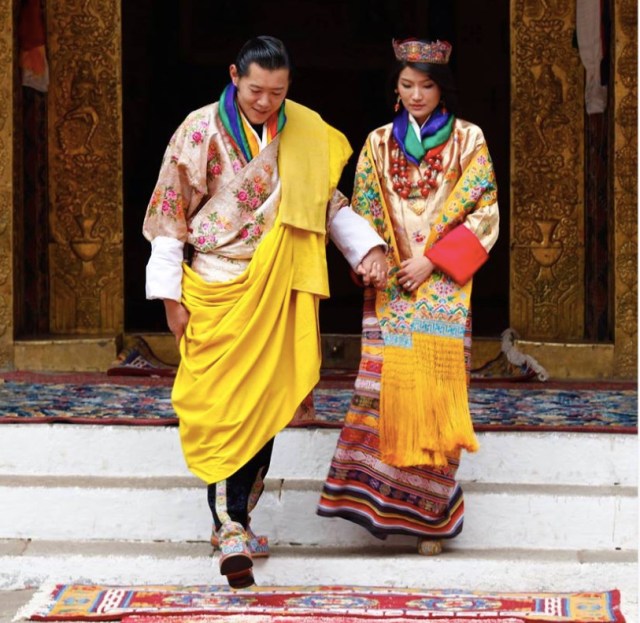
Today marks the Sixth Anniversary of the Royal Wedding of His Majesty the King 🙏🙏🙏
On this day, six years back, as the whole country celebrated the joyous and historic occasion of our time, and when half the country plus foreign dignitaries and over 400 foreign press had gathered in Punakha for the Day, I was busy playing the bad cop. I was the Director of the Royal Office for Media back then. I was shouting at unauthorised people from taking pictures, cautioning foreign photographers from getting too close to the Royal Couple, responding to questions from the press on the significance of each of the lengthy ceremonies and also making sure that some of the regional pressmen who had entered the country were sticking to their script. While my job was often underrated by my peers, for me it was extremely important and tough. I felt I had to balance between the sanctity of the occasion with the new openness of democratic Bhutan (people want to take selfies and have autographs of the King and Queen – something unseen just few years before) and the desire to have extensive media coverage of the global press (that would add to our sovereignty) while keeping the event “simple” – as per the wishes of His Majesty the King.
By the end of the day I was obviously on the verge of collapsing – tired till my last muscle. I was also starving (I didn’t get anything to eat the whole day) and totally dehydrated. Still after the ceremony I managed to drag myself back to the main prayer hall of Punakha Dzong where I offered my gratitude to the gods and deities for the successful proceeding of the day’s event. As I prayed, I also burst into tears and cried silently – perhaps feeling relieved from the stress and tension that I was carrying inside for over six months since the Royal Wedding was announced. My job, as I said, was already tough. Many other unnecessary circumstances made them worse – and sometimes impossible. So I was glad that it was over – without any major failure. After wiping my tears I sat down reclining myself on one of the pillars of the Kuenra (Great Hall of Prayers) for a what I thought was a few minute power nap. But I dozed off for over an hour to be only woken up by a monk who had to close the temple.
Although 2011 was the toughest year for me (that year also saw three State visits – to Bangladesh, India and Japan where I had to play my parts to pitch the stories to the cynical pressmen in three very different countries), I look back at this Day with the greatest sense of fulfilment as a professional. Bhutan had the biggest presence of foreign media in its history and received not only the most extensive coverage but also positive. For decades since the early 1990s some of the foreign media outlets have not been too kind to us. In their eyes Bhutan was either a Shangrila or a human-rights abuser. We were, and we are, neither. I gambled to invite some of these same media for the event although officials from the foreign ministry cautioned me. We managed to give our perspective and tell our version of the story.
I also look back with great fondness and, needless to say, deep respects for both Their Majesties for not only bestowing me the lifetime opportunity and privilege of serving them but also for forgiving many errors and mistakes I made in the course of my duty at the Palace. I wasn’t perfect.
Today wherever I travel people (especially foreigners) often compliment them as the most beautiful royal couple in the world. I always contend that Their Majesties are more than that. They have the most beautiful hearts too.
Happy anniversary, Your Majesties. 🙏🙏🙏
May Your Beautiful Hearts inspire and guide not just our beloved country but our region and the world as it goes through the most uncertain times in modern history.
Dechenphu is located at the north-end of Thimphu Valley. The place is important for two related reasons. First, the name, Thimphu – Bhutan’s capital city, is derived from a rock in front of the temple where according to the legend, the Protector-Deity, Gyenyen Jagpa Milen, is believed to have entered or sunk (Thim in local language) into the Phu (hill). The rock that can be seen today has a shape of hill. The second reason of importance is that the temple is considered as the principal abode of the Protector-Deity.
Aap Gyenyen, as he is fondly called (Aap means father, elderly man in Dzongkha), is considered a very powerful deity whose protection one seeks and is believed to be bestowed almost instantly. Hence, the place is very popular among people venturing on long journeys, among students appearing for exams, among businessman making decisions, with politicians contesting in elections, etc.
My story with Aap Gyenyen goes back to 1996. I was freshly back to the country after a long sojourn in Italy. I was young, brash, western-educated and so, a bit of a non-believer since I was trained in scientific fields. However, on the insistence of my father, I went to seek the protection of Aap Genyen for a trip to Singapore – my first trip abroad in my new job.
After completing my rituals of prostrating three times and receiving the holy water, which I seeped some and wiped the rest on my head, I sought the divination by throwing the dice. The first one went bad. I had an unlucky number. I was asked to give a second try. I did. Bad number again. The caretaker-monk said I could try three times. I was getting bit nervous by then and asked how I could get a good one. “You can promise something in return, like, you can offer a butter lamp or conduct a ceremony,” he replied. I made a deal with Aap Genyen and threw the dice for the third time. This time I hit the perfect 11. “What does this divination mean?” I asked the monk. “Well,” he replied, “You have his protection. You will be alright. But you have to be very careful in whatever you are setting out to do.”
I travelled to Singapore where the hosts picked me from the airport and accommodated me into a five-star hotel. However, on the very first day of my week-long stay, I was hit by a food poisoning. I was vomiting, I had diarrhoea, giddiness; I felt my stomach was hit by a car and anything I ate was turning to water and draining out without even stopping for a minute in there. Fever was rising and I even fainted once in the toilet. I thought I was going to die. I missed the first two days of the seminar and was sick for the rest of the week.
Finally, on returning home I visited Dechenphu again and told the monk what happened. “I told you to be careful,” he brushed aside with a smile – of having successfully foretold my fate.
Now 21 years on, I always make sure to visit this place before I venture out on anything important that I do in my life. Over the years my relationship with Aap Gyenyen has become as human as it can be. I rarely throw the dice. Rather in my prayers, I tell him to look out for me (“That’s you job, my friend,” I whisper) and that if there was anything I could do, or he needs, he just has to tell me. 21 years on he has been more than willing to keep me and my family safe.
I encourage my children to follow me. And they religiously visit Dechenphu on the onset of every important decision in their life. I named my second daughter, Dechen, after the temple and have placed her under his protection.
The place also hosts lots of chicken and animals that have been released to save from slaughters. This act is called Tshethar (releasing the life)The view from the temple towards East is simply breathtaking
(In this third and last part, I highlight the need for the society to slow down and reflect – and for the traditional media such as radio, TV, and newspapers to be proactive and not reactive. This article is an elaboration of the talk in Romania)
A story goes that a Rabbit was sleeping under a tree and dreaming of the world ending in front of him. He suddenly woke up, and thought: “What if the world really should collapse? What would become of me?” At that instant, a coconut fell on the ground. On hearing the noise, the Rabbit was like: “The world is really blowing up!” And he jumped up and ran just as fast as he could, without even looking back to see what had made the noise. Two deer saw him running, and called after him, “What are you running so fast for?” “Don’t you know? The earth is all breaking up!” he replied. And on he ran, and the deer followed him when they heard that the earth was all falling apart. They passed a fox, calling out to him that the earth was all breaking up. The fox then ran with them. The fox called to an elephant to come along because the earth was all breaking up. On and on they ran, and all the animals in the forests joined in the running.
The age of Internet has got the world running. We heard a noise and we all started running – and we are still. Nobody is asking what was that noise. Instead, it is speed, speed and speed. Everything at giga bits per second. Faster computers, faster Internet, faster emails and faster cellphones over above the fast cars, fast planes and fast trains that we already have. Even my country Bhutan, in less than a decade, has gone from 2G to 3G to 4G to soon, 5G. But faster to where or faster for what? Nobody knows.
The irony is that the traditional media, such as the radio and the television – the original gatekeepers and messiahs, have joined the bandwagon. So, news need to be put on air as fast as possible – and, at times, with accuracy and objectivity severely compromised. At best, the news item is shallow devoid of any context or background. Newsreaders have to read the news as fast as they can. That’s the trend. There is also no time to sit and watch a full bulletin. Hence, many news channels just flash the headlines without the main story. In-depth research is a passé because what is news in the morning is history by evening.
There is a fundamental question that we need to ask. Why are we running?
What do people do with the ‘extra’ time that they have ‘saved’ from whatever they were doing? Do they pursue something that they love, something that they are passionate about, their hobby such as painting, cooking, music or gardening? Do they spend quality time with friends and family? Do they pursue spiritual practices? We often notice that as we drive home, people don’t let others overtake because they want to get to their destination fast. There is growing impatience and anger. In Bhutan, we are seeing a new phenomenon that was unheard before: road rage. Anyway, what do people do after they get to their destination? Back to the fast life, I guess – or just gossiping – in our case.
Second, the prophets of technocracy have promised that the world would be more connected. Physically I cannot refute the claim. Yes, we are connected to everyone in multiple modes – phones, Facebook, WhatsApp, WeChat, etc. We are even connected from 39,000 feet when I am cruising in a jetliner. However, just as there is a big difference between having information and being informed, there is also a difference between ‘being connected’ and reals connections. It is not very unusual to see these days groups of friends gather for dinner or coffee and, instead of talking to each other, would be on their respective phones or gadgets. Where is the connection?
People are unconsciously driven to be restless, impatient and anxious all the time. What will be the long term impact of such behaviours on the human species?
Last, and the most important. As a teacher one of the most difficult tasks in teaching is to grab the attention and retain them while you are teaching. Scientifically, the average attention span was thought to be fifteen minutes. With the world being pushed to be faster and speed being the new normal, our role has become even harder. The attention span of even adults, I assume, has reduced. In academic conferences we are given just ten minutes to present our paper. Some newspapers have asked me to write opinion pieces under 500 words. It is crazy. The impact is not only in classrooms but also in life where people are unconsciously driven to be restless, impatient and anxious all the time. What will be the long-term impact of such behaviours on the human species? Is anyone even asking that question?
Almost every place on Earth and beyond is connected and yet misunderstandings, war and conflicts continue to terrorize not only those involved directly but also those who have nothing to do with the issue. Similarly, there is so much information out there on everything – public health, for example, and yet the world is sicker than ever. Facts and figures are lying around like leaf litters in the forests while campaigns of disinformation and mal-information are very successful – even in the so-called developed world. According to a survey done by a German scholar, 40% of respondents in Europe said that they fell flat for the fake news while the same study revealed that 60% could not separate myths from simple facts.
More connectivity does not necessarily mean more connections. More information does not mean that we are better informed.
What does all this mean? It means that we need to slow down, reflect before moving forward. More connectivity does not necessarily mean more connections. More information does not mean we are better informed. Speed does not mean that we are getting things done well. We need to ponder on what is happening around us. We need to understand what the noise is all about – and stop running unnecessarily.
As is an individual, so is an organisation. The traditional media such as radio, TV and newspaper need to do some deep introspection and retrospection. They need to ask who they are and what is their fundamental role. Can they allow knee-jerk reactions? Is it to get the news faster or is it to give accurate and objective information? Is it whitewash the society with shallow and superficial shows or is it to enlighten the people with deeper meanings so that they make informed choices and make positive changes? I don’t mean that they should be indifferent. What I am saying is that they take time to respond – be proactive – but not reactive. The traditional media should lead – and not be lead. There is no need for them to play the catch up game.
The traditional media should lead – and not be led. They should be proactive – not reactive.
Niel Postman, writing in Technopoly, suggests that the impact of a technology is known only decades after it is introduced. Hence, it is too early to say that social media is bad. The initial studies are not positive. Narcissism, anxiety and loss of human connection, family and community are some of the initial findings. Hence, it would be wise for the social science to catch up and then the traditional media can decide whether and how to join the race.
The opening story ends with the King of Jungle, the mighty Lion, appearing and ordering for the running to stop. Inquiries and investigation ensue that finally lead to the Rabbit who had assumed that the world was falling apart after hearing a coconut fall behind him. The world was not cracking up. It was just an imagination. It was a simple error of not fact-checking.
Hopefully, one day, we would realise that a faster world is not necessarily better, and that, actually, we haven’t even set a destination as yet. Then what are we running for? To get to where?
What is this noise?
~~~~~~~~~~~~~~~~~~~~~~~~~~~~~~~~~~~~~
NB:
(At Centennial Radio 101FM in Bhutan one of the most popular programs in Slow and Easy that plays soft music with some pieces of life quotes. We are starting a Centennial Book Cafe where we will invite listeners to come and relax and have a coffee; to put down their phone and talk to each other; to call their illiterate parents or grandparents back in the village – instead of doing only status updates on social media.)
An additional challenge for teachers – Getting the attention of the students from an already attention-deficit-society
I have been flown half way round the World for a conference in a resort town of Sinaia in Romania – where I have been asked to share my views on the future of radio in the age and world of social media. The session I was placed was titled: Social Media – Destructive or Constructive? Here is what I shared there.
Firstly, to provide some background, the traditional mass media, such as radio, television and newspapers have seen dwindling revenues and audience with the rise of the social media such as Twitter, Facebook and YouTube. The situation has worsened to the that even big names in the newspaper and broadcasting are either closing or struggling financially. Not a day passes without a conference being held somewhere around the globe – where the future of the mass media is being discussed. At no point in the history of modern media that such an existential crisis has hit the sector.
Back to the future?
I don’t know about the newspapers but as far as radio and television are concerned they will survive. Among the two, interestingly, radio is the stronger medium and the most resilient among all forms of media that mankind has invented. While television is powerful, glamourous, captivating and bring the world in front of our eyes, in terms of resilience, I would put my bet on the radio. There is one consumption pattern of radio that no other forms can compete with – passive listening. In other words, radio can be played in the background while one drives or works. It does not take, or need, our full attention nor is it so intrusive like the new forms of media.
The imminent death of radio is a familiar narrative that has been heard before.
Most of the experts and practitioners shared their experiences of dealing with the social media
It was foretold many times in the past. When television was invented in the forties, the catchphrase was that the ‘video killed the radio star’, which also became a pop song. But radio survived. When Walkman was developed in the seventies there was another round of dooms-day prediction for radio. It survived again. The third time was a quite recent – when IPod came into being. In sociology parlance, radio has been the Bobo doll among the media technologies. Every time it was punched, it fell but bounced back – smiling and fully reinvigorated. Radio will be there and will, before we realise, reinvent itself again.
Passive consumption
There is one strength of radio that no other news medium can boast of: passive consumption. In other words, while TV and other social media require your eyes and your ears, radio just requires your auditory senses. So, one can go about with one’s work and listen to the radio. You could also blast it as you drive. This makes radio a very popular medium and perhaps the strength that has saved it from the foretold death in the past. There is no doubt that with the onslaught of the social media, radio will survive because of this strength.
No over-reacting
How the radio should respond and how it is responding have been extensively covered in the works of several practitioners and professionals in the field. What I would like to suggest is what radio should avoid – over-reacting. Every time the radio is given for dead, the radio responds. Understandably. However, one of the most bizarre ways goes to some years back when the radio felt it should become ‘trendy’. So besides the RDS data services there was a great deal of talks on what they called visual radio, where pictures could be added to ‘enhance’ the services. Many seminars and conferences later, someone asked a simple question: isn’t radio with pictures known as television?
One tag line at the conference in Romania was that “the only certainty was uncertainty”. Agreed. And as in life, the best way for the radio to face the uncertain future is to be itself – and not to lose its essence as a powerful aural medium.
(In my next article, I will elaborate the strengths of the TV and radio, which the social media has yet to prove: accuracy, depth and credibility.)
The floors of the holy chambers of Tashichho Dzong were shiny and slippery and so I took an extra care not to put up a faux pas in front of His Holiness the 70th Je Khenpo (the supreme abbot of Bhutan). The year was 1997. I had just turned thirty, built a house and was still with my Italian mindset and manners. Meaning, I still possessed some deficits on the traditional driglam namzha – the Code for Official and Social Etiquettes of Bhutan. I was aware of my shortcoming and that made me even more nervous in the presence of such an illustrious figure. I prostrated three times, stretched out my offering of a simple white silk scarf (aka khadha in Bhutanese) to the chief attendant, prostrated three times again, after which I was signalled by the attendant to sit down. I lowered myself – paying attention not to get entangled with my kabney (ceremonial scarf), which happens all the time, crossed my legs and sat down. All the while, His Holiness was smiling broadly and pitifully at me – perhaps amused by my long hair, very un–driglam namzha ways or an overly self-conscious face.
“So, what brings you here?” he asked me in his signature deep and gentle voice that I had heard before in large public prayer gatherings. I felt relieved, composed myself and submitted my request, “I would like you to come and bless my newly-built house”. He nodded and went, “ummm….. Now, how do we go about with this?” The chief attendant was taken aback by my unusual and inadmissible request.
I had not known His Holiness personally before that and, having spent a good part of my twenties in Italy as a student, my knowledge of State protocols was next to nil. I had only seen him once in person, the year before, and received his blessing when he administered the oath of allegiance for senior civil servants. I was one among few hundreds that day. On that occasion, I felt something very unusual in his presence – a feeling of remorse, pride, sadness, joy and bliss – all at the same time. I was explained much later by another Buddhist master that ‘sinners’ like me are remorseful in the presence of great Beings – in that my soul was seeking penitence. I bought his explanation. So, when I had finished building my house I was determined to get him to bless it. I wasn’t sure if he would accept but I thought it was worth a try.
As we sat in silence, another attendant waded in to the room carrying a tray. “Have some tea first,” His Holiness uttered to me and then he called his chief attendant and whispered something in his ears. I grabbed the tea cup by the handle and slowly raised it and took a sip – making sure that the cup didn’t slide away from the saucer. “What do you do? He asked me next. I explained that I was an engineer in the BBS. He smiled. He went on to ask few more questions on my family, where I was born and my education. Meanwhile, the chief attendant came in with a scarf and something small wrapped in a dresho paper.
“You see,” His Holiness went, looking down at the items – and blessing them, “I would have agreed to your request but our internal protocol bars me from doing that. I can only grace State ceremonies or consecrations.”
I accepted his rejection – not with a disappointment but feeling rather foolish at even advancing such a request. I was either naive or idealistic – or both, to expect the highest lama of the land to come and consecrate a private house. “Nevertheless,” he continued, “tomorrow at 3 pm, I suppose you will be doing a day-long ceremony, please tell the lama to toss these rice and the khadha in the air. Exactly at 3pm, OK?” “Las, la” I replied. I got up and received his gifts and at the same time the chief attendant signalled me to leave. I paid my due respects, received his hand-blessing and waded away towards the door. When I got home I gave the khada and the rice to the lama who was preparing for the next day – and conveyed the instructions.
The following day was one of the most hectic days in my life. I was trying to keep tab of every aspect of the ceremony – between feeding the monks and guests – to supplying the kitchen and the altar – to showing the way to toilets. Many friends and family members had come to the consecration. With all the mess going around me I was called outside for a photo session to mark the day. The photographer, a visiting Japanese-American friend from New York, clicked few shots before he pointed to the sky behind us. It was afternoon and the Sun had a beautiful rainbow around it – the colors were so intense, something I had never seen before. Everyone was wowed. It wasn’t even raining. We didn’t have smartphones back then to capture the scene. But all the guests witnessed the auspicious phenomenon including my American friend. I then suddenly remembered the instruction from His Holiness. I looked at my watch. It was 3 pm.
Ever since that experience, I have a total reverence for His Holiness – our Je Khenpo. He restored in me the wonderful world of magic and miracles that I had almost forgotten as I took up engineering, quantum mechanics and technology back at Bologna University. Now, whenever or wherever I come across him – or even see him pass by in his car, I always prostate into submission. I feel blessed and blissful. For a moment, he takes me to another realm. To me, he is a living Buddha. The real Rimpoche (the Precious One). The Purest of the Pure.
On the occasion of his 63rd Birthday anniversary, today, I can only pray that he live a very long life and continue to provide the spiritual strength to our magical Kingdom.
Thirty years back, in 1986, I started working for the Radio NYAB (the predecessor to the Bhutan Broadcasting Service) as a young junior engineer. One of my responsibilities was to operate the sound system at the Royal Banquet Hall where almost every important government meetings, workshops and seminars were held. One such meeting was called by the erstwhile National Urban Development Corporation on the Royal Command of His Majesty the King to discuss the city plan for, and the growing traffic in, Thimphu City. All our leaders of today were there as young directors, under-secretaries and deputy ministers. NUDC was chaired by the late Foreign Minister, Lyonpo Dawa Tsering. Dasho Lhatu Wangchuk was the Secretary. The meeting was steered by late Dasho Lam Penjore, the Deputy Minister of Planning Commission – assisted by a very soft-spoken Director of Planning, Ugyen Tshering (who retired as foreign minister, Lyonpo Ugyen Tshering).
During the meeting, briefly graced by His Majesty the King, the issue of the growing traffic came up. One attendee (I think it was lyonpo Om Pradhan who was the Deputy Minister for Trade then) pointed out that the main issue to be tackled was the Chubachu junction that posed a bottleneck as majority of traffic users moved to Tashichho Dzong in the morning and then away from it in the evening. Many more ideas and feedbacks were floated in that meeting, which were all excellent. I don’t remember exactly what His Majesty commanded but I remember along the lines of not making the mistakes of other countries, to maintain adequate offset between the houses, etc.
Thirty-one years on, and my last visit home, few weeks back, I was stuck in my car for over thirty minutes to go from my house in Kawajangsa to the centre of the city. It would have taken 15 if I had walked. The Chubachu junction, which was causing the bottleneck, was still there taking around twenty minutes to clear me and my old car. As I moved inch by inch, literally, I couldn’t help but think about that meeting – and about how we Bhutanese never learn from, or listen to, our King.
Countries and nations fail because of bad or no leadership. That’s unfortunate. We are failing despite having a great one. The traffic problem, which has now become a chronic issue, is just one of the many thing we could have avoided if we had just listened to our King. Just until 20 years back Thimphu was a blank slate on which we could have drawn a beautiful artwork. We had 30 years to address this issue.
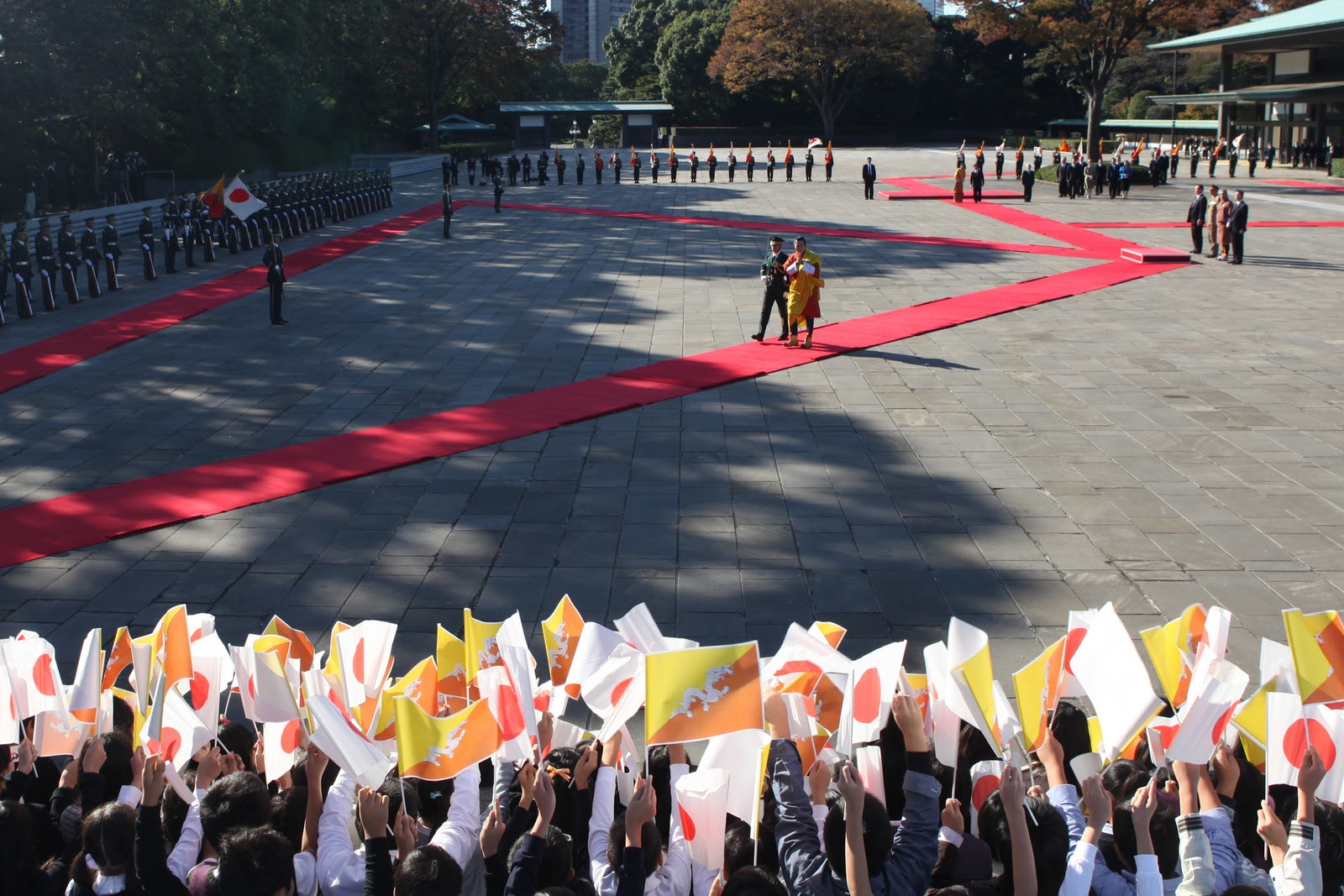
On the occasion of the just-concluded visit of Her Imperial Highness Princess Mako of Japan to Bhutan, I repost a photo story of the State Visit of His Majesty the King of Bhutan to Japan in 2011 that took the relations between the two countries to a different height.
The State Visit of His Majesty the King to Japan was more than just a visit. It was a journey. A journey of life, hope and friendship. Something unexplainable which can perhaps be expressed only through images. Pictures they say tell thousand words. So while I try to put together my thoughts and reflections, here is a photo reportage.
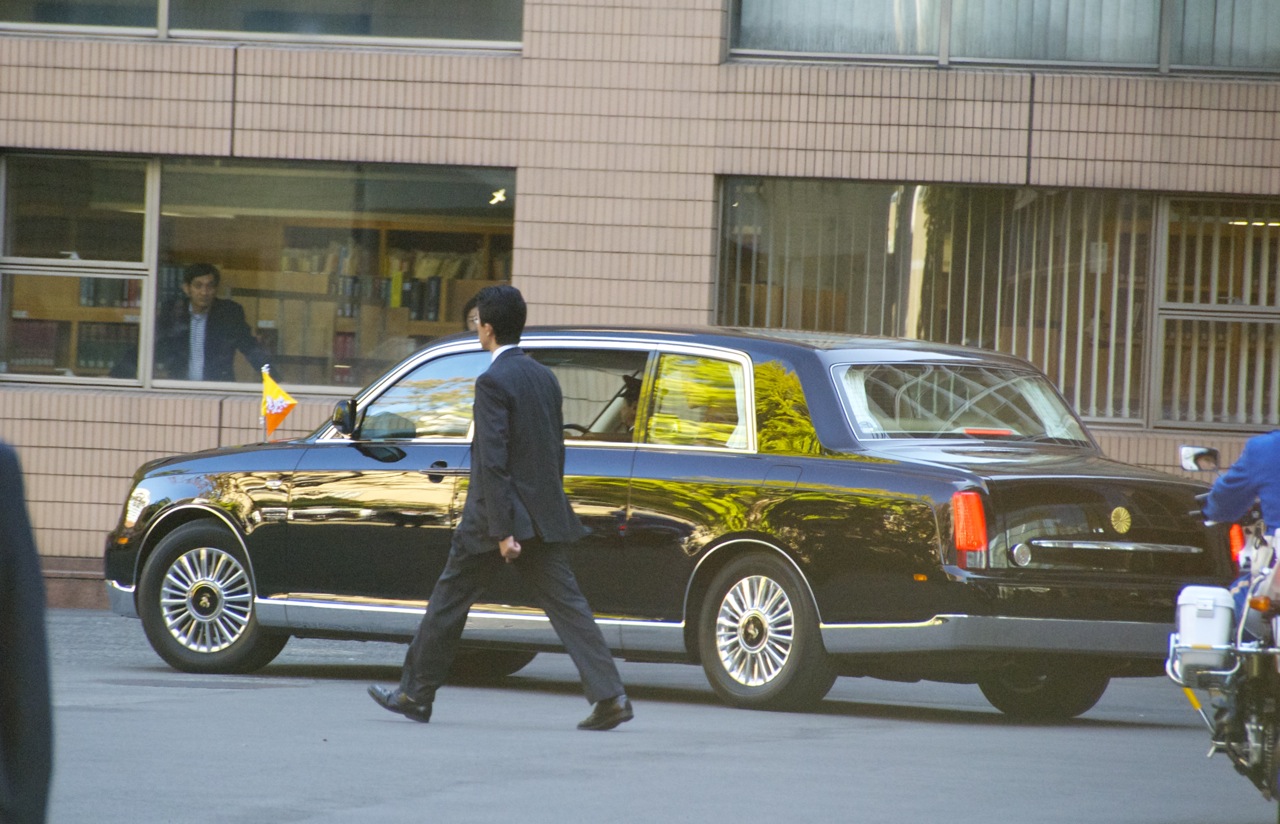
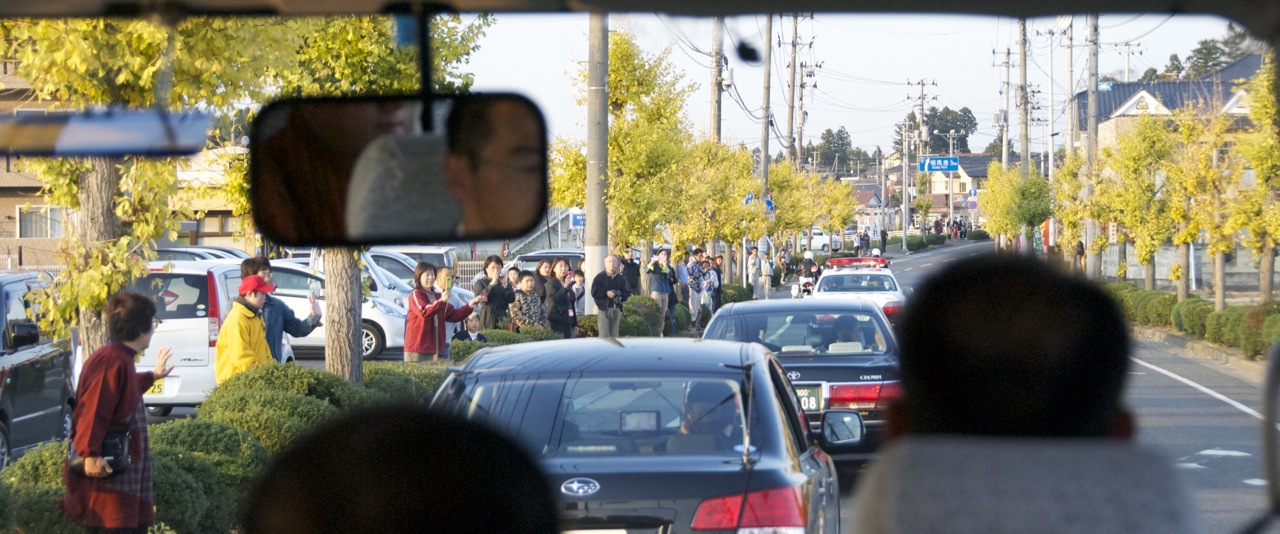
The Imperial Family sent a car from their fleet for the Royal Couple. Among all arrangements, the security detail was impressive (but what is not impressive about Japanese way of doing things). They were there to protect the VVIP at any cost.
Japanese Emperor Akihito was not well. So His Imperial Highness Crown Prince Naruhito stood in for the Emperor. Crown Prince Naruhito had visited Bhutan in 1987 and said he “has fond memories.” (photo source – Reuters)
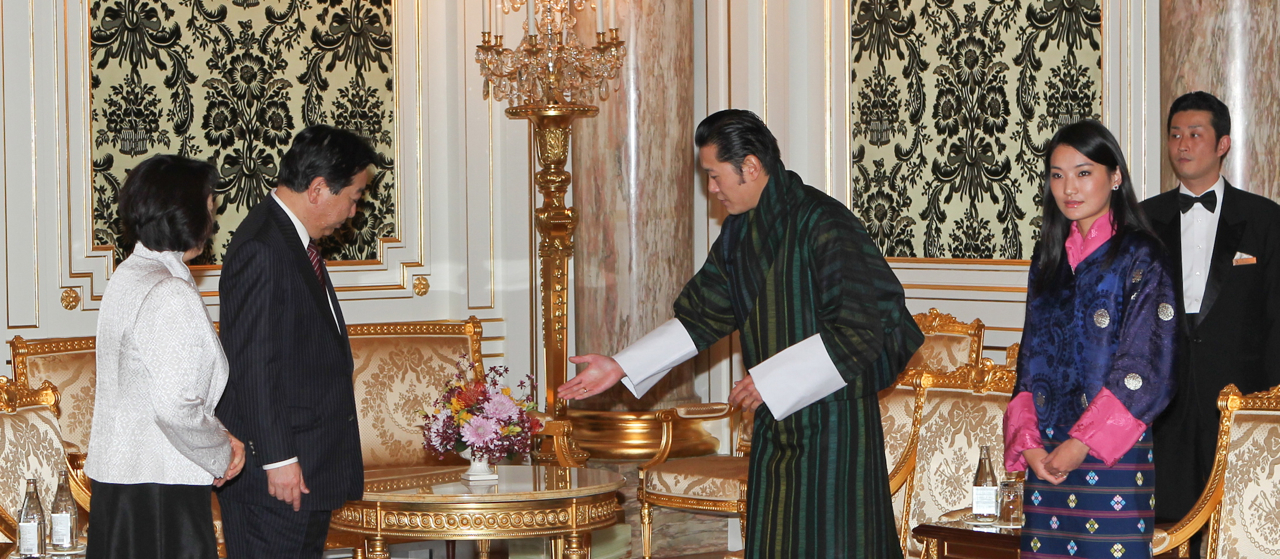
Japanese Prime Minister Noda called on His Majesty the King on the day the King arrived in Tokyo. The PM had also just flown in from the APEC Summit in Honolulu
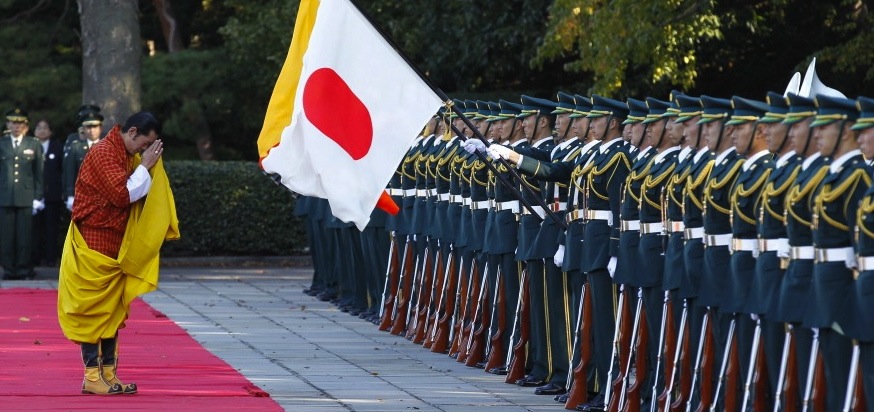
The photo that moved a nation. At the Guard of Honour in the Imperial Palace, His Majesty pays homage to Bhutan – Japan friendship by bowing down to the two flags. This scene made every Bhutanese proud and brought every Japanese to tears.
(photo courtesy – Reuters)
His Majesty the King greeting the children at the Welcoming Ceremony (Imperial Palace)
In an unprecedented move, perhaps defying the standard protocol, the Empress called on His Majesty at the place where the King was staying.
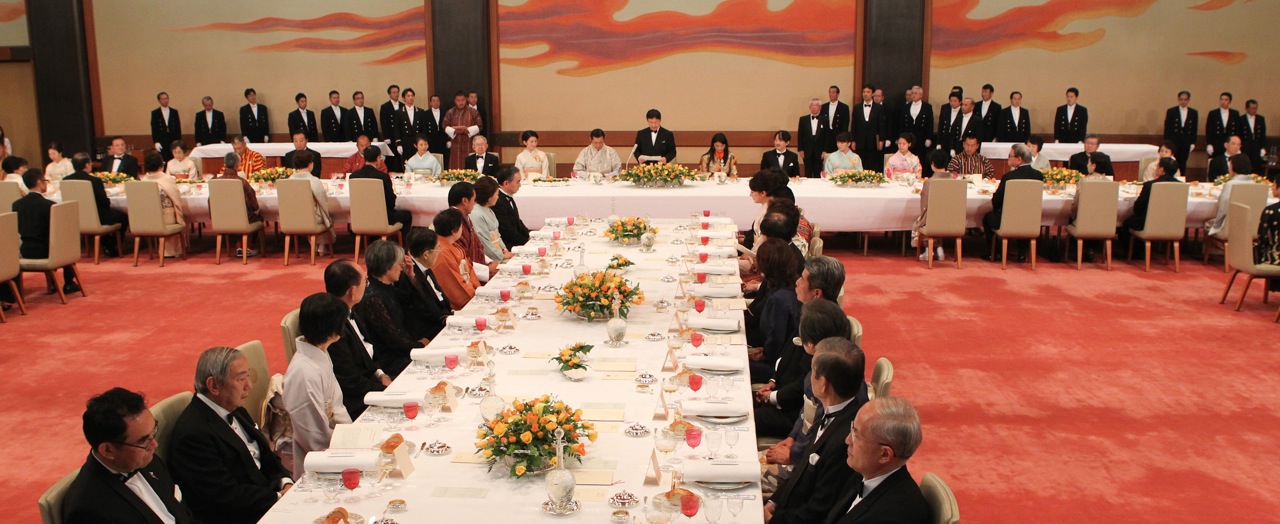
The State Banquet in honour of His Majesty the King and Her Majesty the Queen. In his banquet address His Majesty paid homage to the emperor and to the people of Japan for the special bond. I sat next to Honorary Consul to Bhutan, Hitomi Tokuda and the beautiful wife of trade minister Yukio Edano. Edano is famous for his role as the cabinet secretary in the post March 11 disaster. I also shared a wonderful joke with finance minister Jun Azumi. I also heard the most beautiful Bhutan’s national anthem played here by the Imperial household orchestra.
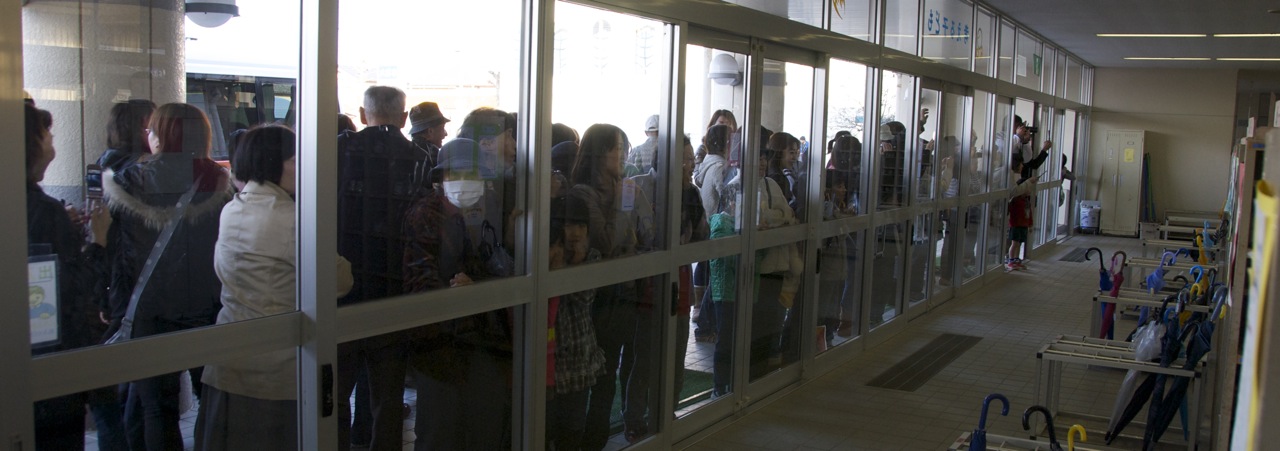
Fans and wellwishers wait for the King and Queen outside the Kieo University Hall. Everywhere we went ordinary people and photographers became a part of the scene.
His Majesty receiving Honorary Doctorate in Economics from Kieo University. “Our generation is called upon to rethink, to redefine the true purpose of growth. And in doing so, to find a growth that is truly sustainable.” The King said in his acceptance speech
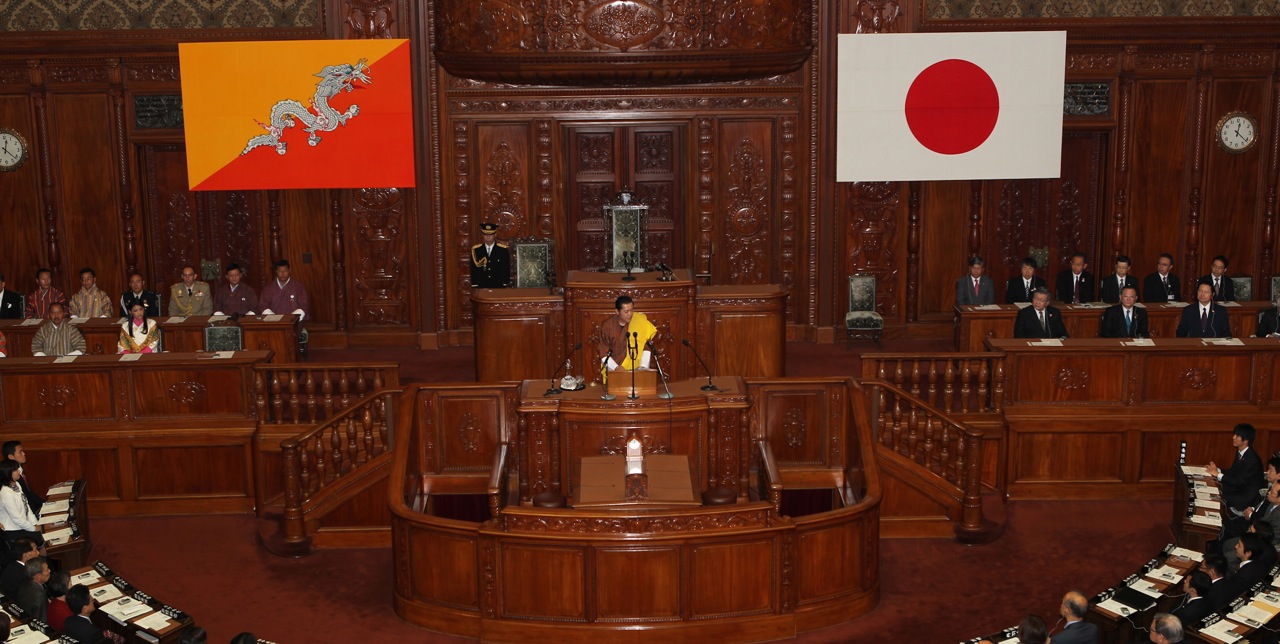
His Majesty addressing the joint session of parliament in Tokyo. His Majesty expressed his solidarity with the people affected by the earthquake and also supported Japan’s aspiration as permanent member in the UN Security Council. “Bhutan not only believes in the need to expand the United Nations Security Council, we are convinced that Japan must play a leading role in it. You have our full commitment and support.” The Speech was televised live by NHK and webstreamed by the Diet secretariat.
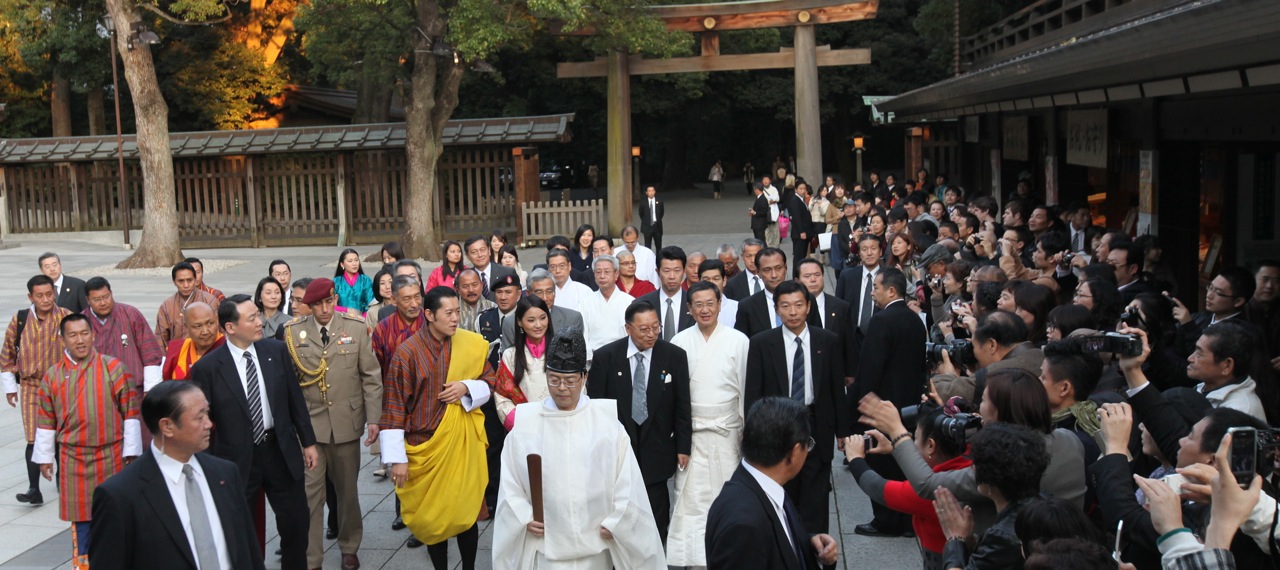
At Meiji Shrine. People as far as Kagoshima in South Japan were following the State Visit through newspapers, live TV reports and updates.
Butlers, chefs, cleaners and staff of Akasaka Palace, where the King was staying in Tokyo, line up to bid goodbye to the King and Queen
In Sakuragako School in Fukushima those who weren’t invited wrapped the building making the Japanese security details quite nervous.
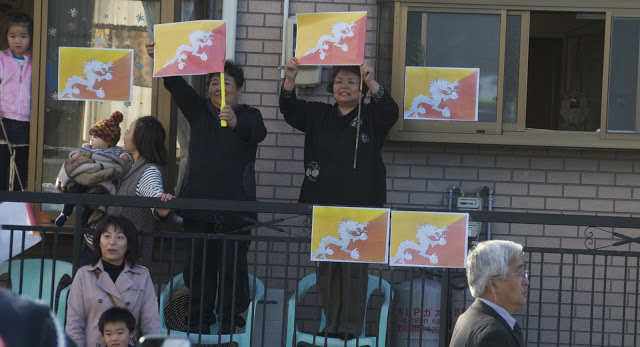
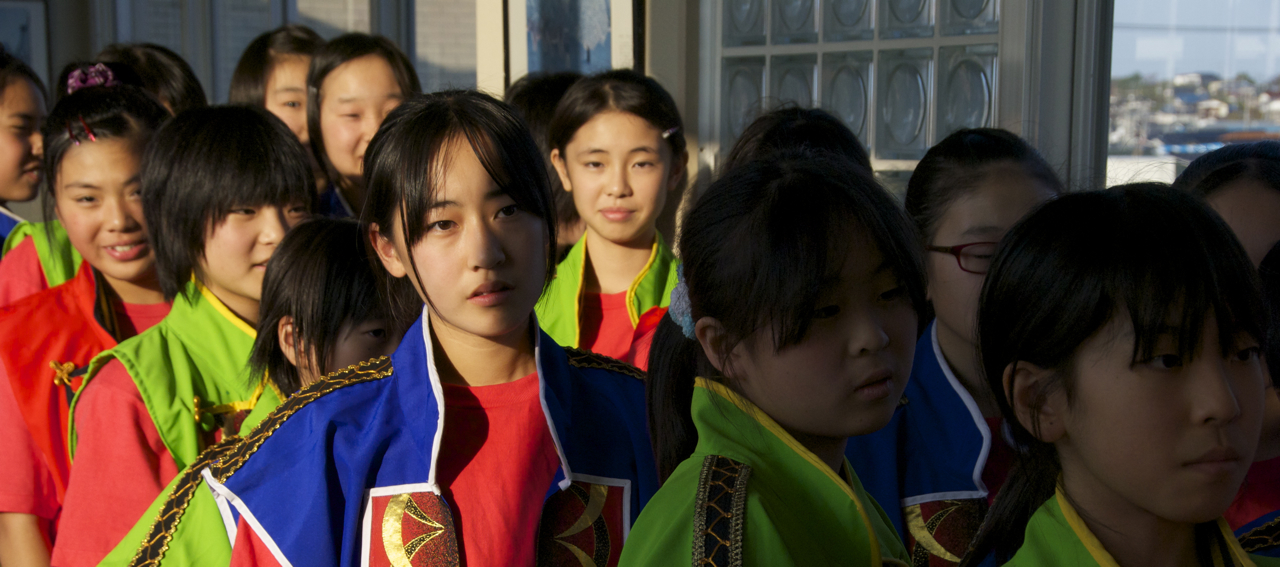
Inhabitants of Fukushima cheer the Royal Couple with Bhutan flag in response to King’s much-appreciated gesture to visit the region. Someone wrote to me “HM’s visit to Japan was like as if the real dragon showed up out of the blue clearing out the gloom and brought happy smiles to the Japanese people with the sun light after the storm
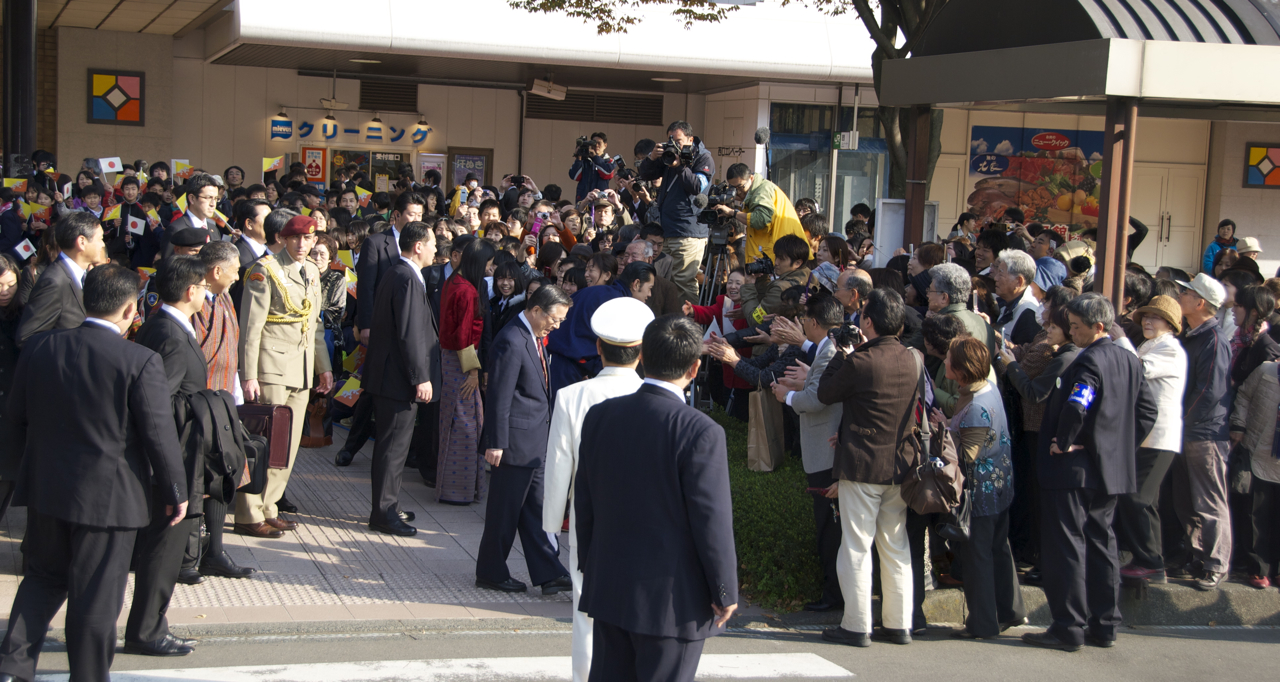
The Japanese security looked very nervous when His Majesty did what he love doing – dive into a crowd (photo courtesy – Yukio Tanaka)
There were excitements, smiles, gratitude and curiosities all around. Some said they could finally smile after a long time
Children and adults alike – all were either curious or touched by the royal presence in their locality.
People came out of their houses and work places and waived Bhutan flags all along the 100 km or so ride from Fukushima station to Soma Port.
“Remember there is a dragon in each one of us,” His Majesty told the children in Sakuragako School who also put up few cultural performances.
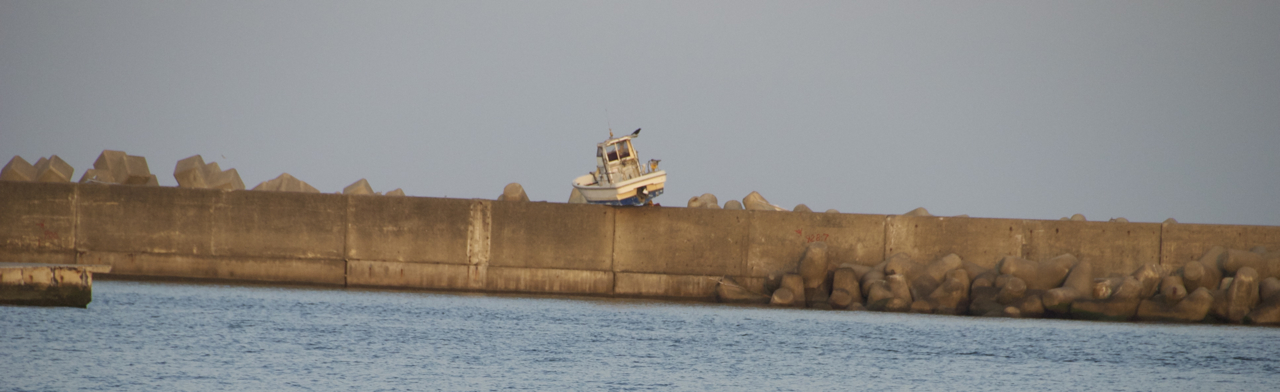
Hard evidence of a tragedy. A fishing boat still stands on top of a 20 meter wall. In some places here the tsunami reached 40 meters.
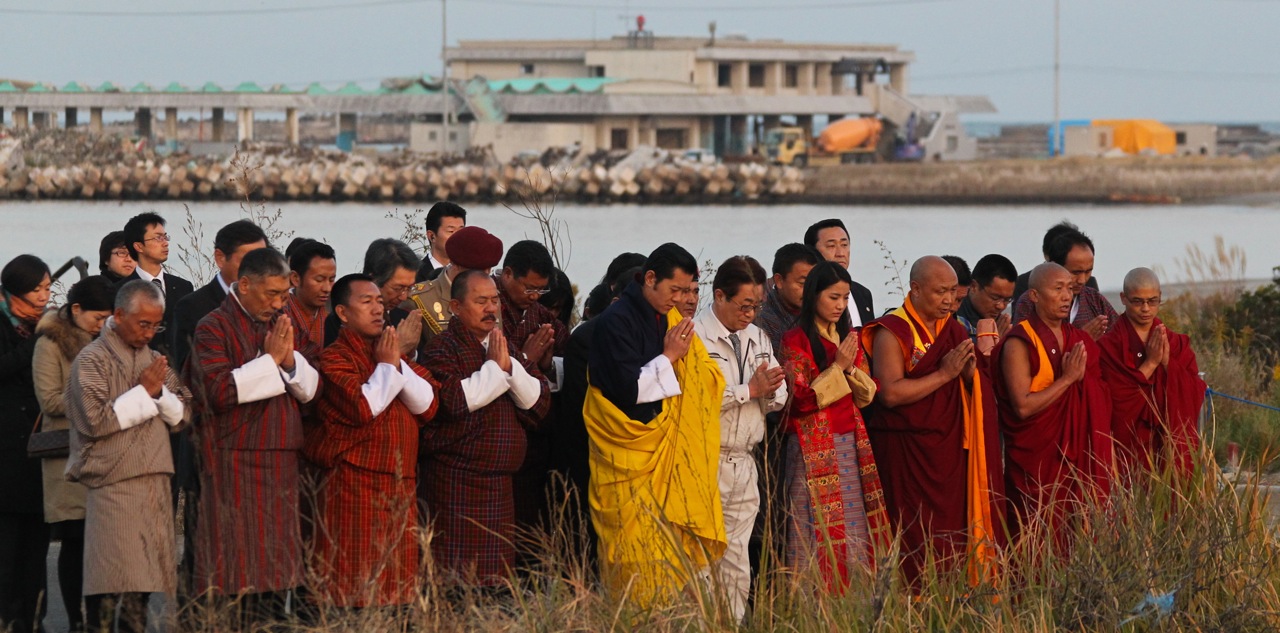
Soma City – Fukushima. His Majesty joins in for the prayer ceremony led by venerable Dorji Lopen – Bhutan’s second highest monk. “No nation or people should ever have to experience such suffering. And yet if there is one nation who can rise stronger and greater from such adversity – it is Japan and her People. Of this I am confident.” The King had told in his address to the Japanese parliament.
HM King and Queen thanking the people of Fukushima for love and affection and the unexpected warm reception. (photo courtesy – Hiroko Kobori)
Many people came out with banners that read “kadrinche”, “tashi telek”, and “Joen pa legso” . Some had even decorated their homes and gates. It was simply moving to see how much this visit meant to them
His Majesty and Her Majesty surprised the hosts in Kyoto by turning up at the Governor’s banquet in hakama and kimono. One female journalist confided to me that she nearly fainted
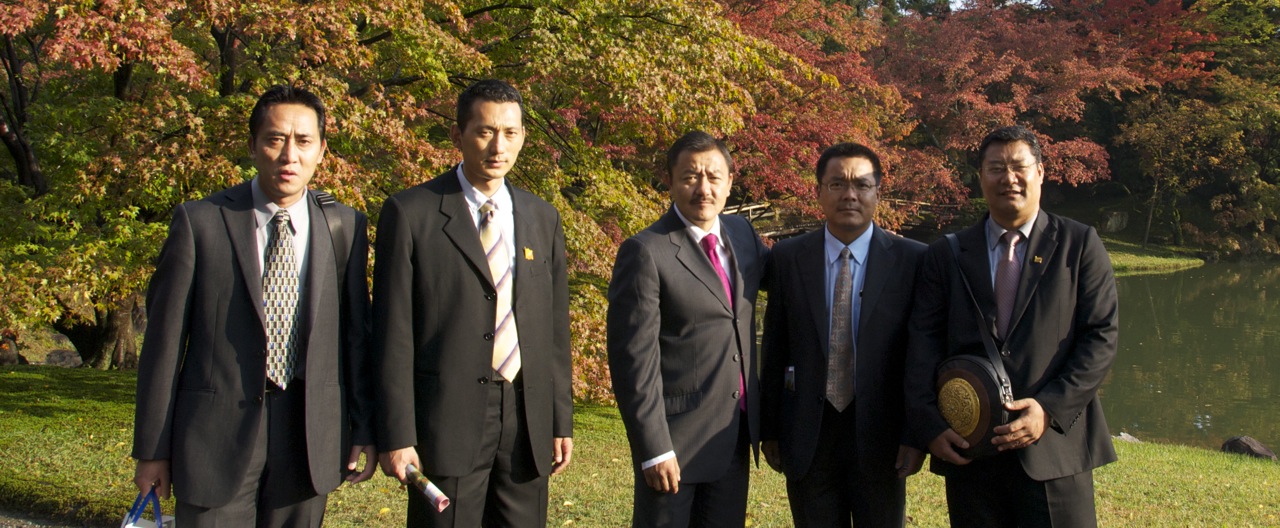
Men in Black. We wore our national dress throughout the Visit except on the day we left Japan. It is almost rare that we have any pictures of ourselves from these tours. But we made exception for Japan.
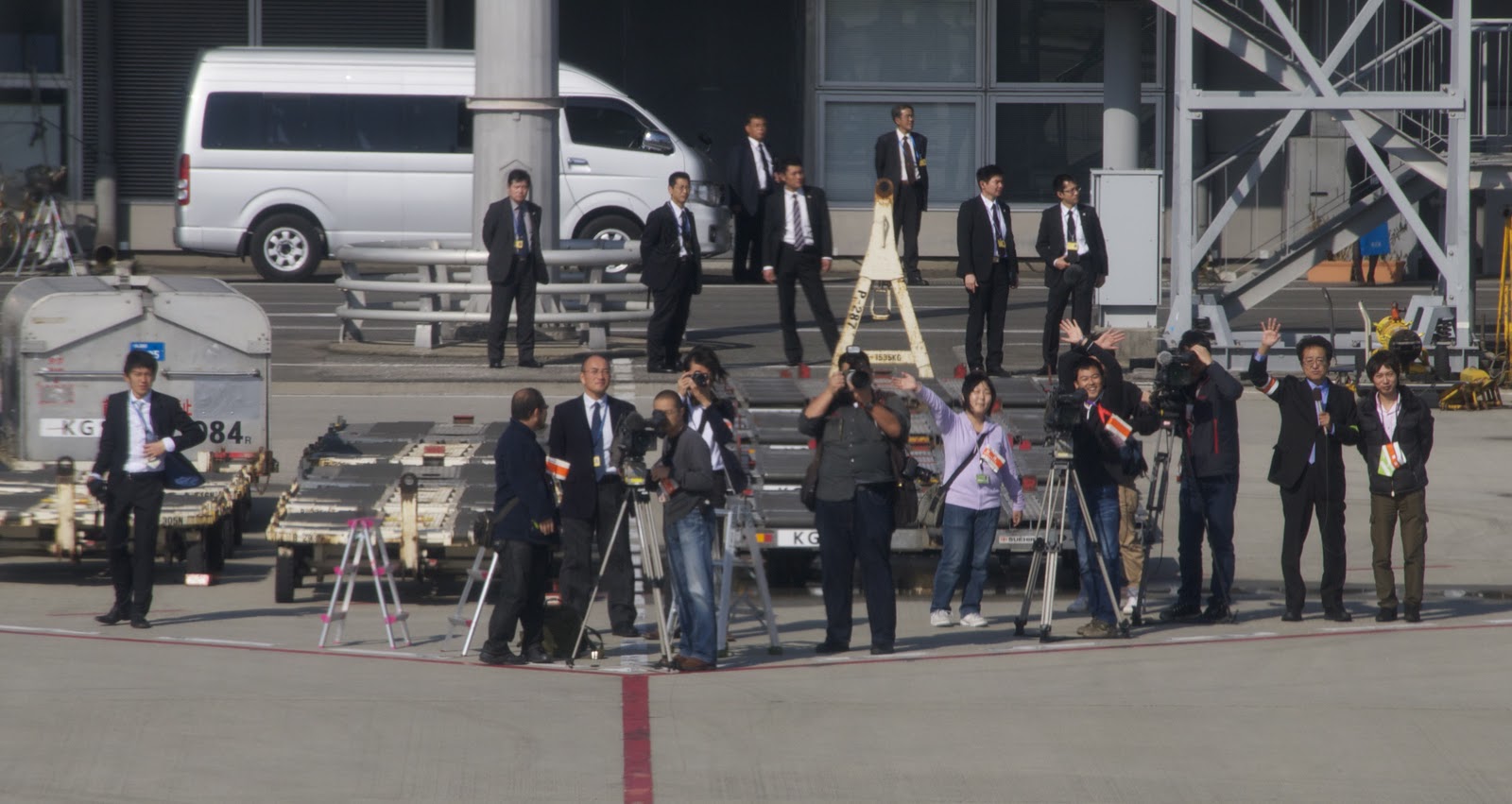
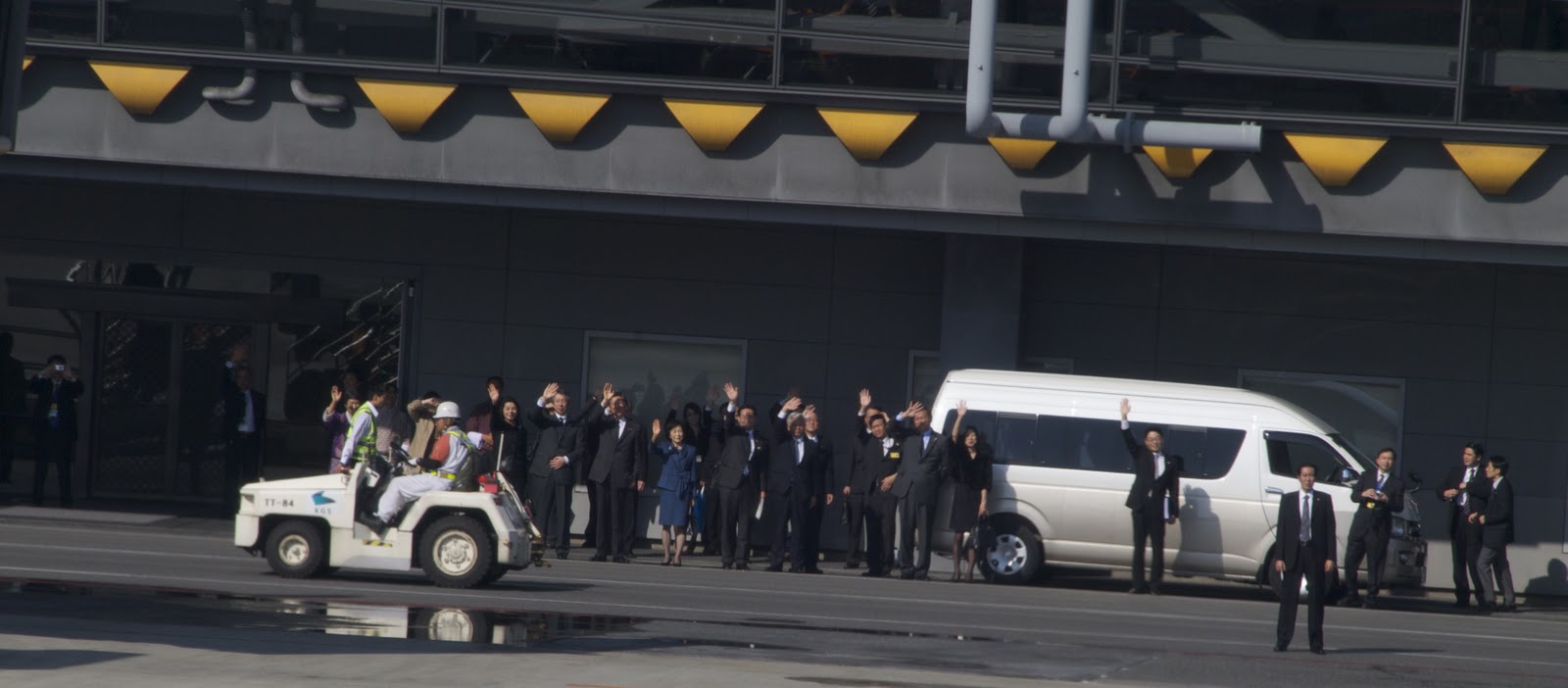
Some of the Japanese media covered the State Visit until the very end. We bid them farewell recognising deep in our hearts that they had done a great service to the relation between our two countries. Japan Times dedicated an editorial.
The entire Japanese foreign ministry team joined the Kyoto Governor and stayed on and waived as His Majesty and Her Majesty waived back from the aircraft. There is no goodbye word in Dzongkha, our national language. Only “see you again” and this really goes for this wonderful land and wonderful people.
My Facebook timeline is flooded with pictures of the snowfall in Thimphu.
It is heartening to see people getting joy out of simple things like a snowfall. I have never understood this pleasant collective euphoria – and the disappointments in the past years when it didn’t snow.
It is heartening because if GNH means anything, it is the ability to find joy in those small things in life that give you togetherness and make you feel, share, forget and live your moment. It is finding happiness and contentment in what modern capitalism has long melted them away as things trivial.
I have taken the liberty to copy-paste some pictures out of the pages (mostly of my friends so that no one sues me for copyright. Need to be careful these days) and have given my own narrative and captions. Enjoy till it lasts. And, of course, to paraphrase an Indian teacher in remote Bhutan, Let them snow!
~~~
It’s freezing to play dad. Still, duty calls….
Some people (like Dr. Dorji Penjore) had their flights cancelled. But didn’t mind..
Aku Pema (aka Tshering Dorji) is either sleep-cycling or is trying Swedish sauna.
Meanwhile Aku Pema’s partner has just started the engine..
Some moms (Sonam Pem) are more excited than their children.
Frezzing Buddha
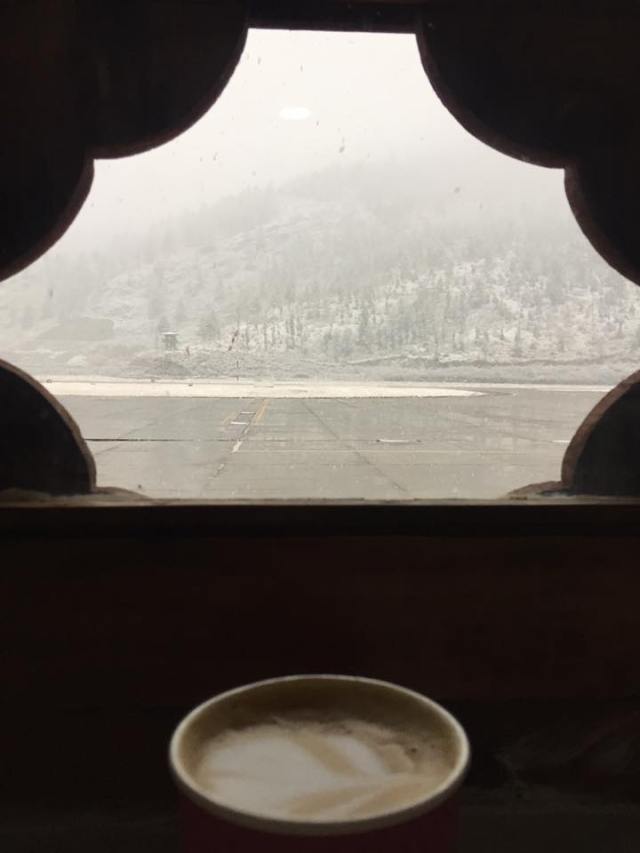
Bhutan Airline is snowstruck in Paro
What remains from the Everest expedition (Karma Jimba)
Some got spiritual even on a cold day
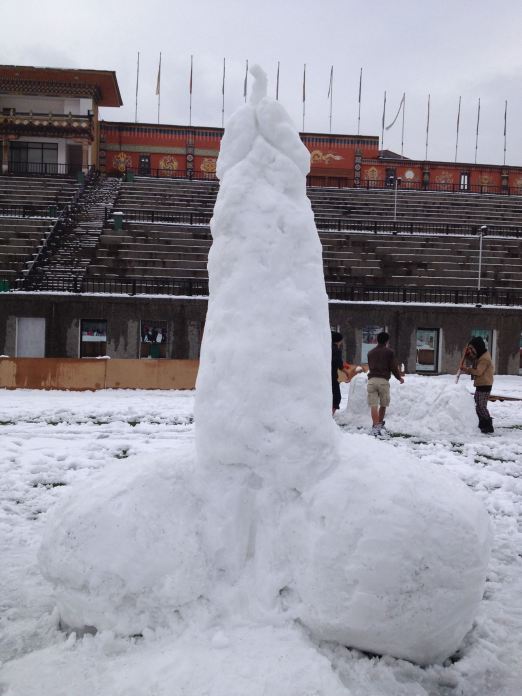
Snow Buddha (to add to Walking Buddha and Sitting Buddha)
Even policemen just wanna have fun
And some people waited for the snow for the annual alumni gathering
What else you expect from Zorig Chusum students
The Fattest of the year
Spot the Trump
His toilet chose this day to malfunction, I think
Some (Kezang Wangchuk) waited for the snow for family photo
Alas, not everyone was happy with the snow. The trade fair was ruined.
But our desuups (Choki, Ugyen and Karma) were there.
Small dogs leave big marks (Karma Choden’s Nuchu)
Only in Bhutan
For some, life is still upside down
Life is too short. Smile as often as you can. Better if you do always. And easier with a lager beer. Cheers to life
On this day, many moons back, I was caught in the Great East Japan Earthquake. I was in Tokyo when that happened. Here is my story of those dramatic days.
March 11, 2011 – I was at a lunch in Akasaka (downtown Tokyo) with two of my friends, Sakitsu san from the NHK World and Ogawa san of Tokyo Broadcasting System (TBS). I was on an official visit to prepare for the State Visit of our King, which was to happen two months later.
As we were eating, chatting and sharing the old times, the building started shaking. Mildly at first. “It’s normal,” one of them reassured me. But the quake only intensified and things started falling down around us. Some people started screaming outside. Sakitsu took out his phone and was rather shocked by what he saw on the mini-screen, “It is a big one. It hit off the coast of Fukushima. Tsunami alert along the Pacific Coast.” The emergency siren rang. Immediately he excused himself and rushed off. Ogawa, seeing me little dazed, asked me to follow him to his office – the TBS building, which is probably one of the safest buildings in Tokyo. I followed him. In the streets people were running all over the place. Another shake. I felt like I was trying to walk down the aisle of an airplane midair under severe turbulence. A big earthquake had just hit Japan.
The 9.2 magnitude earthquake has released an energy that was equivalent to 30,000 times the power of the atomic bomb that was dropped over Hiroshima during the World War II. But more than the earthquake (because Japan was prepared for it) it was the tsunami it triggered that devastated the north-eastern coast.Scenes of cities beings washed away, like in the movie Day After Tomorrow, were flashed on TV news over and over again. At the time of posting this article, over 3,000 people have been confirmed dead, as many were still missing and over quarter of a million have been left homeless or directly affected.
The response to the disaster was quick. Over 1.2 million people were evacuated within minutes after the tsunami alarm went off along the Pacific Coast – from Hokkaido in the north to Kyushu islands in the South. Relief and recovery teams went into action even before the first wave of Tsunami hit the Iwate prefecture (which was closest to the epicenter). Trains, airports and subways were suspended and elevators in every building in Japan were disabled with clockwork precision. The Self Defence Force (Japan’s army) was put into action and the Parliament suspended the debate and the session to allow the government to deal with the crisis.
But what really amazed me was not the Japanese efficiency at work. Rather the courage and the dignity with which the people, even those who were directly affected, dealt with the tragedy. It is often said that the worst of times brings the best and the worst in us. In the case of Japan, it brought only the best. Although left with nothing for themselves and for their family, people lined up in the usual orderly manner – to get some food, buy some supplies or to make telephone calls from public fixed lines. The sense of community was simply moving. For all their technological advancements the core value of Japanese society, the social harmony, was still strong. Usually emotions would run high and looting and riots would take place where desperation sets in. This has happened in recent tragedies and turmoils all over the World. But not in the Land of Rising Sun. I couldn’t help but admire my in-laws (my wife is a Japanese) more than ever before for their great courage and the highest sense of civility.
My journalistic instinct was to go to the affected area but back home everyone was worried for me. I was instructed to leave the country with the first flight that I could catch. It was an order I couldn’t refuse. However, the country had almost come to a halt. I spent the time glued to the TV, rescued by my sister in-law and in her house, getting every bit of information that was coming out from Narita Airport. The transport authorities had shut down everything to assess the damages and the safety -and there were no flights in and out of Tokyo. The radiation leak from Fukushima nuclear plant presented another bigger concern.
Finally on 13th March I made it to Narita and boarded a flight bound for Seoul. Life in Tokyo had almost come to normal after two days although the after-shocks and the threat from the Fukushima nuclear plant kept coming. I called up Ogawa, Sakitsu and my sister-in-law, Junko, for taking care of me and sending me home safely. As the flight took off from Narita airport, I bid goodbye, for this time, to this country that had given me so much but that was going through, what Prime Minister Kan described as, the worst crisis since the WW II.
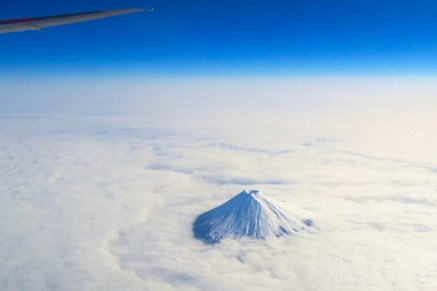
As we climbed higher I looked out of the window and saw the earth moving away and clouds slowly covering my second homeland. A deep sadness engulfed my heart. If there was one positive thing for me out of this incident, I realized how much my friends here and my in-laws cared for me and how much I have become closer to this country. I also realised how unpredictable life could be – even for a nation.
And as the aircraft veered right on its final trajectory towards Seoul, a bright light appeared in the horizon. It was Mount Fuji, beaming with the winter snow still covering its summit. Standing above a blanket of dark cloud that was now covering everything below us. I smiled tearfully at the sight and offered a little prayer. “Yes, Mount Fuji,” I thought, “You are the spirit of this Nation. Rising above all adversities.”
Whatever destruction or despair Mother Nature may have thrown on this Land, suddenly I felt confident that like Fuji san (as the Japanese refer to their favorite mountain) the people here would stand tall, rise above the situation to rebuild their nation and move on. They have done that in the past.They will do it again.
That is the strength of the Land of the Rising Sun.
50 years is a great target for my generation. When we were growing up in the 70s we were given the country’s fact-sheet where our life expectancy was a miserable 35 years. So I remember praying to Buddha for a life way past that age.
So my generation has already lived 15 years more than what we “expected”. I achieved that on February 14, 2017 – on the so-called Valentines Day. In addition to the milestone of outliving the official life expectancy, I present here, in a five-part series, my life’s ups and downs in 50 pictures.
Part I : Early years and schooling
1967. Tongling. Radhi (Trashigang)
I was born in a hut above this village. My family was driven out from our ancestral home in Tongling. This place is called Drung Gonpa. Drung as in Drungpa (sub-district governor) and gonpa means temple. There is a temple there, which was founded by my maternal great-great-grandfather, the Tongling drungpa, in the early 20th century. People called it Drungpa Gonpa because it belonged to him. I grew up with my grandfather, Khandola, who was a hereditary lay-lama, my great-grandmother, whom we addressed as Ashi, my mother and my elder sister. My father was away in a distant place and I rarely saw him. I later learnt that he was drafted into the army following the border clashes between India and China of 1962. So my grandfather took charge of me and I grew up as a young novice – learning how to make ritual cakes – hoping to one day succeed him as a lama. I grew up drinking goat milk and walking with grandpa to the villages of Chaling, Radhi, Khardung, Tshenkar, Jonla where he was invited to conduct rituals and religious sermons. He rarely accepted the gaybcha (offering to monks for the service). I don’t remember his reasoning.
………………………………
1972. Phuntsholing. Earliest photographic record.
When I was 5, my grandfather passed away. So my hereditary duty to become a lama also died with him. My father, who was working in Bhutan Government Transport Service (BGTS) as a driver, came to back to the village and took me to Phuntsholing.
There, he enrolled me in Phuntsholing Primary School in class Infant ‘C’. I aced the class that year. I and an Indian boy, whose father sold Murphy radios in Phuntsholing, were given double promotion. We were directly moved up to Infant ‘A’. In those days it was normal for good students to skip grades. The government was in a hurry to get students out of school and fill the newly established civil service. We were basically fast forwarded to the job market. (How times have changed….)
……………………………………..
1974. Loyal Studio, Phuntsholing.(Photo. To my right is my father. To my left my uncle)
Two years later I moved to Don Bosco Technical School in Kharbandi. My father rarely was home (he went on driving duty) and my mother had to be in Tongling to nurse my great-grandma. So I was packed off to a boarding school. I was only 7 and I remember Father Philip, the Selesian principal, refused to take me in. So my father, who had earlier worked as a royal chauffeur, got a kasho (royal edict) from HRH Ashi Dechen Wangmo Wangchuck (a real angel for many Bhutanese of my generation). The trip to Thimphu also coincided with the Coronation of the Fourth King Jigme Singye Wangchuck. At the celebration ground in Changlingmithang, I received my largest sum of money until then, Nu. 5, which lasted for good 3 months. On my return journey from Thimphu all I can remember is taking a detour to Dawakha over a scary Baily bridge over Chuzom – and vomiting all the way to Phuntsholing in his white BGTS International truck that had the map of Australia on the door (I would later learn that those American International trucks were a gift under the Colombo Plan. They were such powerful beasts).
Don Bosco Technical School was renamed as Kharbandi Technical School. Go Go hairstyle was the fashion and Levis blue jeans was our dream but we were all barefoot (see picture). I was 13. I was a good student but I was naughty and I rarely studied. I would be all over the place. Still, I loved science, history and geography and was a champ in general knowledge (GK). On the vocational side, I did carpentry, welding, plumbing and was majoring as an electrical technician (I still do all the carpentry and electrical works at home). I loved sports too but was fat and unfit to be really good at anything. More than that it was perhaps because I had a hobby – almost an addiction – movies. Dharmendra and Clint Eastwood were my favorite stars. I never missed any movie in Norgay Cinema and so I found myself slipping out of the dorm regularly at night – braving darkness, snakes, scorpions and very vigilant dorm councillors. When I got caught I was reprimanded with toilet cleaning jobs and watering the trees (my early contribution to green Bhutan). I was also beaten very badly, at times. The Selesians were not angels. Corporal punishments were a norm. My father even encouraged them. (So much for all the controversies on the issues these days.)
………………………………
1982 – Bhutan Photo Studio, Phuntsholing. (Photo: Front row: L-R. Kencho Tseten (Executive Engineer, His Majesty’s Secretariat), Nagphey Dukpa (Executive Engineer, Thimphu Thromde), Chencho Tshering (Joint Managing Director, Mangdechu). Standing: L-R. Thinley Wangchuk (Principal, Institute of Zorig Chusum, Tashi Yangtse), Kado Rinzin (Businessman, Gelephu), Yours Truly (in white pants, white shirt inspired by Bollywood star, Jitendra ☺)
Although the school and the government provided everything we needed in school, we were always broke with no pocket money to buy other stuff. I had one set of cloth that I could dress up to go to town. We went around in Bata slippers and played football barefoot – all the time. So my friends and I were so excited to receive our second pair of canvas shoe on the eve of the annual sports day that we decided to take a photo. By the way, taking photo in a studio was also very expensive. That year I was also about to finish my matriculation (that was a term for school leaving certificate exam), which was one of the highest qualifications someone received in those years. Can you imagine the excitement in my family? It was as if I was getting the Nobel Prize. When I matriculated few months later, my father also bought me something I was nagging for years – leather top boot and Levis jeans pant. He paid a hefty sum of Nu. 50 just for the shoe. His salary was Nu. 150. (Today I never refuse anything that he asks. He sacrificed a lot for us.)
……………………………….
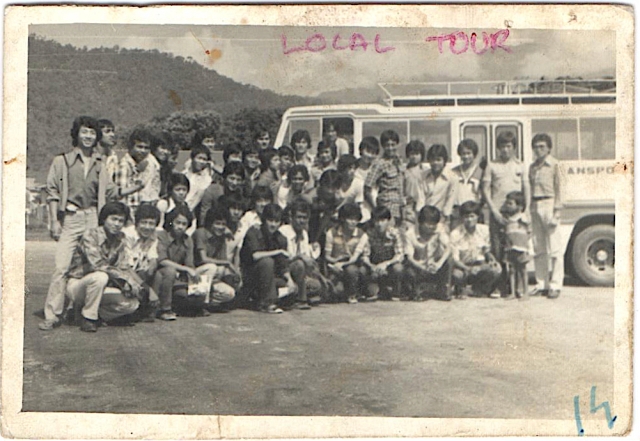
1982 – Phuntsholing, Study tour to BGTS Workshop.
In December 1982 I completed my matriculation. But as we were about to set off for the 14-day study tour to India (those days we had such privileges too) a bolt from the blue struck me. My paternal uncle, who was an engineer and whose education my father sponsored, and who was planning to reciprocate by sending me for pre-university (PU) studies to Shillong, was killed in an accident. I saw my life and dreams blown away in an instant. We were planning that I studied medicines and become a doctor. And there was no way that my father with his salary of a truck driver could afford to send me to Shillong. We were not accepted in Sherubtse because our school followed the Megalaya Board of Exams. During the entire 14-day trip to India where we visited Calcutta, Jamshedpur and Ranchi I cried almost every night. It was double blow. I lost my dearest uncle and I also saw my dreams fade away. Not being able to do PU also meant that I would never go to a university. I felt lost – completely thrown off from my path. I was just 15. Yes, life dealt me with a devastating blow at a very young age.
…………………………….
Dewathang gate. Photo: Gupta Studio, SJ
1983. Dewathang, Samdrup Jongkhar
After our India trip, we went to Thimphu where we had to report to the Manpower Directorate (that had just been renamed as the Royal Civil Service Commission) to take up jobs in the government. I was barely 16 and I wanted to continue my studies. Since Sherubtse was not possible the next best option was to head for Dewathang to study at the Royal Bhutan Polytechnic and become an engineer.
Life will often present you with a wall. If you cannot climb over it, don’t keep banging your head. Take a detour.
But at the Directorate of Manpower, a long stand-off with the employment officer (very cruel guy) began. I persisted and endured one week of Thimphu’s cold and hunger till a divine hand intervened. I was allowed to go to Dewathang. After borrowing Nu. 50 from a cousin I headed to the East. From that on, I never looked back.

 Radio – Back to the Future III
 Second, the prophets of technocracy have promised that the world would be more connected. Physically I cannot refute the claim. Yes, we are connected to everyone in multiple modes – phones, Facebook, WhatsApp, WeChat, etc. We are even connected from 39,000 feet when I am cruising in a jetliner. However, just as there is a big difference between having information and being informed, there is also a difference between ‘being connected’ and reals connections. It is not very unusual to see these days groups of friends gather for dinner or coffee and, instead of talking to each other, would be on their respective phones or gadgets. Where is the connection?

















 nd sending me home safely. As the flight took off from Narita airport, I bid goodbye, for this time, to this country that had given me so much but that was going through, what Prime Minister Kan described as, the worst crisis since the WW II.

 Two years later I moved to Don Bosco Technical School in Kharbandi. My father rarely was home (he went on driving duty) and my mother had to be in Tongling to nurse my great-grandma. So I was packed off to a boarding school. I was only 7 and I remember Father Philip, the Selesian principal, refused to take me in. So my father, who had earlier worked as a royal chauffeur, got a kasho (royal edict) from HRH Ashi Dechen Wangmo Wangchuck (a real angel for many Bhutanese of my generation). The trip to Thimphu also coincided with the Coronation of the Fourth King Jigme Singye Wangchuck. At the celebration ground in Changlingmithang, I received my largest sum of money until then, Nu. 5, which lasted for good 3 months. On my return journey from Thimphu all I can remember is taking a detour to Dawakha over a scary Baily bridge over Chuzom – and vomiting all the way to Phuntsholing in his white BGTS International truck that had the map of Australia on the door (I would later learn that those American International trucks were a gift under the Colombo Plan. They were such powerful beasts).


 Dorji Wangchuk