Sense of Belonging – Part II

In my earlier post on belonging I mentioned that sense of belonging is, firstly, the connection one makes with the past, the present or the future; second, that it is not a fixed state and that people continuously evaluate their belongingness to a place or a group; and third, that loss of sense of belonging is an emotional breakdown, and not an economic disruption (although one could also argue that the latter could trigger the former).

How does one reclaim one’s sense of belonging?

Between 2013 and 2014, when I taught in Sherubtse College I started every class with the existential quest, “Who am I?” Some found it funny, some loved it and many were very confused. When the students went on break they packed off with a mandatory homework: to retrace their ancestry by meeting and spending time with their grandparents..

Whether or not your life has come to a halt, or you are a young person finding a footing in this world, establishing connections with your family elders and ancestors is a good start. After all, blood is thicker than water. You will feel grounded, loved, or cared for. Just give it a try!

After that find your own community – a place that you are comfortable with, and values you and your beliefs. For instance, I found mine among the Oleps in Athang Rukha in western Bhutan – although I am from the extreme east. You could also create one (VAST Bhutan is a perfect example – created by Azha Karma). Quite often, in such a circle you will find your holy grail – the purpose and meaning to your life.

Let me share my own experience of getting lost, tracing my footsteps, and discovering myself again.

I grew up looking after cattle on school holidays in Trashigang Pam. And because I was absent-minded, or engrossed in reading comic books, by late afternoon I would have lost all the cows in the jungle. My paternal grandfather who would come to my rescue had only one technique: trace the footsteps.

That advice would become my life’s philosophy when I felt lost. Ten years back that’s what I did with my life. I traced my footsteps because I was going through the lowest point of my life.

I asked my father to take me to the exact spot where I was born. I always knew I was born somewhere in the jungles between Radhi and Merak in Trashigang. I had nothing on my mind. I just wanted to spend that downtime to look for that place before life takes over again.

However, standing on the spot where a hut once stood, I had my own unplanned Buddha-moment – a moment of Realisation. My whole life replayed in front of me like an old black-and- white movie.

Because of some power struggles and family feuds in the area, my great-grandparents had lost everything and so I grew up extremely poor. We often depended on food loans, and collecting leftover grains in someone’s field – a practice called kangsong.

Then, schooling came, followed by a prestigious scholarship to the world’s oldest university in Bologna (Italy) to study engineering and eventually returning home in 1995 and pursuing a rich and an extraordinary career of bringing TV to Bhutan and a couple of  international awards in documentary filmmaking. Many would give an arm to achieve what I achieved. From walking barefoot as a child to dining in the Imperial Palace of Japan, indeed I have come a long way. I thought if I had come this far, I could still go a little further.

I also reconnected with my folks and especially with my old illiterate uncle, Lepo, who lives there, and who reminded me of my place in the world.

“We are descendants of lamas and lords, and not of scammers and suckers. Other than that, what can I say,” he told me.

Other uncles, Dondrub and Sangay Wangdi, showed me the temples and retreat centres in the area that our ancestors built, and the place where our manor once stood. They introduced me to all my relatives and to the descendants of the people who once served my great grandparents. They shared stories of my late mother and grandfather and cried. I cried with them too. I had finally come home – both physically and metaphorically. It was a very healing moment. (In 2020, my siblings and I sponsored the whole village on pilgrimage to India and Nepal).

Tracing my footsteps gave me tremendous courage to reset my life and start a new career altogether at 46. And in doing so, I found new communities – the academics and the spiritual groups who welcomed me. I am always indebted to my media studies students and Sherubtse College. I also completed the first of the three temples I would eventually build in Athang Rukha.

I also went back to school and earned my PhD (in social science this time). Along the way, I was conferred four academic awards in the US – including the Dissertation of the Year Award 2022. I was looking forward to a tenured position in academia, but I withdrew my plans as something greater just kept me home, for now.

Covid also reminded us of the impermanence, and my lama was even more brutal. “What more do you want to achieve, and how long do you want to push on? Maybe, it is time for you to pave the way for your next life”.

That’s the magic of retracing your past. It puts you solidly on your true path, and to a future. Today my life intersects between community service and spiritualism, and research, teaching and collaboration with some of the finest minds humanity has to offer, and mentoring current and future global leaders to make the world better.

Leadership and belonging:

One big responsibility that leaders have is to instil a sense of belonging among those who are in his or her charge. And by leader, I mean anyone with a sphere of influence – including parents, teachers, media influencers and celebrities.

For leaders in the business and in the government I suggest a book by Owen Eastwood, Belonging. In it the author recommends that leaders must start by asking the question: What is the optimal environment for this group to perform to their best? And take a proactive and facilitative role to create one. You do that by valuing each and every employee for their strengths and skills. You value the time and life they have put to the organisation.

The book goes on to say that when we experience a sense of belonging our body produces feel good chemicals in the brain, which leads to healthy and a highly productive life (good for the organisation too). Whereas people underperform or leave when they don’t feel the sense of belonging. This, in my view, explains the high attrition rate in civil service.

In conclusion…

May you all find your place in the world – especially the young ones who are seeking it. Keep looking for it! Meet real people in the streets, farms and cafes. Stop wasting money following fake celebrities on TikTok or some billionaires whose lives and backgrounds we don’t identify with.

Be open and be broad-minded. Listen to ordinary folks. If you are humble and respectful, you’ll find wisdom everywhere and in everyone.

Above all, ask for help. There are more good people in the world than mean ones. And you are loved.
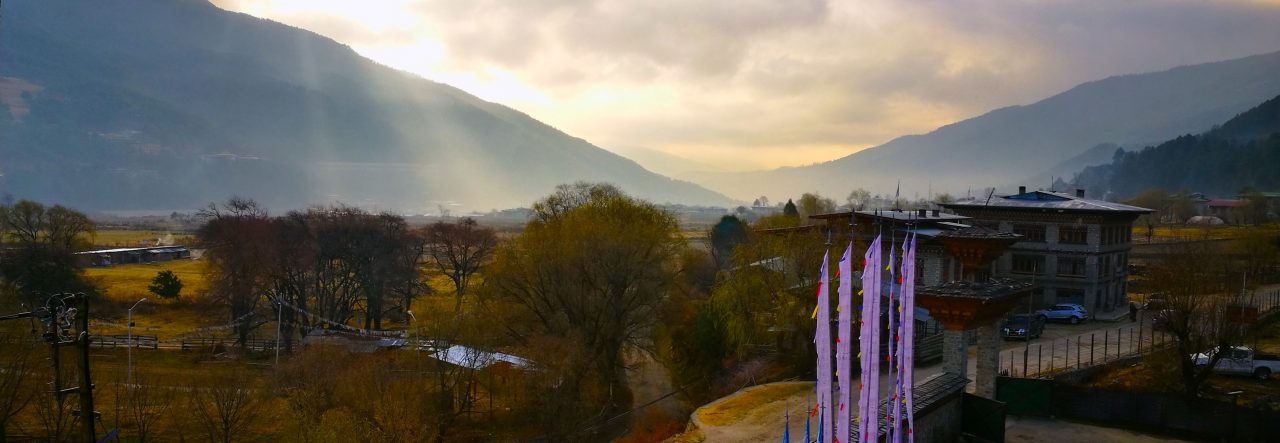
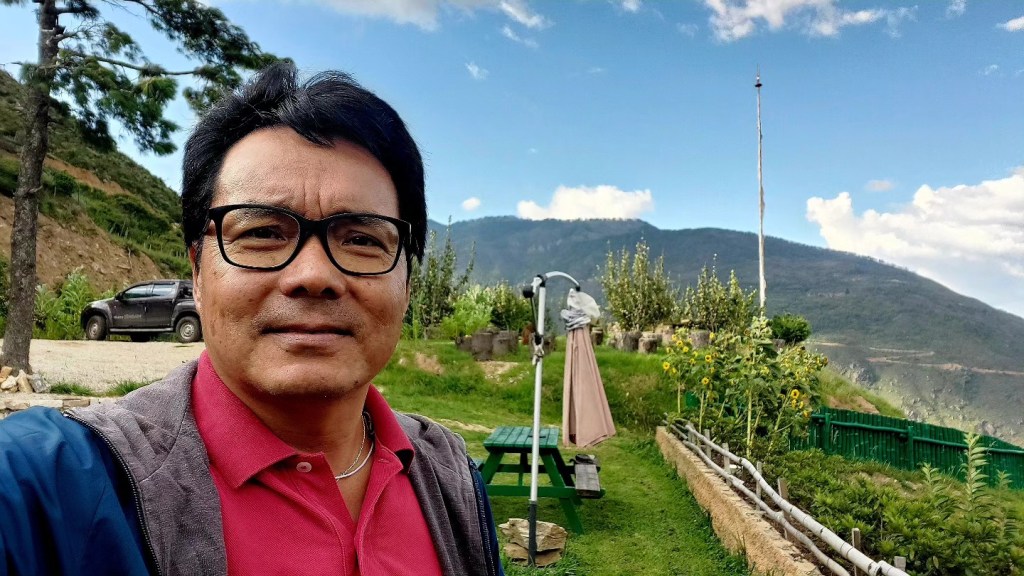
Sense of belonging

At the on-going Bhutan’s literature festival, Bhutan Echoes, where I was invited to share my doctoral dissertation, two concepts – loss of belongingness and loss of innocence, resonated with the young moderator. I guess, he also represents the feelings of our next generation.

I have argued that these two losses are the principal root cause for most of the issues we face with our youth today.

Let me define what sense of belonging is in this article.

Sense of belonging is, firstly, our authentic connection to our shared past, our shared present and our shared future. When people have no connection to their story of their past, when people feel that they have no stake or say in the present circumstances, or when people see no hope for the future, they lose the sense of belonging. They feel worthless, and unrecognised, and pushed away. One can only imagine where people will head for, or resort to because as social animals, we always seek a place and a community where they feel they are accepted, belonged and valued.
How do we come to such conclusions? As communication scholars, we are trained to observe, listen to and analyse social interactions such as verbal and non-verbal cues. This field of study is callled ethnography of communication. It posits the idea that what we communicate reveals a lot of our identity, beliefs systems and socio-cultural dispositions.

To put it simply, statements like “Nga yoena mena ei. Yoe ru toob, mi ru toob” (Whether I am there or not, it is fine) – a common statement these days can index to loss of self-worth and motivation. It is not a good sign for a country of less than quarter a million of productive citizens.

Second, a sense of belonging is not a fixed state. We constantly evaluate our surroundings and people around us – and ask: do I belong here? Am I wanted? Am I useful? Just because you have a job in the government, or you come from a good family, do not guarantee anything. If someone feels useless, they will either go haywire or in the best case scenario, which is especially true for Bhutanese, they will walk away – a phenomenon that has been coined in sociology as quiet-quitting. 

Third, a sense of belonging is not a rational thinking but an emotional feeling. This means from the perspective of neuroscience it emerges from an area in the brain called the limbic system. Humans have three areas of the brain: the frontal neocortex, which is broadly termed as the logical brain; the limbic area, which is the emotional brain; and the oldest layer called the reptilian brain, which mainly controls our survival instinct.

So, because it is an emotion, using facts, figures and logic will not reinstate a sense of belonging to any person. For instance, the government promising to double the per capita income by 2029 or 2034 will not change anyone’s mind from leaving if they have so decided. Loss of sense of belonging is an emotional breakdown, and not an economic disruption.
Fortunately, when it comes to a shared future, we have the ambitious Gelephu Mindfulness City project, which has given us a topic to talk about, and something to look forward to – or simply to gossip on.

As someone who has seen a lot in life, if there is something that we can achieve, it is always what we perceive as something impossible. In recent memory, the 2003 military operation comes to my mind. Earlier to that we have fended off the British – sometimes militarily, sometimes through diplomacy. History and our past achievements are with us, as we embark on the most important project of our generation and the next.

Another initiative that will help address the sense of belonging will be the Gyalsung program, which will connect our youth to the past, and firmly ground them into the present.

Hope is, as they say, on the horizon.

Building a stupa

Chortens (Dzo. མཆོད་རྟེན་; literally meaning “Support to The Teaching”) come in all shapes and sizes. Contrary to popular belief, there are more than three architectural types of chorten.

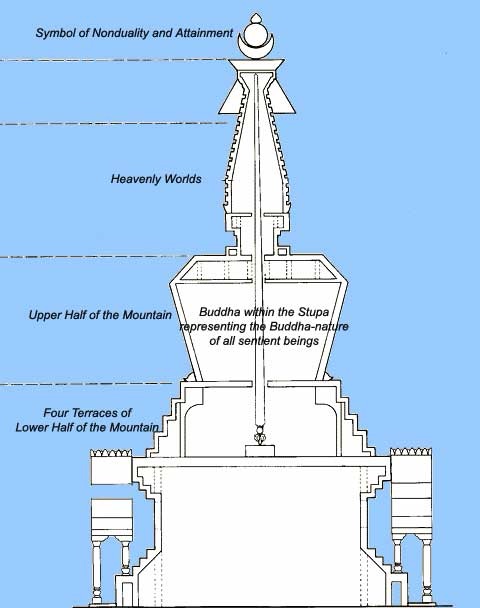
Stupas were adapted in the Buddhist world from earlier traditions as monuments for simply safekeeping the mortal remains of Buddha. Over time they evolved both in terms of physical aspects as well as the content. What is common to all types of chorten in the Buddhist world is that there are five physical structures to represent the five natural elements of earth, water, fire, wind, and space. Chortens in Buddhism are built as representation of the Buddha as seated in a lotus position.

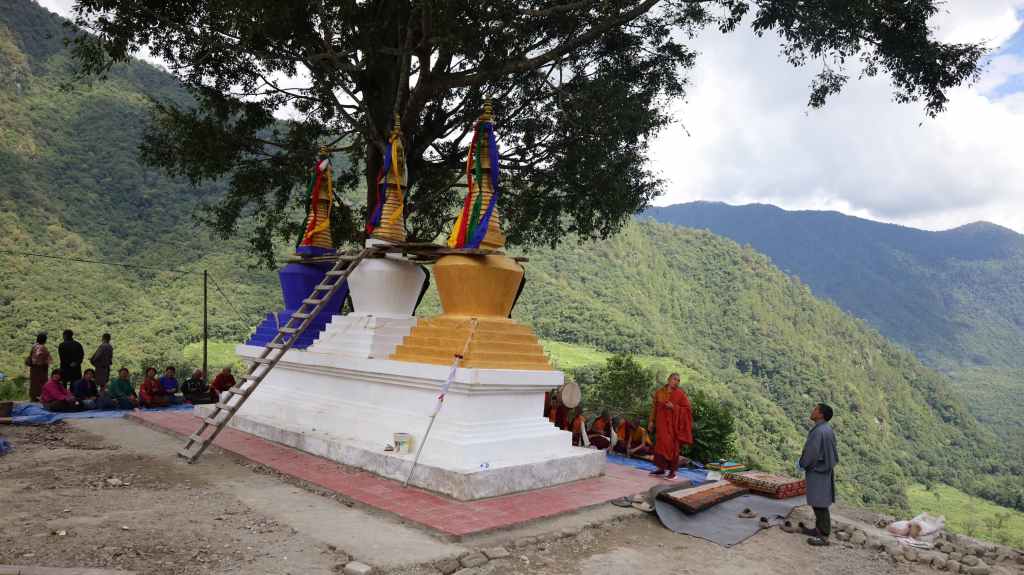
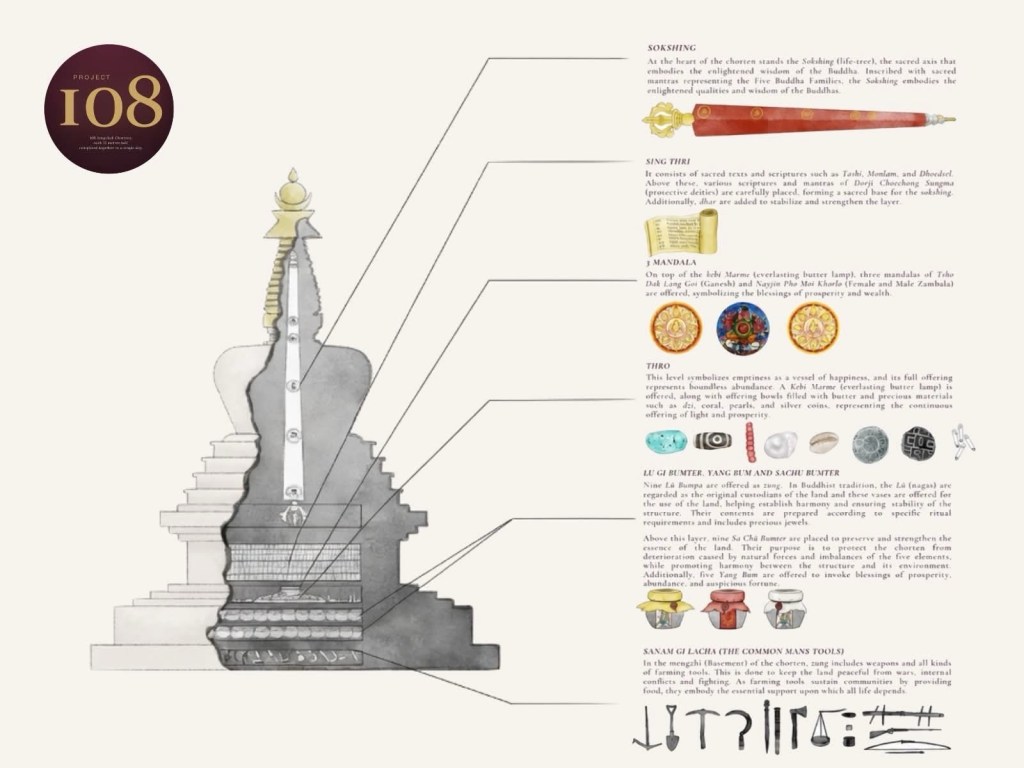
In this post let me share what goes inside a Bhutanese stupa, so that one day you can also build one. These pictures are from the Rigsum Gonpo stupa that my siblings and I sponsored to rebuild in Athang Morakha in Wangdue, as per the advice of my lama, Khandro Dorje Phagmo Rimpoche.

I dedicated the holy Saga Dawa month (the fourth month in the Bhutanese calendar) rebuilding a Rigsum Gonpo stupa in Morakha village in Athang Gewog. The place is associated with two very important figures in Vajrayana Buddhism. First, it is believed to be the abode of Vajrapani (Chana Dorje), which is referred to as Changlochen. Second, it is associated with Mendharawa – one of the principal consorts of Guru Padmasambhava. 

Rigsum Gonpo (Dzo. རིགས་གསུམ་མགོན་པོ) means Lords Protectors of Three Families (or Realms) and refers to Chana Dorje (Vajrapani), Chenrizig (Avalokiteshvara) and Jamyang (Manjushri). The three stupas are the representations of these three important deities in Vajrayana Buddhism.

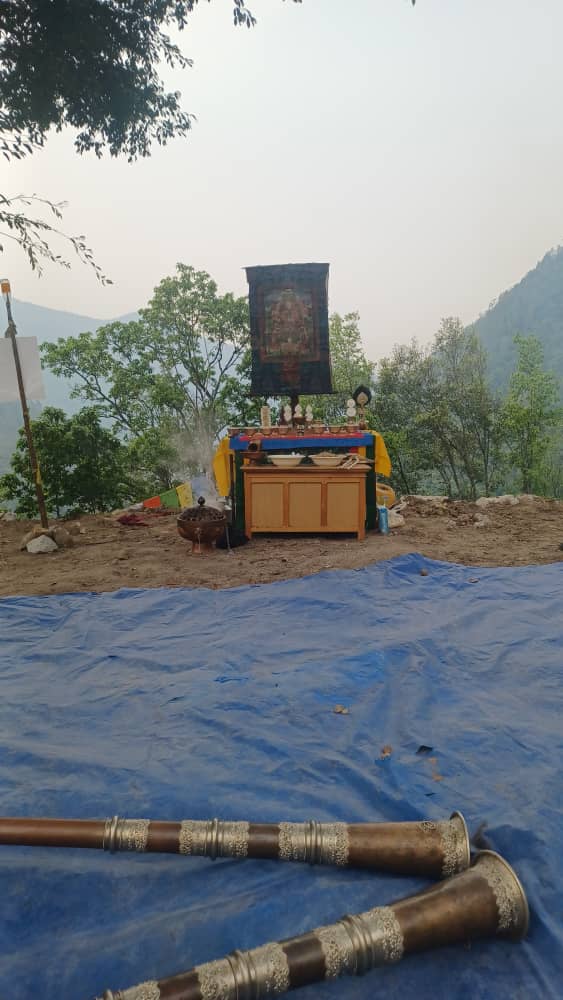
Picture 1 – Every major construction starts with a salang tendrel (Permission Seeking Ceremony) where we ask the consent of the earth deity to build the stupa. We offer 12 sacho bumter (vase of treasure) – four each for the three chortens. This offering is considered as a gift to the earth deity for allowing us to occupy the ground.

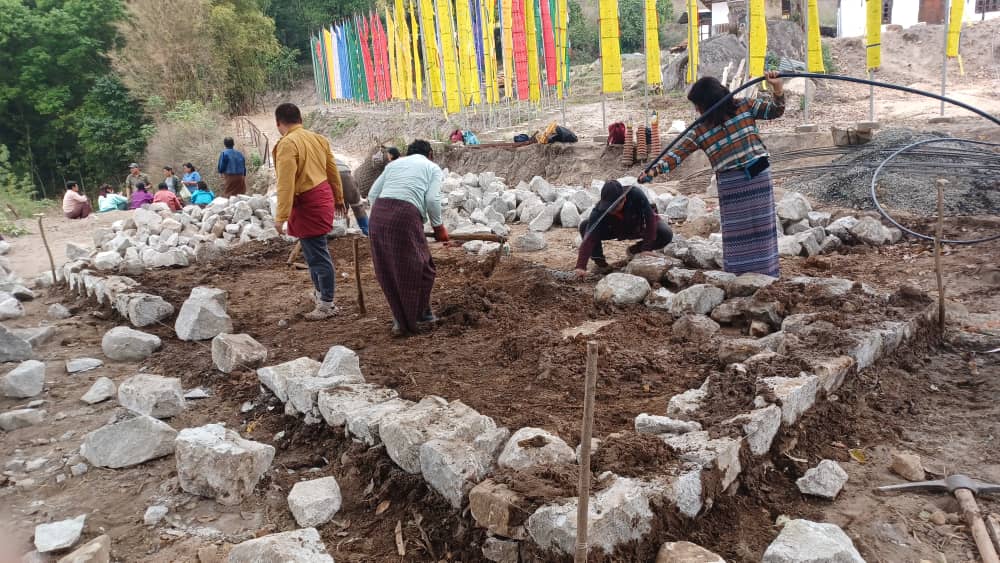
Picture 2 – The first structure over the ground is the Sa-zin (foundation). This stage is important to provide the correct direction of the stupa (called Chho in Dzongkha). It should not face any direction randomly – especially its shadow should fall in the direction of any private homes. A master astrologer or a realised lama should do this to ensure that it benefits all sentient beings and hurts no one. 

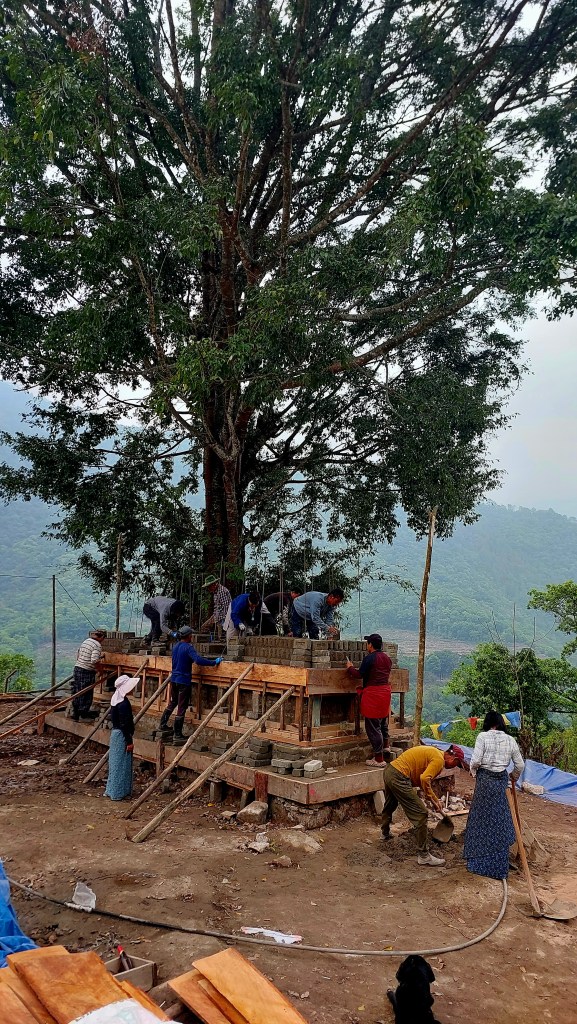
Picture 3 – The next is to build three stairs called them-kha. Here inside the walls we have the first set of zung (relics) going in – consisting of farming implements and an old urn at the bottom layer. After covering this layer with juniper leaves the men and women garment and jewelries are spread – including arms and ammunition.

Picture 4 – Then comes the Thri (throne) where the second set of Zung is buried. Here, inside of it, we offer a full set of religious musical instruments, and as many yangbum (vase of prosperity).

Picture 5 – Every inch of the hollow space is filled with tsatsa (mini stupas) and dried juniper leaves. If juniper leaves are not available dry sand is fine too. The thing to remember is not to leave any space.

Picture 6 – The Thri is sealed and this marks the completion of the first stage of the constriction.

Picture 7 – Over the Thri, we build what we call the Tshemed-Zhi (The Four Immeasurable). It is four-step pyramid and in it we plant the sokshing – the soul of the stupa

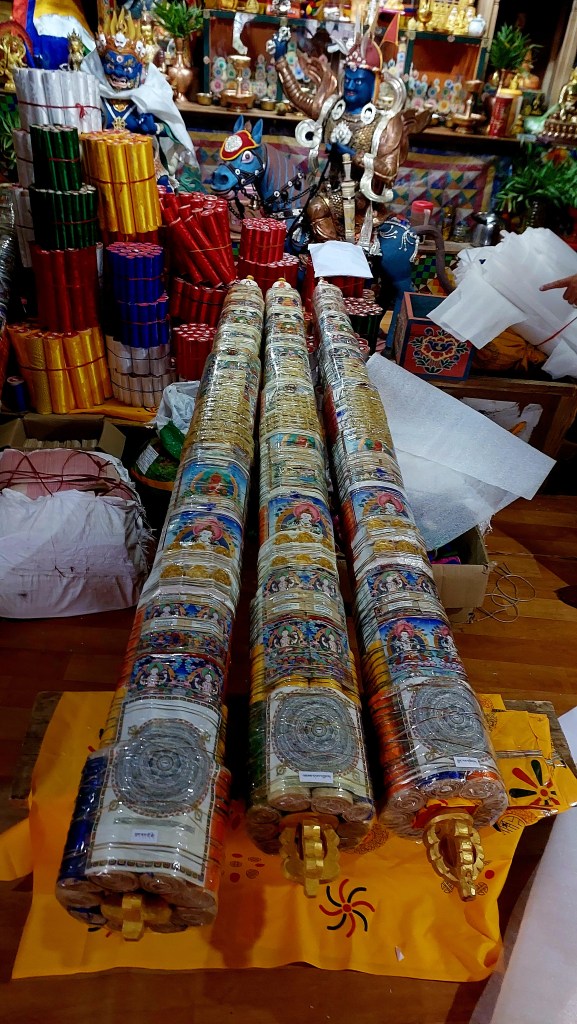
Picture 8 – Sokshing means “tree of life” and it is what makes the stupa come to life and bestow the power. It is a wooden pole sliced out of a young juniper tree, around which hundreds of scrolls of mantras, clay statues and precious objects are bound. This is best done by a master artisans, although it may be cheaper to do on your own. I prefer to get it from one master I know.  

Picture 9 – Planting the sokshing is one of the three most sacred stages of the construction of the stupa and hence, a realised lama should preside over this. It is believed the act of “planting” causes disturbances in the Lower Realm, and even the Lord of Death, Yama, can get upset. On the other hand, the upper tip is believed to send power of prayers and mantras, like a radio antenna, to the Higher Realms and the divinities would take a break to witness this sacred moment.  
Picture 10 – At the base of the sokshing we offer Kaypi-Mar (eternal butter) in a copper urn, and four sets of choeb-ting (water offering cups) filled with gemstones and precious metals. You fill the remaining empty spaces with sacred scriptures like Kanjur (Words of Buddha) or Bum Poti (Perfection in 100,000 lines).

Picture 11 – The Bumpa (vase) – the conical shape structure is filled with statues of the deities and divinities.

Picture 12-13 – Above the bumpa is the chug-sum khrolo (Thirteen Discs of Enlightenment) which envelopes the upper part of the sokshing. The completed chug-sum khorlo is in the picture below.

Picture 14 – The golden parasol which covers the Chug-sum Khorlo is placed on top and both are given a golden color. The three stupas of Rigsum Gonpo are also given their respective colors: yellow for Manjushri, white for Avalokiteshvara, and dark blue for Vajrapani.

Picture 15 – Finally, the top-most structure is the golden pinnacle. Usually the Sun, Moon and the Star representing the space are carved and placed there, but increasingly people offer golden pinnacle, which is costlier and believed to accumulate more merits.

Picture 17 – The main sponsor of the construction is honoured with gifts of rice, textile and a white khadar.

May this sacred stupa bless all sentient beings and bring peace and prosperity to this community and country.

Spreading kindness and compassion

For many years now I have been helping young people who are struggling to pay their tuition fees, get to school, travel to colleges outside Bhutan, go for rehab, etc. I accept 3-4 cases a year. I can’t afford more. Wish I could. In recent years I have been doing a little more.

Back then I used to come across them during my official tours (my former colleagues will remember some). In recent years they are mostly referred to me by my friends and former students, because people facing difficulties come from their age group. They come from all corners of Bhutan – Sharchop, Ngalop, Lhotshampa, Khengpas.

I also don’t meet most of the beneficiaries because there is no need to really meet, take selfies and blast on the social media. Some, of course, I do run into them casually. Few months back I met a pharmacist who told me that I paid his travel expenses to go to Chennai for his scholarship – back in 2007.

There is, of course, one commitment they have to make. They have to practise similar level of kindness to two or three random strangers in a distant future when things are settled in their life. It can be to a struggling student, or a family. By making them commit to something like this the beneficiary receives the help with dignity, and with a promise to pass the favour to someone else in future – and not to receive it with shame, victimism or self-pity.

They must also pass the message of spreading kindness to their beneficiaries in future. This way we multiply the act of loving kindness to as many people in the world. Basically, a pyramid-scheme to spread and multiply goodness and compassion.

Nothing is legally binding. It is just a word of honour that I tell them to remember to uphold. I assure them that problems in life are temporary. They will get themselves firmly on their feet and when they do, they must help others, just as they received help.

I haven’t kept the count but I started somewhere in 2004. So, 20 years multiplied by 3 means I helped around 60 people through this simple pyramid scheme. In turn, if they helped 2 each means there are at least 120 kind people, if not more, in Bhutan.

Yesterday, I helped the third word of honour candidate for the year, through a mentee. The beneficiary is a high-school student, who was otherwise getting dropped-out, because the only source of funding – her grandfather, is hospitalised for over two months now. And her parents cannot afford to let her continue in a private school.

I did not meet the candidate, but I fully trust my mentee/referee. The second candidate, whom I met last month, was for buying him an air ticket to New Zealand. He was going on the Earn&Learn program.

I am sharing this personal initiative, one among many similar things I do, encouraged by someone, to lift the mood in these depressing times.

Loving-kindness (Skt. maitrī; Dz. བྱམས་པ་, jampa) and compassion (Skt. Karuna. Dz. སྙིང་རྗེ་ nyingjey) are the core practices in Mahayana-Vajrayana Buddhism. As a country that is founded on these ideals and values, we must never forget to practise them. This is what makes our country (still) a good place to be. We cannot take them for granted, though. We must nurture these values by practising them.

I know it is not easy. Nonetheless, while we maybe limited by our means to help others, we can still cultivate some jampa and nyingjey in our thoughts and prayers.

After all, nyingjey literally means “Supreme Heart”.

🥰😍🥳

Practising Generosity


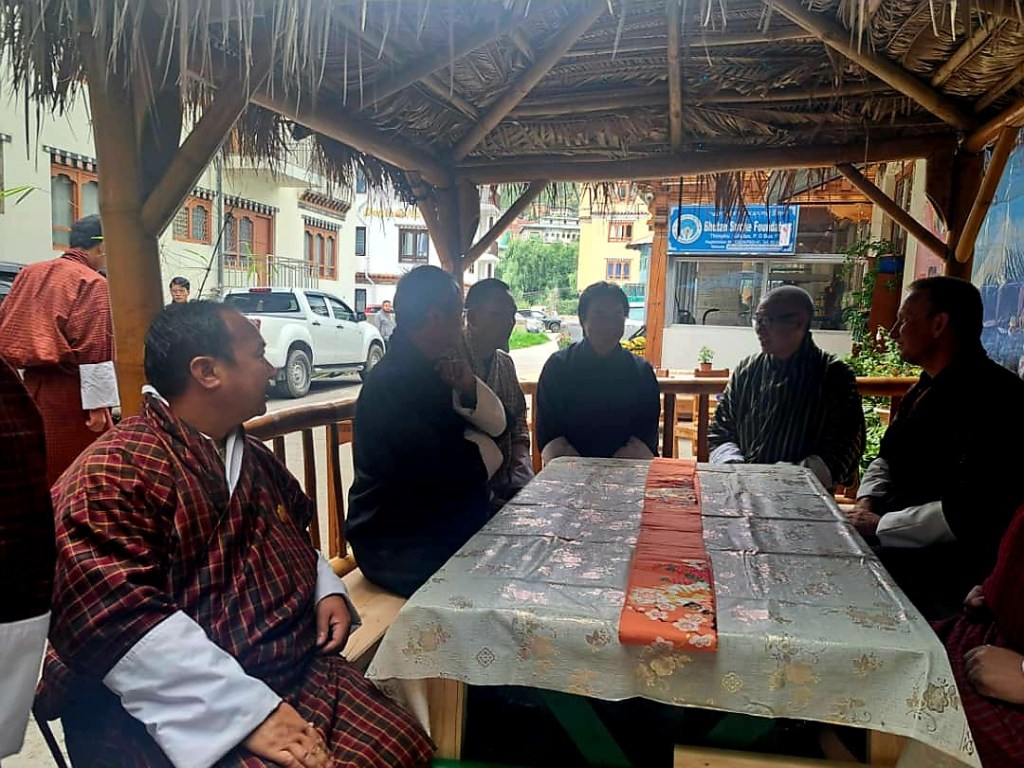
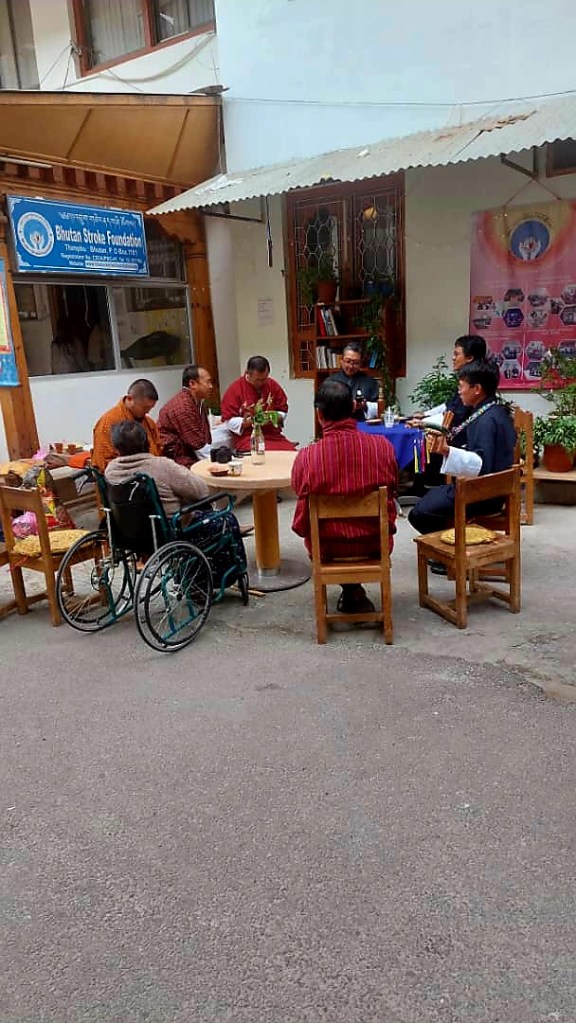
On this auspicious Choekor Duechen (aka Drub Tshezhi in Bhutan), I decided to practise giving and compassion by offering the money I had budgeted (10k) for religious activities, to Bhutan Stroke Foundation.

Today is celebrated as the First Day of Teaching by Buddha after he attained enlightenment. It is one of the four holiest days of the year in Buddhism. As a lay practitioner, the day is of reflection and practice. I reflected well this morning in my altar room (decided I was doing OK 😜😜😜).

For the practice part, I chose to practise compassion (core teaching in Vajrayana) to help the 130+ post-stroke patients that are currently served by Foundation. I spent the day with some of them who are currently living in the office complex of BSF.

This gesture was inspired by my recent visit to my family lama, Rangshikhar Rimpoche, who impressed on me the practice of loving-kindness (jampa) and compassion (nyingjey) as the supreme practice. This is of course not to discount the pilgrimages and monument buildings. It is just about finding the middle path.

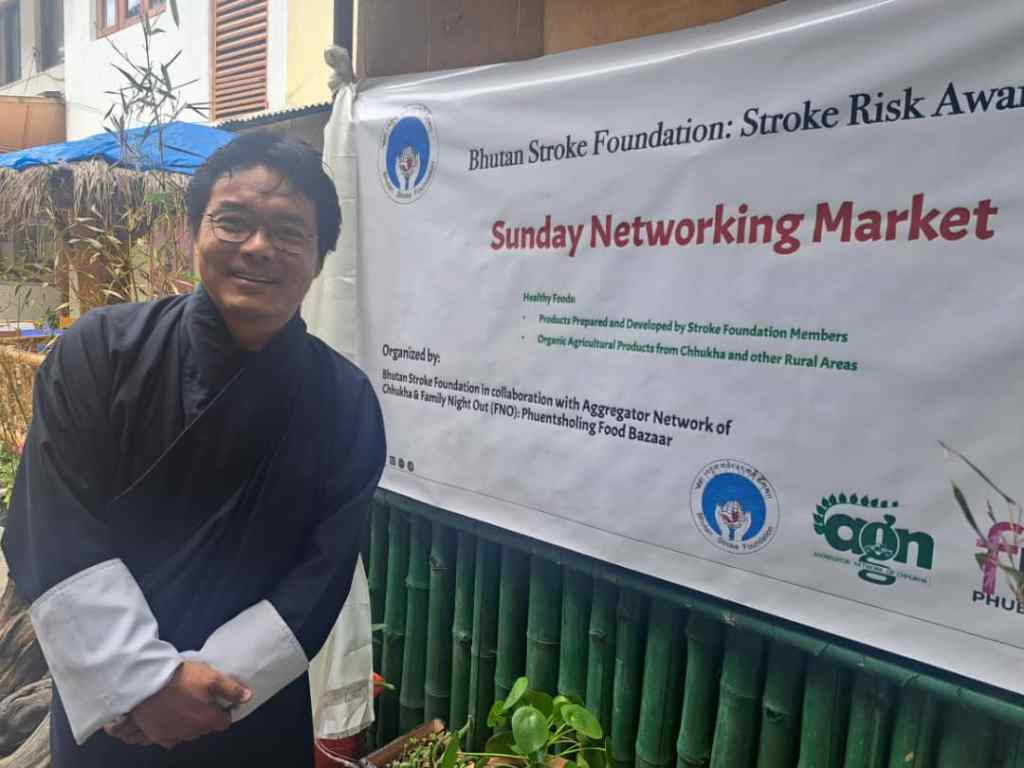
BSF Sunday Networking Market.

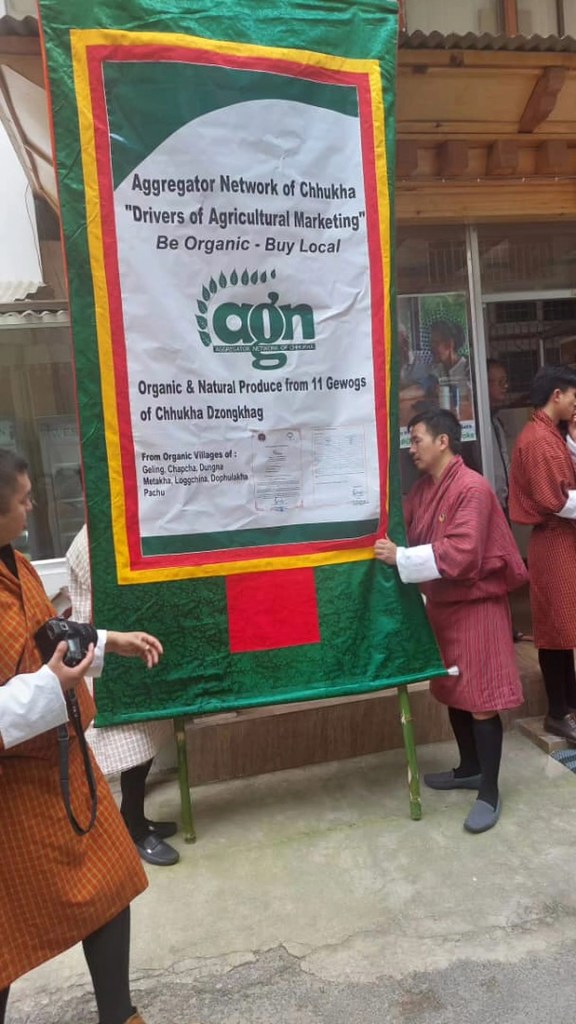
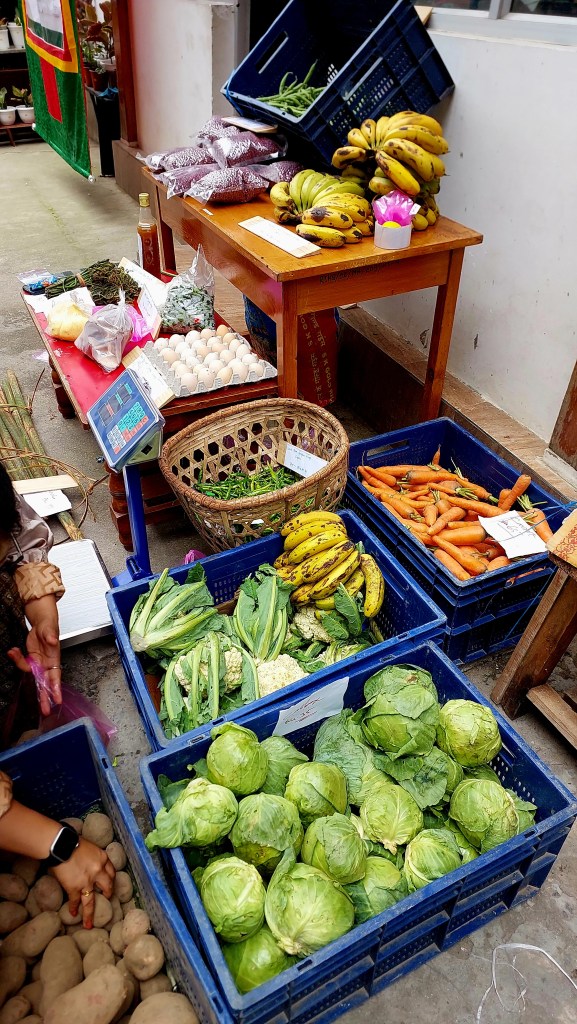
On this Day, we opened the first edition of the Sunday Networking Market – a weekly market of organic food, drinks, flowers and networking. This initiative is to help reintegrate the stroke patients into the mainstream economy. We also opened a cafe, run by recovering stroke patients.

Please show support every Sunday by visiting us at the BSF office, and buying the products. The vegetable and fruits are all sourced from villages in Chukha – spearheaded by Sangay Thinley, who works as Economic Development Officer with Chukha Dzongkhag.

May you all be blessed too with good health and happiness.

🙏🙏🙏

Compassion is the supreme practice

Compassion is the supreme practice, says Rangshikhar Rimpoche.

“Oh! It is my ancient jindhas (patron),” Rimpoche exclaims as soon as he gets closer to me and sees me properly. I prostrate three times as customary.

Rimpoche’s eye sight has been troubling him for a while now. He is 88 too but other than his eyes he looks well and healthy, which I point it out to him.

“Well, I have been around for a while and so, I think it is time that I linger among the clouds now. I have been living off people for far too long and I may get too indebted to you all. Karmically, that’s not good,” he jokes.

In between my life of travels and work – and work and travels, I try to make time to visit my family Lama in Gelephu – two or three times a year.

Popularly known as Rangshikhar Rimpoche (his full name is Togden Jigme Chogyal Rimpoche) he was born in Dremetse-Aja Nye region and comes from a bloodline of some of the greatest yogis and Buddhist masters. He was trained under his father, which included some 21 years of solitary retreats.

My family, from my father’s side, has been servant-supporters of his religious lineage. My great grand father served his grandfather. My grandfather served his father – Dekiling Rimpoche. My father served him to establish the seat in Rangshikhar. And mine is the fourth generation, and serving his son – the current Sey Gabu Rimpoche.

Because of this relation going back to several generations, he is always happy to have us, as much as we feel blessed to see him.

“Where are you coming from today? And take a seat,” he offers me a seat closer to him and at same level.

”Maybe in my next life if I am reborn as a lama I will take that seat,” I tell him.

“For this life, I am fine on the floor. But you know, I am trying my best to be reborn as a trulku”.

We both laugh. Regardless of how learned he is, he loves to crack jokes and laughs when he hears one. So, I always share my lighter side of life with him.

Tea arrives and as I am taking my first sip, Rimpoche continues the topic.

”You know, you don’t have to wait for your next life to do some serious spiritual practice. It is never late either to start getting deeper. For instance, Mipham Rimpoche was a common man till the age of 30. You can start now if you want,” Rimpoche makes a serious proposition.

”However,” he continues, “the most important practice is the practice of compassion and loving kindness. This is the best and quickest way towards attaining realisation. It is the supreme and the final target of all practices.”

🙏🙏🙏

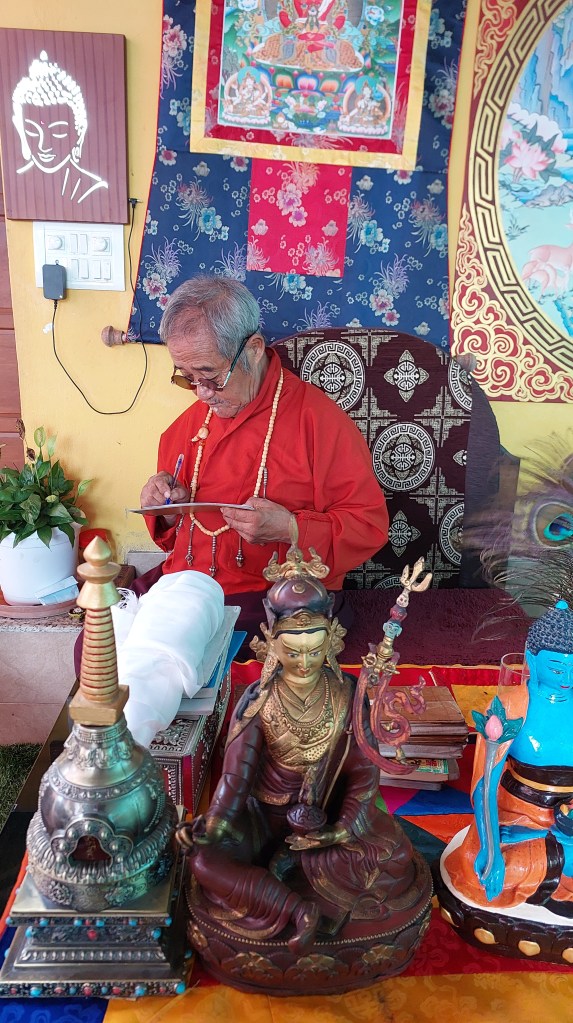
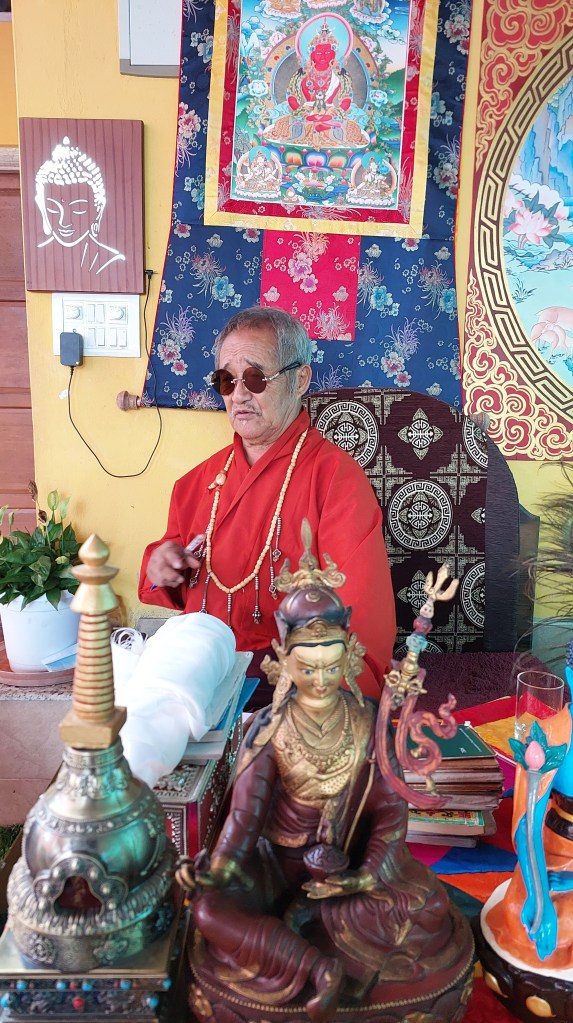
(In the picture Rimpoche is blessing my prayer beads and my gaw, which I carry everywhere.)

Why are lakes sacred in Bhutan?

Why are our lakes sacred, while lakes in other countries are not? (A question on my Instagram from a young Bhutanese friend)

Basic fact: All the lakes in all the countries on Earth were once deemed as sacred. Every native culture – American, Finnish, Asian, African, Polynesian etc. have viewed every aspect of nature as sacred. Then, science and rationalism took over the popular narrative towards the end of the 18th Century and everything that was not rational or logical were slammed as archaic, obsolete and irrelevant. Still, in many countries, including in some native reservations in the US, many lakes and water bodies are considered sacred. In a recent move, New Zealand just gave human status (with the same rights) to rivers and lakes.

Our belief in Bhutan:

As to why we in Bhutan still hold them as sacred, it has got to do more with Bonism than Buddhism. While Buddhism treats every sentient being – including nature and the super-natural, as sacred, it was the Bon masters who insisted that the Buddhists accept some of their sacred places and their deities within the Buddhist universe.

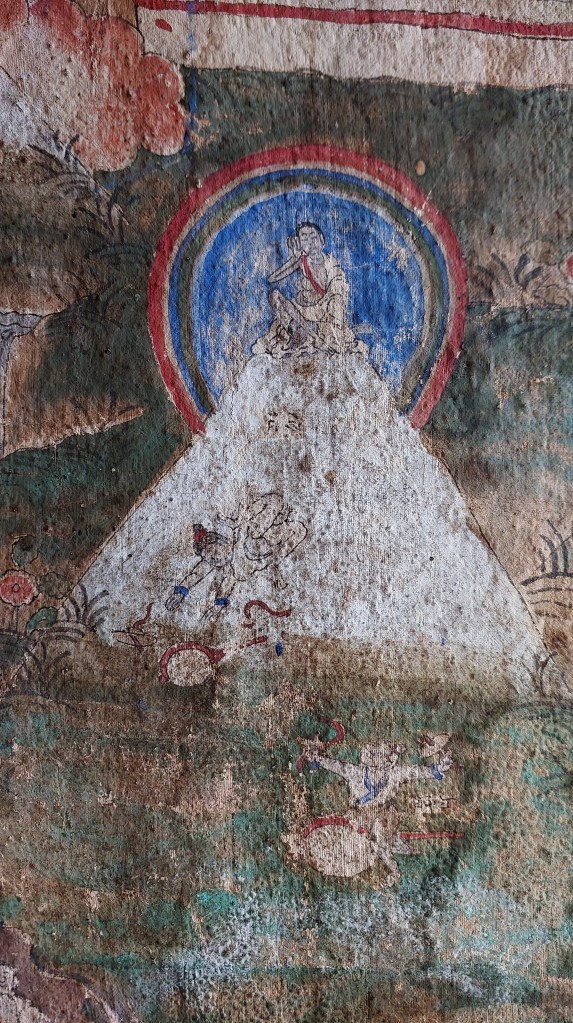
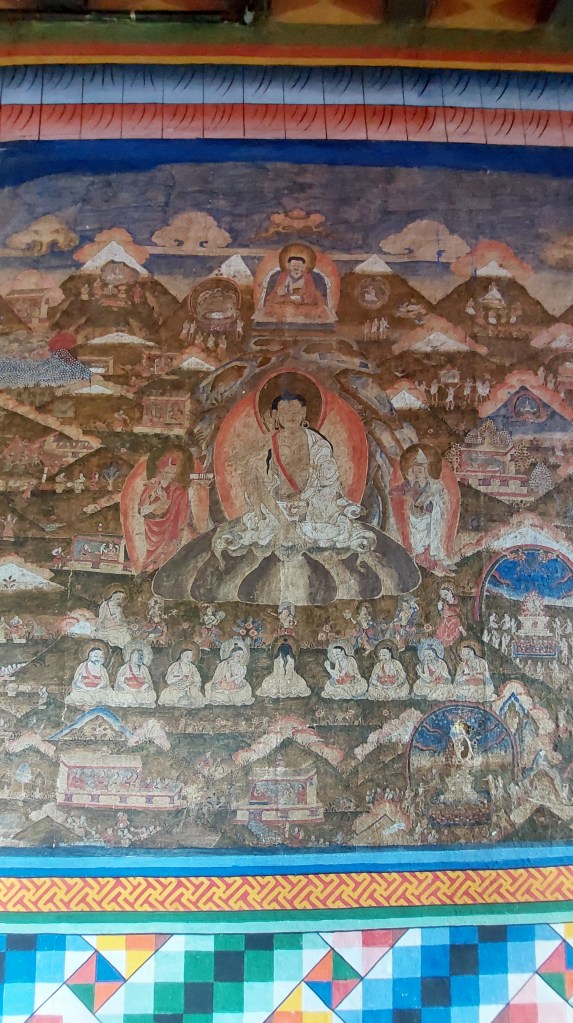
According to a popular legend, the final truce between the Bonpos and the Buddhists was made following the race to the top of Mt. Kailash between Bon Narochung and Jetsun Milarepa, in which the latter won*. The Buddhist demanded that the Bonpos accept the core Mahayana practice of Loving Kindness and Compassion and refrain from animal and human sacrifice, and the Bonpos required the Buddhists to regard all their sacred spots – mountain peaks, water bodies, creeks, soil, trees, etc. as sacred. Following the famous truce, the reformed Bon came to be known as Bon Kar (white Bon) and some of their belief systems and ritualistic practices were integrated in Vajrayana Buddhism.

There are deeper nuances on this topic and more to the story (and young readers are invited to delve further), but in brief it explains fairly well the Himalayan traditions of nature worship like treating a lake as sacred.

*In Nalanda Monastery in Punakha there is a mural painting depicting this legend. Check it out.

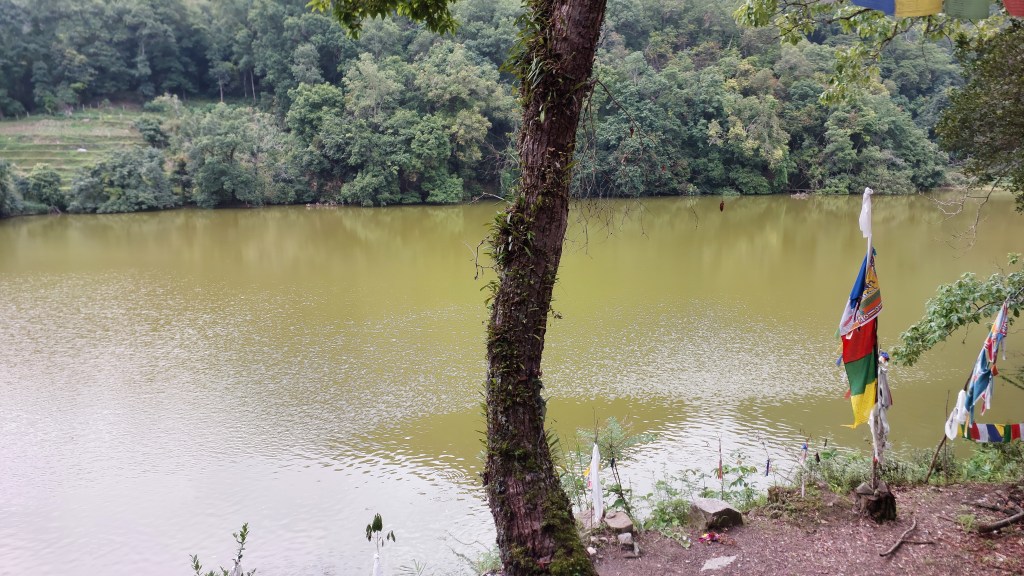
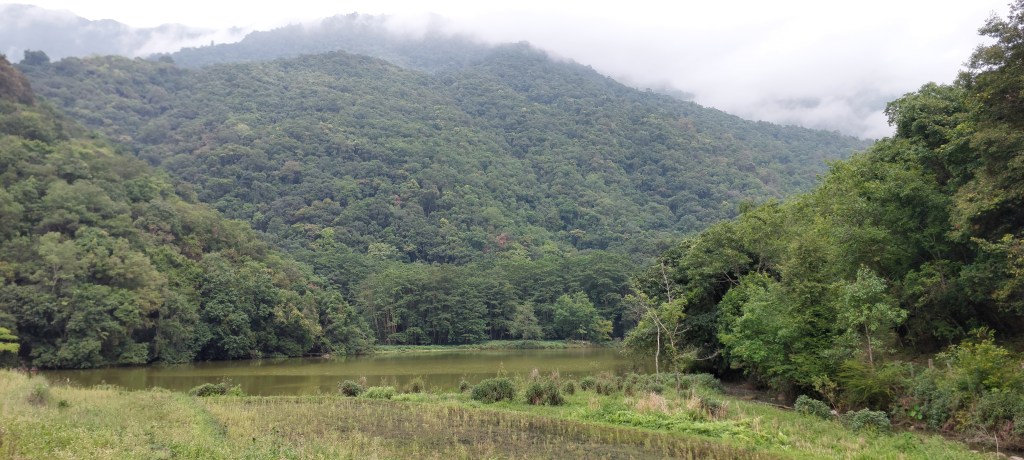
(Photo: Athang Tsho – the sacred lake in Bhutan.)

Zamling Chisang 2024

June 22, 2024, is the Zamling Chisang (literally meaning World Smoke-offering Day) – a universal day of prayers, which is an important day in the Vajrayana Byddhist calendar. It marks the day when Guru Padmasambhava completed the taming and liberation of all demonic forces opposing the construction of Samye monastery in Tibet. Thus, it falls on the Full Moon of the Trelda month (Guru’s month) in the lunar calendar.

In most Vajrayana schools, the day is marked as a day of purification of mind, body, and speech, which is celebrated by putting up colourful prayer flags, and large bonfires for incense offerings as a gratitude to the Four elements of nature and to all the sentient beings of the six realms.

As is with all Buddhist practices, the day is also about the inner contemplation where “taming the demon” could also mean calming of your restless “mind” and your inner demons, which you may be struggling against. Either way, it is a day to contemplate, and celebrate.

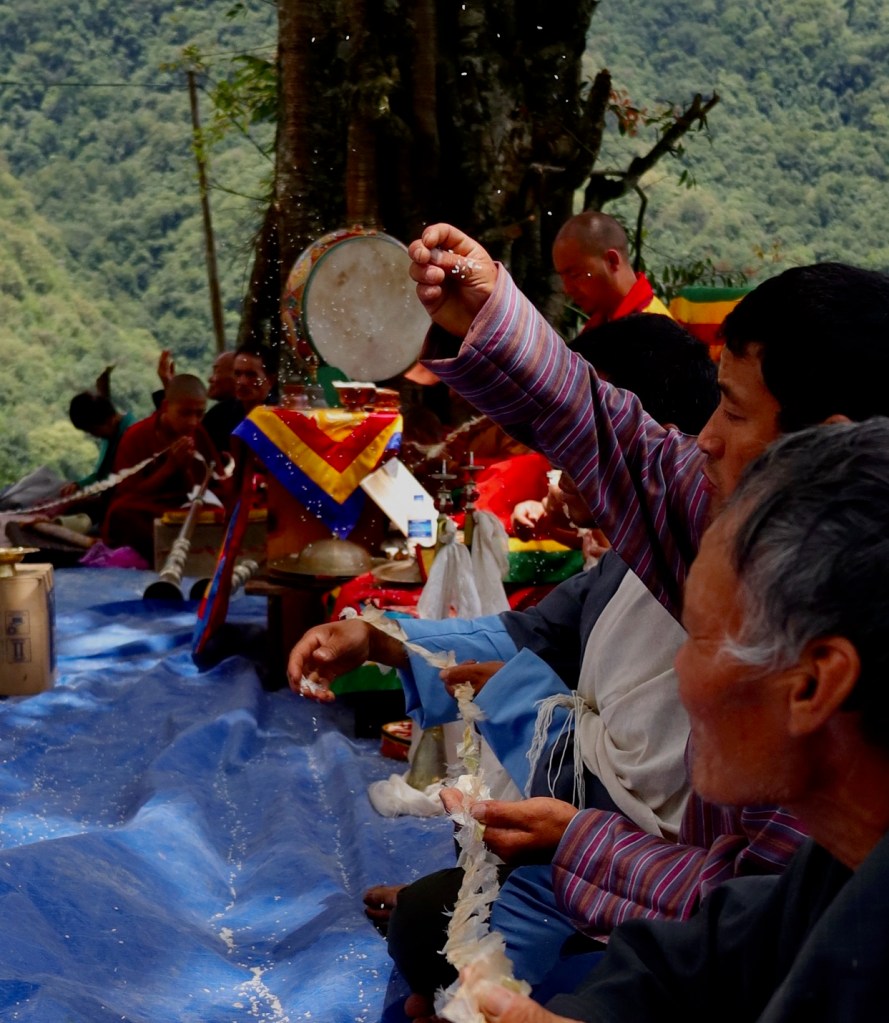
On this auspicious day, I am blessed to participate in the Riwo Sangchoe organise by members of Dorje Phagmo Foundation.

Riwo Sangchoe

Riwo Sangchoe (Dz. རི་བོ་བསང་མཆོད་), literally meaning “Mountain Smoke Offering”, is a popular practice of offering sang (incense and smoke) to the universe.

Among various Riwo Sangchoe that were instituted by various masters over the ages, the one discovered as terma by terton Lhatsuen Namkhai Jigme (1597-1653) is the most popular. It was extracted from Lhari Yosel Nyingpo in Sikkim.

The terma which is referred to as Rigzin Sokdrup (Accomplishing the Vidyadharas’ Life-Force) was later condensed by Dudjom Jigdrel Yeshe Dorje Rimpoche (1904-1987) who was popularly known as Dudjom Rimpoche – one of the greatest yogis of our time. This is one that is practiced today in Bhutan.

The overall purpose of Riwo Sangchoe is to achieve the perfection of wisdom. On a practical side it is believed that the blessings of Riwo Sangchoe has a dual purpose of Realisation through giving, and Purification from obstructions. The obstacles can come in every form – health issues, relationships, loss of property or reputation, etc.

The practice has the potential to also help beings of all the Six Realms and hence it is a very popular practice in Vajrayana Buddhism.

Does your prayer matter?

Finally, there is a myth that only lamas and rimpoche can help the sentient beings. This is furthest from the truth especially as Mahayana Buddhist. What is important is one’s intention and thought. Even ordinary people with right intention can benefit others by participating and through offering moelam and prayers. Every person has the agency.

As you read this and see the pictures from today’s event from across the Buddhist world, take a moment to offer prayers and compassion to all sentient beings – and especially for those whose lives are not the same like ours.

For those struggling to pray or have positive thoughts here is a para from the Riwo Sangchoe ceremony.

རྒྱལ་བ་མཆོད་པས་མཉེས་གྱུར་ཅིག །
May all the buddhas be pleased with this offering!

དམ་ཅན་ཐུགས་དམ་སྐོང་གྱུར་ཅིག །
May the solemn promise of the protectors be fulfilled!

རིགས་དྲུག་འདོད་པ་ཚིམས་གྱུར་ཅིག །
May the wishes of the six classes of beings be satisfied!

ལན་ཆགས་ཤ་མཁོན་སྦྱང་གྱུར་ཅིག །
May the enmity of karmic debtors be assuaged!

ཚོགས་གཉིས་ཡོངས་སུ་རྫོགས་གྱུར་ཅིག །
May we complete the accumulation of merit and wisdom!

སྒྲིབ་གཉིས་བག་ཆགས་དག་གྱུར་ཅིག །
May we purify cognitive and emotional defilements, and karmic traces!

དམ་པ་སྐུ་གཉིས་ཐོབ་གྱུར་ཅིག །
May we attain the dharmakāya and rūpakāya, for the benefit of self and others!

🙏🙏🙏

The Treasure of Neyphu


I felt really blessed to be able to see for the first time a Guru Kuthsab. This is one of the Five-Envoy-Statues known as kutshab (སྐུ་ཚབ་), which, according to the scriptures, were commissioned by Guru Padmasmbhava before he left the human world. Kutsab means “physical representative” and the sight of it is believed to be like seeing Guru Rimpoche in person.

This statue, probably the only one in Bhutan (besides the one held by Dzongsar Jamyang Khyentse Rimpoche), is in the possession of, and the main nangten of Neyphu Gonpa. It was on its annual display today as per the tradition – on the Birth Anniversary of Guru Padmasambhava.

A popular belief within the Tibetan Buddhism is that in the Eighth Century, when Guru Rinpoche was leaving for the southwestern land of the Rakshas, King Muthri Tsenpo (reign 797-799) of Tibet requested Guru to leave something in the human world to represent him. It is said that Guru instructed Acharya Shantarakshita to make five statues with five different costumes – of Zahor, Nepal, India, Tibet and China. The statues were then buried into the earth as termas, to be revealed by tertons at a later period.

The one in Neyphu is with the costume from China. It was retrieved from the large Jowo Shakyamuni statue at Kyichu temple in Paro in the 16th Century. Terton Pemalingpa (1450-1521) is believed to have seen it in his vision, and revealed it to his son, Thugsey Dawa Gyeltshen, who then later instructed Terton Ngawang Drakpa (1525-1599) to retrieve it.

Terton Ngawang Drakpa is the founder-lama of Neyphu Gonpa. He is considered as the first Neyphu trulku.

For all those who could not make it, I share it with a prayer for all sentient beings.

I spent the whole day and yes, it feels very powerful to be in its presence. I prayed that as long as I live I will make at least one visit every year, if not more.

P.S – A more detailed account of Neyphu Gonpa, and Guru Kutsab is in this blog post of mine.

https://dorji-wangchuk.com/2023/06/04/the-wish-granting-tree-and-guru-kutsab-of-neyphu-gonpa/

Humanity is still alive

“You save one man. You save mankind entire” (Jewish proverb).

Anyone who saw the film, The Schindlers List, would remember this line. This beautiful quote has been my inspiration when I feel overwhelmed by all the misery and tragedies, and when we feel helpless. The quote tells us that we don’t need to save the world if it is not possible. Or take on all the problems and issues. But we can solve one problem for one person. That way we save the sense of humanity.

Today we celebrate the collective compassion we exhibited after we all saw a harrowing picture of this man carrying his child as he ran up and down the street to do his work. Our hearts simply melted as the scorching Sun was roasting both of them.

The video and the subsequent posts also caught the attention of the members of the Bhutan Early Childhood Education and Development Association – an association of private day-care centers. They in turn circulated the case of this family among their members and just EVERY member offered to take in the child (in the day care) ON SCHOLARSHIP, so that the father and the mother can go to work in peace, while the child is taken care. The association jointly decided that child will be admitted to the nearest private ECCD near Pamtsho, where the couple lives.

More help for the young family is forthcoming from what I hear. It is simply heartwarming to see that compassion is still alive – here among the Bhutanese. 🥳🥳🥳

Lastly, a shout-out of appreciation to my young friend Tertoens『MJ』gaming for the heart-wrenching video (this is the power of media). Please keep going. You don’t need billions to help the poor. You just need a good heart and empathy. Plus you need a phone, which everyone has these days.

And thank you, the ECCD association led by Jamtsho Yld for your offer.
😍😍😍