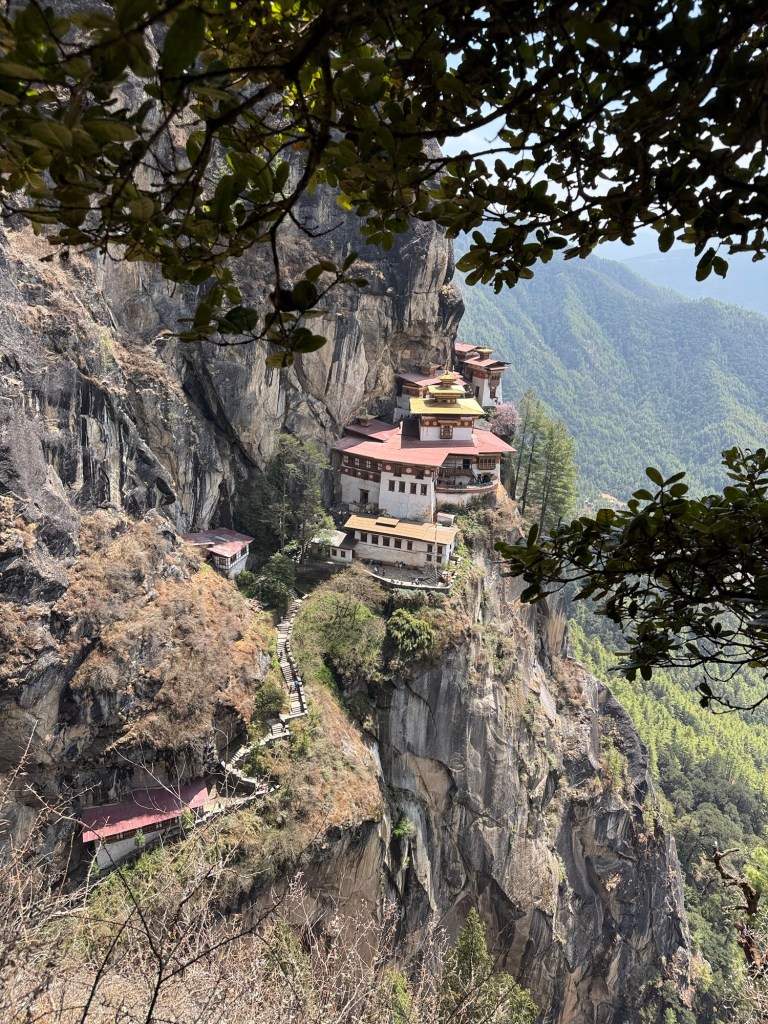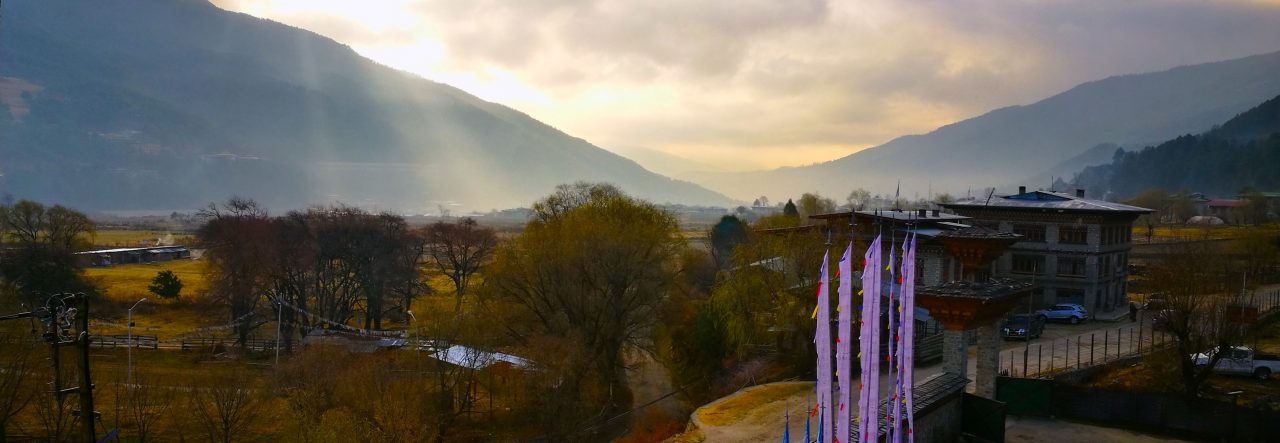
I go to Taktshang around 7-8 times a year. Sometimes I take my students and teach there. Most of the time I go to complete some Tara-Guru mantra recitations. Once every year I visit all the Nine Caves. It is a place where I retrieve my sanity and strength and some spirituality to keep moving with life.
Let me share a few observations.
I was once sitting alone in the Eight Manifestations of Guru temple reciting Baza Guru when an Indian couple walked in and started looking around. A Bhutanese guy came running after them a little later.
“What is here?” the Indian man asked the Bhutanese guy.
“Same thing. Nothing special here. Let’s go!” and he whisked them away. The woman looked at me and was sure this place was not the ‘same thing’.
This scene left me saddened because if I have paid for a guide in Lhasa, I won’t want to be rushed away like that.
Every temple in Taktshang Pelphug (there are nine in total) has distinct spiritual meaning and practice. For example, the Eight Manifestations Temple is believed to be where the Guru’s powerful kilaya, which tamed every demons in the Himalayas, landed as he was transmitting the Vajrakilya teachings to Langchen Pelgyi Sengye and Yeshey Tshogyel.
Dzongs and temples NOT MUSEUMS.
Other times, or almost every time, I have seen guides walk in with their guests into the temples in Taktshang and Punakha Dzong, and without prostrating or making any offerings, even if a lama is conducting a ritual, they just walk in and explain the significance and leave – very much like how the guides do in a museum in Paris or Delhi. Often they talk over other guides and groups with little or no regard for pilgrims and practitioners who are present.
When I train my guides at the Desuung Academy in Punakha, I keep repeating to them, “A Bhutanese temple is not a museum. You must complete the spiritual formalities – prostrate to the Lama’s seat and then to the altar, make an offering, get the holy water, and then narrate the meanings of the temple. Please do not walk around your guests like you are visiting a museum.”
The thing is, temples in Bhutan are living monuments, and each one of us must contribute to that ‘living’ experience by living them.
GO BEYOND Wikipedia.
There is also another more important aspect to it. Making the visitors live through the spiritual experience is more profound than just telling the facts and legends that are already detailed out in Wikipedia. And in any case, after the visitors are back in their lives, they might hardly remember anything.
But a moment of silence and prayers, and of prostrations and empowerment in some form remains. And if the experience is really deep, there is a chance that they might return to Bhutan for another experience. However, unless you live and practise them yourself, it is unlikely that a visiting tourist will feel it.
And yes, if a tourist has a profound moment or a vital insight to life, you might even get a fat tip. 🤑🤑🤑
Beyond the joke, every Bhutanese must do their bit and their best to provide the most compelling experience to every visitor. Don’t make Taktshang a checklist. Go beyond Wikipedia. Make them connect to the places they visit.
This is dharma too.
🙏🏻🙏🏻🙏🏻