Nyilo Diaries

Annual Gratitude.

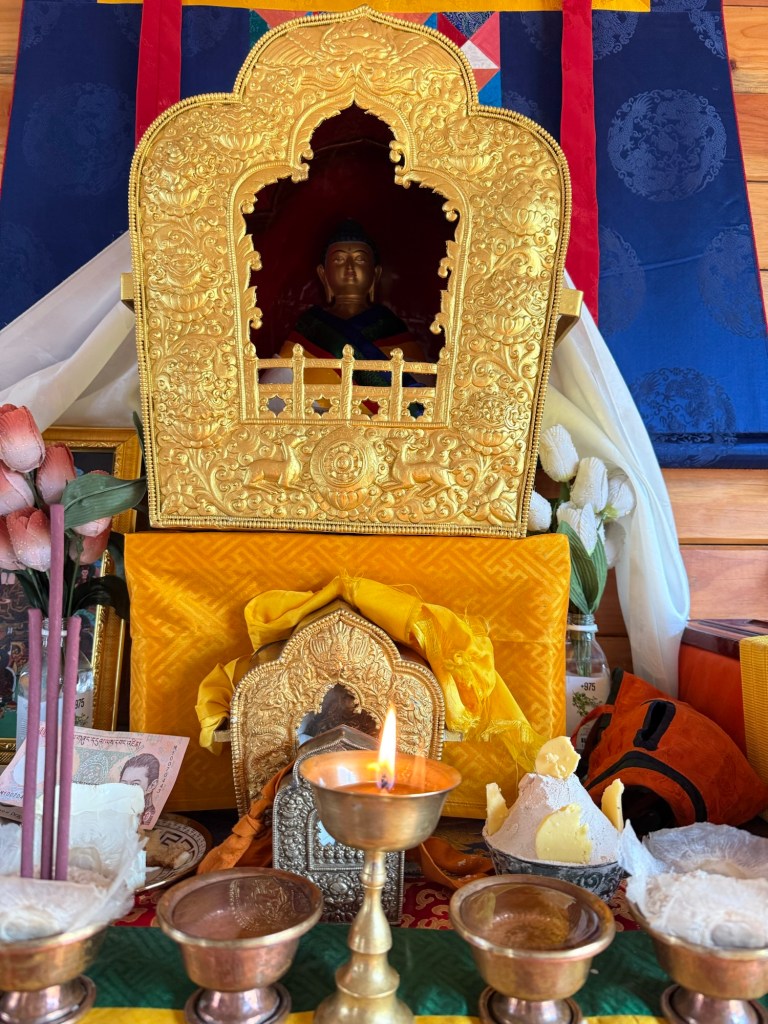
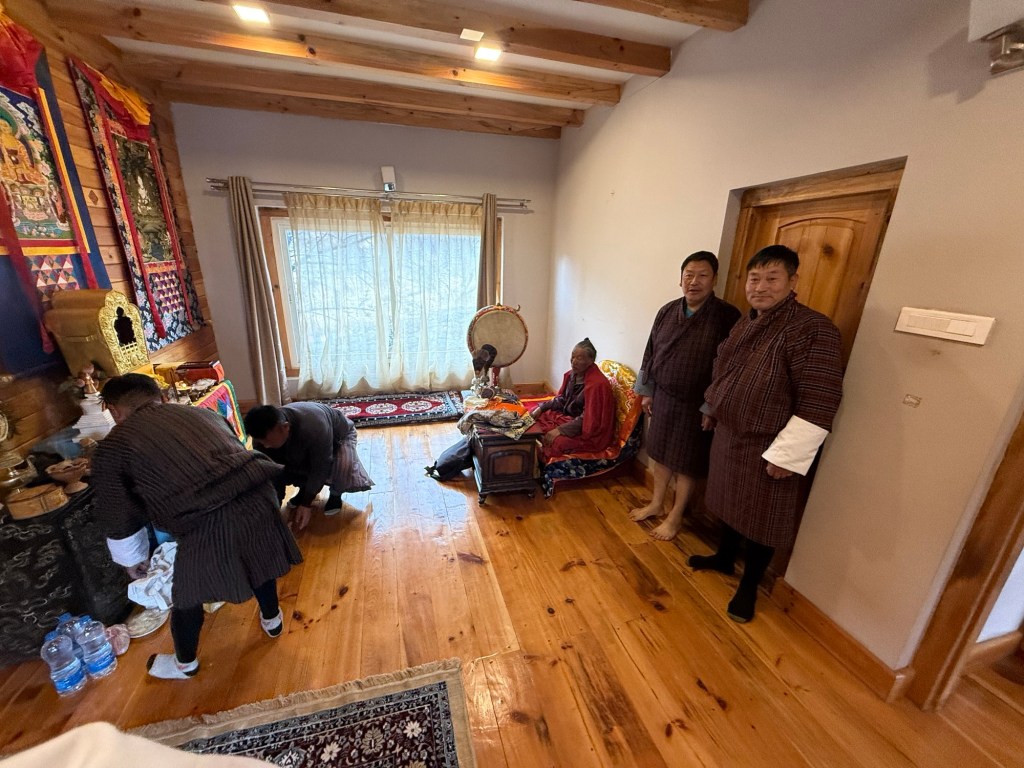
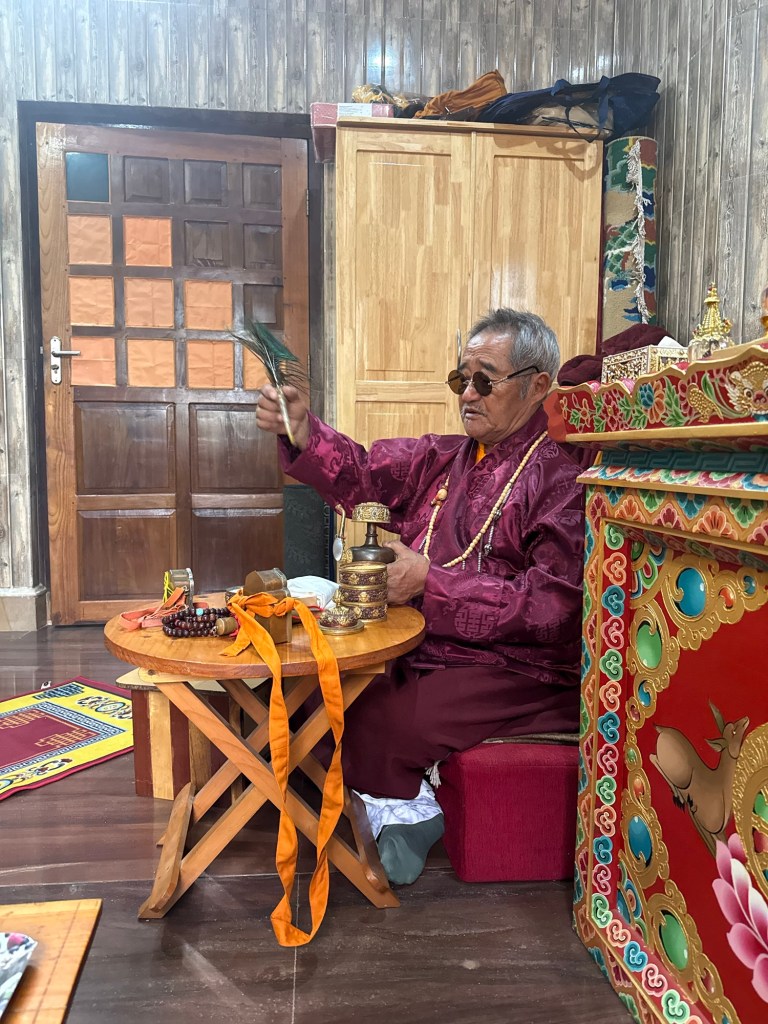
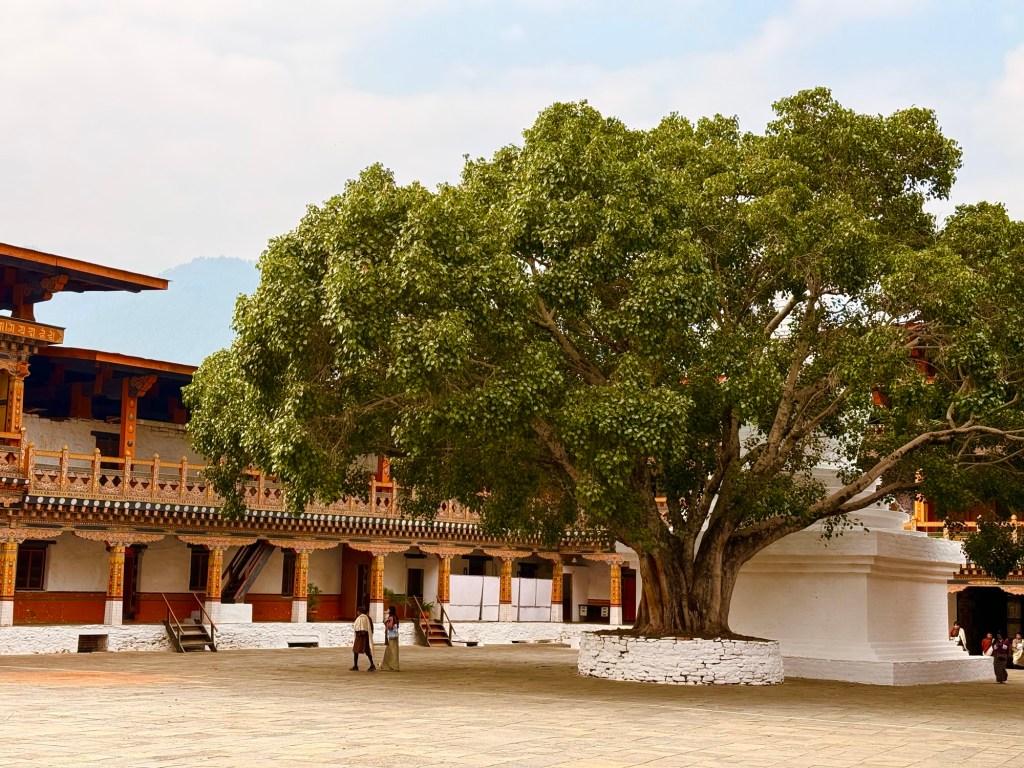
Paid my homage on the Nyilo Day to our founding father, Zhabdrung Ngawang Namgyel, at the sacred Machen Lhakhang in Punakha Dzong. Sought his blessings for the new year and what he thought of me coming out of my semi-retirement. He responded with a perfect dice number which means, Awesome! (this is according to the caretaker-monk).

Waking the Talk.

On this day I completed revising the Buddhist iconography, and Foundation of Buddhism, which were two courses I taught this group of 200+ young Bhutanese – in September and October. (To all the Tour agencies maliks, please know that I trained these guys. So take them with blind faith).

I also gave the guys some peptalk where I told them not to only find faults in the stars, the society or the state but to look at themselves in the mirror and challenge themselves first.

I said, “We always think it is someone’s fault when life does not go our way. You know, for me I am my biggest biggest obstacle. For instance, these days I feel too lazy to go for morning walks. I keep rejecting all job offers because I don’t want to work full-time. I struggle to eat healthy, or work as hard as I used to. At your age I used to work 18 hours a day. Can you do that? Can you wake up at 5 in the morning, work like crazy, and go to bed at midnight for 5 years every day?”

I told them to just go out, explore and grab every opportunity, take what comes their way, and they will eventually find their place and purpose in the world. At the very least, they could carry some boulders at GMC. The world may be unfair but you can’t change it if you only look for excuses.

Aum Om’s Homestay

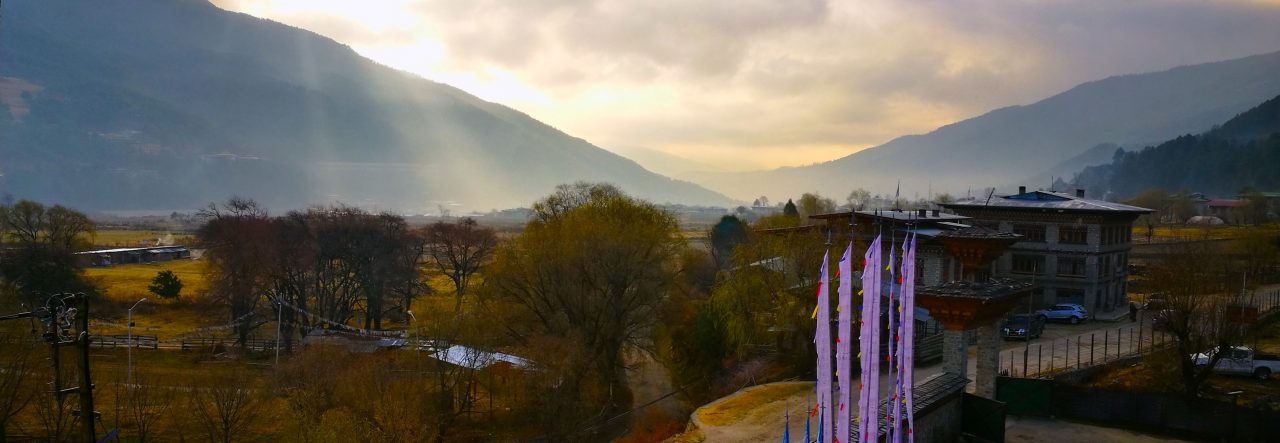
On the eve of the Nyilo I had a free meal (she refused to take the payment) at Aum Om’s Homestay. After running around in foreign land for months I wanted to eat something authentic Bhutanese, and I called her up. Aum Om is the sister of the legendary artist Asha Karma of VAST. The homestay, certified for tourists, is tucked away in the quiet corner overlooking the Punakha valley.

Aum Om is a quintessential Bhutanese lady – super warm, generous, strong, dignified, and a great homemaker. Her place is an oasis of peace and perfection. (If you want to go there, and you must, you can find her place on Google Map too)

May 2025 bring peace, and contentment to all.

The Soul of the Nation

The National Day is a day of reflection as a nation. It is a reminder of who we are as people and a day of introspection for individuals of the sense of nationhood we possess. With globalisation, urbanisation and outmigration facing every country – including ours, the National Day has gained more prominence in the life of our country in recent times. 

Like many Bhutanese, I watched the 117th National Day online. I was travelling for work. And like many, I shed a tear of joy and hope – especially touched by His Majesty the King’s words that he would make his young children work at the project sites at the upcoming mindfulness city.

The King-People bond

Recently, I watched a movie—Taking Chance. This small-budget film, based on a true story, has a simple but powerful storyline. It shows how Americans honour their people who make the ultimate sacrifice for the country. The respect, tribute, and honour for the fallen hero, as the casket makes its way back to his hometown, is viewed as the soul of America itself.

As a Bhutanese, I have often asked, what is the soul of Bhutan as a nation? What is that one sacrosanct thing we should hold dear?

In my PhD fieldwork, I have found that among many national symbols and beliefs, such the national flag, religion, or a fixed ideology it is the institution of the monarchy that emerges at the top.

Furthermore, every family in Bhutan sees the King as an extension of the family. This is because the King-People bond – as in the love and care that the King has for the subjects and the genuine respect and gratitude that the people have for the monarch goes beyond the simple ruler-ruled dynamics. It is more like a parent-offspring relationship. This is the soul of the Bhutanese nation. A glue that binds the country together in unity and harmony.

During His Majesty’s visit to Australia, some Bhutanese in Perth resigned from their jobs to attend the event to see the King. The tears our people shed there were tears of overwhelming joy of seeing what we in Bhutanese refer to the King as drinchen ghi phama (meaning ‘parents to whom we owe much’). The fact that His Majesty crossed an ocean to go and meet his subject is unheard of in the history of mankind, in general. Likewise, the videos of people lined up for kilometres in freezing temperatures in Thimphu on the eve of the National Day is yet another testament to the above.

Hence, this sacrosanct soul of the nation should never be tainted, compromised, or broken. No individuals or institutions should stand between the King and the people. Otherwise we lose everything.

The Call of Duty – and the Golden Generation

In the life of a nation, every generation gets a call of duty. For Generation Z and Generation Alpha, the Gelephu Mindfulness City (GMC) project is the Call. However, my generation is not excused from this call, either, because no generation is better equipped to understand the magnitude of what we are about to create, its benefit for the future generation and its value in our journey towards nation-building and sovereignty.

For my generation, it was to enrol in modern schools. Then, when we passed our high school, the smart ones were sent out on fellowships to study science and engineering and return to serve the King, people and the government. We did that. Some did more, some did less, but every Bhutanese of my generation who went on government scholarship returned home and did the best. We built modern health services, RNR extension centres, public infrastructures and communication systems like radio, TV and Internet.

My generation saw the country evolve from the days of struggling with basic economic necessities to flashing around Prados and smartphones – and everything in between. We come from the school of hard knocks, where we survived the bedbugs and hunger in poorly resourced boarding schools and where we had to fight for the last scoop of broth in the school mess. For the most part, we went barefoot, where even Bata slippers were a luxury.


My generation also learnt the ways of our elders and ancestors, seamlessly embracing both science and spiritualism and believing in both Maxwell’s field theory and Buddha’s four noble truths.

In short, we brought the world to Bhutan and took Bhutan to the world. We made them fall in love with our commitment to happiness. The experiences of living in the best of both worlds make us the Golden Generation, who is now called to perform one last song. As I joked with someone at the Bhutan Innovation Forum, paraphrasing a line from one of my favourite movies (Good, Bad and the Ugly), some people will talk, and some people will have to dig. We must, therefore, fish back our safety helmets, dust off our gumboots and show up one more time with “axes and spades” (tari toktsi) – as a Bhutanese adage goes.

Our generation must not only lead and inspire the next generation. Those of us with a sphere of influence in the government or public life must shed off our selfish and often corrupt and red-taped past. Instead, we need to open our eyes to new immense possibilities of the royal vision and solidly rally behind it. In this way, we would be giving back to the country that gave us so much.

What can you do? A lot

His Majesty’s royal address has moved us, but getting inspired and taking no action gets us nowhere. “To know and not do is the same as not knowing” – so an old Bhutanese proverb goes. However, one must also recognise that as a society, we are schooled to seek permission to even take a toilet break or to wait for instruction for every little thing.  It is not that people are always passive or indifferent. So, when it comes to the Mindfulness City project, here are a few of the many actionable things you could do.

Firstly, you can volunteer your time or resources to the Vajrayana centres that are being built or are coming up. This is the easiest way. As we say in Bhutanese, it is time to pave the path for your next existence. Remember that whether you take action or not, you will age, and it is better to grow old by looking back and seeing things you have done rather than look back and say, “I should have done this or that”.

Second, for those who are working outside the country, the GMC’s official bank – The Oro Bank, invites you to make fixed deposits in foreign currency. The capital raised will go towards developing the basic infrastructure like airports and bridges. After ten years, your money will be back to you with interest.

There is, however, something deeper in this Oro Bank initiative for the Bhutanese diaspora. In my view, it is about giving those living abroad a sense of being a part of this ambitious project and a connection to our home called Bhutan. It is more than just about money. It is about restoring the sense of belonging and ownership in the destiny of future Bhutan. One need not respond to the call to duty by relocating back immediately but by supporting the initiatives back in our country – financially and morally.

Third, and most importantly, let’s learn to love each other and support one another beyond our social status and professions, and avoid categorizations and classifications. Let us look up to those who are better than us and look out for those who are less endowed and less resourced. Let’s try not to unsee our accomplished people or undo their achievements. Let’s focus on human power – and not just on hydropower.

For people of my generation, as I was sharing with two instructors of the Desuung Skilling Centres, we need to groom the next generation, nurture them, guide them, scold them and put them on the path to livelihood and righteousness. Otherwise, who will? Consultants will come and go. But this country – someday, we would have to hand it over to our children. They must be prepared to receive it and take it forward by honouring with integrity and pride and with everything that makes up the glorious nation of Pelden Drukpa. The duty to uplift our people and communities and truly care for our country falls squarely on us, the Bhutanese.

Nation-building is a work in progress. And by nation-building, I am referring to the sense of nationhood and that feeling of oneness as people – and not the highways, hydropower dams or hospitals. Unless the citizens have a shared dream and a common purpose, unless there is unity, solidarity, and harmony, a country with a physical territory of humans and animals and nature does not necessarily guarantee peace, prosperity, or progress.

The GMC project provides that common purpose and a collective dream, which is envisioned by our King, who unites us as people and as a nation and whose bond with the people has sustained the test of time.

May the Sun of happiness truly shine on us – as a line from the National Anthem goes.

Dorji Wangchuk (PhD)
Professor, Writer, Engineer

(Views expressed here are personal)

This article appeared on Kuensel, 22 Dec 2024

(Photos: Official FB page of HM King)

Deity of the Airlines

Dongkala stands at almost 4,000 meters above sea level and commands a view over Thimphu, Paro and Chukha Valleys. It also stands on the mouth of Paro valley (site of Bhutan’s only international airport) and thus, this place is where the airlines also seek blessings for safe operations.

As a frequent flier, I always seek the blessings of this temple for a safe and successful journey. Of late, I have been travelling a lot for work. I took three to-and-fro flights out of Paro in a single month. So, I felt I owe a visit to this marvellous temple overlooking half of the Bhutanese territory. I wanted to pay my homage and gratitude for the awesome trips I just had.

One thing that I like about Dongkala is that it invokes all the protector deities in both the Nyingma and the Drukpa Kagyu tradition. From my mom’s side I have a long list of Nyingma dharmapalas, while from my father’s side I have to invoke the dharmapalas from the Kagyu tradition. Hence, I feel super protected – the maximum protection one can get.

Beyond that Dongkala is home to the sacred Ter statue discovered by Terton Pema Lingpa from Mebar Tsho in Bumthang. And hence, I feel blissful just to be in its presence in the main hall of Dongkala. There is also the Talking Guru statue and the memorial stupa containing the mortal remains of the founder of Dongkala – Terton Tshering Dorji. This stupa and the Ter statue are where you seek blessings for any projects or aspirations you might have.

If one goes on a clear day you can see all the tall mountains of Bhutan from Jumolhari to Gangkhar Puensum, and even the peak of Kanchenjunga (Gangchen Jin-Nga in Bhutanese/Sikkimese/Tibetan, which means Five Treasures Peak).

🙏🙏🙏

Is it always possible to practise compassion?

For a while now, I have become the self-appointed messiah of compassion. Many love this idea and the message of loving-kindness. Not all do, though. A few even trolled me on Facebook, telling me that if someone did something heinous to my family member, would I still be talking about compassion?

Well, the straight answer is yes!

Many would remember that my wife was assaulted in front of our house in Thimphu in 2012. Yesterday marked the twelfth anniversary – a full cycle in the Bhutanese zodiac system.

Two boys who were drunk had violently pushed her, and one punched her in the face, sending her flying backwards and hitting her head on the concrete drain. My wife was just closing the gate. She was found unconscious and rushed to the hospital, where she went into a coma until the next morning.

When that happened, I was with the royal entourage in south Bhutan – in a security-sensitive area, and it was past dinner time when my friend TG called me. In the rush to reach Thimphu, I put myself, my colleagues and the soldiers who were assigned to protect me – in grave danger. I still feel bad about this. And not a day goes by that I don’t thank our Guardian Deities that nothing more tragic happened that night.

My wife miraculously recovered to some degree after seeking several medical treatments both at home and abroad. She still carries the trauma – both physical and mental. However, the longer and deeper trauma was inflicted on my family – my daughter especially – something that we wrestle with even to this day. Nonetheless, we have also slowly learnt to live with it. I guess that’s the imperfection of life.

The assailants were caught a week after the incident. The Royal Bhutan Police did an excellent job. They were charged and tried in court and sentenced.

And here is where the compassion thing comes in.

Towards the end of the court procedures, the prosecutors called me (I was again on royal duty abroad), and the judge summoned my wife and asked her to seek damages – financial and psychological – from the defendants. Both my wife and I declined – to the surprise of the prosecutors, who then asked me to submit in writing.

In the letter to the judge, I declined to press any financial damages, which would have been huge. We had all the bills from the hospitals in Thailand. I also requested the prosecutors not to push too hard on the two young defendants in terms of the prison time.

In our submission to the court, we ended with something to this effect:

“The fact remains that my family and I will never be the same again. The incident has altered it forever – if it has not been destroyed. However, ruining the lives of two more families will not undo the tragedy that has befallen me. While for now, I am still drowned in anger and angst, something deep inside me tells me that I would regret being vindictive – in the long run. My prayers, therefore, are for my family to find peace and happiness again and for the young boys to deeply repent and rebuild their lives. I would like to believe that this was an involuntary unfortunate accident.

In the short period that we have on earth, l have been taught to be kind to others no matter where I find myself.”

Fast forward to twelve years:

Yesterday (22 November) marked the full zodiac cycle after that unfortunate accident happened. And I offered a prayer and Tshogkor to the deities and divinities at the most sacred of all places in Bhutan – Paro Taktshang. I thanked them for the struggle without which I wouldn’t be a different man today. I thanked them for the support and success, without which I wouldn’t feel lifted again. I thank them for being there all along because otherwise the tragedies would have been greater.

The Day was also one of the holiest days of the year – now celebrated as Mother’s Day. And it was nice to “come home” to her as I stood in silence in front of Khandro Yeshey Tshogyel. Earlier in the day my new-found friend, Steven Posner, led a group breath work. During the session I felt love, anger, compassion, forgiveness and finally my heart coming home back to me as he put song that said:

Don’t worry about a thing
‘Cause every little thing
Gonna be all right (by Bob Marley in Three Little Birds)

Optimism pays:

Life, I have come to understand, is about perspectives. You see how you decide to look at it. The same event or a phenomenon or a person can be very different from whichever angle you choose to look at. When I look back, many sad things happened after that. But so did many good things. I met my teachers and my Root Guru – Dorje Phagmo. I fulfilled my lifelong dream to be a teacher. I completed the works on my first temple in Athang Rukha in 2014 and went on to build two more there in the Covid years. And recently I built three stupas in Athang Morakha.

I also went back to school and got a PhD and studied Communication and Cultural Studies. Along the way, I deepened my knowledge of the world’s great wisdom traditions, such as the Balinese, Native Americans and, of course, the Vajrayana Buddhism – and got to travel to these places extensively and met some of the more brilliant minds in academia and corporate America.

I hold no grudge or anger towards anyone now. Hate ruins the life of the hater more than the hated. I still don’t know the faces of those boys who shattered my world. I didn’t even care to go meet them at the detention centre back then. I believed then and still believe that our youth are just the mirror of us, the adults, and the product of the society and country we have built for them.

Back to the question, is it possible to always practise compassion?

Well, the simple answer is yes!

Epilogue

As I walk down the Tigers Nest, I listened to another Bob Marley favorite, which encapsulated what late Mother would tell herself:

My feet is my only carriage,
And so I’ve got to push on through,
But while I’m gone,
Everything’s gonna be alright,
So no, woman, no cry

What makes a great teacher

(Sharing my prepared speech at the Teachers Appreciation Dinner at Paro for teachers of the well-being club. 26 October 2024.)

This year marks the 11th Year of my teaching and academic life, and let me tell you that I have never been happier. It has been a fulfilling third career. Not a day goes by that I don’t get a message from one of my former students—both Bhutanese and foreigners—who share how much impact I have had on them or how they were inspired to think beyond and better for themselves. These are the kinds of messages that you want to grow old with.

Mind you, in my career in the government, I have directed several million-dollar projects, and people have built their lives, families, and buildings after working for me. But I have yet to receive a “thank you note” from anybody about that.

(What is the wellbeing curriculum? How does that help you become Bhutanese?)

The organisers have asked me to address two questions: What is the wellbeing curriculum? And then contextualise it to what it means to be Bhutanese – a topic of discussion that I have initiated in the public domain.

Exactly 10 years ago, when I was teaching in Sherubtse, I asked a simple question: What makes a great teacher?

One conclusion that I came to was that a teacher must be well – mentally and physically, to start with. There can be no quality education – or whatsoever, if teachers are stressed, demotivated and unwell. This gave birth to the Four Pillars of Wellbeing and the Contentment Foundation through research we initiated with academics from UC Berkeley and Yale. This program now serves thousands of teachers around the globe – touching thousands of lives. The Four Pillars of Wellbeing (community, mindfulness, self-curiosity and contentment) are aimed at the wellbeing of the teachers for this reason, I have stated.

Let me contextualise them within our societal needs and trends around us. As usual, I will use stories to drive the points.

(Mindfulness and contentment)

I was 8 when my parents sent me to a boarding school – a Catholic institution run by the Don Bosco fathers and brothers near Phuntsholing. As I entered my teens, I became a movie addict – a fan of Dharmendra and Amitabh Bachchan – and so I was always slipping out of the dorm. When the school counsellor was too upset and helpless, he would call my parents to talk to me.

My parents would come but would never tell me not to do this or do that. We, Bhutanese, you know, will do exactly the opposite of what you ask – especially boys (girls are better). Instead, my parents would tell me, “Whatever you do, do with Tsham Tshey”.

Tsham Tshey means limit. It is about setting a limit to what we do – whatever we do, both good and bad. It is finding the balance in life. It stems from Buddha’s first realisation – the need to follow the middle path without veering into the extremes of self-mortification and hedonism. It ultimately aims to attain contentment and equanimity.

Every year, as I left for my boarding school, my mother used to give me another simple piece of advice: Take care of your mind, and be mindful in whatever you do, everything will fall in place if you take care of your mind.

My mother never told me anything specific to be done or to avoid at school or in my life. She knew that if I took care of my mind, I would be alright. Decades later, I am still following her advice of mindfulness.

The second story is about community building and selfless service.

Starting in 2007, I volunteered for Tarayana for two years to work in the remote community of Athang Rukha. After the project was over, I stayed on to help the community build a temple. Back then, my only motive behind the community temple was that the place would eventually bring people together. It is a social place. It is where people share their lives and help build community vitality and resilience. This aspect is important for Bhutan as it navigates between tradition and technology and between science and spiritualism.

As a teacher, I also encourage building communities among my students and mentees through moelam and memories.

The third story is about compassion and kindness.

I once took a leave for a week from my class. A teacher substitute was identified, and we went through the things this teacher would cover while I was away. We went into every detail. When I came back from my leave, I was shocked to learn that no teaching was done while I was away. When I asked, I was told by the teacher that my students didn’t know anything, and this person didn’t feel like teaching them. I was completely lost for words. This teacher, I concluded, had no compassion whatsoever.

At the most basic level, to be a teacher, you have to have empathy and compassion. Unless you have that, the young learners will not connect to you. And, like it or not, these days, no learning takes place in an atmosphere of disconnection and disregard. The students will just shut you out. It is different during our time. We even endured corporal punishment to learn from our teachers.

Whenever I meet teachers in rural areas, I am always awed – not by their knowledge but by the compassion and empathy that our teachers practise – which go unnoticed. I once came across one whose small quarter was a dorm for 15 students.

(Role of teachers in the new era)

So, to rotate back to the question: What is the role of the four pillars of well-being in education, and how do we reinforce the art of being Bhutanese?

Of late, I have been sharing one of the findings from my PhD research – what does it mean to be Bhutanese? I have been saying that to be Bhutanese is to be compassionate, altruistic and spiritual. Spiritual, not only in the sense of being religious but also having an intimate connection to the nature, people and all sentient beings of the six cosmic realms. And altruistic as being in the selfless service of them.

I believe the role of the teacher and the education system in the 21st century is not to launch ourselves into some futuristic imagination and fantasies but to help consolidate who we are as Bhutanese – through timeless values, traditions and wisdom.

I say this with conviction because the entire library that humanity has produced is on your palm now. I believe the days of teachers as the sole repository of knowledge are gone. Skills can be learnt through watching YouTube. It is free. However, contentment, compassion and community need to come from someone closer.

I believe one of the challenges we are facing as individuals and as a nation is that we have strayed away from what it means to be truly Bhutanese or simply to be human.

There is so much talk about technology, such as AI replacing some 300 jobs, including teaching, according to some experts. However, I feel no machine can teach empathy, kindness, and mindfulness. No AI tool will look at you like my mother and tell you, “Whatever you do, take care of your sem (mind)”.

While the teaching profession is safe from AI, our role as teachers is beyond delivering curriculum or the bulky syllabus. It is more about inspiring people to learn, motivating them that education is still important, and bringing humanity back to the centre stage of our lives. It is about teaching children to be compassionate and caring and practise loving-kindness.

Above all, it is about building communities, collaborations and country.

Thank you all for being a wonderful audience.
🙏🙏🙏

Why Punakha Dzong is Dewachen.

Puna Dewachen pi Phodrang (Palace of Eternal Bliss) was built by Zhabdrung Ngawang Namgyel – the founder of modern Bhutan – in 1637. It served as the capital of Bhutan till 1955.

Dewachen refers the western Pure Land of Buddha Amitabha known as Sukhavati in Sanskrit. Sukhavati means “eternal bliss”.

It is said that Drubthob Nagi Rinchen (1384-1468) arrived at this spot and saw it in his vision as the paradise of Buddha Amitabha, which was later envisioned by Zhabdrung Ngawang Namgyel too. Hence, this name was given to this place – Palace over Sukhavati.

The grand citadel served as the capital of Bhutan for many centuries until the mid-twentieth century. It is still the spiritual capital of Bhutan, where all major state ceremonies and rituals are conducted.

Popular legend also talks about it being built on the trunk of a sleeping elephant – a view that you can see from the opposite hill of Logodama.

There are two dzongs here. The smaller one on the left is the older one, which was built by Ngagi Rinchen. This one has an amazing wish-fulfilling Buddha statue.
__________________
Punakha Dzong by night.😍😍😍
Never experienced this pretty monument at night. It is prettier.

Connection

One word that comes to my mind as I follow our King’s visit to Australia is connection. Connection to our past, connection to our King, and connection to one’s own self. In a world that is getting so disconnected, this is a huge relief.

Our Bhutanese people’s connection to our King is sacred. It is the essence of the Bhutanese nation. Nothing should come between our King and us. Seeing this sacred bond on display, even thousands of kilometres away, is heartwarming. From the tiny pieces of information that are trickling on social media, it even feels emotional.

The connection to our past is symbolised by the presence of Dorje Lopen Rimpoche* – a person I interacted with very closely and developed an immense respect for during the State Visit to Japan in 2011. He used to stay in his hotel room most of the time to complete his daily prayers and practices – instead of exploring the city of Tokyo. This time to Australia, he travelled with some sacred relics to bless our people living far away.

Spirituality and monarchy are the souls of Bhutan. They are the glue that binds the Bhutanese people and the nation together and the essence of being Bhutanese in many ways – and for many Bhutanese as individuals.

To stay connected to these ideas and institutions is to reconnect to one’s inner self – and to discover that deep inside, one has never left one’s home called Bhutan.

As we join our compatriots in their reunion with our King, what is one word that comes to your mind? Drop it in the comments. I also hope that those who are Down Under will pen some reflections on this historic event.

🥰🥰🥰

*His Eminence Dorje Lopen is the second highest ranking master in Bhutan – a true monk-scholar
(Photo: HM King Official Page)

Restoring the sense of belonging and purpose

Sense of belonging, as I have mentioned in a past article, What it means to be Bhutanese?- is our authentic connection to our common heritage, our collective present, and our shared future. Losing the sense of belonging means that people have lost this connection – as in not knowing where they come from, or where they belong, and see no future ahead of them. This is a terrible state to be in because one feels worthless, unrecognised, and increasingly pushed away. Humans are social animals and we always seek a place and a community where we feel accepted, valued, and validated.

I have also pointed out that the sense of belonging is an emotional question and not an economic one. A case in point is my generation and the one before who were happy with the little we were paid but worked happily and with pride because we felt a sense of belonging, and duty towards our country, and responsibility towards our community.

The problem of the decline of belongingness is not confined to Bhutan. It is a global issue. For instance, a study from Stanford University shows that one in five Americans do not feel a sense of belonging and suffer from chronic loneliness. Sense of belonging is defined by psychologists “as the experience of personal involvement in a system or environment so that persons feel themselves to be an integral part of that system or environment”.

How have we got here?

Major psycho-social shifts do not happen in a vacuum. They are caused by many factors – big and small. Here I will point out a few of them.

Social media and mobile phones: The mass proliferation of communication technology, such as smartphones and social media, has connected humanity more than at any point in history. However, the newer and faster connections have made the connection itself shallow – giving us less time to absorb and appreciate.

More significantly, social media amplifies the illusive greener pasture – making us always feel that there is something “out there” that is better than what we have in front of us – be it people or places. It promotes distant heroes and role models instead of nearer natives and achievers. It tends to devalue everything in front of you if you are not careful.

Power and money over meaning: The rapid urbanisation, the bureaucratization of society, and the monetization of every aspect of our lives are eating into our souls as a nation. Adding to that is the social hierarchy that seems to turn off the younger generation. I don’t make a judgement on whether that is right or wrong. Some degree of social structure is required to maintain the social order. Beyond that, it can be suffocating for everyone.

I don’t undervalue money either – or the need to pay for services. However, the anti-freebies section may not realise that in social democracies such as the Nordic countries, many things come free from the state as a part of ensuring some egalitarian ideals. I view money as a means and not as an end in itself – as in to pay my bills, support my family, help others, build religious structures, and not let it rule my mind or life. However, truth be told, we are putting greater emphasis on money and hierarchy over men and meaning.

Education that competes: Enough has been said about the modern education system. And so, let me just add that what we measure is what we will eventually get – with everything in life. Assessment is a key component in education and learning. Putting one student on the pedestal estranges the rest. Grading them like factory products will make them compete against each other. And if history as a subject is taught as numbers and names to be memorised, it will just be a number or a name, and not a feeling. All these have alienated our youth, and not helped them to learn to appreciate our heritage and traditions, build communities, or make them feel like an integral part of the greater whole.

All is, however, not lost and below I will reiterate the ongoing Desuung and the new Gyalsung program as solutions and initiatives to restore these feelings.

How do the Desuung and Gyalsung programs help?

I have mentioned in another article that the success of the Desuung program can be attributed to making our youth feel proud and validated. They find a community that accepts them, and their works and efforts are recognized. They get an opportunity to serve the country – something that every Bhutanese look forward to. As I see pictures of the Gyalsung program kicking off, I feel the same sense of duty, diligence, discipline, and pride can be achieved for the younger Bhutanese who will undergo the Gyalsung program.

World over, national service has three recurrent themes – an enhanced feeling of shared purpose and patriotism, instilling loyalty and diligence, and giving a sense of belonging, resilience, and direction. I will elaborate on a few of these points.

Sense of shared purpose and resilience: As one begins to be a part of a bigger Bhutanese community, dreams and aspirations will be shared and will find acceptance. They will forge life-long and meaningful friendships and fraternity. They will learn to look out for each other and build trust and confidence – and not indulge in unnecessary competition and in self-destructive ego and confrontations that they have seen elsewhere.

As the program extends to a year, our youth will have time to go through a roller-coaster of emotions and self-discovery. Many will harden up and might find their meaning in life, which eluded them from being in their comfort zone. They will find a shared purpose, build a collective dream, and envision a future for themselves and for those around them.

Sense of belonging and patriotism: The over-emphasis we give to one small section of the society – the esteemed civil service, has us questioning our basic fundamental duty and rights to patriotism – as in if those who are outside of it should feel less Bhutanese and lack the love for the country. This has ramifications on the psyche of the young as they see their parents and relatives increasingly feel estranged – and not contributing meaningfully to the country.

With Gyalsung, young boys and girls will learn to love the country and be loved and find their way to feel belonged through service to the King and country – irrespective of profession, social standing, race, or wealth. They will learn that no one has a monopoly on patriotism and each one of them is entitled to feel for their country like any other. They will find a culture to be experienced, traditions to be learned, relationships to be nurtured, and an inner self to be discovered. They will learn that the country is big enough to fit every dream and find things to do, places to go, people to meet and communities to serve. They will discover that they have a place in the world. It will be a worthwhile journey, I am sure.

——————–

Of cars, bans, and the artificial demand


Following the lifting of the import ban on cars, there was a sudden uproar when consumers realised a huge increase in taxes for new cars. While the taxes may be a cause, another reason for the cost escalation, in my view, is the ban itself. Simply put, if you ban, or limit something, the price of the commodity increases. This phenomenon is called artificial demand, or artificial scarcity – in microeconomics.

The concept of artificial demand is based on psychological human behaviour, whereby we place higher value on anything that is in short supply. The more the value we put on something, the higher the price. The entertainment industry and high fashion goods manufacturers practise this by issuing limited editions and selling the exclusivity narrative. Advertisements and commercials are solely based on creating artificial demand to stimulate sales.

Some large multinationals and unscrupulous corporations also practise artificial demand by manipulating the supply of goods into the market. Such wilful market distortions are illegal in countries like the US and the EU. In our case here in Bhutan, however, the artificial demand and price escalations may be unwittingly created through blanket bans and moratoriums.

Banning the ban.

For quite some time now, I have been discouraging the practice of imposing blanket bans as a tool in governance. Bans, moratoriums, suspensions and changing policies have become a norm with democratically-elected governments after 2008. Blanket bans should be enforced only as the last resort and that too after thorough and independent research that factors in all short-term implications and long-term consequences, plus the collateral damages on other sectors. For instance, the “ban” on drones for private users has severely limited the filmmakers and the creative industry and its potential use in the delivery of goods to difficult locations and relief materials during disasters.

Bans may be effective as urgent short-term measures to stabilise a market or an emergency situation but are ineffective in the long run. Studies following the 2008 US financial crisis and the 2012 European debt crisis found that sporadic sales restrictions largely failed to support prices and reduced liquidity overall. Bans also skew long-term and larger opportunities for the overall economy and the employment market. Although it is hard to imagine something that has not happened before our eyes, researchers can mathematically model different options and possible outcomes, and do the cost-benefit analysis of any public policy. Bhutan aims to double its GDP by 2029 and become a high-income economy by 2034. If few things will thwart these achievable dreams, those will be unstable policies, unpredictable bans, subjective applications of “rules”, and the decline of the population.

Bans on car imports do not serve the desired purpose of limiting the numbers either. There have been several bans in the past 15 years. If you look at the data over the same period you can see that the upward trend has been the same. Instead, the bans have put our young people, who were working in the car dealerships, out of jobs.

Effects of bans and artificial demand.

Fear and FOMO. I am even inclined to think that bans drive up sales instead of reducing it. This is because unpredictability generates unfounded fears and suspense – plus market speculations. Fear emerges out of our reptilian brain, which produces the most primitive and illogical instincts in us. There is nothing worse than unpredictability to garner irrational behaviours. For instance, my Isuzu pick-up has almost hit 70,000 km. And at the rate I am using, it is safe to go on for two more years. However, what if there is another import ban and if this one becomes unreliable? With my wanderlust life, my skin and my work depend on it. It doesn’t matter that, as a teen, I survived on erstwhile BGTS trucks – some of which were falling apart when we were moving on the road. Like me, there might be many who will make premature purchases out of fear. One dealer told me they had several inquiries asking if there would be another ban because they wanted to wait for the current tax rates to be reduced.

Recovering lost sales. The management of STCB has clarified that it is also the manufacturers who have raised the prices. Of course, why wouldn’t they? The Bhutanese market may be small, but it still brings them an annual revenue of over Nu. 5 billion. They will try to make up for the zero sales in the last two years – and blame the price increase on technology, transport, steel prices, wages, crude oil and even their dogs and cats. I have also taken a “jab” at the dealers. They need to recover the overhead costs of the last two years. While the employees may have been laid off, they still had to pay the rent for the showroom, and utility bills such as electricity, water, and for the cleaners and watchmen. Ultimately, though, all these costs and expenditures will be passed down to the customers and it is the ordinary people who will bear the brunt of the ban eventually.

Revenge buying. We must also not be naive to think that foreign manufacturers and corporations are angels. They are aware of the artificial demand theory and they know they can cash in on it. They expect that our young salarymen, who have entered the job market in the last two years, will rush to buy no matter what. In sociology, this phenomenon is called revenge buying. The manufacturers also understand that unpredictable rules create unfounded fears in older people like me. Unlike us, their decisions are based on research and evidence.

The solutions.

The State has two powerful mechanisms to regulate public finance: monetary and fiscal tools. These can be used strategically and tactfully to steer the economy. For example, if there is heavy public investment in mass transport, people won’t be compelled to buy private vehicles. If the government refrains from buying Prados and Landcruisers as pools, and instead goes for vehicles that are made in India, a lot of hard currency will be saved. There are many ideas as long as one is not stuck with old habits. No new solutions can be found for any issue with the same beliefs and behaviours that created the problem in the first place.

As for the rising number of cars in the streets of Thimphu and Phuntsholing (these are the only two places in Bhutan facing congestion), the long-term solution is developing public transportation, where everyone benefits. I would even go further by making it free, or heavily subsidised, like in some EU countries. Thimphu has about 70,000 vehicles in a population of little over 140,000, which is perhaps the highest car-person ratio in the world. There have been talks about electric trams and pedestrian streets. We should fish back those bold ideas. If pollution is the issue, this government initiated the idea of electric cars in 2014. I feel this can be reinvigorated through not only giving tax breaks but by making all government pool vehicles electric. There will be less misuse too and less dependency on fossil fuel.

Most importantly, the car import ban should not be nationwide. Thimphu’s municipal problem does not necessarily apply to other 19 urban centres. Good connectivity and seamless movements of goods, people and services are essential for an economy to grow. Beyond Thimphu, other places do not even have a reliable taxi service.

The lifting of the counterproductive ban itself was necessary, and I disagree with the school of thought that argues that we should have extended the ban. On the surface, it may look logical, but national monetary and fiscal policies are not like personal saving accounts and spending habits. Every action, big and small, by the central bank and the government, has huge implications on the economy, and ramifications on hundreds of thousands of businesses and people – most of which will never come to light.

While this current government may not be responsible for the increased tax rates, it has the power to review them without necessarily bringing them down drastically. It can also introduce some new innovative schemes. However, it cannot wash its hands off, because like anywhere else, and more so in Bhutan, we look up to the government for relief, guidance and leadership.


Dorji Wangchuk (PhD)
Professor, Engineer, Communication Scholar

(The print version appeared in Kuensel, 31 Aug 2024)

Don’t swap self identity and cultural identity

Those who missed my talk at the last Bhutan Echoes 2024, I post the link to the full video here.

What does it mean to be Bhutanese? To be Bhutanese means to be compassionate, altruistic and spiritual. It emerges out of the sense of self that we construct for ourselves which I define as the interdependent self consisting of the personal self, social self and the spiritual self.

Not in this video, but there is one confusion that seems to be there (and I will elaborate it in my next article) – especially among our youth.

When we talk about identity in Bhutan it is often equated to cultural identity and overpowered by political identity (e.g. ID card, nationality, etc). Unlike self-identity, cultural identity is a collective sense of identity among a group coming from, or is part of, a same culture. For instance, forget about the nationality, even a region such as the Himalayas will have a common and generalisable cultural identity, but very different self-identity among its inhabitants.

The other confusion is with cultural identifiers as identity, such as wearing a gho, speaking the national language, religious festivals, temples, etc. These are known as identifiers in cultural studies and as symbols in everyday language.

Here by identity I refer to the definition from psychology which is the sense of self – the personhood – the self-identity as in those characteristics and attributes, both inherent and acquired, that make us unique. E.g. The way someone from Merak Sakten makes a sense of self will be very different from someone who is born and brought up in Phuntsholing.

Cultural identity will change with culture but self-identity should not. A compassionate person will be compassionate whether you are in Bhutan or in Manhattan. In Bhutan you wear a gho but in Manhattan you wear a suit.

Identity is personal and it provides the foundation of your being – and something that will give you the principle, integrity, resilience, etc. Isn’t this what we are lacking nowadays?

Enjoy the video and happy to keep this in the national conversation.