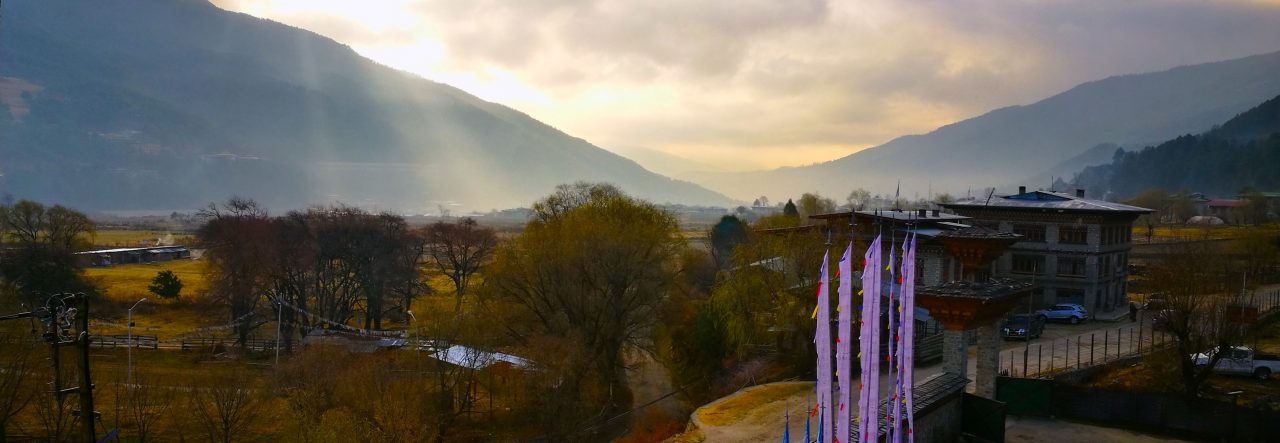
I made a visit to the Shiva Mandir in Gelephu. This was my second visit and was made following the news of its refacing works commanded by our King.
The temple is dedicated to Hindu god Shiva – one of three principal deities in Hinduism, the other two being Brahma and Vishnu. The three gods are often referred to as Trimurti.
Many would also know that Shiva is invoked as a powerful protector deity (dharmapala) in Mahayana and Vajrayana Buddhism, where he is referred to as Lha Wangchuk Chenpo (“Great Powerful God”) or simply as Lha Chenpo (“Great God”). Every day in all the dzongs and Buddhist temples across Bhutan, he is invoked together with all the other dharmapalas and lokpalas (worldly protectors).
NO SUCH THING AS HINDUISM OR BUDDHISM (in the strictest sense)
One thing to consider is that before the arrival of the colonial powers that imposed divide-and-rule policies, the spiritual traditions such as Shaivism (followers of Shiva), Shaktism (followers of female deities like Durga), or Brahmanism (followers of Brahma) existed independently as vibrant traditions on their own. And they coexisted in harmony with all other religious and spiritual groups. Besides the Shaivites and the Brahmins, there were larger communities such as Jains (followers of Mahavira), Vaishnavites (followers of Vishnu), and Krishnaites (followers of Krishna), plus hundreds of smaller tribal communities practicing their own cult, and animistic and shamanistic cultures and traditions.
The word “Hinduism” as a unified religion has historical roots given by the external forces such as the Persians and Greeks to describe all spiritual traditions south of the Indus River and later by the British colonizers to categorize the people of India for census and legal purposes. Simply put, from an academic standpoint, the word “Hinduism” was a socio-political construct.
Buddhism too, as a word, was coined by a Frenchman only in 1800. In fact, as Dzongsar Khyentse says, there was no “ism” to Buddha for over 500 years after Buddha passed away. In Bhutanese, the word for Buddhism is nang-choe (Inner Reality).
ASSIMILATION AND INSPIRATION.
The spiritual traditions in the Indian subcontinent were also not organized as institutionalized religions; instead, there were many wandering spiritual teachers and seekers, who taught under the trees, near the rivers, in the caves, etc. Buddha himself taught everywhere. Later after he passed away, his followers organized to stay together and preserve the teaching.
The different spiritual teachers often learned from each other, and their students debated one another. For instance, Brahma and Indra are believed to have approached Gautama Buddha to teach the devas and other humans. Similarly, Buddha’s first two teachers were wandering gurus from the Sramana tradition – a non-vedic ascetic movement that practiced renunciation, meditation, and moksha (liberation).
HOW COME SHIVA IN VAJRAYANA?
The Vajrayana school of Buddhism inducted many deities and higher beings – most notably Brahma (Lha Tshangpo) or his direct emanation and Shiva (Lha Chenpo) as dharma protectors. In fact, the statue of Lha Chenpo Shiva is adorned in the first spiritual monument inaugurated in GMC – the Ugyen Norlha Temple. (See pictures of Ganesh and Shiva below). On the other hand, today among Hindu practitioners, Buddha is revered as an avataar (emanation) of Lord Vishnu.
Furthermore, these spiritual groups, big and small, also “borrowed” best practices from one another. For instance, the esoteric techniques, such as reciting mantras, making mudras (hand gestures), and reciting sadhana (spiritual practice), are common to both Vajrayana and Shaivism.
GMC – A CITY OF HARMONY
As Gelephu slowly emerges as a global hub for Vajrayana Buddhism, it is important that people acquire a deeper understanding of not just the ritualistic practices but also of the historical evolutions of various spiritual traditions and, even more importantly, the basic philosophical tenets.
A good understanding is the basis of mutual respect and social harmony, which the world needs more today.
🙏🏻🙏🏻🙏🏻
NB:
- If you visit the Ugyen Norlha temple in GMC, the statues of Ganesha and Shiva are above the main door.
- For those interested in doing a pilgrimage to sacred sites of Shiva in Bhutan, we have one Shakta Peetha in Jomotshangkha in southeast Bhutan.
Shakta Peethas are the 51 must-visit Hindu pilgrimage sites where parts of Goddess Sati’s body fell when Shiva went around carrying the dead corpses of Sati. Sati had committed suicide after a fallout with her father over her marriage to Shiva, which sent him into complete sadness and madness, and he vowed to destroy the universe. (See the last picture).
 Dorji Wangchuk