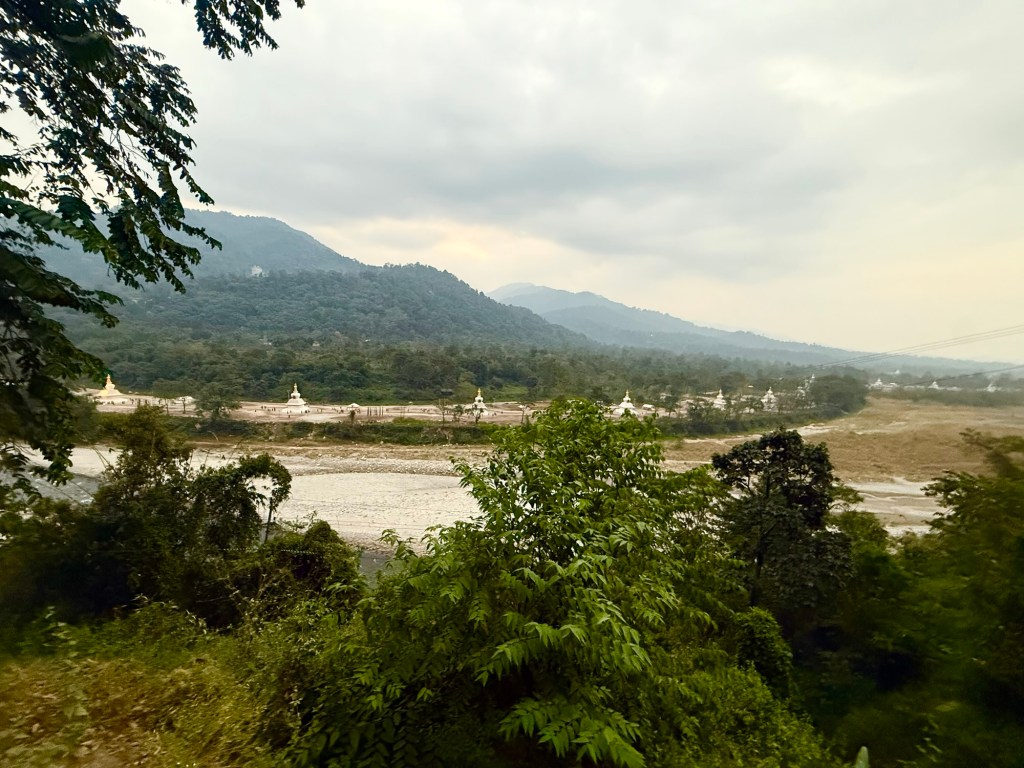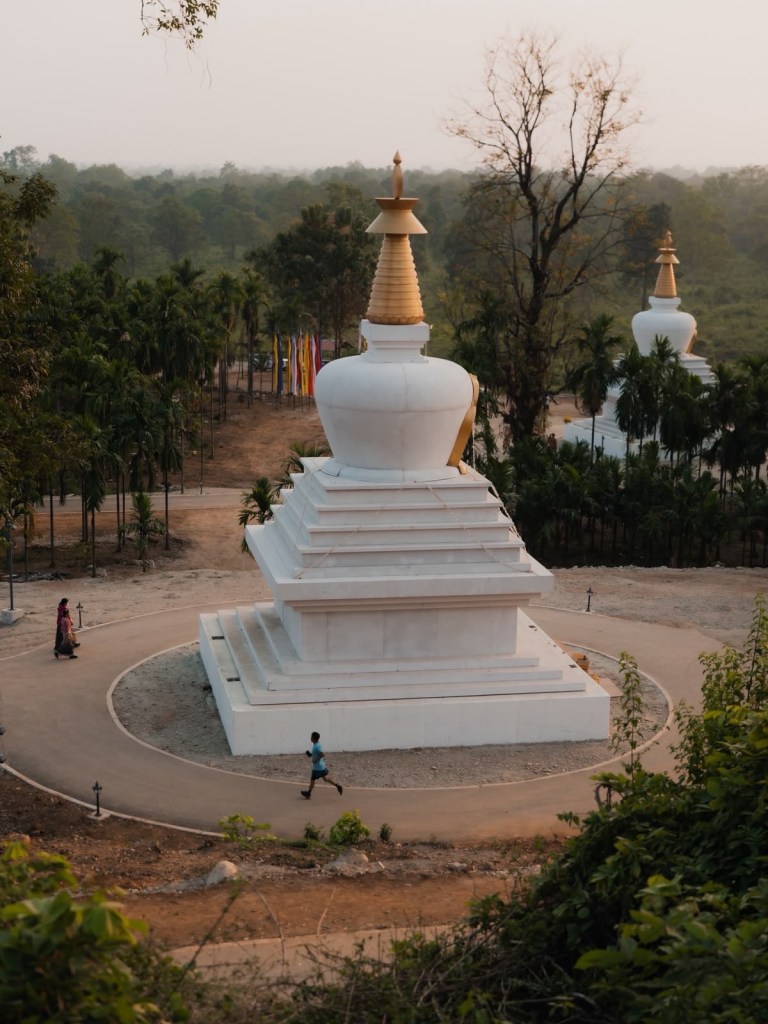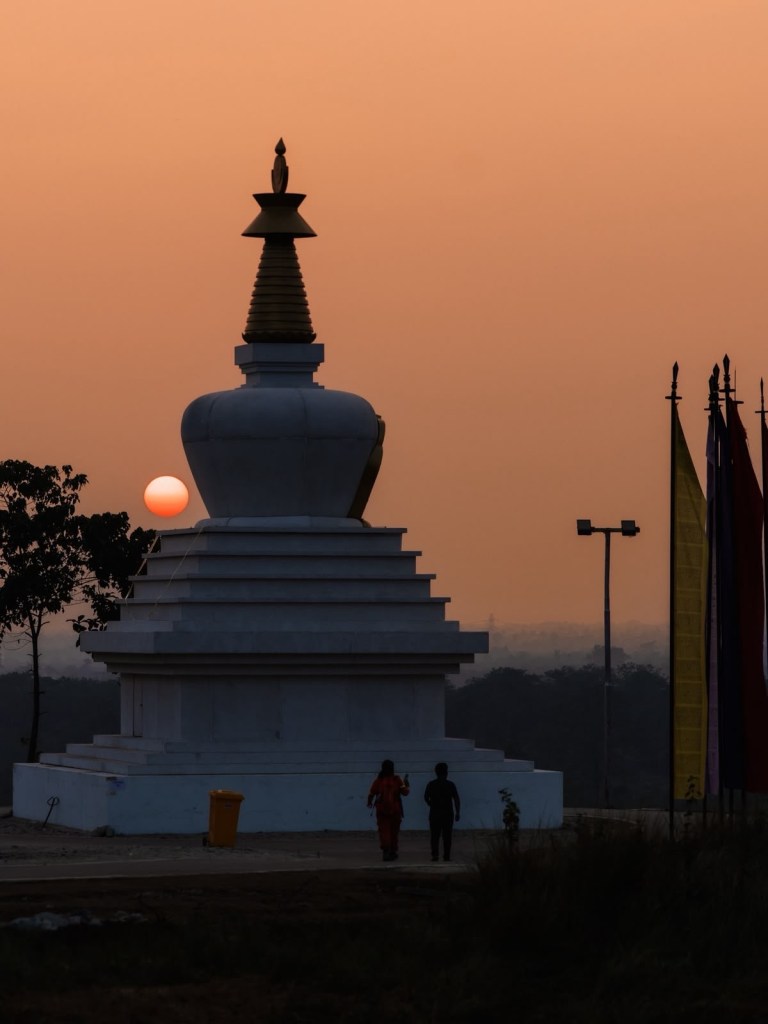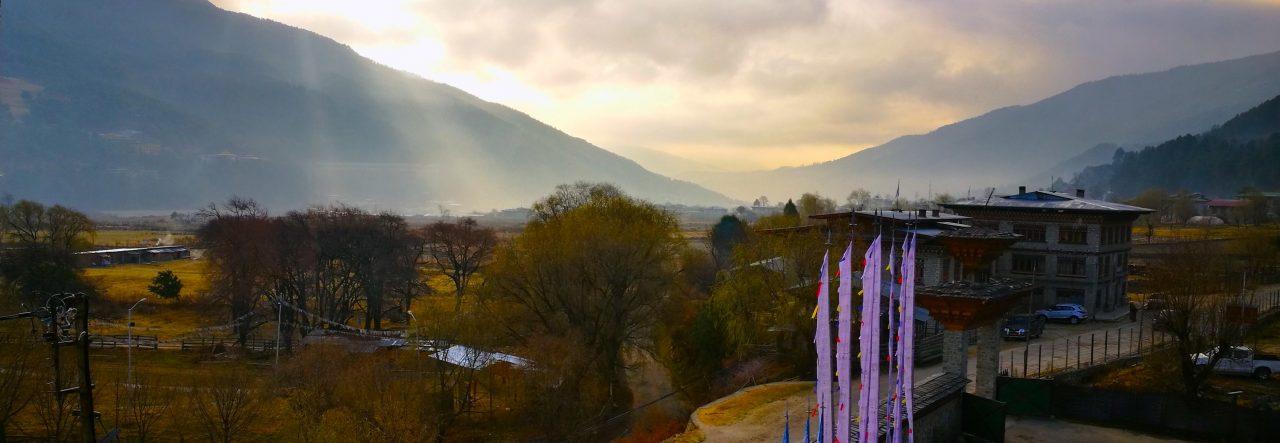
There has been a lot of back-and-forth on the validity of the 108 stupas in Gelephu Mindfulness City because they were not built out of traditional materials. Simply put, this is a straw man argument, because it really doesn’t matter. The inner relics, the intention of the patron and the builders, and the consecration are the vital elements, and not the materials.
So, what is a stupa? Is the material used in Gelephu okay? Absolutely! Why? It is because a stupa is a representation of the Buddha’s enlightened mind, and the spiritual power comes not from the outer shell but from the life force we give it through, what we call ‘sok-shing’, and through the consecration (rabney) presided over by a high lama.
In essence, there are three vital components to a stupa, and the material building it does not appear as one. In fact, it is immaterial.
First, the sokshing (སྲོག་ཤིང་། meaning life tree) – a central wooden pole inscribed and enveloped with scrolls of mantras and sacred relics that forms the life force and power of the stupa. This is the most important item inside the stupa – and of the stupa. Each of the 108 stupas in Gelephu has a sokshing that contains the sacred remains of Gautama Buddha and of countless Bodhisattvas and masters who came after him. They were, in addition, carefully made by monks and stationed in Sarpang Dzong and blessed for over three months of prayers and rituals.
Second, the consecration ritual known as Rabney (རབ་གནས།), where a high lama and realised master or a reincarnation trulku perform elaborate ceremonies to invite the enlightened mind and wisdom to take residence in the physical structure. The symbolic representation is then transformed into a living spiritual presence. In the case of the stupas in Gelephu, there was not one but over 100 living Bodhisattvas and a dakini (Dorje Phagmo Rimpoche) and led by a living Buddha – His Holiness the Je Khenpo of Bhutan, who conducted an elaborate consecration ceremony. The congregation of these many holy people is unprecedented, for they represented all three Buddhist traditions – Theravada, Mahayana and Vajrayana – and the four great schools of Vajrayana – the Nyingma, Gelug, Kagyu and Sakya. This was simply a historic first in Buddhism.
The 108 stupas project was conceived by a dharma king of our time, His Majesty King Jigme Khesar Namgyel Wangchuck, to make Gelephu a new Buddhist city during these degenerate times. It has the purest of motivations. Stupas in this regard serve both as path breakers to clear the obstacles towards the propagation of Buddha dharma and as a point of reference for ultimate realisation and enlightenment.
Such virtuous acts are also common among Bodhisattvas, who initiate activities to take along people together towards a collective liberation and enlightenment. By engaging hundreds of donors, thousands of monks and builders, and a quarter million people to make aspirational prayers at the event, our king has capitalised on his innate agency to help everyone get a step closer to uncover the bodhicitta – the seed of Buddhahood, an attribute that all sentient beings possess per Mahayana and Vajrayana believers.
In conclusion, materials and even forms of stupas are of least consideration when it comes to a Buddhist stupa. The inner relics, the intention of the patron and the builders, and the consecration are the vital elements.
As for the materials, they have evolved since the time of Buddha according to the availability in the local area. The Indians and the Nepalese built stupas out of mud and bricks. The Bhutanese made them out of stones and woods. In Tibet some stupas for private homes were adorned with corals and turquoise.
My prized stupa in my home is made of glass containing the hair relic of my lineage master.
🙏🏻🙏🏻🙏🏻
(I hold a PhD in communication with research that intersects Buddhism, society and technology. I teach Buddhism and Buddhist iconography to tour guides and to Western Dharma practitioners.