Pollutions and politics

I am back to my university in Macau – and away from the pollutions and politics that seem to have completely engulfed my home city of Thimphu. Both were killing me. And between the two, I don’t know which one was worse. What a sad development. I always thought we, as Bhutanese, were better than that.

First, the pollution.

Has anyone measured the level of dust particles in the air in Thimphu? I am sure it will be at dangerous level We boast of being a carbon-negative country but the construction boom and rising number of cars have resulted in unbreathable air in Thimphu. What does that mean? Well, more respiratory problems such as bronchitis and asthma, allergy attacks, lung impairment in the long run and increased overall cost on public health. However, all these are preventable. The Building Regulations require construction sites to be covered and pollutions to be contained. Who is supposed to implement and why are people so irresponsible? As someone who is allergic to dust, and I know many who are, winters in Bhutan is hell for me. The dryness itself kills me. Now add to that the dust from open construction sites.

The second cause of pollution is from cars. Just since my last visit in July, Thimphu suddenly is swarmed by more cars. Well, we can’t prevent people from buying cars but we can regulate the way they move around. Meaning, through effective traffic management, which unfortunately doesn’t seem to be the case. Thimphu’s traffic is planned more to ease the works of some organizations rather than for convenience of commuters. For example, it is ironic that a country that doesn’t produce a drop of oil is obsessed with one-way streets that you are forced to do several merry-go-around to get from point A to point B. To ensure that you are channeled into a jam, there are several dividers along the road in Thimphu. The dividers along the Chorten to Chubachu round-about is unnecessary. Those around the BOD station is idiotic. Adding to the chaos is the public transport system network that is small, sporadic and unreliable. Taxis, as told to me by several taxi drivers, are considered a nuisance – as a poor man’s option. There are, in fact, signs in major public offices that say “Taxis not allowed”.

Hence it was such a relief to be away to Punakha, Athang Rukha and Bumthang. Thimphu, as a city, is gone. Hopefully, it will be the only place we would have ruined in Bhutan.

Second, the politics.

I am not allergic to politics. Fortunately. After all, politics means “affairs of the states” from the Greek word, polis – meaning cities within reference to city-states of Athens. What is unappealing, though, is the perception and narratives that we are creating around it. “Politics is dirty”, “Don’t mix politics with religion”, “No public gatherings during election”, “Apolitical civil service”. In an earnest attempt to carve out clean politics in Bhutan, I am afraid we have irrevocably marred it.

For me politics is just another reality that we have embraced. It is neither dirty nor clean. It is a part of our civic life. So why should it override other aspects of our society? I work, I pray, I eat, I talk and every few years I vote. They all blend seamlessly. As is in one’s life, so it is in the life of a nation. Every five year, we will listen to new aspirants and old leaders.

However, the overbearing rules and restrictive regulations, while done with good intentions, are killing the interests in politics that people are refraining from talking openly. Only individuals supporting a particular candidate or a party are getting together. Furthermore, by letting the political process take over social functions, we may also be losing the essence of Bhutanese society. They should be at par. By overemphasizing not to mix politics with religion, we are implying that politics is dirty. A dirty place, whether perceived or real, will not attract good people. Is this what we want?

Politics or democracy should be a harmonious part of life of a nation – not an exceptional event that overtakes religious gatherings, public functions, cultural events or wedding parties – and that too for an extended period. If there are people who get mixed up, and there will be, they should be allowed to grow. This is the only way how democratic ideals are internalized. This is the only way how democratic principles are sown. A blanket ban is an easy method – not the best solution.

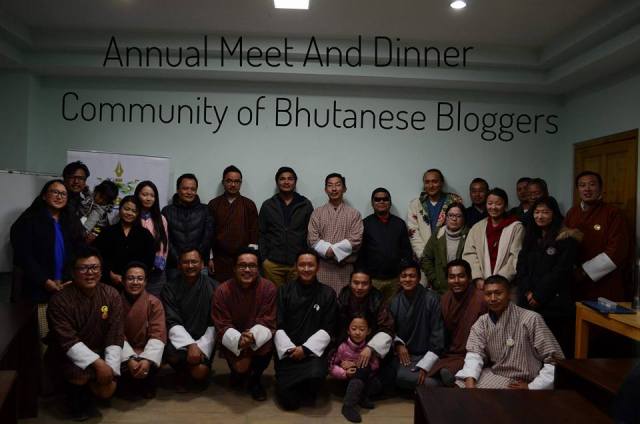
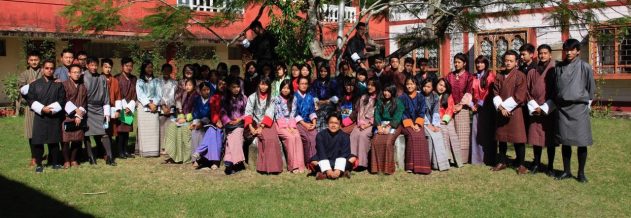
Still, at the Bloggers Meet, which had to be a closed-door event, it was nice to have two attendees bring their children to the meeting room. While our presenters presented and adults talked about plans and projects, and about stories, dreams and illusions, the children went about with their life. Crying, sleeping, making noise and running around, etc. As the moderator, I wasn’t disturbed. Rather I was happy. This is how a village zomdu used to be. Women bringing young babies and old men groaning some irrelevant topics. And no one noticing because they all flow seamlessly. This is how Bhutan was – or should be. Everything that exist in harmony.

I am not sure how the new or future Bhutan would like. More pollutions? More dirty politics? More overbearing rules and regulations? Perhaps.

But life, you must know, will go on. And what doesn’t makes sense will disappear into irrelevance.

27971718_933452686818383_2071982206161975660_n
Two babies (one regular, Ninzi) attended our annual CBB meeting


Introducing myself

This post might look strange but a regular reader of my blog asked me asked to clarify about myself – because, apparently, there are some confusions among those who never met me, between me and other namesakes (those who are also called Dorji Wangchuk). In fact, many people ask me about a book, which was written by another Dorji Wangchuk (dean at Paro College of Education). The confusion is further aggravated after I entered the teaching profession – when I got associated with Sherubtse College. And also, of late, because I have been writing extensively on education and teaching.

So, first of all, I am not a career teacher. I have never been one until my short stint in Sherubtse where I taught three classes for three semesters. I never studied in Sherubtse either. I used to joke with my students there that I didn’t qualify for Sherubtse but became qualified to teach there.

My background is in engineering. All my formal education, except the current one, is in technical field. Right from the primary classes to matriculation from Kharbandi to Dewathang Polytechnic and to advanced university studies in Italy, I did carpentry, welding, metal works, electrical engineering, telecommunication and microelectronics. Furthermore, in the school I went (Don Bosco Technical School in Kharbandi) from 1974 to 1982 I also studied English, History, Geography, Physics and Chemistry, which gave me some grounding me in language and literature. It is pity that these subjects have been removed and technical and non-technical fields are so compartmentalised nowadays.

I started my working career as a junior engineer in Radio NYAB in 1985 and was part of the team that launched the Bhutan Broadcasting Service (BBS) – a year later. In 1987, I was awarded a fellowship to undergo higher studies at the University of Bologna (Italy). I returned home in 1995 with a laureate degree and resumed my job in the BBS. I worked as head of transmission, project manager, chief engineer, general manager leading the team that brought both FM radio and television to Bhutan between 1999 to 2002. In 2003 I moved to documentary production and journalism – producing some 25 documentaries and hosting 112 shows on BBS – Q&A with Dorji Wangchuk. I resigned in 2006 to start Centennial Radio and pursue an independent career. I also wrote some 120 columns – mainly for Bhutan Times. My freelance life was, however, short-lived when I was called back to the government again – as the Director for Royal Office for Media, His Majesty’s Secretariat from 2009 to 2013.

After my service at the Palace, I taught for three semesters in Sherubtse College and then worked as a Dean at Royal Thimphu College for one year. These two places inspired me to go back to classroom and that is when I started working again towards another advanced degree – but this time in another field – communication. Speaking of my zeal for learning, it is not for the fancy title (I have the “Doctor” title from my degree in Italy, which I never used – or cared for). I am pursuing this academic works in communication to consolidate the rich professional experience I accumulated in engineering, mass media, public affairs, governance, etc. into some scholarly works that could contribute to the national narrative – and to the discourse on nationhood and nation-building.

What next? Well, honestly, I haven’t really decided what to do next. I have done a lot in my life, and been through a lot too. I guess, as John Rambo puts it, I will take my life day by day. It is still an open book. But a story worth a read.

Don Bosco boysIV - Version 2
Barefoot and broke, Kharbandi Technical School, 1979
Student_Dewathang_1985
Sportsman of the Year,
1903990_10154715711815153_6559796854393848296_n
First job, Radio NYAB, 1986
11102999_10155554987420153_5996986538093325351_n
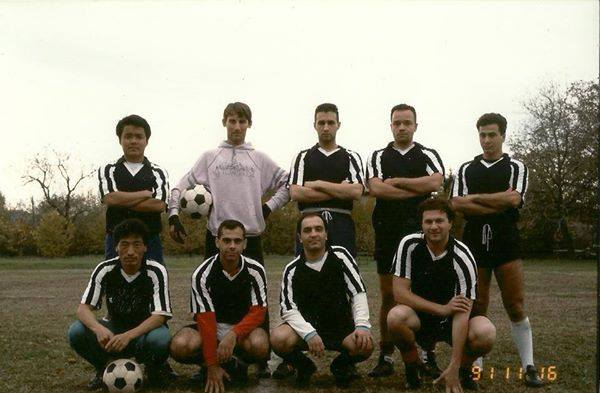
Footballing my life away, Italy, 1990
sdr
Launching BBS TV, 1999
BBS Days 001
Larry King of Bhutan, Production meeting for Q&A with Dorji Wangchuk, 2003
IMG_20171217_152309_674
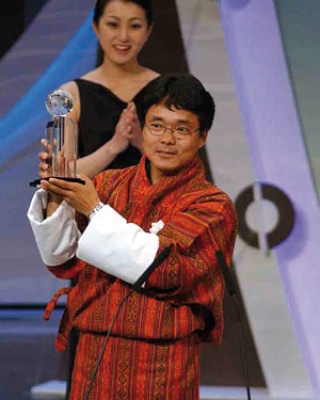
First International win, Tokyo, 2003
17133_388691300152_1115854_n
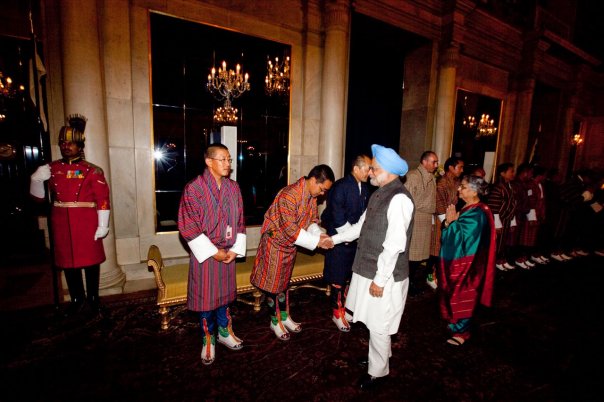
Meeting Indian Premier, Delhi, 2009
b9d4d-20111118-gj1_4425
Praying with HM, Japan, 2011
cropped-mg_33881.jpg
Teaching in Sherubtse, 2014
Photo on 30-11-2017 at 5.30 PM
Young scholar, Macau (China), 2016 – till date

Wise Man and Lama

The newly-built road to Lamga seems painstakingly carved out of a rocky vertical cliff that one miss could take you flying straight down to Harachu river. However, my host and driver, Chorten Tshering, is hardly bothered by it. He is rather proud and happy. “When I first landed here as a groom, I was asking God what I had done in my past life to be transplanted all the way here from Mongar?” he says with a beaming smile. “Now I don’t even think of my native village anymore.” sdr

Chorten Tshering, popularly known as Kota, married into a family in Lamga and is now the de facto leader of the community. His father-in-law, Mindu, who died two years ago, had led them before him. My association with this community started in 2008 when I was volunteering for Tarayana Foundation that was building them homes, sending their children to school and teaching them health and sanitation among others. The Lamgaps are simple innocent folks who depended on Mindu for every wise decision. And with him gone, Chorten Tshering and I decided to fill the void – as wise men of the village. Sharp, quick and resourceful, Kota learnt to drive in few days. When the Gewog Administration implemented the farm road in the valley, he befriended and invited the bulldozer driver and the site supervisor in his house and lavished them with food and drinks. Although Lamga has been trailing behind other villages in every aspect of modern developmental works, it became the first village to be connected with a motor road in the valley. “The government may provide the budget but it is the hands of the people on the ground as to how the road should be built. If we treat them well, they would go an extra mile to do a good job,” he explains. Even before the road was through, he bought a used Bolero and was ahead of the game.

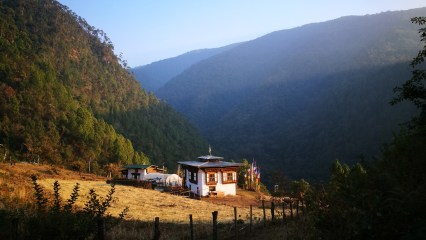
Lamga village is located at the southeastern end of Athang Gewog. Beyond the village is the massive Black Mountain range and further towards the east is the Mangdechu valley. To the south is Tsirang. It is a new settlement of Phobjibs who made there their permanent home after the government asked them to choose between Phobjikha and Lamga. Until then, they moved between the two distant places in the bjasa-guensa (summer-winter) tradition – a practice that has been long been discontinued in other parts of Bhutan. hdr

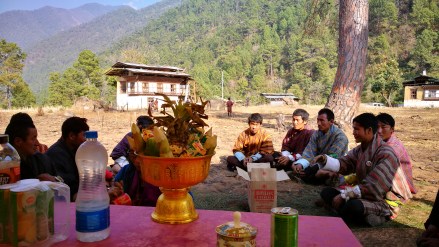
Moving to Lamga, however, posed a challenge they forgot to consider. They needed to appease their deities regularly. There are at least three rituals to be conducted every month. “During the monsoon, we do the rituals under the tarpaulin sheets in a pouring rain,” explained Daw Gyeltshen, the village Tshogpa. Few years back, on the insistence of Chorten Tshering and Daw Gyeltshen, I initiated a community temple project.

When I say, I am doing a temple, I am not doing everything. From my experience doing my first temple in Rukha, you only need to put in, may be, a third of what it might take. The rest is something that the community will do on their own. As a net result, you have the people that contribute in equal measures and feel proud to be a part of the whole process. This is called empowerment. In Lamga, the same modus operandi was followed. I provided the three main statues, fuel for the wood working machineries, royalty for timber, some cash to the chief carpenter, the roofing materials. The villagers happily go into the jungle to extract the timber, find boulders near the river and carry them to the site, dig muds and pound them for days and months till they have all the four walls. Compared to what I put in, theirs is a much larger share.

As the Bolero pick-up truck negotiates the dusty hair-pin bends taking us the village, we see a huge smoke of incense shooting up from the site where the new temple is built. As we get closer, we see the whole village lined up to greet the chief guest (me). “Sorry to keep you waiting. There was a road block above Samthang,” I tell the people as I jump out of the car. I then walk and greet one woman after another – with each of them offering me a basket of raw rice, three eggs and three incense sticks. This is a traditional way of welcoming an important guest into a village. We all gather in the temple that is under construction. All around us, the place has been cleaned, decorated and done up really well for my impending visit. My heart is overjoyed to see the progress at the site. They have worked hard.sdr

“Thank you everyone, for this most heartwarming welcome to your village,” I open my speech. “Allow me to tell you that it’s a very humbling experience and totally undeserved for something so little that I have done for you,” I continue. I updated on the statues of Tshela Namsum (Tsepamay, Namgyelmo and Drolma) being completed in Gangtey and Tashi Yangste and ready to be transported to site. I conclude with a renewed commitment to see to the completion of the project.

“The main purpose of this temple is to serve a place of meeting – as social place. Otherwise you people will never get together as a community.”

When I am done, Chorten Tshering and Daw Gyeltshen share on the recent visit of His Eminence Lama Gangtey Tulku, who came and blessed the place. “That’s wonderful,” I interrupt them. “However,” they continue, “this spot is nam droesum sa droesum (literally, three skies and three earth*) and so it is quite an auspicious spot.”

Wow! What a coincidence, I thought


* Nam droesum sa droesum refers to a place where two rivers meet in mountainous area and thus creating a spot with three valleys and three skies. The local belief is that such places have excess of cosmic energy that ordinary dwellings would perish. Only spiritual structures can come up and that too initiated by accomplished masters.

~~~~~~~

mmexport1519380755046
Statutes being currently consecrated in Gangtey Gonpa. The Zung was granted by Gangtey Tulku
cof
After the roofing works, the temple can host the rituals and ceremonies for all time to come

cof

sdr


My Story, Our Legacy

Extracts from my opening and closing remarks at the 4th Bloggers Meet/Conference, Feb 2, 2018

Friends and fellow bloggers,

Thank you for sacrificing your weekend to be here at this 4th Bloggers Meet. I apologize for all the confusions surrounding the venue and the nature of this Meet. Since we are in the election season, we have made this Meet for registered members only. So, this is not open to public like other meets . I know many out there will be unhappy about this. My apologies to them.

The Community of Bhutanese Bloggers is a loose collection of writers who use the web to tell their stories. It is non-political, non-religious and non-commercial – with no affiliation to any individuals, groups or organizations. All expenses for the meets and conferences are borne by few of us. And despite that no incentives are given out for attending these meets, we have participants who travel from other districts.

The theme of this Meet is My Story Our Legacy. This was chosen to reflect the historic times we are going through. Few people today realize that fifty or hundred years down the road, our future descendants will scramble to look at this period for written records and references. Even if we don’t write on events of great historical importance, the written records we leave behind will be told as stories one day. In fact we often use the phrase, dhi gang ngache ghi pham ghi kad su. (those days during the times of our forefathers). So, what we write,  whether they are worth of being read or mentioned, will be talked about and read. So I invite you to be mindful of what you write and share.

My Story Our Legacy was also coined out of the belief that the story of a nation is nothing but the stories of ordinary people. We all have a story to tell. Today, we have three speakers – three storytellers who I believe are also creating their little stories in their own little world. Pawo Choyning Dorji is a filmmaker – photographer who tells stories through pictures, Amrith Subba is spreading the love for sharing and compassion and Tshering Pelden writes about everything from ants to drayang girls. My thanks to them for accepting to share their stories today.

Lastly, the question: what is your story?

For me, writing has been a way to share my life, beliefs and my concerns. It has served as a place where I could offload my feelings and frustrations, share joys and sorrows, and drop ideas and inspirations. It takes time, of course. And sometimes I have even wondered if anyone is even reading them. Yes, I know this hollow feeling of talking to a wall – especially in your early years of blogging. But do not despair. Keep writing. Keep going. Keep flowing. If for nothing, one day you will also turn 50 like me. Your shoulder will get frozen. Then you discover that a physiotherapist is your fellow blogger and is ready to do the magic on you.

Yes, this is a true story.

Also few days back as I walked away from one of these physio sessions, a young woman walked up to me with a beaming smile and went on with something like, “Sir, you don’t know me but we are friends on Facebook and I follow your writings. I work as a nurse in the …. section. If you need anything there, just look out for me. It will be my pleasure to serve you”.

It is these pleasant and unexpected encounters that make your life worth living, pains worth taking and time worth spending on this small activity of sharing called writing.

Happy blogging to all


27971718_933452686818383_2071982206161975660_n

Advent of TV in Bhutan

sdr

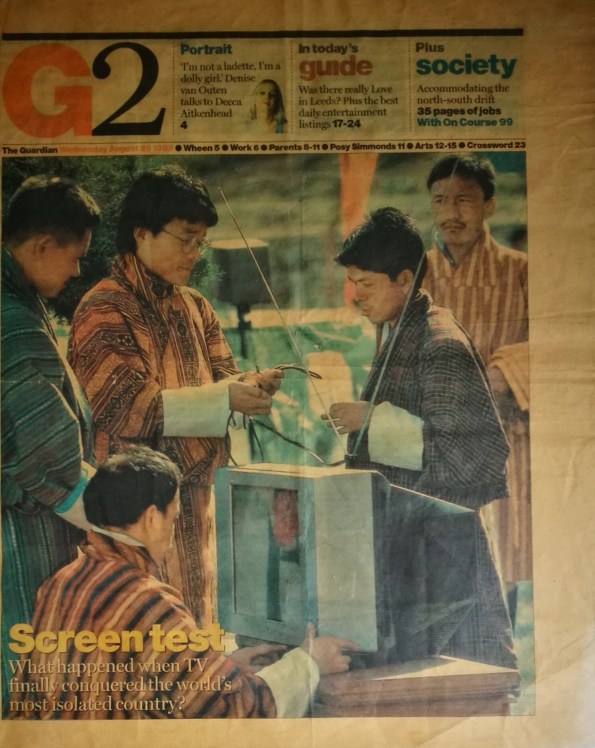
June 2, 1999 – This is me making the final connection and screen test for what was a historic moment for Bhutan: Television.

Yes, I led the team to a world-record launch of a television channel – 3 months from the scratch to the screen. That the was the biggest and the most prestigious project I executed as an engineer  😍😍😍 And I made it to the pages of Guardian UK and New York Times and host of other news outlets. I was also also conferred the Asia-Pacific Engineering Award for that stunt. However, those were pre-internet era. So, no way to social media about. Meaning, it is as good as it never happened. 😜😜😜

Still, it is nice to have your past smiling at you although, for me really, I just miss my engineering colleagues. They were the best foot soldiers I had. They were always ready to charge uphill into any battle with me. And we did many battles. In the final days leading to June 2, we camped at Sangaygang so that we could work round-the-clock to complete the task. Not a single complaint was uttered by anyone in my team. Really great guys. I will always be proud of you. As a saying goes in Bhutanese, “Your share, you have to chew even if they are gravels”. Yes, we did chew our gravels. And much more. 😎😎😎

But, my god! Almost 20 years that we have TV ??? HA HA HA

BBS Days 001
Uli, our German friend, taught us how to use cameras and studio lights. I am the only one not paying attention 🙂

Holidays and calendars

January 17, 2018 – Today is celebrated as another local new year although as per the lunar calendar it is the 12th month of Year of Rooster. Some may wonder why we have so many new years in Bhutan.

Since ancient times, different communities around the world, ethnic groups, religions and nations have different times to celebrate a new cycle in life – a new beginning. Some followed the Sun (like the Egyptians) and some the Moon (Chinese), while others followed both (Indians). They also had different days to observe as holidays (derived from the words, holy days) to attend to religious activities. There were also rest days. In Sharchop communities, for example, there used to be a day for rest known as saa nyan (earth rest) – when the farmers give the soil some rest. (By the way, isn’t this beautiful? Earth rest day)

As communities came together as nations and states, the calendar system was introduced to bring everyone to synchronise their lives so that they can all work together. Therefore, the calendar system is more political and administrative in nature. However, it included the religious holy days and rest days to allow people to take some time off for themselves. While the calendar systems have changed with political changes, the religious holidays have remained constant. Even today while we follow the western Gregorian calendar, our local tshechus have to follow the local lunar calendar known as dathog.  Religion and culture runs deeper than politics.

This is the reason you will find different communities in Bhutan celebrating the start of a new cycle (new year) at different times of the year. These cultural practices predate the formation of Bhutan as a nation-state in the 17th century. This is what makes Bhutan diverse and beautiful. And when we say that we have been successful in maintaining our culture and traditions, we are talking of retaining such practices.

Furthermore, since Losar means new year or new cycle, the term, Chunipa Losar, is technically and linguistically wrong. It is more appropriate to say Sharchop Losar as in Parop or Haap Lomba. Chuni is 12. No new cycle begins at 12. It begins at 1. This day also coincides with the first day of the new moon according the older Gongdu calendar. So it is not a random or modern invention. The Tibetan tradition of celebrating the new year on the second Moon was introduced after the Mongols overrun them and imposed the Hor calendar. I would guess that they followed this day as the losar before that event.

Of greater historical importance for Bhutan is that as Zhabdrung Ngawang Namgyel brought together the nation of Pelden Drukpa, in around 1637, this day became the day when regional governors and noble families from around Bhutan made the buelwa phuelwa (offerings of tributes). The day was marked with great festivity in Punakha where goods and foods from different regions of Bhutan were shared and celebrated. Some might argue that the “offering” was actually the annual tax – which is right. However, Zhabdrung Ngawang Namgyel didn’t believe in taxing his subjects – and rather declared that the state should be so good that the people would offer taxes as offerings to maintain the central administration, which they did. (Can we learn something from him?)

Everything evolves. So do holidays too. Bhutan, as the nation founded on the ideals of the Zhabdrung and on the selfless sacrifices of the Wangchuck dynasty, could view this day beyond its traditional significance of a local new year – and as a day of national thanksgiving, where we come together to celebrate our elders, our ancestors and monarchs. It could also evolve like the Thanksgiving in the US.

After all, more than the medieval times, it was in the modern era – during our time that we have faced the greatest threats to our survival. And our Kings kept us, and continue to keep us, as a sovereign nation – and as proud sons and daughters of Pelden Drukpa.

26757924_10155880236383260_8731548338542003747_o
Offerings to His Majesty, a practice that should be encouraged more to pay homage for the selfless service of our Kings

Who are we?

National Days are a time to reflect who we are as a nation – just as a birthday is a day that one ponders upon as a person. 

Who are we? What does it mean to be a Bhutanese? Does wearing a gho or Kira make me Bhutanese? Does simply loving my country make me a Bhutanese? Do I have to eat ema datsi or drink Ara? Do I have to perform religious rituals or be a civil servant? Or is the search a search within and somewhere far deeper or greater?

Firstly, in my view, what makes us Bhutanese is neither an external display nor just an internal sublimity (aka thib thib in Dzongkha). It is a fine balance of both – between the tangible and the intangible, the seen and the unseen, the extraordinary and the ordinary. Second, what is means to be Bhutanese is also a far bigger question than one could possibly answer. Bhutanesity cannot be just characterized by one or two overt symbols or with few internal rhetoric.

IMG_20171217_152309_674
When I won the Japan Prize 2003, I chose the national dress over a suit someone sent me. A small contribution to Bhutanesity.

Only a fool would think that wearing a gho or kira would suffice to be Bhutanese or parroting tsawa-sum constitute as Bhutanese. Many Thais love our King and our country as much as we do. Being Bhutanese requires o\ne to be even more than that – do much more. 

Being Bhutanese is also process with the variables in constant flux with several dimensions – cutting across social, cultural, geo-political, economic and religious contexts and circumstances. What it was to be a Bhutanese when I was growing up has changed to what it is now. That too less than in one generation. To put it simply, we are still a work in progress. To paraphrase an Italian freedom fighter and the PM, Cavour, we have a State. Now we (still) need to build the nation. And so it will be for many generations to come.

We are but a small country susceptible and vulnerable to even the slightest of changes within and in the neighborhood. And of the many external factors, the influx of new technologies, materialistic ideals and new individualistic values will pose serious challenges that will continuously force us to question ourselves. Within our own Lhomon khazhi, the growing indifference, complacency and declining empathy of those who make it in life – will be the greatest threat. Of the two challenges, external and internal, I would tackle the internal one first. It won’t be enough to be strong and united but we will need to look out for each other. 

Therefore,

what does it mean to be a Bhutanese is not limited to having genuine thoughts or flattering words for ‘tsawa sum’ but also calls for serious altruistic actions too. 

National Day was the day we came together as a nation under our first King Ugyen Wangchuck. 110 years since, we sing praises to our monarchs for the unprecedented developments that came about. For me, however, the greatest achievements of our Kings have been to keep us safe and sovereign. Every king had to pull some legendary acts – one as late as December 2003. It is no secret that countries and territories that were far bigger and affluent than us vanished into the wikipedia of history. No other nation or people face a continuous existential question like we do. Therefore, the search for what it means to be Bhutanese itself is quintessentially Bhutanese. It is a search for survival – as a nation, as a state and in the 21st century as an economy.

My hopes and prayers on this 110th National Day is that the Bhutanese people, wherever they are, will continue to ask this question.

As is life, so is a nation. What we ask collectively is ultimately what we seek as a goal – as a country. To ask who we are is to know our place, our roles, our responsibilities and our duties to our King and our people. Conversely, to cease asking means to cease being a Bhutanese. A tall and provocative statement? Maybe.

For now, I will stand to this claim. 

maxresdefault

Knowledge of humility

So I have just crossed two of the four hurdles towards my next doctoral degree. I have completed all the course work (the last one was very demanding) and cleared the much-dreaded Qualifying Exam.

Untitled
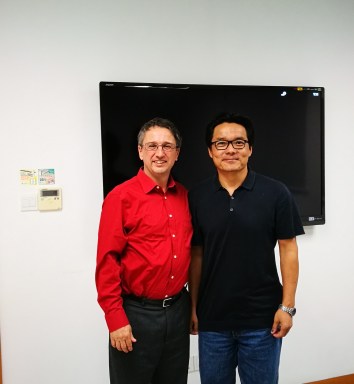
With my supervisor, Prof. Todd Sandel

Now what is a qualifying exam? In different countries it comes with different names, shapes, sizes and formats. In the US and Canada it is called Comprehensive Exam, in other countries it is referred to as General Exams or Preliminary Exams. It consist of a long written part spanning for few days followed by an oral defence where you respond to the committee of 3-4 professors. You have only two shots. If you fail once, you can take another one. And that’s it. The objective is to test your overall knowledge in the field you will be getting your PhD and also see if you are deemed fit to be called a scholar. It is not simply a test of the cumulative knowledge of the courses you have taken (I took six) but a test of your preparation to work independently at the highest level hereafter. In other words, it is a rite of passage from being a student till now – to a distinguished title or status of being referred to as scholar, doctor, etc. Simply put, as a student you absorb knowledge. As a scholar you produce knowledge. Big difference. The next step is for you to produce something new in the form of a dissertation, which, if accepted, confers you the title of doctor. Doctor comes from Latin word, docere, which means “to teach”. In other words, after your knowledge is accepted by the discipline, you are also entitled to teach it to others. This practice has its roots in Italy that saw some of the first universities in the western world (e.g. my Alma mater, University of Bologna). Now, of course, titles of PhD and doctors have changed in their meaning and purpose. 

To come back to my experience of this Q exam, it’s been few months of consuming lots of coffees, kit kats, communication theories, research methodologies and selected works from philosophy, religion, sociology, history, anthropology, sociolinguistics, semiotics and technology. Communication cuts across many fields and take almost all the theories from sociology. The written exam was a solitary confinement for 3 days in a row (you can also choose to spread it over a month but I like getting done away with) – each lasting 8 hours to finally produce some 12,000+ word length of what could be the last humanly readable paper. After this, no one will understand what you write. 👿👿👿

Then the oral part was a 3-hour slash-and-burn farming on my ideas 😂😂😂. 

Now that I am done with it, how do I feel? I don’t know. Have I learnt anything? A lot. Do I feel wiser? Not at all. In fact, now I feel less confident (or may be more humble) than before I started. I was sharing this feeling with another Bhutanese friend who is also in a PhD programme. He is going through the same kind of transformation. Basically, PhD is a process where you finally know how much you don’t know – and that is really a humbling dose. And perhap the greatest lesson one learns in a grad school. 

So then, is one of the ultimate objectives of knowledge to make you more humble? Perhaps. When I look around and imagine some of the most learnt Bhutanese I have come across – people like my family lama – Rangshikhar Rimpoche, my lama-friend – Eminence Tsugla Lopen (I say “friend” because I am spiritually not at the level to be his disciple), our historian, Dr. Karma Phuntsho and then my last employer, RTC President Thakur Singh, they are all very humble people. In fact, in Bhutanese we say “behaving like someone has no knowledge” if your acts are rowdy and uncultured. Maybe there is a wisdom to that.

I guess, ultimately

Knowledge makes you humble. Ignorance inflates your ego.

Coming back to the Q Exam, I am sharing my experience not to scare anyone but to show how the system works. PhD is absolutely doable. I hope our universities back home will offer because it leads you to another world of knowledge, discovery and perspectives of life. You should go for it – especially if you are a teacher – in a school or in a university. But don’t go for it, looking forward to a fancy title and the world to bow down to you after you complete it (see the cartoon below). You should go for it because learning excites you, it makes you really happy and you can leave behind some knowledge for mankind. If I can, so will you. I am not even doing it in what I studied in undergrad (engineering) or my career (film and journalism). Those subjects would have been too easy. As is of me, I chose the red pill and I am looking broadly at communication as a tool in sociolinguistics and philosophy. These are challenging concepts but very exciting. 

As I wrote in my earlier blog entry, you should keep learning because if you stop learning, you stop living.

phd030215s

Get busy livin’

Time flies, wounds heal, scars remain – and life goes on, regardless.

A little more than 5 years have passed after that moment when the world cracked open – sucking me in. I also saw the sky closing over me. There were two options : I could accept that everything was over, resign to the fate and disappear into the irrelevance. That was the easier option. For a while that was my option.

OR cry your life out, wipe your tears and slowly claw yourself out of the hole. That was the difficult choice but the one I ultimately took. 🏊🏊🏊

btyTo all those who stretched out their hands to help me to get me out of that hole, I thank you. You were so few; so I will never forget your faces too. 😇😇😇
To others, thank you nonetheless – for, I came out stronger. 😎😎

And to all those, who may find themselves in a hole, big or small, don’t let yourself get buried. Cry, if you must – but pause for a moment, take a deep breath and reflect in silence. Then grab your fate by its collar, shake it and say, “You can’t kill me”, and move on. There is no greater satisfaction than beating the greatest of odds. There will be no greater regret than giving up. Many choose the latter. You shouldn’t.

Fate, more often than not, deals you a heavy hand. Play with whatever you are dealt with. Don’t believe when people say things like, it happens for a reason. That’s rubbish – a mere rhetoric. There is no reason for things to happen unless you caused it. If they do, try making sense out of it, a motivation that will drive your further. Turn it into THE reason for you to launch yourself. Run with it, fly and then dunk it.🤾🤾🤾

You will also hear old moralistic cliches like, forgive and forget. Of course, you should forgive. That will make you feel much better. There is no point bottling up inside you. But unless you are going dement, you shouldn’t forget. Remember the faces, especially of those who stood by you.

When you are back on your feet, don’t forget to look around with your head held high and smile at the world. Most likely, it will smile back.

To paraphrase a line from my favourite movie, Shawshank Redemption,

Get busy living or get busy dying

As Andy, the lead character in that movie says, “It all boils down to that one choice”.

Make the right one.

Always “do something”

These days I am swamped in books, journal articles, papers, coffees, kitkats and computers, as I work towards my PhD qualifying exam – transiting, hopefully, to being a real “scholar”. That’s what the study guidebook says, whatever that means.

Photo on 30-11-2017 at 5.29 PM

However, I have rarely been fixated with titles and designations and decorations. I have had many in my career. Rather, I am happy that I have done things in my life that I am passionate about, while doing things I had to do with the same zeal. In others words, I love what I do, and I do what I love – something that I always preach. To paraphrase Frank Sinatra, I did it my way.

I won’t say I was fortunate – or that I am lucky. I don’t believe much in fortune or chance happenings. Try waiting, if you believe in it. In life, it is the choices you make, the decisions you take that will in large part decide what will become of yourself.  

Nevertheless, there are people you draw inspirations from. And I must say, in learning, my inspiration comes from a quote by Buddhist Sakya scholar, Kuenga Gyeltshen (1150-1203), popularly known as Sakya Pandita, who said,

“Even if you are going to die tomorrow, it is still worth learning something new today”.

“Even if you are going to die tomorrow, it is still worth learning something new today”. Isn’t this wonderful?

Also as Buddhists we believe in reincarnation where your mind-soul-spirit, or whatever, passes on to the next living thing after you die (leave one’s body). My illiterate elder sister, who thought I had finished studying “everything” from Italy, asked me if I am studying again for my next life. I said, yes. She was very pleased.

To the great Sakya Pandita and my illiterate sister, thank you for your words of encouragement.24_lis_kirkby

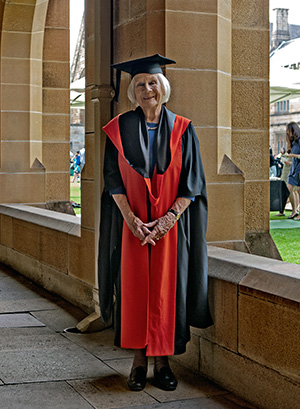
You also just don’t get inspired by famous people, or learn from your own circle of friends, family or tribe. You can draw from some distant, unknown and unusual figures. For me one such person is Elizabeth Kirkby. Now who is Elizabeth Kirkby? I don’t know. I just saw her on the news (on the Net). She became Australia’s oldest PhD – at 93. And this is what she said that caught my imagination.

You can’t believe that when you retire you just play golf or bowls or sit round with your mates. You always have to do something

There was a time when I was seriously pondering if I really should, or shouldn’t, go to another grad school. Of course, I always had this crazy dream to meet Nelson Mandela, fly a plane and enrol for a PhD – by the time I hit 50. But you know, you always need that one last push. This news of some 93-year old graduating somewhere flashing on my newsfeed did that work. I jumped up and told myself, “I have 45 years to go. Better do something”.

Thanks Aum Elizabeth, wherever you are. 


(NB – I first heard of the quote by Sakya Pandita from lama Dzongsar Khyentse in his talk at Yale. The video is on YouTube. Watch if you follow him)