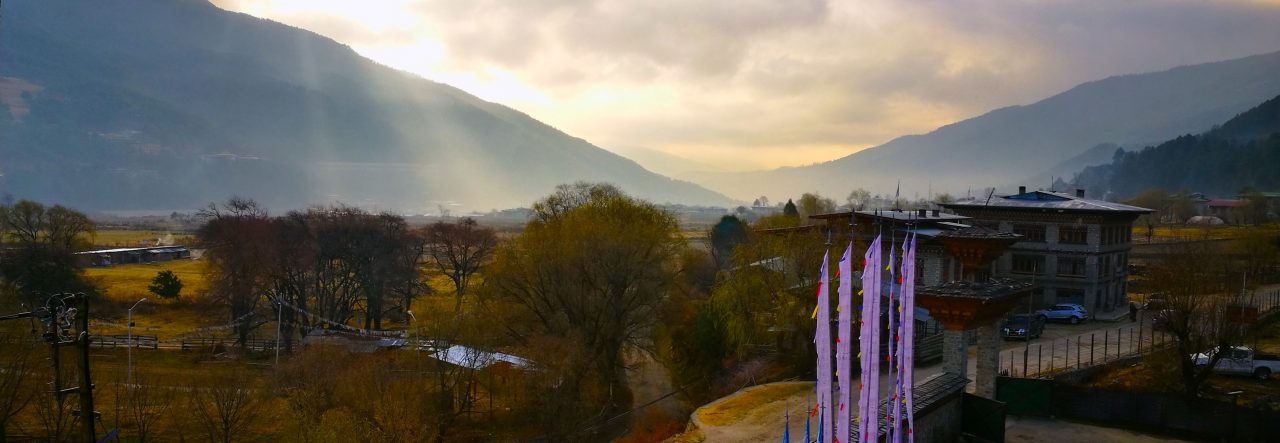
On the peak of the iconic Tigers Nest – Taktshang in Paro stands the less-frequented temple of Ugyen Tsemo (ཨྱོན་རྩེ་མོ).
Ugyen Tsemo is probably one of the earliest temples established at Taktshang. It is attributed to Nyingma Lama, Uwo Yeshey Bumpa, from Kathog monastery in Kham Derge. He built a shrine there as early as 1408*.
Almost a century later his descendant Kathog Lama Sonam Gyeltsen (1466-1540) built the first temple at Pelphu and at Shama. He stayed in Ugyen Tsemo, having been invited and hosted by Nyamey Chum in Paro. The temples at Taktshang remained under the care of the descendants of Lama Sonam Gyaltsen.
During the series of Tibetan invasions, and especially the one in 1644, one of Zhabdrung’s teacher for Nyingma tradition, Kathog Rigzin Nyingpo, invoked all the Nyingma protector deities in support of Zhabdrung to repel the invaders.
As a gratitude, Zhabdrung Ngawang Namgyel visited Ugyen Tsemo in 1645. During this visit the shrine at Pelphug was offered to him. Zhabdrung promised to build a large statue of Guru Padmasambhava, but he passed away a few years later. His promise was fulfilled by his heart son Tenzin Rabgye who build the legendary Pelphu (Taktshang) monastery in 1692.
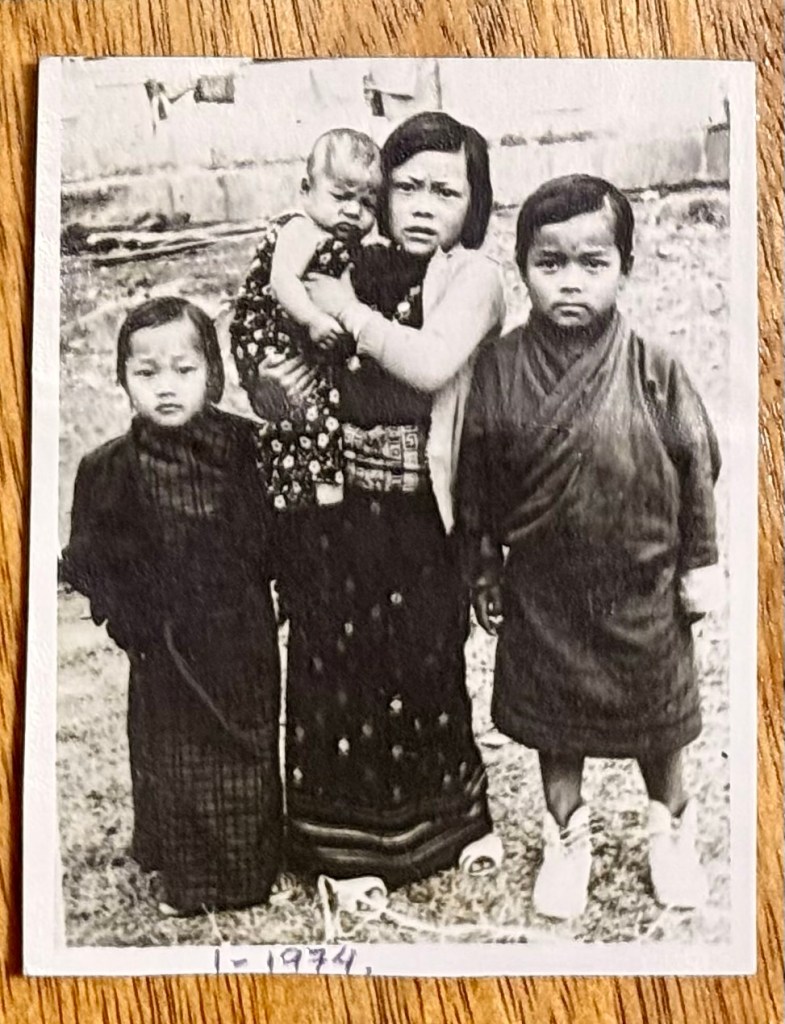
Ugyen Tsemo, thus, played an important role in the history of Bhutan. However, what you see today at Ugyen Tsemo is not the original temple, because a massive fire burnt it down. There is no record of what was left and what was rebuilt. The oral sources only say that a major repair was done in 1958 by Queen Phuntsho Choden (See the black-and-white picture).
The temple.
The temple is in the shape of Zangtopelri with Buddha Amitabha on the top floor, Avalokiteshvara in the middle floor and Guru Padmasambhava on the ground floor, following the Choekor-Lungkor-Truelku tradition.
The thousand-arm Avalokiteshvara on the second floor is believed to be the art work of Jadrel Sangye Dorje Rimpoche. Also on the same floor, towards the left, there is perhaps one of the most beautiful mural paintings of Twenty-Taras in the Jigme Lingpa tradition (most prefer the Suryagupta version).
On the ground floor there are also statues of Nyingma protector Damchen Dorji Legpa as well as the statue of the local guardian, Taktshang Sengye Samdrup. The main statue is of Guru Padmasambhava with his eight manifestations circling him. The main statue of Guru is believed to be the last work of Jinzob Damchu from Neyphu (one of his students was late Lopen Omtong from Trashigang).
Getting there.
From Taktshang view point it takes about 45 minutes to reach Ugyen Tsemo. Don’t miss the holy water revealed by Kathog Rigzin Nyinpo. It is few minutes walk towards Yoselgang.
✌️✌️✌️
This aspect, and even the expansion done by his descendant Sonam Gyaltshen is hardly mentioned by tour guides when explaining to visitors. It wipes out close to 200 years of history by jumping straight to 1692.
As you look up from the base of Taktshang you see two temples. The small temple on the right is called Taktshang Shama, which is built around Drolo Phu – dedicated to Guru Dorje Drolo. Shama
Taktshang- the iconic tiger’s nest is today equated to just one cave – Pelphu – around which 9 temples have been built. And yet, Taktshang is actually composed of nine principal caves and more minor places. Locals believe one must visit all to get the full blessings of Taktshang. Most of these caves are where successive masters like Milarepa, Phadampa Sangye, Thangtong Gyalpo, Machig Labdron, Phajo Drugom visited.
On the side that is popular, and where almost every visitors go, there are three caves: Pelphu (where Langchen Pelgyi Sengye meditated), Sengyephu (associated to Yeshey Tshogyel) and Machiphu (associated to Machig Labdron).
The other six caves on the right side are Drolophu, Phagmophu (where Guru met his adopted mother Dorje Phagmo), Chogyelphu, Kapaliphu, Thratshogpgu, and Yoserphu. To do the six remaining caves, you must veer off from trail at the Chukor Mani and take the right ridge.
You can also visit the Pelphu complex and then proceed up to Machiphu and then to Ugyen Tsemo and climb down. From this route, Thratshophu will be the first cave you will meet.
Taktshang Shama.
The place is believed to have been built by Kathog lama Sonam Gyaltshen sometime in 1508. This also explains the painting of the ChoLongTruel Sum of the pre-Zhabdrung era that is on the upper floor.
The lower floor has the more sacred Guru Dorje Drolo – in that it is believed that the statue is said to have spoken.
In 1998, when the Taktshang complex at Pelphu caught fire, the caretaker started packing the belongings and the statue to leave the place for a safer ground. Dorje Drolo told the caretaker not to move anything.
Whether or not the story is true, Taktshang Shama feels very different and provokes a deeper experience. Maybe it is because you avoid the crowd and can do some real prayers.
Cautionary note: If you suffer from vertigo or cannot stand heights, PLEASE DON’T do this side. It is not safe.
Moelam Chhenmo is one of the most popular prayer festivals in Vajrayana Buddhism. Every district in Bhutan has one conducted every year and every tradition of Tibetan Buddhism holds one big one in Bodhgaya every year. The recently-concluded Global Peace Prayer probably holds a historic first in bringing all schools of Buddhism together in this prayer, and to pray for a common goal: world peace.
And yet, the Bodhisattva that is invoked, Samantabadra (Dz: Kuntu Zangpo) – not to to be confused with Adi-Buddha Samantabadra (aka Kuntu Zangpo), is among the least known Bodhisattvas in Bhutanese Buddhism.
Bodhisattva Samantabadra.
Bodhisattva Samantabadra (ཀུན་ཏུ་བཟང་པོ་ Dz: Jangsem Kuntu Zangpo), whose name is often translated as “All Good” is one of the eight Bodhisattvas (བྱང་ཆུབ་སེམས་མ་བརྒྱད་, Jangchub sempa gyé) is an important figure in Mahayana Buddhism. The eight Bodhisattvas are Manjushri (Jampel Yang), Avalokiteshvara (Chenrizig), Vajrapani (Chana Dorje), Maitreya (Jampa), Samantabadra (Kuntu Zangpo), Akashagarbha (Namkhai Nyingpo), Ksitigharbha (Sayi Nyingpo), Sarvanivaranavishkambhin (Driba Namsel).
They are also known as Eight Great Sons (ཉེ་བའི་སྲས་བརྒྱད།) of Buddha Shakyamuni who have been assigned to be enlightened after him and spread Dharma. The next in line is Bodhisattva Maitreya. Samantabadra is also considered as the eldest of the eight Bodhisattvas. He also vowed to postpone his Buddhahood until the last sentient being is liberated from Samsara.
Zangcho Moelam.
The prayer that is recited at the Moelam Chhenmo is the Phakpa Zangpo Chöpé Mönlam gyi Gyalpo (འཕགས་པ་བཟང་པོ་སྤྱོད་པའི་སྨོན་ལམ་གྱི་རྒྱལ་པོ: ), which of often translated as The King of Aspiration Prayers: Samantabhadra’s “Aspiration to Good Actions”, or simply Zangchoe Moelam
In essence, the Zangchoe Moelam is a summary of Samantabhadra’s advice to his student Sudhana. It comprises 63 succinct verses and expresses the entirety of the Buddhist path and the actions of a bodhisattva.
Samantabhadra challenges that wisdom is only beneficial if it is put into selfless practice for the benefit of all living beings. True enlightenment is not just about attaining wisdom, but about extending that wisdom through boundless compassionate actions.
The story of Sudhana and Samantabhadra serves as a powerful metaphor, where practice (Samantabhadra) must accompany wisdom (Manjushri) as essential components of the path to Buddhahood.
Recitation of this prayer generates tremendous merit, and inspires us to dedicate our lives to the benefit of all sentient beings.
Zangchoe moelam is often recited together to accumulate collective moelam (aspirations) such as global peace, harmony, and restoring health and happiness.
Chan (Zen) Buddhism.
Samantabadra is a very important bodhisattva in Chan (Chinese) Buddhism that one of the four holiest mountains in China, Emmei Mountain, is revered as his abode. He is often depicted riding a white elephant with six tusks.
In Vajrayana Buddhism, however, he never gained as much popularity as the other Bodhisattvas, and was not elevated as meditational deity. In some traditions, Samantabhadra is described as red in colour holding a vase in the right hand, and the symbol of the Sun atop a flower blossom held in the left hand. He mostly appears as part of the Eight Great Sons of Buddha.
One of the temples that depicts the eight bodhisattvas is Semtokha Dzong – all standing around main Buddha Shakyamuni.
🙏🏻🙏🏻🙏🏻
My favourite line is:
“May I ease the suffering in the lower realms and in the many directions and dimensions of the universe.
May I guide all wanderers in samsara to the pure bliss of awakening, and be of worldly benefit to them as well.”
According to traditional faith history, a year after his enlightenment, Buddha Shakyamuni received a strange visit from King Suchandra (Dawa Zangpo in Dzongkha) from the mythical kingdom of Shambala (Some Buddhist scholars place this kingdom in modern-day Xinjiang region in China).
The King wanted a teaching from Buddha that guaranteed enlightenment in one lifetime, while also, without him having to renounce his throne. He argued that even as a King he could do many good things for sentient beings.
Buddha Shakyamuni is said to have yielded to the request, partly because he saw the pure intent of the King as well as seeing him as the emanation of Vajrapani. Buddha then conferred the Kalachakra (དུས་ཀྱི་འཁོར་ལོ།, Dueki Khorlo) teachings to King Suchanda.
The King wrote it down and spread it in his Kingdom. His successors maintained the tradition, and furthermore, the eighth Shambala king, Manjushrikirti (Jampel Dakpa) composed a shorter tantra of five chapters and initiate to some thirty million of his subjects and sentient beings. He was thereafter referred to as Kulika (Rigden in Dzongkha) – the One Who Held The Lineage. Legend has it that there will be 32 Shambala kings with each king appearing to save a degenerate world. The current king is Anirudha who ascended the throne in 1927 and would be king toll 2027. The last king Rudra Chakrin is believed to appear in the year 2424 to face a degenerate world and help fight it and cure it.
Shambala King Suchanda
Kalachakra. What is it?
Literally meaning “Wheel of Time”, Kalachakra deepens the concept of interconnectedness between the Outer cycles of the universe (such as the cosmic time, planetary movements and seasons), and the Inner-individual cycles of human body (such as life, breath, heart beats, chakras, etc). It then proposes the Alternative cycle to move beyond the Inner and the Outer cycles to achieve a purified state of consciousness and end ones existence in samsara.
It posits that the external universe and our internal cycles are similar, if not identical. The same laws that govern the universe also govern at the subatomic level like our own body and our experiences of life. Being trapped in the cycle of Samsara is to remain within the two cycles without moving beyond or achieve the liberation from all suffering.
Why “Wheel of Time”?
At the core of the philosophical tenet of Kalachakra is how we view time. In Buddhism, time is understood as cyclical and not linear (which is western-scientific understanding). It is a continuum. For example, one year is the time that the Earth moves around the Sun, and a day is when the earth makes one complete rotation – and then the cycle repeats.
As is in the greater universe where the same pattern repeats in the cosmic-astronomical-astrological cycles, at an individual-internal level, our body also goes through physiological cycles, many of which bode mental and emotional cycles as well.
Furthermore, just as a universe forms, expands, contracts, explodes, and forms again, Buddhist beliefs posit that individual beings pass through a continuum of births and rebirths with repeated conception, growth, old age and death. However, because of our compulsive attachment to seeing everything as solid and permanent, we are reborn without any control in the cycle of Samsara.
Universes, civilizations and human life, will continually form and fall, and this is the truth of cyclical time, impermanence, and emptiness. This understanding constitutes the philosophical foundations of the Kalachakra teaching.
Kalachakra spreads to Himalayas.
It is believed that an Indian master, Chilupa, from Orissa travelled to Shambhala and returned with the scriptures in 966 CE. Subsequently in the early 11th century, another Indian scholar Somanatha introduced Kalachakra into Tibet, followed by many others.
Starting in the 13th century, as Buddhism saw decline in India, so did the Kalachakra tradition. However, it flourished in Tibet and from there two traditions spread across the Himalayan region.
The Kalachakratantra is composed of chapters on cosmology and astrology in how the universe is formed and falls – and tracks the movements of the planets and their effects on humans. For example, science has discovered recently that increased solar activity such as the geomagnetic storms may have impact on our mood causing anxiety and depression. The lunar cycle affecting the sea tides have long been established. All these were already written in the Kalachakra scriptures.
It also includes physiology – as in how a human body is made up of the natural elements and how it is a universe in itself – dependent on the wind, water, fire, and earth – both internally and externally. Interestingly, Kalachakra also sees society as a living microcosm and ecological system – a theory that has been only recognized in recent years in the modern academia.
Kalachakra and our Dharma Kings.
Because of the tradition of granting initiation en masse, Kalachakra has often conferred to unify people and nations and bring peace and harmony. Buddha Shakyamuni, for instance, is supposed to have bestowed to some 100 members of the Shambhala King Suchanda’s entourage. And so did King Manjushrikirti who initiated some 35 million of his subjects into the Kalachakra mandala.
It was thus appropriate to include the Kalachakra Cycle in the Global Peace Prayers – given what is happening in the world today. This Initiative was a massive undertaking and of great historical significance – in that it brought together all schools of Buddhism into one place and prayer for the first time in modern history.
The Bhutanese people in particular, and Vajrayana practitioners in the world in general, are fortunate that we have Dharma Kings in our monarchs – His Majesty the King and His Majesty the Fourth Druk Gyalpo, to bring together the greater humanity.
And of course, our own Living Buddha – the Purest of the Pure, His Holiness Je Khenpo Jigme Choedra, who initiated us into the Kalachakra Mandala together with our Dharma Kings. This is the greatest privilege for all of us.
May Vajrayana flourish under them for all time to come. May peace and prosperity prevail in our Land.
And above all, may the world remember our monarchs as the Dharma Kings.
🙏🏻🙏🏻🙏🏻
༈ བྱང་ཆུབ་སེམས་མཆོག་རིན་པོ་ཆེ། ། Bodhicitta, precious and sublime མ་སྐྱེས་པ་རྣམས་སྐྱེས་པ་དང༌། ། May it rise in those in whom it has not arisen སྐྱེས་པ་ཉམས་པ་མེད་པ་ཡང༌། ། And where it has arisen, may it never decline གོང་ནས་གོང་དུ་འཕེལ་བར་ཤོག ། May it go on enhancing, further and further
Disclosure: This article is based on my conversation with Venerable Sonam Tobgye – the Abbot of Dodeydrak Monastic Institute.
The two Dharma kings of BhutanHis Holiness the Je KhenpoKalachakra statue at the venue
Bebena, Thimphu—The newest restaurant in town accepts customers only with prior booking. This is because Sonam, 33, who started this small Italian restaurant, is the owner-chef-waitress-cleaner – all in one – running the restaurant almost single-handedly. And she makes the pasta all day long.
“Yes, it is just me and my cousin,” she says, adding that there is a limit to how much a person can make in a day. And so, she makes them depending on how many have booked for the day.
Besides, she doesn’t buy industrial products. For obvious reasons, I guess. Good Italian restaurants around the world promote homemade fresh pastas. Fast food is frowned upon by lovers of Italian cuisine, and factory food is never good enough for a chef.
The small joint in Thimphu is named Sole, which means “the sun” in Italian, and is located at Bebena across the football field. It undoubtedly serves the best Italian food in town with a slight Bhutanese fix with yak meat and local chili.
Sonam is one of the few young Bhutanese who returned home – leaving behind a career abroad –—iItaly, to be precise, where, after a course in culinary arts, she interned in a Michelin-starred restaurant in Milan, landed a permanent position as a chef, and quickly rose up the ladder. She is a Thimphu native both by ancestry and by birth and left the country when she turned 18. She lived and worked in Australia before going on a holiday to Italy, falling in love with the country, and planting there for close to seven years.
“I miss Italy. You must be too, right? The people are lovely, the food is great, and the country is beautiful,” Sonam tells me with a huge nostalgia.
“Yes! That’s the place I would go back to any day,” I reply. (I lived in Italy for a little over 8 years—doing my long university studies in the nineties).
“And why did you come back? You had a secured job,” I ask Sonam.
“In short, my mom called me back. It is time to come home, she said,” Sonam says with a smile.
“Of course, as you know, life in Italy is good, but there is no place like Bhutan. When I came back, I realized what I had missed—those simple things in life, like barging into a relative’s house unannounced and demanding some tea. Or families sitting together on the floor for dinner and the loving presence of my mom and my grannies. No amount of money can match these feelings. And no matter how close I was with my friends and colleagues abroad, I could never be spontaneous or natural. ”.
Sonam returned home last year and worked on building her restaurant, which she finally opened in September 2025.
“It has a short menu, only a few things I can do myself, but which I try to do well. It’s been doing OK. I wasn’t sure if people would like the taste of homemade pasta and ragu made from yak meat,” she says with pride.
My second time at Sole was even better. She gave me one of my favorite Italian desserts—mele al forno—caramel baked apple with ice cream topping.
Gya-zhi (also pronounced as Jabzhi) literally means “Four Hundred” and it refers to the four hundred offerings of which one hundred are tormas, one hundred are butter lamps, one hundred tsha-tsa (miniature stupas), and one hundred human effigies. It is one of the, or probably the most powerful kurim (rituals to remove obstacles).
In ancient Tibet, the ritual was conducted only by the wealthiest of families because everything had to be human size or bigger. In Bhutan, however, the Bhutanese masters simplified this powerful and elaborate puja – making it accessible to ordinary people by doing all in miniature size. In fact there are stories of how Tibetans would be in awe when they used to hear that every Bhutanese family would do gya-zhi.
The one being prepared at Kuenselphodrang is the elaborate one and even bigger. In fact it could be biggest in size in recent history.
What do the prayers mean?
The ritual mainly aims at appeasement of the Four Great Maras, who are hindrances in our mundane life in causing us untimely deaths, diseases, delusions, destructive emotions. The mantras basically invoke Buddha Shakyamuni to negotiate with the Maras and bless them and send them away with gifts of four hundred items. Hence, it is appropriate that the biggest gya-zhi is performed in front of the biggest Buddha statue.
At a deeper philosophical-spiritual level the butter lamps are to eradicate one’s delusion from clinging to forms and perceptions as ‘real’. The hundred tormas represent our desire for pleasure, convenience, and peace, resulting in jealousy and greed. The hundred human effigies are to subdue the demon of death, which causes untimely deaths and represents our fear of change and impermanence. The hundred Tsha tsas to overcome our negative emotions.
The benefits.
The benefits of this ceremony, therefore, are many. From removing obstacles affecting one’s career and business to preventing malevolent beings, and sorcery from affecting you – to extending your life and recharging you with extra life-force and positive karma, Gya-Zhi is the most popular ritual to ward off negative energy.
Ultimately, every ritual, every aspirational prayer in Vajrayana Buddhism is about cultivating the Bodhisattva ideals.
May you all make it there in spirit as well as with your body, and pray for all the challenges we are facing as a country and humanity – and wish for the peace and happiness for all sentient beings. 🙏🏻🙏🏻🙏🏻
I made a lightening trip to GMC for some urgent work.
Although it was a short visit, here are few updates and an observation from there:
The place has taken off. I can feel the life and energy now. Young people chilling out in cafes and restaurants, hotels rooms getting sold out, and shortages of rental spaces are all positive signs of economic activities taking off.
The town is very clean. The new Guru Lhakhang is up and dominating the business area. The outcome of the volunteers is visible in the teak woods, and the Bhutan Post Building is getting remodeled to GMC Building.
There are no stray dogs or potholes – both of which are bothersome. I saw our young Desuups trimming the bushes along the highway. I felt very proud of them. Everyone is working.
Overall, it was nice to see the hustle and bustle – especially at the airport area with hundreds of trucks, escavators and men toiling day and night. (Last picture shows how the entire stretch of how the 3500m long runway will look like).
One suggestion, though.
Now that seatbelts and speed limits are mandatory (no excuses. Fines, right away), I wonder if all the speed bumps can be removed.
My worry is, if a visiting investor dozes off while being driven around in Gelephu, and the car hits a speedbump hard, it can cause a whiplash injury. This injury can even be faked. A hefty lawsuit might then follow. Not all foreigners are angels. Some can be shameless with money. They will demand an upwards of 100 million dollars. If I don’t make sense, don’t bother.
Other than that for the youth especially, stay alert, stay positive, get skilled. Something for you will be there as long as you are ready to roll up your sleeve and charge. 🏃➡️🏃♂️➡️🏃➡️
In this article, I will address the question for those who are not doing well with their career or business – whatever this means. Hopefully it will help unlock an unfavourable situation in life.
First of all, we must understand that the state of human unsatisfactoriness (I prefer to use this word instead of suffering to mean Dukha in Sanskrit, Dugnel in Dzongkha) is very subjective. It is also very complex. So, I have no one-size-fits-all solution to this. No one actually has it.
Second, I don’t want to trivialise what each individual may be going through in life. So, I chose to say Tashi Delek to those who are excelling – like the male nurse in Australia, that ranger from Bumthang and that teacher in Samtse. It warms my heart to see our younger generation doing well.
Third, needs and wants are subjective. Someone earning a couple of thousand ngultrums may be super happy, while for others, that sum may be nothing. On the other hand, I know few millionaires who have nearly committed suicide because they felt their life was meaningless, and few in the same financial situation who are happy and content.
Still, as someone who has done relatively well in life (I went barefoot and hungry as a child), I can share what worked for me, and others may have their ways too. Three simple things come to my mind, and this is applicable wherever you are.
1. Never say it is not my work.
Humans have the attitude of avoiding jobs and tasks that they feel are below their dignity – or it is not within their purview or interest. Unless the work is illegal, no job or profession is below any human dignity. The moment you say, “This is not my work, you are giving a death sentence to your career”. Every job or task must be seen as an opportunity to learn, and to make new connections – and to launch you forward.
Don’t let your ego precede success. Don’t let your attitude bury that hidden talent. You never know where your destiny lies. You don’t know what is written in your stars. Show up. Grab every opportunity to work, and run with it. When I was an engineer in BBS, I often went for news reporting too. I never said, “It is not my work”. Nobody wanted to look after the HR because it was messy and I took it as my additional charge.
Today besides my main line of work, I volunteer in three civil society and religious organizations. It is hard to juggle many things, but very fulfilling. For a good number of years put your head down and work. Stop comparing yourself with others. Life is not a race. Compete with yourself – with your laziness, your pessimism, with your procrastination.
2. Keep learning. Keep reinventing.
One common mistake many make is considering a job as an end and not as a means to something greater – or further. One tends to take root in a place or a profession, and get possessive and defensive of the position and the organization – and never think of learning anything new. Forget about reinventing, there is no innovation either. Stagnation and status quo prevail till one is burnt out, or pushed out.
And yet, in a fast changing world and in a small economy and market, you will soon hit a wall, or go out of fashion. Bhutan is not Bangkok where you can survive your whole life running a single-menu noodle point. You have to keep learning new things. You have to keep reinventing yourself. You have to keep innovating. For example, I started out as an engineer, moved to documentary filmmaking and journalism. And at 47, I reinvented myself as a university professor. I went back to school at 49. And in six years I got a PhD, and started a new career as an academic and scholar.
3. Don’t forget spirituality.
To get, you must give. This is a line from Chatrel Sangye Dorje Rinpoche. Don’t forget “kencho” – as a saying goes in Bhutanese. Believe in whatever makes you feel good but don’t make everything about yourself. In my circle, those who balance life, community, and spirituality are not only happier, they are doing better than those who are only focused on themselves.
Generosity does not mean only giving money or making in-kind donations. One can be generous with time, with positivity, and with volunteering. Making these non-financial resources available for others selflessly will guarantee you returns in the form of instant karma. While this may sound religious and Buddhist in nature, it has been proven empirically in a study done by an American researcher. Anecdotally, I can attest this study. The more you give, the more you get.
And needlessly to say, being positive, humble and honest are basics to having a fulfilling life and career.
✌️✌️✌️
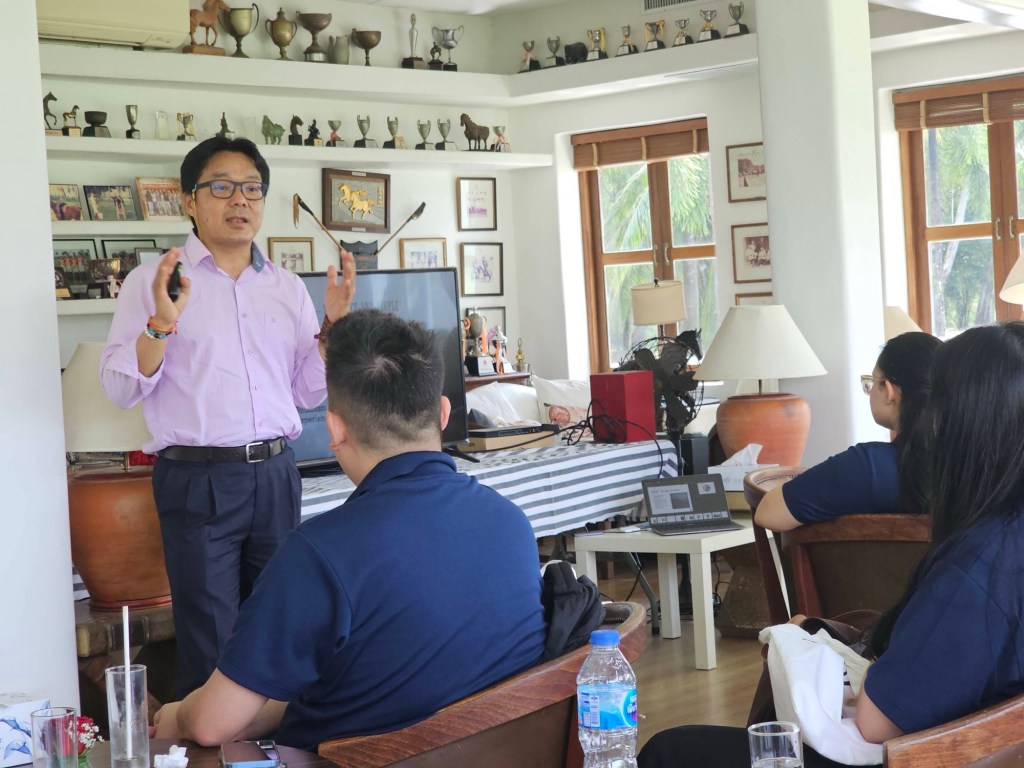
(Pictures are unrelated to the post, and are from my recent PD for the wonderful Dechencholing school faculty 🙏🏻🙏🏻🙏🏻)
The big river that passes Phuntsholing, which becomes Toorsa in India, is called Aum-Mo Chhu and not Amochu. Even Dzongkha speakers have anglicised the river, thus making it lose its meaning. The sacredness of the river is not even talked anywhere in the urban narrative.
And yet, Aum Mo Chhu is sacred. It originates from Chumbi valley in Tibet, where it is called Machhu. According to sources, the names of Chomo, Jomo, Chumbi are all of same origin – referring to the same deity – Jomo Tashi Tsheringma, whose abode is believed to be Mt. Jomolhari and a couple of other mountains in Sikkim, Tibet and Nepal (Mt. Gaurishankar).
Tashi Tsheringma is the eldest of the five Tsheringma sisters of longevity (Tshering Chhe-nga) and many mountains in the Himalayas are named after them. Mt. Everest – aka Chomolungma in Tibetan is believed to be the abode of one of the Tsheringma sisters – Miyo Lhangzangma.
Aum Mo is probably a shortened version of Aum Jomo Tsheringma. However, this Aum Jomo is different from Aum Jomo of Merak-Sakten. That one refers to Jomo Remati – an emanation of Aum Palden Lhamo.
The Aum-Mo Chhu is sacred to the inhabitants like the Lhops (derogatively known as Doyas) – one of the two earliest inhabitants of Bhutan, and to the people of Chumbi valley in Tibet.
Names of places and the origin stories should be recorded, retained and taught to younger generations. Inter generational transfer of values and traditions happen effectively through stories. They define who we are. They need to be told and retold because they hold our collective history, popular narratives and wisdom.
If the sacredness is gone, our essence will fade and slowly we will become like any other societies that sees nature as a source of exploitation. At a broader level, retaining that essence is good for cultural identity and sovereignty.
On this most auspicious day in the Buddhist calendar, on the altar.
While I could have waited for the monsoon to pass and travel there, I decided to go despite the poor and dangerous road conditions. The reason: the village lost four members in two months – one in a tragic accident, and they were terrified by these deaths and requested me to help. Some asked me to invoke Deity Palden Lhamo (whose abode is there) on their behalf because they believe she listens to me.
So, while celebrating the achievement of completing the Guru Tshokhang, we also conducted Marmey Moelam and collectively mourned and prayed for those who left us. In happiness and in sorrows, we are in together.
I did ask Aum Pelden Lhamo to watch over them too. But what could be a bigger blessings and protection than our own Second Buddha – Guru Padmasambhava and the Eight Manifestations? I am sure now everyone will alright.
I also made a quick visit to another village in the valley – Lamga, to offer the silver butter lamp made from the bangles of my late mother. (See picture).
This village has a peculiar problem: only in rare cases, do people hits 60. At 59 people there drop dead like flies. Things improved after we initiated invoking Drolma (Tara). So, I promised them to initiate a Sangye Tshepamay (Buddha Amitayus) practice.
Thank you, all people of Rukha, Lawa and Lamga for the support, love and opportunity. I wish you all health, happiness and continued Dharma practice (there was none when I first landed there in 2007).
Needless to say, with all the support they received from different organisations and the government they were saved from abject poverty. Now they are thriving.
I feel truly blessed and fortunate to be able to do this. I remain inspired by the words and encouragements by three different Rimpoches who told me the same thing: everyone rushes to do and to be seen in places like Thimphu and Paro. There is no greater merit than leading people in such places out of spiritual void.
And lastly, thanks to my three friends, who sponsored three of the eight statues (my family sponsored the rest), and for being part of this spiritual journey in 2025. 😍 😍
Next stop: gold painting of statues in another temple.
*Guru statues set of 11 are:
Guru Nangsi Zillnoen (5 feet)
Khandro Yeshey Tshogyel
Khandro Mendharawa
Guru Tsoki Dorje
Guru Sakya Sengye
Guru Loden Choksey
Guru Nyima Oser
Guru Sengge Dradok
Guru Pema Sambhava
Guru Pema Gyalpo
Guru Dorje Drolo
(On this day, some 2600 years ago a man by the name of Gautama Buddha taught for the first time in Sarnath, India, on the universal truth on suffering and cessations of suffering)