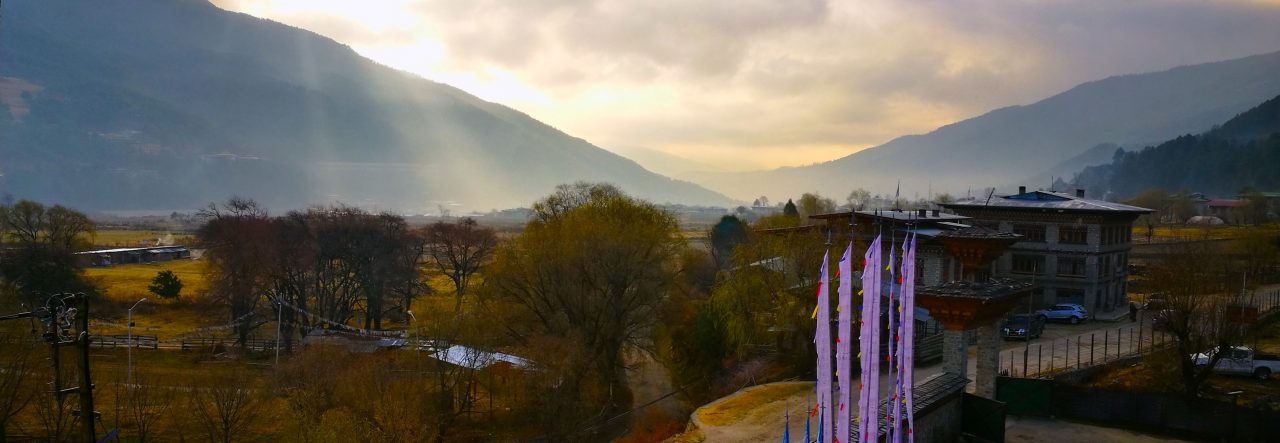
If I have to name my favorite pilgrimage place in Bhutan, it is Chumphu Nye. It is tucked away in a corner of Paro Valley, hence off the normal tourist trail.
This sacred site, Chumophu (literally meaning “female waters mountain”), is dedicated to Vajravarahi (Dorje Phagmo), the queen of all the dakini and mother of Buddha. It is thus a very powerful place. In Vajrayana Buddhism, the Dakini practice is the last stage towards liberation from Samsara.
The first temple was established by Sacha Rinchen (1710-1759)—the ninth Je Khenpo and perhaps the greatest scholar in Bhutanese Buddhism. There are three main relics, and while Sacha Rinchen discovered one, the other two are attributed to Terton Tseten Gyaltshen and Terton Drukdra Dorji.
Chumphu was built as Tsari Nyipa (Second Tsari)—with reference to the famed Tsari (Crystal Mountains) in Tibet, which is believed to be the eternal abode of Dorje Phagmo. Story has it that Sacha Rinchen, in his vision, saw Dorje Phagmo telling him that in the future the first Tsari would see a decline, and Chumphu Nye would be her main abode.
The main statue—a 5-foot-tall Dorje Phagmo (Vajravarahi), according to one legend—is rangjung (self-arisen) and not man-made. The other legend is that it was discovered in a lake—located some 30 minutes up from the temple.
Whichever be the true story, the marvelous thing about this statue is that it is levitating—meaning it is floating.
The walk and the experience of entering this valley are always enchanting and surreal. Although it’s been 16 years since I have visited this place, it is always like the first time. Very emotional trip. 🥹🥹🥹
More details of Chumphu Nye are in my blogs.

