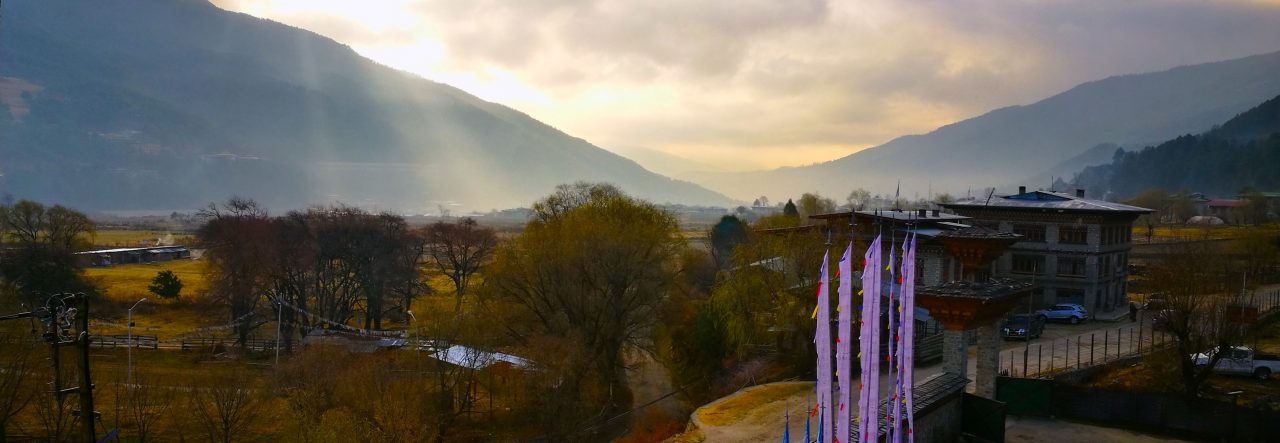
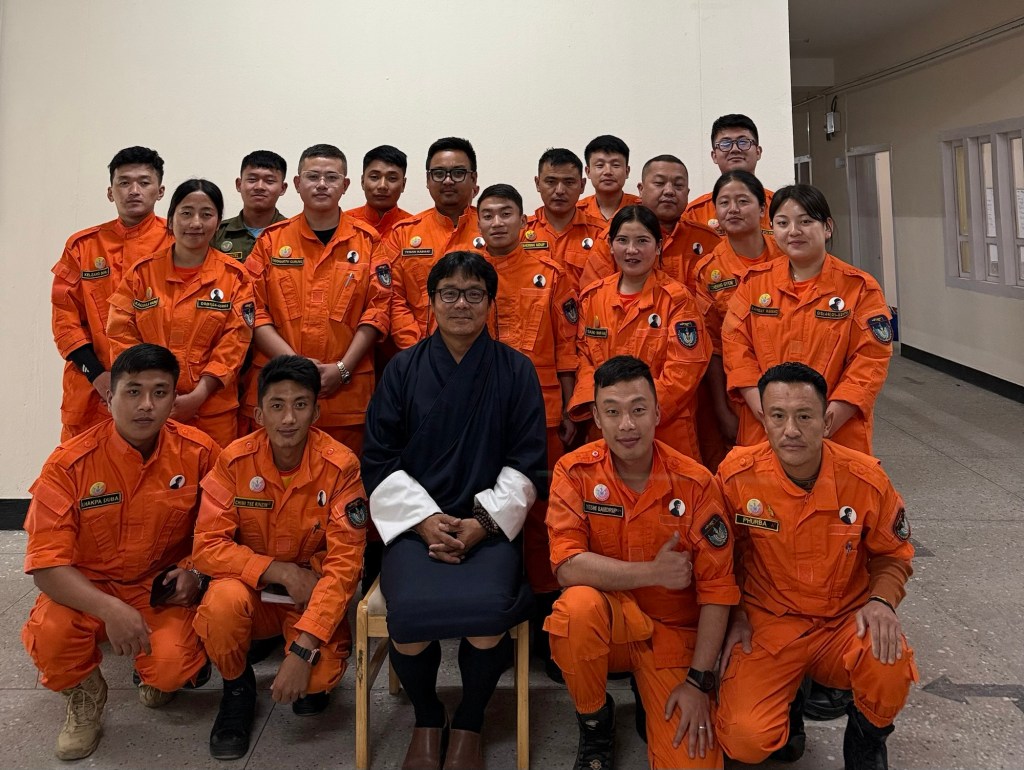
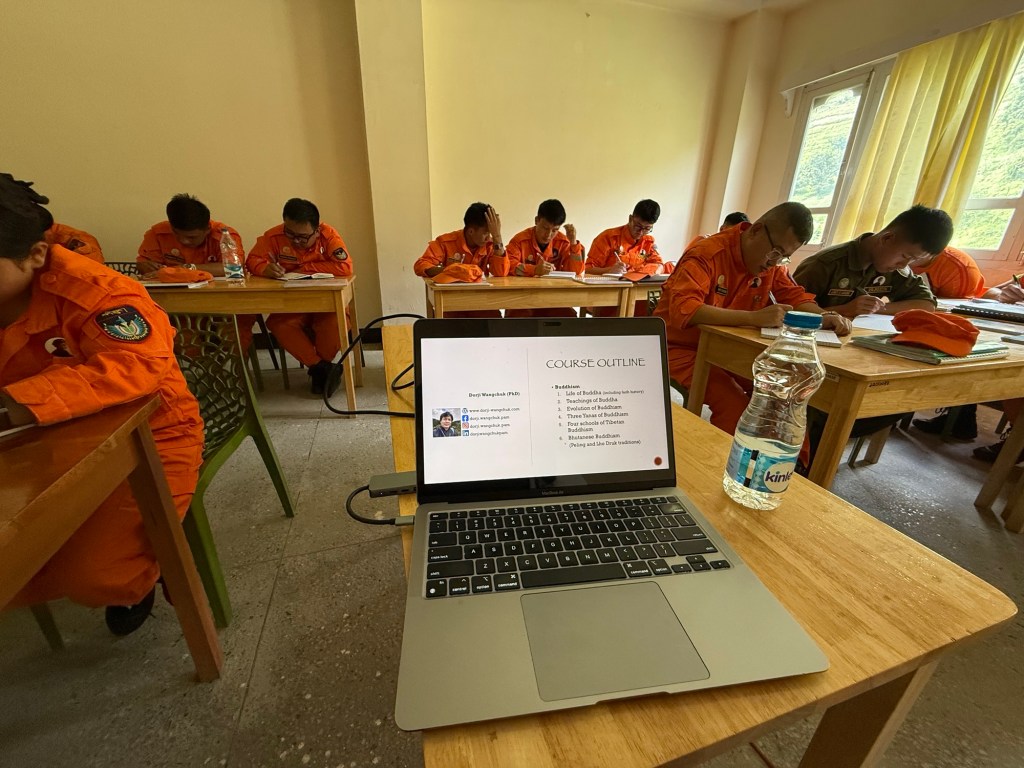
I just completed teaching the foundations of Buddhism to the Desuups in Punakha. They are the 8th cohort training to be cultural tour guides. And the experience is always rewarding for me since I know that unlike many courses I teach, this will be put into use right away as they go out in the market.
I have, however, not limited my class to the Buddha Dharma. I also gave them some insights and trends in the global travel industry and how they could prepare themselves to be ahead in the game. This knowledge of the industry comes from the research I have done. Before teaching any course, one needs to have a deep knowledge of the industry itself.
Here, I happily share the findings for the benefit of all sentient beings in the tourism industry since it is the holy Saka Dawa month. 😁😁😁
- Intentional versus informational. Travel versus tourism.
These days information is everywhere. Tourist guides need to provide more than just information. They need to move beyond what is already there in Wikipedia. That can be achieved by making the tours more intentional and not an information session in the sense that we need to move away from rushing from one cultural site to another to a more meaningful and mindful exploration of a place. It is quality over quantity, more human connections, and creating greater local impact as well.
At the very least, don’t treat temples like museums where you just walk through. Make them sit and let the blessings sink in. Stop at social events if you come across one.
Post-COVID, there are fewer tourists but more travelers. One must know the difference. Tourists try to hit every place marked as a tourist destination. Travelers seek deeper experiences, to learn from locals, to veer off to the unbeaten trails, and to connect directly more with the community.
People’s taste is shifting from fulfilling the bucket list to filling the bucket. So, don’t pack too many things in the itinerary. Make it honest. Host them well. And take it slow. That is what Bhutan can be naturally good at. Turn our weakness into a product.
- The Quiet Escapes.
The world is getting burnt out. As if the capitalistic and market-driven life were not already fast enough, Silicon Valley has made it faster, and life is now traveling at breakneck speed. People are sick of running, tired of capitalism, and exhausted with everything happening around them. They are overwhelmed with being smacked on the face with everything happening everywhere every time, via smartphones and social media.
Hence, demands for wellness retreats will surge. People will just come to Bhutan to slow down, sleep, and do nothing. So, keep in mind that most from the advanced economies will be coming to rediscover their own self or a new self that needs to be discovered to move forward with life.
We also live in what sociologists call the post-truth era of AI and nationalism and individualism, where the line between what is real and what is not has been blurred. The boundary between what is true and what is false is increasingly hazy, with people becoming distrustful, disillusioned, and dismissive.
The innocence and authenticity that still marks much of Bhutan, a genuine welcome for a simple tea, a shoulder to cry on without being judgmental, and mindful attention to their stories would catapult Bhutan to be the place to go to restore one’s sanity and faith in oneself and humanity.
- Gen Z from the region. Welcome them.
The world’s economic center of gravity is shifting towards Asia. China and India will join Japan, South Korea, and Singapore as countries filled with the nouveau riche. With that, of course, the ills and ailments from overconsumption and being consumed will creep in.
Bhutan can offer some quiet time for them to recover from the stress and strains of the newfound wealth and reset their lives and recharge their batteries.
The beauty of these markets—especially India—is that the travelers are younger, and they can make lifelong connections with Bhutan. Welcome them with open arms. It is a big market.
- Specialize and expand.
The world is getting hyperconnected, with basic information being shared on everything, including tourist sites and culture. Hence, you need to specialize in one area, such as food trails, river guiding, high-altitude trekking, birding, skydiving, spiritual yatras, or agro-tourism. Do not stick to one skill or one product.
And on the other hand, you need to cast your net wide and venture into other travel-related enterprises like food, yoga, meditation, medicines, and even laundry and transport services.
The Gelephu Mindfulness City also offers newer opportunities because of a different visa/entry regime that will be worked out and a different environment and culture being in the southern subtropical area.
No one can predict exactly what kind of city in terms of character and charm will emerge eventually. But one thing is certain. A city will happen. And moving there now might give you an early-settlers advantage.
Lastly, don’t forget to have fun!
 Dorji Wangchuk