The Australia Exodus


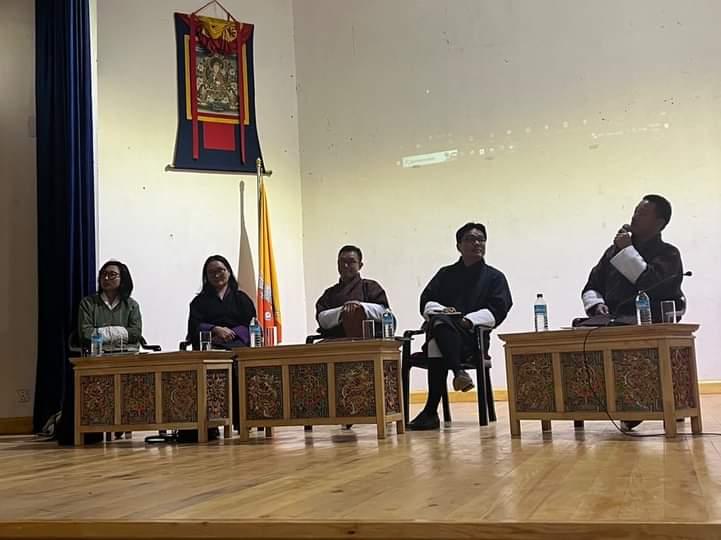
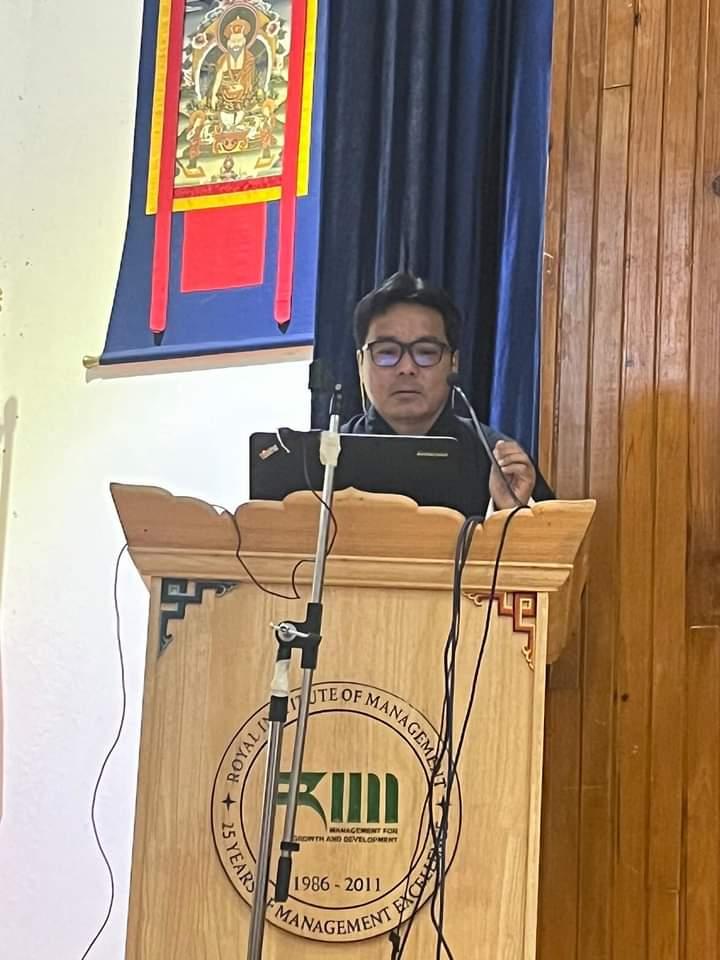
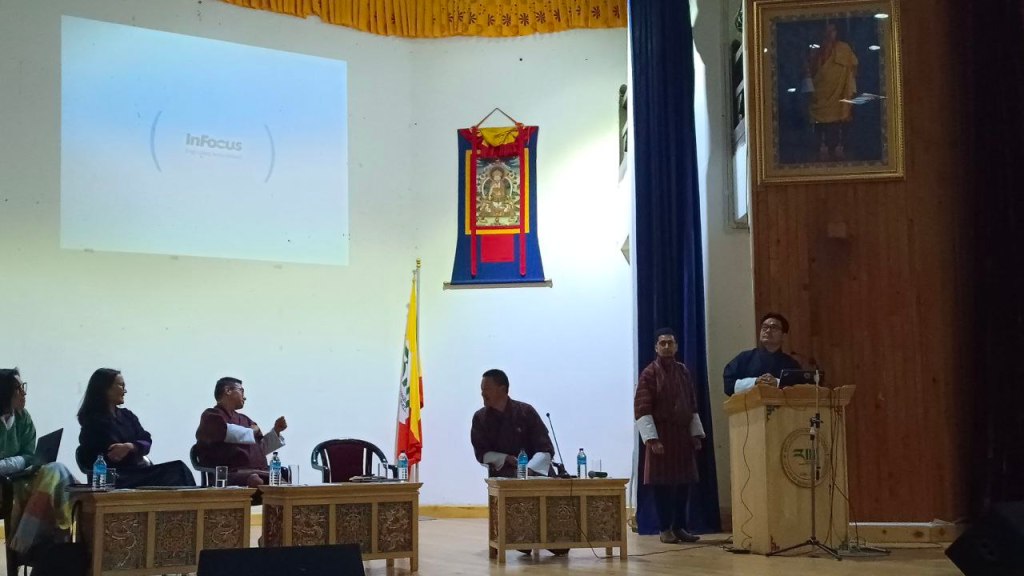
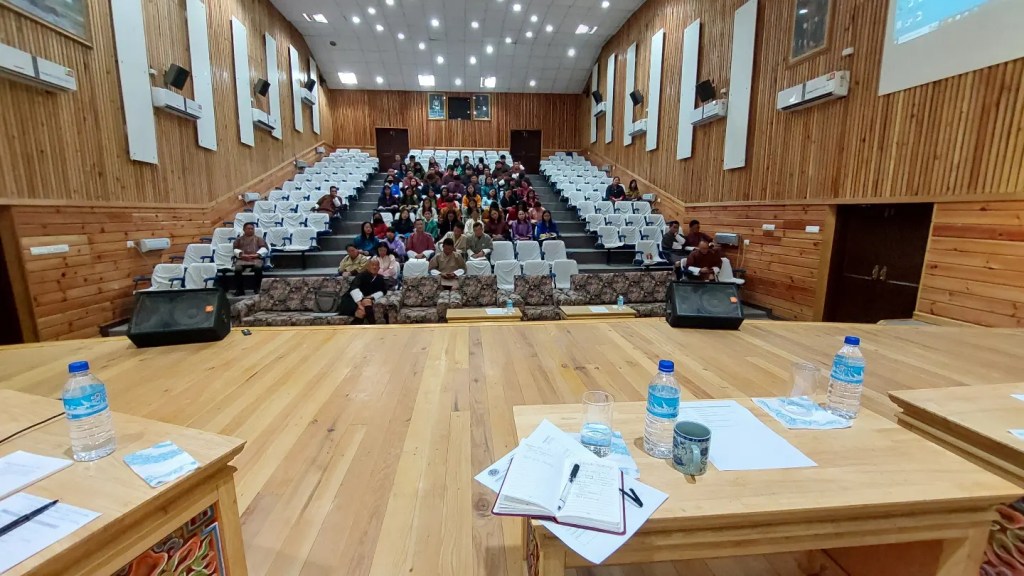
I was invited to speak at a half-day seminar for the officers-trainees of the Royal Institute of Management in Thimphu on the topic of Bhutan becoming a remittance economy. I offered to provide some sociological perspectives to explain why the exodus is happening in the first place – based on studies and experiences from other countries.

My qualification to speak on the topic stems from my PhD dissertation, which was an interdisciplinary reasearch that combined communication, technology, sociology, literary theory and Buddhism, and explored the question of identity, community, and spirituality.

Migration is complex

First of all, is this Australia exodus a migration or an emigration? Is it economic migration or brain drain? These differences need to be clear because each phenomenon requires different theoretical frameworks to make sense of, and diverse solutions to address them – if they are recognised as a problem at all.

Second, migration is multifaceted, and calls for a multidisciplinary approach to fully comprehend it. Sporadic, ad-hoc or piece meal plans won’t help address it. For example, to think that by simply raising the income we would put a stop to this exodus is a fallacy. Studies have shown that migration rate from developing countries increases as the GDP per capita rises, because of the enhanced capacity to migrate. The rate of migration starts declining only at around USD 10,000. Bhutan’s current GDP per capita stands at around 3,200. Out-migration, thus, will only gain steam for a decade or so. Unless other measures are implemented, the upward trend will continue till 2038. This year has been arrived using the Rule of 70 from economics.

Third, on the question on why people leave, the neoclassical theory of migration (aka the functionalist paradigm), which characterises migration as “seeking greener pasture”, and which is the dominant narrative in our government, needs to consider other broader perspectives such as the aspirations-capabilities framework.

Aspirations-capabilities framework views migration as complex, non-linear and, in many cases, counter-intuitive – and as shaped by macro-structural changes such as urbanisation, economic policies and system of governance. If Bhutanese are opportunists then why is it that every student from my generation returned to serve the country?

This Aspirations-Capabilities theoretical approach allows us to investigate migration as a constitutive part of the broader social process. In a pilot study that I conducted in 2019 among professionals who moved to Australia (I couldn’t do the actual research because of Covid), preliminary findings showed that money was not the main factor. Sense of self-worth and belonging, followed by perceived lack of negative liberty, preceded money, which in turn was viewed as the counterbalance to the two main factors. Statements such as, “If I have money, I can do anything”, or “I can now repay my parents”, or “I feel so suffocated there”, or “It doesn’t matter whether I am in Bhutan or outside” all index to these findings.

Furthermore, Covid-19 and subsequent lockdowns forced many people to reflect on their life’s meanings and purpose. Is this life worth it? What if I died tomorrow? I have not even bought a mobile phone for my parents. The exodus gained momentum thereafter. The monthly departure rate is four times the pre-covid level.

Migration thus occurs as a result of, and which could later drive, deeper psychosocial changes in the country. To oversimplify it as chasing the dollar tree, or to underestimate it as not-a-major-issue, would be a mistake with long-term consequences.

So, what are the solutions? Well, honestly, we all know what to do. It is just that we don’t do what needs to be done. Ego, arrogance, and indifference seem to stand between us and our duty. And yet, complex and multifaceted as it is, it will only be through multiple agencies, including the populace, working together that a lasting solution will be found.

Here are a few ideas, nonetheless. (I could not mention the third one at the seminar because of time)

Public service that facilitates

Like it or not, bureaucracy occupies the centre stage in Bhutan. While it has done well to pull the country out of poverty and underdevelopment, it has not kept up to the changing times and needs. Every little service that we seek requires multiple visits to a government office, or to multiple government offices. This has not only stunted the growth of other sectors but it has stalled itself with a cobweb of rules.

Worse still, there is a perception among the general public that if you know someone you can get anything done. Otherwise you won’t get the service at all. This is terrible, because perceptions may be just that – perceptions, but they bite deeper into the public psyche than the actual reality. In psychological terms perceptions penetrate into the limbic brain. Facts and logic remains in the frontal neocortex. But the thing is, people make serious decisions in life in the limbic system.

One former senior government official also told me that rules are designed to protect the public officials and not the public, or the public interest. The need to submit heaps of documents with undertakings signed on legal stamps for a regular service to the same office, over and over again, is a perfect example. On the other hand, in my six years in Macau I don’t remember submitting anything other than showing my passport to avail the services, including when doing my visa and the stay permit.

Our old ways of doing things need to change. Otherwise our people, the youth especially, don’t have the patience. They will walk away. Or worse still, do nothing. There is a new term in sociology to refer to this phenomenon. It is called quiet-quitting.

Our Parliament may like to do a thorough review of all the rules and regulations of each government agency. As the legislative arm, it falls on them. Regulatory overreach slows down or blocks everything. There is no use of passing a perfect legislation if the sub-legislations drawn by the bureaucrats do not comply with the original intent of the law. Repeal those rules that do not conform, or are outdated – some are even unconstitutional – and those that hinder the movements of goods, people and services, or curtail ideas and innovations.

Every state institution has to chip in. Only then will it set the right conditions for our country to achieve its full potential. If we have policies and public services that facilitate, ideas and entrepreneurship will flourish, employment will be created, taxes will pour in, wages and salaries will increase, everyone will be better off. As things stand, there are no winners. Everyone is losing.

Keeping the emotional connections

To quote Tom Friedman, the world is flat. Australia and Canada are far but for me physical distance is not an issue. What bothers me is the emotional distance that may develop with our people there. It would be a disaster if that happens. And yet, from my own experience, it just takes one generation to disconnect. My wife is Japanese. My daughters don’t know any of their Japanese cousins. Not even one. It is that easy for people to disappear in your life.

Individuals and families must make extra efforts to maintain the connections. Family gatherings for annual rituals can be shared through social media platforms to create a virtual space for blessings. Caretakers and lamas can be reached on WhatsApp and WeChat. Influential Bhutanese must engage in conversations with young Bhutanese living abroad. These days it is not too difficult, thanks to technology. Everyone is just one click away.

Coming back to legislative or executive overreach, we need to amend some provisions of our existing laws, lest we lose some of our people forever. A simple example: the postal ballot facility is not available to Bhutanese outside the bureaucracy. So says our electoral law. We should recognise that it is also in the interest of the State that subject engage in civic duties. If this provision of the law persists, and is not amended, a large section of the population cannot vote. That would disengage the people who will then lose touch with the affairs of the country. There are other provisions and practices in other line ministries that are becoming a wedge between the people and the State. This is not good for a country with less than a million.

Emotional connections can also be maintained if, for example, physical connections are improved. What about direct air connectivity to Australia, Kuwait and Japan? We can negotiate more Fifth Freedom Agreements with countries like Thailand, Singapore, and India right now. With our own scheduled flights, there will be frequent movements of people, which could even lead to a circular migration, and to investments and capital inflow from our own citizens, and not just the monthly doles.

The opening of our embassy was a great move. More such initiatives should be brainstormed. Otherwise migration will become emigration.

Liberalising some key sectors

Some of the world’s biggest companies are in the health, education, energy and entertainment. In Bhutan they remain fully under government control or as public services with no competition whatsoever. While this arrangement was necessary in the past, it does not serve the present circumstances or the future needs. We have to open up. We can not build an economy by retailing Dhaka garments or Uniqlo jackets. We should let our people dream big.

These four sectors are also where we can compete globally. Any economist will tell you that a country’s economy is either based on manufacturing or services – or both. Being surrounded by three of the world’s biggest manufacturing giants – India, China and Bangladesh, Bhutan can only develop its service and knowledge industry as its core economic base. Even hydropower is questionable now.

We can start small, like dishing out private dental services, and allowing private schools to try new curriculum. Our music and movies should be spared from government certifications and censor boards, and instead go for peer-reviews. There is no good rationale behind strangulating Bhutanese content creators while allowing the public to access billions of YouTube channels and Peppa Pig.

Coming back to health service, the wealthy and the affluent, plus those who value their health but not necessarily rich, are jetting off to Thailand and India. Just one hospital – Phyathai, in Bangkok treats over 3,000 Bhutanese out-patients and over 100 in-patients in a year. Read these numbers again. That’s just one hospital. And there are people I know who go to Bumrungrad, Samitavej, and Bangkok Hospital. And, what about patients going on their own to Delhi, Kolkata, Vellore and Siliguri?

All in all, around a billion ngultrums of private money is flowing out annually and that too in foreign currency. Since people are spending money anyway, why don’t we open up our minds, and the health sector, and make them spend that money in our own country? Similarly other areas of growth should be explored instead of slamming every idea as mitub (not allowed).

If our entrepreneurship is limited to importing cars, Korean cosmetics and consumer goods, then I am afraid that the temporary economic migration will become a permanent one-way brain drain.

In conclusion

These days I dread reading government circulars. Seriously. I often ask myself, where is that can-do mentality we once had? Where is the excitement to do, to serve and to build? TV, telephones, Internet, air transport, we got them. It wasn’t easy. Not for our King to find the money, and not for us the engineers to build them. But we did it. Our parents were even better. They scratched the mountains with bare hands to build the first highways. Now everything is about bans and rules and no-budget. Where and when did we lose our optimism, the grit and our sense of humour?

Our bureaucrats need to relax, smile, and develop more confidence. Knee-jerk reactions, myopic policies, narrow and subjective interpretations of rules will wear out the population. Show some strength and give space for people to breathe, make mistakes, cry, learn, laugh and move ahead.

Covid has drained our foreign reserve, and the state coffers. It has also revealed our strengths and weaknesses. Like many countries ours is also at a crossroad. Which road do we take? The familiar and the comfortable one, or the one that is unknown and uncharted?

The choice is not easy but we have to roll the dice. And give a go.

#bhutan #migration #thimphu #seminar #rim

NB:

I also invited the young officer-trainees not to look at us, the oldies, only for inspirations, or to point the fingers, but to roll their sleeves, and get to work immediately. And that from next year, today, they will be sitting in the board rooms, and their opinions will be sought. I shared that in 1999 after lots of back-and-forth in the government, I was cornered and the final decision to bring television into the country rested on my yes-or-no. It was 1999. And I was only 31. Just 5 years into my service.
You can give your time

The people of the valley of Athang Rukha, until 15 years back, lived in extreme poverty and on dole from the neighbouring villages. Things took a drastic turn as they worked their way out of it since then. Today they are relatively doing very well. They have everything going for them.

“Now it is the time you give back. You have to help others,” I told them after we organised the first Tshechu and Tshobum in Rukha last December. They all looked perplexed and unconvinced.

“You can give your time”, I told them. “We all have it”.

Yes, in a world that is obsessed with money, as in living with the money-is-everything narrative, there is one priceless resource that nature has endowed equally to every human and sentient being. That is time. You don’t only have to have wealth or power to be able to do good things, or be of service to others. You can donate your time.

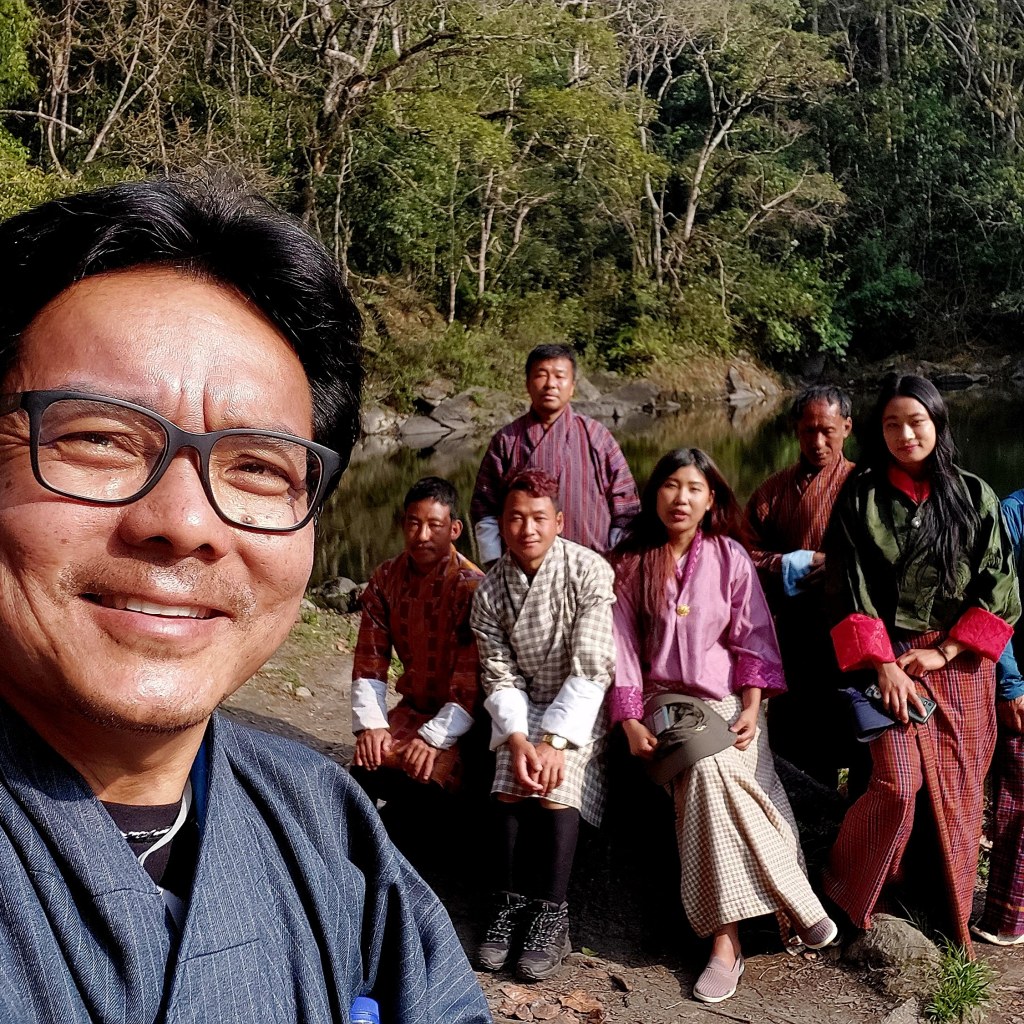
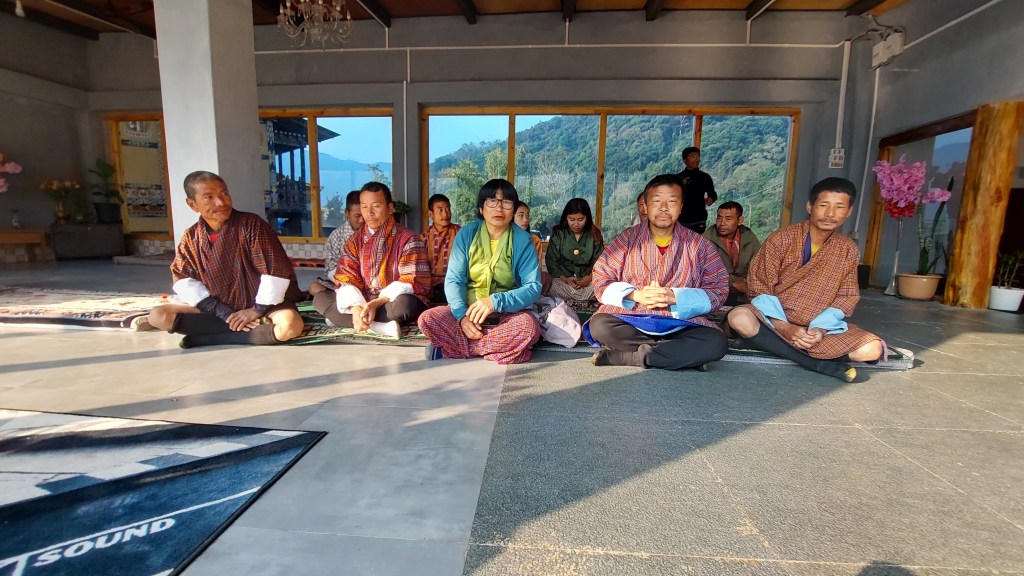
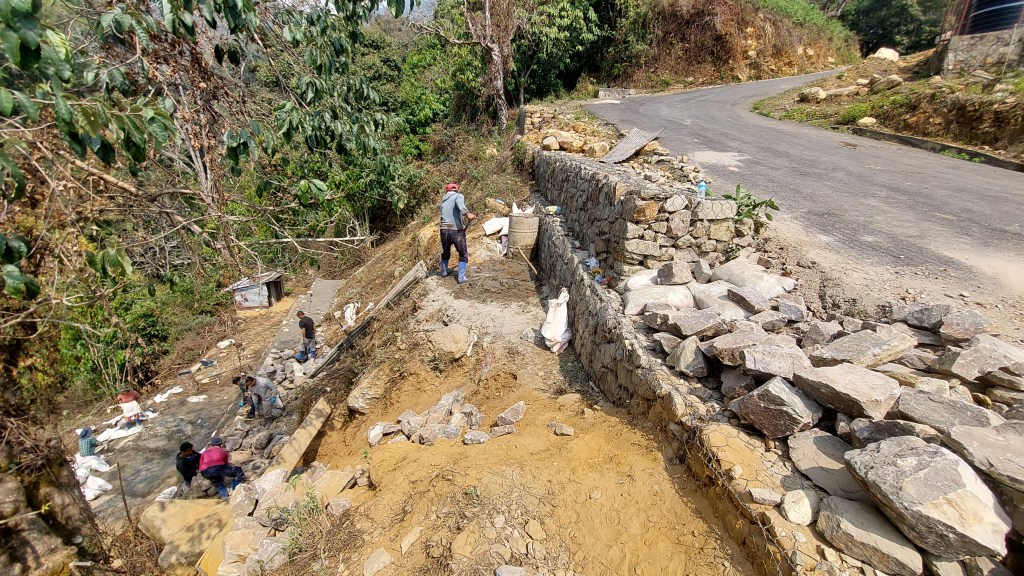
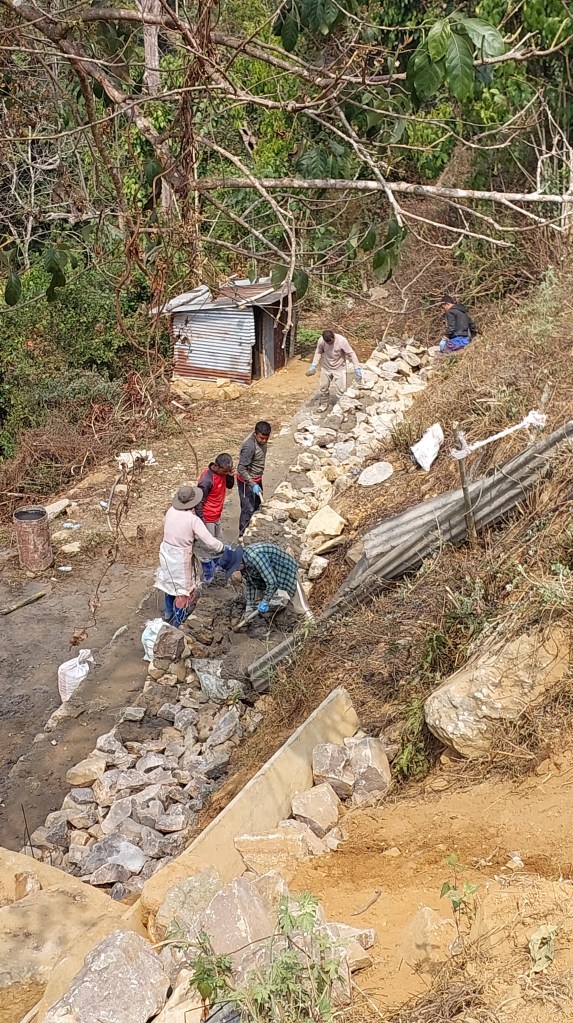
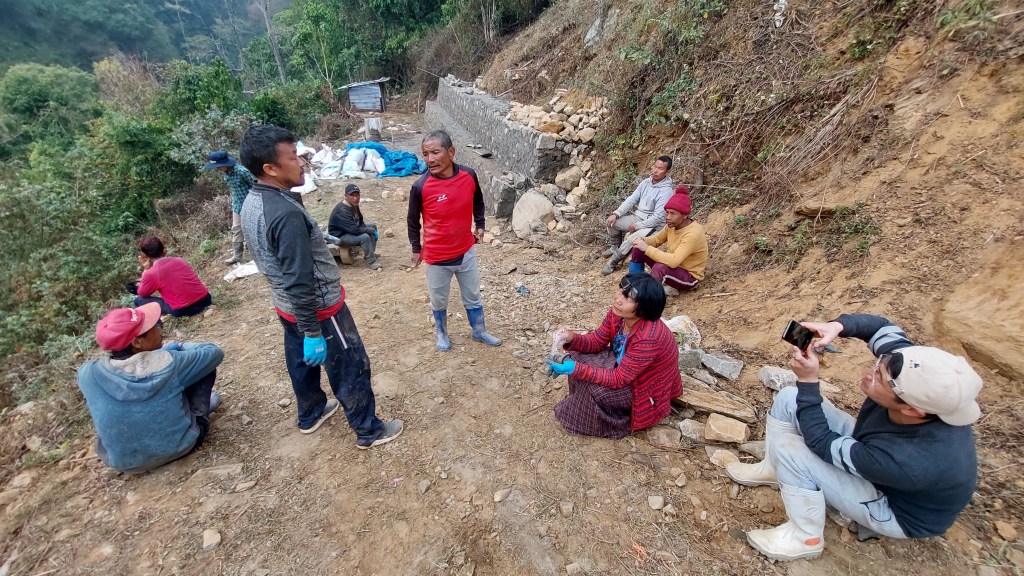
With this belief, I got 11 people accompanying me this time to do some pre-monsoon works at Dorje Phagmo Center in Zhemgang. More had actually signed up from Rukha but we only had three cars.

I agreed to put forward the money and materials, they agreed to give their time. Collaboration at best again. We are doing a massive 60 feet long, and a 20 feet tall wall, to prevent the feeder road from possibly sliding down next summer – or in future.

Whether you are rich or powerful, poor or powerless, time is also Great Equaliser. You may have the wealth, or power to buy anything, or do anything, but you cannot buy time.

Last, and the most important, our time on this planet is limited. And in the limited time we have in this life, use it meaningfully, while you can.

The Welcome Bowl

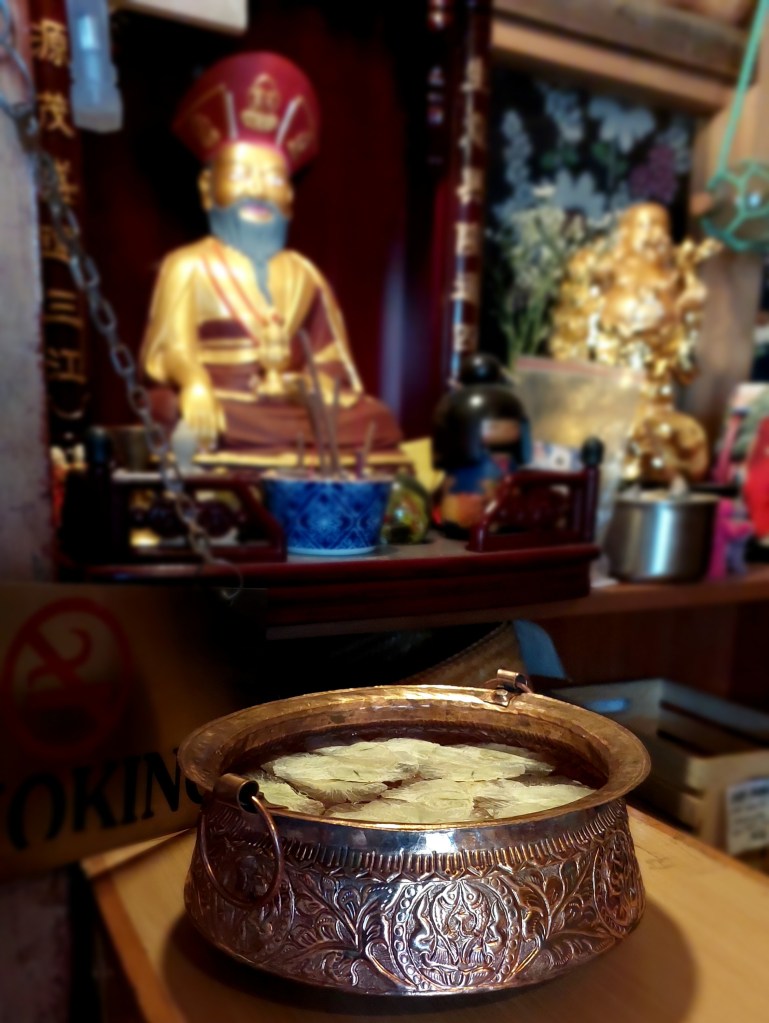
I have adapted this Newari copper container known as khadkalo, as a thro (large bowl in Dzongkha) for offering water and floating tsampaka (Oroxylum Indicum) flowers, as a sacred welcome offering.

Such displays of a bowl of water or milk, with floating flowers, are a traditional welcome to one’s house that signifies good luck, happiness, enlightenment and healing. You normally find them in front of temples but this cultural practice is in decline in Bhutan – and are done only when there are VIP visits, or during consecration and installation ceremonies.

However, I found among the Newaris in Kathmandu that they do this every day. So, I am taking a leaf out of their tradition and deciding to make a permanent display.

Culture can ba shared too.

#coppervase #welcomeflowers #bhutan #hospitality

Dechenphu Lhakhang

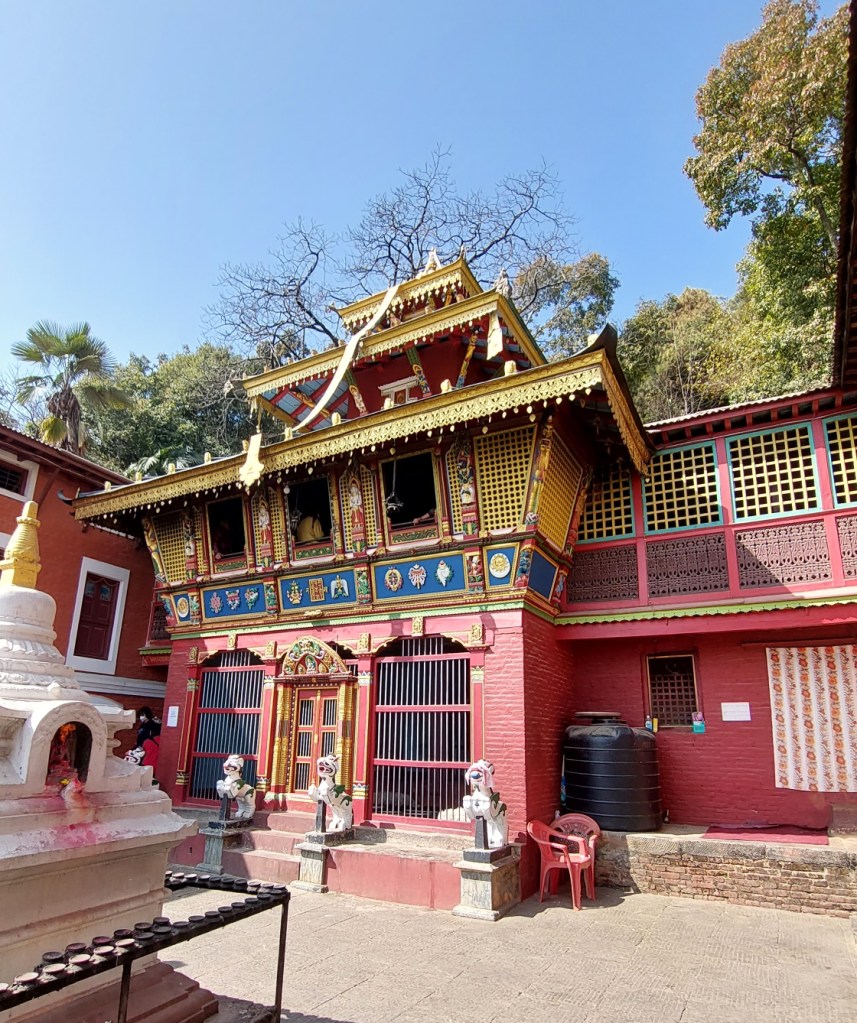
Many visitors visit Dechenphu Lhakhang but they actually visit only the Neykhang, and forgo or forget to visit the real Lhakhang (the one in the picture).

Lhakhang, which means, Place of Gods, is where divinities are believed to reside, and it is where you seek blessing for you to get a step closer to enlightenment.

In Dechenphu, the tall red structure is not a Lhakhang but a Neykhang, which literally means Place of Spirit, and the spirit here being the Genyen, Jakpa Melen.

Spirits, those tamed by Buddhist masters, help devotees to clear their obstacles that may stand on their paths to enlightenment. They fall under the class of worldly deities and are of not much use as far as your journey towards enlightenment is concerned.

The ultimate goal of Buddhism is enlightenment, and so one must always visit the Lhakhang, when you visit the Neykhang.

In the Lhakhang in the picture, the centerpiece is a speaking statue of Guru Padmasambhava.

May all be blessed

#guru #dechenphu #thimphu #bhutan #vajrayana #buddhism #spirits #mountaindeities #deities

The Sakya Artisans of Nepal

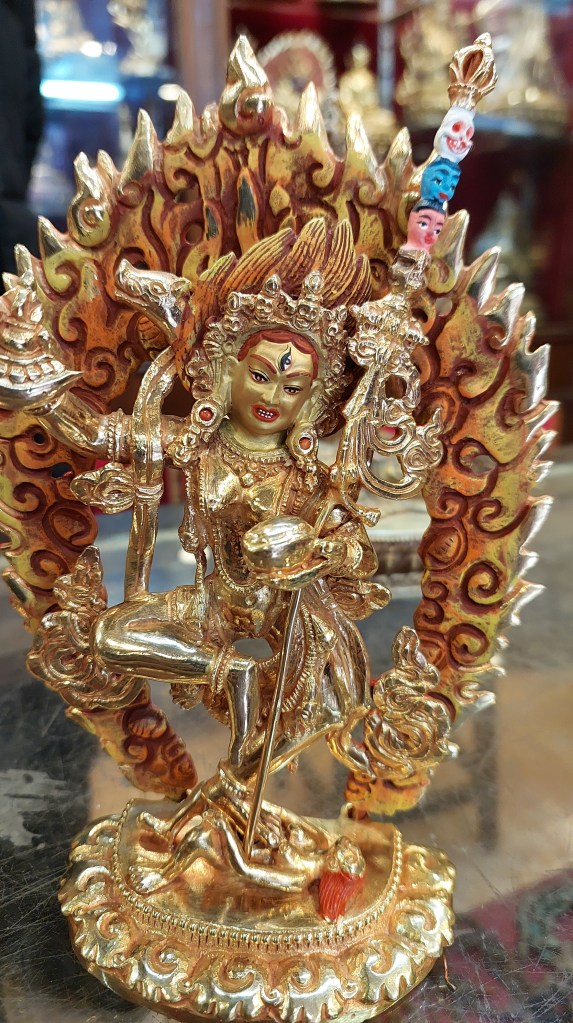
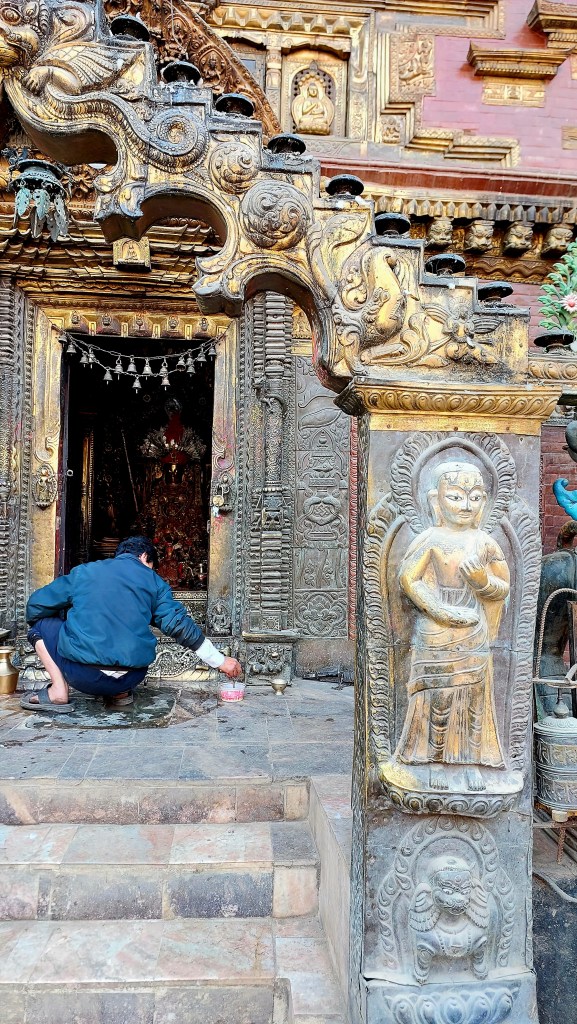
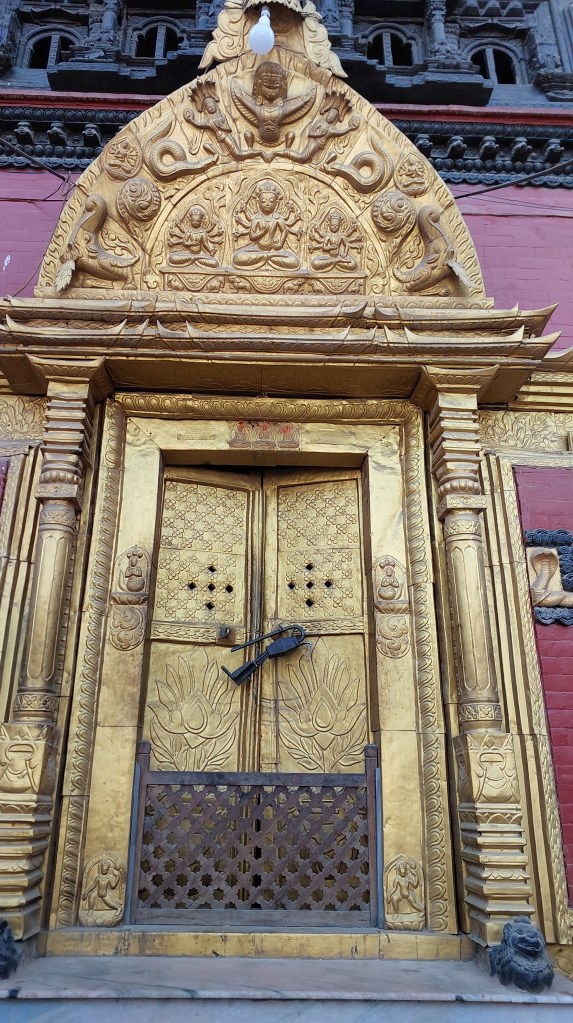
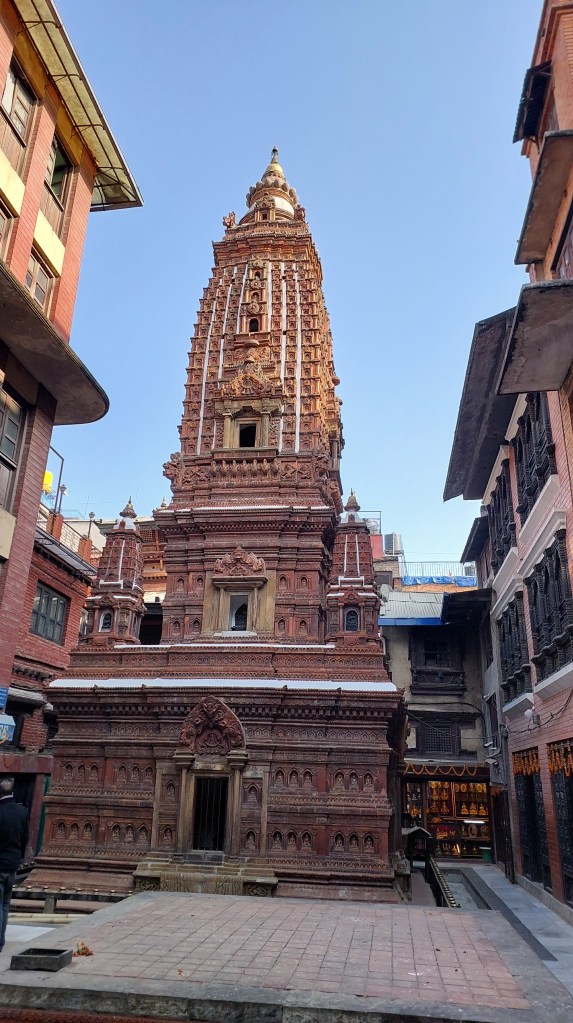
I bought two small statues – one of Vajravarahi (Dorje Phagmo) and the other of Buddha Shakyamuni, from an artisan in Patan. He is a descendent of the legendary Abhaya Raj Sakya, who built the Mahabuddha Temple (see picture) in Patan more than 500 years ago.

The Sakya artisans are bronze craftsmen par excellence since time unknown. I spent two full days visiting this metal town, listening to their stories, watching them at work, and admiring some of their marvelous creations – and reading what is available of their past.

A folk legend, which I heard many years back, tells the story of one of their ancestors, a Sakya artisan, who was taken to the realm of gods in his dreams by Vishwakarma, and was introduced to all the 33 deities there. He was told to memorise how each of the deities looked, and to craft them accordingly in bronze. This is the reason why, I was told, the Sakya artisans make the perfect replicas of Buddhist and Hindu divinities. 

Another legend claims that the statues crafted by the artisans, who have descended from that Sakya artist, will eventually talk (sungjoen in Dzongkha). One example of such a person is the artistan Pintsa Deva, who was invited by Zhadrung Ngawang Namgyel in the 17th Century and whose works are still revered in dzongs and temples in Bhutan – the most famous being the Wish-fulfilling statue in Tango Monastery.

In more recent times, Kuber Singh Sakya, a member of the same clan built the 40-feet tall Maitrya Buddha in Trongsa Dzong between 1938-39. The statue was made in Nepal, dismantled, and then packed in boxes, and carried on mules to Bhutan, and finally assembled in Trongsa in the 1940s. One of his grandsons was the Late Raj Kumar Sakya who built the giant 173 feet tall Guru Nangsi Zillnoen at Takila in Lhuentse in 2015.

Some of these craftsmen also claim bloodline to Buddha Sakyamuni, who was born in the Sakya clan. 

Likewise, another myth or legend is that the gods wanted to be fair. So, they distributed the skills equally among the Sakyas, the Bhutanese and the Tibetans. Accordingly, while the Sakyas make the best bronze images, the Bhutanese make the best clay statues, and the Tibetans are best at thangka painting.

May these artisans, craftsmen and painters continue to create and inspire, and make this world more beautiful to live in, for eons to come. 

#newari #sakyastatues #buddhism #thangka #vajrayana

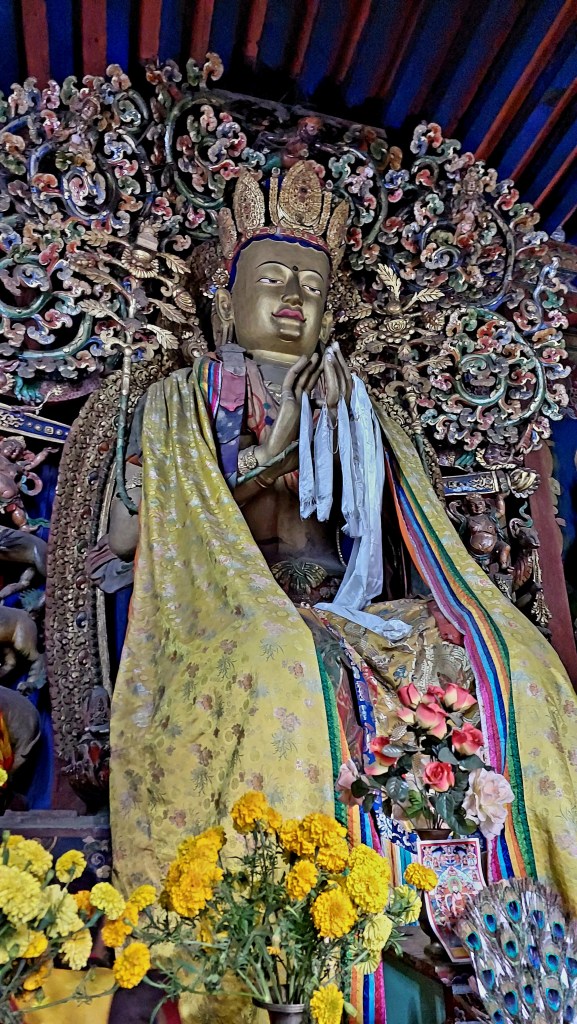
The six-meter tall Buddha Maitrya in Trongsa Dzong that is believed to have been made in 1938-39 in Nepal and reassembled in Bhutan
Mahabuddha Temple in Patan
Sudarshan Suwol is a great contemporary Newari artist
Mayadevi on the Golden Temple

Top 10 must-visit sacred sites in Kathmandu

What is now known as Kathmandu was historically Nepa Mandala, a Malla Kingdom with predominantly Newari communities, and which subsequently got divided into the three Buddhist kingdoms of Kantipur, Lalitpur (Patan) and Bhaktapur.

In Buddhist mythology the valley was the most important charnel ground known as Lhuendrup Tse, visited by Guru Padmasambhava many times over.

The valley was considered as an altar of offering for the higher Himalayan peaks that are believed to be the abodes of the gods – or gods themselves. Kathmandu is, therefore, a very sacred valley.

Here are the Top Ten Must-visit sacred sites and temples.

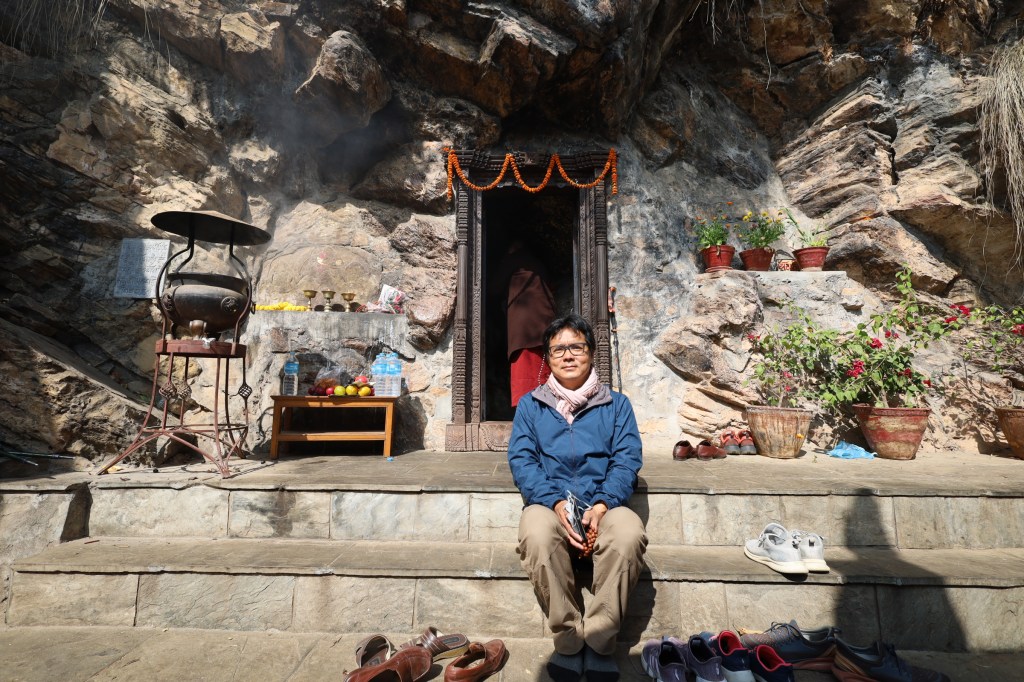
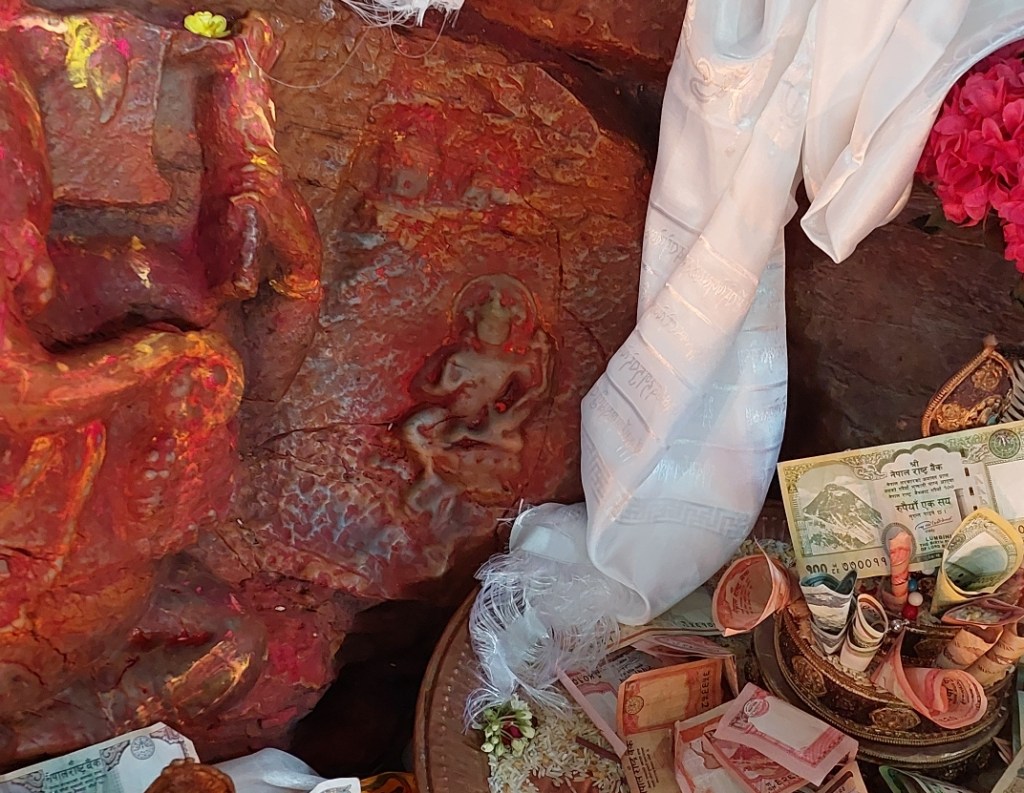
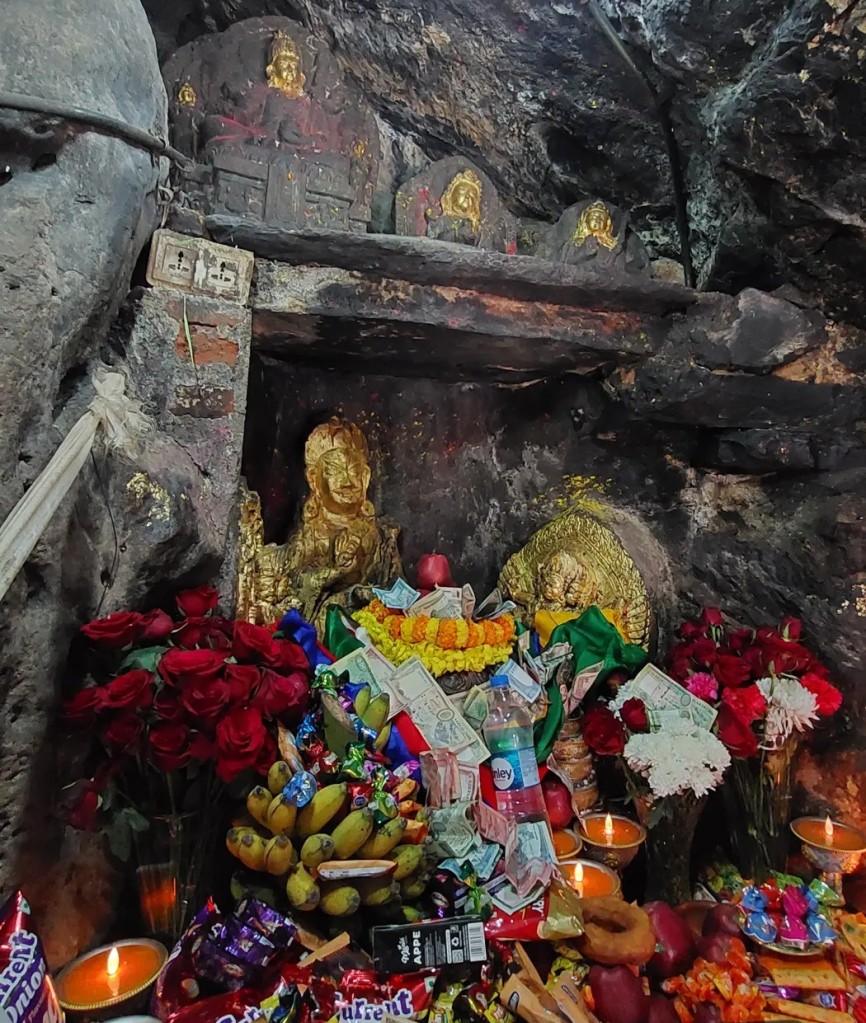
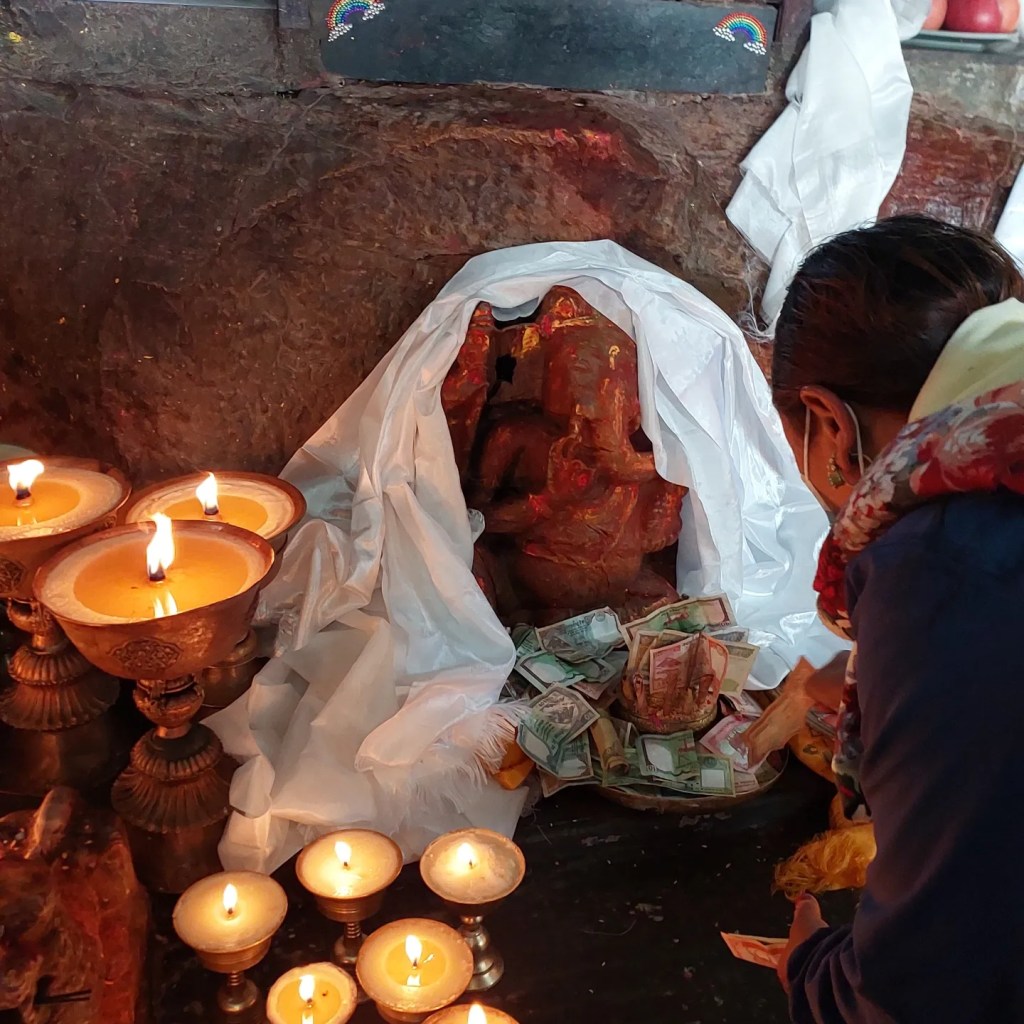
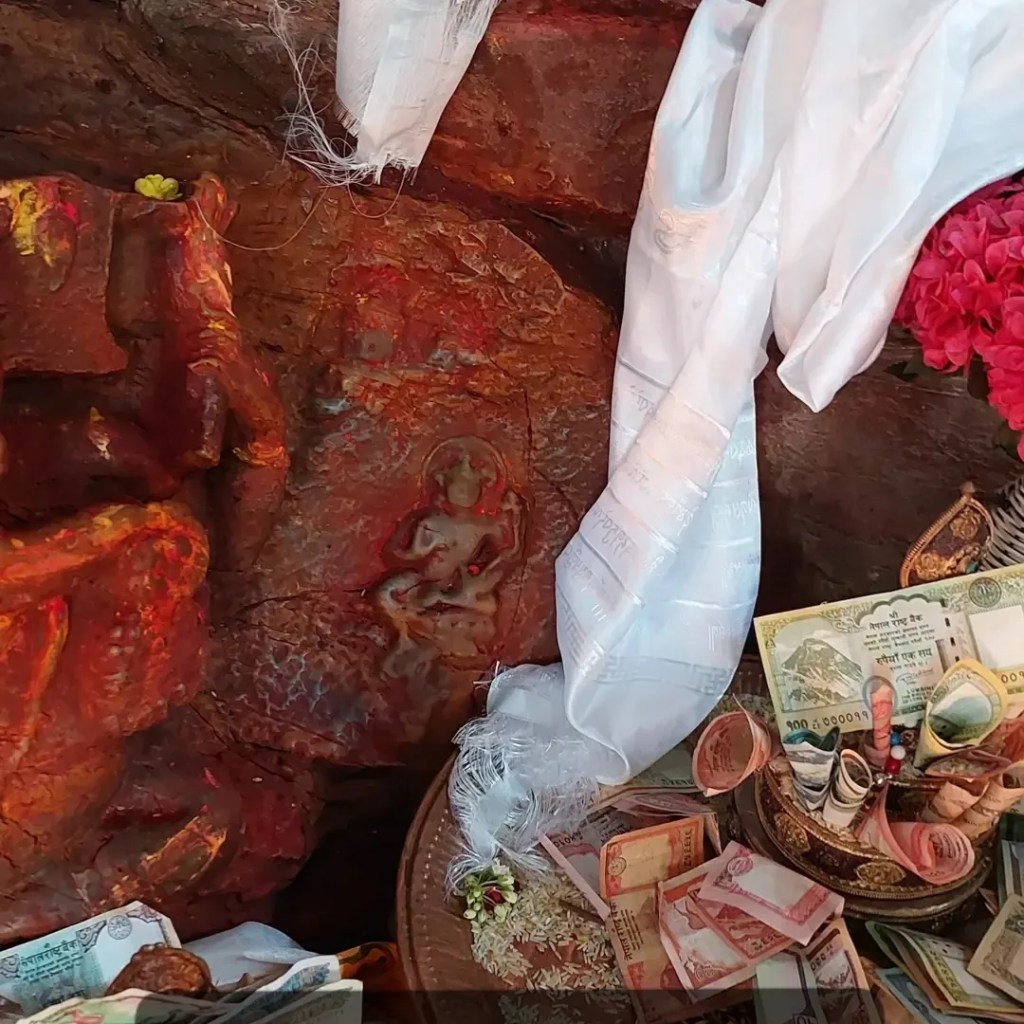
1. Asura Cave, Pharping. Known in Bhutanese as Yanglesho, it is where Guru attained enlightenment after practicing Yangdak Heruka and Vajrakilaya. The area also has a temple with Self-Arisen Tara and Self-Arisen Ganesh. There are two caves – one besides the main road, which is the lower Yanglesho cave, and the other is the upper Asura cave – above the Tara-Ganesh-Saraswati temple.

If time allows, you can visit the Kudrung Chorten of the Late Jadrel Rimpoche in Pharping.

Pundita of Yanglesho – Guru Mawe Sangye

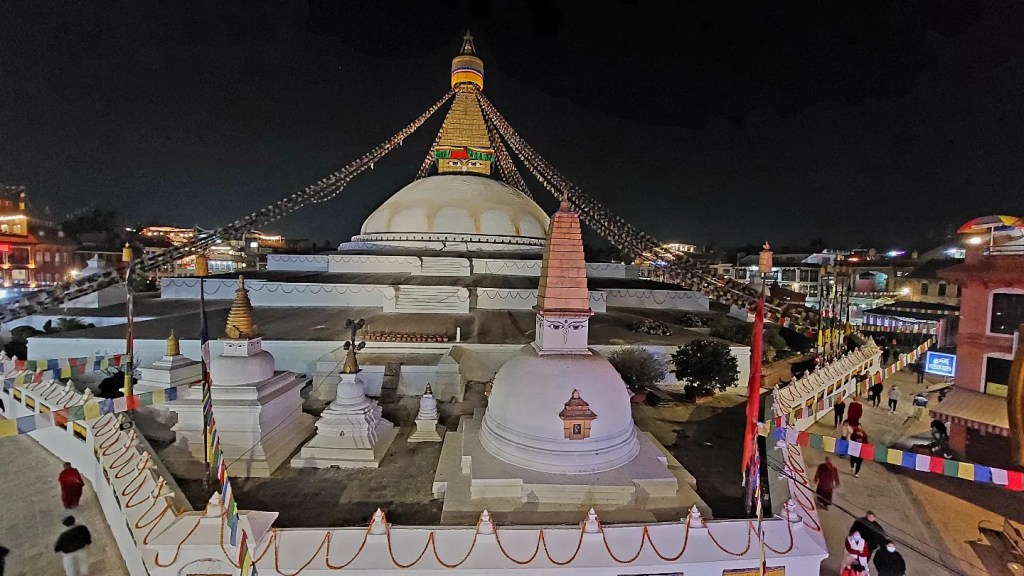
2. Boudhanath Stupa, Boudha. The Wish-fulfilling Jarong Khashor is impressive, powerful and beautiful. It is perhaps one of the few monuments that has continuously been revered without going into decay, at any point of time in its history. So, billions of moelam prayers must have been uttered here making it the most sacred monument in Buddhism.

I suggest you do three things: First do 12 rounds (108 rounds is the best), and then light 108 butter lamps. Third, make a wish – any wish. It will be fulfilled.

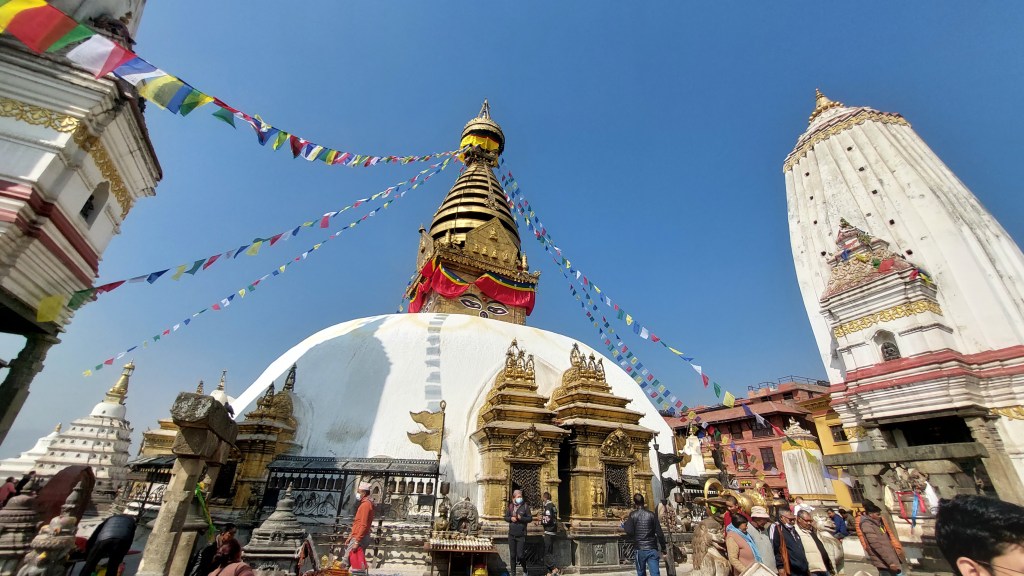
3. Swayambhunath Stupa, Swayambhu. Back in time, Kathmandu valley was a huge lake and a butter lamp was seen flickering in the middle of it. Manjushri came over and struck one end of the valley and drained out the lake. And then rose the Swayambu hill over which a stupa was built to hold the eternal flickering butter lamp. Known as Phagpa Shingkun (Sublime Trees) in Bhutanese, it is believed to be one of the most sacred sites in Buddhism. A prayer here is believed to gather thirteen billion times more merit than other sacred places.

Don’t miss the Shantipur building, from where Nagarjuna retrieved the sacred Prajanaparamita.

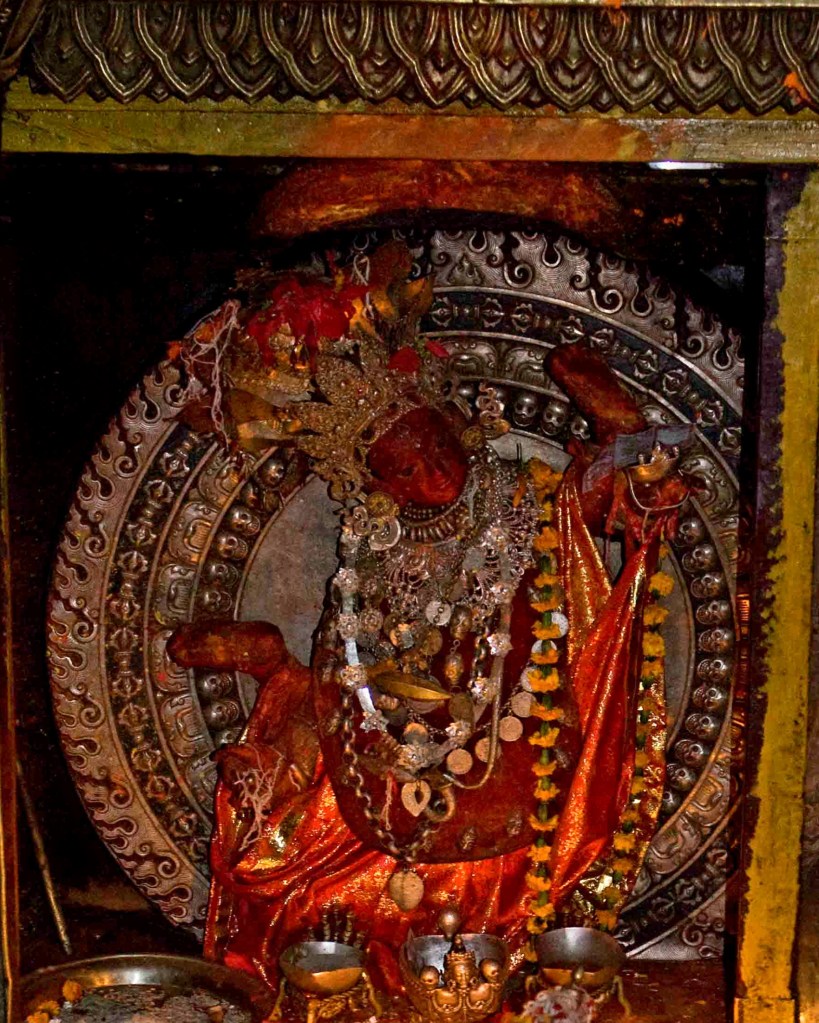
4. Vajrayogini Temple, Pharping. The Newari-style temple has a “Talking” Vajrayogini statue called the Phamting Dorje Neljorma. The temple is associated to the Phamthingpa, a heart-son of Naropa (1016-1100) who engaged in Vajrayogini practices. Some sources attribute the red-faced Vajrayogini to have been placed there by Marpa Lhotsawa (10th Century). Whatever. It is a wish-fulfilling one.

5. Chumik Jangchub, Rikeshwor. Translated as the “spring water of enlightenment” it is where Guru manifested as Kheychok Tsulzang, and appears in Barchel Lamsel mantras.

The area was partly discovered, and popularised, by a Bhutanese wandering yogi, whose children continue to hold the place. Look out for them and make generous donations if you can.

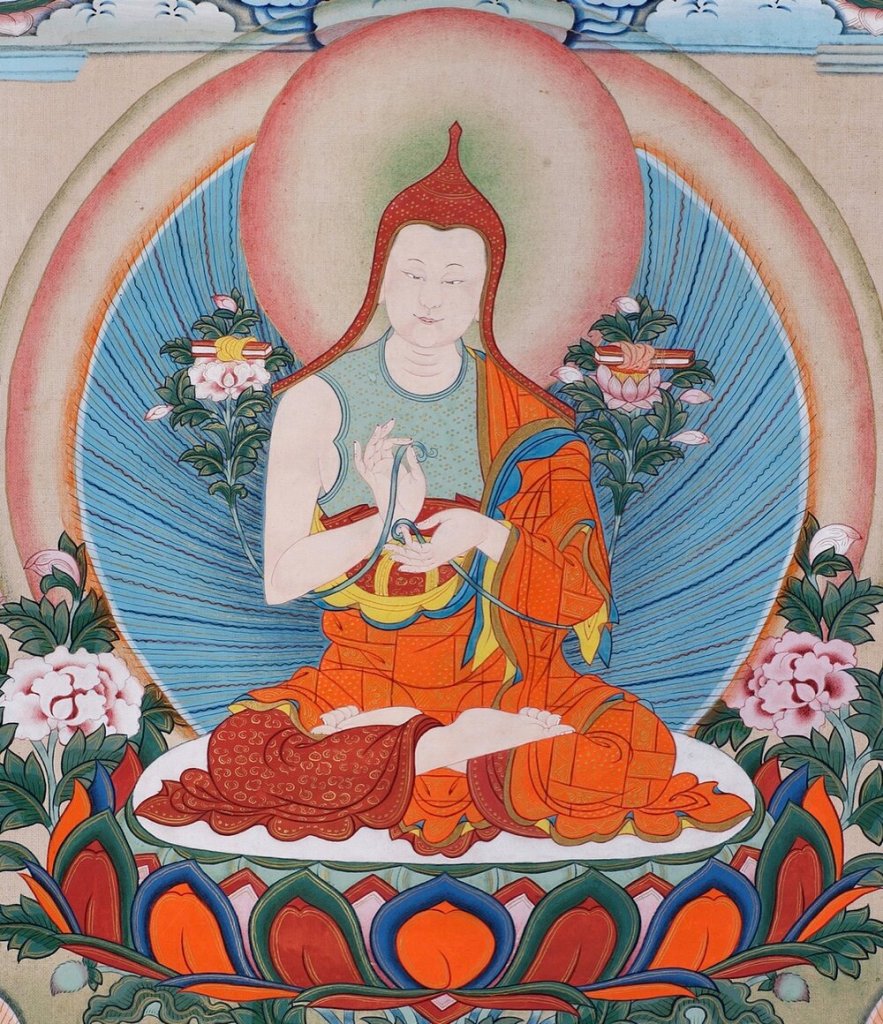
6. Tham Bahil, Thamel. One of the oldest viharas in Kathmandu valley, believed to have been established in First Century BC, it played host to several great figures such as Nargarjuna, Atisha Dipankar and Tshongpon Norbu Zangpo (Manidhara in Sanskrit).

The temple’s priced possession is the most sacred Prajanaparamita, known as Ser Bum, which was written by Manjushri and kept in custody with the subterranean naga king. It was retrieved from the nagas by Nagarjuna in the First Century CE.

You need a prior appointment to see the Ser Bum. As a Mahayana Buddhist, you must get a glimpse of it.

7. Jana Bahil, Thamel. The temple is a popular temple as the sacred Self-arisen Chenrizig, known as Seto Machidranath, sits there. It is considered as the protector deity of Kathmandu with its annual public festival . The statue was blessed by Guru Padmasambhava, and thus makes it more special for Vajrayana Buddhists.
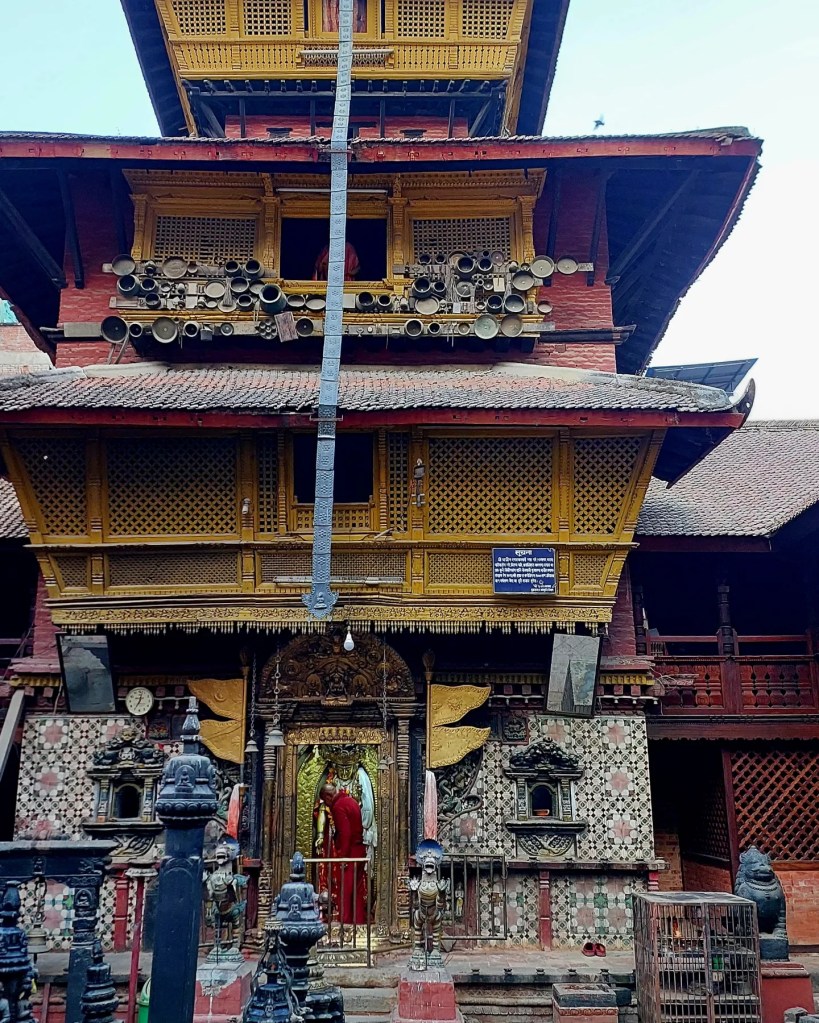
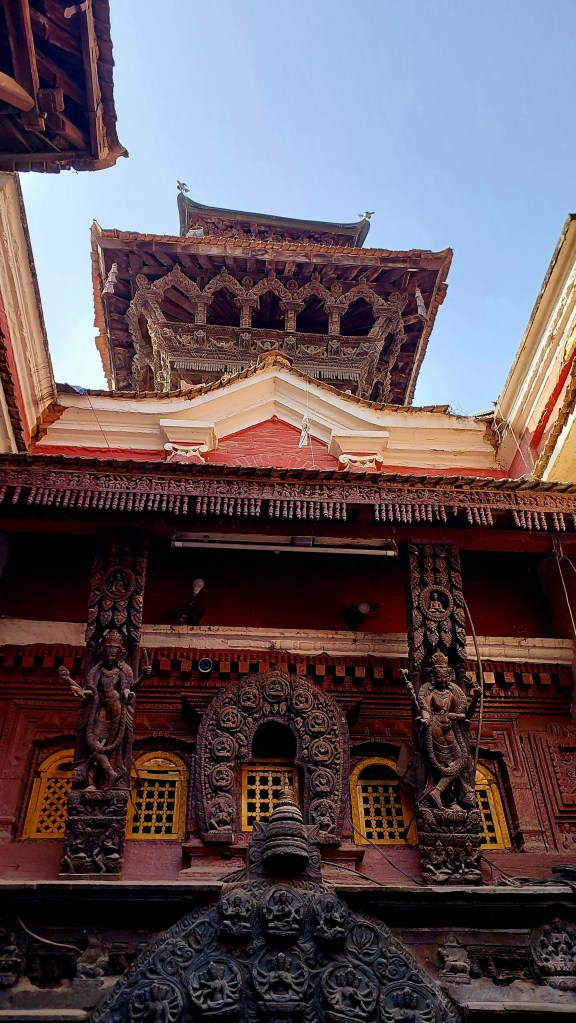
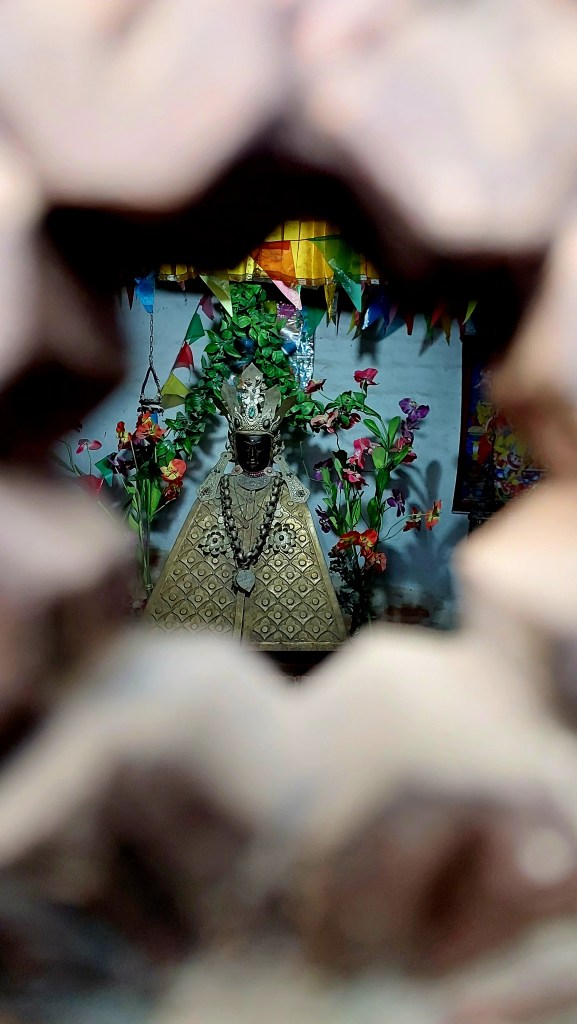
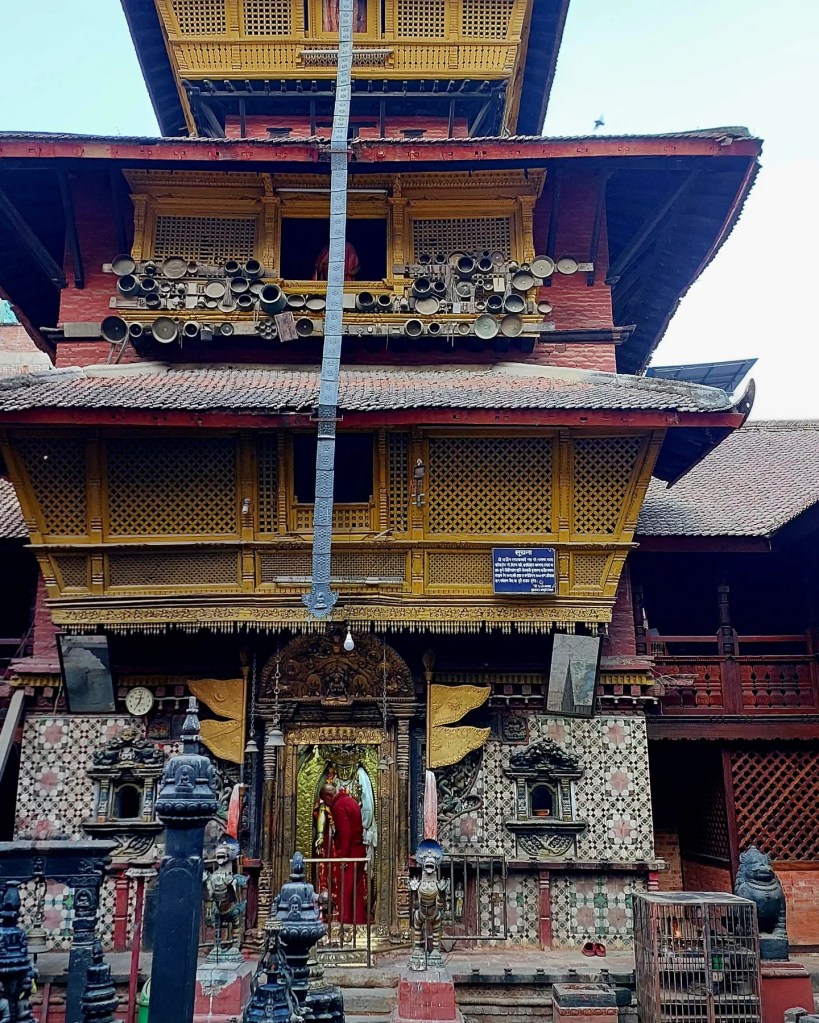
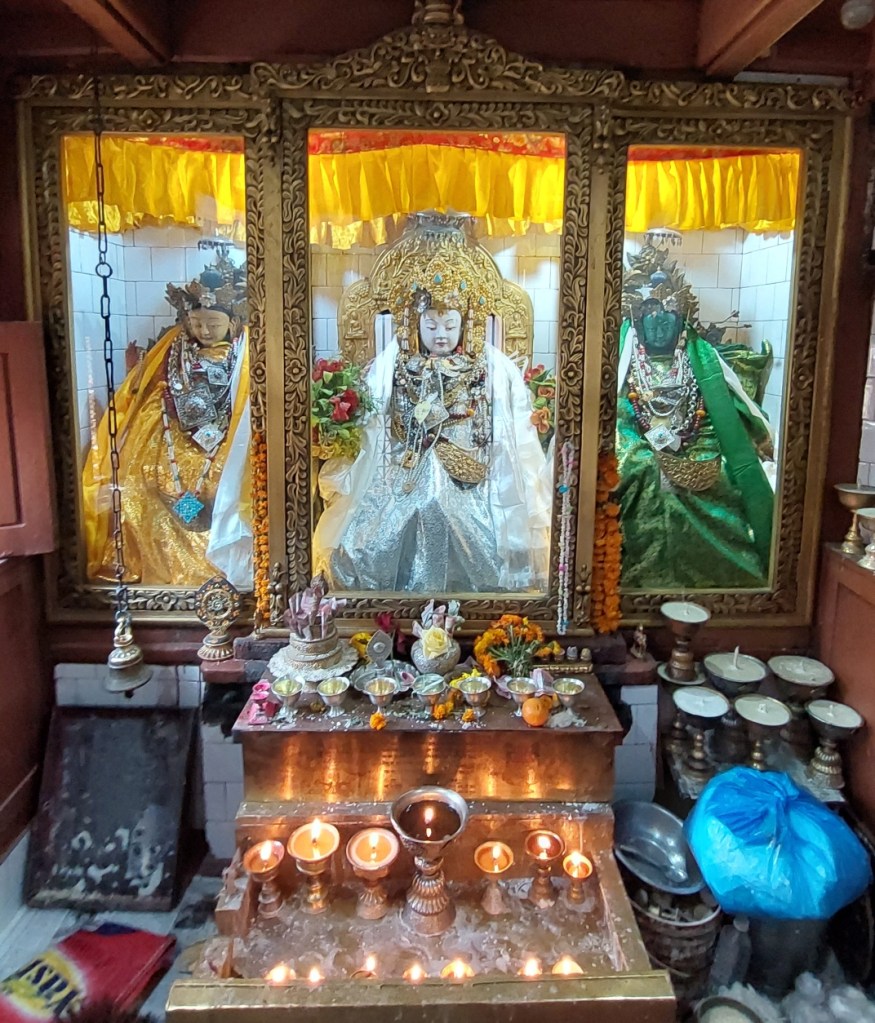
8. Itum Bahil, Thamel. The family-owned temple has a Talking White Tara that is believed to have flown down from Lhasa Potala. This is the centre piece, and she is flanked by the Green Tara and the Yellow Prajanaparamita Devi. With the blessings from the three Taras, your peace, prosperity and enlightenment are guaranteed.

For me it was one of the most powerful statues in the whole of Kathmandu.

9. Namo Buddha. At the south-east end of Kathmandu, some 40 kilometers away, is Tagmo Lue-jin (meaning ‘Body sacrifice to Tigress’) and it is where Buddha in his previous life sacrificed himself to a starving tigress and her cubs. A stupa stands on the same spot, and is considered the three most sacred stupas in Kathmandu – along with Boudhanath and Swayambunath.

A trip to Namo Buddha should also give your lungs and nose a respite from the polluted air of Kathmandu.

10. Flying Vajrayogini, Patan. Located inside the Mahabuddha Statue complex this Akasha Vajrayogini is over 500 years old and was commissioned after an old lady visiting the Mahabuddha statue mentioned that the house was also an abode of Vajrayogini.

Of course, don’t miss the 700-years plus Mahabuddha statue with thousand Buddha statues adorning it.

Self-disclosure.

I am a Vajrayana Buddhist from the Kagyu-Nyingma traditions, and a fan of Guru and Vajrayogini. Choices here may reflect my beliefs.

Tham Bahil and Tshongpon Norbu Zangpo

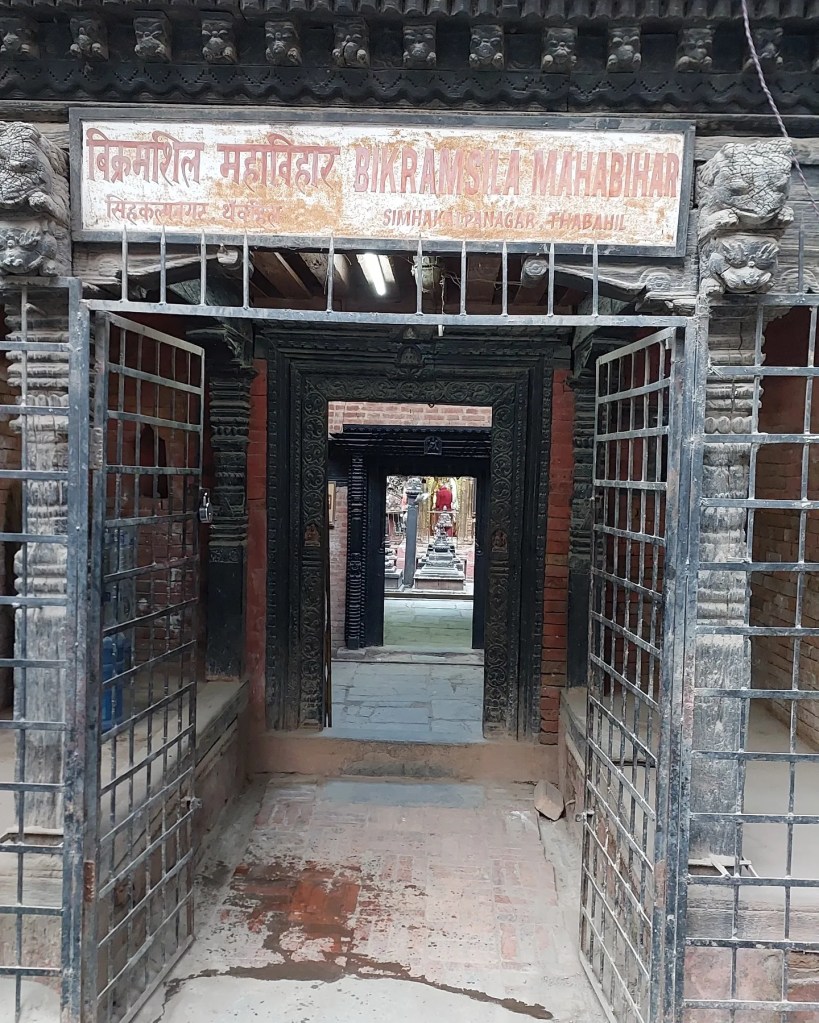
I started my pilgrimage from here from Tham Bahil – one of the oldest viharas (Buddhist learning centres) in Kathmandu Valley. I close it with a visit there with a prayer and moelam to be back again.

Tham Bahil, also known Vikramshila Vihar, appears in the records of Nalanda as established as early as in the first century BC. It was later expanded and repaired by Atisha Dipankara (Dzongkha: Jowo Pelden Atisha), n the 11th century. He is believed to have stayed here for 2 years, while on his way from India to Tibet. He later revived Buddhism in Tibet and is regarded by many as the founder of the Sarma tradition, from where the Kagyu, Gelug and Sakya schools emerged.

Since ancient time, Kathmandu was a mandatory stop for all Buddhist masters travelling between Tibet and India, and of all places in the Valley, this temple played the host. Prominent figures include Nagarjuna, Atisha and Manidhara Tshongpon Norbu Zangpo (known here as Manidhara). Tshongpon Norbu Zangpo is referred to as Jewel Trader here. In Tibetan Buddhism he is considered as one of the mahasiddhas.

The most important relic at Tham Bahil is a set of 108,000-line Prajnaparamita sutra (known as Ser Bum in Dzongkha and Newari), and the original copies Mulamadyamika sutras. Tham Bahil also also has Medicine Buddha, which is believed to possess miracles with health issues. The main temple is dedicated to Dipankara Buddha (Sangye Marmezay), which is one of the favorite deities in Newari Buddhism.

Boudha stupa – of myths and legends

Why it is called Be-bou Chorten in Dzongkha

There are many theories on the origin about the name “Nepal”. There is one I agree with.

In Newari, ‘Ne’ means ‘middle’ and ‘pa’ means ‘country’. So Nepal is a country situated in the middle. This probably got transliterated in Choekay as ‘Pe-bou’ (as referenced by European sources from the mediaeval period), which later became as “Bae-bou”, which either means “Bae-yul-Bou”, or just mispronounced from Pe-Bou.

Boudha, thus, became to be known as Be-bou Chorten in Dzongkha.

Lesser known legends about Be-bou Chorten.

1. The stupa contains the physical remains of Buddha Kashypa (Sangye Yoesung) – the Buddha prior to Buddha Sakyamuni.

2. During consecration 100 million Buddhas descended and dissolved into it. Thus it is the most sacred monument in all three strands of Buddhism.

3. Boudha is the biggest stupa in the World. It has inspired several statues built in Bhutan, such as Chorten Kora, Chendepji, Kurizam, and Tama.

Guru Rimpoche in Kathmandu

Kathmandu valley, as a spiritual realm is known as Lhuendrup Tse, and was the most important charnel grounds frequented by Guru Rimpoche. Boudha was the centre of this Lhuendrup Tse.

However, in Newari Buddhism, Guru is just regarded as a great magician, who put an end to a terrible drought and disease in the Valley. The sacred places like Yanglasho, Chumik Jangchu and Maratika were discovered by Tibetan and Bhutanese lamas and traders in the late mediaeval period.

The Wish-fulfilling Stupa

There are many legends, myths, history and stories around this magnificient chorten that it is left to the devotee as to what to believe. As a Bhutanese, and thus a Guru Rimpoche fan, I choose to believe it as a wish-fulfilling stupa.

Story goes that the four sons of the Poultry Keeper made some aspirations during the consecration of the stupa. The eldest aspired to be reborn as a Dharma King. The second wished to be a great scholar monk. The third aspired to be a powerful tantric yogi. And the fourth to be a minister to coordinate all religious activities of his elder brothers.

All their wishes were fulfilled. The eldest brother was reborn as Tibetan Emperor Trisong Deutsen, the second as great scholar Shantarakshita, the third as Guru Padmasambhava, and the youngest as minister Ba Trisher.

Interestingly bad wishes are also granted if made at this Stupa. The donkey, who believed that he did all the hard work, was upset that he was not invited to the consecration. So he made a wish that he be the one to destroy all the religious legacies of the four brothers. The donkey was later reborn as anti-dharma King Langdarma.

However, as the donkey was making that bad wish, a crow witnessed it and aspired to be the one to put an end to any anti-dharma elements. He would be reborn as Lalung Pelgyi Dorji and he would be the one to assassinate the anti-Buddhist Langdarma.

The Boudha chorten would, therefore, become known around the Tibetan Buddhist world as a wish-fulfilling stupa. And “the most sacred monument in Buddhism” according to my lama.

Because the stupa is so big, your wishes can also be as vast, and as crazy as you can possibly think.

#stupa #boudha #nepal #kathmandu #guru #chorten #padmasambhava

Significance of Yanglesho Caves

I have finally made it to Yanglesho after a good 20 years since I first heard about it. In these 20 years, of course, my spirituality has matured too, for me to fully appreciate the significance of this place. So, let me share here, for the benefit of all sentient beings. As they say, I think my Moelam (destiny) has matured to be here, at this time. 🙂 🙂 🙂

As an adherent of #Vajrayana Buddhism, nothing compares to a pilgrimage to the Asura caves at Yanglesho, where Guru #Padmasambhava attained, to put it simplistically, enlightenment. To be more precise, it was here that he achieved Yangdak (ཡང་དག་), corresponding to the Enlightened Mind, after practicing the Yangdak Heruka (ཡང་དག་ཧེ་རུ་ཀ་). Yangdak Heruka is a wrathful manifestation of #Vajrasattva (Dorji Sempa) and is similar to the deity Chakrasamvara (Demchok).

Several past and contemporary masters, chief among them the Late Jadrel Rimpoche and Chokyi Nima Rimpoche, consider Yanglasho as important as Bodh Gaya for practitioners of Tibetan Buddhism, especially the #Nyingma school.

Yanglasho, also appears in the history of #Bhutan as the place where the envoys of King Sindhu Raja of #Bumthang found him when they came looking for him. (In fact I first heard about Yanglasho when I did a documentary, In the Footsteps of Guru, for BBS in the 2004) 

After he was exiled from his kingdom, he lived as a wandering yogi, visiting mainly the charnel grounds. When he visited the Parushakavana charnel ground, he came across the wrathful Vajravarahi (Dorje Phagmo), who agreed to initiate him, and help him attain the Knowledge-Holder of Spiritual Maturity. In Pema Kathang, Guru says Dorje Phagmo is his (adopted) mother. Guru, then, moved to Maratika Caves in eastern Nepal where he attained the Knowledge-Holder of Immorality – gaining victory over the Lord of Death. In Bodhgaya (Dorje-Dhen in Dzongkha), he achieved the Knowledge-Holder of Spontaneity. And finally in Yanglasho, he became the Knowledge-Holder of #Mahamudra. 

Of these four knowledge-holder attainments, the Knowledge-Holder of Mahamudra is supreme.

May everyone make it, or be blessed.

The Talking Tara of Kathmandu

#Nepal #Neykor #Series

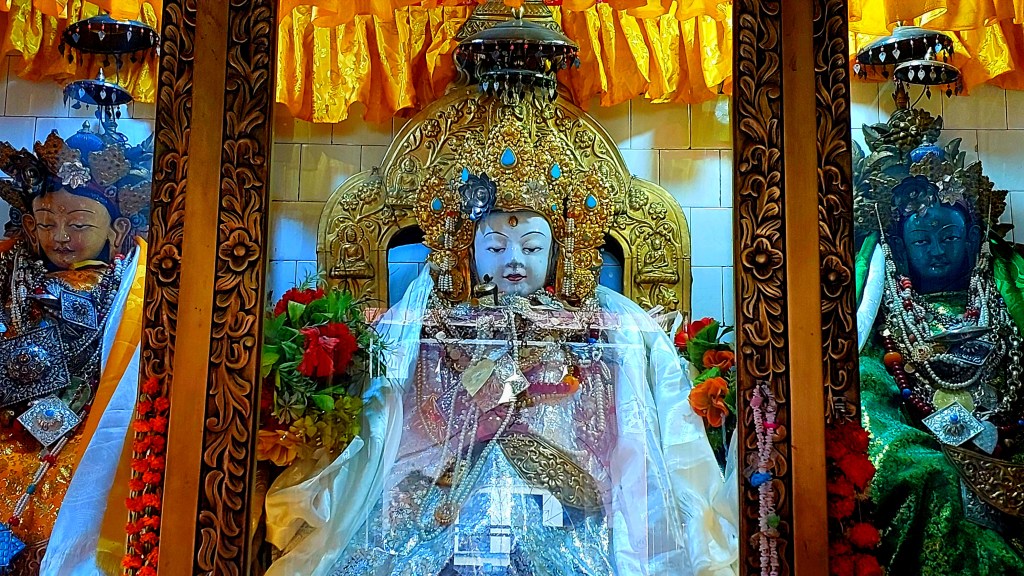
The temple complex of Itum Bahal in Kathmandu hosts one of the most sacred Tara statues in the world. The Mahashanta Shweta Tara is a large bronze statue of White Tara. It is more sacred than the rest because it is believed to have given teachings. In fact is also known as “The Great White Tara Who Turned the Wheel of Dharma”.

“According to what my father and my grandfather told me, it is believed that she flew to Kathmandu from Potala in Tibet,” says Bupendra Bahadur Sakya, the 8th generation caretaker of the temple. “Many masters and meditators even today have shared powerful experiences after praying and meditating here,” he adds. The statue is said to have to have flown to other parts of Nepal to be of benefit to other sentient beings.

I prostrated three times and made an offering of Rs. 1,000. “It feels very peaceful and powerful at the same time,” I tell him.

Bupendra was very pleased to hear that, and also to know that I am a Bhutanese. He shared that during the long Pandemic shutdown he really missed Bhutanese pilgrims. “You guys show great respect to Tara that my community finds very inspiring”.

Still, while Tara may not be the most favourite deity of the Newari Buddhists, this Tara is highly revered and there are special rituals observed by the Newari community.

The White Tara is in the middle. To her right is Prajnaparamita Tara (Yum Chenmo in Tibetan) in yellow color, and on its left is Green Tara (Dron Jang).

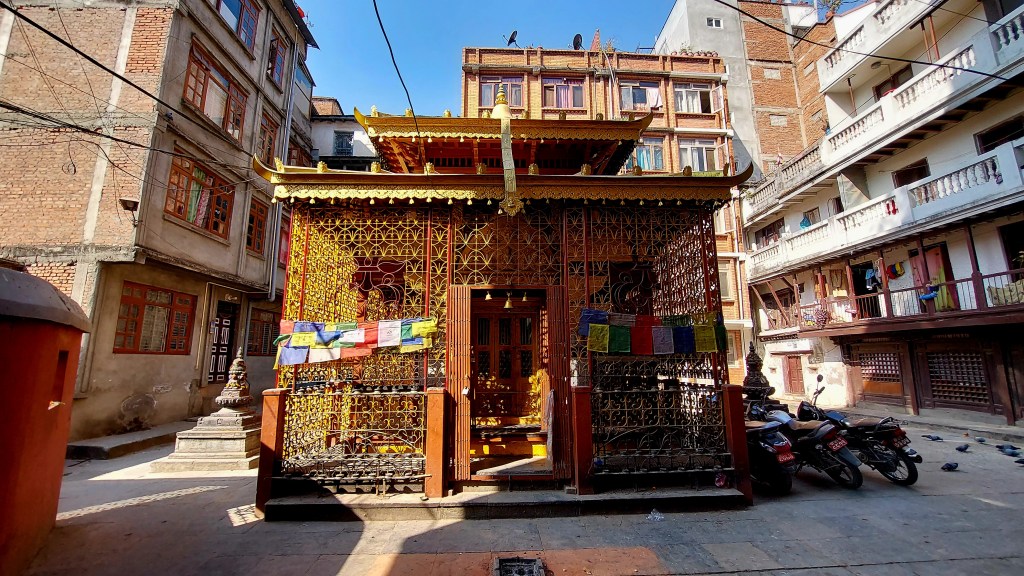
The small caged temple is in the courtyard to the north of Itumbahal.

#kathmandu #itumbahal #tara #vihara #whitetara #greentara