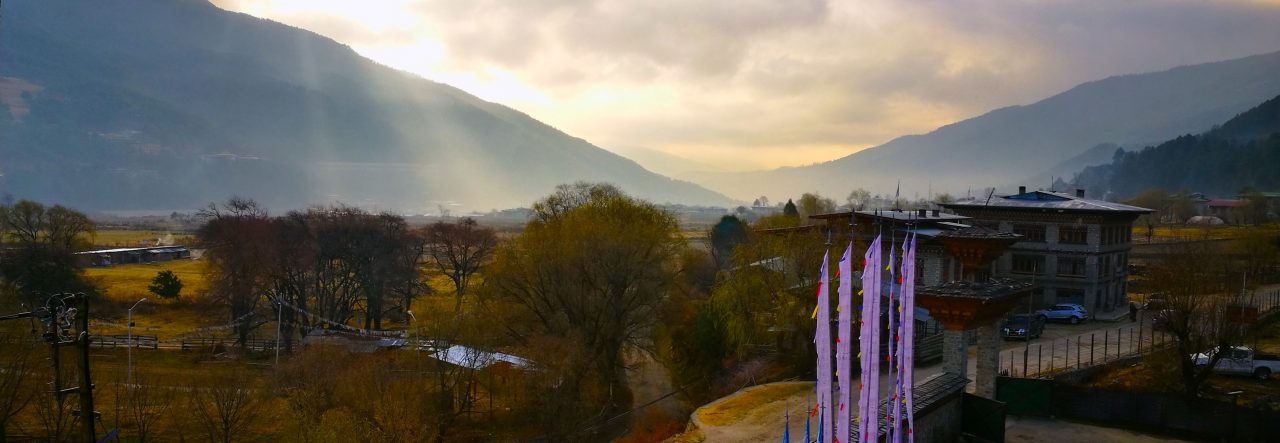
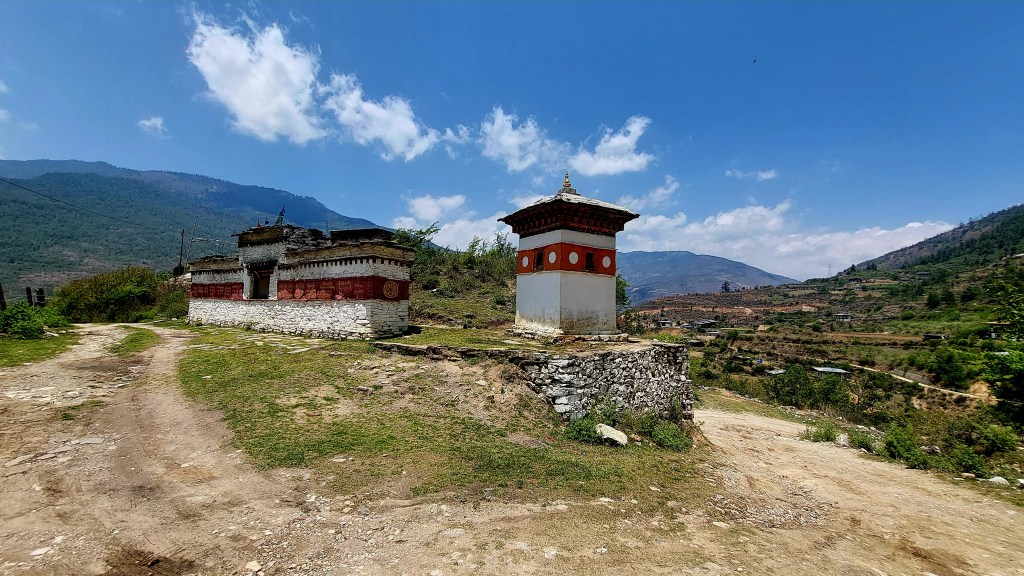
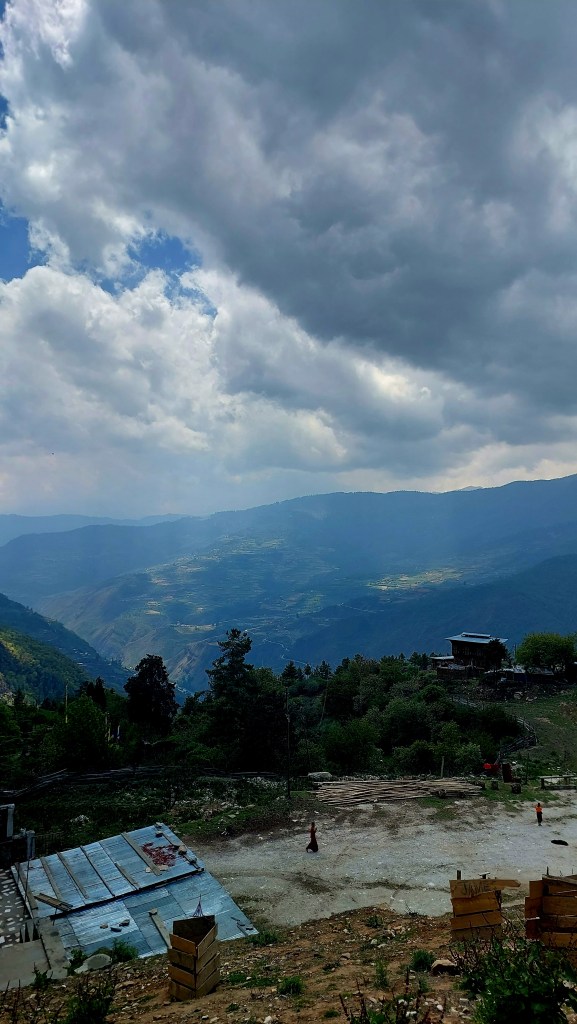
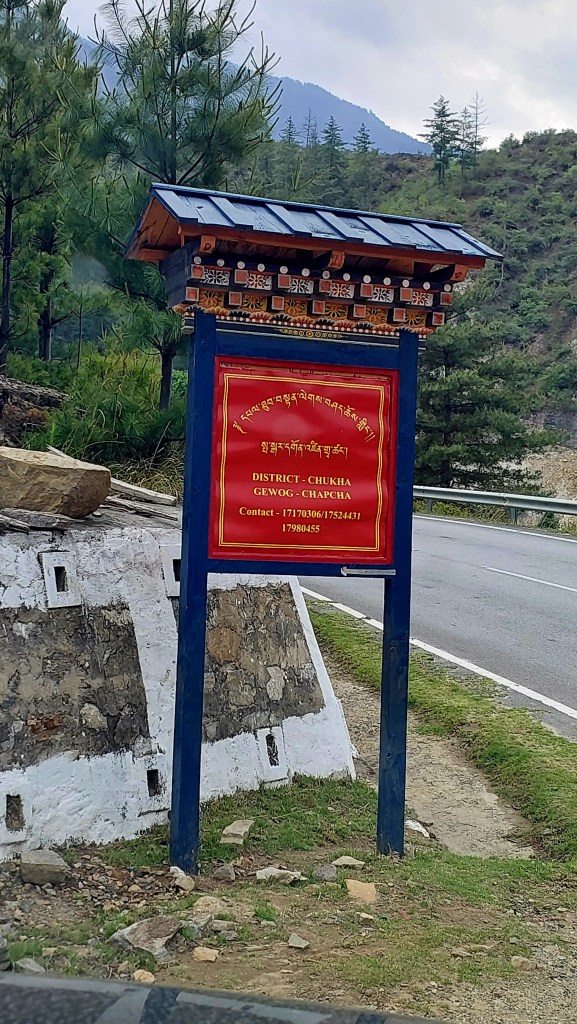
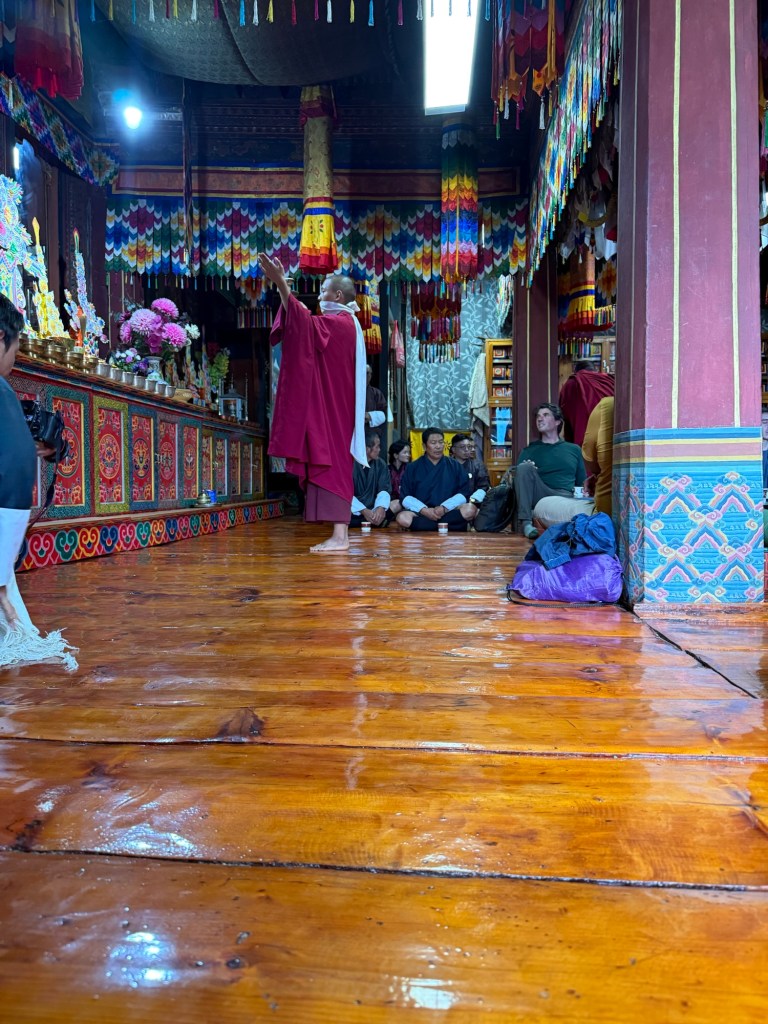
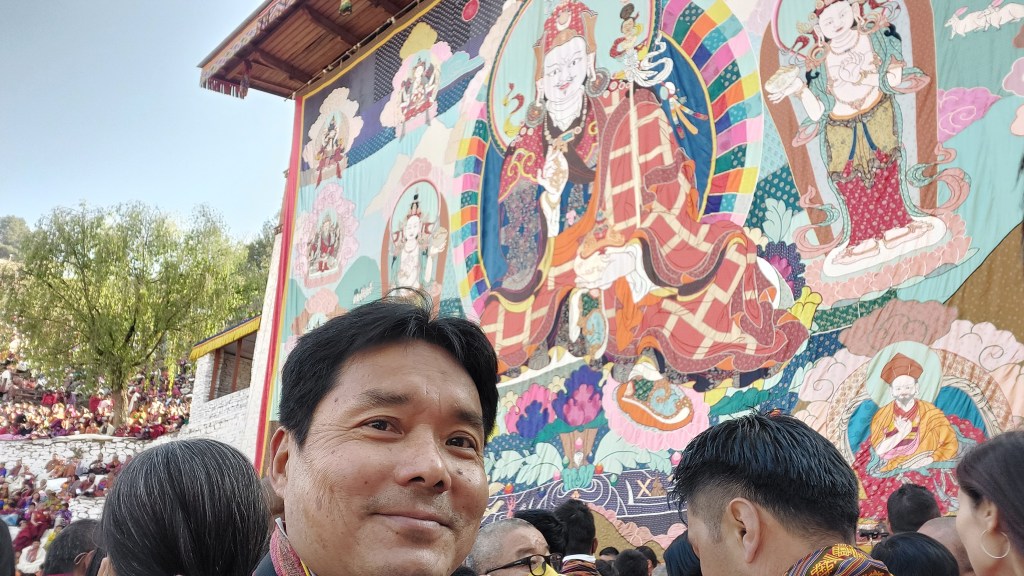
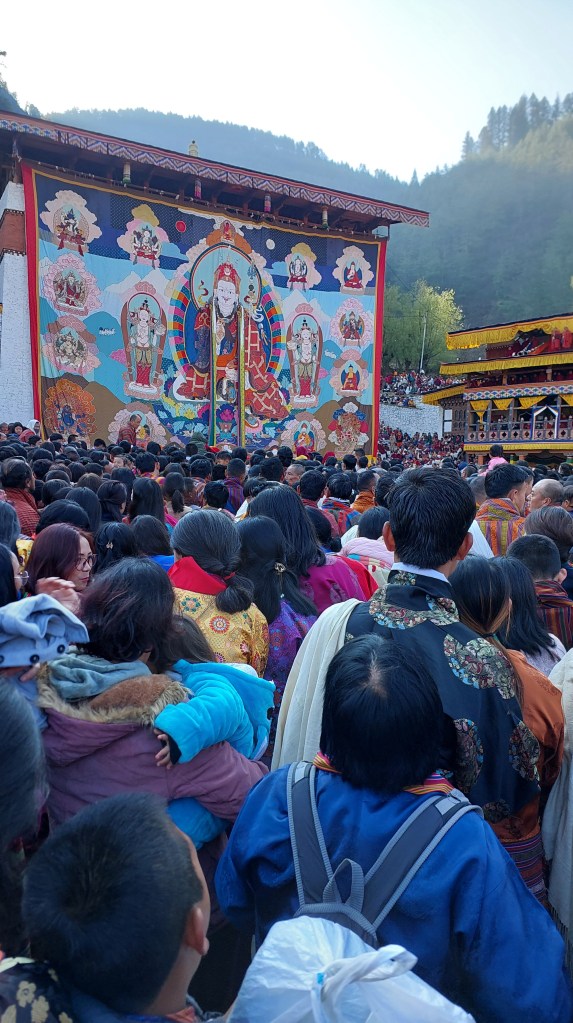
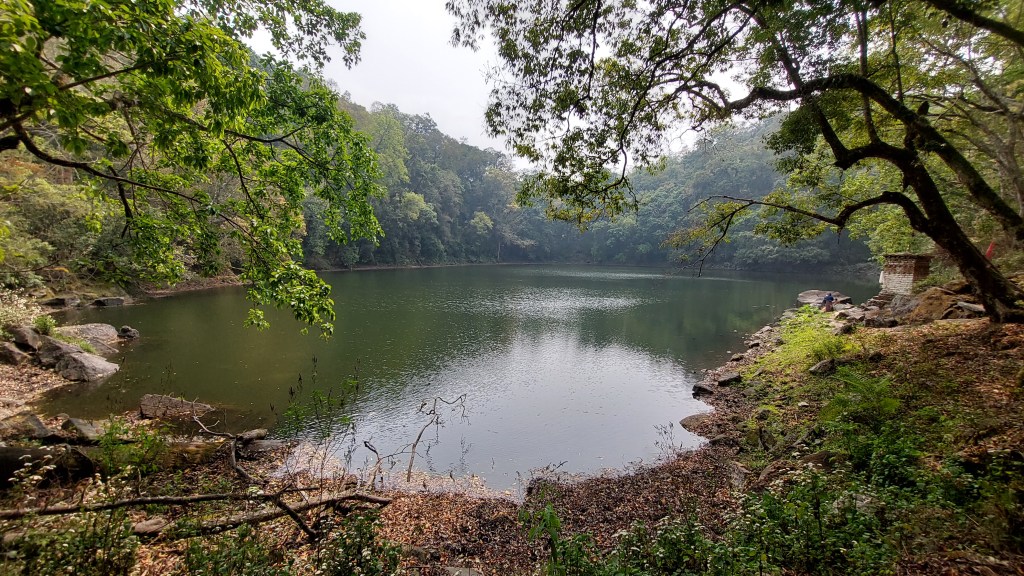
Many years back when I was building the radio repeater stations overlooking Paro, Thimphu and Chukha one thing that I enjoyed was visiting local temples and listening to local folk tales. There was one popular saying in that area, which remained ingrained in my head, and that went something like: Do not compete in making drums with Tshamdrak Gonpa. Do not compete in reading scriptures with Paga Gonpa. Do not compete in blowing horns with Chizhing Gonpa. Do not compete in mask dance with Datong Gonpa.
Popular sayings and proverbs convey timeless wisdom. In Bhutan they are more powerful and important for intergenerational transmission of values and belief systems because of the lack of writing culture. For a researcher, or a journalist, these sayings are clues, or keys, to greater hidden meanings, and vital information to spiritual treasures.
Coming back to the saying, it is because Tshamdrak Gonpa is supposed to have, as treasure-relics, a set of 108 drums; Paga Gonpa has a set of Kanjur made out of a single daphne tree (འདལ་ཤིང༌།); Chizhing gonpa has a pair of Tibetan horns (དུང༌།); and Datong Gonpa has the religious dance – ter-chham. Or so I was told. The other thing is these four temples were under Thimphu Dratshang before district remapping two the first two under Chukkha – and hence, the popular title, The Four Skills of Wang Valley.
On a side note, I just wish that our political-administrative undertakings respect the social and cultural backgrounds and contexts, because they could erase timeless wisdoms, or hurt local sentiments – or both. This is another issue for another time.
Anyway, last weekend I set out to discover these four places.
Pagar Gonpa
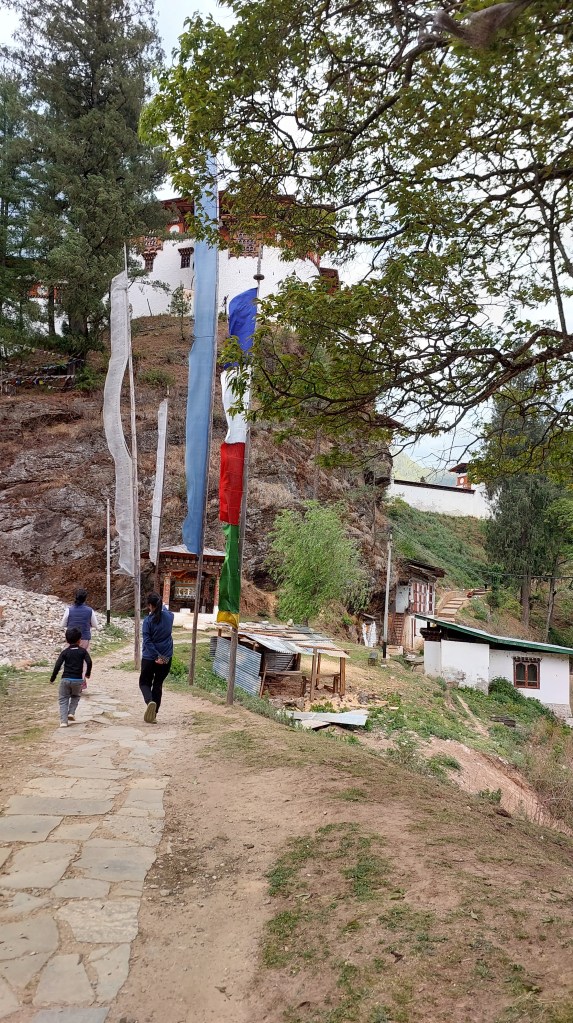
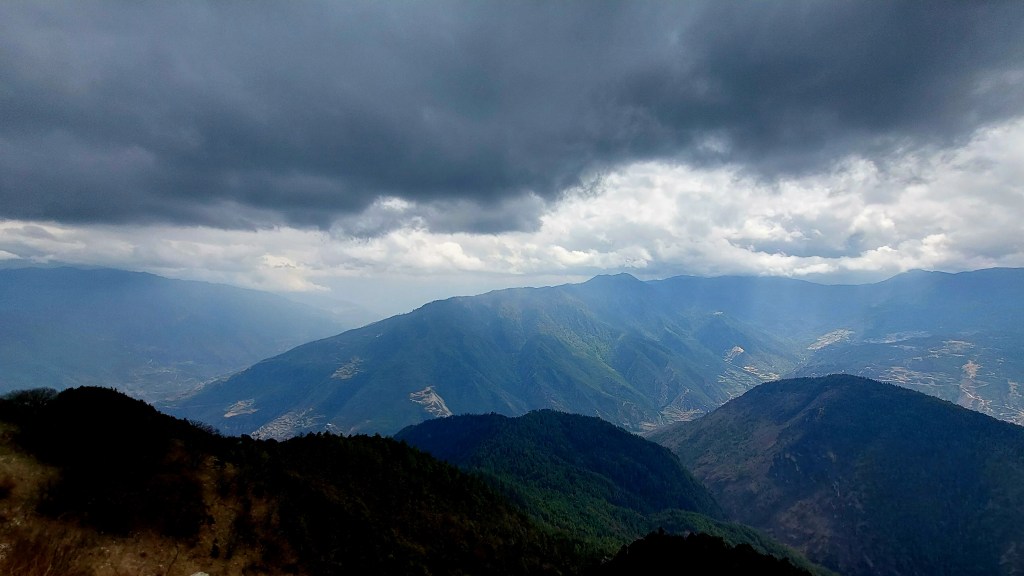
Pagar Sangachholing Gonpa, or simply Paga Gonpa, sits on the left ridge above the highway after one crosses Chuzom Bridge on the Thimphu – Phuntsholing route. It takes little over an hour to drive from the capital. It has a commanding view of Dawakha village, Dobji Dzong, and Nyechen Dongkala, Phurdo Gonpa and Mendrup Gonpa.
There are varying stories of its origin. One is associated with Kunga Gyatsho (1702 -1776) – one of the four principal students of Tshang Khenchen Palden Gyatsho – the biographer of Zhabdrung Ngawang Namgyel (1594 – 1651). The other tells the story of it being established in 1707 by Geshe Kunga Gyeltshen who, when he was meditating above in a place called Jangkhochen, saw a crow fly towards him, pick his small cymbal and then fly away and drop it at the present site where Paga Gonpa now stands.
Whichever of the two stories is true is secondary. They both add to the folklore. What is important is that Paga Gonpa became the most important and famed library in mediaeval Bhutan for Buddhist scriptures and scholarship. Among them the sacred Kanjur volume is believed to be the ter (sacred relic) and was written by Kunga Gyatsho himself from the papers made out of a single daphne tree (འདལ་ཤིང༌། dey-shing in Dzongkha).
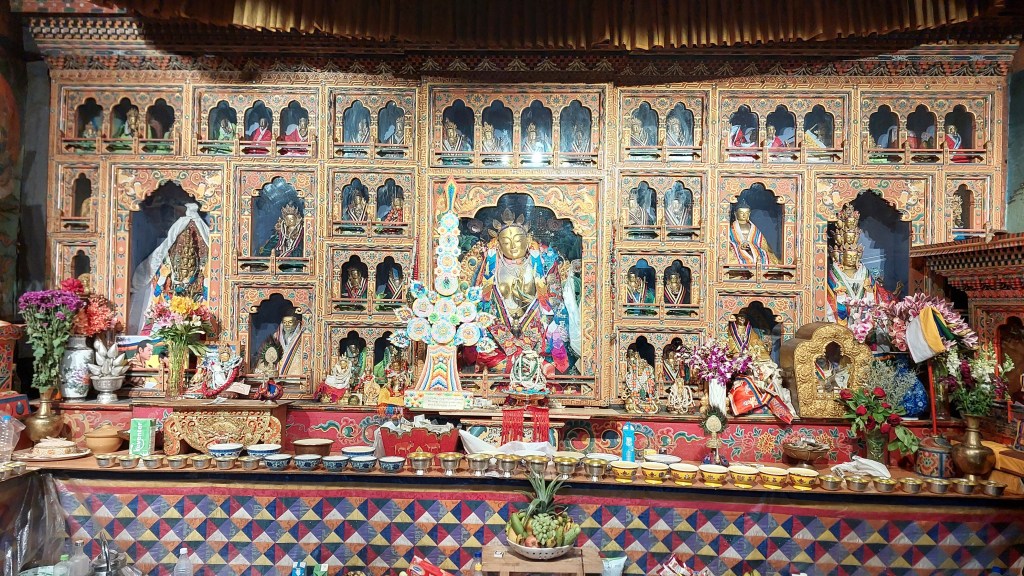
The temple is being rebuilt after a devastating fire destroyed its structures in 2012. The Kanjur was saved, fortunately. Owing to the rennovation, all the scriptures and books are locked away, except for one volume, for public viewing, that is placed in front of the main statue of Shakyamuni Buddha.
The kudrung chorten
An equally mind-blowing relic is the kudrung chorten (stupa) in the small temple located in front of the main Paga Gonpa. The chorten is believed to be one of the three stupas of its style and spiritual value that are still standing in the world. It is very powerful and any wish made here is believed to be fulfilled.
This small chapel also has mural painting in fresco style, which is now extinct, as all murals paintings are done on canvas and then pasted on the temple walls. This temple was not destroyed by the big fire of 2012.
Chhu Yenla Gyedhen
About 30 minutes walk from the temple there is the famous Chhu Yenlha Gyedhen, which means “Water of Eight Qualities”, which not only is believed to cure illnesses but also cleanse your bad Karma.
Many monks and masters in the past would come from Punakha and Thimphu dratshang to take the holy bath and stay in Paga for a week.
Getting there
From Chuzom Check post drive towards Phuntsholing and look out for the red signboard on the left. You have to drive past the Paga village and community temple. It is not visible from the highway, or from any point of the feeder road.
A trip to Paga Gonpa would be a perfect Sunday afternoon drive from Thimphu, Paro or Chukha. There are few places for picnic and a wonderful sunset spot.
NB – I plan to return after the reconstruction is over and all relics are put out on public display
(Picture coutesy: BBS)Paga Village was once along the ancient “highway” to Pasakha from Thimphu.View towards Dobji DzongView towards Dongkala
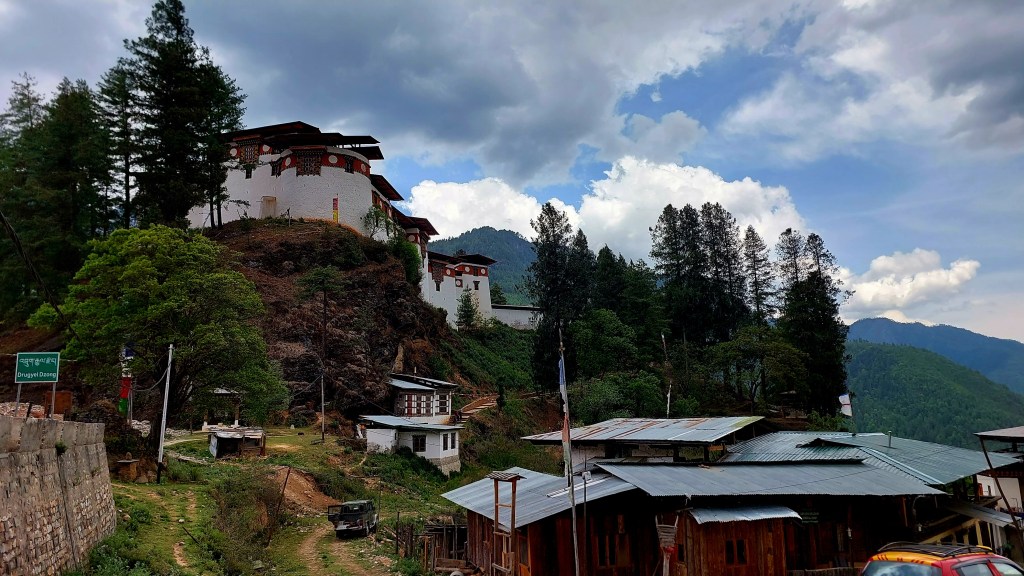
I don’t know how many times I must have been to Drukgyel Dzong. Countless, I am sure.
Now there is this very unassuming house below the Dzong, pasted on the cliff, and right at the base. An old man could be seen sitting outside this house with a prayer wheel and a rosary, and sometimes he would invite the people to visit the house. He used to say that it was a Drolma Lhakhang (Tara Temple).
I was never impressed by it and I used to give it a pass. Once I even told the man that I was in a hurry and joked that I had no time for his Tara.
Recently, a friend of mine was told by a visiting Tibetan Rimpoche that there is a very sacred Drolma Sung-joen (literally meaning “Tara that spoke”) in Paro – and that too a wish-granting Tara. My friend, a devout practioner, looked for the holy statue high and low, and finally asked our our root lama, Khandro Dorje Phagmo, who directed her to that house.
Story goes that this Tara statue was kept in this house for safekeeping from a temple, which was undergoing some major repairs. When the works were done and the statue was to be taken back and reinstated, the statue is believed to have spoken – saying that it did not intend to leave. The Tara statue thus remained in that farmhouse ever since.
According to our lama, the statue is of White Tara – which is considered to be the epitome of maternal compassion and healing. Many thus refer to her as Ama Jetsun Drolma (Mother Tara). The caretaker says that this Tara also confers wealth and prosperity. And that many merchants in Thimphu and Paro have been secretly worshipping her.
I visited this Talking Tara a few days back. The house has now been upgraded to a nice and cozy temple. Maybe the merchant-devotees sponsored the works. The main altar holds this magnificent Talking Tara. A very beautiful clay image – more beautiful than the one I saw in Singye Dzong. She is flanked by 21 Taras – the different manifestations.
There are also two large statues of Chukchi-Zay (The Eleven Faces Thousand Arms Avalokiteshvara) and tens of other smaller statues of Vajrayana deities and divinities. The altar itself is very beautiful.
It is privately-owned and a young woman is the caretaker, who is seen cleaning and washing the offering bowls, butter lamps and milk cups. “This Drolma is believed to love cow milk,” my friend whispers to me. There is silence and peace. We sat and chanted our prayers. I felt as if I was transported into another realm.
To the right of the main altar, there is a separate chamber of the wrathful Dharma protector, Mahakala (Yeshey Gonpo), where you can get your divinations done by rolling the dice. You must hit 14 for the Mahakala, and 10 for Tara, and 11 for the local king-spirit (Gyelpo). I decided to roll the dice to see if Mother Tara was upset that I walked past her temple all my life.
I took the dice in my right hand, put them on my forehead, closed my eyes, made my mantra, and apologised for ignoring the temple for so long, and promised to visit regularly hereafter. “I didn’t know you were here. My apologies.”
I also wished for something (I cannot disclose it here. It is not Australia visa 😁). Looks like Tara not only accepted my apology but also granted my wish. I threw the perfect number.
I left after making an offering with a request to make prayers for my younger daughter and grandson who have Tara as their birth deity.
Background – The legends of Tara
Tara, which means “star” in Sanskrit, is undisputedly the most popular female divinity in Vajrayana Buddhism. Among my female friends, she is the deity.
There are many legends and myths and stories of the origins of Tara. My favorite is the one that goes something like: Avalokiteshvara, the buddha of compassion, was looking down on the human world and saw the endless and immense sufferings despite his efforts to deliver the salvation. Saddened to the core, two tear drops feel from his two eyes. One tear drop turn to White Tara (Drol-kar) – the Peaceful One, and the other Green Tara (Drol-jang) – the Semi-wrathful.
Other legends tell the story of a devout Buddhist princess that lived aeons ago and who became a Bodhisattva and vowed to be reborn as a female deity and continue to help others. Another myth tells about a bodhisattva-princess who rescues tens of millions lives from suffering for which her name means drolma (One Who Saves).
To get there
Drukgyel Dzong is 15 km from Paro town. After you reach the Dzong parking, leave your car there. The temple is just 50 meters away on the right side of the hill. You can see it from the parking.
Prayer to Mother Tara
There are few prayers to invoke Mother Tara.
This is my favourite and it is a Prayer to Tara to seek help from the Eight Great Fears. It was composed by my Buddhist master Atiśa Dipankara when he found himself in a sea storm. It is believed that the deity Tara appeared to him and saved him and the ship from sinking.
ཨོཾ། འཇིགས་པ་བརྒྱད་སྐྱོབ་མ་ལ་ཕྱག་འཚལ་ལོ། །
om, jikpa gyékyob ma la chaktsal lo
Oṃ! Homage to you, lady who protects us from the eight fears!
བཀྲ་ཤིས་དཔལ་འབར་མ་ལ་ཕྱག་འཚལ་ལོ། །
tashi palbar ma la chaktsal lo
Homage to you, lady who blazes with the splendour of auspiciousness!
ངན་སོང་སྒོ་འགེགས་མ་ལ་ཕྱག་འཚལ་ལོ། །
ngensong go-gek ma la chaktsal lo
Homage to you, lady who closes the door to lower rebirth!
མཐོ་རིས་ལམ་འདྲེན་མ་ལ་ཕྱག་འཚལ་ལོ། །
tori lamdren ma la chaktsal lo
Homage to you, lady who leads us on the path to higher realms!
རྟག་ཏུ་ཁྱེད་ཀྱིས་སྡོང་གྲོགས་མཛད། །
taktu khyé kyi dongdrok dzé
You are the one who holds us always in your care—our guide, support and friend;
ད་དུང་ཐུགས་རྗེས་བསྐྱབ་ཏུ་གསོལ། །
dadung tukjé kyab tu sol
So protect us still, we pray, with all of your vast compassion!
I made my maiden visit to Euthok Gonpa in Shaba yesterday. Somehow over the years I kept missing it as I would be rushing up to Dra Karp or Dongkala, and would be late by the time I was coming down.
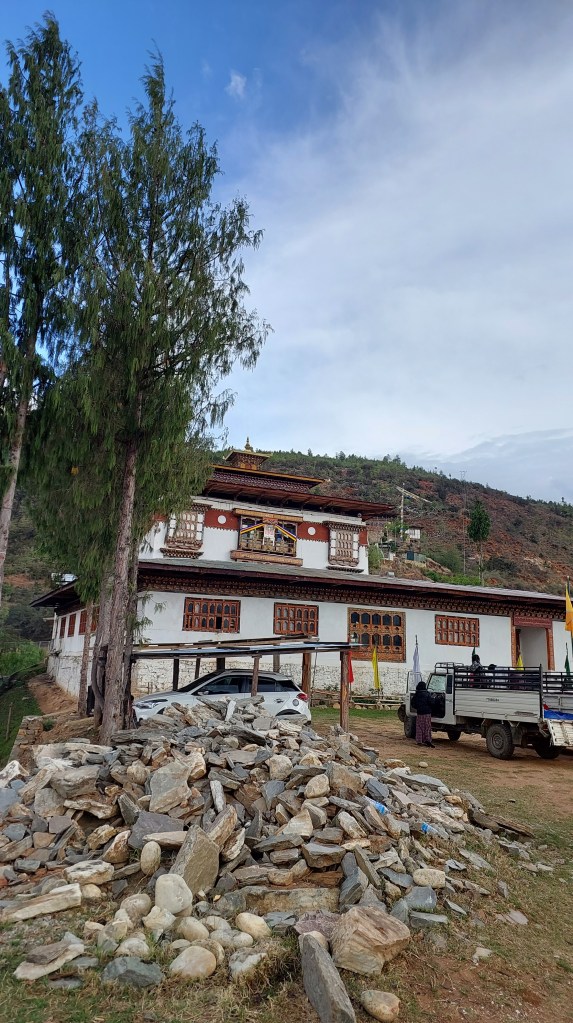
Euthok Samdrup Choeling Gonpa, popularly known as Euthok Gonpa, is a mediaeval temple located in Paro Shaba. It is an important community temple guarded by a powerful local deity, who is the kay-lha (birth-deity) of the children born in the area.
If one bases on the fact that it was established by Terton Rigzin Jatson Nyinpo, the temple dates its founding to the late 16th or early 17th Century. The gonpa, which is now a monastery, is the first major spiritual abode on the same mountain as Dra Karp, Mendrup Gonpa, Dongkala, Bemri and Samtenling.
Euthok, which literally means “turquoise top” takes its name from the dream that founder-lama saw and in which he visioned a snake wrapped on a golden pillar with the turquoise on the top of the pillar. He then decided to call the temple Euthok Samdrup Choeling Gonpa – literally meaning “a wish-fulfilling religious centre adorned with a turquoise.
The most sacred relic of the temple is a set of Kanjur – the holy canon in Buddhism. Legend has it that the Kanjur was blessed by Sangye Menlha (Medicine Buddha) in person after the volume was printed in Tibet and kept for safekeeping at centre of Tibetan medicine. And thus is believed to help people recover from illnesses and health issues. The other legend is that papers used in the writing of the Kanjur were made from a single tree that grew out of a strand of hair of Sangye Menlha.
“There are many but I know two people personally who have recovered from cancer after commissioning the reading of the sacred Kanjur,” says the caretaker monk, Tashi Demba. I have also heard about a tour guide who survived after seeking help here. The temple, in fact, receives a lot of requests for prayers for the sick.
We get invited for tea in the guest room. And I enquire more about the legends and stories of this under-rated temple (Paro Dzongkhag doesn’t even figure it on their website). I hear more amazing stories. I am simply awed, and glad that I dragged myself here this time.
“It is not even necessary to sponsor the reading of the whole set. You can either attend the annual reading session in May, or simply drop your nyendar. It is your faith and moelam,” he adds. I made an offering and asked him to include all the “twelve birth signs” – meaning everyone on the planet.
Other than that the temple is in a beautiful location with a mind-blowing view of Paro Valley. It has a nice courtyard, and wooden floors of the main altar that are over 200 years old. Everything feels old, holy and grand inside.
More on the Mountain
Euthok Gonpa is on the base of the mountain that was designated as Potala, the Abode of Avalokiteshvara, by none other than great yogi Thangtong Gyalpo (1385 CE–1464). While meditating on the summit, where now stands the Phurdo Gonpa, the yogi visioned this mountain as the abode of Chenrizig. Hence, there are numerous and important sites that have come up such as Samtenling (blessed by Longchen Rabjam), Bemri (or Bum-Ri), Dongkala, Dra Karp, Mendrup Gonpa, Neyphu Gonpa. The spiritual merit of visiting this mountain is the same as visiting the sacred abode of Potala.
Getting there:
Euthok Gonpa is the large monastery you see on the hill to the left as you pass the Shaba Bridge while driving from Paro to Thimphu. It takes 5-10 minutes by car from the bridge.
The Annual Reading
The annual reading of the sacred healing Kanjur takes place from the First Day to the Fifteenth Day of the Fourth Month of the Bhutanese calendar. You may want to visit the Gonpa on these days and participate by making offerings of food, fruits, money, wine and snacks.
If you go there, make a specific request to get the blessings of the Kanjur. In Bhutan, if you don’t have prior information, the caretaker monks do not reveal the most sacred relic of the temple – for whatever reasons.
A note of gratitude
The place was badly damaged by the 2011 earthquake, after which locals and the Lama, under the royal patronage of Her Majesty Royal Grandmother Ashi Kesang, rebuilt this magnificent abode.
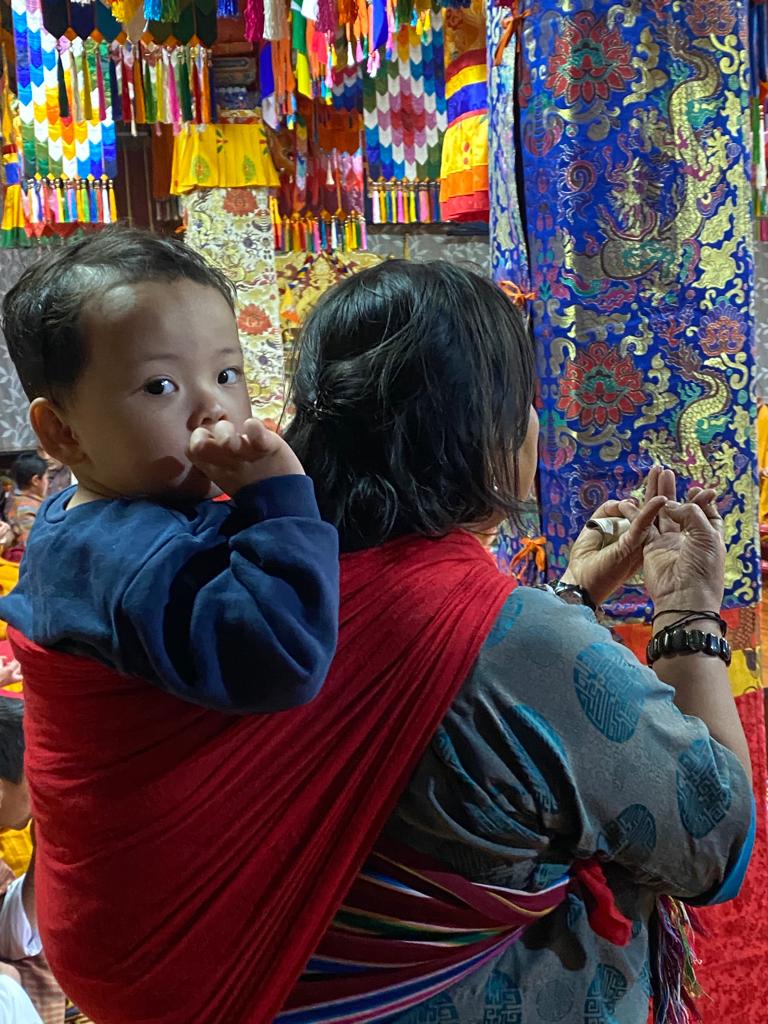
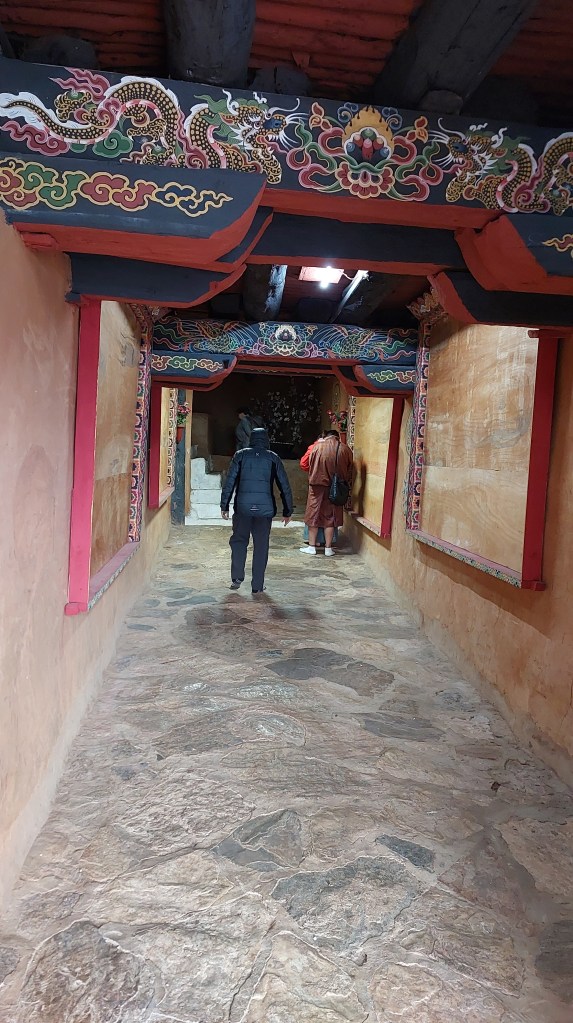
My elder daughter, TsetenEuthok GonpaLooking south from DongkalaMy grandson with his paternal grandmaPassage inside Euthok Gonpa
And so, after a long time I was in a crowd. It was at the recently concluded Paro Tshechu.
I hate gatherings, but this time I couldn’t avoid it. I had to get the blessings of Paro Thongdrel. This large and sacred scroll is exhibited only once a year to the public. It is believed to grant any wish you make.
Buried in the mass for over 2 hours, though, while getting pushed and shoved, I took the opportunity to listen carefully (read as snoop) on how people talked these days. Sociolinguistics and ethnography of communication are my research areas. I study people and society as they communicate – verbally, non-verbally, or in any expressive form. It reveals a lot about a person, or of a people.
One thing that caught my attention was the forced, and widespread, use of English by the parents with their kids. “Chechay, put the phone in your gho”. “Stay with apa”. “Sangay, be careful”. And so on.
In the days after the Paro Tshechu, as I went around in Thimphu with my life, I noticed a vast majority of the urban parents refrained from talking to their children in their mother tongue or the native language. I don’t want to make any moralistic judgments or speculate on the reasons as to why people do that. Instead, let me share what might transpire as long-term consequences of this new emerging trend and practices.
Language is conveyor of culture and values
Contrary to the conventional wisdom, language is not just about communication. Depending on what you grow up with, language also shapes the person you become. This sociological perspective is called linguistic (or structural) relativism and it establishes the relationship between the language we speak, or grow up with, and our values and beliefs that get instilled in our brain.
Simply put, the language we speak influences our worldviews and thoughts, which will then defines what we do or believe, or how we behave. If one grows up speaking English, one may accordingly tilt towards Anglophonic cultures. If you grow up speaking native languages, you will be exhibiting more local values and behaviours.
This sociological theory is a bit old and debated, but that does not mean that it is wrong. For instance, researchers argue that Chinese people are family-oriented because Mandarin has a rich repertoire of describing family relationships. Likewise, the Innuits of northern Canada know a lot about snow because they have several words to describe it. Italians hold their mothers (la mamma) as sacred because of the importance that their language puts on it.
Proponents of the language-thought relationship have even gone to the extent of arguing that the language we speak shapes our cognitive abilities. In a study among the native aborigines of Australia who speak Kuuk Thaayorre, researchers found that even in the vast flatland devoid of landmarks they never lose their way. This is because their language uses the four cardinal directions of east, west, north, and south when talking, instead of left, right, front, or behind. So instead of saying, “your left leg”, they would say something like, “your leg towards the west”. Researchers believe that over time this linguistic practice has shaped their cognitive abilities for directions. No matter where they wander about, even aimlessly, they can always find their way back to where they want to be.
Coming back to our situation, if we are serious about our timeless values and beliefs, and our character as a nation; and if cultural conservation and cultural identity are what we care for, then it is not only the tangible heritage like dzongs and ghos and kiras that we should preserve. The use of our native languages right from childhood is as important, if not the most important aspect of being Bhutanese. It sows the seed of who or what they become later in life.
To provide an example, in my native language, Tshangla (aka Sharchopkha), traditionally, we rarely use individualistic terms like “I” (jang) or “mine” (janga). Instead, more collectivistic words like aha (ours) and aye-ba (we) are widely used in daily conversations. My sisters and other family members refer to my children as aha waktsa (our children). Even my car becomes aha gari (our car) and not your car or my car. Similar linguistic practices can be observed among other ethnic groups in Bhutan. This may explain why Bhutanese are more oriented towards family, community and country. This sense of community, or of service before self, must never fade no matter where you go. Isn’t this something we want to preserve? Or are we okay to head towards individualism and materialism?
Language connects. And deeply.
In another blogpost I recommended the need to maintain emotional links among family members in this age of rural-urban migration and emigration to other countries. Native language happens to be the simplest, and yet a powerful tool, to achieve this. Bhutanese languages and dialects have rich rhetorical devices, idioms and phrases that keep us connected to our families, nature, spirits, deities, communities, King, and country. Phrases such as drinchen ghi phama (literally meaning “parent to whom we are immensely grateful” in Dzongkha) to refer to our King, and jinghi-labhi sa (blessed land), as we characterise our country, or Palden Drukpa (glorious dragon people) keep us emotionally connected to our King, our Land and our Heritage. This is important for national unity and harmony. For example, we have coined Dragon Boys, and Dragon Girls, for our national football teams. Don’t you feel closer to them when you hear the term?
In another study, which I conducted, I suggested that the rich repertoire of kinship terminologies in Tshangla might explain why Sharchops have, and feel connected to, a large extended family.
Tshangla has over 23 terminologies to address the kiths and kins as compared to less than 10 in English. For instance, the word, aunt, can be ani (father’s sister), azem (literally meaning ‘little mother’ and referring to mother’s younger sister), or amchi (‘big mother’ – referring to mother’s elder sister, or ani (mother’s brother’s wife).
Sinologists argue that such individualised kinship addressing style do not only serve a referential purpose but also creates an emotional links between the interlocutors. This is to say that a person feels closer when he or she is addressed by the proper kinship terminology – as au (elder brother in Dzongkha), ashim (elder sister), azha (uncle). New relationships are established or old ones are sustained as a result of this simple gesture. My favourite term is azhi (elder sister in Sha-Wang-Pa-Sum valley). The imported culture of calling “uncle” and “aunty” may not help cement such strong emotional bonds.
To conclude
The debate between one’s mother tongue or national language versus English need not be about a dichotomic choice of one over the other. Anyone can perfect two or more languages. My daughters are fluent in three – Dzongkha, Japanese and English. I speak six. The point here is that language is not just a tool for communication. It can also shape your thoughts, worldviews and behaviours – and who you are. For the children speaking in native tongue first, it plants the seed of values, culture, traditions and beliefs that will remain for life.
No matter where you are, make your children speak your native language or the mother tongue – or both. They will also be inheriting timeless values and wisdoms. It is a great gift you can give. Once they grow up they can speak whatever they want, depending on the place and circusmtances.
####################
Wochu bhi ZheySelfie with GuruThe rush to get the blessing
The recent Kuensel editorial that suggested Bhutan as a spiritual destination warrants a serious consideration. I too believe there is great potential here. The few hundreds of Vietnamese pilgrims landing in Paro was a testimony of this. A large group of Malaysians came around some months back.
It is only pity, though, that they just came for 4 days – apparently because of the high SDF fees. Perhaps the government may like to work out some discounts to visitors making longer trips, because at this rate people will just see Taktshang and go away. They will not even get to see Bumthang Kurjey and Jampa Lhakhang.
Better still, we should develop a separate visa category altogether – for third country visitors and for pilgrims from India, Nepal and Sri Lanka. A good pilgrimage to Bhutan should be for a month – and three months if someone wants to attend a teaching event or spend some time meditating and completing some deeper practices.
Spiritually, Bhutan is magical. In the three pandemic years, 2020-22, I took a lot of opportunities to explore the sacred places around the country. I must say it has been a truly marvellous journey – and to some extent transformative too.
Yes, there can be the Amans and Umas of the world. There can be this “exclusive” destination spin too. But Bhutan is also a Bae-Yul – the hidden kingdom of Guru Padmasambhava – and blessed by the primordial Buddhas and the successive masters and enlightened beings like Zhabdrung Ngawang Namgyel, Drukpa Kuenley and Pema Lingpa. It has maintained spiritual purity like no other – something that we can be proud of and share with the world in these degenerative times.
One place that has drawn me frequently in recent years is Zhemgang, which has hidden paradises like Buli and Buli Lake, Mebar Tokchoe Temple, and Dunmang Hot-springs. Zhemgang is also a natural Eden of lush tropical green and of birds and animals.
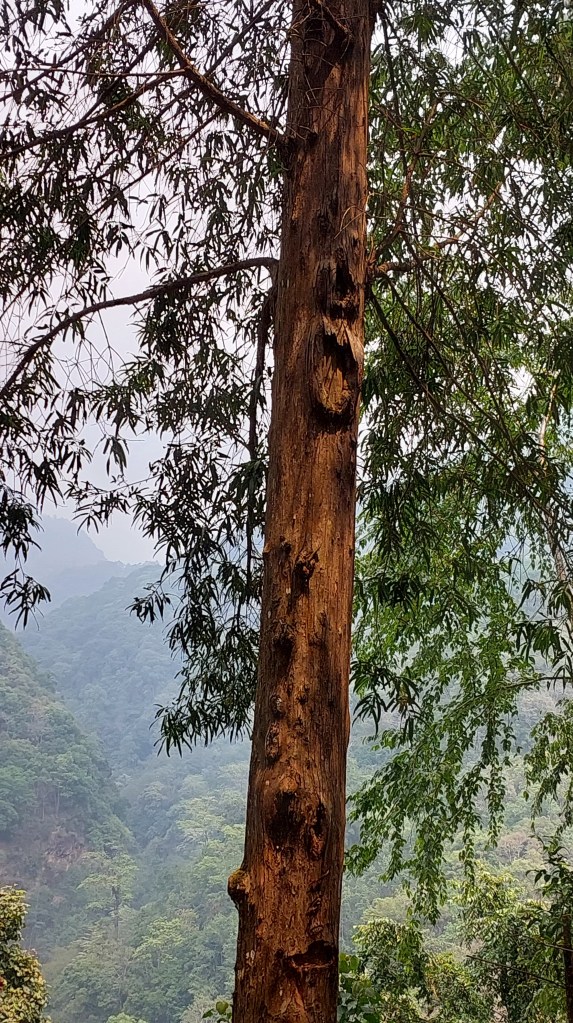
No idea what tree is this but a forester visits here regularly. Says it is the last piece left in Bhutan (or on Earth)
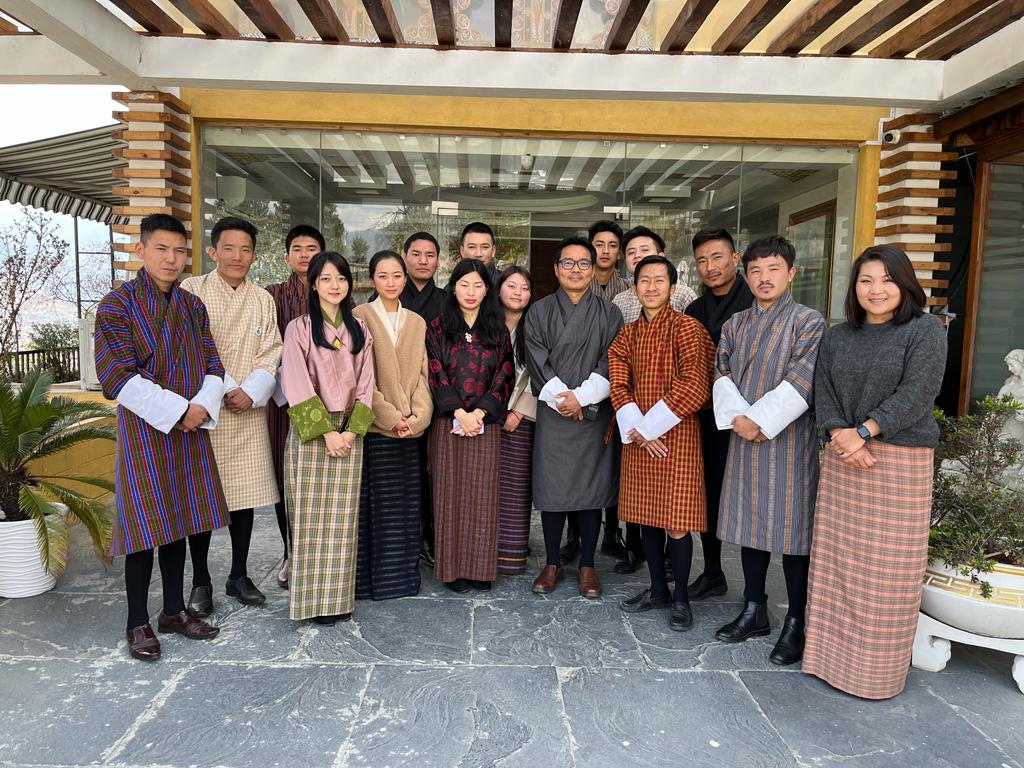
Over the past few days, I delivered two guest lectures to two groups of youth. The first ones were newbies from my former organisation, BBS, brought together for a training by journalist Namgay Zam. The second group was a class of mass communication students at the Royal Thimphu College with Prof. Nithil Dennis. Both the groups were interested in documentary filmmaking. For the context, I directed some 30 documentaries between 2002 and 2010, three of which made it big in the international festival circuit.
I am glad that I accepted the invitations because I found two young, energetic, and motivated groups, who, if they want to, can take BBS and Bhutan to the next level in films and documentaries. They gave me hope in these rather confusing times.
I shared what is not there in the books, manuals, or YouTube. In other words, my approach to making documentaries, and what worked for me. I also elaborated on how I switched from engineering to documentaries, and how arts shaped me or reshaped me. I shared my tips on how to conceive a story, what elements are the most important for me, how I write the scripts, how I use of pre-credits, time lapse and music and how I paced everything.
Most importantly, I invited them and motivated them to think big, believe in themselves, and push harder. I focussed on three key messages.
Don’t be a just-pass!
As an academic now, I have had the opportunity to assess and observe students from several countries. And I must say that Bhutanese are no less intelligent than other nationality. It is only us, and also the Asians, who have this west-is-the-best stereotype. In terms of spontaneity and service to others, Bhutanese are even better than others.
However, we have one deep-seated belief that is holding us from achieving our full potential – our normalisation of mediocrity. For example, when I was teaching in Sherubtse and when I used to call my students to inform them that the assignment was not up to the mark, they would ask me if they failed. When I replied that was the case, the students would just say, “If I am just-pass, I am okay, sir!” and walk away.
Well, the just-pass mentality is not okay if you are planning to go far. You have to push harder and further – in everything you do. Little extra efforts here and there. Like, how can I tell the story better? How about moving the camera by a few metres? Can I replace this part of the narration? Can I stay up another hour on the editing desk? All these can make the difference between a “great” product and a “mediocre” one.
In general, we Bhutanese have perfected the art of mediocrity. Our society has normalised it. Our system has encouraged it. Some have become masters in doing nothing. So, phrases like zha dha (leave it) nyam tsheyey (it’s bothersome), khey mi (it’s okay) have all been reappropriated from what were actually lifted from the profound Buddhist concepts of middle path and contentment. Of course, life need not be a rat race or a cut-throat competition, but you can relax later when you get my age. Right now, if you want to achieve something you have to move beyond the just-pass mindset.
The promises and potentials of Bhutan
Bhutan is a treasure trove of stories. I am not the only one to say this. I heard Khyentshe Rimpoche made this remark too. In fact, there are only a few places in the world where you have mountains falling in love, lakes running away, twigs turning you invisible, statues speaking and rivers competing who will win the race till Brahmaputra. Tell these stories. The world wants to hear them because it is fed up with Hollywood superheroes and Korean drama.
Do not look at everything Bhutanese as inferior. Do not think that our stories are unreal and uninteresting – and our people are less capable than others. As an artist and as a journalist, at least, you should not do that. Train your mind to be in the present moment and see beauty in everything, and in everyone. Otherwise, everything will be flat. Your productions will be flat too like what you see on TV these days. The most inspiring story may come from a farmer or from a yak herder.
Travel. Move. You are not a tree. Meet people without any prejudice. Listen carefully. Feel the place. Cherish the moment. Most importantly, be humble. Accept criticism. If there is one thing that will bring down our country it will be our ego. Of course, pride is an inherent quality of the Bhutanese. Thanks to it, we didn’t sell our soul to anyone. But there is a fine line between pride and ego.
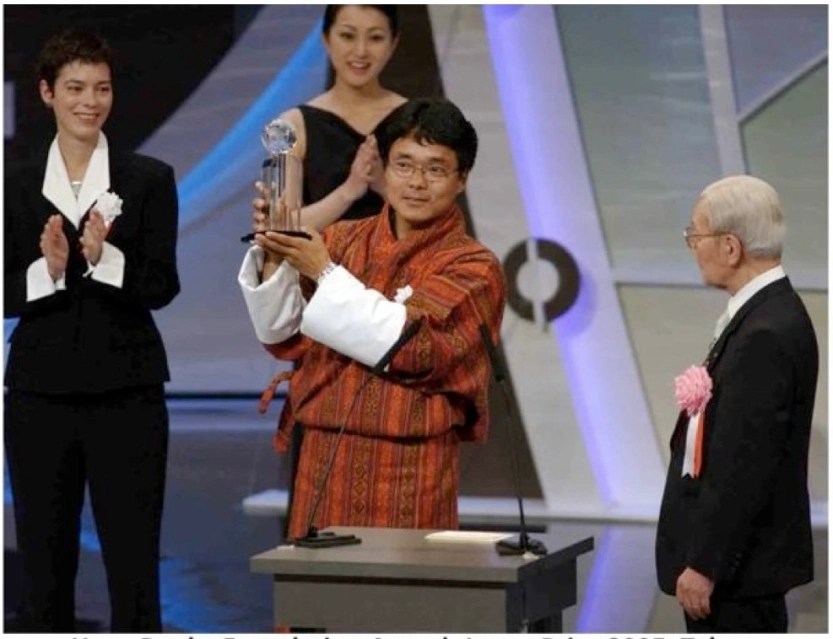
20 years ago, in 2003, I won my first international award for School Among Glaciers. More awards followed in the subsequent years. That paved the way for many to believe that it was possible, and some of our guys celebrated greater glories. Now, the torch is in your hands to take our country to higher platforms. I hope you run with it. Both Bhutan and the Bhutanese have a great future, if you truly believe, and if you are ready to work towards it.
Oscars and Grammys are within reach.
One thing that I can tell you, from my own experience switching from engineering to arts, and also after mentoring lots of young producers and teaching media students, is that Bhutanese maybe are genetically disposed towards art, creativity, humanities, literature, and spiritualism, and service to others. I am not saying that science is off limits. My first two degrees were in electrical and electronics engineering respectively, and I aced all the subjects, except chemistry. Plus all seven of us who were sent to Italy to study engineering graduated with flying colours.
What I mean is that it is more likely that Bhutanese will win Oscars and Grammys rather than Nobel Prize. I also say this with confidence because I was very close to getting there. I am sure you will eventually. It will happen in my lifetime, if you promise me that you will put your heart and soul and holidays and your resources into this profession.
I end with one cautionary note. We Bhutanese also have the tendency to compare ourselves with our fellow citizens or co-workers. I think this behaviour comes from being a small society, which maybe further aggravated by our education system that categorises our students as first, second, third, or as pass and fail.
I have no idea where and how I have overcome this, but I consider myself as my greatest competition. In other words, you are your worst opponent. It doesn’t matter in which country you are born, or live, but if you cannot drag yourself out of bed at 5 in the morning and run five kilometres and practice for hours every day, you will never be a good footballer. If you want your Sundays and holidays untouched, you cannot be a good journalist. If you don’t find yourself on the editing table at dawn, straight after your dinner, and without closing your eyes the whole night, you won’t be a good filmmaker. Yes, there are lots of social media memes about work-life balance and work-is-not-everything plaques on sale, but the old adage, no-pain-no-gain, is still valid.
And it will be if you are chasing excellence or success or whatever you may want to call it. As the lead character in Good, Bad and the Ugly, Blondie tells Tuco, “You (have to) dig” if you want the gold.
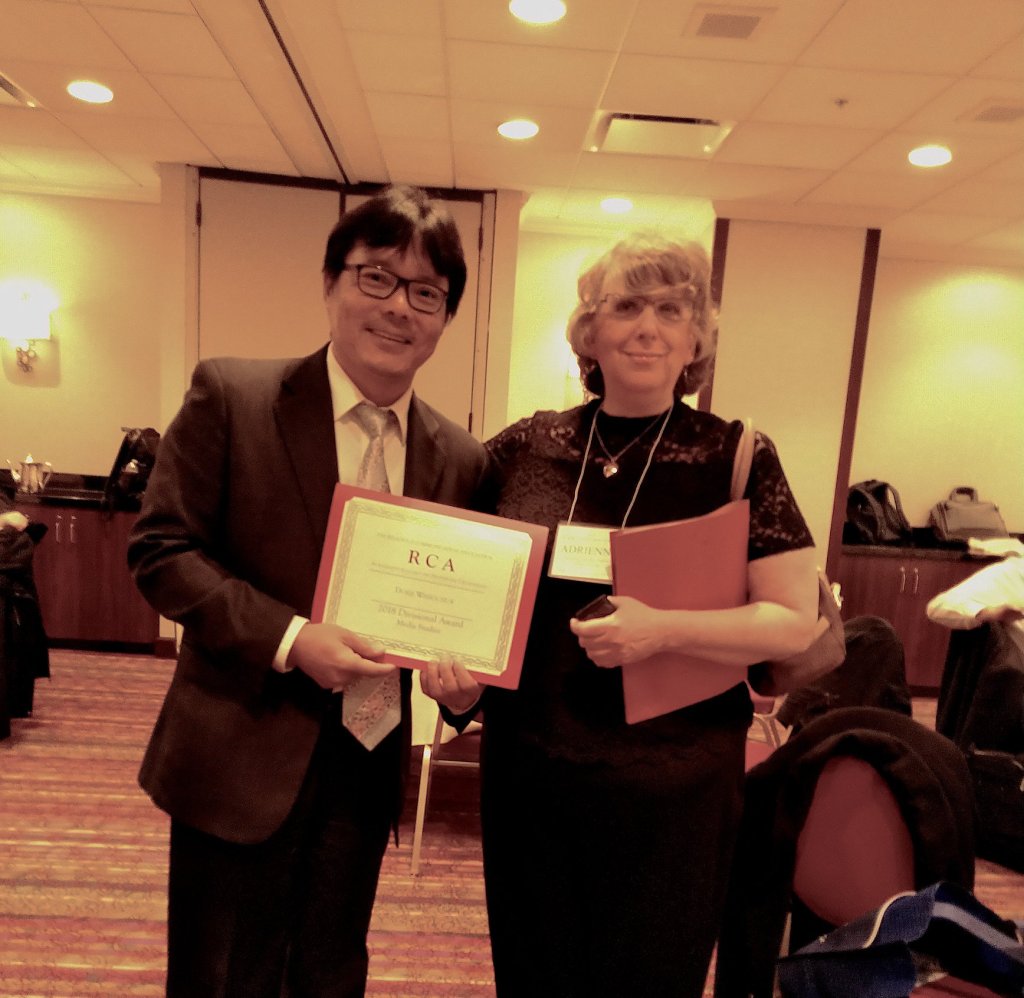
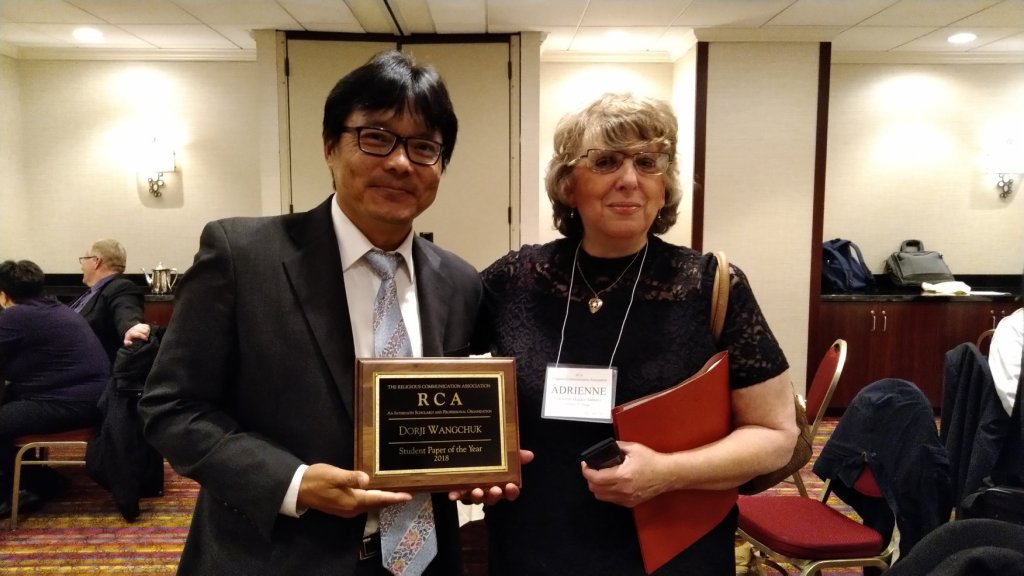
BBS newbiesAt RTC. Year 2 media studentsJapan 2003South Korea, 2005Award in media studies research and teaching. Salt Lake City, UT, 2018Best academic paper, National Communication Association, USA, 2018And of course, I have an engineering award tooSwitzerland, 2004Beijing, China, 2005
“There is no such thing as a self-made man. Every one who has ever done a kind deed for us, or spoken one word of encouragement to us, has entered into the make-up of our character and of our thoughts, as well as our success,” so wrote the American journalist, George Matthew Adams.
Tashi Phuntsho (aka Tosh) happens to be one of those who dropped in occasional encouragement which contributed to my writing journey. We were not that close. I knew him mostly through his cousin, and my friend and the-then work colleague, (MP) Ugyen Tshering. Back then he was in Kuensel and we often ran into each other in bars and newsrooms. Those were the days when media persons partied together and ruled the dance floors and the streets. I always admired his writings. The way he structured the articles, his choices of words, and the flow – were all a gem.
When Bhutan Times opened in 2006 the founders, Tosh and Rigden, asked me to be a guest columnist. Tosh was the editor-in-chief. They told me that they had seen a piece I wrote to Kuensel and were impressed by it. It was a letter to the editor that I had written on the emerging youth issues. The year was 2005.
“What is a column?” I asked Tosh.
Coming from a broadcast background, I was not familiar with the jargons in the print media. Tosh got up from his chair, put the cigarette he was smoking in his mouth, weeded through his book shelf and pulled out copies of Time Magazine and told me to read the works of Pico Ayer, Fareed Zakaria and a few others writers.
“You will figure it out right away, I know,” he said.
I didn’t get it right away, actually. It took me 35 days to write my first column. It was a steep learning curve – and an uphill task, for someone who was on TV doing more talking – and not much writing.
Bhutan Times published it right away. And I went on to pen over 120 columns between 2006 and 2009. Tosh always had nice things to say about them, and coming from him (he is one of the two Bhutanese I held in high regard when it comes to writing) I used to feel simply elated, and kept going and kept improving, and made a name for myself as a “good” columnist. I must also add that the skill I perfected writing for Bhutan Times ultimately came very handy in my PhD journey.
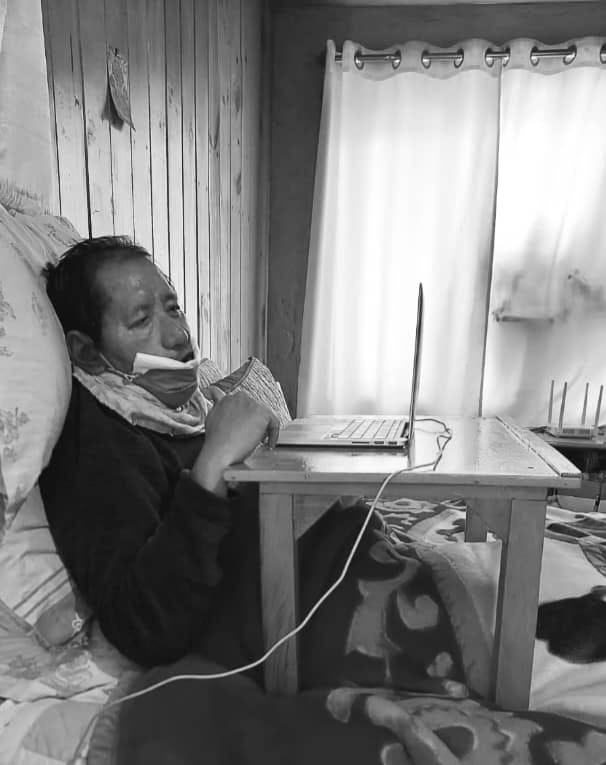
So, this time while I was in Paro for Paro Tshechu, I asked my good friend, Ugyen, if we could make a visit. I knew from various sources that Tosh had suffered a massive stroke and was bed-ridden.
I was happy to see my former idol and equally sad to see what fate had done to such a brilliant writer-thinker.
But Tosh was Tosh – in his element as always – in high spirit. He told me that he was following me on Facebook and reading everything I wrote – but then I disappeared.
“I am sorry I vanished. I was completing my grad school,” I told him.
He shared with us that he was doing OK, and that he is able to move a bit and most importantly that he is now able to write.
“I can type with only one finger, but that’s OK. And I just sent a manuscript to a publisher,” he added.
I was like, “Wow! You are always amazing. You know that I have always admired your works. Let me know when your book is out”.
As I left his place I couldn’t help but feel inspired by Tosh again – his will to live, and to do what he loved despite the massive physical challenge. It was a reminder to me to make the best of my own life – to cherish each moment, to celebrate the time and opportunities laid in front of us.
Between many things I do, I vowed to keep writing. And post them. At least I know, now, that there is one person who is going to read my post.
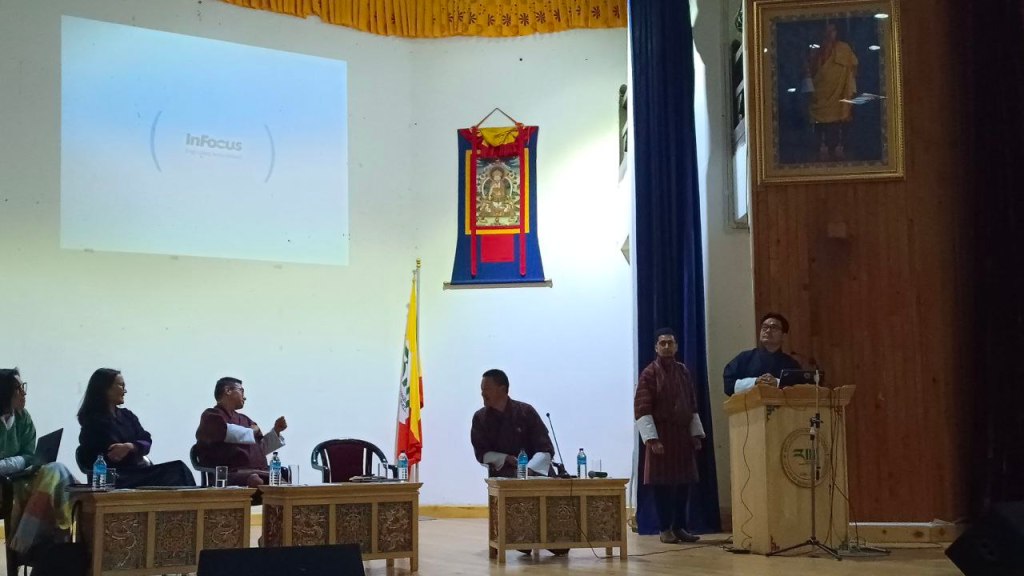
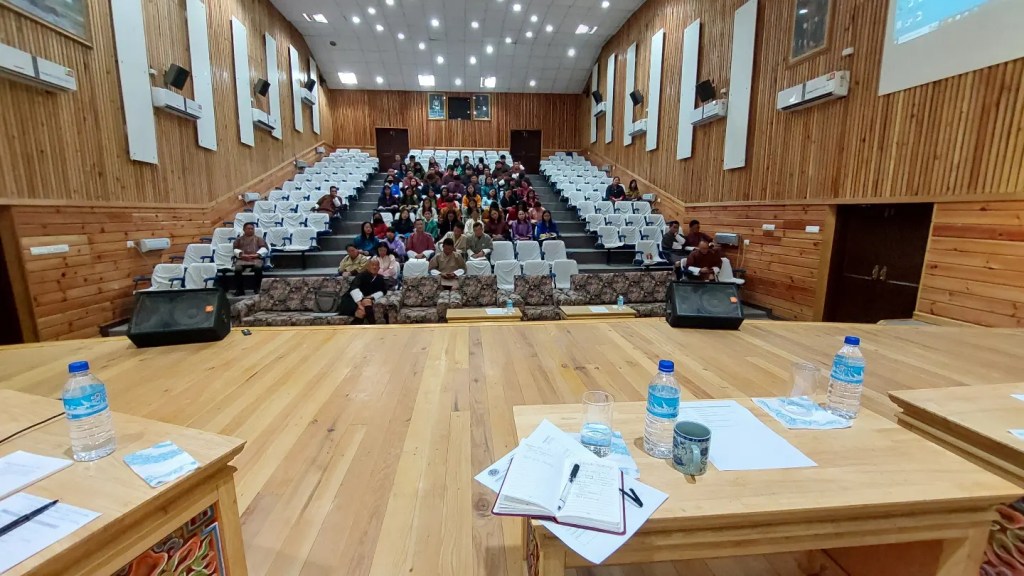
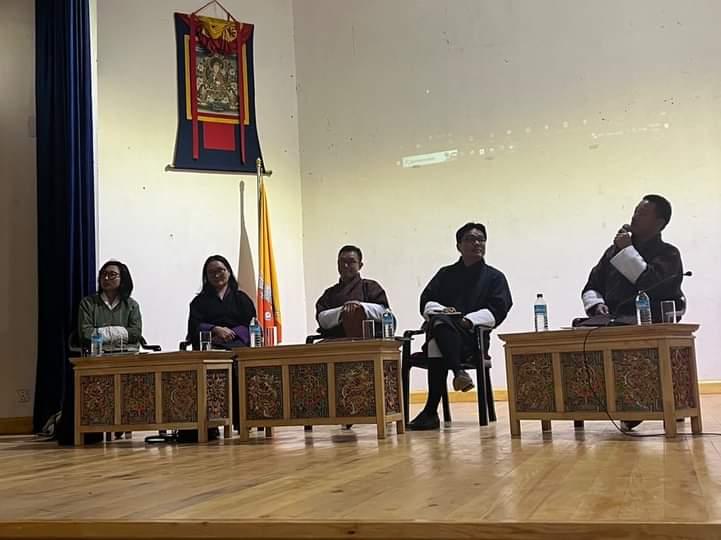
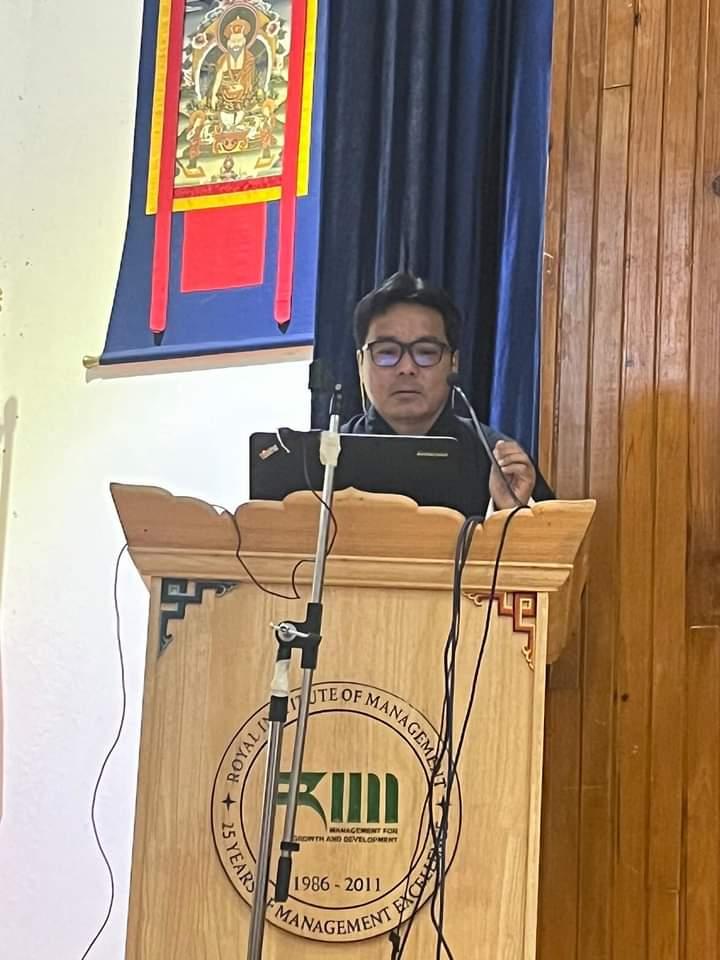
I was invited to speak at a half-day seminar for the officers-trainees of the Royal Institute of Management in Thimphu on the topic of Bhutan becoming a remittance economy. I offered to provide some sociological perspectives to explain why the exodus is happening in the first place, based on studies and experiences from other countries.
My qualification to speak on the topic stems from my PhD dissertation, which was an interdisciplinary research project that combined communication, technology, sociology, literary theory, and Buddhism and explored the question of identity, community, and spirituality.
Migration is complex.
First of all, is this Australia exodus a migration or an emigration? Is it economic migration or brain drain? These differences need to be clear because each phenomenon requires different theoretical frameworks to make sense of, and diverse solutions to address them – if they are recognised as a problem at all.
Second, migration is multifaceted and calls for a multidisciplinary approach to fully comprehend it. Sporadic, ad hoc, or piecemeal plans won’t help address it. For example, to think that by simply raising the income we would put a stop to this exodus is a fallacy. Studies have shown that the migration rate from developing countries increases as the GDP per capita rises, because of the enhanced capacity to migrate. The rate of migration starts declining only at around USD 10,000. Bhutan’s current GDP per capita stands at around 3,200. Out-migration, thus, will only gain steam for a decade or so. Unless other measures are implemented, the upward trend will continue till 2038. This year has been arrived at by using the Rule of 70 from simple theory economics.
Third, on the question on why people leave, the neoclassical theory of migration (aka the functionalist paradigm), which characterises migration as “seeking greener pasture”, and which is the dominant narrative in our government, needs to consider other broader perspectives such as the aspirations-capabilities framework.
Aspirations-capabilities framework views migration as complex, non-linear and, in many cases, counter-intuitive – and as shaped by macro-structural changes such as urbanisation, economic policies and system of governance. If Bhutanese are opportunists then why is it that every student from my generation returned to serve the country?
This Aspirations-Capabilities theoretical approach allows us to investigate migration as a constitutive part of the broader social process. In a pilot study that I conducted in 2019 among professionals who moved to Australia (I couldn’t do the actual research because of Covid), preliminary findings showed that money was not the main factor. Sense of self-worth and belonging, followed by perceived lack of negative liberty, preceded money, which in turn was viewed as the counterbalance to the two main factors. Statements such as, “If I have money, I can do anything”, or “I can now repay my parents”, or “I feel so suffocated there”, or “It doesn’t matter whether I am in Bhutan or outside” all index to these findings.
Furthermore, Covid-19 and subsequent lockdowns forced many people to reflect on their life’s meanings and purpose. Is this life worth it? What if I died tomorrow? I have not even bought a mobile phone for my parents. The exodus gained momentum thereafter. The monthly departure rate is four times the pre-covid level.
Migration thus occurs as a result of, and which could later drive, deeper psychosocial changes in the country. To oversimplify it as chasing the dollar tree, or to underestimate it as not-a-major-issue, would be a mistake with long-term consequences.
So, what are the solutions? Well, honestly, we all know what to do. It is just that we don’t do what needs to be done. Ego, arrogance, and indifference seem to stand between us and our duty. And yet, complex and multifaceted as it is, it will only be through multiple agencies, including the populace, working together that a lasting solution will be found.
Here are a few ideas, nonetheless. (I could not mention the third one at the seminar because of time)
Public service that facilitates
Like it or not, bureaucracy occupies the centre stage in Bhutan. While it has done well to pull the country out of poverty and underdevelopment, it has not kept up to the changing times and needs. Every little service that we seek requires multiple visits to a government office, or to multiple government offices. This has not only stunted the growth of other sectors but it has stalled itself with a cobweb of rules.
Worse still, there is a perception among the general public that if you know someone you can get anything done. Otherwise you won’t get the service at all. This is terrible, because perceptions may be just that – perceptions, but they bite deeper into the public psyche than the actual reality. In psychological terms perceptions penetrate into the limbic brain. Facts and logic remains in the frontal neocortex. But the thing is, people make serious decisions in life in the limbic system.
One former senior government official also told me that rules are designed to protect the public officials and not the public, or the public interest. The need to submit heaps of documents with undertakings signed on legal stamps for a regular service to the same office, over and over again, is a perfect example. On the other hand, in my six years in Macau I don’t remember submitting anything other than showing my passport to avail the services, including when doing my visa and the stay permit.
Our old ways of doing things need to change. Otherwise our people, the youth especially, don’t have the patience. They will walk away. Or worse still, do nothing. There is a new term in sociology to refer to this phenomenon. It is called quiet-quitting.
Our Parliament may like to do a thorough review of all the rules and regulations of each government agency. As the legislative arm, it falls on them. Regulatory overreach slows down or blocks everything. There is no use of passing a perfect legislation if the sub-legislations drawn by the bureaucrats do not comply with the original intent of the law. Repeal those rules that do not conform, or are outdated – some are even unconstitutional – and those that hinder the movements of goods, people and services, or curtail ideas and innovations.
Every state institution has to chip in. Only then will it set the right conditions for our country to achieve its full potential. If we have policies and public services that facilitate, ideas and entrepreneurship will flourish, employment will be created, taxes will pour in, wages and salaries will increase, everyone will be better off. As things stand, there are no winners. Everyone is losing.
Keeping the emotional connections
To quote Tom Friedman, the world is flat. Australia and Canada are far but for me physical distance is not an issue. What bothers me is the emotional distance that may develop with our people there. It would be a disaster if that happens. And yet, from my own experience, it just takes one generation to disconnect. My wife is Japanese. My daughters don’t know any of their Japanese cousins. Not even one. It is that easy for people to disappear in your life.
Individuals and families must make extra efforts to maintain the connections. Family gatherings for annual rituals can be shared through social media platforms to create a virtual space for blessings. Caretakers and lamas can be reached on WhatsApp and WeChat. Influential Bhutanese must engage in conversations with young Bhutanese living abroad. These days it is not too difficult, thanks to technology. Everyone is just one click away.
Coming back to legislative or executive overreach, we need to amend some provisions of our existing laws, lest we lose some of our people forever. A simple example: the postal ballot facility is not available to Bhutanese outside the bureaucracy. So says our electoral law. We should recognise that it is also in the interest of the State that subject engage in civic duties. If this provision of the law persists, and is not amended, a large section of the population cannot vote. That would disengage the people who will then lose touch with the affairs of the country. There are other provisions and practices in other line ministries that are becoming a wedge between the people and the State. This is not good for a country with less than a million.
Emotional connections can also be maintained if, for example, physical connections are improved. What about direct air connectivity to Australia, Kuwait and Japan? We can negotiate more Fifth Freedom Agreements with countries like Thailand, Singapore, and India right now. With our own scheduled flights, there will be frequent movements of people, which could even lead to a circular migration, and to investments and capital inflow from our own citizens, and not just the monthly doles.
The opening of our embassy was a great move. More such initiatives should be brainstormed. Otherwise migration will become emigration.
Liberalising some key sectors
Some of the world’s biggest companies are in the health, education, energy and entertainment. In Bhutan they remain fully under government control or as public services with no competition whatsoever. While this arrangement was necessary in the past, it does not serve the present circumstances or the future needs. We have to open up. We can not build an economy by retailing Dhaka garments or Uniqlo jackets. We should let our people dream big.
These four sectors are also where we can compete globally. Any economist will tell you that a country’s economy is either based on manufacturing or services – or both. Being surrounded by three of the world’s biggest manufacturing giants – India, China and Bangladesh, Bhutan can only develop its service and knowledge industry as its core economic base. Even hydropower is questionable now.
We can start small, like dishing out private dental services, and allowing private schools to try new curriculum. Our music and movies should be spared from government certifications and censor boards, and instead go for peer-reviews. There is no good rationale behind strangulating Bhutanese content creators while allowing the public to access billions of YouTube channels and Peppa Pig.
Coming back to health service, the wealthy and the affluent, plus those who value their health but not necessarily rich, are jetting off to Thailand and India. Just one hospital – Phyathai, in Bangkok treats over 3,000 Bhutanese out-patients and over 100 in-patients in a year. Read these numbers again. That’s just one hospital. And there are people I know who go to Bumrungrad, Samitavej, and Bangkok Hospital. And, what about patients going on their own to Delhi, Kolkata, Vellore and Siliguri?
All in all, around a billion ngultrums of private money is flowing out annually and that too in foreign currency. Since people are spending money anyway, why don’t we open up our minds, and the health sector, and make them spend that money in our own country? Similarly other areas of growth should be explored instead of slamming every idea as mitub (not allowed).
If our entrepreneurship is limited to importing cars, Korean cosmetics and consumer goods, then I am afraid that the temporary economic migration will become a permanent one-way brain drain.
In conclusion
These days I dread reading government circulars. Seriously. I often ask myself, where is that can-do mentality we once had? Where is the excitement to do, to serve and to build? TV, telephones, Internet, air transport, we got them. It wasn’t easy. Not for our King to find the money, and not for us the engineers to build them. But we did it. Our parents were even better. They scratched the mountains with bare hands to build the first highways. Now everything is about bans and rules and no-budget. Where and when did we lose our optimism, the grit and our sense of humour?
Our bureaucrats need to relax, smile, and develop more confidence. Knee-jerk reactions, myopic policies, narrow and subjective interpretations of rules will wear out the population. Show some strength and give space for people to breathe, make mistakes, cry, learn, laugh and move ahead.
Covid has drained our foreign reserve, and the state coffers. It has also revealed our strengths and weaknesses. Like many countries ours is also at a crossroad. Which road do we take? The familiar and the comfortable one, or the one that is unknown and uncharted?
The choice is not easy but we have to roll the dice. And give a go.
#bhutan #migration #thimphu #seminar #rim
NB:
I also invited the young officer-trainees not to look at us, the oldies, only for inspirations, or to point the fingers, but to roll their sleeves, and get to work immediately. And that from next year, today, they will be sitting in the board rooms, and their opinions will be sought. I shared that in 1999 after lots of back-and-forth in the government, I was cornered and the final decision to bring television into the country rested on my yes-or-no. It was 1999. And I was only 31. Just 5 years into my service.
The people of the valley of Athang Rukha, until 15 years back, lived in extreme poverty and on dole from the neighbouring villages. Things took a drastic turn as they worked their way out of it since then. Today they are relatively doing very well. They have everything going for them.
“Now it is the time you give back. You have to help others,” I told them after we organised the first Tshechu and Tshobum in Rukha last December. They all looked perplexed and unconvinced.
“You can give your time”, I told them. “We all have it”.
Yes, in a world that is obsessed with money, as in living with the money-is-everything narrative, there is one priceless resource that nature has endowed equally to every human and sentient being. That is time. You don’t only have to have wealth or power to be able to do good things, or be of service to others. You can donate your time.
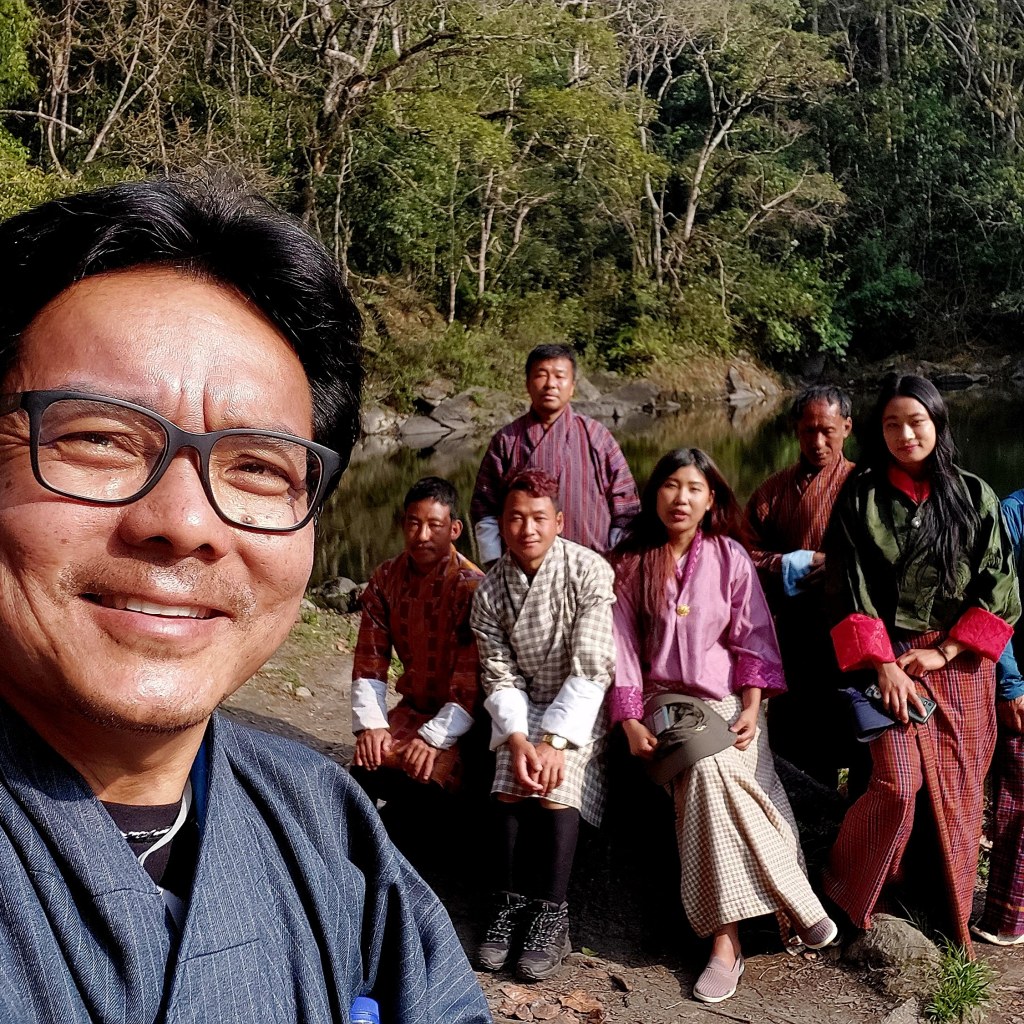
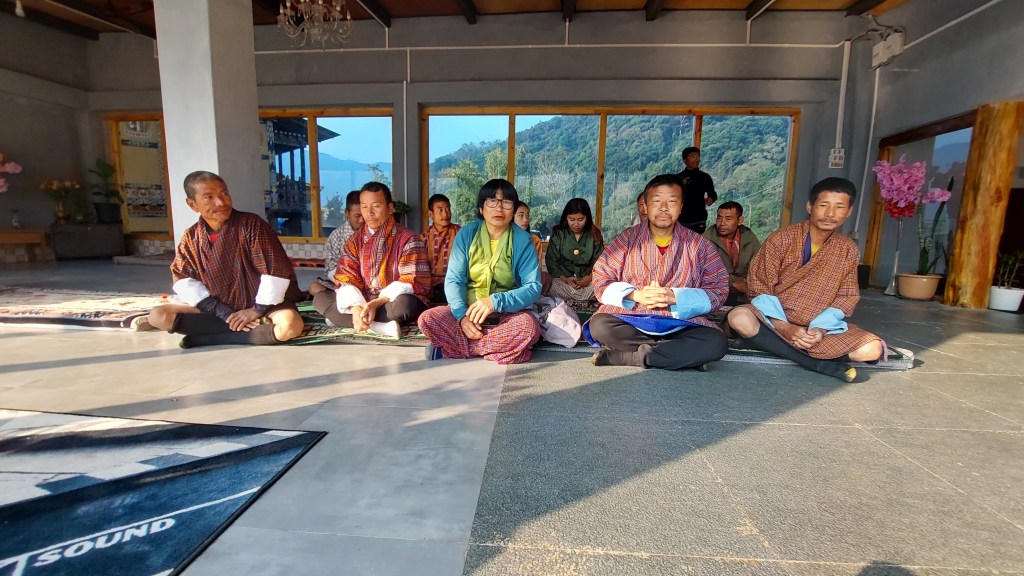
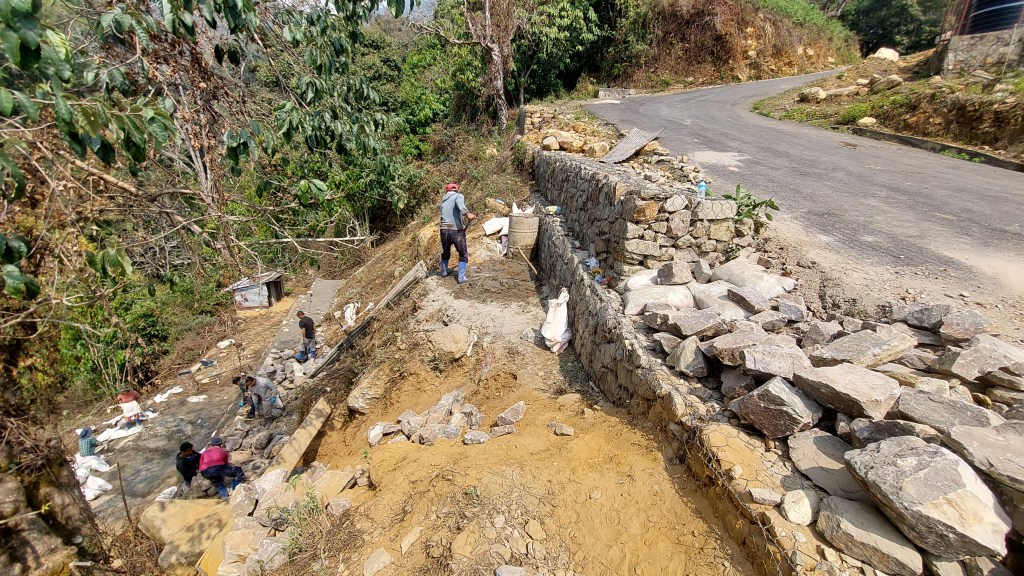
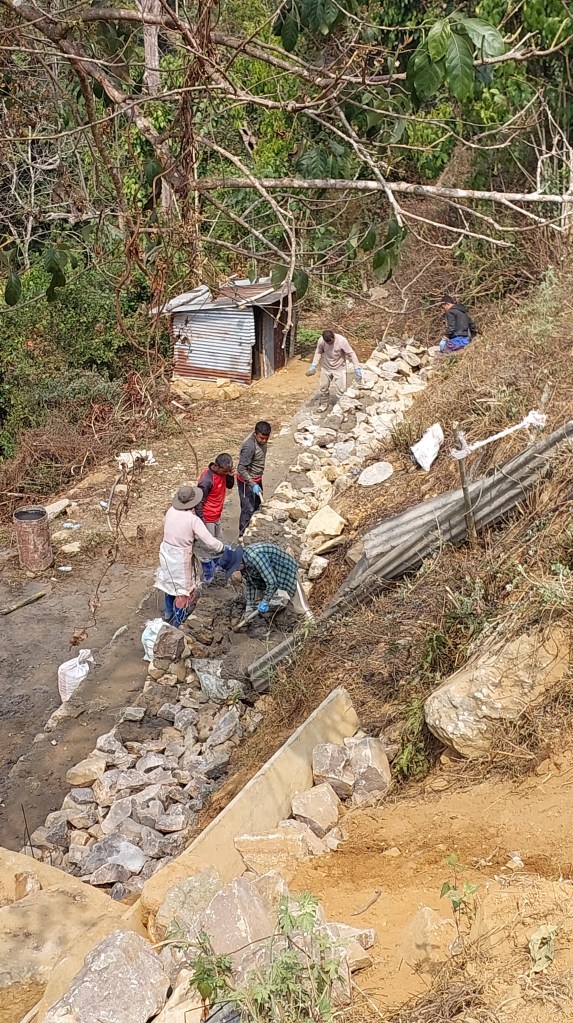
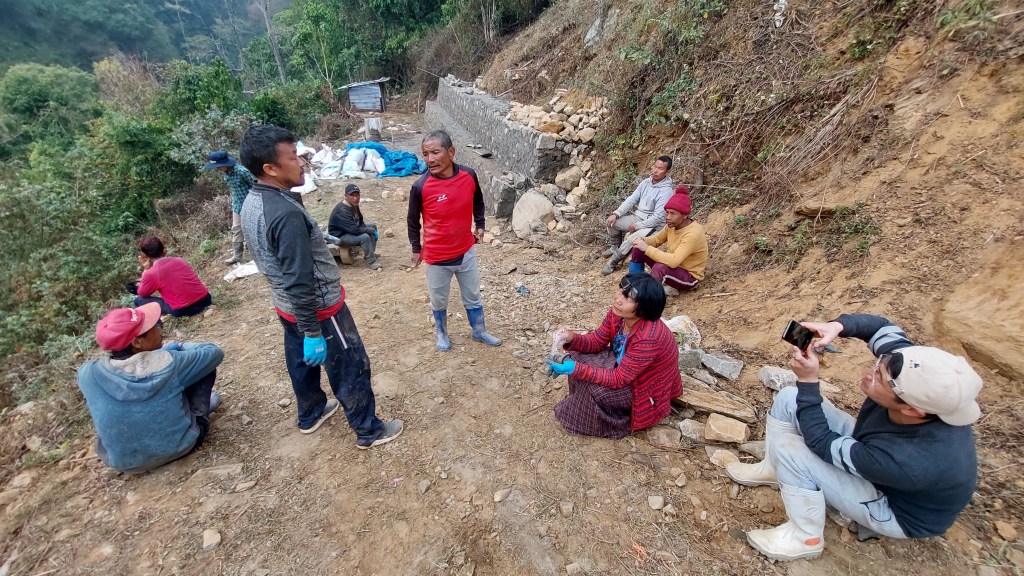
With this belief, I got 11 people accompanying me this time to do some pre-monsoon works at Dorje Phagmo Center in Zhemgang. More had actually signed up from Rukha but we only had three cars.
I agreed to put forward the money and materials, they agreed to give their time. Collaboration at best again. We are doing a massive 60 feet long, and a 20 feet tall wall, to prevent the feeder road from possibly sliding down next summer – or in future.
Whether you are rich or powerful, poor or powerless, time is also Great Equaliser. You may have the wealth, or power to buy anything, or do anything, but you cannot buy time.
Last, and the most important, our time on this planet is limited. And in the limited time we have in this life, use it meaningfully, while you can.
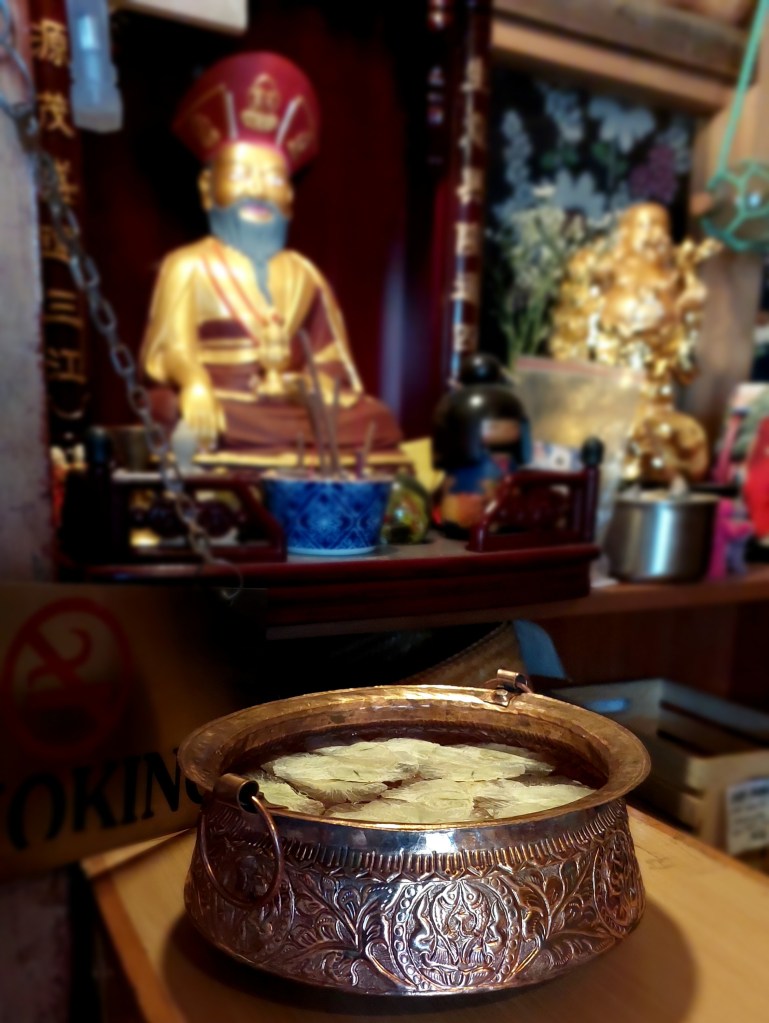
I have adapted this Newari copper container known as khadkalo, as a thro (large bowl in Dzongkha) for offering water and floating tsampaka (Oroxylum Indicum) flowers, as a sacred welcome offering.
Such displays of a bowl of water or milk, with floating flowers, are a traditional welcome to one’s house that signifies good luck, happiness, enlightenment and healing. You normally find them in front of temples but this cultural practice is in decline in Bhutan – and are done only when there are VIP visits, or during consecration and installation ceremonies.
However, I found among the Newaris in Kathmandu that they do this every day. So, I am taking a leaf out of their tradition and deciding to make a permanent display.